How to Write an Invisible Man Literary Analysis Essay

Invisible Man essay

Writing an Invisible Man literary analysis essay can feel hard because Ralph Ellison’s novel is full of symbols and sharp social questions. This guide shows you how to build a sharp thesis and use evidence with purpose.

In This Guide

Use this as a quick map before you start your essay.

  • Why Invisible Man works well for literary analysis
  • How to choose a focused topic
  • How to write a strong thesis statement
  • What evidence to use from the novel
  • How to shape a clear essay outline
  • Common mistakes to avoid
  • Helpful books and resources
  • FAQ for students
Invisible Man essay

Why Invisible Man Works Well for Literary Analysis

Ellison’s novel rewards essays that track patterns, not just plot events.

Invisible Man is rich because it asks deep questions about identity, race, power, and self-knowledge. The narrator wants to be seen as a full human being, but many people treat him as a symbol or tool.

That tension gives you many strong essay paths. You can study the narrator’s journey, the role of blindness, the use of speeches, or the way objects gain meaning.

Like the green light in The Great Gatsby, Ellison’s symbols grow more complex as the story moves on. A strong essay shows how that growth changes the reader’s view of the novel.

If you need a refresher on essay basics before you start, review this guide on how to write a literary analysis essay.

How to Choose an Invisible Man Literary Analysis Essay Topic

A good topic starts narrow, then opens into a bigger idea.

The best Invisible Man literary analysis essay does not try to explain the whole novel. It picks one pattern and asks what that pattern reveals. This keeps your essay focused and easier to prove.

Start with a question. Why does the narrator keep meeting groups that claim to help him? What does invisibility mean by the end of the novel? How do speeches shape public identity?

Here are focused topic ideas you can adapt:

  • Invisibility and identity: How the narrator learns that others refuse to see his full self.
  • Blindness as a symbol: How physical and moral blindness shape the novel’s conflicts.
  • The briefcase: How the objects inside it track the narrator’s changing hopes.
  • The Brotherhood: How political language can erase the person it claims to defend.
  • The prologue and epilogue: How the narrator’s underground space becomes a place of thought.

Each topic has room for argument. That is the key. A topic like symbols in the novel is too wide, but the briefcase as a record of false promises can become a strong essay.

How to Build a Thesis for an Invisible Man Literary Analysis Essay

Your thesis should make a claim that another reader could question.

Your Invisible Man literary analysis essay needs more than a theme statement. Do not write only that the novel is about racism or identity. Those ideas matter, but they are too broad by themselves.

A stronger thesis explains how Ellison builds meaning through a literary choice. That choice might be symbolism, irony, point of view, structure, or imagery.

Use this simple frame:

In Invisible Man, Ellison uses [literary device or pattern] to show [larger meaning].

Here are thesis statement examples you can revise for your own essay:

  • Example thesis: In Invisible Man, Ellison uses the narrator’s repeated speeches to show how public language can hide fear, ambition, and confusion.
  • Example thesis: The narrator’s briefcase becomes a symbol of false progress because it carries rewards that seem meaningful but often trap him in roles made by others.
  • Example thesis: Ellison connects blindness to power in order to show that many characters fail to see the narrator as a person, even when they claim to guide him.
  • Example thesis: By placing the narrator underground in the prologue and epilogue, Ellison suggests that retreat can become a form of self-examination rather than defeat.

Notice that each thesis names a literary feature and explains its meaning. That gives your body paragraphs a clear job.

Evidence to Use in an Invisible Man Literary Analysis Essay

Strong evidence comes from patterns, not random quotes.

The best evidence for an Invisible Man literary analysis essay often appears in repeated images or key scenes. Look for moments where the narrator sees himself one way, while others define him another way.

You might use evidence from these parts of the novel:

  • The battle royal: This scene shows how white power turns the narrator’s ambition into a cruel performance.
  • The college chapters: The narrator learns that respectability can depend on silence and control.
  • Liberty Paints: The factory can support an essay about racial imagery and hidden labor.
  • The Brotherhood chapters: These scenes show how group ideals can erase personal truth.
  • The Harlem riot: The chaos forces the narrator to face how little control he has had over his public role.

When you quote, do not drop the line and move on. Explain the words. Ask what the image, tone, or contrast does in that scene.

For background on the novel’s publication and importance, see Britannica’s overview of Invisible Man.

Sample Invisible Man Literary Analysis Essay Outline

A clear outline helps you turn ideas into a paper that feels organized.

This outline keeps your Invisible Man literary analysis essay focused from the first paragraph to the last.

Introduction: Name the novel, author, and main issue. End with a thesis that states your argument.

Body paragraph 1: Start with a topic sentence about your first pattern or scene. Use a quote, then explain how it supports your thesis.

Body paragraph 2: Move to a new scene that deepens the argument. Show change, contrast, or cause.

Body paragraph 3: Use your strongest point near the end. Link it to the novel’s larger meaning.

Conclusion: Do not repeat the thesis word for word. Show what the reader understands by the end of your analysis.

If you want a faster way to plan claims, quotes, and commentary, the Literary Analysis Essay Toolkit gives you printable steps for building stronger paragraphs.

How to Write Body Paragraphs That Analyze

Analysis explains why the evidence matters.

A weak paragraph tells what happens. A strong paragraph shows how Ellison’s choices shape meaning.

Try this pattern: topic sentence, short context, quote, close reading, link back to thesis. You do not need a long quote. A short phrase can work better if you explain it well.

For example, if you write about invisibility, do not only say that the narrator feels unseen. Ask how Ellison turns invisibility into a social problem. Who refuses to see him? What do they gain from that refusal?

This is where many essays improve fast. The more time you spend on the words of the novel, the less your paper sounds like plot summary.

Common Mistakes in an Invisible Man Literary Analysis Essay

Most weak essays have good ideas, but they lose focus.

One common mistake is writing a character report. The narrator matters, but your essay should study how Ellison presents him.

Another mistake is treating themes as facts. Instead of saying the novel is about identity, show how a symbol or scene develops that idea.

Watch out for quote overload, too. Your teacher wants your thinking, not a page of copied lines. Use fewer quotes and give each one more attention.

A final problem is moral summary. Yes, the novel deals with injustice. Your job is to explain how the novel makes the reader feel and understand that injustice through form, voice, and symbol.

Helpful Books and Resources

Good support texts can help you understand context without replacing your own argument.

Here are useful books to look for in a library or bookstore:

  • Invisible Man by Ralph Ellison
  • Shadow and Act by Ralph Ellison

You can also read more about Ellison’s life through Britannica’s Ralph Ellison biography. Context can help, but keep your essay centered on the novel’s language.

FAQ: Invisible Man Literary Analysis Essay

These quick answers can help you make smart choices before you draft.

What is the best topic for an Invisible Man literary analysis essay?

The best topic is narrow and arguable. Invisibility, blindness, the briefcase, or the Brotherhood can all work if you connect them to a clear claim.

What should my thesis include?

Your thesis should name a literary choice and explain its meaning. It should answer the question, So what?

Can I write about race in Invisible Man?

Yes. Race is central to the novel, but your essay should still analyze Ellison’s craft, not only the social issue.

How many quotes should I use?

Use enough evidence to prove your point, but do not overpack the paragraph. One strong quote with clear analysis can do more than several weak ones.

Key Takeaway

A strong Invisible Man literary analysis essay makes a focused claim, studies Ellison’s craft, and explains how each piece of evidence supports the argument.

Start small, read closely, and let the novel’s patterns guide your thesis.

Themes in Invisible Man: A Student-Friendly Guide

Invisible Man Themes

Ralph Ellison’s Invisible Man is a rich novel about race, identity, power, and the search for a true self. This guide explains the major themes in Invisible Man in clear language for high school, AP Literature, and college students.

In this Guide

Use these sections to find the idea you need fast.

  • Why the themes matter
  • Invisibility and identity
  • Racism and power
  • Self-knowledge and voice
  • Education and false promises
  • Politics and betrayal
  • Dreams and truth
  • Writing about the novel
  • FAQ
Invisible Man Themes

Why the themes in Invisible Man still matter

The novel speaks to students because it shows how hard it can be to define yourself in a world that tries to define you first.

Invisible Man was published in 1952, but its questions still feel current. Who gets seen? Who gets ignored? And who controls the story people tell about you?

The themes in Invisible Man matter because the narrator’s fight is both personal and social. He wants respect, but he also wants to understand who he is without lies from others.

For background on Ellison’s life and career, see this helpful Britannica overview of Ralph Ellison.

Major themes in Invisible Man: invisibility and identity

Invisibility in the novel is not about magic. It is about being unseen as a full human being.

The narrator says he is invisible because people do not see his real self. They see a symbol, a threat, a tool, or a problem. This is one of the central themes in Invisible Man.

At school, in the city, and inside political groups, people keep trying to give him a role. Each role seems to offer success, but each one hides part of who he is.

This theme connects well to Hamlet, where the main character also struggles with who he is and what role he must play. In both works, identity becomes a conflict, not a simple fact.

Student tip: When you write about invisibility, do not stop at the title. Ask who refuses to see the narrator clearly and why that refusal gives them power.

Themes in Invisible Man: racism and power

Ellison shows racism as more than personal dislike. He shows it as a system that shapes schools, jobs, politics, and public life.

The narrator meets people who claim to help him, but many use him for their own goals. Some use polite words. Others use open violence. Both forms limit his freedom.

The Battle Royal scene shows this clearly. Young Black men are forced into pain and shame for the amusement of white leaders. The scene reveals how power can hide behind ceremony.

These themes in Invisible Man also connect to W.E.B. Du Bois’s idea of double consciousness, the sense of seeing yourself through the eyes of a racist society. Ellison does not repeat Du Bois in a simple way, but the link can help students think deeper.

The search for self-knowledge and voice

The narrator’s journey is a long lesson in how hard it is to know yourself when others keep speaking for you.

At the start, he often trusts authority figures. He believes the right speech, the right school, or the right group will give him a place in the world.

Over time, he learns that borrowed ideas can harm him. He must sort truth from slogans. He must build a voice that is his own.

This is why the ending matters. The narrator is underground, but he is not just hiding. He is thinking, judging, and preparing to speak with more honesty.

Education, books, and false promises

Education in the novel can open doors, but it can also teach people to obey unfair rules.

The narrator values school and learning. At first, he believes education will protect him. Yet the college does not fully protect him from racism or control.

The novel asks students to think about what education is for. Is it meant to free the mind, or to train people to fit into an unfair system?

This makes the themes in Invisible Man useful for essay writing. You can study how Ellison treats education as both a hope and a trap.

Politics, brotherhood, and betrayal

The Brotherhood promises unity and justice, but the narrator learns that a group can use noble language while it hides selfish plans.

At first, the Brotherhood gives him a public voice. He becomes a speaker and feels useful. The group seems to care about change.

Yet the Brotherhood often treats people like pieces on a board. The narrator’s community becomes less important than the group’s strategy.

This theme can remind students of Animal Farm, where political language hides control. In both books, words like equality can lose meaning when leaders chase power.

Dreams, illusions, and painful truth

Ellison fills the novel with dreams, masks, and strange events to show how hard truth can be to face.

The narrator often believes in promises that later fall apart. He trusts leaders, systems, and public roles. Each illusion breaks under pressure.

This theme is close to The Great Gatsby. Gatsby believes in a dream that cannot survive reality. The narrator of Invisible Man also learns that dreams can guide people or blind them.

The difference is that Ellison’s novel ties illusion to race, power, and survival. Truth is not just personal. It has a social cost.

How to write about themes in Invisible Man

A strong essay should connect a theme to scenes, symbols, and changes in the narrator.

Do not write only that the book is about racism or identity. Instead, show how Ellison develops that idea across the novel.

For example, you could trace how the narrator moves from trust in public approval to a deeper search for truth. That path reveals several themes in Invisible Man at once.

If you need help shaping a claim, use our guide on how to write a literary analysis essay. It can help you turn a theme into a focused thesis.

You can also use a quick theme review resource if you want extra support before a quiz, class discussion, or essay draft.

Suggested books for deeper study

These books can help students understand Ellison’s ideas in a wider literary and historical context.

  • Shadow and Act by Ralph Ellison
  • The Souls of Black Folk by W.E.B. Du Bois

For a reliable short reference on the novel, you can also read the Britannica entry on Invisible Man.

FAQ about themes in Invisible Man

These quick answers help with review before class, a test, or an essay.

What is the main theme of Invisible Man?

The main theme is the struggle to be seen as a full person. The narrator must reject false roles and search for his own identity.

Why is invisibility important in the novel?

Invisibility shows how racism and power can erase a person’s real self. People look at the narrator, but they do not truly see him.

What are the most important themes in Invisible Man for an essay?

Good essay choices include invisibility, identity, racism, education, power, and self-knowledge. Choose one and connect it to key scenes.

How does the Brotherhood connect to the novel’s themes?

The Brotherhood shows how political groups can use people while they claim to help them. It reveals the danger of losing your voice to a cause.

Key Takeaway

The themes in Invisible Man show a young man’s fight to see himself clearly in a world built to misread him. The novel asks students to notice power, question easy answers, and value a voice that comes from hard-won truth.

Best Books for Identity and Belonging: A Student Guide to Finding Your Place

Identity Belonging Books

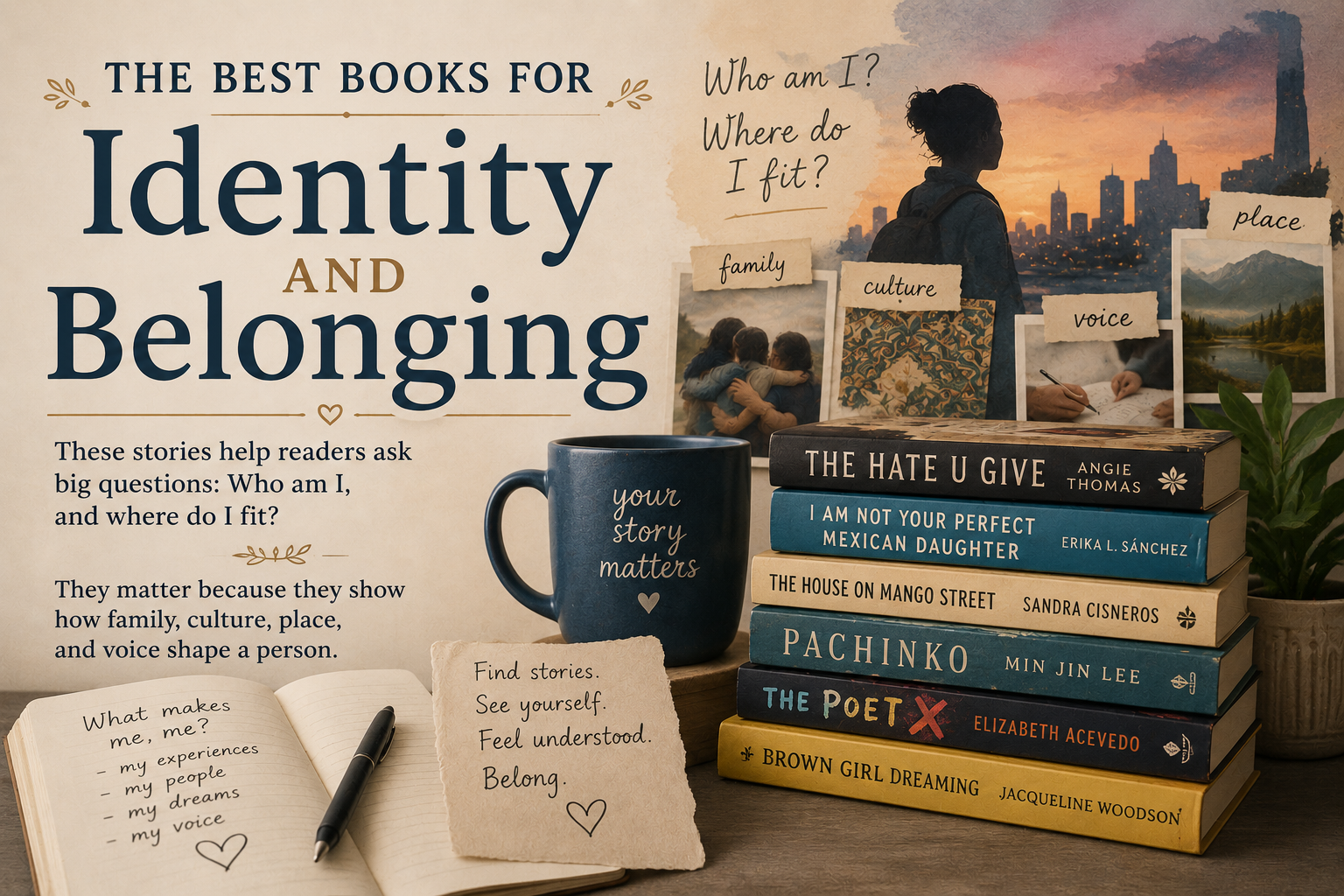
The Best Books for Identity and Belonging help readers ask big questions: Who am I, and where do I fit? These stories matter because they show how family, culture, place, and voice shape a person.

For students, these books can make class reading feel personal. They also give strong material for essays, discussions, and literary analysis.

In this Guide

  • Why identity and belonging matter in literature
  • Books to read first
  • Symbols and themes to notice
  • How students can read these books closely
  • More examples from classic and modern literature
  • Frequently asked questions
Identity Belonging Books

Why the Best Books for Identity and Belonging Matter

Stories about identity help readers see both difference and connection.

The Best Books for Identity and Belonging often follow characters who feel caught between worlds. They may face pressure from family, school, society, or their own fears.

These books show that identity is not always fixed. A character may change as they learn their history, speak their truth, or claim a place in the world.

Belonging can be just as complex. Sometimes a character wants to fit in. Other times, they learn that real belonging starts with self-respect.

Best Books for Identity and Belonging to Read First

These books are strong choices for high school, AP Literature, and college readers.

A good list of Best Books for Identity and Belonging should include voices from different cultures and time periods. The books below are often taught because they mix clear storytelling with deep themes.

The House on Mango Street by Sandra Cisneros

This short novel follows Esperanza, a young girl in a Chicago neighborhood, as she studies the world around her. She wants a home, but she also wants freedom.

Names, houses, windows, and streets become symbols of identity. Esperanza learns that belonging to a place does not mean she must be trapped by it.

The Namesake by Jhumpa Lahiri

This novel follows Gogol Ganguli, the son of Bengali immigrants, as he struggles with his name and his family history. His name becomes a symbol of love, burden, and memory.

The book asks a clear question: can a person honor their roots and still build a life of their own?

Their Eyes Were Watching God by Zora Neale Hurston

Janie Crawford searches for love, voice, and selfhood. Her journey shows how identity can grow through pain, choice, and courage.

The horizon is one of the novel’s key symbols. It represents hope, desire, and the dream of a wider life.

If you want to buy or borrow a few strong starting points, look for The House on Mango Street by Sandra Cisneros, The Namesake by Jhumpa Lahiri, and Their Eyes Were Watching God by Zora Neale Hurston.

Symbols and Themes in the Best Books for Identity and Belonging

Symbols make inner conflict visible on the page.

Across the Best Books for Identity and Belonging, authors often use objects, places, and names to show what a character feels but cannot always say.

A name may show family history. A house may show safety or limits. A road may show escape, growth, or the search for a new life.

In The House on Mango Street, the house is not just a building. It stands for poverty, shame, hope, and the need for self-definition.

In The Namesake, Gogol’s name carries memory from another country. It also becomes a source of conflict as he tries to decide who he wants to be.

Poetry can explore these same ideas in a smaller space. Langston Hughes often writes about voice, race, dream, and place. You can learn more from the Poetry Foundation profile of Langston Hughes.

If you want help with poems that explore identity, use this step-by-step poetry analysis guide to break down imagery, tone, and speaker.

How Students Can Read the Best Books for Identity and Belonging

Close reading helps you move from plot summary to real analysis.

When you read the Best Books for Identity and Belonging, track moments when a character feels accepted, rejected, or unseen. These moments often reveal the main conflict.

Pay attention to names, homes, language, clothing, food, and public spaces. These details often carry cultural meaning.

Ask what the character wants at the start. Then ask what they understand by the end. That shift can become the center of a strong essay.

You can also connect these books to the coming-of-age tradition. Britannica explains this type of story in its overview of the Bildungsroman.

More Examples of the Best Books for Identity and Belonging

Many famous works ask what it means to be seen and understood.

Invisible Man by Ralph Ellison explores race, power, and the pain of being unseen by society. The narrator’s identity changes as he learns how others try to define him.

American Born Chinese by Gene Luen Yang uses humor, myth, and graphic storytelling to explore shame and self-acceptance. It is a strong choice for students who like visual texts.

Jane Eyre by Charlotte Brontë follows a young woman who wants love without losing her sense of self. Jane’s voice is central to her identity.

Persepolis by Marjane Satrapi shows how politics, family, and memory shape a young person’s life. Its black-and-white art makes identity feel sharp and personal.

These works prove that the Best Books for Identity and Belonging do not all look the same. Some are novels. Some are graphic memoirs. And some are poems or plays.

FAQ: Best Books for Identity and Belonging

What makes a book about identity and belonging?

A book fits this theme when characters ask who they are, where they come from, and where they feel accepted.

Why are the Best Books for Identity and Belonging useful for students?

They give students clear themes for essays and class talks. They also connect literature to real life.

Are these books good for AP Literature?

Yes. Many of these books have rich symbols, complex characters, and strong themes, which makes them useful for AP-style analysis.

Can poetry count as literature about identity and belonging?

Yes. Poems often explore voice, culture, memory, and place in a direct way.

Key Takeaway

The Best Books for Identity and Belonging remind us that finding a place in the world is rarely simple. These stories show that identity grows through choice, memory, conflict, and voice.

For students, that makes them more than good reading. They are tools for thinking about literature, society, and the self. 📚

error

Enjoy this article? Please spread the word :)

Follow by Email
BLUESKY
fb-share-icon
Reddit
LinkedIn
Share
RSS