Ekphrasis Poetry Prompt: The Motel Sign Still Buzzing

Ekphrasis Poetry Prompt Motel

Some images feel like they already contain a story before a single word arrives. A flickering motel sign in the rain. A suitcase left beside a vending machine. An empty highway with no headlights coming. The image does not explain itself, which is exactly why it can unlock strong poetry.

This ekphrasis poetry prompt asks you to enter the emotional atmosphere of an image instead of simply describing it. You are not writing a summary of what you see. You are writing toward the feeling underneath it.

Ekphrasis Poetry Prompt: The Motel Sign Still Buzzing

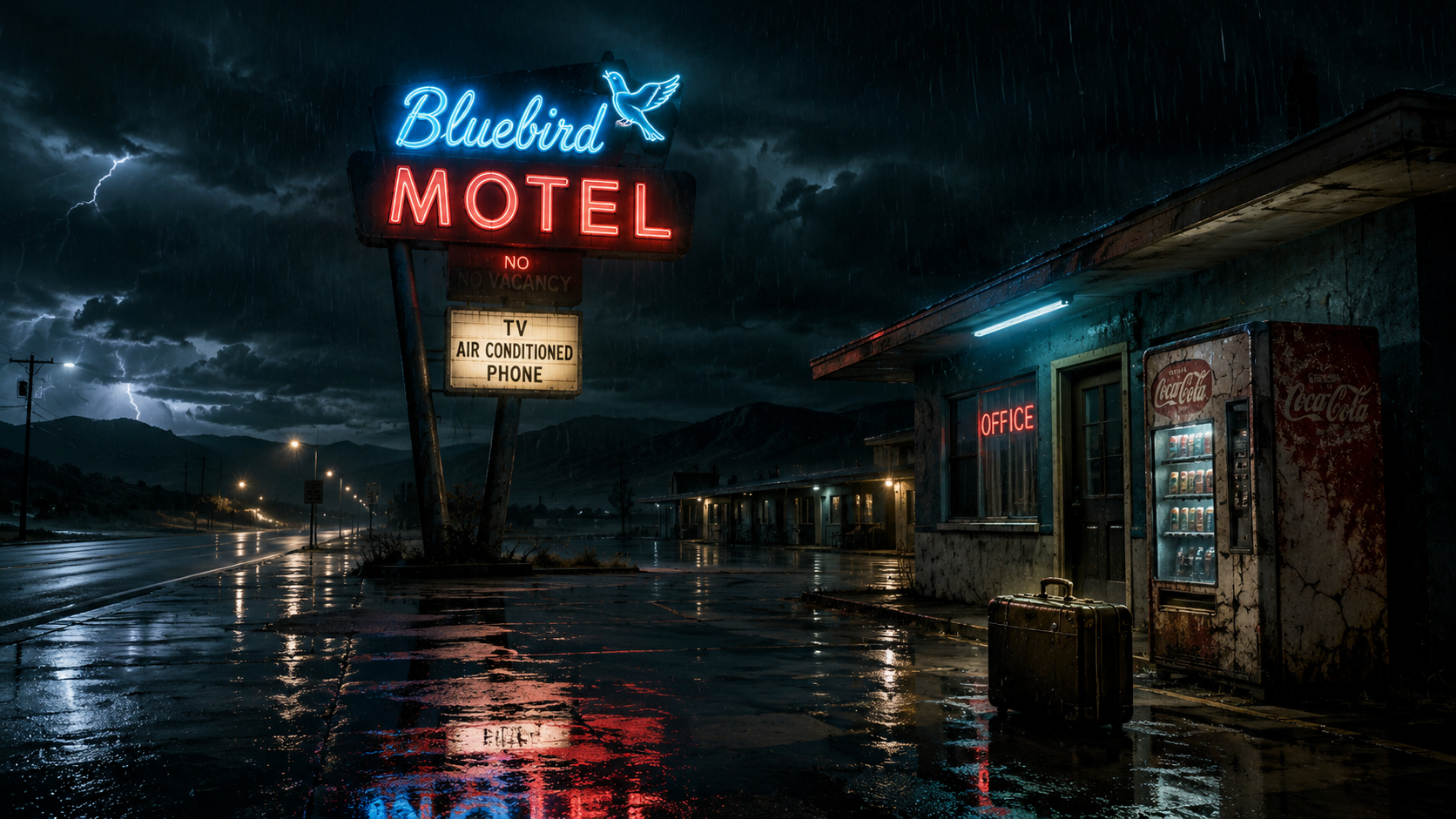
Write a poem inspired by an empty roadside motel at midnight during a storm.

Somewhere nearby, a neon sign still buzzes. A suitcase sits abandoned beside a vending machine. Rain keeps falling. No one arrives.

Your speaker may be someone who stayed there years ago, someone passing through, someone waiting for a person who never came back, or even someone who cannot leave. The poem can stay realistic or drift toward the surreal.

Try to focus on sensory detail instead of explanation. Let the image create emotional pressure on its own.

Questions to Explore

Why was the suitcase left behind?

What does the storm seem to remember?

What feeling hangs in the silence?

Or, what happened just before this moment?

What does the speaker refuse to admit?

You do not need to answer every question directly. Sometimes the strongest poems leave part of the image unresolved.

Why This Ekphrasis Poetry Prompt Works

Ekphrasis poetry becomes powerful when the image feels emotionally alive. An empty motel can suggest escape, regret, loneliness, freedom, disappearance, memory, or reinvention without stating any of those ideas outright.

Images like this give poets something concrete to return to while writing. The glowing sign, the rainwater, the cracked pavement, and the abandoned suitcase can act as emotional anchors throughout the poem.

If the poem feels stuck, narrow your focus. Write only about the sound of the rain hitting the sign. Write only about the suitcase handle. Or, write only about the color of the reflected neon on the wet asphalt.

Small details often carry the emotional weight.

Try Different Angles

You could write this poem as:

A narrative free verse poem

A fragmented prose poem

A noir-inspired monologue

A memory poem about leaving home

A surreal dream poem

A poem spoken by the motel itself

The image does not need to stay literal. Let it shift as the poem develops.

A Final Thought

Good ekphrasis poetry does not just describe an image. It enters it. The goal is not accuracy. The goal is emotional resonance.

Somewhere in the storm, the motel sign is still buzzing. Let the poem begin there.
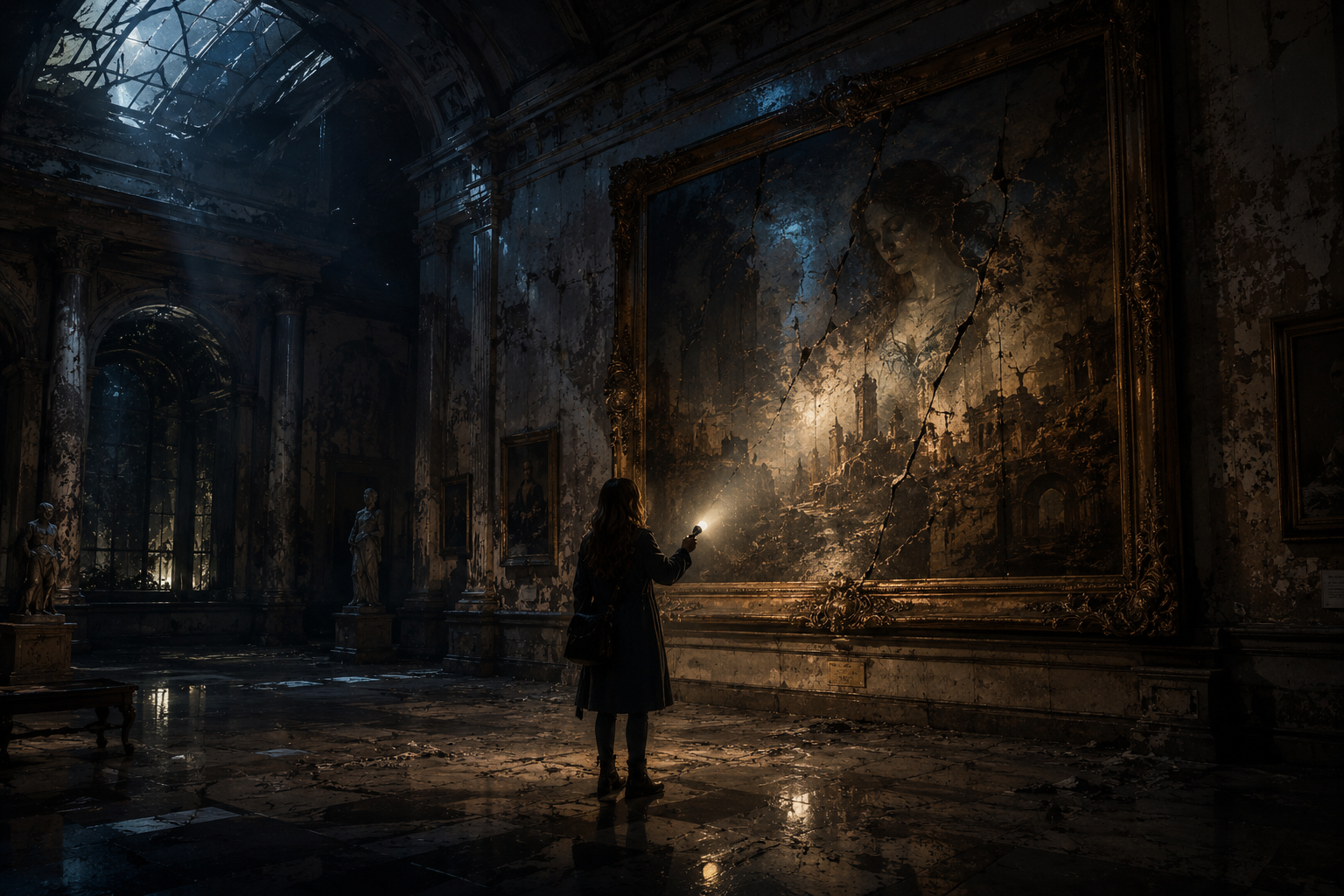
Ekphrasis Poetry Prompt: Writing a Poem from a Haunted Painting

Ekphrasis Poetry Prompt

Sometimes an image feels less like a picture and more like a memory waiting for language. That is part of what makes ekphrasis poetry so powerful. A poet looks closely at a visual image and begins to speak back to it. The poem becomes a conversation between silence and observation.

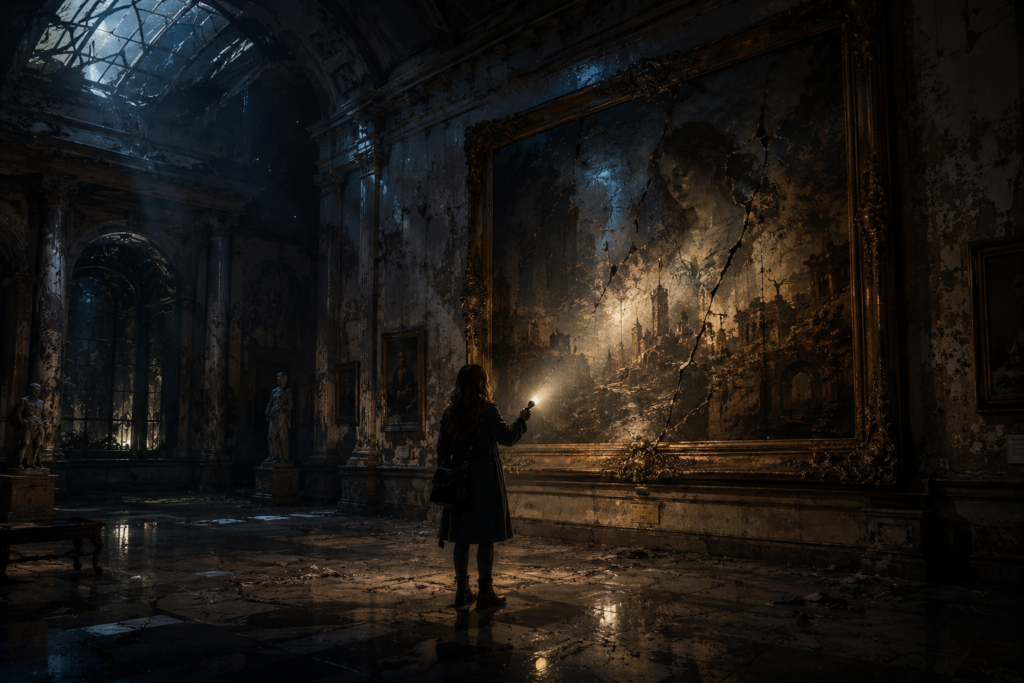
This ekphrasis poetry prompt invites you to write from the emotional atmosphere of an abandoned museum and a damaged painting that seems to hold a secret inside it.

Ekphrasis Poetry Prompt

In this Prompt

What ekphrasis poetry is

How to approach the image emotionally

A creative poetry prompt

Questions to deepen the poem

Tips for strong sensory writing

What Is Ekphrasis Poetry?

Ekphrasis poetry is poetry inspired by visual art.

The art can be real or imagined. A poet might respond to a painting, sculpture, photograph, film still, or even a mural seen on the side of a building. Sometimes the poem describes the image directly. Sometimes it explores the emotions, memories, or hidden story behind it.

John Keats’ “Ode on a Grecian Urn” remains one of the most famous examples. Modern poets often use ekphrasis to explore grief, identity, memory, fear, beauty, or history through visual details.

The goal is not to explain the image perfectly. The goal is to let the image open a door inside the poem.

The Prompt

Look at the image of the abandoned museum and the cracked painting.

Write a poem about the moment someone realizes the painting is trying to tell them something.

The message may be literal or emotional. The painting might remind the speaker of a forgotten memory, a lost relationship, a fear they buried, or a version of themselves they no longer recognize.

You can write in first person, second person, or third person.

You might focus on:

The silence of the museum

The flashlight beam moving across the damaged canvas

The feeling that the painting is watching back

What the cracks in the artwork reveal

Why the speaker came to the museum in the first place

Whether the painting offers comfort or warning

You do not need to explain everything. Mystery often gives ekphrasis poetry its emotional force.

Questions That Can Deepen the Poem

What emotion appears first when the speaker sees the painting?

What detail feels impossible to ignore?

Ask, what does the broken artwork reveal about the speaker’s own life?

What sounds fill the empty museum?

Does the speaker leave changed?

Tips for Writing the Poem

Focus on sensory detail before explanation. Let readers hear the echo of footsteps, smell dust in the air, or notice the cold light on marble floors.

Avoid summarizing the image too quickly. Stay inside one moment long enough for tension to build.

Strong ekphrasis poetry often moves from observation into reflection. The image becomes a mirror for something human.

You can also let the painting remain partly unknowable. Some of the strongest poems leave space for uncertainty.

Final Thought

A powerful image can hold emotion before language ever arrives. Ekphrasis poetry gives writers a way to step inside that silence and answer it.

The abandoned museum in this prompt is not just a setting. It is a place where memory, art, loneliness, and imagination begin speaking at the same time.

error

Enjoy this article? Please spread the word :)

Follow by Email
BLUESKY
fb-share-icon
Reddit
LinkedIn
Share
RSS