

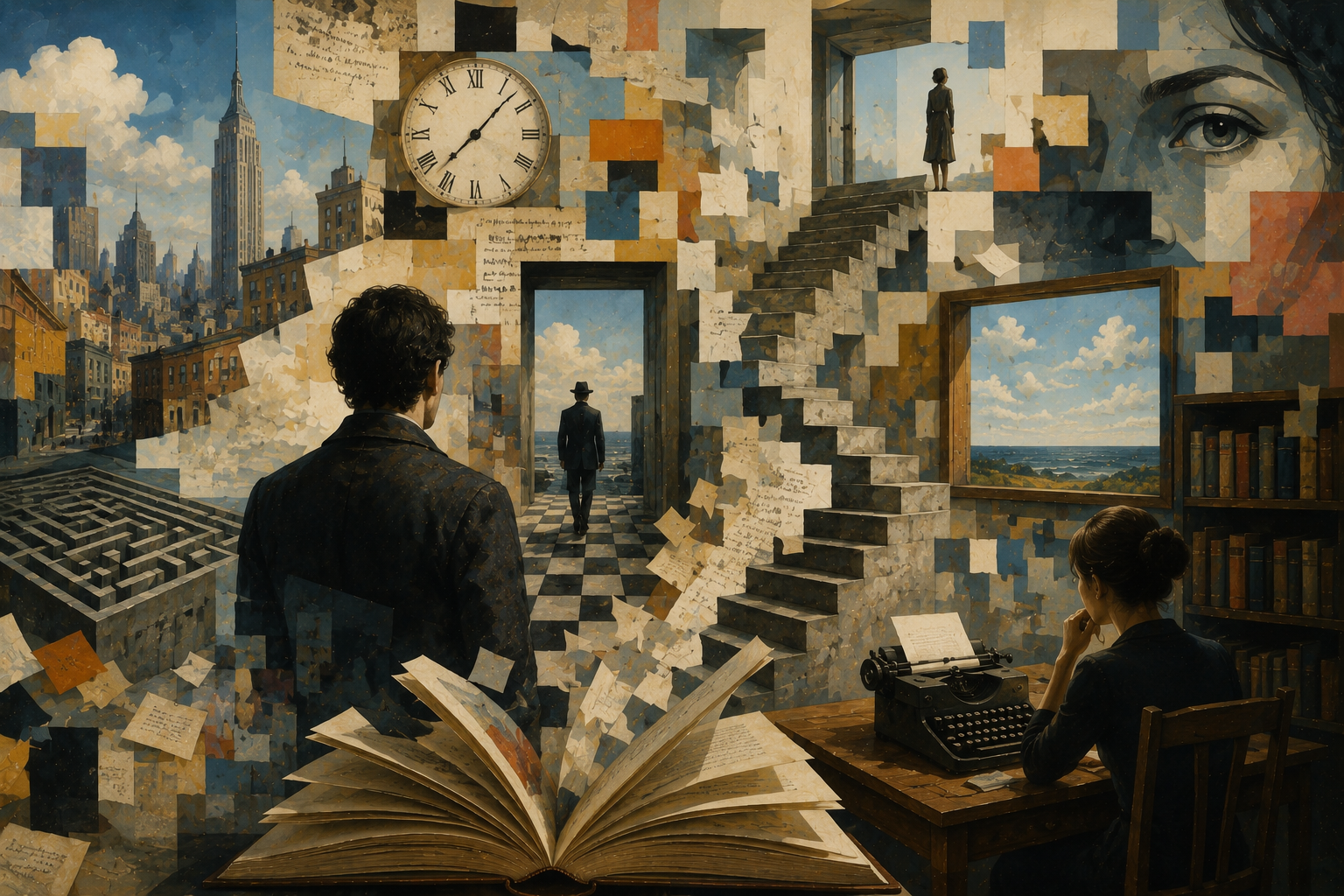
Postmodern books can feel strange at first, but their patterns are easier to spot once you know what to look for. This guide explains Common Postmodern Literary Techniques with clear examples, so students can read these texts with more confidence.
These techniques often challenge truth, order, identity, and the idea that stories must follow normal rules.
In this Guide
- What postmodern literature tries to do
- Common techniques students should know
- Examples from famous books
- How to spot these techniques while reading
- Why writers use them
- Recommended books
- FAQ
What Postmodern Literature Tries to Do
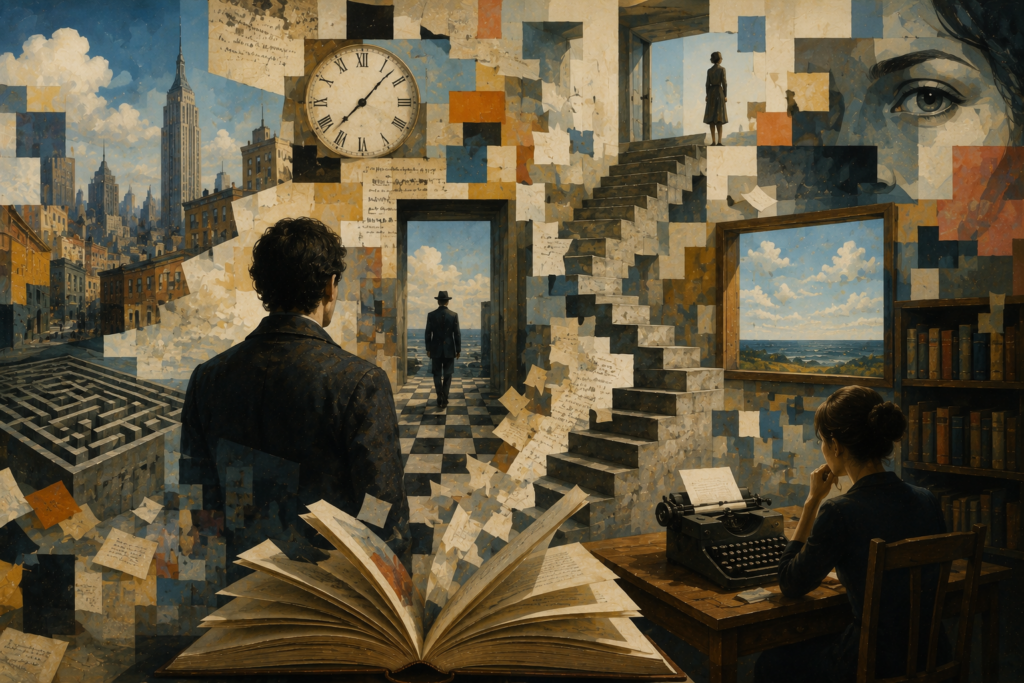
Postmodern literature questions the rules that many older stories follow.
Traditional novels often try to create a believable world. They may have a clear plot, stable characters, and a firm ending. Postmodern works often break those expectations.
Instead of giving one clear meaning, a postmodern text may offer many meanings. It may even make readers wonder if meaning can ever be fixed.
This is why Common Postmodern Literary Techniques can seem confusing at first. They are meant to make you pause and ask, “Who is telling the truth?” or “Why is this story built this way?”
For a wider background on the movement, Britannica’s overview of postmodernism is a useful place to start.
Common Postmodern Literary Techniques Students Should Know
These are the tools many postmodern writers use to disrupt normal storytelling.
Metafiction is one of the most important Common Postmodern Literary Techniques. It happens when a story calls attention to itself as a story.
For example, in Italo Calvino’s If on a winter’s night a traveler, the reader becomes part of the book. The novel keeps reminding you that you are reading a novel.
Fragmentation means the story appears in broken parts. The plot may jump between scenes, voices, or time periods.
Kurt Vonnegut’s Slaughterhouse-Five uses this technique. Billy Pilgrim’s life does not unfold in a straight line, which reflects trauma and confusion.
Intertextuality means one text refers to another text. A postmodern novel may borrow from older books, myths, pop culture, or history.
Jean Rhys’s Wide Sargasso Sea responds to Jane Eyre. It gives a new voice to Bertha Mason, a character who was pushed to the side in Charlotte Brontë’s novel.
Unreliable narration happens when the narrator cannot fully be trusted. The narrator may lie, misunderstand events, or leave out key facts.
Vladimir Nabokov’s Pale Fire uses an unreliable commentator who takes over the text. The result is funny, strange, and deeply uncertain.
Common Postmodern Literary Techniques in Famous Books
Seeing these techniques in real books makes them much easier to understand.
In Slaughterhouse-Five, Vonnegut uses time jumps, dark humor, and a broken structure. These Common Postmodern Literary Techniques help show how war damages memory and identity.
In The Things They Carried by Tim O’Brien, the line between truth and fiction becomes blurry. O’Brien tells readers that some stories may not be factual, yet they may still feel emotionally true.
In Rosencrantz and Guildenstern Are Dead by Tom Stoppard, minor characters from Hamlet become the focus. The play uses absurd humor and literary borrowing to question fate, free will, and meaning.
In The French Lieutenant’s Woman by John Fowles, the narrator breaks into the story and gives more than one possible ending. This reminds readers that novels are shaped by choices.
These examples show how Common Postmodern Literary Techniques can make a book feel playful, serious, strange, or all of those at once.









How to Spot Common Postmodern Literary Techniques While Reading
You do not need to understand everything at once. Start by noticing what feels unusual.
Ask whether the story has a clear order. If time feels broken or scenes seem out of place, the writer may use fragmentation.
Ask whether the narrator seems honest. If the narrator contradicts facts or pushes a strange version of events, you may have an unreliable narrator.
Ask whether the book refers to other works. If it echoes Shakespeare, fairy tales, myths, or popular culture, it may use intertextuality.
Ask whether the text talks about its own form. If a narrator comments on chapters, endings, authors, or readers, that is often metafiction.
If you want a stronger method for close reading, this guide on how to read literature like a scholar can help you build better habits.
Why Writers Use Common Postmodern Literary Techniques
Postmodern writers often use these tools to challenge easy answers.
Many postmodern works were shaped by war, mass media, political distrust, and rapid cultural change. Writers began to question whether old forms could still explain modern life.
That is why Common Postmodern Literary Techniques often deal with doubt. They ask whether history is reliable, whether identity is stable, and whether language can fully capture truth.
These techniques also invite readers to take an active role. You are not just following a plot. You are piecing together meaning.
This can feel hard, but it can also make the reading experience more exciting. A postmodern text often treats the reader like a co-creator.
Common Postmodern Literary Techniques and Theme
Technique and theme often work together in postmodern literature.
If a novel has a broken structure, that structure may reflect a broken world. If a narrator lies, the book may explore the limits of truth.
For example, The Things They Carried does not just use blurred truth as a trick. It uses that technique to show how memory and trauma affect storytelling.
Wide Sargasso Sea uses intertextuality to question who gets to tell a story. By rewriting part of Jane Eyre, Rhys challenges power, race, and gender in the older novel.
When you study Common Postmodern Literary Techniques, do not stop at naming them. Ask what they reveal about the book’s larger message.
Practical Takeaways for Students
Postmodern texts reward patience and careful reading.
When you read, mark moments that feel strange. A confusing scene may be the key to the whole work.
Keep track of shifts in time, voice, and structure. These details often show where the author wants your attention.
For essays, connect the technique to meaning. Do not only write, “The novel uses metafiction.” Explain how metafiction shapes the reader’s view of truth, control, or identity.
If you use Common Postmodern Literary Techniques as a study lens, difficult books become less random and more purposeful.
Recommended Books to Understand Postmodern Literature
These books offer strong examples of postmodern style and structure.
- Slaughterhouse-Five by Kurt Vonnegut
- If on a winter’s night a traveler by Italo Calvino
For poetry and literary terms, the Poetry Foundation glossary is also helpful for students.
FAQ About Common Postmodern Literary Techniques
What are Common Postmodern Literary Techniques?
They are methods writers use to challenge normal storytelling. Examples include metafiction, fragmentation, intertextuality, and unreliable narration.
Why is postmodern literature hard to read?
It often avoids clear answers. The plot may feel broken, and the narrator may not be trustworthy.
Is postmodern literature always confusing?
No. Some works are playful and funny. Others are difficult because they ask readers to question truth, history, and identity.
How do I write about postmodern techniques in an essay?
Name the technique, give a clear example, and explain its effect. Focus on how the technique supports the theme.
Key Takeaway
Common Postmodern Literary Techniques help writers question truth, structure, and meaning. Once you learn to spot them, postmodern literature becomes less confusing and much more rewarding.












