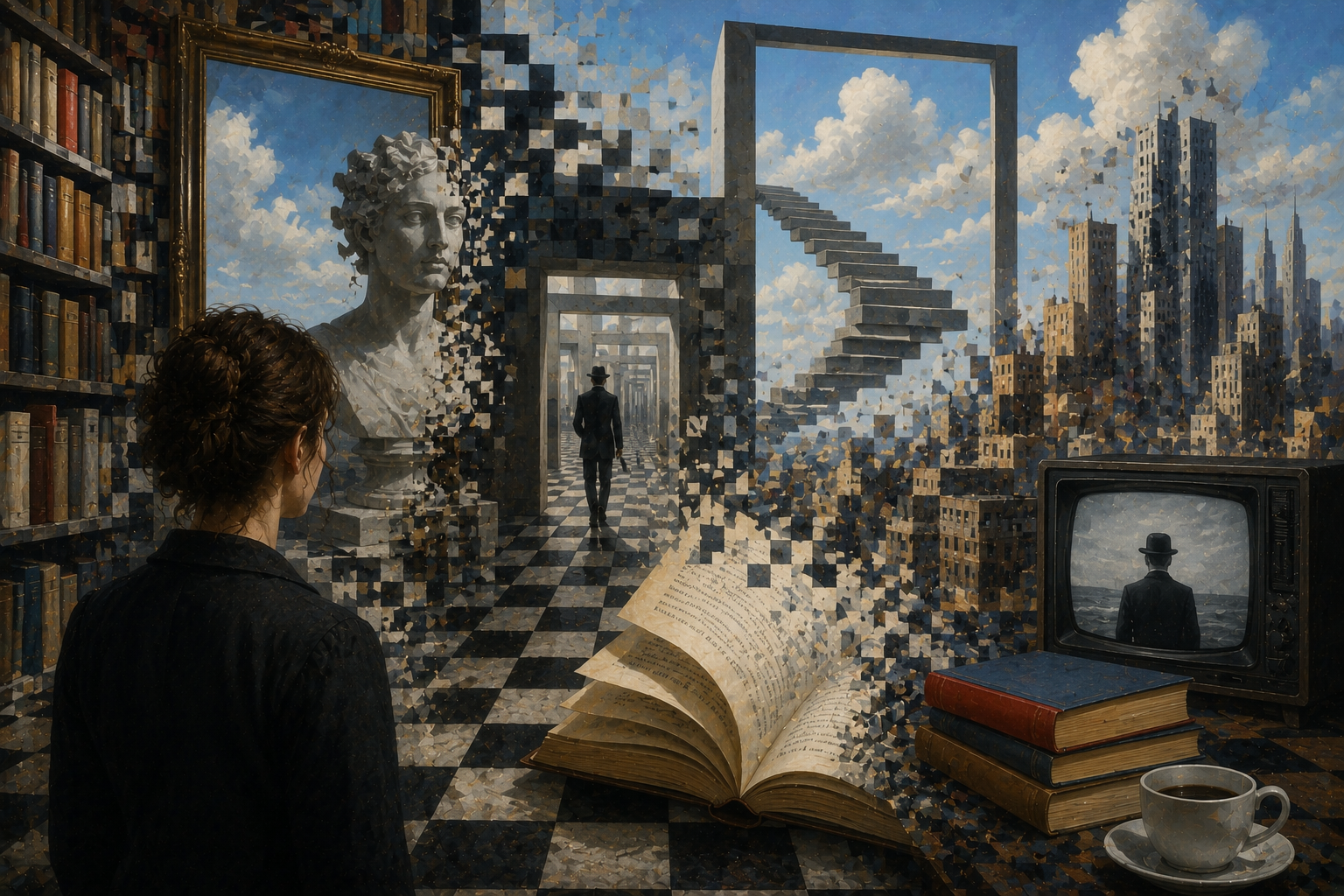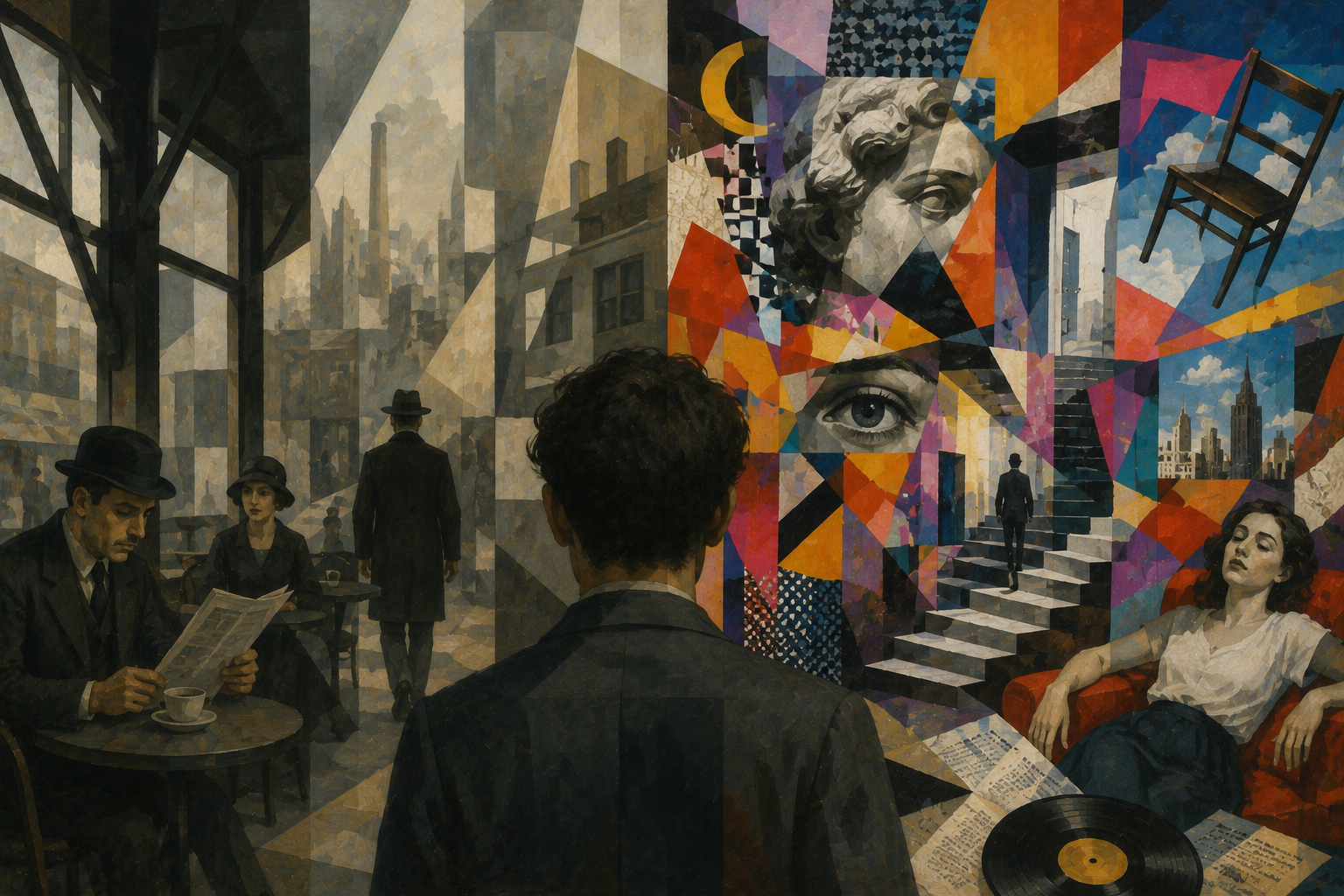
Common Postmodern Literary Techniques

Postmodern Techniques

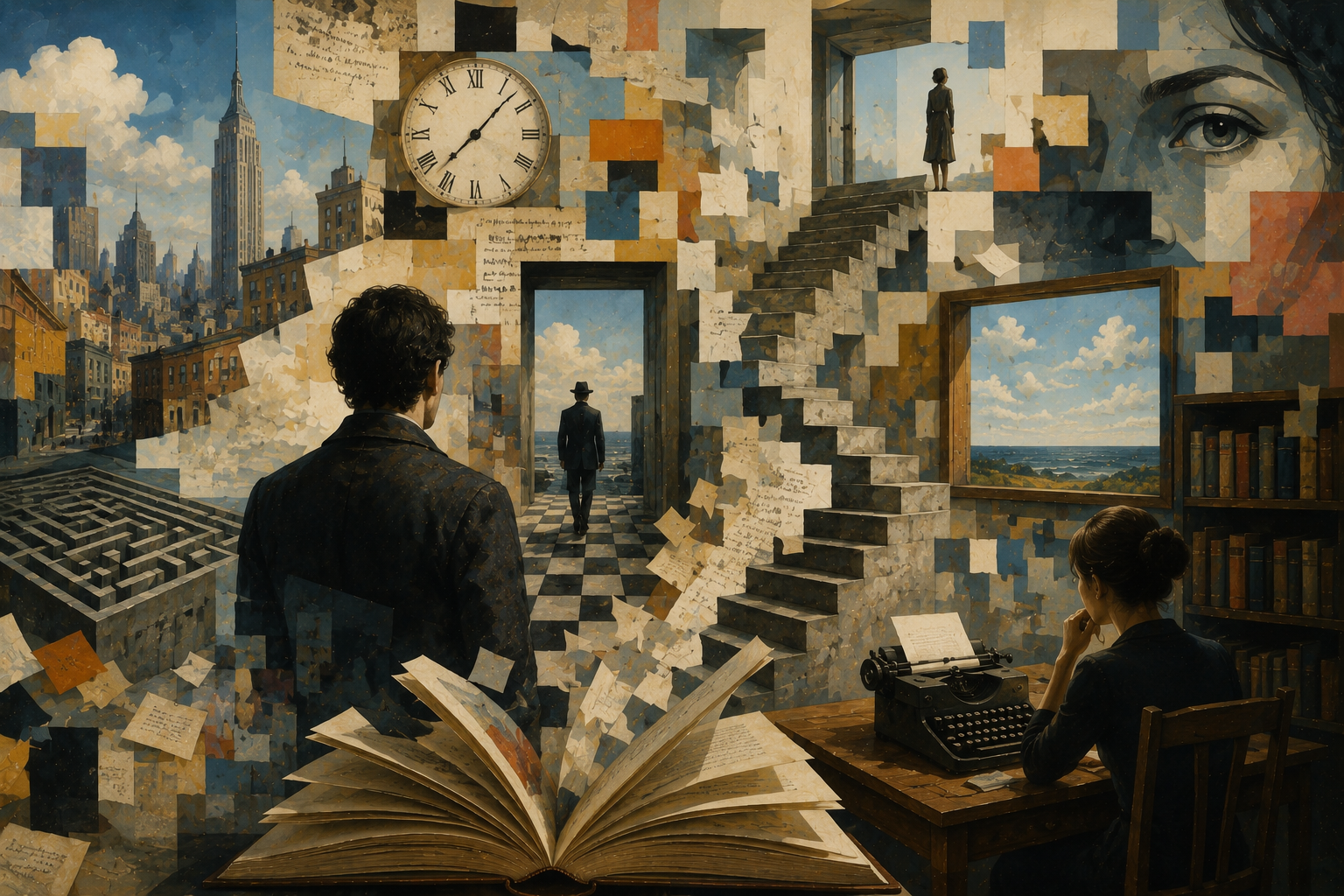
Postmodern books can feel strange at first, but their patterns are easier to spot once you know what to look for. This guide explains Common Postmodern Literary Techniques with clear examples, so students can read these texts with more confidence.

These techniques often challenge truth, order, identity, and the idea that stories must follow normal rules.

In this Guide

  • What postmodern literature tries to do
  • Common techniques students should know
  • Examples from famous books
  • How to spot these techniques while reading
  • Why writers use them
  • Recommended books
  • FAQ
Postmodern Techniques

What Postmodern Literature Tries to Do

Postmodern literature questions the rules that many older stories follow.

Traditional novels often try to create a believable world. They may have a clear plot, stable characters, and a firm ending. Postmodern works often break those expectations.

Instead of giving one clear meaning, a postmodern text may offer many meanings. It may even make readers wonder if meaning can ever be fixed.

This is why Common Postmodern Literary Techniques can seem confusing at first. They are meant to make you pause and ask, “Who is telling the truth?” or “Why is this story built this way?”

For a wider background on the movement, Britannica’s overview of postmodernism is a useful place to start.

Common Postmodern Literary Techniques Students Should Know

These are the tools many postmodern writers use to disrupt normal storytelling.

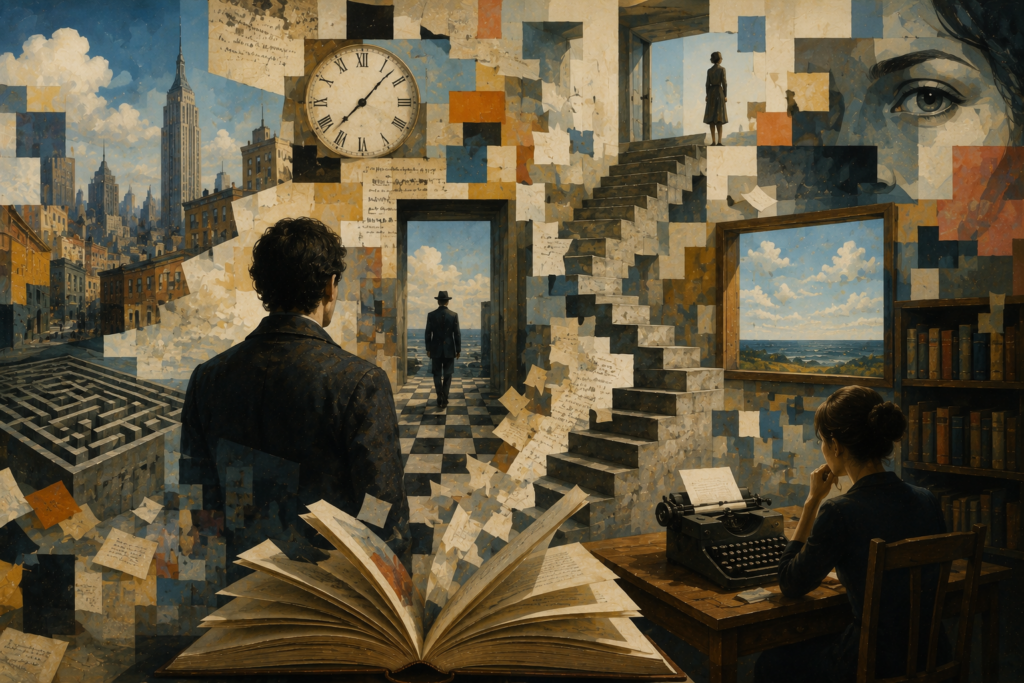
Metafiction is one of the most important Common Postmodern Literary Techniques. It happens when a story calls attention to itself as a story.

For example, in Italo Calvino’s If on a winter’s night a traveler, the reader becomes part of the book. The novel keeps reminding you that you are reading a novel.

Fragmentation means the story appears in broken parts. The plot may jump between scenes, voices, or time periods.

Kurt Vonnegut’s Slaughterhouse-Five uses this technique. Billy Pilgrim’s life does not unfold in a straight line, which reflects trauma and confusion.

Intertextuality means one text refers to another text. A postmodern novel may borrow from older books, myths, pop culture, or history.

Jean Rhys’s Wide Sargasso Sea responds to Jane Eyre. It gives a new voice to Bertha Mason, a character who was pushed to the side in Charlotte Brontë’s novel.

Unreliable narration happens when the narrator cannot fully be trusted. The narrator may lie, misunderstand events, or leave out key facts.

Vladimir Nabokov’s Pale Fire uses an unreliable commentator who takes over the text. The result is funny, strange, and deeply uncertain.

Common Postmodern Literary Techniques in Famous Books

Seeing these techniques in real books makes them much easier to understand.

In Slaughterhouse-Five, Vonnegut uses time jumps, dark humor, and a broken structure. These Common Postmodern Literary Techniques help show how war damages memory and identity.

In The Things They Carried by Tim O’Brien, the line between truth and fiction becomes blurry. O’Brien tells readers that some stories may not be factual, yet they may still feel emotionally true.

In Rosencrantz and Guildenstern Are Dead by Tom Stoppard, minor characters from Hamlet become the focus. The play uses absurd humor and literary borrowing to question fate, free will, and meaning.

In The French Lieutenant’s Woman by John Fowles, the narrator breaks into the story and gives more than one possible ending. This reminds readers that novels are shaped by choices.

These examples show how Common Postmodern Literary Techniques can make a book feel playful, serious, strange, or all of those at once.

image-slider-with-thumbnail1.jpeg
PlayPause
previous arrow
next arrow
image-slider-with-thumbnail1.jpeg
image-slider-with-thumbnail3.jpeg
image-slider-with-thumbnail4.jpeg
ChatGPT Image Jun 27, 2026, 06_33_13 PM
ChatGPT Image Jun 27, 2026, 06_36_37 PM
ChatGPT Image Jun 27, 2026, 06_38_39 PM
ChatGPT Image Jun 27, 2026, 06_31_22 PM
image-slider-with-thumbnail7.jpeg
ChatGPT Image Jun 27, 2026, 06_29_43 PM
ChatGPT Image Jun 27, 2026, 06_27_44 PM
image-slider-with-thumbnail6.jpeg
ChatGPT Image Jun 27, 2026, 06_15_07 PM
image-slider-with-thumbnail5.jpeg
ChatGPT Image Jun 27, 2026, 06_22_43 PM
ChatGPT Image Jun 27, 2026, 06_25_37 PM
ChatGPT Image Jun 27, 2026, 06_19_43 PM
ChatGPT Image Jun 27, 2026, 06_12_00 PM
ChatGPT Image Jun 27, 2026, 06_08_50 PM
ChatGPT Image Jun 26, 2026, 04_54_23 PM
ChatGPT Image Jun 27, 2026, 05_53_51 PM
ChatGPT Image Jun 28, 2026, 08_35_55 AM
previous arrow
next arrow

How to Spot Common Postmodern Literary Techniques While Reading

You do not need to understand everything at once. Start by noticing what feels unusual.
Ask whether the story has a clear order. If time feels broken or scenes seem out of place, the writer may use fragmentation.

Ask whether the narrator seems honest. If the narrator contradicts facts or pushes a strange version of events, you may have an unreliable narrator.

Ask whether the book refers to other works. If it echoes Shakespeare, fairy tales, myths, or popular culture, it may use intertextuality.

Ask whether the text talks about its own form. If a narrator comments on chapters, endings, authors, or readers, that is often metafiction.

If you want a stronger method for close reading, this guide on how to read literature like a scholar can help you build better habits.

Why Writers Use Common Postmodern Literary Techniques

Postmodern writers often use these tools to challenge easy answers.

Many postmodern works were shaped by war, mass media, political distrust, and rapid cultural change. Writers began to question whether old forms could still explain modern life.

That is why Common Postmodern Literary Techniques often deal with doubt. They ask whether history is reliable, whether identity is stable, and whether language can fully capture truth.

These techniques also invite readers to take an active role. You are not just following a plot. You are piecing together meaning.

This can feel hard, but it can also make the reading experience more exciting. A postmodern text often treats the reader like a co-creator.

Common Postmodern Literary Techniques and Theme

Technique and theme often work together in postmodern literature.

If a novel has a broken structure, that structure may reflect a broken world. If a narrator lies, the book may explore the limits of truth.

For example, The Things They Carried does not just use blurred truth as a trick. It uses that technique to show how memory and trauma affect storytelling.

Wide Sargasso Sea uses intertextuality to question who gets to tell a story. By rewriting part of Jane Eyre, Rhys challenges power, race, and gender in the older novel.

When you study Common Postmodern Literary Techniques, do not stop at naming them. Ask what they reveal about the book’s larger message.

Practical Takeaways for Students

Postmodern texts reward patience and careful reading.

When you read, mark moments that feel strange. A confusing scene may be the key to the whole work.

Keep track of shifts in time, voice, and structure. These details often show where the author wants your attention.

For essays, connect the technique to meaning. Do not only write, “The novel uses metafiction.” Explain how metafiction shapes the reader’s view of truth, control, or identity.

If you use Common Postmodern Literary Techniques as a study lens, difficult books become less random and more purposeful.

These books offer strong examples of postmodern style and structure.

  • Slaughterhouse-Five by Kurt Vonnegut
  • If on a winter’s night a traveler by Italo Calvino

For poetry and literary terms, the Poetry Foundation glossary is also helpful for students.

FAQ About Common Postmodern Literary Techniques

What are Common Postmodern Literary Techniques?

They are methods writers use to challenge normal storytelling. Examples include metafiction, fragmentation, intertextuality, and unreliable narration.

Why is postmodern literature hard to read?

It often avoids clear answers. The plot may feel broken, and the narrator may not be trustworthy.

Is postmodern literature always confusing?

No. Some works are playful and funny. Others are difficult because they ask readers to question truth, history, and identity.

How do I write about postmodern techniques in an essay?

Name the technique, give a clear example, and explain its effect. Focus on how the technique supports the theme.

Key Takeaway

Common Postmodern Literary Techniques help writers question truth, structure, and meaning. Once you learn to spot them, postmodern literature becomes less confusing and much more rewarding.

What Is Postmodern Literature?

what is postmodern literature

What Is Postmodern Literature? It is a style of writing that questions truth, plays with form, and reminds readers that stories are built by authors.

If that sounds strange, that is the point. Postmodern books often feel playful, confusing, funny, or even broken on purpose.

In this Guide

  • What postmodern literature means
  • Why it matters
  • Common features to notice
  • Famous examples
  • Books to read next
  • FAQ and key takeaway
what is postmodern literature

What Is Postmodern Literature? A Simple Definition

Postmodern literature is fiction that challenges the usual rules of storytelling.

In a traditional novel, the plot often moves in a clear order. The narrator may seem trustworthy. The story may try to show one clear meaning.

Postmodern literature does not always work that way. It may jump around in time, break the fourth wall, mix fact with fiction, or make the reader question what is real.

So, What Is Postmodern Literature? At its core, it is literature that asks, “Can we really trust stories, language, or even our own view of the world?”

What Is Postmodern Literature? Why It Matters

Postmodern literature matters because it reflects a world that often feels uncertain.

After wars, mass media, political conflict, and rapid technology shifts, many writers began to doubt simple answers. They wanted fiction to show confusion rather than hide it.

This style helps readers think harder about truth. It asks who gets to tell a story and whose voice has been left out.

For students, What Is Postmodern Literature? is more than a definition. It is a way to read books that seem strange at first but have deep meaning under the surface.

Common Features of Postmodern Literature

Postmodern books often call attention to the fact that they are books.

One common feature is metafiction. This happens when a story talks about itself as a story. A narrator might speak to the reader or point out that the plot is made up.

Another feature is a broken timeline. The story may move back and forth instead of following one straight path.

Postmodern writers also love irony. They may treat serious topics with dark humor or mix high culture with pop culture.

You may also see many voices in one book. This can make the reader work harder, but it can also show how truth changes from person to person.

image-slider-with-thumbnail1.jpeg
PlayPause
previous arrow
next arrow
image-slider-with-thumbnail1.jpeg
image-slider-with-thumbnail3.jpeg
image-slider-with-thumbnail4.jpeg
ChatGPT Image Jun 27, 2026, 06_33_13 PM
ChatGPT Image Jun 27, 2026, 06_36_37 PM
ChatGPT Image Jun 27, 2026, 06_38_39 PM
ChatGPT Image Jun 27, 2026, 06_31_22 PM
image-slider-with-thumbnail7.jpeg
ChatGPT Image Jun 27, 2026, 06_29_43 PM
ChatGPT Image Jun 27, 2026, 06_27_44 PM
image-slider-with-thumbnail6.jpeg
ChatGPT Image Jun 27, 2026, 06_15_07 PM
image-slider-with-thumbnail5.jpeg
ChatGPT Image Jun 27, 2026, 06_22_43 PM
ChatGPT Image Jun 27, 2026, 06_25_37 PM
ChatGPT Image Jun 27, 2026, 06_19_43 PM
ChatGPT Image Jun 27, 2026, 06_12_00 PM
ChatGPT Image Jun 27, 2026, 06_08_50 PM
ChatGPT Image Jun 26, 2026, 04_54_23 PM
ChatGPT Image Jun 27, 2026, 05_53_51 PM
ChatGPT Image Jun 28, 2026, 08_35_55 AM
previous arrow
next arrow

What Is Postmodern Literature? Examples You May Recognize

The best way to understand postmodern literature is to see it in action.

Slaughterhouse-Five by Kurt Vonnegut is a famous example. The novel moves through time in a strange way as Billy Pilgrim becomes “unstuck in time.” It uses science fiction to talk about war and trauma.

The Crying of Lot 49 by Thomas Pynchon is another key text. It follows a woman who may have found a secret system, or may just be seeing patterns that are not there.

Pale Fire by Vladimir Nabokov is built around a poem and a strange commentary. The form itself becomes part of the mystery.

House of Leaves by Mark Z. Danielewski uses unusual page layouts and layered stories. The physical book becomes part of the reading experience.

Each of these books helps answer the question What Is Postmodern Literature? by showing how writers can bend form to create meaning.

Postmodern Literature vs. Modern Literature

Modern literature and postmodern literature are related, but they are not the same.

Modern literature often shows characters who feel lost in a changing world. Writers such as James Joyce and Virginia Woolf used new forms to explore the mind.

Postmodern literature goes a step further. It questions whether a story can ever show a full truth at all.

A modernist novel may search for meaning in chaos. A postmodern novel may ask if meaning is something we create as we read.

Why Postmodern Literature Can Feel Confusing

If postmodern literature feels hard, you are not alone.

These books often refuse to explain everything. They may leave gaps, contradictions, or unanswered questions.

That does not mean you are reading them wrong. In many cases, the confusion is part of the design.

When students ask, What Is Postmodern Literature?, one helpful answer is this: it is literature that makes you notice how you read.

If you want a stronger method for close reading, try this guide on how to read literature like a scholar.

Helpful Books to Read

If you want to explore postmodern literature, start with books that are famous but still readable.

  • Slaughterhouse-Five by Kurt Vonnegut
  • The Crying of Lot 49 by Thomas Pynchon

For background, you can also read Britannica’s overview of postmodernism. The Poetry Foundation is also useful for learning how modern and postmodern styles affect poetry.

Practical Tip for Reading Postmodern Literature

Do not try to solve the whole book at once.
Instead, track one pattern. Notice repeated images, odd structure, narrator problems, or moments when the book talks about storytelling.

Ask this simple question as you read: Why did the author choose this strange form?

That question can help you turn confusion into analysis. It also connects well with scholarly reading habits.

FAQ: What Is Postmodern Literature?

What Is Postmodern Literature in simple terms?

Postmodern literature is writing that questions truth, breaks normal story rules, and makes readers think about how stories are made.

What is the main goal of postmodern literature?

Its main goal is often to challenge easy answers. It asks readers to think about truth, power, language, and point of view.

Is postmodern literature always confusing?

No, but it can be. Many postmodern books use confusion on purpose to show how messy life and truth can feel.

What is a good first postmodern novel?

Slaughterhouse-Five by Kurt Vonnegut is a strong starting point because it is short, powerful, and easier to follow than many postmodern novels.

Key Takeaway

What Is Postmodern Literature? It is literature that questions the rules of stories and asks readers to think harder about truth. If a book feels strange, start by asking what that strange form helps the author reveal.

Modernism vs Postmodernism Explained

Modernism vs Postmodernism

Modernism vs Postmodernism Explained can sound harder than it is. Both movements ask big questions about truth, identity, and art, but they answer those questions in very different ways.

This guide breaks the difference down in plain language, with examples from literature you may see in high school, AP Literature, or college.

In this Guide

  • Modernism in plain language
  • Postmodernism in plain language
  • The main difference between the two
  • Style and structure in famous texts
  • Themes to watch for in analysis
  • Books to read next
  • FAQ

Modernism vs Postmodernism Explained in One Simple Idea

The easiest way to see the difference is to look at how each movement treats meaning.

Modernism often shows a world that feels broken, confusing, or lonely. Still, modernist writers often search for meaning inside that broken world.

Postmodernism also shows a confusing world, but it is less sure that one stable meaning exists at all. It often treats truth as slippery, playful, or shaped by culture.

At its heart, Modernism vs Postmodernism Explained means this: modernism searches for order after chaos, while postmodernism questions whether order was ever real.

What Is Modernism?

Modernism was a major literary movement in the late 1800s and early 1900s.

It grew out of a world changed by war, cities, science, and new ideas about the mind. Many writers felt that older forms of art could not explain modern life.

Modernist literature often feels fragmented. A novel may jump between thoughts, memories, and moments instead of moving in a straight line.

Virginia Woolf’s Mrs Dalloway is a strong example. The novel moves through one day in London, but it also enters the private thoughts of its characters.

T.S. Eliot’s poem The Waste Land is another famous modernist text. It uses broken images, many voices, and references to older works to show a culture in crisis.

For more background, Britannica offers a helpful overview of Modernism in the arts.

What Is Postmodernism?

Postmodernism became more visible after World War II.

Postmodern writers often distrust grand explanations. They may question history, identity, language, and even the idea of the “serious” novel.

Postmodern texts often call attention to themselves as made-up stories. A narrator may speak directly to the reader, break the rules, or remind us that fiction is fiction.

Kurt Vonnegut’s Slaughterhouse-Five is a clear example. It mixes war, science fiction, humor, and trauma in a way that refuses a neat message.

Thomas Pynchon’s The Crying of Lot 49 also fits the postmodern style. The main character tries to solve a mystery, but the truth keeps slipping away.

The Poetry Foundation has a useful entry on Postmodernism in literary culture.

Modernism vs Postmodernism Explained Through Literary Style

Style is one of the best ways to tell these movements apart.

Modernist writers break old forms because they want to show the pressure of modern life. Their work can feel difficult, but the difficulty often points toward a serious search for truth.

Postmodern writers also break forms, but often with irony or play. They may mix genres, parody older works, or reject the idea of a single “correct” reading.

Modernism vs Postmodernism Explained helps you spot why a strange structure matters. In modernism, the broken form often shows inner crisis. In postmodernism, the broken form often questions the whole idea of stable meaning.

Think of James Joyce’s Ulysses. It uses stream of consciousness, myth, and shifting style to turn one ordinary day into something vast.

Now think of Italo Calvino’s If on a winter’s night a traveler. The book keeps starting new stories and reminds you that you are reading a book. That self-aware style is very postmodern.

Modernism vs Postmodernism Explained with Major Themes

The themes overlap, but the attitude is different.

Modernist literature often explores alienation, loss, memory, and the search for meaning. Characters may feel cut off from society or even from themselves.

In The Great Gatsby, F. Scott Fitzgerald shows the failure of the American Dream. The novel feels modernist because it presents beauty, longing, and collapse in the same world.

Postmodern literature often explores uncertainty, media, consumer culture, and unstable identity. It may ask whether truth has been replaced by images, stories, and systems.

Don DeLillo’s White Noise is a useful example. The novel looks at fear, advertising, death, and modern media with a strange comic tone.

Use Modernism vs Postmodernism Explained as a lens. Ask whether the text mourns the loss of meaning or laughs at the idea that meaning was ever simple.

How to Use Modernism vs Postmodernism Explained in Analysis

The distinction becomes most useful when you connect it to evidence.
Do not just label a book “modernist” or “postmodernist.” Instead, point to a passage, a structure, a narrator, or a repeated image.

For example, if a poem uses fragments, ask what those fragments do. Do they show a damaged culture that still seeks renewal? That leans modernist.

If a novel mocks its own plot or makes the reader doubt every clue, ask what that doubt means. That often points toward postmodernism.

Modernism vs Postmodernism Explained works best when it helps you make a claim about how the text creates meaning.

If you want a stronger method for close reading, check out our guide on how to read literature with deeper attention.

Quick Comparison: Modernism and Postmodernism

Here is a simple way to keep the difference clear.

Category Modernism Postmodernism
View of meaning Meaning is hard to find, but worth seeking. Meaning may be unstable or invented.
Tone Serious, anxious, often tragic. Ironic, playful, often skeptical.
Structure Fragmented to show inner or social crisis. Fragmented to question story, truth, and form.
Common method Stream of consciousness, myth, symbolism. Parody, self-reference, genre mixing.
Typical question How can we make meaning in a broken world? Who decides what meaning counts?

Common Literature Examples

These examples can help you place the movements in context.

Modernist works often include Mrs Dalloway by Virginia Woolf, The Waste Land by T.S. Eliot, and Ulysses by James Joyce.
Postmodern works often include Slaughterhouse-Five by Kurt Vonnegut, White Noise by Don DeLillo, and The Crying of Lot 49 by Thomas Pynchon.

Some books do not fit one label perfectly. That is normal. Literary periods overlap, and writers often borrow from more than one style.
Books to Read Next

If you want to see the difference in action, try these books.
  • Mrs Dalloway by Virginia Woolf
  • Slaughterhouse-Five by Kurt Vonnegut
  • White Noise by Don DeLillo

Read a few pages from each and notice the narrator, structure, and tone. You will start to feel the difference quickly.

FAQ

What is the main difference between modernism and postmodernism?

Modernism searches for meaning in a broken world. Postmodernism questions whether stable meaning exists at all.

Why is Modernism vs Postmodernism Explained important for students?

It helps students move beyond plot summary. The difference gives you a way to analyze structure, tone, and theme.

Is The Great Gatsby modernist?

Yes, it is often read as a modernist novel. It shows disillusionment, loss, and the collapse of a dream.

Is postmodernism always funny?

No. Postmodern works can be dark or serious, but they often use irony, parody, or play to make their point.

Can one book be both modernist and postmodern?

Some books share traits from both. Labels are tools, not strict boxes.

Key Takeaway

Modernism vs Postmodernism Explained comes down to one key idea: modernism tries to find meaning after the old world breaks, while postmodernism asks who created that meaning in the first place.

image-slider-with-thumbnail1.jpeg
PlayPause
previous arrow
next arrow
image-slider-with-thumbnail1.jpeg
image-slider-with-thumbnail3.jpeg
image-slider-with-thumbnail4.jpeg
ChatGPT Image Jun 27, 2026, 06_33_13 PM
ChatGPT Image Jun 27, 2026, 06_36_37 PM
ChatGPT Image Jun 27, 2026, 06_38_39 PM
ChatGPT Image Jun 27, 2026, 06_31_22 PM
image-slider-with-thumbnail7.jpeg
ChatGPT Image Jun 27, 2026, 06_29_43 PM
ChatGPT Image Jun 27, 2026, 06_27_44 PM
image-slider-with-thumbnail6.jpeg
ChatGPT Image Jun 27, 2026, 06_15_07 PM
image-slider-with-thumbnail5.jpeg
ChatGPT Image Jun 27, 2026, 06_22_43 PM
ChatGPT Image Jun 27, 2026, 06_25_37 PM
ChatGPT Image Jun 27, 2026, 06_19_43 PM
ChatGPT Image Jun 27, 2026, 06_12_00 PM
ChatGPT Image Jun 27, 2026, 06_08_50 PM
ChatGPT Image Jun 26, 2026, 04_54_23 PM
ChatGPT Image Jun 27, 2026, 05_53_51 PM
ChatGPT Image Jun 28, 2026, 08_35_55 AM
previous arrow
next arrow
error

Enjoy this article? Please spread the word :)

Follow by Email
BLUESKY
fb-share-icon
Reddit
LinkedIn
Share
RSS