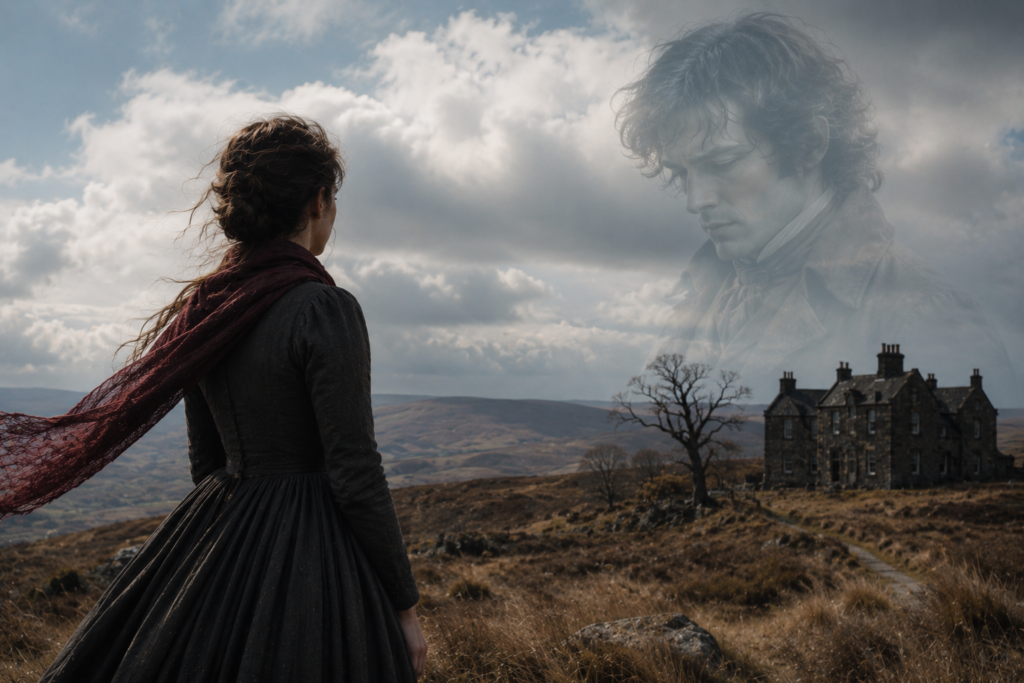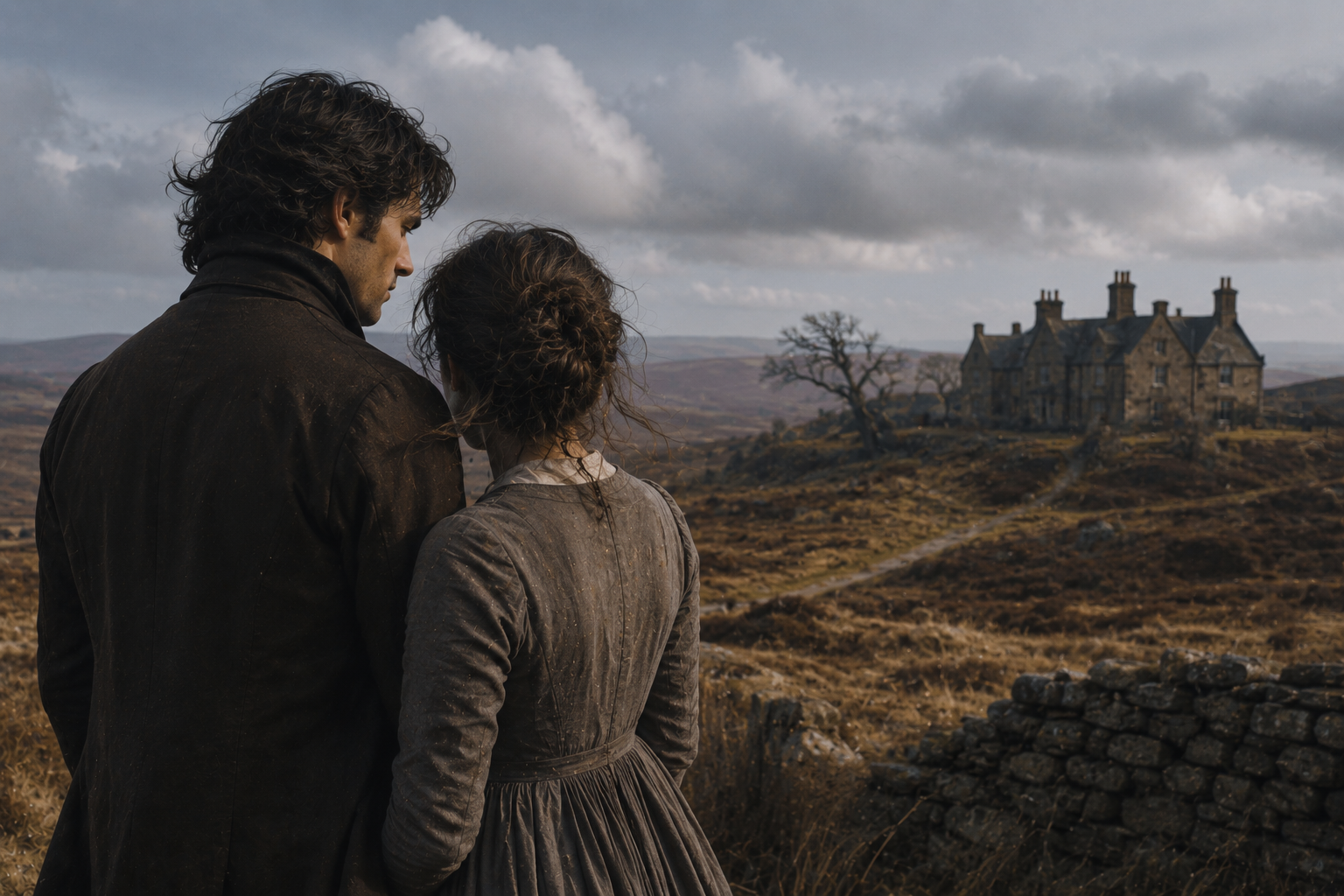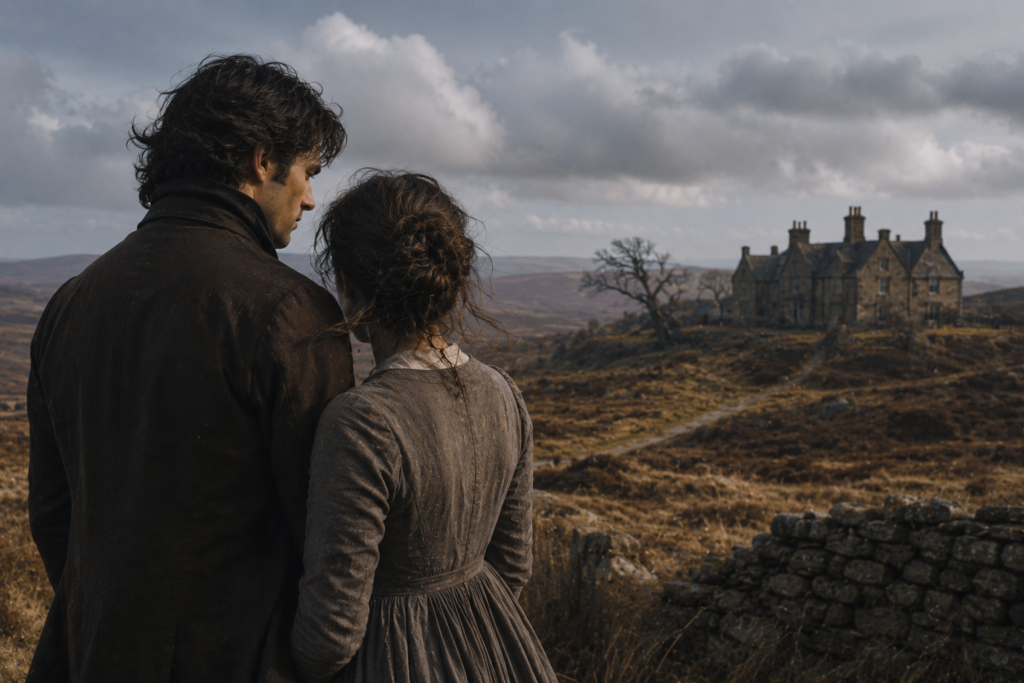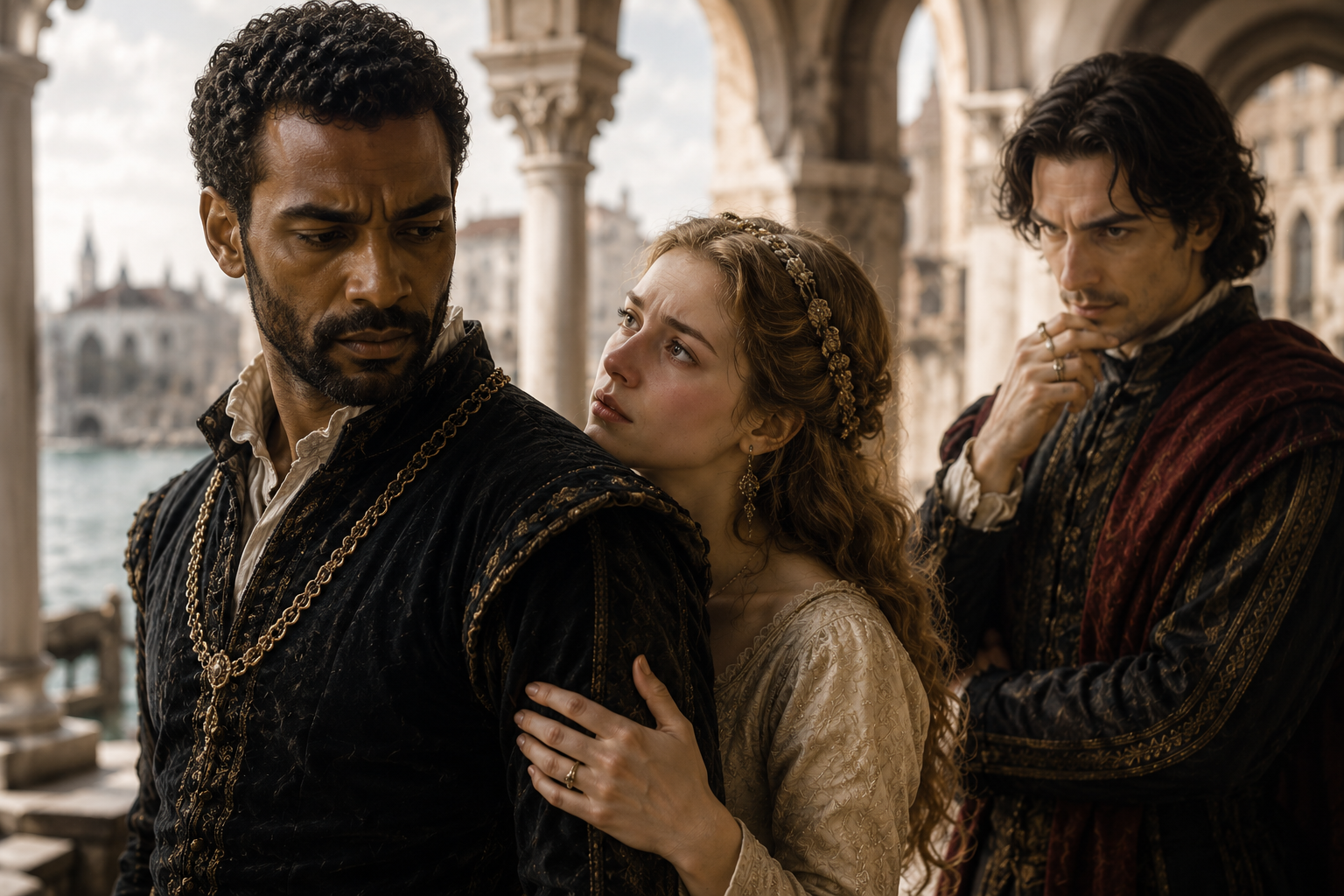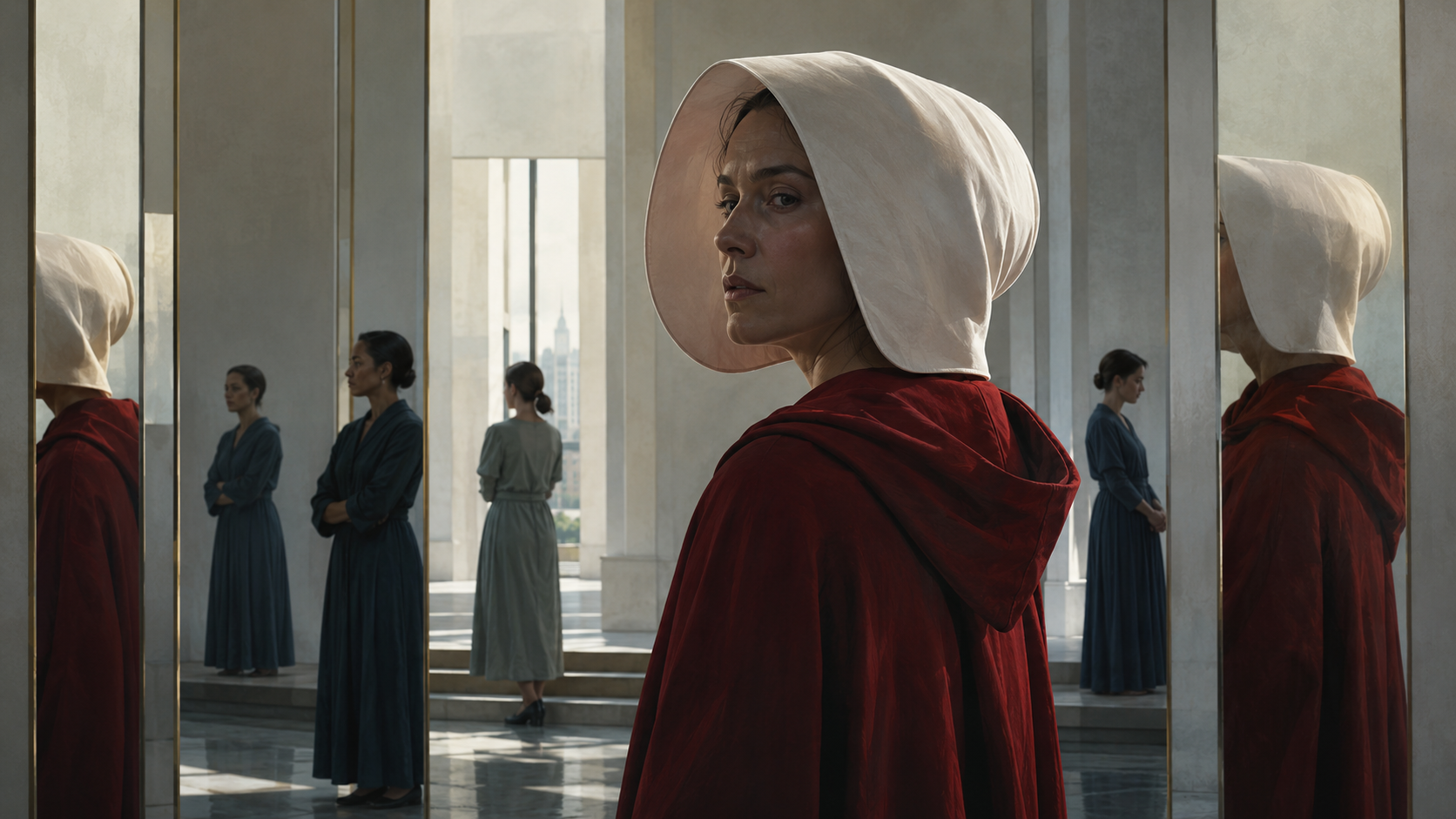
The Handmaid’s Tale character analysis: Key People and Conflicts

Handmaid’s Tale character analysis

A practical breakdown of the main characters and how their choices shape the story.

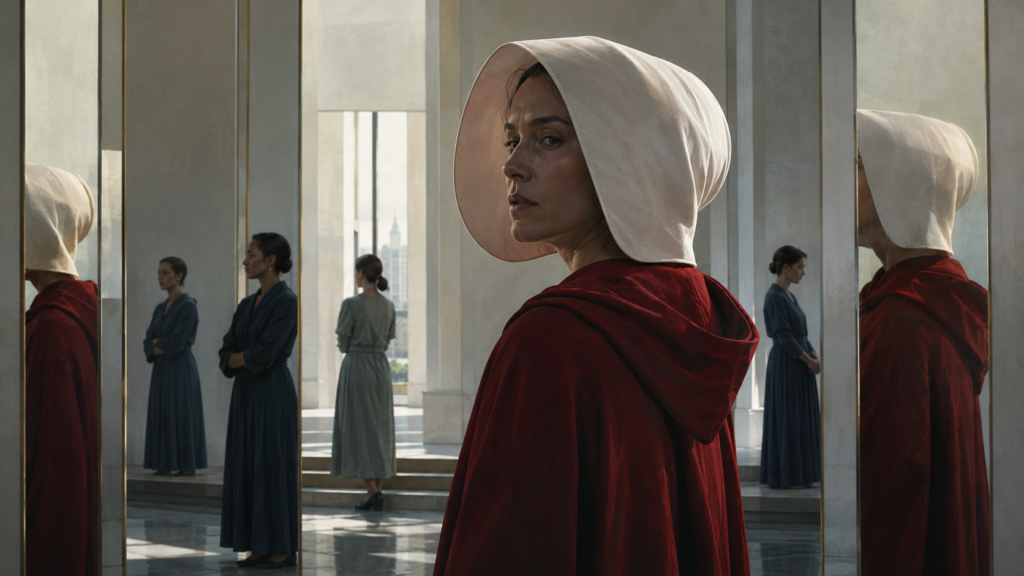
The Handmaid’s Tale character analysis is easier when you study each person’s choices and fears. Margaret Atwood shows how people act under pressure, and those actions shape the novel’s deepest conflicts.

This guide is useful for class posts, essays, and quote-based analysis.

In this Guide

  • Why character analysis matters in the novel
  • Offred’s role and inner conflict
  • Serena Joy’s power and pain
  • The Commander’s control
  • Moira and Ofglen as forms of resistance
  • Nick’s mystery and risk
  • How to use this analysis in essays
  • Books to read next
  • FAQ
Handmaid’s Tale character analysis

Why The Handmaid’s Tale character analysis matters

Characters in this novel reveal how Gilead controls the body, the mind, and even memory.

A strong The Handmaid’s Tale character analysis looks past plot summary. It asks why a person obeys, rebels, stays silent, or takes a risk.

Gilead is built on fear. Because of that, small choices can carry huge meaning. A glance, a hidden word, or a secret meeting can become an act of power.

If you want a step-by-step method, this guide on how to analyze characters in literature can help you build stronger claims.

The Handmaid’s Tale character analysis: Offred

Offred is the center of the novel, but she is not a simple hero.

Offred’s main conflict is between survival and resistance. She wants to live, but she also wants to remember who she was before Gilead took her name, family, and freedom.

Her real name is hidden from the reader. That choice matters. It shows how Gilead tries to erase identity, but it also keeps part of Offred private and protected.

Offred’s memory is one of her strongest tools. She remembers her mother, Luke, her daughter, and Moira. These memories hurt her, but they also prove that Gilead has not fully owned her mind.

Like Winston Smith in George Orwell’s 1984, Offred lives under a system that watches and punishes. Yet Offred’s voice feels more personal and uncertain. She does not always know what is safe, or what she truly believes.

In a The Handmaid’s Tale character analysis, Offred works best as a study of quiet resistance. She may not lead a public revolt, but she keeps a self alive inside a system made to destroy it.

Serena Joy: Power, loss, and bitterness

Serena Joy shows how a person can support a system that later traps her.

Before Gilead, Serena helped promote ideas that pushed women out of public life. After Gilead takes power, she lives inside the limits she helped create.

That irony makes her one of the novel’s most painful characters. She has status in the Commander’s home, but she lacks real freedom. She can command Offred in some ways, yet she cannot control her own future.

Serena’s treatment of Offred is often cruel. Still, Atwood does not make her flat. Her anger comes from power, but also from grief and shame.

A useful The Handmaid’s Tale character analysis of Serena should avoid calling her only a villain. She is part victim and part oppressor, which makes her moral position hard to ignore.

The Handmaid’s Tale character analysis: The Commander

The Commander represents the calm face of a brutal system.

He has power, comfort, and choice. Offred does not. That difference drives the tension in their secret meetings.

The Commander breaks rules by inviting Offred to play Scrabble and read banned material. At first, this may seem human. Yet his kindness is not equal. He controls the space, the risk, and the reward.

His need to feel liked makes him dangerous in a quiet way. He wants Offred to see him as different from Gilead, even though he benefits from it.

In The Handmaid’s Tale character analysis, the Commander is important because he shows how power can hide behind politeness. He does not need to shout to harm others.

From Idea to Novel Blueprint

Moira and Ofglen: Resistance in different forms

Moira and Ofglen help readers see that resistance is not only one thing.

Moira is bold, direct, and sharp. She refuses to accept Gilead’s rules, and her escape from the Red Center makes her a symbol of courage for Offred.

Yet Moira’s later life at Jezebel’s complicates that image. She is alive, but she seems worn down. This does not make her weak. It shows how hard it is to stay brave in a system built to crush people.

Ofglen’s resistance is more secret. She appears careful and quiet, but she is part of Mayday. Her courage depends on trust, code, and risk.

Moira resists with open defiance. Ofglen resists through hidden action. Together, they help readers see the cost of rebellion.

Nick: Trust, doubt, and emotional conflict

Nick is one of the hardest characters to judge because the reader knows him through Offred’s limited view.

He may be part of the Eyes, the secret police of Gilead. He may also help Offred escape. Atwood lets that doubt stay alive.

Nick matters because he gives Offred a sense of desire and comfort. Their relationship is risky, but it also reminds her that she is more than her assigned role.

Still, Nick’s mystery should not be ignored. In an essay, you can argue that he represents both hope and danger. Offred wants to trust him, but Gilead makes trust unsafe.

How conflicts shape the characters

The novel’s strongest conflicts are moral, personal, and political.

Offred faces the conflict between safety and truth. Serena faces the conflict between status and suffering. The Commander faces the gap between what he says and what he does.

These conflicts make the novel feel real. People do not always act with clear courage. Many adapt, excuse themselves, or choose silence.

This is where The Handmaid’s Tale character analysis becomes powerful. It helps you explain how Atwood links private fear to public control.

For background on the novel and its place in modern literature, see this Britannica overview of The Handmaid’s Tale.

How to use this The Handmaid’s Tale character analysis in essays

Good essays do not just name traits. They prove how a character changes the meaning of the story.

Start with a clear claim. For example, you might argue that Offred’s memories are a form of resistance because they protect her identity.

Then choose a short quote that shows the idea. Explain the words closely. Do not let the quote speak for itself.

You can also compare characters. Serena and Offred are both trapped by Gilead, but they do not hold the same power. That difference can lead to a strong paragraph about guilt and survival.

If you want more context, these books pair well with The Handmaid’s Tale character analysis.

  • The Testaments by Margaret Atwood
  • 1984 by George Orwell

Both books explore power and fear. They also help students compare how dystopian worlds shape character choices.

FAQ

These quick answers can help with study notes and class prep.

Who is the most important character in The Handmaid’s Tale?

Offred is the most important character because readers see Gilead through her memories, fears, and choices.

Is Serena Joy a villain?

Serena is an oppressor, but she is also trapped by the system she supported. That mix makes her complex.

What is Offred’s main motivation?

Offred wants to survive and hold on to her identity. She also longs for love, safety, and her lost family.

Why is Nick hard to analyze?

Nick is hard to read because his loyalty is unclear. Offred trusts him, but the novel keeps his role uncertain.

What is the best focus for The Handmaid’s Tale character analysis?

Focus on how power changes each person’s choices. That approach leads to stronger essay claims.

Key Takeaway

The Handmaid’s Tale character analysis shows that Atwood’s characters are shaped by fear, power, and the need to survive. Their choices reveal how Gilead controls people, but also how the self can resist in quiet ways.


Themes in The Handmaid’s Tale: A Student-Friendly Guide

The Handmaid’s Tale Themes

Margaret Atwood’s novel can feel intense at first, but its main ideas are clear once you know what to track. The themes in The Handmaid’s Tale focus on power, gender, language, faith, memory, and resistance. This guide explains those ideas in a student-friendly way for class discussion and essays.

In This Guide

Use this section to find the ideas you need fast.

  • Why the themes matter
  • Major themes in the novel
  • Key conflicts and examples
  • Links to literary study
  • FAQ for students
The Handmaid’s Tale Themes

Why the themes in The Handmaid’s Tale matter

Atwood’s novel is not only about one imagined society. It asks what can happen when fear, law, and religion join to control people.

Studying the themes in The Handmaid’s Tale helps you see the novel as more than a dark future story. It becomes a warning about rights, language, memory, and choice.

Gilead works because it changes normal life one rule at a time. That slow change is part of the horror. It shows how people can lose freedom before they fully understand what is gone.

If you need help with theme as a concept, this guide on how to identify theme in literature is a useful place to start.

Major themes in The Handmaid’s Tale

The novel’s biggest ideas connect to one central question: who gets power over another person’s life?

The major themes in The Handmaid’s Tale often overlap. Power affects gender. Language shapes truth. Memory helps people resist.

That is why the novel works so well for essays. You can focus on one theme, then show how it links to symbols, setting, and character choices.

Power and control over the body

Gilead controls people by controlling their bodies first.

Offred’s body is treated as property of the state. Her value in Gilead depends on whether she can have a child.

This theme is one of the most disturbing parts of the novel. Gilead removes private choice and turns the body into a political tool.

Students should notice how the law, clothing, public rituals, and names all support this control. The red dress is not just clothing. It is a sign of rank, shame, and forced purpose.

A helpful comparison is George Orwell’s 1984. In that novel, the state controls thought and speech. In Atwood’s novel, the state also controls birth, sex, and family.

Gender, patriarchy, and forced roles

The novel shows a society built on strict gender roles.

Women in Gilead are sorted into fixed groups, such as Wives, Marthas, Aunts, and Handmaids. Each group has a job, a uniform, and a limit.

This theme shows how patriarchy can turn people against one another. Some women gain small amounts of power by helping the system.

Aunt Lydia is important here. She teaches Handmaids to accept their role. Her lessons show how oppression can sound like care when it comes from someone with authority.

Men also live inside rules, but they still hold the main power. The Commanders create laws that benefit them while hiding those benefits behind moral language.

Language, silence, and truth

Words matter in Gilead because words can either hide truth or reveal it.

Gilead changes language to control thought. Terms like Handmaid and Ceremony make violence sound official and clean.

Offred’s real name is taken from her. Even the name Offred means she belongs to Fred. This loss shows how language can erase identity.

Silence is also part of the theme. People cannot speak freely, so they must read small signs. A look, a phrase, or a hidden message can carry great risk.

The phrase Nolite te bastardes carborundorum gives Offred a secret link to the past. It reminds her that someone before her resisted, even in a small way.

From Idea to Novel Blueprint

Faith, fear, and political abuse

Atwood does not attack faith itself. She shows what happens when faith is used as a weapon.

Gilead uses selected Bible stories to defend its laws. Leaders take sacred language and twist it to serve power.

This theme is important because it shows how public belief can become public control. People may obey out of fear, not true faith.

The ceremonies in the novel feel cold and staged. They use religious language, but they lack mercy. That contrast helps readers see the gap between belief and abuse.

For background on the novel’s place in modern literature, Britannica offers a helpful overview of The Handmaid’s Tale.

Memory, identity, and hope

Offred survives by remembering who she was before Gilead.

Her memories of her mother, Luke, and her child help her hold onto a self that Gilead tries to erase. These memories are painful, but they also keep her human.

Memory works like a quiet form of resistance. It proves that Gilead is not the only possible world.

This is why flashbacks matter so much. They show the old world with its flaws, but they also show freedom that once felt normal.

In many novels, memory helps characters resist pressure from the outside world. In Beloved by Toni Morrison, memory is also painful, but it is tied to truth and survival.

Resistance and survival

Resistance in the novel is often small, hidden, and risky.

Offred does not lead a public revolt. Most of her resistance comes through memory, desire, secret words, and private judgment.

This makes the theme more realistic. In a violent state, survival itself can become an act of refusal.

Characters resist in different ways. Moira fights more openly, while Offred resists in quieter ways. Both forms matter because each shows a refusal to fully accept Gilead’s story.

The novel asks a hard question: is staying alive enough? It does not give a simple answer, which is one reason it works well in AP Literature and college classes.

How themes in The Handmaid’s Tale connect to literary study

Strong theme analysis must connect ideas to specific choices in the text.

AP essays on the themes in The Handmaid’s Tale should not just name big ideas. They should show how Atwood builds those ideas through setting, point of view, symbols, and tone.

For example, Offred’s first-person narration matters because readers only know what she knows. Her limited view creates fear and uncertainty.

The setting also matters. Gilead is both strange and familiar. That mix makes the warning feel close to real life.

For extra essay support, you can pair this guide with a one-page theme organizer to track quotes and patterns as you read.

Essay ideas about the themes in The Handmaid’s Tale

Good essay topics focus on conflict, not just a broad idea.

Instead of writing only about control, ask how Gilead uses control to change identity. Instead of writing only about gender, ask how women are forced to take part in their own oppression.

Here are a few strong angles:

  • How Gilead uses language to make violence seem normal
  • How memory protects Offred’s identity
  • How clothing turns the body into a public symbol
  • How fear shapes obedience in Gilead
  • How small acts of resistance matter in a cruel system

When you write, use short quoted details. Then explain why each detail matters. Theme should grow out of proof, not float above it.

If you want related books to search for on Amazon or borrow from your library, these titles pair well with Atwood’s novel.

  • 1984 by George Orwell
  • A Room of One’s Own by Virginia Woolf

These books help students think about power, language, gender, and freedom from different angles.

FAQ: themes in The Handmaid’s Tale

These quick answers can help with review before a quiz, class talk, or essay draft.

What are the main themes in The Handmaid’s Tale?

The main themes in The Handmaid’s Tale include control, gender roles, language, faith, memory, and resistance.

What is the most important theme in the novel?

Control is often the central theme because it shapes every part of Gilead. It controls bodies, words, families, and even memory.

How does Offred show resistance?

Offred resists by remembering her past, judging Gilead in her mind, seeking secret human connection, and refusing to fully accept the role forced on her.

Is The Handmaid’s Tale a warning?

Yes. The novel warns readers about how fear and extreme power can weaken rights when people stop questioning authority.

Key Takeaway

When you study themes in The Handmaid’s Tale, focus on how Gilead turns private life into public control. The novel’s deepest message is that freedom depends on memory, language, and the courage to notice what power tries to hide.

Best Classic Cults and Manipulation: Literature’s Most Chilling Power Stories

Cults and Manipulation

The best classic cults and manipulation stories show how people can lose their freedom without noticing at first. These books and plays are not just dark or strange, they reveal how fear, loyalty, and pressure can change a whole group.

For students, these works are rich choices for essays because they connect character, theme, symbolism, and history in clear ways.

In this Guide

  • Why cults and manipulation matter in classic literature
  • Best classic cults and manipulation books to read first
  • Common themes in these works
  • Symbols that reveal control
  • How to study these texts for class
  • FAQs

Why Best Classic Cults and Manipulation Stories Still Matter

These stories help us see how control can look normal from the inside.

The best classic cults and manipulation stories often begin with ordinary people. A town, a school, a family, or a nation starts to follow a belief system that no one is allowed to question.

That is what makes these works so powerful. They do not always need monsters. The danger comes from people who obey rules, repeat slogans, or fear being cast out.

In literature, cult-like control can appear in many forms. It may come from a leader, a government, a religious group, or even a crowd. The key idea is the same: people give up their judgment because the group seems stronger than the self.

Best Classic Cults and Manipulation Books to Read First

These works are strong starting points for students who want clear themes and powerful examples.

A strong best classic cults and manipulation reading path often starts with George Orwell’s 1984. In the novel, the Party controls language, memory, privacy, and love. Big Brother becomes more than a leader. He becomes a symbol of total power.

Arthur Miller’s The Crucible is another key text. The play is set during the Salem witch trials, but it also reflects fear during the Red Scare. People accuse others to save themselves, and the whole town becomes trapped by panic.

Shirley Jackson’s “The Lottery” is short, but it hits hard. The villagers follow a violent tradition because it has always existed. No one can explain it well, yet they still obey.

William Golding’s Lord of the Flies also fits this topic. The boys form a violent group around fear, status, and ritual. Jack does not need truth to lead. He needs emotion.

Amazon Books: Classic Titles Worth Reading

If you want to build a strong literature list, these books are easy to find on Amazon, in libraries, or through school reading programs.

  • 1984 by George Orwell
  • The Crucible by Arthur Miller

Both texts work well for essays about power, fear, mass belief, and moral choice.

Common Themes in Best Classic Cults and Manipulation Literature

These stories often ask one sharp question: why do people obey harmful systems?

One major theme in the best classic cults and manipulation works is fear. Fear makes characters doubt themselves. It also makes them turn against others.

In The Crucible, fear spreads through accusation. A person can be ruined by a lie, so people lie first to protect themselves.

Another major theme is identity. Cult-like systems often erase the individual. In 1984, Winston’s private thoughts are treated as crimes. The Party wants to control not only what people do, but what they believe is true.

Group loyalty is also central. In “The Lottery,” villagers follow the crowd even when the result is cruel. Jackson shows how tradition can become dangerous when people stop asking why it exists.

Common Symbols in Best Classic Cults and Manipulation Stories

Symbols in these works often turn simple objects into signs of control.

In the best classic cults and manipulation stories, symbols help readers see hidden power. A symbol may look ordinary, but it carries deep fear or pressure.

In 1984, Big Brother’s face is everywhere. His image stands for constant watchfulness. Even when he is not present, people feel watched.

In “The Lottery,” the black box is a key symbol. It is old, worn, and treated with respect. It shows how people can worship tradition even when that tradition harms them.

In Lord of the Flies, the painted faces become masks. The boys use them to hide shame. Once hidden, they act with more cruelty.

These symbols matter because they make manipulation visible. They show how power works through objects, rituals, and repeated images.

How Leaders Manipulate in Classic Literature

Manipulative leaders often use simple tricks that feel familiar.

They create enemies. They repeat slogans. They punish doubt. They make the group feel chosen or threatened.

In Animal Farm, Napoleon changes the rules while claiming to protect the farm. The animals are too tired, scared, or confused to resist. Language becomes a weapon.

In Lord of the Flies, Jack uses fear of the beast to gain control. He offers safety, but his version of safety requires obedience.

This is why the best classic cults and manipulation texts still feel current. They show that control does not always begin with force. Sometimes it begins with a promise.

How to Study Best Classic Cults and Manipulation for Class

These works become easier to analyze when you track patterns as you read.

When you study the best classic cults and manipulation literature, pay attention to repeated words, rules, punishments, and public rituals. These details often reveal the system of control.

It also helps to mark moments when a character doubts the group. Doubt is often the first sign of inner freedom.

If you want a simple method, use this guide on how to take notes while reading a novel. It can help you track symbols, character shifts, and theme evidence without feeling lost.

For essay writing, connect each example to a bigger idea. Do not just say a leader is cruel. Explain how that leader gains trust, spreads fear, or controls truth.

Historical Context That Helps

Many of these works reflect real fears from history.

1984 is often read as a warning about totalitarian power. For a clear overview of that idea, Britannica’s entry on totalitarianism is a helpful resource.

The Crucible connects to the Salem witch trials and to political fear in Miller’s own time. Britannica’s overview of the Salem witch trials gives useful background for students.

Context can deepen your reading, but the human questions still matter most. Why do people join in? Why do they stay silent? What does it cost to resist?

Why These Stories Work So Well for Essays

The topic gives students a clear path from plot to theme.

The best classic cults and manipulation stories are useful for essays because they have visible patterns. You can study leaders, victims, symbols, rules, and turning points.

They also invite strong thesis statements. For example, you might argue that Orwell shows language as the main tool of control. You might argue that Jackson presents tradition as dangerous when it lacks moral thought.

Good essays on this topic should avoid simple claims like “power is bad.” A stronger claim explains how power spreads and why people accept it.

FAQ: Best Classic Cults and Manipulation in Literature

What makes the best classic cults and manipulation stories so powerful?

They show how people can accept harmful systems. That makes the danger feel real, not distant.

Is 1984 about a cult?

Not in the usual sense, but it uses cult-like control. The Party demands total loyalty, controls truth, and turns Big Brother into a figure of worship.

Why is “The Lottery” often linked to manipulation?

The villagers follow a deadly ritual because of tradition and group pressure. No one wants to stand apart from the crowd.

What should I track while reading these works?

Track rules, repeated phrases, symbols, fear tactics, and moments when characters choose silence or resistance.

Key Takeaway

The best classic cults and manipulation stories are not only about strange groups or cruel leaders. They are about how fear, language, and loyalty can shape what people believe.

Great literature asks us to notice those patterns before they become normal. That is why these classics still matter in the classroom and beyond. 📚

Important Wuthering Heights Quotes Explained for Students

Wuthering Heights Quotes

Emily Brontë’s Wuthering Heights is full of lines that feel intense, strange, and hard to forget. This guide to Wuthering Heights quotes explained will help you understand key passages and use them with confidence in essays.

You will see how each quote connects to love, revenge, class, setting, and Gothic mood.

In this Guide

Wuthering Heights Quotes

Wuthering Heights Quotes Explained: Love and Obsession

Brontë often makes love feel powerful, but not always healthy.

One of the most famous lines in the novel is Catherine’s claim:

“Whatever our souls are made of, his and mine are the same.”

Catherine says this about Heathcliff. The line shows that she sees him as part of herself, not just as someone she loves.

This is why the quote works so well in essays about identity. Catherine does not describe love as kindness or trust. She describes it as a shared soul.

That sounds romantic at first. Yet the novel shows how dangerous this bond can become, since Catherine and Heathcliff hurt each other and the people around them.

Another short line deepens the same idea:

“I am Heathcliff.”

This quote is easy to remember, but it is not simple. Catherine feels that Heathcliff is her true self, while Edgar represents comfort and social status.

For a strong essay, explain the conflict inside Catherine. She wants both deep passion and a safer life. Brontë shows that she cannot fully have both.

This is one reason Wuthering Heights quotes explained can help students move beyond plot summary. The quotes reveal how the characters think about love as possession, not peace.

Wuthering Heights Quotes Explained: Revenge and Pain

Heathcliff’s love turns into revenge, and the novel asks what that revenge costs.

After Catherine dies, Heathcliff speaks one of his most haunting lines:

“Be with me always.”

He does not ask for rest. He asks to be haunted.

This quote shows the Gothic side of the novel. Death does not end desire. Grief becomes a force that follows the living.

Heathcliff’s pain also appears in this short cry:

“I cannot live without my soul!”

He calls Catherine his soul. That makes his grief feel huge, but it also shows his lack of a separate self.

In an essay, you could argue that Heathcliff’s revenge is not strength. It is a sign that he cannot escape Catherine, even after her death.

This part of Wuthering Heights quotes explained is useful for prompts about destructive passion. Like Captain Ahab in Moby-Dick, Heathcliff lets one obsession shape his whole life.

Wuthering Heights Quotes Explained: Setting and Gothic Mood

The houses and moors are not just background. They shape the mood and meaning of the novel.

The name Wuthering Heights already suggests harsh weather. The word “wuthering” points to strong winds and rough conditions.

That rough setting matches the Earnshaw household. The home feels wild, bitter, and full of conflict.

Thrushcross Grange feels different. It is linked to manners, wealth, and order. Yet Brontë does not present it as pure happiness.

Students can compare the two houses to the way Shakespeare uses places in Macbeth. A castle can seem safe, but it may hide fear and violence.

When you use Wuthering Heights quotes explained for setting, do more than say the moors are gloomy. Show how the weather and houses mirror the characters’ inner lives.

For more background on the novel’s place in English literature, you can read this overview from Britannica.

Important Quotes About Identity and Class

Class pressure shapes many choices in the novel, especially Catherine’s choice to marry Edgar.

Catherine knows that marrying Heathcliff would lower her social position. This creates one of the novel’s central conflicts.

“It would degrade me to marry Heathcliff.”

This quote can sound cruel, and it is. Yet it also shows how much Catherine has absorbed the class values around her.

She loves Heathcliff deeply, but she fears what life with him would mean in society. Brontë makes the reader see how class can twist personal desire.

Heathcliff’s later rise in power does not heal this wound. Instead, he uses money and control to punish others.

This is a strong quote for essays about social class. It proves that the novel is not only a love story. It is also a story about status, shame, and power.

How to Use Wuthering Heights Quotes Explained in Essays

A quote only helps if you explain how it supports your claim.

Do not drop a quote into a paragraph and move on. Set it up, include the quote, then explain its meaning in your own words.

Here is a simple pattern:

  • Make a claim about a theme or character.
  • Add a short quote that proves the claim.
  • Explain one key word or image from the quote.
  • Connect the quote back to your thesis.

For example, if your thesis says Catherine’s love is tied to identity, the line “I am Heathcliff” is powerful. You could focus on the word “am” because it turns love into being.

If you want more help with structure, read our guide on how to write a literary analysis essay.

You can also use a student literature guide to track quotes, themes, and quick notes as you read.

More Wuthering Heights Quotes Explained for Close Reading

These shorter quotes can work well in timed essays because they are easy to remember.

“Treachery and violence are spears pointed at both ends.”

This line suggests that cruelty harms both the victim and the person who uses it. It fits Heathcliff’s revenge plot, since his cruelty damages his own life too.

“I wish I were a girl again.”

Catherine’s words show a desire to escape adult pressure. She longs for an earlier self, before marriage, class choice, and illness trapped her.

“He’s more myself than I am.”

This quote repeats the theme of shared identity. Catherine sees Heathcliff as closer to her real nature than her own social role.

Wuthering Heights quotes explained in this way can help you write deeper analysis. Focus on conflict inside the words, not just the obvious meaning.

Suggested Books for Students

If you want to study the novel more deeply, these books are worth searching for on Amazon or at your library:

  • Wuthering Heights by Emily Brontë
  • The Brontës: Wild Genius on the Moors by Juliet Barker

You may also find useful author context through Poetry Foundation’s Emily Brontë page.

FAQ: Wuthering Heights Quotes Explained

What are the best Wuthering Heights quotes explained for exams?

The best quotes are short and rich. Try “I am Heathcliff,” “Be with me always,” and “Whatever our souls are made of, his and mine are the same.”

What themes do the main quotes show?

The major themes include obsessive love, revenge, class pressure, identity, and the power of place.

How many quotes should I use in an essay?

Use a few strong quotes rather than many weak ones. Each quote should get clear analysis.

Is Wuthering Heights a romance?

It has romance, but it is also Gothic and tragic. The novel shows love as intense, harmful, and hard to control.

How can I make my quote analysis stronger?

Zoom in on one word, image, or contrast. Then connect it to your main argument.

Key Takeaway

Wuthering Heights quotes explained help you see that Brontë’s novel is not just about love. It is about how love can become identity, pain, and power. 🌿

Themes in Wuthering Heights: A Student-Friendly Guide

Wuthering Heights themes

Wuthering Heights can feel wild, painful, and strange at first. This guide explains the major themes in Wuthering Heights so students can see how Emily Brontë builds meaning through love, revenge, class, and setting.

If you need help with theme in general, start with this quick guide on how to identify theme in literature.

In this Guide

  • Why the novel feels so intense
  • Love and possession
  • Revenge and damage
  • Class and social shame
  • Nature and the moors
  • Abuse and inherited pain
  • Essay tips and FAQs
Wuthering Heights themes

Why the themes in Wuthering Heights feel so intense

Brontë turns private emotions into forces that shape whole lives.

The themes in Wuthering Heights stand out because the novel does not treat love as soft or simple. Love often looks like hunger, pride, and control.

The setting also makes every conflict feel larger. The lonely houses and open moors reflect the mood of the story. For background on the novel and its place in English literature, see Britannica on Wuthering Heights.

Themes in Wuthering Heights: love that becomes possession

The novel asks whether love can survive when it turns selfish.

Catherine and Heathcliff share a bond that feels deep, but it is also troubling. They do not love each other in a calm or healthy way. Their bond becomes tied to pride, pain, and identity.

Catherine says she is Heathcliff, which shows how much she connects him to her own self. Yet she still chooses Edgar because he offers comfort and status. This choice harms everyone around them.

This theme is useful for essays because it shows that **love is not always moral**. In this novel, love can lead to cruelty when people refuse to care about others.

You can compare this to Romeo and Juliet, where love also clashes with society. But in Shakespeare’s play, the lovers seem innocent. In Brontë’s novel, love often harms the people it touches.

Themes in Wuthering Heights: revenge and damage

Revenge drives the plot, but it never brings peace.

One of the darkest themes in Wuthering Heights is the way pain moves from one person to another. Heathcliff suffers as a child, then later uses his power to punish others.

He takes revenge on Hindley, Edgar, Isabella, and the next generation. His actions show how cruelty can spread if no one stops the cycle.

Brontë does not excuse Heathcliff, but she does show how he is shaped by rejection and abuse. That makes him complex. He is both victim and villain.

For students, a strong thesis might argue that the novel shows **revenge as self-destruction**. Heathcliff gains property and control, but he loses any chance at rest.

Class, power, and social shame

Social rank shapes choices more than many characters admit.

Catherine’s choice to marry Edgar is tied to class. She believes Edgar can give her a better life, while Heathcliff would lower her social position.

These themes in Wuthering Heights help explain why the love story becomes a social conflict. Catherine does not only choose between two men. She chooses between wild freedom and social comfort.

Heathcliff’s unclear background also matters. As an outsider, he is treated as less valuable. His later rise in power feels like revenge against a system that once mocked him.

This theme connects well to novels like Great Expectations by Charles Dickens, where class shapes desire and shame. Both novels ask whether status can truly make a person whole.

Nature, the moors, and wildness

The landscape is more than a backdrop. It helps shape the novel’s meaning.

The moors suggest freedom, danger, and emotional force. Catherine and Heathcliff seem most alive when they are connected to that wild space.

Many themes in Wuthering Heights depend on this contrast between wildness and social order. Wuthering Heights feels rough and stormy. Thrushcross Grange feels polished and controlled.

Neither place is perfect. The Heights can be violent, while the Grange can feel shallow. Brontë uses both houses to show different kinds of damage.

This is a smart point for AP Literature essays. A setting can reveal theme when it reflects conflict, mood, or values. If you want a refresher, review this guide to finding theme in a literary work.

Abuse, family, and inherited pain

The novel shows how harm can pass from one generation to the next.

Hindley mistreats Heathcliff. Heathcliff later mistreats Hareton. Linton also suffers because adults use him for their own plans.

This pattern makes the second half of the novel important. Young Catherine and Hareton offer a possible break from the past. Their bond is not perfect, but it has more patience and kindness than the love before it.

That shift matters. Brontë suggests that people can inherit pain, but they do not have to repeat it forever.

Identity and belonging

Several characters struggle to know where they fit.

Heathcliff never fully belongs in the Earnshaw home, even after Mr. Earnshaw brings him there. His outsider status shapes how others treat him and how he sees himself.

Catherine also feels split. She is drawn to Heathcliff’s wildness, but she wants Edgar’s social world. Her divided identity helps explain her inner conflict.

These ideas make the novel feel modern. Students often notice that the characters suffer when society gives them narrow roles and labels.

How to write about the themes in Wuthering Heights

A strong theme essay should make an argument, not just name a topic.

When you write about the themes in Wuthering Heights, avoid saying only that the novel is about love or revenge. Ask what Brontë says about those ideas.

For example, this is a weak theme statement: The novel has a theme of revenge.

This is stronger: Brontë shows that revenge can give a person power, but it also traps that person in the same pain that caused the revenge.

Use scenes as proof. You might discuss Catherine’s choice to marry Edgar, Heathcliff’s treatment of Hareton, or the contrast between the two houses.

For a simple study tool, you can also use our printable literature theme resources to organize quotes and claims before you write.

Helpful books for deeper study

If you want more background, these books can help:

  • Wuthering Heights by Emily Brontë
  • The Madwoman in the Attic by Sandra M. Gilbert and Susan Gubar
  • Emily Brontë: A Life in 20 Poems by Nick Holland

You can also read about Emily Brontë’s poetry at the Poetry Foundation, which helps show her interest in nature, death, and intense feeling.

FAQ: themes in Wuthering Heights

What are the main themes in Wuthering Heights?

The major themes include destructive love, revenge, class pressure, nature, and inherited pain.

What is the most important theme in the novel?

Many readers see destructive love as the central theme because it shapes Catherine, Heathcliff, and both families.

How does setting connect to theme?

The moors and houses reflect emotional conflict. The wild setting often mirrors the characters’ inner lives.

Is Heathcliff a hero or villain?

He is both complex and dangerous. Brontë shows his suffering, but she also shows the harm he chooses to cause.

What theme should I use for an essay?

Revenge is a strong choice because it connects to plot, character change, and the novel’s ending.

Key Takeaway

The themes in Wuthering Heights show that love, pain, and power can shape families across time. Brontë’s novel is powerful because it refuses easy answers.

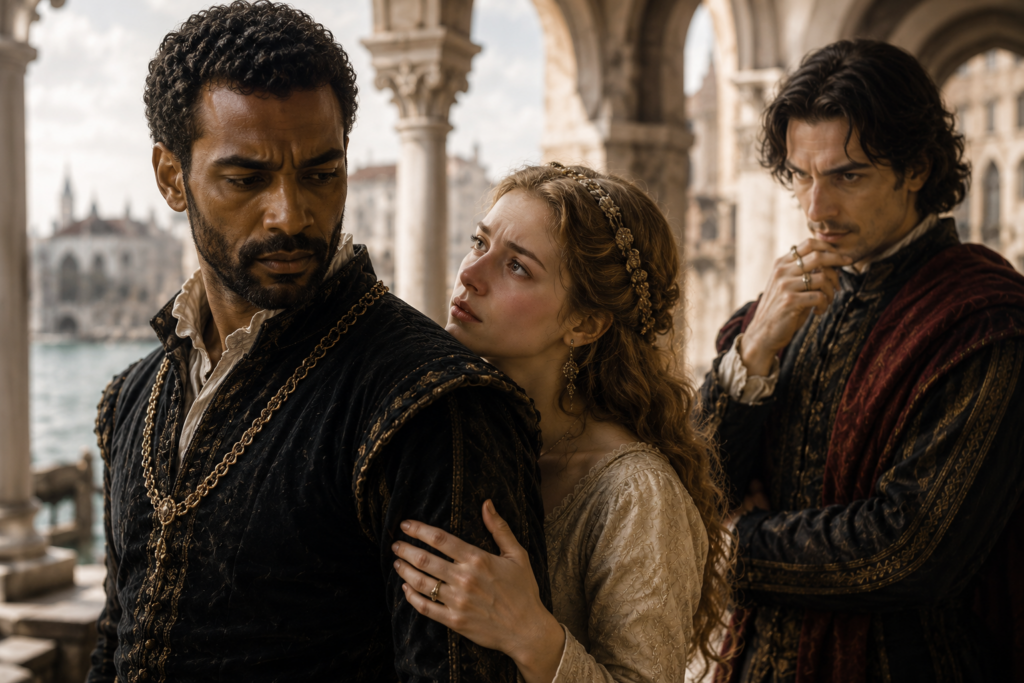
How to Write an Othello Literary Analysis Essay

Othello Analysis

Writing an Othello literary analysis essay can feel hard because the play moves fast and the emotions run deep. The key is to study how Shakespeare builds meaning through language and conflict instead of just retelling the plot. If you need the basic process first, review our guide to literary analysis essays.

In this Guide

Use this quick map to find the part of the essay process you need most.

  • What a literary analysis of Othello should do
  • How to choose a strong thesis
  • Thesis statement examples
  • Topic ideas that lead to real analysis
  • Evidence suggestions by scene
  • How to structure body paragraphs
  • Helpful books and outside sources
  • FAQ
  • Key takeaway
Othello Analysis

What an Othello Literary Analysis Essay Should Do

A strong essay does more than explain what happens in the play.

Your Othello literary analysis essay should answer a clear question about Shakespeare’s choices. You might ask how Iago gains power, why Othello trusts him, or how Desdemona is trapped by the rules of her world.

Do not write a plot summary. Your teacher already knows that Iago lies, Othello becomes jealous, and Desdemona dies. Your job is to explain why those events matter.

Think of the essay as an argument about meaning. In Macbeth, students often study ambition because it shapes the hero’s choices. In Othello, jealousy and trust play a similar role, but Shakespeare ties them to honor, race, gender, and social fear.

Build an Othello Literary Analysis Essay Around a Strong Thesis

Your thesis is the backbone of the whole essay.

A strong Othello literary analysis essay needs a thesis that makes a claim someone could debate. Weak theses often sound like facts. Strong theses explain how Shakespeare creates meaning.

Weak thesis: Iago is evil and makes Othello jealous.

Stronger thesis: In Othello, Shakespeare presents jealousy as a force that grows when a person trusts public image more than private truth.

The stronger version gives you something to prove. It points to jealousy, trust, and reputation without trying to cover the whole play.

If you want a ready-made system for turning notes into strong claims, the Literary Analysis Essay Toolkit can help you plan your thesis, evidence, and body paragraphs with less stress.

Thesis Statement Examples for Othello

Use these as models, not as lines to copy.

  • Jealousy thesis: In Othello, Shakespeare shows that jealousy becomes deadly when a person values suspicion more than direct proof.
  • Iago thesis: Iago’s power comes from his skill at reading others, which lets him turn their fears into choices that serve him.
  • Reputation thesis: Shakespeare presents reputation as a fragile social mask, since characters protect their public names while ignoring moral truth.
  • Gender thesis: Through Desdemona and Emilia, Shakespeare shows how women suffer under rules that demand obedience but offer little protection.

Notice that each thesis names a main idea and explains how the play treats it. That is the main difference between a topic and an argument.

Othello Literary Analysis Essay Topics That Lead to Strong Claims

The best topics are narrow enough to prove with close reading.

The best Othello literary analysis essay topics focus on a pattern in the text. A pattern might be a repeated image, a type of language, or a shift in how one character speaks.

  • Jealousy as a learned response: How does Iago teach Othello to see Desdemona as guilty?
  • Language as control: How does Iago use careful wording to guide Othello’s thoughts?
  • Race and insecurity: How does Othello’s outsider status shape how he responds to doubt?
  • Love and possession: How does the play show the danger of treating love like ownership?
  • Emilia’s moral growth: How does Emilia move from silence to truth?

Good topics lead to evidence. If you cannot find several moments in the play that support your idea, the topic may be too broad or too thin.

Evidence to Use in an Othello Literary Analysis Essay

Your evidence should prove your idea, not decorate your paragraph.

When your Othello literary analysis essay uses quotes, explain how the words work. Do not drop a quote into the paragraph and move on. Say what the language reveals about character, power, or theme.

Here are useful moments to study:

  • Act 1: Othello explains his marriage to Desdemona and says she loved him for the dangers he had passed. This can support essays about storytelling, identity, or love.
  • Act 1: Brabantio warns Othello that Desdemona may deceive him. This line helps show how suspicion enters the marriage early.
  • Act 3, Scene 3: Iago warns Othello to beware of jealousy. The warning sounds helpful, but it plants the fear it claims to fight.
  • Act 3, Scene 3: The handkerchief becomes false proof. This can support essays about symbols, trust, or the gap between truth and appearance.
  • Act 5: Emilia exposes Iago. Her speech helps reveal the cost of silence and the courage needed to tell the truth.

For background on the play, see Britannica’s overview of Othello. For more on Shakespeare’s life and works, the Poetry Foundation profile of William Shakespeare is also useful.

How to Structure Body Paragraphs

A clear paragraph makes one main move in your argument.

Start with a topic sentence that connects to your thesis. Then give context for the quote so the reader knows where the moment occurs. After the quote, explain the words closely.

Here is a simple pattern:

  1. Make a claim about the scene.
  2. Give brief context.
  3. Use a short quote.
  4. Analyze the language.
  5. Connect back to the thesis.

For example, if your paragraph focuses on Iago, do not just say he lies. Look at how he sounds honest while he lies. His calm tone and careful pauses make Othello feel as if he has discovered the truth on his own.

This is where close reading matters. A strong paragraph might study one word, one image, or one repeated phrase. For a full walkthrough of this process, you can use our step-by-step literary analysis essay guide.

Common Mistakes to Avoid

Small essay mistakes can weaken a strong idea.

One common mistake is to make Iago the whole essay. Iago matters, but your essay should still explain what Shakespeare reveals through him.

Another mistake is to treat Othello as only jealous. His jealousy matters because it connects to trust, shame, honor, and the fear that others see him as less worthy.

Do not assume every quote explains itself. Shakespeare’s language is dense. Your analysis should slow down and show how the words create meaning.

Last, avoid a thesis that tries to cover the entire play. A focused Othello literary analysis essay often earns a stronger grade than a broad one.

Sample Mini Outline

This outline shows how a focused argument can develop across the essay.

Thesis: In Othello, Shakespeare shows that Iago destroys Othello by turning uncertainty into false certainty.

  1. Body paragraph 1: Iago first creates doubt by posing as a loyal friend.
  2. Body paragraph 2: Othello begins to treat hints as proof because Iago controls the language of the scene.
  3. Body paragraph 3: The handkerchief gives Othello a false object to trust, which makes his error feel certain.
  4. Body paragraph 4: The final act reveals the tragic cost of mistaking suspicion for truth.

This kind of outline keeps the essay organized. Each paragraph adds a new step to the argument instead of repeating the same point.

These books can help you understand the play and write with more confidence.

  • Othello by William Shakespeare, Folger Shakespeare Library edition
  • Shakespeare: The World as Stage by Bill Bryson

Use outside sources to support your thinking, not to replace it. Your teacher wants to see your own close reading of the play.

FAQ About Writing an Othello Literary Analysis Essay

Here are quick answers to common student questions.

What is the best topic for an Othello literary analysis essay?

The best topic is one you can prove with several scenes. Jealousy, reputation, Iago’s language, and the handkerchief are all strong choices.

How long should my thesis be?

Most strong thesis statements are one sentence. It should name your main idea and explain what Shakespeare shows about it.

Can I write about Iago as the main focus?

Yes, but do not only call him evil. Analyze how he uses language, trust, and social roles to gain power.

How many quotes should I use?

Use enough evidence to prove each body paragraph. Short quotes often work better than long ones because they leave more room for analysis.

Key Takeaway

A strong Othello literary analysis essay makes a focused claim, supports it with close reading, and explains how Shakespeare’s choices shape the tragedy. Start small, study the language, and let your evidence guide the argument.

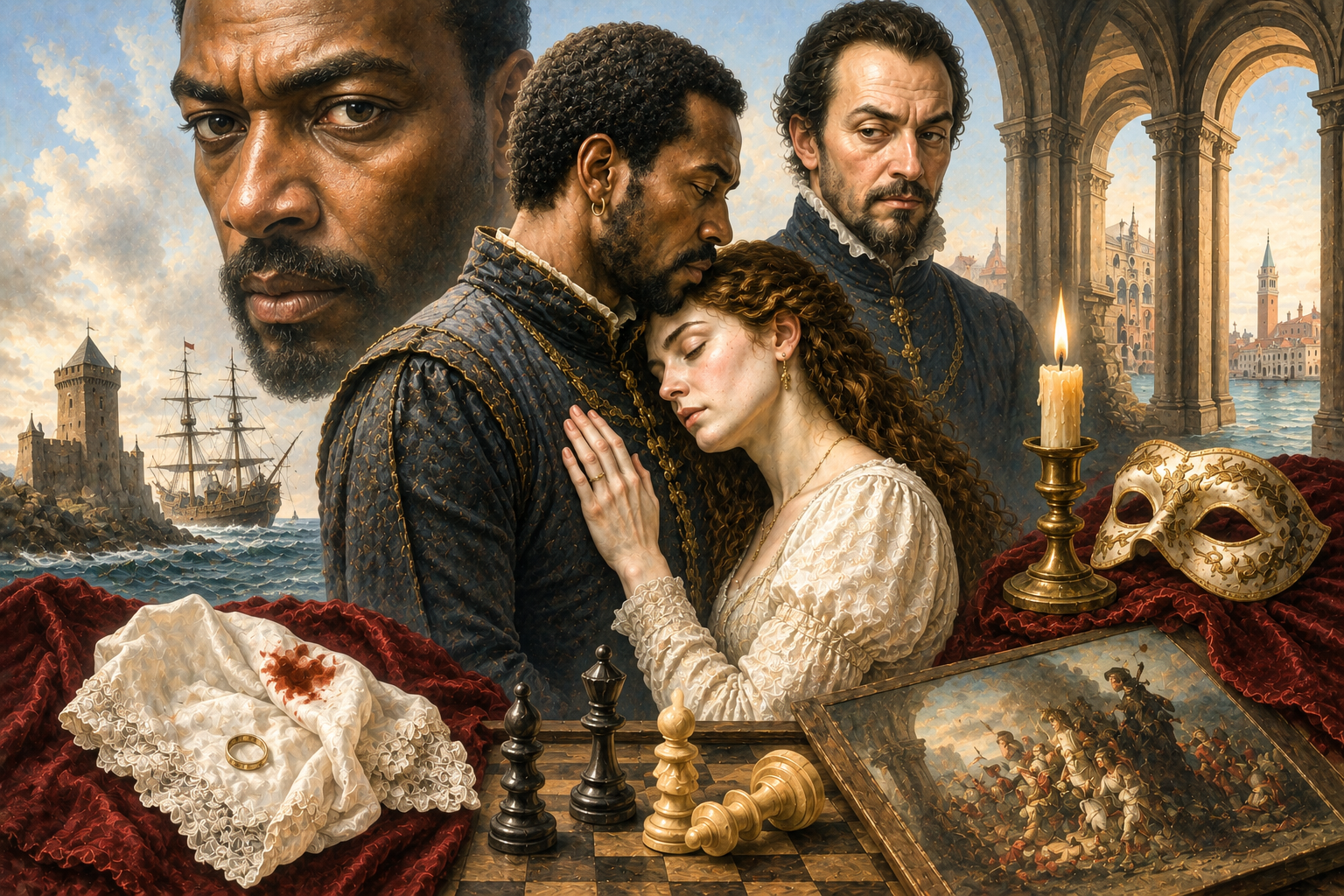
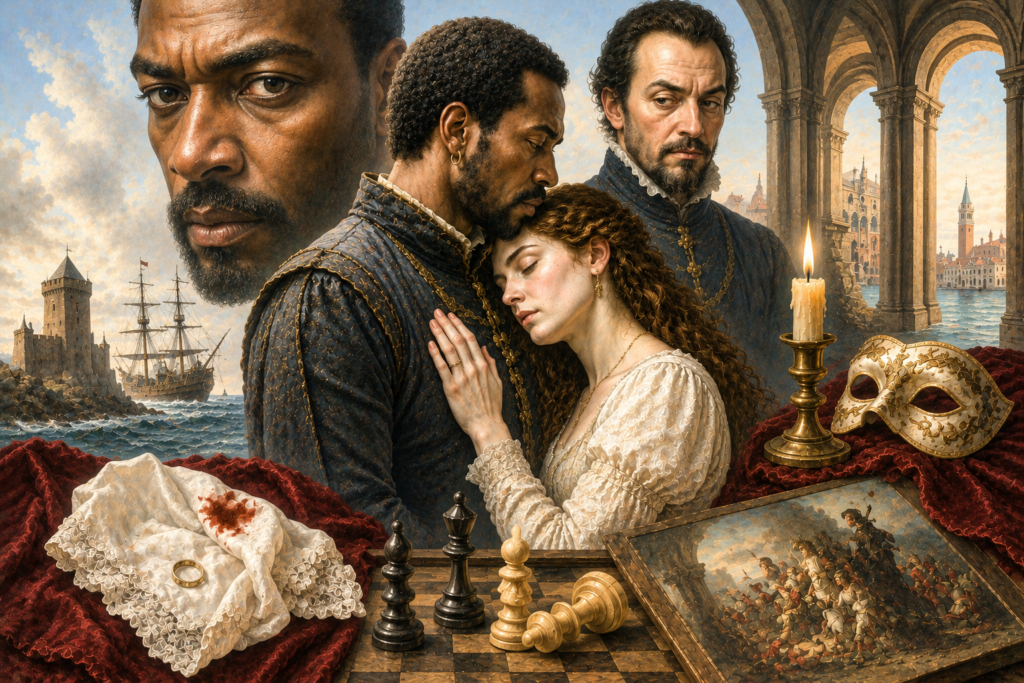
Themes in Othello: A Student-Friendly Guide

Themes in Othello

Shakespeare’s tragedy is full of conflict, fear, and painful choices. This guide explains the themes in Othello so you can understand the play and write about it with more confidence.

Whether you need a class answer or an essay idea, the play gives you a lot to work with. Its biggest ideas still connect to real life today.

In this Guide

Use this quick menu to find the idea you need.

  • Why the play’s themes still matter
  • Jealousy and insecurity
  • Race and outsider identity
  • Appearance versus reality
  • Trust and manipulation
  • Gender and power
  • Reputation and honor
  • Tragedy and responsibility
  • Essay tips, books, and FAQ
Themes in Othello

Why the Themes in Othello Still Matter

Othello is old, but its problems still feel close.

The plot is about a respected soldier, a new marriage, and a lie that grows out of control. The deeper meaning comes from the way people react to fear, status, love, and doubt.

The themes in Othello help us see why the play is more than a story about one jealous man. Shakespeare shows how private feelings can become dangerous when others know how to use them.

That is why students still study this play. It asks hard questions about trust, identity, and the damage people cause when they refuse to seek the truth.

Themes in Othello: Jealousy as a Destructive Force

Iago turns a private fear into public ruin.

Jealousy is one of the central themes in Othello. It begins as a small doubt, then grows until Othello can no longer see clearly.

Iago warns Othello, “O, beware, my lord, of jealousy.” The warning sounds wise, but it is part of the trap. Iago knows that naming the danger will make Othello think about it even more.

Othello does not see Desdemona betray him. He hears suggestions, watches small moments, and fills in the rest with fear. That is what makes the jealousy so painful. It is not built on real proof.

This theme also appears in other famous works. In The Great Gatsby, jealousy and status push characters toward reckless choices. In Othello, jealousy becomes even darker because it destroys love from within.

For an essay, do not just say, “Othello is jealous.” Ask what causes the jealousy and why he accepts it so quickly. That question leads to a stronger claim.

Themes in Othello: Race and Outsider Identity

Othello has power, but Venice never fully accepts him.

Othello is a skilled general. He has earned respect through service and courage. Yet he is also treated as an outsider because he is a Moor in Venetian society.

Some characters speak about him with racist language. Brabantio cannot accept that Desdemona chose Othello freely, so he imagines magic or trickery. His reaction shows how prejudice can twist the truth.

The themes in Othello ask us to look at the pressure Othello faces. He must prove himself in a world that respects his talent but questions his place.

This matters because Iago attacks Othello’s weak spots. He knows Othello fears not being loved, trusted, or seen as equal. Iago does not create every fear, but he gives those fears a voice.

A strong reading of this play should not ignore race. Othello’s fall is personal, but it also happens inside a society that makes him feel unsafe in his own marriage.

Themes in Othello: Appearance Versus Reality

Nearly everyone in the play judges by what seems true.

Iago is called “honest Iago” again and again. The name is bitter because the audience knows he is lying. This gap between what people believe and what is real drives the whole tragedy.

Othello thinks he is seeing signs of betrayal. In truth, he is seeing a story that Iago has built for him. That story feels real because Iago controls the details.

The handkerchief is the clearest object tied to this theme. It is a small gift, but Iago turns it into false evidence. If you want to practice reading objects like this, this guide on how to find symbolism in a story can help.

Many themes in Othello connect through this gap between image and truth. Love looks like betrayal. Honesty looks like deceit. Proof looks solid, even when it is false.

This theme is useful for essays because it lets you discuss dramatic irony. The audience knows more than Othello, so we watch him move toward a terrible mistake.

Trust and Manipulation in Othello

The play shows how language can reshape a person’s mind.

Iago does not need to shout or force Othello to act. He uses hints, pauses, and careful questions. He lets Othello think the worst idea came from his own mind.

This makes Iago one of Shakespeare’s most dangerous villains. He understands people well, but he uses that knowledge to harm them.

Othello asks for “ocular proof,” meaning proof he can see. Yet he accepts weak signs because Iago has already changed the way he reads the world.

This theme pairs well with jealousy. Othello’s jealousy grows because he trusts the wrong person. He doubts Desdemona, who loves him, and believes Iago, who hates him.

Gender and Power in Othello

Desdemona is strong, but her world gives men more control.

Desdemona chooses Othello and speaks for that choice in public. She is not weak or silent at the start of the play. Still, she lives in a society where men often decide what women are allowed to be.

Once Othello doubts her, Desdemona has little power to defend herself. Her words do not count as proof. Her honesty is treated as another act.

Emilia helps us see this theme more clearly. She understands that men can be unfair and cruel. Near the end, she tells the truth even when it costs her life.

The female characters are often judged by male fear. Desdemona is accused of sin she did not commit. Emilia is used by Iago. Both show how dangerous a male-controlled world can be.

Reputation and Honor in Othello

Public image matters so much that it can crush private truth.

Cassio loses his position after a fight, and he feels ruined. He says reputation is a huge part of who he is. Without it, he feels empty.

Othello also cares deeply about honor. He wants to be seen as noble, loyal, and controlled. When he believes Desdemona has betrayed him, he thinks his name has been stained.

This is where the tragedy becomes even more painful. Othello begins to care more about restoring honor than protecting the person he loves.

Reputation also helps Iago hide. Because others think he is honest, his good name becomes a mask. Shakespeare shows that reputation can protect the guilty and harm the innocent.

Tragedy and Moral Responsibility in Othello

The ending feels both shocking and avoidable.

Othello is a tragedy because noble people suffer, but the suffering does not come from fate alone. Human choices cause the disaster.

Iago chooses evil again and again. Othello chooses to trust him. Emilia chooses truth too late, though her final courage still matters.

This theme is common in Shakespeare. In Macbeth, ambition opens the door to violence. In Othello, jealousy and false trust lead to the same kind of collapse.

The play does not let us blame only one cause. That is part of its power. The tragedy grows from lies, prejudice, fear, and the failure to pause before action.

How to Write About the Themes in Othello

Strong essays move from theme to claim.

Students often name a theme but stop too soon. A better essay explains what Shakespeare says about that theme.

For example, do not write only, “Jealousy is a theme.” Try a claim like this: Shakespeare presents jealousy as a force that makes false stories feel stronger than truth.

When you write about the themes in Othello, connect your idea to a pattern. Look at repeated words, repeated doubts, and repeated mistakes.

You can also build a paragraph around an object, such as the handkerchief. For more help with that skill, use this student guide to spotting symbolism.

If you want a quick study support, you can also check our Othello theme notes for students.

Helpful Books and Resources

These resources can help you understand the play more deeply.

For background, the Britannica overview of Othello gives a clear summary of the play and its history.

You can also read the full text through the Folger Shakespeare Library’s online edition of Othello.

Relevant books to consider:

  • Othello by William Shakespeare, Folger Shakespeare Library edition
  • Shakespeare: The World as Stage by Bill Bryson

FAQ: Themes in Othello

Here are quick answers to common student questions.

What are the main themes in Othello?

The main themes include jealousy, race, appearance versus reality, trust, gender, reputation, and tragedy.

What is the most important theme in Othello?

Jealousy is often seen as the most important theme because it drives Othello’s downfall and shapes the main conflict.

How does Iago connect to the play’s themes?

Iago connects to many themes because he uses language, reputation, and doubt to control others.

Why is the handkerchief important?

The handkerchief becomes false proof. It shows how a simple object can gain dangerous meaning.

Key Takeaway

The themes in Othello show how trust can break when fear takes control.

Shakespeare’s play warns that lies become powerful when people already feel insecure. That is why the tragedy still matters in class, in essays, and in real life. 📚

error

Enjoy this article? Please spread the word :)

Follow by Email
BLUESKY
fb-share-icon
Reddit
LinkedIn
Share
RSS