Themes in The Color Purple: A Student-Friendly Guide

The Color Purple themes

Alice Walker’s novel asks readers to watch how people survive pain, claim a voice, and learn love. This guide breaks down the themes in The Color Purple so students can connect the letters, symbols, and conflicts to the novel’s larger meaning.

For helpful background on the author, see Britannica’s Alice Walker biography.

In this Guide

Use this table of contents to jump to the ideas you need for class or review.

  • Why theme matters in the novel
  • Voice and freedom
  • Abuse and survival
  • Sisterhood and chosen family
  • Gender roles and power
  • Faith and spiritual growth
  • Race and identity
  • Symbolism and theme
  • Essay tips and FAQ
The Color Purple themes

Why the themes in The Color Purple matter

The novel is not only about what happens to Celie. It is about how people find worth in a world that tries to silence them.

The themes in The Color Purple are not hidden from the plot. They grow through Celie’s letters, her changing view of God, and her ties with women who help her see herself in a new way.

For students, theme is the bridge between summary and analysis. A summary says Celie writes letters. Analysis asks why those letters matter.

Major themes in The Color Purple: voice and freedom

Celie’s growth begins with language. Her letters show how a silenced person can slowly claim the right to speak.

At the start, Celie writes because she has no safe person to talk to. Her letters to God hold fear, pain, and confusion. Yet even this private act becomes a form of strength.

As Celie changes, her voice changes too. She speaks more clearly about what she wants and what she refuses to accept.

This is one of the most important themes in The Color Purple because the novel links voice with freedom. To speak is not just to make sound. It is to say, I exist, and my life has value.

A useful comparison is Jane Eyre by Charlotte Brontë. Jane also must learn to speak for herself in a world that expects her to stay quiet.

Abuse and survival

The novel shows harm without treating pain as the whole story. Survival becomes a hard, active force.

Celie faces violence, control, and sexual harm. Walker does not present this only to shock the reader. She shows how abuse can shape a person’s sense of self.

At the same time, Celie is never only a victim. Her life shows the slow work of survival. She learns to name what happened, trust others, and build a future.

This theme can be hard to read, but it matters. The novel asks readers to see how systems of power can hurt people inside homes, not just in public life.

Sisterhood and chosen family

Love between women becomes one of the strongest sources of healing in the novel.

Celie’s bond with Nettie, Shug, and Sofia helps her grow. These relationships give Celie models of courage and self-respect.

Nettie represents loyalty across distance. Shug helps Celie see her body and spirit in a new light. Sofia shows open resistance to control.

One of the central themes in The Color Purple is that family is not only blood. Chosen family can help a person survive when the home has become unsafe.

This idea also appears in Little Women by Louisa May Alcott, where female bonds shape identity and moral growth.

Gender roles and power

Walker shows how strict gender roles can trap people.

Many men in the novel are taught that power means control. They expect women to cook, obey, and stay silent.

Celie’s life challenges that belief. Sofia’s anger also challenges it. Shug’s independence offers another path, one shaped by desire and choice.

The novel does not excuse cruel behavior, but it does show how harmful ideas pass from one generation to the next. Power becomes a pattern people learn, copy, and sometimes reject.

For an AP Literature essay, you could argue that Walker uses gender conflict to show how freedom requires a change in both private life and public values.

Faith and spiritual growth

Celie’s view of God changes as her view of herself changes.

At first, Celie imagines God as distant, male, and tied to authority. This image reflects the world that has hurt her.

Later, Shug helps Celie see God in nature, beauty, and human connection. This shift is not just religious. It is personal.

Faith becomes less about fear and more about wonder. Celie learns that the sacred can appear in color, touch, and love.

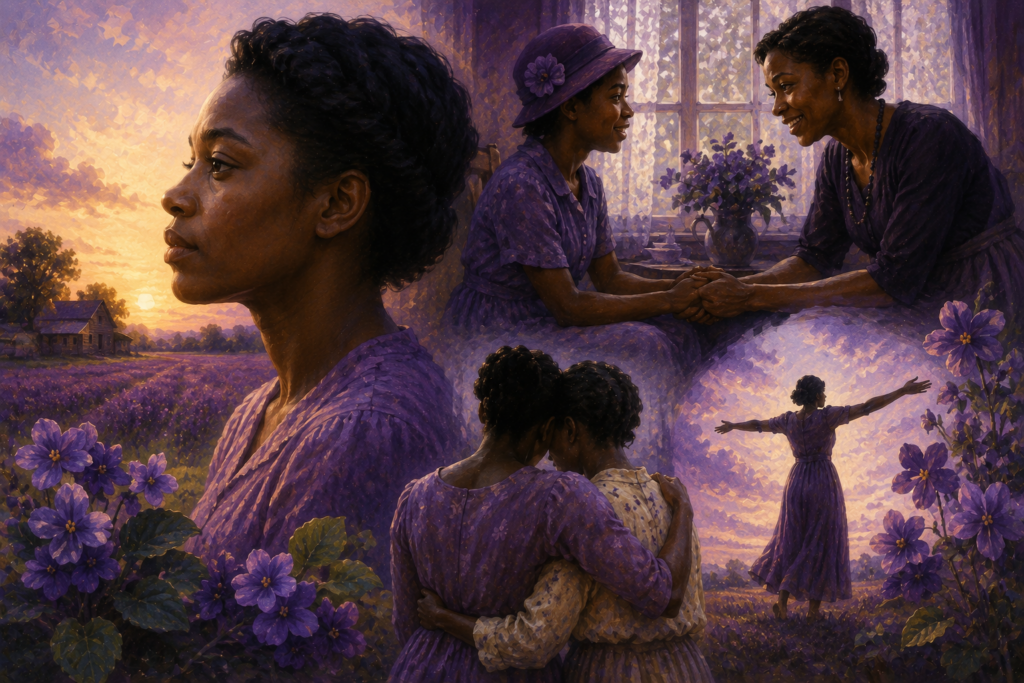
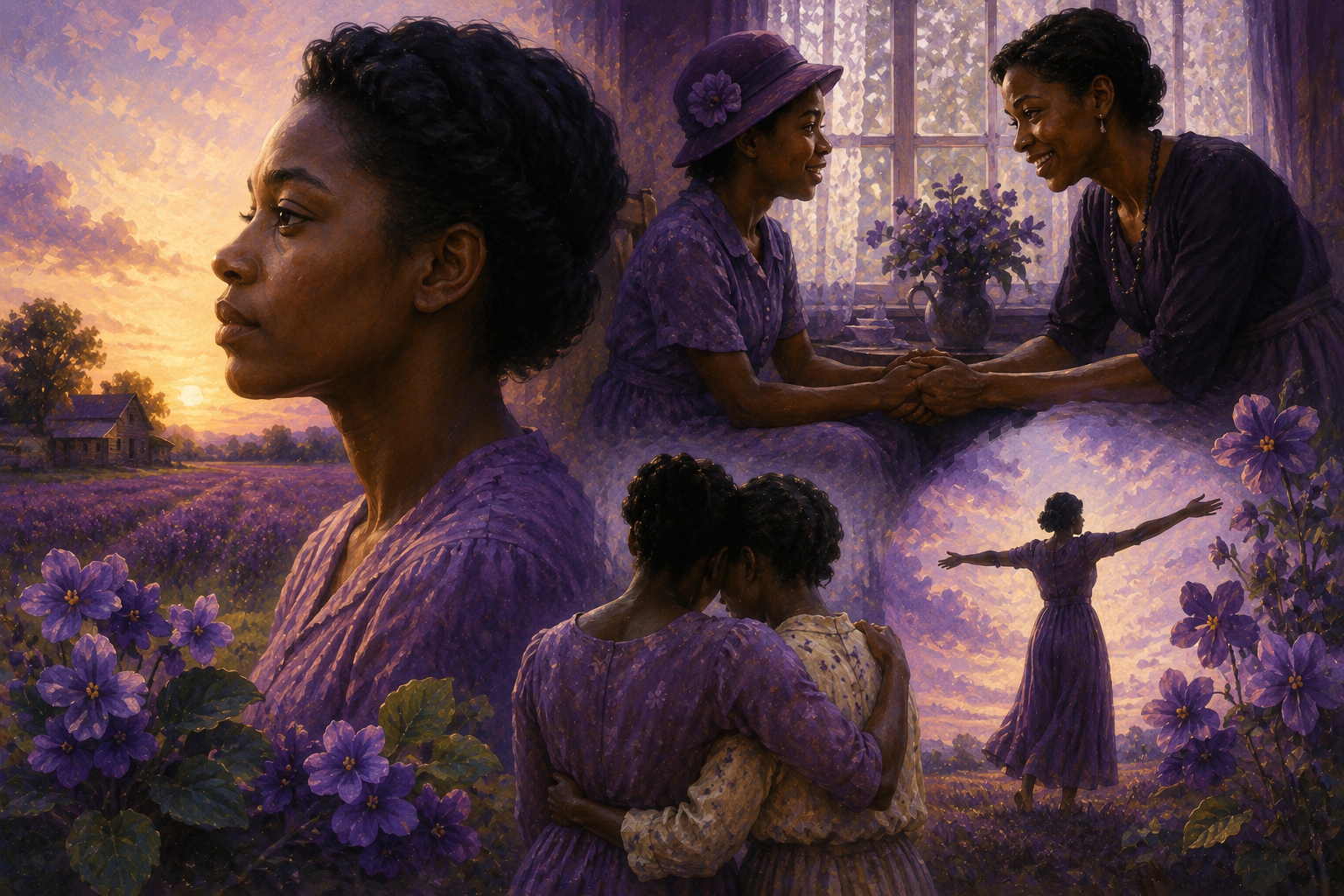
This is why the color purple itself matters. It points to beauty that people often miss. If you want help with that kind of detail, read our guide on how to find symbolism in a story.

Race and identity

The novel explores Black life in the American South and connects personal pain to larger social forces.

Celie and the other characters face not only sexism, but racism too. Sofia’s clash with white authority shows how race, gender, and class shape daily danger.

Nettie’s letters from Africa widen the novel’s world. They connect African American identity to African history, while also showing that no culture is simple or perfect.

Walker asks readers to see identity as layered. Race matters, but so do gender, family, faith, and place.

Symbolism connects to themes in The Color Purple

Symbols help the novel turn private details into larger ideas.

Students often understand themes in The Color Purple more clearly when they track repeated images. Letters, pants, sewing, gardens, and the color purple all carry meaning.

Letters symbolize voice and connection. Pants symbolize work, freedom, and a new self-image. The color purple suggests beauty, spirit, and attention to life.

When you write about symbols, do not just name them. Explain how they change across the novel. For more practice, use this student guide to symbolism.

How to write about themes in The Color Purple

A strong paragraph connects a theme to a clear choice Walker makes.

When you write about themes in The Color Purple, avoid broad claims like, “The book is about love.” Make the claim sharper.

Try this: “Walker presents love as a force that helps Celie recover her voice after years of silence.” That sentence gives you a theme and a direction.

Then use one short moment from the novel as evidence. Explain how the detail supports your idea. A good AP Literature paragraph should not just quote. It should interpret.

If you want a quicker study path, explore our student-friendly literature guides for theme review and essay prep.

Books to pair with this novel

These books work well for comparison essays or deeper reading.

  • Their Eyes Were Watching God by Zora Neale Hurston
  • Beloved by Toni Morrison

Both novels explore voice, memory, and the search for selfhood. They also pair well with high school, AP Literature, and college English study.

FAQ: themes in The Color Purple

These quick answers can help with review before a quiz, essay, or class talk.

What are the main themes in The Color Purple?

The main ideas include voice, survival, sisterhood, gender power, faith, race, and identity. Each one connects to Celie’s growth.

Why is voice so important in the novel?

Voice matters because Celie begins as someone who has been silenced. Her letters show her path toward self-worth and freedom.

What does the color purple symbolize?

It symbolizes beauty, spirit, and the need to notice joy in ordinary life. It also points to Celie’s new way of seeing the world.

Is The Color Purple a feminist novel?

Yes, many readers see it that way. The novel focuses on women’s strength, female bonds, and resistance to male control.

Key Takeaway

The themes in The Color Purple show how a person can move from silence toward selfhood. Walker’s novel is painful at times, but its deepest message is one of voice, beauty, and hard-won freedom.
The Grapes of Wrath Summary and Analysis for Students

Grapes of wrath summary

This guide offers a The Grapes of Wrath summary and analysis for students who need a clear path into John Steinbeck’s novel. We will cover the plot, structure, conflicts, themes, and deeper meaning without making the book feel harder than it is.

In this Guide

  • Plot overview
  • Historical context
  • Structure and style
  • Major conflicts
  • Key themes
  • Study tips and FAQ
Grapes of wrath summary

The Grapes of Wrath Summary and Analysis: Plot Overview

Steinbeck’s novel follows one family, but it speaks for many people hurt by poverty and broken systems.

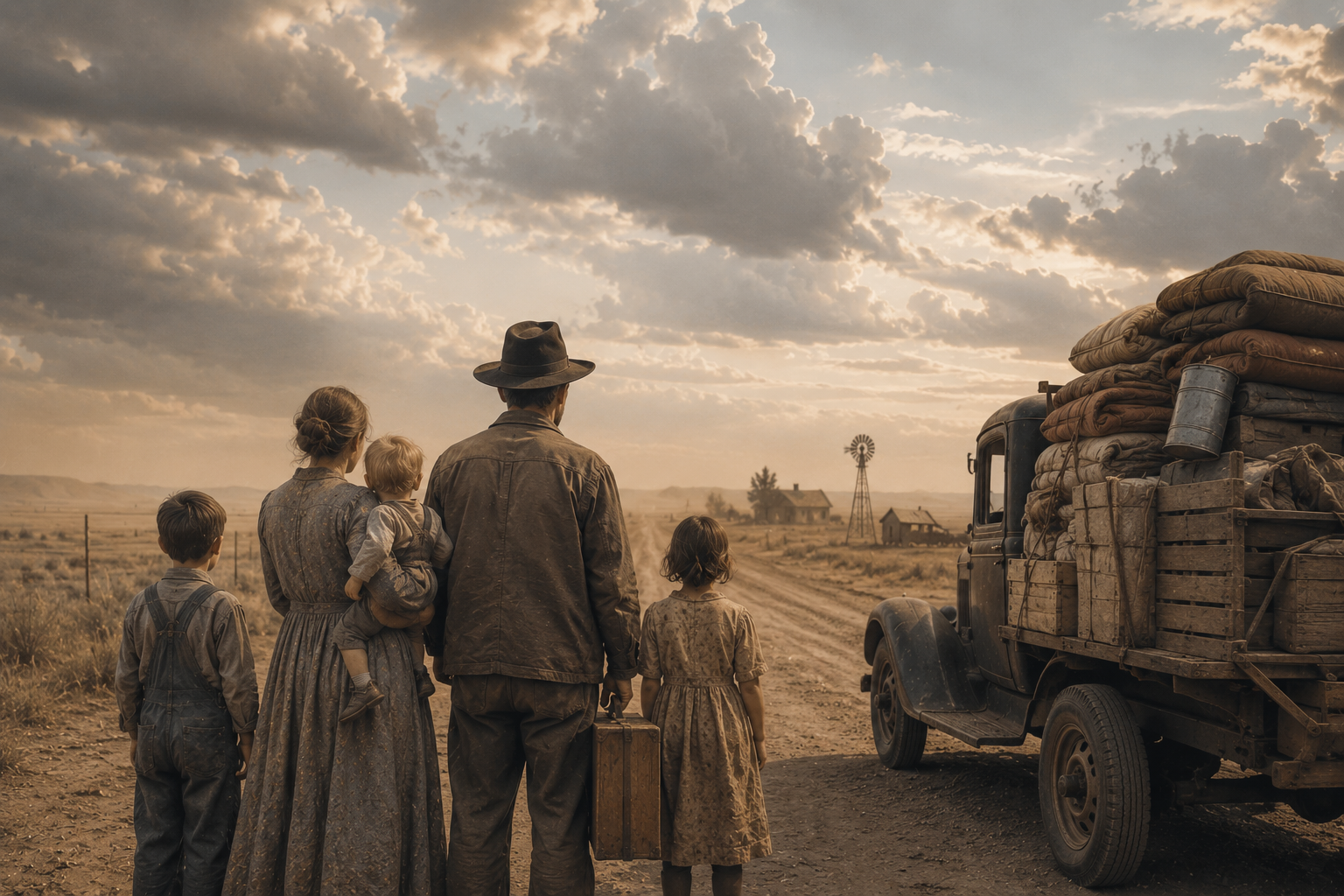
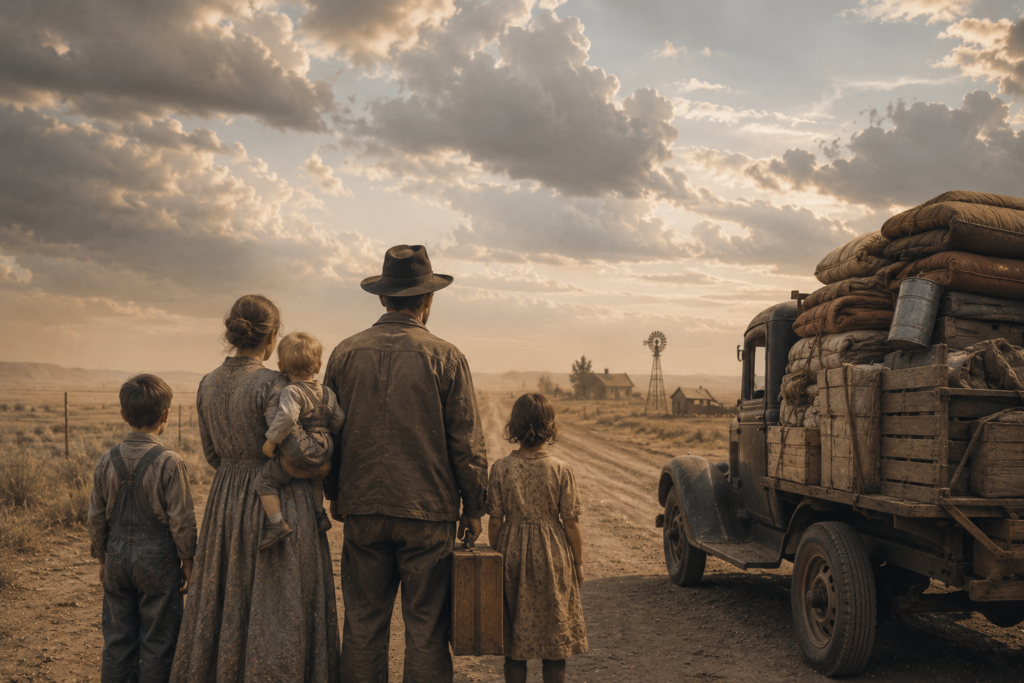
The story begins in Oklahoma during the Dust Bowl. Tom Joad comes home from prison and finds that his family has lost its farm. Banks and landowners have pushed tenant farmers off the land, so the Joads pack a truck and head west to California.

This part of The Grapes of Wrath summary and analysis shows the novel’s main pattern: hope meets hardship. The Joads believe California will offer work, food, and safety. On the road, they face death, hunger, fear, and cruel treatment.

Grampa dies soon after the trip starts. Grandma dies before the family reaches California. Noah leaves the family, and Connie runs away from his pregnant wife, Rose of Sharon. Each loss makes the family smaller, but Ma Joad works hard to keep everyone together.

In California, the Joads find that work is scarce and wages are low. Many workers compete for the same jobs. Owners use hunger to force people to accept almost any pay.

Jim Casy, a former preacher, becomes a labor organizer. He is killed by men who want to stop worker protests. Tom kills Casy’s attacker and must hide. Before he leaves, Tom tells Ma that he will keep fighting for poor people wherever they suffer.

The novel ends after a flood ruins the family’s shelter. Rose of Sharon gives birth to a stillborn baby. In the final scene, she breastfeeds a starving man, turning grief into an act of mercy.

Historical Context Behind The Grapes of Wrath Summary and Analysis

The novel makes more sense when you know the real crisis behind it.

The Grapes of Wrath was published in 1939, near the end of the Great Depression. Many families had lost jobs, savings, and homes. In the Great Plains, drought and poor farming methods helped create the Dust Bowl.

Without this context, The Grapes of Wrath summary and analysis can feel like a long road story. With context, it becomes a story about economic power, forced migration, and survival.

Steinbeck based the novel on real reports and his own visits to migrant camps. You can read more about the author’s life through Britannica’s John Steinbeck biography. For background on the Dust Bowl, the Library of Congress Dust Bowl overview is a strong source.

The book also caused debate. Some readers praised it for showing the pain of farmworkers. Others attacked it because it blamed rich owners and unfair systems.

Structure and Style in The Grapes of Wrath Summary and Analysis

Steinbeck’s structure is one reason the novel feels larger than one family’s story.

The book uses two kinds of chapters. Some chapters follow the Joad family closely. Others zoom out and describe groups of migrants, banks, cars, roads, diners, and camps.

For students, The Grapes of Wrath summary and analysis becomes clearer when you notice this pattern. The Joad chapters make the story personal. The wider chapters show that the Joads are part of a national crisis.

This structure is a bit like the way Victor Hugo uses personal stories in Les Misérables to show a whole society under pressure. Steinbeck does not want readers to pity only one family. He wants readers to see a system that hurts thousands.

His language often sounds plain, but it carries strong emotion. He uses biblical echoes, folk speech, and images of land, dust, machines, and hunger. These patterns reward close study, so a guide to close reading in literature can help you track them.

Major Conflicts in the Novel

The conflicts in the novel move from private pain to public struggle.

The first conflict is people against nature. Drought, dust, and flood shape the Joads’ lives. Nature is not evil, but it makes survival harder.

The second conflict is people against society. Banks take land. Police harass migrants. Owners cut wages. The Joads learn that poverty is not just bad luck.

The third conflict is inside the characters. Tom must decide what kind of man he wants to be after prison. Ma must stay strong even when the family falls apart. Rose of Sharon must face loss and still choose compassion.

These conflicts build the novel’s central question: how can people keep their dignity when the world treats them as cheap labor?

Key Themes in The Grapes of Wrath Summary and Analysis

The novel’s themes focus on justice, family, anger, and human worth.

A good The Grapes of Wrath summary and analysis should start with human dignity. Steinbeck shows that the migrants are not lazy or weak. They are skilled, proud people trapped by forces bigger than themselves.

Family is another major theme. At first, the Joads think of family as blood relatives. By the end, the idea grows. Casy’s beliefs and Tom’s final speech suggest that all suffering people are connected.

Wrath also matters. The title comes from “The Battle Hymn of the Republic,” which uses biblical language about judgment. Steinbeck suggests that anger can grow when injustice lasts too long.

The final scene with Rose of Sharon is one of the most debated endings in American literature. It is shocking, but it is not only meant to shock. It shows that care can survive even after great loss.

Symbols and Motifs to Watch

Small details in the novel often point to larger ideas.

The turtle near the start is a key symbol. It crosses a road slowly while cars threaten it. Like the migrants, it keeps moving despite danger.

The truck becomes a symbol of hope and pressure. It carries the Joads west, but it also holds their fear and grief. Every mile brings promise and risk.

Dust represents loss and damage. It covers farms, homes, and bodies. It reminds readers that the land itself has changed.

Food appears often because hunger drives the plot. When people share food, they show community. When owners destroy food to protect prices, they show cruelty.

How to Use The Grapes of Wrath Summary and Analysis for Class

A strong study plan turns summary into real interpretation.

If you use The Grapes of Wrath summary and analysis for an essay, do not stop at what happens. Ask why Steinbeck tells the story this way. Look at how each chapter builds pressure.

Track Tom, Ma, Casy, and Rose of Sharon. Each one shows a different response to suffering. Tom moves toward action. Ma protects the family. Casy gives the novel its moral voice. Rose of Sharon turns sorrow into care.

For a quick support tool, you may also find this student reading guide useful as you plan notes or review before class.

Good essay topics include the role of community, the meaning of the ending, the use of intercalary chapters, and the link between poverty and power.

These books can help you understand Steinbeck, the Dust Bowl, and American social fiction.

  • The Grapes of Wrath by John Steinbeck
  • Of Mice and Men by John Steinbeck
  • The Worst Hard Time by Timothy Egan

FAQ

What is the main point of The Grapes of Wrath?

The main point is that poverty is often caused by unfair systems, not personal failure. Steinbeck also shows the power of shared care.

What should a The Grapes of Wrath summary and analysis include?

It should include the Joads’ journey, the Dust Bowl context, the labor conflict in California, and the novel’s major themes.

Why is Jim Casy important?

Casy gives the novel many of its moral ideas. He moves from preacher to worker activist and inspires Tom’s later choices.

What does the ending mean?

The ending shows mercy after loss. Rose of Sharon’s act suggests that human kindness can answer suffering in a powerful way.

Is The Grapes of Wrath hard to read?

Some chapters feel slow because Steinbeck shifts between the Joads and wider social scenes. Once you see the pattern, the novel becomes easier to follow.

Key Takeaway

The Grapes of Wrath is more than a migration story. It is a novel about dignity, anger, and the need to care for others when systems fail.

error

Enjoy this article? Please spread the word :)

Follow by Email
BLUESKY
fb-share-icon
Reddit
LinkedIn
Share
RSS