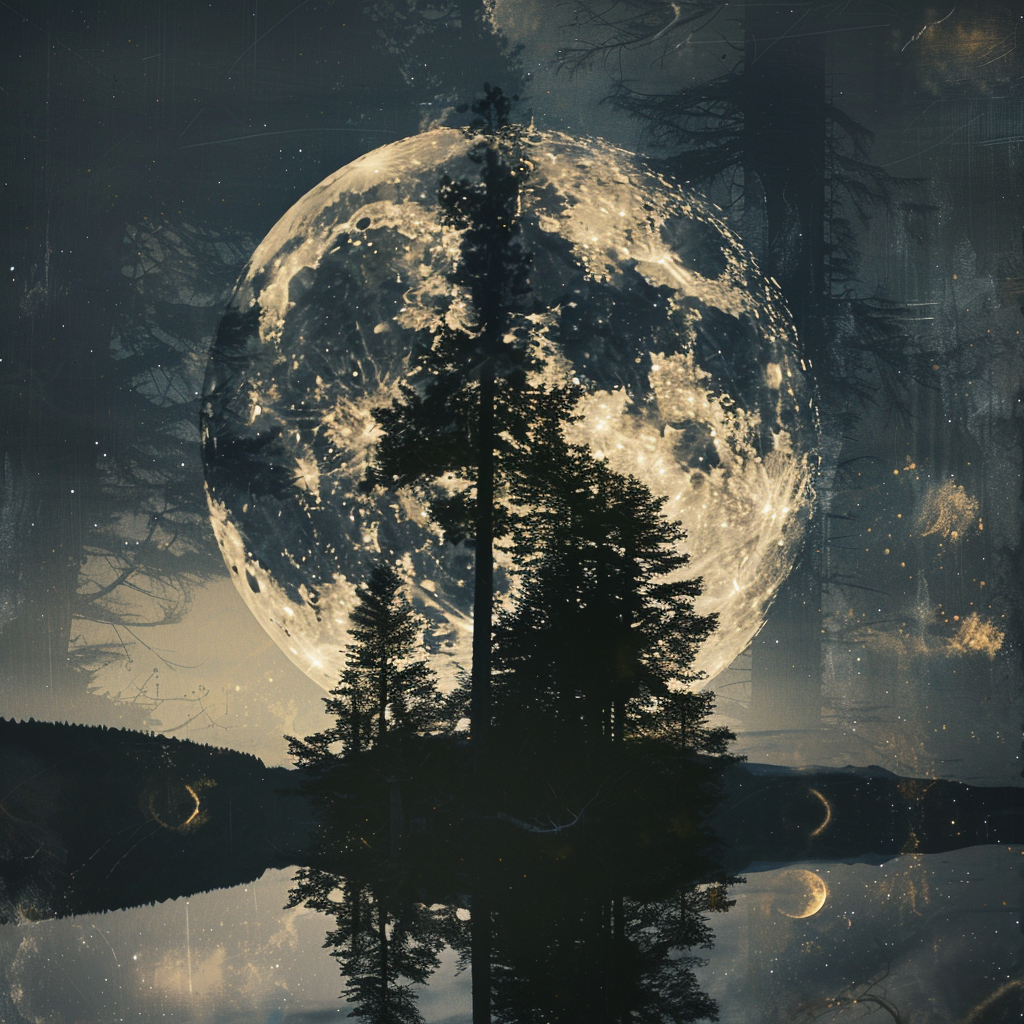
What Is Romanticism in Literature?

Romanticism in Literature

What Is Romanticism in Literature? A Beginner-Friendly Guide

If you have ever asked, “What Is Romanticism in Literature?”, you are asking about one of the most important movements in literary history. Romantic writers cared deeply about emotion, nature, imagination, and the power of the individual.

This guide explains Romanticism in clear terms, with examples that students often meet in class.

Romanticism in Literature

In this Guide

What Is Romanticism in Literature? A Clear Definition

Romanticism is a literary movement that began in the late 1700s and grew strong in the 1800s.

So, What Is Romanticism in Literature? In simple terms, it is a style of writing that values strong feelings, personal freedom, nature, mystery, and imagination.

Romantic writers often pushed back against strict rules. They did not want art to feel cold or overly logical. They wanted literature to feel alive.

For example, William Wordsworth wrote poems about common people and natural scenes. Mary Shelley used a strange science story in Frankenstein to ask deep questions about ambition and responsibility.

Why What Is Romanticism in Literature? Matters for Students

Romanticism changed what literature could do.

Before Romanticism, many writers valued order, reason, and social rules. Romantic writers shifted the focus toward the inner life of the individual.

This matters because many later novels and poems build on Romantic ideas. When a character feels trapped by society, searches for meaning in nature, or trusts emotion over logic, Romanticism may be part of the text.

If you want a stronger method for close reading, this guide on how to read literature like a scholar can help you notice patterns, symbols, and deeper meaning.

What Is Romanticism in Literature? Key Traits to Notice

Romantic literature has a few clear signs that show up again and again.

One major trait is emotion. Romantic writers often show fear, awe, grief, love, or wonder in intense ways.

Another key trait is nature. Nature is not just a background. It can heal, inspire, frighten, or reveal truth.

Romantic writers also value the individual. Their heroes may feel different from society. They may follow a private vision, even when others judge them.

The supernatural also matters. Ghosts, strange landscapes, dreams, and dark secrets often appear in Romantic works, especially Gothic Romantic texts.

When teachers ask, “What Is Romanticism in Literature?”, they often expect you to connect these traits to a text, not just define the term.

What Is Romanticism in Literature? Famous Examples

Examples make Romanticism easier to understand.

In Frankenstein by Mary Shelley, Victor Frankenstein tries to master life itself. The novel explores ambition, guilt, isolation, and the danger of ignoring moral limits.

In the poetry of William Wordsworth, nature often becomes a source of wisdom. His poems suggest that simple scenes can lead to deep insight.

In the poetry of John Keats, beauty and death often stand close together. His work shows how Romantic writers used rich images to explore human longing.

These works make the question “What Is Romanticism in Literature?” much easier to answer because they show Romantic ideas in action.

What Is Romanticism in Literature? Is It the Same as Romance?

Romanticism is not the same as a love story.

The word can confuse students because “romantic” often means love today. In literature class, Romanticism means a historical and artistic movement.

A Romantic text may include love, but it does not have to. It may focus on nature, freedom, imagination, or the struggle between the individual and society.

For example, Frankenstein is Romantic, but it is not mainly a romance. Its focus is on creation, loneliness, and moral failure.

How to Analyze Romanticism in a Text

Start with what the text values.

Ask whether the work praises emotion, imagination, nature, or personal freedom. Then look for moments where those values clash with rules, science, society, or control.

A helpful question is: What does this text trust more, the heart or the system?

You can also look for symbols. A storm may show inner conflict. A mountain may suggest awe. A lonely character may reflect the Romantic idea of the outsider.

For more background, the Poetry Foundation’s guide to Romanticism offers a clear overview of the movement. Britannica also has a useful entry on Romanticism in art and literature.

Books to Read Next

If you want to understand Romanticism better, try these books. You can find them in libraries, bookstores, or on Amazon.

  • Frankenstein by Mary Shelley
  • Lyrical Ballads by William Wordsworth and Samuel Taylor Coleridge

Both books help answer “What Is Romanticism in Literature?” because they show emotion, imagination, and nature at the center of the work.

FAQ: What Is Romanticism in Literature?

What Is Romanticism in Literature? in one sentence?

Romanticism is a literary movement that values emotion, imagination, nature, and individual freedom.

When did Romanticism happen?

Romanticism began in the late 1700s and became a major force in the 1800s.

Is Romanticism only about love?

No. Romanticism can include love, but it is more about feeling, nature, imagination, and personal experience.

Is Frankenstein a Romantic novel?

Yes. Frankenstein uses Romantic ideas such as ambition, isolation, nature, and the danger of unchecked power.

How can I spot Romanticism in a poem?

Look for strong emotion, vivid nature, mystery, and a speaker who values personal experience.

Key Takeaway

What Is Romanticism in Literature? It is a movement that puts feeling, imagination, nature, and the individual at the heart of writing.

Practical tip: when you read a Romantic text, ask what the writer wants you to feel and what the natural world reveals about the character’s inner life.
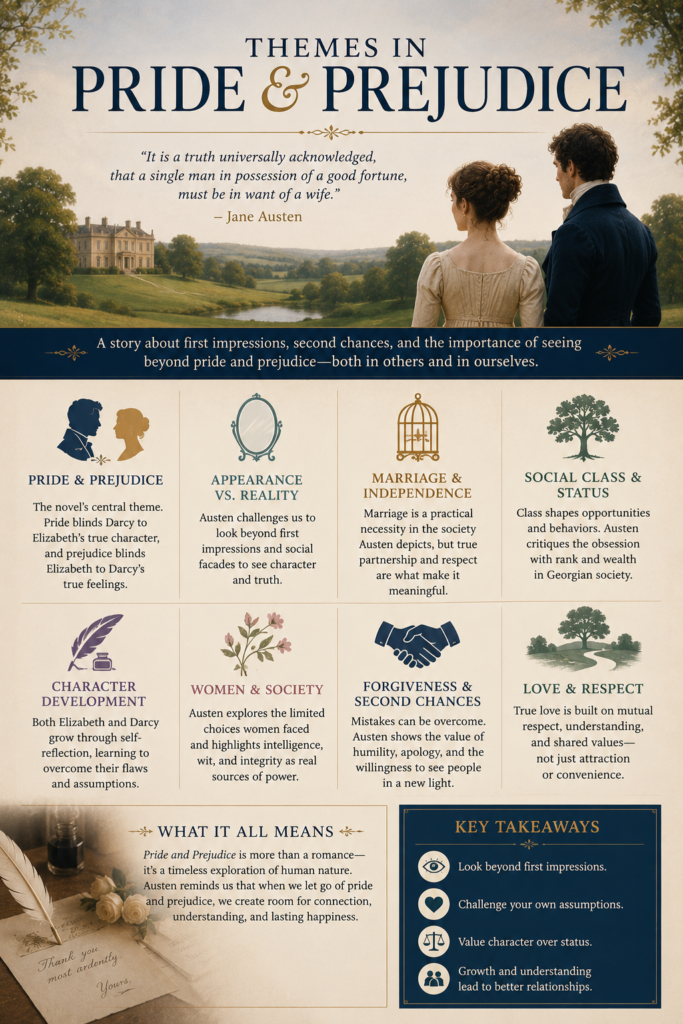
Themes in Pride and Prejudice: A Student-Friendly Guide

Themes in Pride and Prejudice

Jane Austen’s novel may look like a love story, but its ideas run much deeper. This guide explains the major themes in Pride and Prejudice so students can see how love, class, pride, and choice shape the whole book.

In this Guide

Use this quick map to find the part you need for class, notes, or an essay.

  • Why the ideas matter
  • Pride, prejudice, and self-knowledge
  • Love and marriage
  • Class and reputation
  • Money and limited choices
  • Gender and power
  • Family and education
  • Essay tips and FAQ
Themes in Pride and Prejudice

Why the themes in Pride and Prejudice matter

The novel’s themes help explain why a book from 1813 still feels fresh today.

Austen writes about people who judge too fast, protect their social rank, and search for a life with dignity. Those issues still matter in schools, friendships, and families.

The themes in Pride and Prejudice also help students see Austen’s craft. She does not preach. She uses wit, dialogue, and character change to make her ideas clear.

For helpful background on Austen’s life and era, see this overview from Britannica.

Theme 1: Pride, prejudice, and self-knowledge

Elizabeth and Darcy both have to face the truth about themselves.

Pride is not always bad in the novel. A person needs self-respect. But Darcy’s pride makes him cold, while Elizabeth’s confidence makes her judge him too quickly.

Prejudice means more than unfair dislike. It also means forming an opinion before you know the facts. Elizabeth believes Wickham because he seems charming. Darcy misreads Elizabeth’s family and social rank.

A central part of the themes in Pride and Prejudice is the need to grow. Elizabeth changes because she can admit error. Darcy changes because he can see how his behavior has hurt others.

This is similar to Pip in Great Expectations. Pip must learn that status does not equal worth. Both novels ask students to notice how a character’s wrong ideas shape the plot.

Theme 2: Love, marriage, and good judgment

Austen shows that love works best when feeling and reason stay linked.

Marriage is a major plot force in the novel. Mrs. Bennet wants her daughters married because their future is at risk. But Austen does not treat marriage as only a business deal.

Elizabeth refuses Mr. Collins because she knows a loveless match would harm her. Charlotte Lucas accepts him because she wants security. Neither choice is simple.

Another key part of the themes in Pride and Prejudice is the question of good judgment. Elizabeth and Darcy reach a strong love only after they face hard truths.

For quicker review, students can use Pride and Prejudice study resources alongside class notes.

Class and reputation as themes in Pride and Prejudice

Social rank affects how characters speak, marry, and judge one another.

Darcy has wealth and status, so others expect him to act with control. The Bennet family has less rank, so their behavior gets watched more closely.

Lady Catherine believes social class should decide marriage. She sees Elizabeth as beneath Darcy. Austen exposes how cruel that belief can be.

Reputation matters too. Lydia’s elopement threatens the whole family because society blames women more harshly than men. This shows a world where public opinion has real power.

The British Library offers useful context on Austen’s world and works at its Jane Austen page.

Theme 4: Money, security, and limited choices

Money is never just background in this novel.

The Bennet estate is entailed, which means the daughters cannot inherit it. This fact creates pressure from the first chapters.

The themes in Pride and Prejudice often connect love to economics. Characters may want romance, but they also need food, shelter, and respect.

Charlotte’s marriage to Mr. Collins can feel sad to modern readers. Yet Austen asks us to see her reason. Charlotte has few safe options, so she chooses stability.

This does not mean Austen supports every practical match. Instead, she shows how unfair systems limit personal freedom.

Theme 5: Gender and power in daily life

Austen shows how women must work within rules they did not create.

The Bennet sisters need marriage because the law and custom do not give them many paths. Their education, income, and public image all affect their futures.

Elizabeth stands out because she speaks with wit and courage. She refuses to obey Lady Catherine. She also refuses to marry without respect.

Among the themes in Pride and Prejudice, gender may be the easiest to connect to class discussion. Students can ask who has power, who lacks it, and how each character responds.

If you want help tracing those patterns, this guide on how to analyze characters in literature can help you build stronger claims.

Theme 6: Family, education, and influence

Family shapes each character’s choices, but it does not fully control them.

Mr. and Mrs. Bennet both affect their daughters. Mr. Bennet is clever, but he often avoids responsibility. Mrs. Bennet cares about security, but her panic causes trouble.

Elizabeth’s mind has been shaped by reading, talk, and sharp observation. Darcy’s values have been shaped by privilege and family pride.

This is one reason many themes in Pride and Prejudice feel personal. Austen shows that people inherit ideas, but they can still revise them.

How to write about themes in Pride and Prejudice

A strong theme paragraph needs a clear claim and proof from the story.

Do not write only that pride is a theme. Go further. Say what Austen suggests about pride, such as: pride becomes harmful when it blocks empathy and honest self-judgment.

Use a character, a choice, and a result. For example, Darcy insults Elizabeth, then later learns why his pride damaged his chance at love.

When writing about themes in Pride and Prejudice, connect the theme to Austen’s message. A theme is not just a topic. It is an idea the novel develops.

You can also review character analysis strategies to make your theme essay more focused.

Helpful books for deeper study

These books can support essays, class projects, or AP Literature prep.

  • Pride and Prejudice by Jane Austen
  • Jane Austen: A Life by Claire Tomalin

To understand the themes in Pride and Prejudice more fully, read the novel slowly and track how each major character changes.

FAQ about themes in Pride and Prejudice

These quick answers can help before a quiz, essay, or class discussion.

What are the main themes in Pride and Prejudice?

The main themes include pride, prejudice, marriage, class, money, gender roles, family influence, and self-knowledge.

What is Austen’s message about marriage?

Austen suggests that marriage should include respect and good judgment. Love matters, but so do character and security.

Why does social class matter so much in the novel?

Class affects how people judge each other and who they see as a proper match. Austen shows that this system can be unfair.

How does Elizabeth change?

Elizabeth learns that cleverness does not make her always right. Her growth comes from honest self-reflection.

Is Darcy’s pride completely bad?

No. Darcy has dignity, but his pride becomes harmful when it makes him look down on others.

Key Takeaway

The best way to read Pride and Prejudice is to watch how judgment changes. Austen shows that love and wisdom grow when people become honest about themselves.

Best Classic Moon Symbolism in Literature: Meaning, Themes, and Books to Read

Moon symbolism

The Best Classic Moon Symbolism in literature often points to mystery, change, hidden truth, and emotion. Writers use the moon because it feels familiar, but it also feels strange and powerful.

From Gothic novels to Romantic poems, the moon can light up secrets that characters try to hide. It can also show fear, love, madness, or hope in a quiet way.

Moon symbolism

In this Guide

  • What moon symbolism means in classic literature
  • How Gothic writers use the moon
  • Moon symbolism in poetry
  • Famous examples from novels and plays
  • Common moon themes
  • Books to read for moon symbolism
  • FAQs about moon symbolism

What Is Best Classic Moon Symbolism?

The moon often acts like a mirror for a character’s inner life.

In classic literature, the moon is rarely just part of the setting. It can show that a scene is strange, emotional, secret, or unsafe.

The Best Classic Moon Symbolism works because the moon changes shape. It grows, fades, disappears, and returns. That makes it a strong symbol for change, time, memory, and unstable feelings.

The moon also rules the night. Since night often hides what daylight reveals, moonlight can create tension. It lets readers see a little, but not everything.

For more help with symbols in fiction, read our guide on how to find symbolism in a story.

Best Classic Moon Symbolism in Gothic Literature

Gothic writers use the moon to make fear feel beautiful and dangerous.

In Gothic literature, moonlight often falls on castles, graveyards, windows, and wild landscapes. It gives scenes a dreamlike look, but it can also make them feel unsafe.

In Dracula by Bram Stoker, the night world matters. The moon helps build a mood of danger because Dracula’s power grows after dark. Moonlit scenes remind readers that evil can move quietly when people feel most helpless.

In Frankenstein by Mary Shelley, moonlight often appears during lonely or fearful moments. Victor sees the world through guilt and dread, so the moon can feel cold instead of calm.

This is why the Best Classic Moon Symbolism in Gothic fiction often connects to fear, isolation, and the unknown. The moon does not comfort the characters. It watches them.

Best Classic Moon Symbolism in Romantic and Victorian Poetry

Poets often turn the moon into a symbol of longing, beauty, and deep thought.

Romantic poets loved nature because they saw it as a path to feeling and imagination. The moon gave them a perfect image for quiet sadness, wonder, and spiritual mystery.

Percy Bysshe Shelley’s poem To the Moon presents the moon as tired and wandering. It feels almost human. You can read the poem at the Poetry Foundation.

Emily Dickinson also uses the moon in striking ways. In poems like “The Moon was but a Chin of Gold,” the moon becomes strange, almost like a face in the sky. Her moon is not simple or soft. It feels alive and hard to explain.

The Best Classic Moon Symbolism in poetry often depends on mood. A moon can feel romantic in one poem and lonely in another. The symbol changes with the speaker’s mind.

Famous Examples of Moon Symbolism in Classic Literature

Many famous works use the moon to show love, secrecy, or a shift in power.

In Shakespeare’s A Midsummer Night’s Dream, the moon is tied to romance, magic, and confusion. Lovers meet in the woods at night, where moonlight helps create a world that feels playful but unstable.

In Nathaniel Hawthorne’s The Scarlet Letter, moonlight matters during scenes of guilt and hidden truth. The night does not fully hide sin. Instead, the moon gives just enough light to make secrets feel visible.

In Jane Eyre by Charlotte Brontë, the moon often has a guiding role. Jane sometimes sees it as calm and almost motherly. It can reflect her need for safety, love, and moral direction.

These examples show why moon symbolism stays popular in classrooms. It helps readers track a character’s fear, desire, or private struggle without a long speech.

Best Classic Moon Symbolism and Common Themes

The moon can carry many meanings, but a few themes appear again and again.

Change is one of the most common meanings. Because the moon has phases, it often points to growth, decline, or a coming shift.

Mystery is another key theme. Moonlight reveals shapes but not details. That makes it perfect for scenes where characters do not fully understand what they face.

Madness also appears in older literature and folklore. The word “lunatic” comes from an old belief that the moon could affect the mind. You can learn more about the moon’s cultural history through Britannica’s overview of the Moon.

Love is a softer meaning. Moonlit scenes can feel private and emotional, which is why writers often place lovers under the moon.

The Best Classic Moon Symbolism does not have one fixed meaning. The scene, character, and genre all shape what the moon suggests.

How to Spot Best Classic Moon Symbolism in a Story

Look at what happens when the moon appears.

Ask what the moon changes in the scene. Does it make the setting feel peaceful, eerie, romantic, or tense?

Notice who sees the moon. A lonely character may read the moon as cold. A hopeful character may see it as beautiful.

Pay attention to light and shadow. Moonlight often sits between darkness and full truth. That makes it useful when a story deals with secrets.

If you want a simple method, use this symbolism reading guide to practice with any poem, novel, or short story.

Recommended Books for Studying Best Classic Moon Symbolism

These books are strong choices for students who want clear examples of moon imagery and symbolism.

  • Dracula by Bram Stoker
  • Jane Eyre by Charlotte Brontë
  • The Poems of Emily Dickinson by Emily Dickinson

Dracula is useful if you want to study moonlight, fear, and Gothic mood. The night scenes show how setting can shape terror.

Jane Eyre gives a different kind of moon symbol. The moon often feels moral, emotional, and personal.

Emily Dickinson’s poetry is a great choice for close reading. Her moon images are short, strange, and rich with meaning.

FAQs About Moon Symbolism in Literature

What does the moon usually symbolize in literature?

The moon often symbolizes mystery, change, emotion, secrecy, or the hidden self. Its meaning depends on the scene and the character.

Why do Gothic writers use the moon so often?

Gothic writers use the moon because it creates fear and beauty at the same time. Moonlight makes a scene visible but still unclear.

Is moon symbolism always romantic?

No. The moon can suggest romance, but it can also suggest danger, madness, loneliness, or guilt.

How can I analyze moon symbolism for school?

Start with the mood of the scene. Then ask what the moon reveals, what it hides, and how the character reacts to it.

Key Takeaway: Best Classic Moon Symbolism Still Matters

The Best Classic Moon Symbolism works because the moon feels both close and mysterious. It lights the dark without removing the dark completely.

That is why writers keep returning to it. The moon can show love, fear, change, and secret truth in one quiet image.

When you see the moon in a classic text, pause for a moment. It may be telling you what the characters cannot say out loud.

error

Enjoy this article? Please spread the word :)

Follow by Email
BLUESKY
fb-share-icon
Reddit
LinkedIn
Share
RSS