

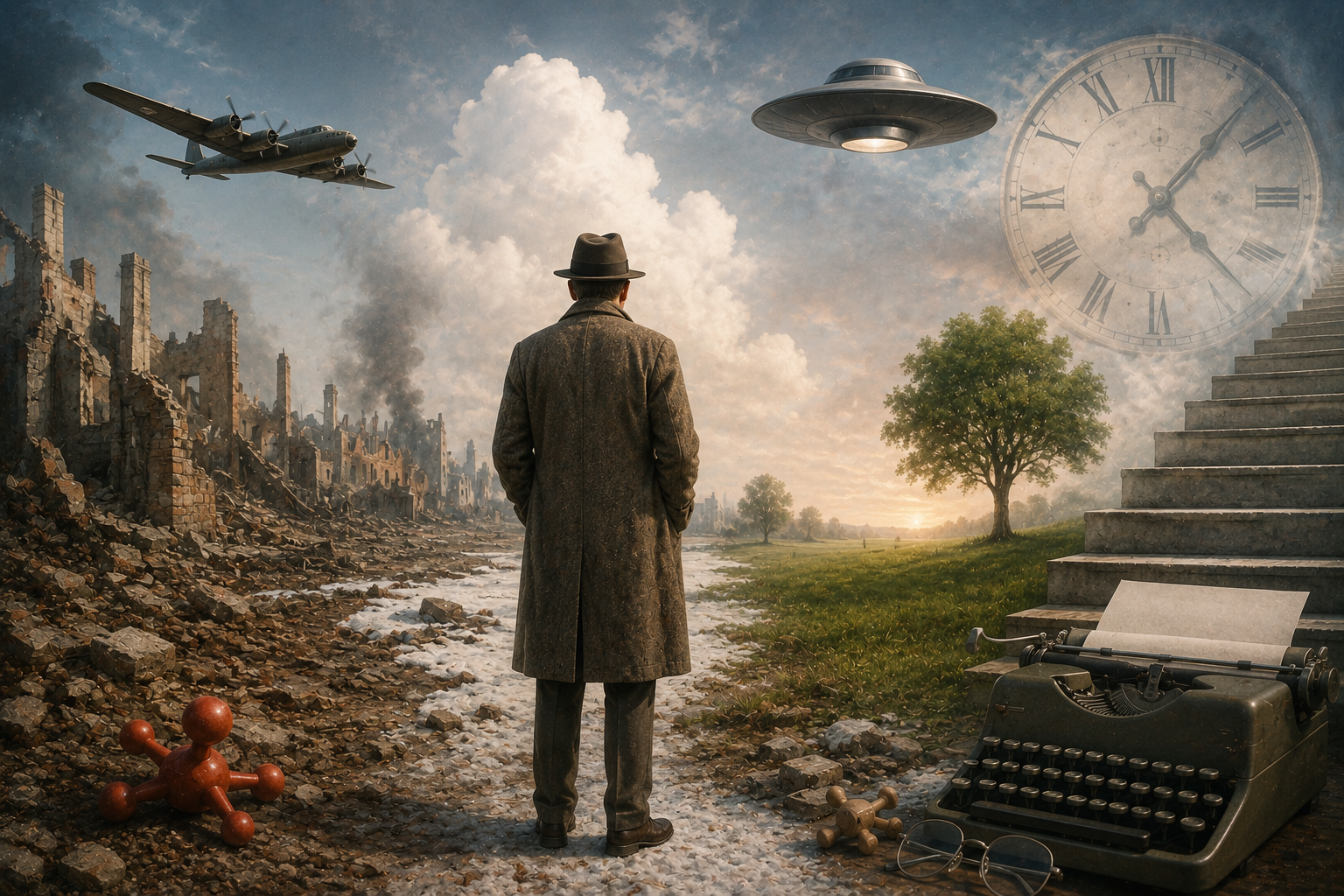
Slaughterhouse-Five by Kurt Vonnegut is one of the most unusual war novels students read in high school or college. This Slaughterhouse-Five summary and analysis gives you a clear path through the plot, structure, conflicts, and meaning without making the book feel harder than it is.
The novel is strange on purpose. Vonnegut uses time travel, dark humor, and broken order to show how war breaks the human mind.
In this Guide
- Quick overview
- Plot summary
- Nonlinear structure
- Main conflicts
- Major themes
- Key characters
- Symbols and motifs
- Close reading tips
- Books to read next
- FAQ
- Key takeaway
Slaughterhouse-Five Summary and Analysis: Quick Overview
Vonnegut blends war fiction with science fiction to explore trauma and memory.
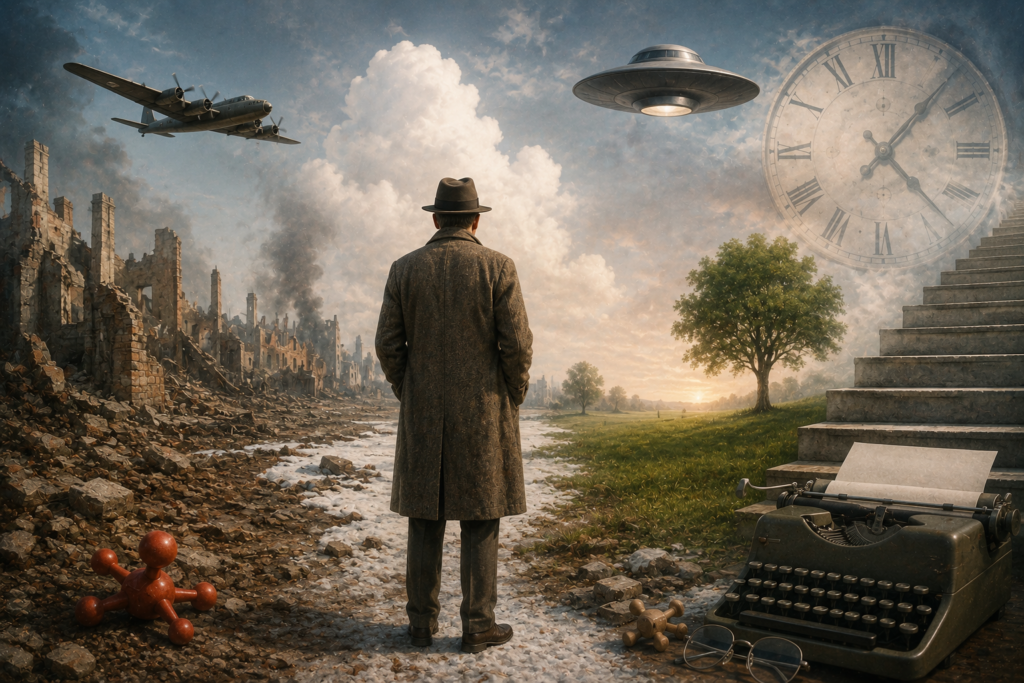
Slaughterhouse-Five follows Billy Pilgrim, an American soldier who survives the bombing of Dresden during World War II. After the war, Billy lives an ordinary-looking life, but his mind keeps jumping through time.
A good Slaughterhouse-Five summary and analysis should not treat those time jumps as random tricks. They are the heart of the novel. Billy does not move through life in a straight line because trauma does not feel straight.
The book was published in 1969, during the Vietnam War era. Vonnegut had survived Dresden as a prisoner of war, so the novel feels personal even when it becomes absurd.
For reliable author background, students can read the Britannica profile of Kurt Vonnegut.
Slaughterhouse-Five Summary and Analysis of the Plot
The plot moves across Billy Pilgrim’s life instead of following one straight timeline.
This Slaughterhouse-Five summary and analysis starts with the basic story. Billy Pilgrim is born in Ilium, New York. He becomes a weak and awkward soldier in World War II, then gets captured by German forces during the Battle of the Bulge.
Billy and other prisoners are taken to Dresden, Germany. They stay in a meat locker beneath a slaughterhouse, which saves them when Allied bombs destroy the city.
After the war, Billy returns home. He becomes an optometrist, marries Valencia, and has children. On the surface, he lives a safe middle-class life.
Yet Billy says he has become unstuck in time. He jumps from childhood to war, from marriage to old age, and from Earth to the planet Tralfamadore.
On Tralfamadore, aliens place Billy in a zoo-like exhibit with Montana Wildhack, a movie star. The aliens believe all moments exist at once. To them, death is only one moment among many.
The novel ends without a clean victory or lesson. After the Dresden bombing, silence fills the world. A bird calls out, and the odd sound shows how language fails after mass death.
How the Nonlinear Structure Works
The broken structure helps readers feel the damage that war leaves behind.
Most novels move from beginning to middle to end. Slaughterhouse-Five does not. It repeats scenes, skips years, and returns to Dresden again and again.
For any Slaughterhouse-Five summary and analysis, this structure matters as much as the plot. Billy’s life is not told out of order just to surprise the reader. The form matches his inner state.
Trauma often returns without warning. A smell, sound, or image can pull a person back into the past. Billy’s time travel works like that, even when the novel gives it a science fiction frame.
Other famous books use strange structure to show memory. The Great Gatsby moves through Nick’s memories, and The Odyssey uses travel to test what a person can survive. Vonnegut’s version is colder. Billy does not seem stronger after his journey.
The order also keeps readers from seeing war as a neat adventure. There is no proud march toward a heroic ending. There are only moments, some funny and some awful, placed side by side.
Main Conflicts in Slaughterhouse-Five
The novel’s conflicts are quiet, but they cut deep.
The biggest conflict is human life versus war. Soldiers are treated like objects. Cities become targets. Civilians die far from the battlefield.
Billy also faces an inner conflict. He cannot fully face what happened in Dresden, so his mind moves away from it. His time travel may be real inside the story, but it also acts like a symbol of escape.
Another conflict is free will versus fate. The Tralfamadorians claim that every moment is fixed. They tell Billy not to worry about death because all moments always exist.
This idea comforts Billy, but Vonnegut does not fully endorse it. If everything is fixed, people may stop taking responsibility. That danger matters in a book about war.
There is also a conflict between words and horror. Vonnegut wants to write about Dresden, but he knows words cannot fully explain it. That is why the novel often turns to silence, jokes, and repeated phrases.














Major Themes and Literary Meaning
Vonnegut asks readers to question war stories that make violence look noble.
One major theme is the absurdity of war. Soldiers do not always act like brave heroes. Many are scared, hungry, confused, or very young.
Many students use a Slaughterhouse-Five summary and analysis to understand why the book feels funny and sad at the same time. That mix is called dark humor. Vonnegut uses it because plain grief may not be enough.
Another key theme is trauma. Billy survives Dresden, but survival does not mean peace. His later life shows how the past can keep control over the present.
The novel also explores death. The repeated phrase so it goes appears after deaths large and small. It can sound calm, empty, or bitter depending on the scene.
Free will is another theme. The Tralfamadorians say no one can change anything. Vonnegut lets that idea stand, but he also warns readers not to accept cruelty too easily.
At its core, the novel suggests that war cannot be made beautiful by style, speeches, or patriotic myths. It leaves broken bodies and broken minds.
Key Characters to Know
The characters often feel odd because Vonnegut wants to challenge heroic war fiction.
Billy Pilgrim is the main character. He is passive, weak, and emotionally distant. This makes him very different from a classic war hero.
Kurt Vonnegut appears as a narrator figure. He reminds us that the story comes from memory, research, and personal pain.
Roland Weary is a cruel American soldier who wants to imagine himself as a hero. His fantasy of war clashes with the ugly truth.
Edgar Derby is an older soldier who seems decent and brave. His death feels senseless, which supports the book’s anti-war message.
Tralfamadorians are aliens who see all time at once. They help explain Billy’s worldview, but they also make that worldview seem strange and dangerous.
Montana Wildhack appears in Billy’s Tralfamadorian life. Her role shows how Billy’s imagined escape still has limits and problems.
Symbols and Motifs in Slaughterhouse-Five
Vonnegut uses repeated images to connect war, memory, and helplessness.
The slaughterhouse is the most important setting symbol. It saves Billy’s life, yet its name links humans to animals sent to be killed.
Time travel symbolizes trauma and escape. Billy moves through time because he cannot stay safely in one moment.
The phrase so it goes is a motif. It repeats after death and forces readers to notice how often death appears in the book.
Dresden becomes a symbol of mass destruction. The city is not just a place. It is a wound that the novel keeps touching.
The bird call near the end shows the failure of human speech. After horror, a simple sound may say more than a full speech.
How to Read Slaughterhouse-Five Closely
Close reading helps you see how Vonnegut builds meaning through small choices.
To turn this Slaughterhouse-Five summary and analysis into a strong essay, focus on patterns. Track repeated phrases, sudden time shifts, and moments where humor appears near death.
Ask why a scene appears where it does. If Billy jumps from a war scene to a normal family scene, Vonnegut may show that the past still lives inside the present.
Pay close attention to tone. A sentence may sound simple, but it may carry grief, shock, or anger under the surface.
If you need a method, read our guide to close reading in literature. It can help you move from summary to analysis.
For extra support, you can also explore our student literature study guides as you plan your notes or essay.
Essay Ideas for Students
Strong essay topics come from tension, not just from plot facts.
You could write about Billy Pilgrim as an anti-hero. Unlike a brave warrior in a traditional epic, Billy often drifts through events rather than shaping them.
You could also focus on time. Does Billy’s time travel protect him from pain, or does it trap him inside it?
Another strong angle is Vonnegut’s anti-war style. Instead of long battle scenes, he uses irony, plain language, and strange comedy.
A thesis might say: Vonnegut uses Billy’s broken timeline to show that trauma turns memory into a prison.
Another thesis might say: The Tralfamadorian view of time comforts Billy, but the novel warns readers against using fate as an excuse for violence.
Books to Read Next
These books pair well with Vonnegut because they also question war, memory, or moral choice.
- Catch-22 by Joseph Heller
- The Things They Carried by Tim O’Brien
- Mother Night by Kurt Vonnegut
Each book asks what war does to truth. They can help you compare tone, structure, and point of view across modern literature.
FAQ: Slaughterhouse-Five Summary and Analysis
Here are quick answers to common student questions.
What is Slaughterhouse-Five mainly about?
The best Slaughterhouse-Five summary and analysis starts with Billy Pilgrim, a World War II survivor who becomes unstuck in time. The novel shows how Dresden haunts him for the rest of his life.
Is Slaughterhouse-Five an anti-war novel?
Yes. Vonnegut attacks the idea that war is noble or clean. He shows war as chaotic, absurd, and deeply harmful.
Why is the book out of order?
The broken order reflects trauma. Billy cannot leave the past behind, so the novel moves through time the way his mind does.
What do the Tralfamadorians mean?
They represent a view of time where every moment already exists. Their ideas comfort Billy, but they also raise hard questions about free will.
Why does the phrase so it goes repeat?
It appears after death. The repetition makes death feel common, but it also shows how hard it is to respond to loss.
Key Takeaway
A strong Slaughterhouse-Five summary and analysis should show that the novel is not confusing by accident. Its broken form, dark humor, and science fiction ideas all point to one truth: war damages people in ways a normal story cannot fully explain.












