

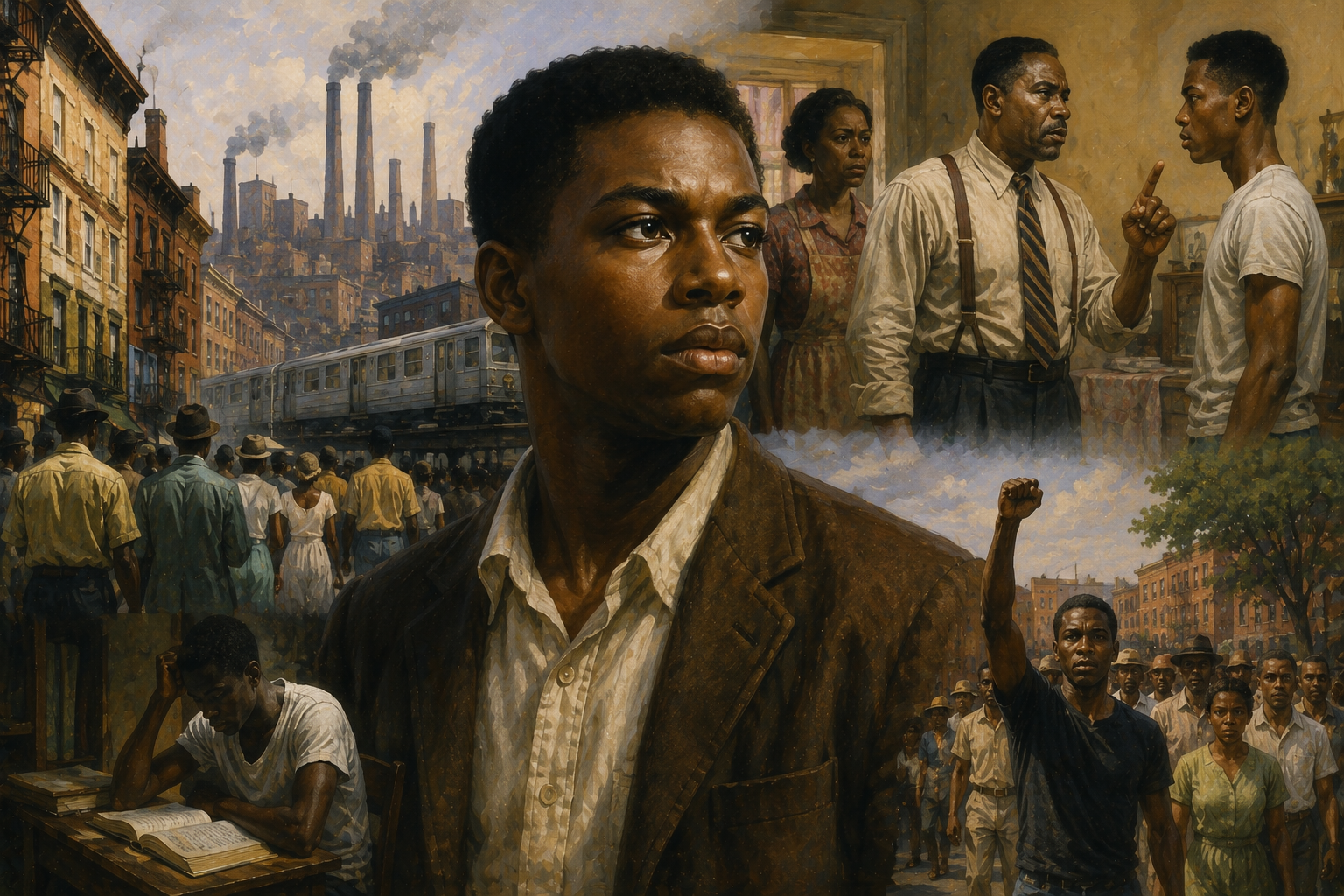
Native Son by Richard Wright is a powerful novel about fear, racism, pressure, and the search for identity. This guide explains the major themes in Native Son in clear language, so students can build stronger class notes and essays.
This post discusses major plot events, so expect spoilers.
In this Guide
- Why the themes matter
- Fear and survival
- Race, power, and social control
- Violence and moral pressure
- Blindness and misunderstanding
- Identity, shame, and self-image
- Fate, choice, and the city
- How to write about the themes
- FAQ
Why Themes in Native Son Matter
The novel is not just about one crime.
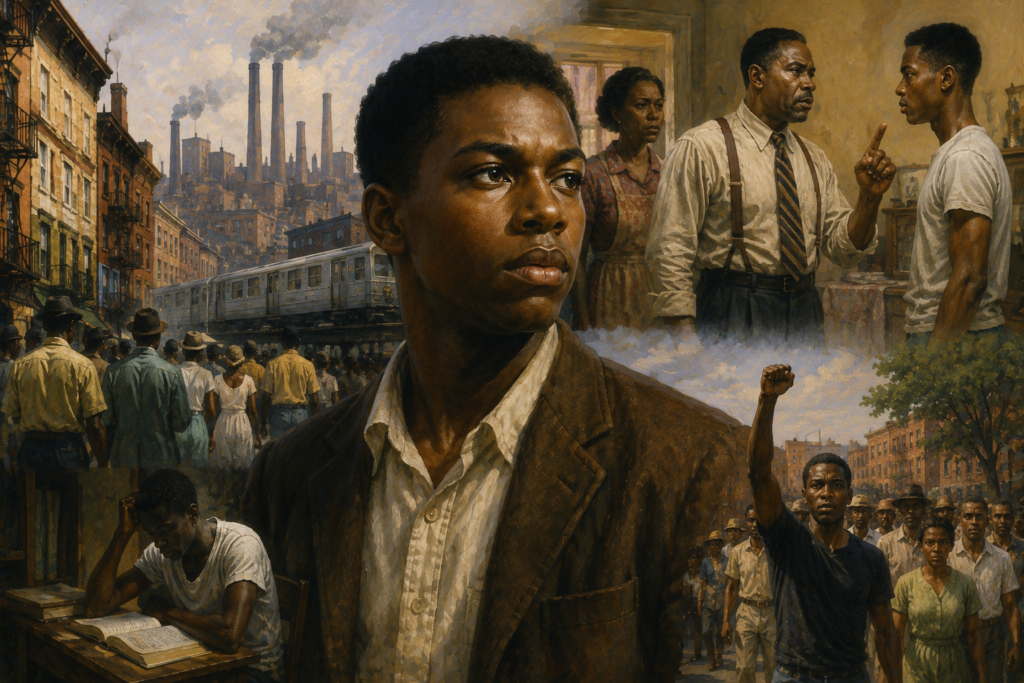
When students study themes in Native Son, they should look at the whole world Bigger Thomas lives in. Wright shows a society that limits Bigger before he makes any choice of his own.
The novel asks hard questions. How does fear shape a person? What happens when a society treats someone as less than human? Can a person be fully blamed for choices made under extreme pressure?
These questions make the book useful for AP Literature and college classes. The novel connects private action with public systems, which is one reason it still feels urgent.
Themes in Native Son: Fear and Survival
Fear drives much of Bigger’s behavior.
One of the central themes in Native Son is fear as a survival instinct. Bigger often feels watched, judged, and trapped. He does not move through Chicago with ease. He moves through it with dread.
His fear is not simple nervousness. It comes from racism, poverty, and the threat of violence. Bigger expects danger because the world has taught him to expect it.
This helps explain why he often acts quickly and badly. The novel does not excuse his actions, but it asks readers to see the pressure behind them.
A useful comparison is Franz Kafka’s The Trial, where the main character also faces a system that feels huge and hard to understand. In both works, fear grows because the forces around the character seem too large to fight.
Themes in Native Son: Race, Power, and Social Control
Wright shows racism as a system, not just a personal feeling.
Race is one of the most important themes in Native Son because it shapes where Bigger lives, where he can work, and how others see him. The novel shows racism through housing, jobs, police power, and public opinion.
The Daltons appear polite, but they still profit from the unfair housing system that traps Black families in overcrowded areas. This detail matters because Wright does not present racism only as open hatred.
He also shows the harm caused by people who believe they are kind but do not question their own power. Mrs. Dalton gives money to charity, yet her family’s wealth connects to the same system that hurts Bigger’s family.
This is why the themes in Native Son are complex. The novel suggests that racism can hide inside comfort, wealth, and good manners.
For historical background, students may find Britannica’s overview of Richard Wright helpful.













Themes in Native Son: Violence and Moral Pressure
Violence in the novel is both personal and social.
Violence is one of the most disturbing themes in Native Son. Bigger commits terrible acts, and the novel never makes those acts easy to accept.
At the same time, Wright shows a world already full of violence. There is police violence, mob violence, and the quieter violence of poverty. Bigger’s actions happen inside that larger pattern.
This creates moral tension. Readers must face Bigger’s guilt while also seeing the forces that shape him. That tension is part of what makes the novel hard and important.
In To Kill a Mockingbird, racism also shapes the legal system and public judgment. Wright’s novel is darker, though, because it keeps readers close to a character who both suffers harm and causes harm.
Blindness and the Limits of Understanding
Many characters cannot truly see one another.
Blindness works as a symbol in the novel. Mrs. Dalton is physically blind, but many other characters are morally or socially blind.
Some white characters cannot see Bigger as a full person. They see an idea, a fear, or a project. Even the people who claim to help him often fail to understand his life.
Bigger also struggles to see himself clearly. He has been surrounded by images that tell him he is dangerous, unwanted, or powerless. Over time, those images shape how he thinks and acts.
The themes in Native Son often connect here. Fear, race, violence, and identity all depend on who gets seen and who gets ignored.
Identity, Shame, and Self-Image
Bigger’s sense of self is shaped by the world around him.
Bigger does not begin the novel with a strong, free identity. He feels shame about his poverty and anger about his lack of choices. He also fears being seen as weak.
Wright shows how painful it can be when a person has no safe way to define himself. Bigger often performs toughness because he does not know how else to protect his pride.
This is one reason the novel works well in literary analysis. Bigger is not a flat symbol. He is frightening, hurt, angry, and human.
Ralph Ellison’s Invisible Man also explores identity under racism. That novel asks what happens when society refuses to see a Black man clearly. Wright asks a related question in a harsher way.
Fate, Choice, and the City
The setting makes Bigger’s choices feel narrow.
Chicago is more than a background. The city is built with boundaries that Bigger feels every day. He knows which spaces seem open to him and which ones do not.
This creates one of the key conflicts in the novel: fate versus choice. Bigger chooses, but his choices happen inside a world that has already limited him.
Good essays on themes in Native Son should avoid saying Bigger has no responsibility. They should also avoid saying he is fully free. Wright wants readers to sit inside that uncomfortable middle space.
That middle space is where the novel becomes most powerful. It asks whether justice can exist in a society built on unequal power.
How to Write About Themes in Native Son
A strong essay should connect theme to character, setting, and conflict.
If your teacher asks for an essay on themes in Native Son, start with a clear claim. Do not just write, Racism is a theme. Say what the novel argues about racism.
For example, you might argue that Wright presents racism as a force that shapes both public systems and private fear. That claim gives you room to discuss housing, the Dalton family, and Bigger’s reactions.
Use short quotes and explain them. A quote should not stand alone. Show how the words reveal fear, pressure, or a limit placed on Bigger.
If you need help building a thesis or organizing body paragraphs, use this guide on how to write a literary analysis essay.
For quick review before class, you can also check our Native Son theme study notes.
Books to Read Next
These books can deepen your understanding of Wright’s ideas.
If your class uses Amazon, a school store, or a library database, search for these titles:
- Native Son by Richard Wright
- Black Boy by Richard Wright
Black Boy is useful because it helps students understand Wright’s life and the social world that shaped his writing.
FAQ About Themes in Native Son
Here are short answers to common student questions.
What are the main themes in Native Son?
The main themes include fear, racism, violence, identity, blindness, and social pressure. The novel shows how these forces shape Bigger’s life.
Is fear the most important theme in Native Son?
Fear is one of the most important themes because it drives many of Bigger’s choices. It also shows how racism affects the mind, not just the body.
Does Native Son excuse Bigger’s crimes?
No. The novel shows his guilt, but it also asks readers to study the world that helped create his fear and rage.
Why is blindness important in the novel?
Blindness shows how characters fail to see the truth about one another. It also points to the limits of sympathy without real understanding.
How should I write a thesis about the novel?
Make a claim about what Wright says through the theme. Then connect that claim to scenes, symbols, and character choices.
Key Takeaway
The themes in Native Son show how fear and racism can shape a life before one choice is ever made.
Wright’s novel is difficult because it refuses easy answers. For students, that difficulty is the point: the book asks you to think about guilt, power, and humanity at the same time.












