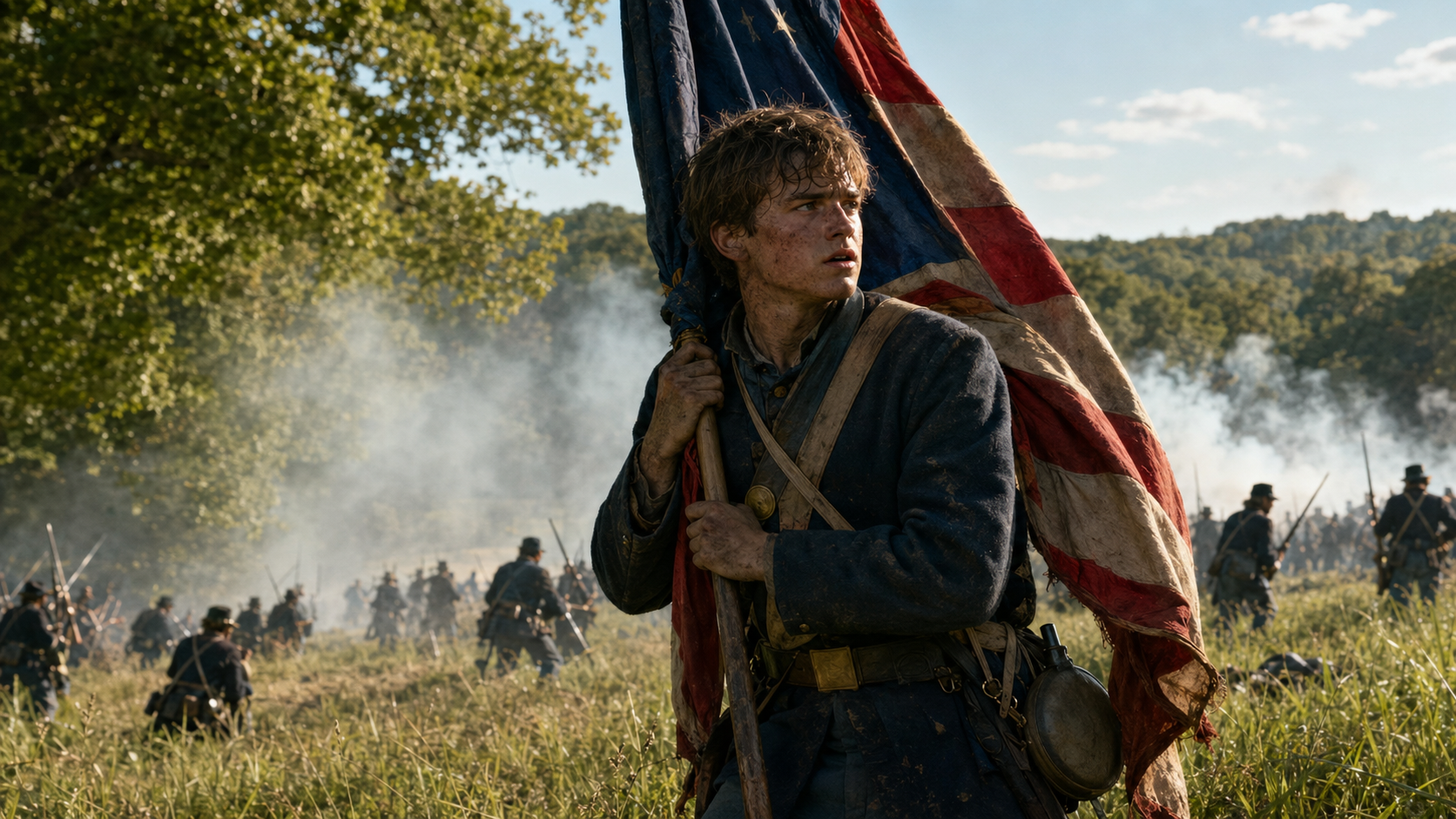
A simple explanation of the most important symbols and images in the text.
The symbols in The Red Badge of Courage help readers see Henry Fleming’s fear, pride, and changing idea of bravery. Stephen Crane uses simple images, like wounds, colors, nature, and battle noise, to show what Henry cannot always say out loud.
In this Guide
- Why symbols matter in the novel
- The main symbols and what they mean
- Nature and color imagery
- How symbols connect to theme
- How to study symbolism for class
- Helpful books to look up
- FAQ
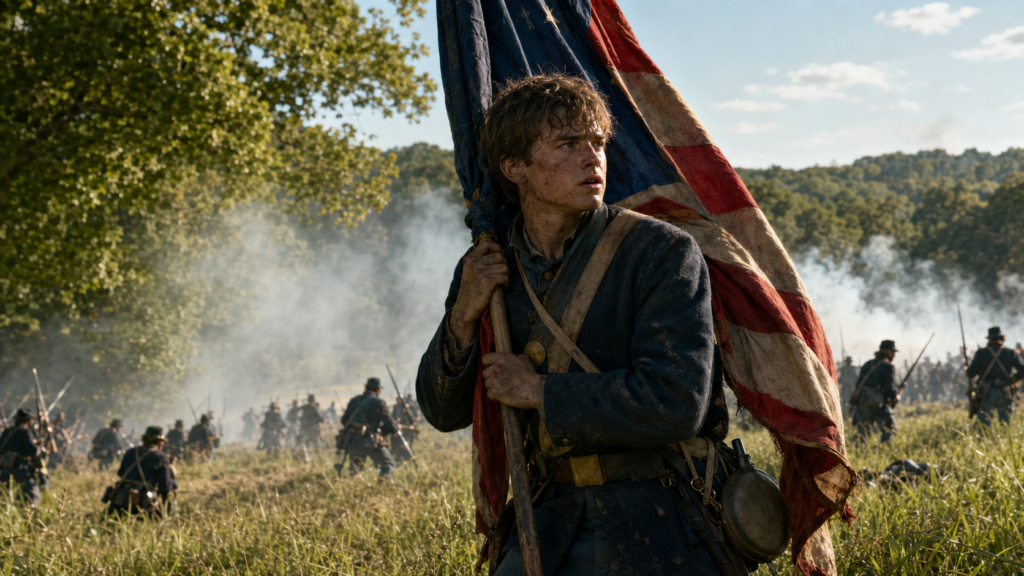
Why symbols in The Red Badge of Courage matter
Crane uses symbols to make war feel personal, not just historical.
Henry does not fully understand himself at the start of the novel. He wants to be brave, but he also fears pain, shame, and death.
The symbols in The Red Badge of Courage let us track his growth. A wound can mean honor, but it can also reveal Henry’s need for approval.
This is why the novel works well for AP Literature and college essays. Its symbols often point to larger themes like courage, self-deception, and the gap between fantasy and real life.
If you need help with the basic method, start with this guide on how to find symbolism in a story.
Main symbols in The Red Badge of Courage
The most important symbols show Henry’s confused view of courage.
The red badge
The main symbols in The Red Badge of Courage begin with the title image. A “red badge” means a wound from battle.
To Henry, a wound first feels like proof. He thinks an injury would show that he has faced danger and earned respect.
The problem is that Henry wants the sign of courage before he has truly earned courage. He wants the look of heroism, not the pain or duty behind it.
This makes the red badge a symbol of **honor and insecurity**. Henry wants others to see him as brave because he does not yet feel brave inside.
Henry’s head wound
Henry later gets hurt, but not in a noble charge. A panicked soldier hits him in the head.
This wound looks like a battle mark, but its real meaning is more complex. It hides Henry’s shame from others, yet it also reminds readers that appearance can be false.
Crane uses this moment to ask a sharp question: Is courage about what others see, or what a person knows about himself?
The tattered soldier
The tattered soldier is weak, hurt, and honest. He has suffered in battle, and his body shows it.
To Henry, the tattered soldier becomes a painful mirror. Henry has run from battle, while this man has truly faced it.
His suffering makes Henry feel guilt. The soldier symbolizes **real sacrifice**, not the heroic image Henry wants.
Jim Conklin’s death
Jim’s death is one of the most serious scenes in the novel. It strips away Henry’s romantic ideas about war.
Jim does not die like a perfect storybook hero. His death is painful, strange, and lonely.
For Henry, Jim becomes a symbol of the real cost of war. Courage is no longer just a dream about glory. It is tied to fear, loss, and loyalty.
Nature and color symbols in The Red Badge of Courage
Nature often feels calm while humans destroy each other.
Crane often shows nature as distant from human suffering. The sun rises, the trees stand, and the world moves on while soldiers panic and die.
These symbols in The Red Badge of Courage make war seem small against the larger world. That can feel cold, but it also fits Crane’s style.
Crane is often linked to literary naturalism. In naturalist writing, people face forces they cannot fully control. You can read more about Crane’s life and work at Britannica.
The forest
The forest gives Henry a place to escape after he runs. At first, it seems peaceful.
Yet the forest does not solve his fear. It only gives him space to think, panic, and create excuses.
The forest can symbolize **escape**, but it also shows Henry’s isolation. He is away from battle, but not free from shame.
The corpse in the chapel-like place
Henry finds a dead soldier in a quiet, shaded area. The scene feels almost holy, but the corpse makes it disturbing.
This image breaks Henry’s false peace. Nature may look calm, but death is still present.
The corpse shows that Henry cannot hide from war’s truth. Even the quiet places carry fear.
Red
Red appears through wounds, battle, and the title itself. It stands for blood, pain, and the public mark of combat.
Red can also suggest Henry’s desire for honor. He wants a red badge because he thinks it will give him a new identity.
That double meaning is important. Red means both glory and suffering.
Smoke and fog
Battle scenes often feel unclear. Smoke, noise, and confusion block Henry’s view.
This matters because Henry’s mind is unclear too. He cannot always tell if he is brave, cowardly, selfish, or loyal.
Smoke becomes a symbol of **confusion in war**. It also reflects Henry’s moral uncertainty.

How symbols in The Red Badge of Courage build theme
The symbols matter because they connect Henry’s private fear to the novel’s big ideas.
One major theme is that courage is not simple. At first, Henry treats courage like a prize he can wear.
By the end, he learns that courage comes from action, not image. He cannot just look brave. He must face fear and keep his place with the group.
The red badge, the tattered soldier, and the battle smoke all support this idea. They show how hard it is to know what true bravery looks like.
Another key theme is self-deception. Henry often tells himself stories to feel better. He tries to turn fear into wisdom and retreat into strategy.
Crane’s symbols expose those lies. Like the green light in The Great Gatsby, the red badge carries both hope and illusion. Like the scarlet letter in Hawthorne’s novel, it is a public sign that holds private pain.
You can read the public domain text of The Red Badge of Courage at Project Gutenberg if you want to check scenes closely.
How to Study symbols in The Red Badge of Courage
Good symbolism notes connect an image to a theme, not just a definition.
Do not write only that red means blood. Ask what blood means to Henry in that scene.
At one moment, it may mean honor. At another, it may mean fear or shame.
Use this simple pattern for a strong paragraph:
- Name the symbol.
- Explain where it appears.
- Connect it to a theme.
- Show how Henry reacts to it.
For example, Henry’s head wound looks like proof of bravery, but readers know it came from confusion. That gap supports the theme of appearance versus truth.
For more practice, try our symbolism reading strategy before you write your next essay.
For a quick classroom or study tool, you can also use our symbolism study resource to track images, meanings, and themes as you read.
Relevant Books to Search on Amazon or at Your Library
These books can help you study Crane and the novel with more context.
- The Red Badge of Courage by Stephen Crane
- Stephen Crane: A Life of Fire by Paul Sorrentino
FAQ: symbols in The Red Badge of Courage
What are the most important symbols in The Red Badge of Courage?
The strongest symbols in The Red Badge of Courage include the red badge, Henry’s head wound, the tattered soldier, Jim’s death, nature, red color imagery, and battle smoke.
What does the red badge symbolize?
It symbolizes a battle wound, but it also shows Henry’s desire for honor. He wants proof that he is brave before he fully understands bravery.
Why is nature important in the novel?
Nature often stays calm while soldiers suffer. This shows how small human fear can seem in a large, indifferent world.
How does symbolism show Henry’s growth?
Henry begins by caring about how courage looks. By the end, he has a deeper sense of duty and action.
Key Takeaway
The best symbols in The Red Badge of Courage show that courage is not a costume or a wound. True bravery grows when Henry faces fear, sees war clearly, and stops chasing a perfect heroic image.