
Flash Memoir Prompt: Last Time a Particular Season Felt the Way It Used to Feel

season prompt

A brief, sensory writing invitation for remembering the last time a season felt familiar, whole, and emotionally true in the way it once did.

Maybe it was the first cold night when the heat clicked on and the room smelled faintly dusty. Maybe it was a summer evening when the screen door slapped shut behind someone you loved. Or maybe it was autumn, and for one afternoon the light, the leaves, and the air all matched the version of the season you still carry from childhood.

This flash memoir prompt last time particular season felt familiar asks you to notice that strange moment when time folds. A season returns, but you know you are different. The weather may be the same. The feeling is what has changed.

season prompt

The Prompt

Write about the last time a particular season felt the way it used to feel.

This prompt works because seasons are more than weather. They hold routines, family patterns, school calendars, holidays, sports, chores, clothing, meals, and moods. A single season can store years of memory.

You do not have to explain your whole relationship with winter, spring, summer, or fall. Instead, choose one moment when a season briefly felt like its old self. The memory may be happy, lonely, ordinary, or mixed. What matters is that the feeling was sharp enough for you to remember it now.

Why This Memory Matters

Some seasons stop feeling the same after a move, a loss, a graduation, a divorce, a new job, or a change in health. Sometimes nothing dramatic happens. You just grow up, and one day December no longer feels like December used to feel.

This kind of memory can reveal a quiet before-and-after in your life. Maybe summer used to mean freedom, then became full-time work. Maybe spring used to mean softball games and wet grass, then became allergy medicine and bills. Maybe winter once meant everyone under one roof, until the roof changed.

A flash memoir prompt last time particular season felt old again can help you write about change without naming it too soon. You can begin with the smell of sunscreen, the sound of snow under boots, or the sight of your mother pulling a heavy coat from the hall closet. The meaning can arrive later.

Seasons can also act like symbols in memory. If you enjoy studying how ordinary details carry meaning, this guide on how to find symbolism in a story may help you see your own seasonal images with fresh eyes.

How to Approach This Prompt

Begin with a physical detail. Do not start by explaining the full history of the season. Start with what your body noticed first.

Was the air warm against your arms? Did the snow look blue at dusk? Did the house smell like cut grass, cinnamon, rain, lake water, or furnace dust? Let one detail open the door.

Next, narrow the memory to one scene. A scene has a place, a moment, and someone doing something. You might be sitting on a porch, walking home from school, standing in a grocery store aisle, or driving past a field at sunset.

Try writing the first few lines without explaining what the moment meant. Stay close to the action. Let the reader see what you saw before you tell them why it mattered.

For example, instead of starting with “Christmas never felt the same after my parents split up,” you might start with “My dad plugged in the colored lights, and half the strand went dark.” That small image can carry the larger truth.

If you are a student, you can treat your own memory the way you would treat a passage in class. Circle the strongest detail. Underline the line where the mood changes. This simple habit is close to the skills in how to annotate literature, except this time the text is your own life.

Keep the piece short. Flash memoir is not about saying everything. It is about choosing one bright piece of the truth and holding it still for a moment.

A Quick Example

The last summer that felt like summer was the year I was sixteen and my brother still lived at home. Every night after dinner, we rode our bikes to the corner store with quarters in our pockets. The air smelled like hot pavement and someone’s grill. He always bought grape soda, and I always said it was disgusting, even though I asked for a sip before we got back on our bikes. One night, we stayed out until the streetlights came on, then longer. No one called us. No one needed us. The whole neighborhood seemed to be breathing slowly. By the next summer, he had a job, a car, and a girlfriend. I still rode to the store once or twice, but grape soda just tasted purple.

Try It Yourself

Choose one season and one specific time it felt the way it used to feel. Do not worry if the memory seems small. A small scene can hold a large shift.

Set a timer for ten minutes. Begin with the detail that returns first. Write about where you were, what the air felt like, and what made the moment feel familiar. Then add the small truth underneath it: what had changed, what had ended, or what you wished could stay.

If the writing turns sad, let it. If it turns funny, follow that too. The season may have felt familiar for only five minutes, but five honest minutes can be enough for a strong flash memoir.

Return to the focus of this flash memoir prompt last time particular season felt like itself, and ask one final question: what did that season give me back, even briefly?

Want More Flash Memoir Prompts?

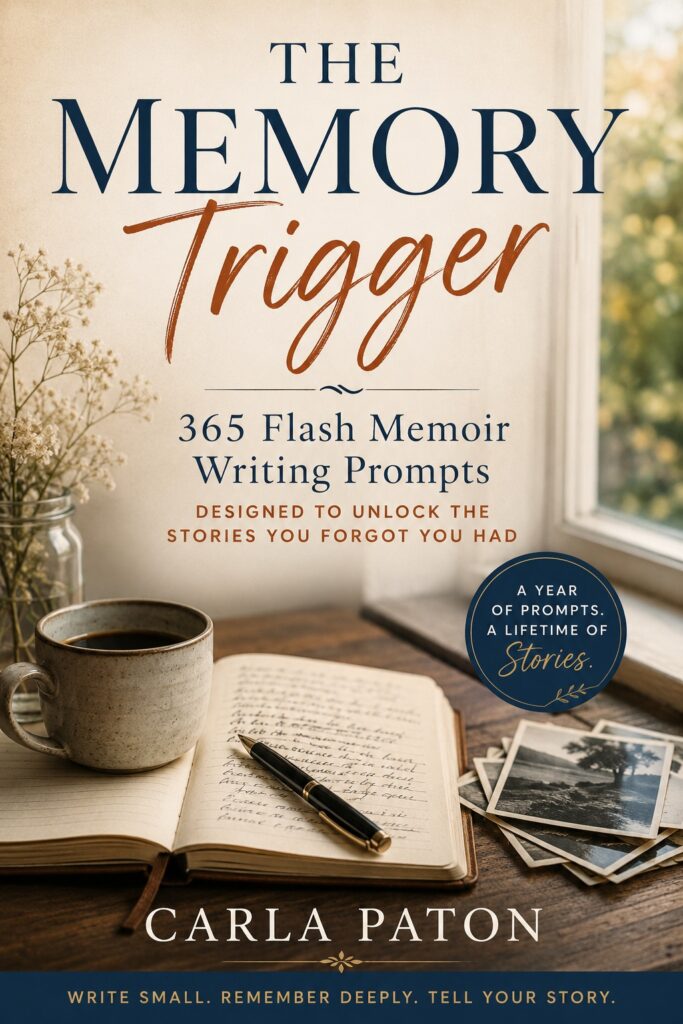
Explore all 365 prompts in The Memory Trigger: 365 Flash Memoir Writing Prompts. Use them one at a time whenever you want a short, focused way to turn real memories into meaningful writing.

The Memory Trigger

Flash Memoir Prompt: Last Time You Felt Like a Child

Rapid Reads Press

A brief, tender writing invitation about the last time you felt small, safe, silly, scared, or suddenly young again.

Maybe it happened in a grocery store when you reached for the cereal you loved as a kid. Maybe it came over you during a storm, when thunder made you want to call someone older and wiser. Or maybe you felt it while laughing too hard over something completely ridiculous, the kind of laugh that makes you forget your age for a minute.

This flash memoir prompt last time felt like child asks you to notice one of those moments when adulthood loosened its grip. It does not have to be dramatic. In fact, the smaller the scene, the more honest it may become.

childhood prompt

The Prompt

Write about the last time you felt like a child.

This prompt can open a memory because feeling like a child is rarely about age alone. It may be about needing comfort. It may be about wonder. It may be about shame, joy, fear, play, or wanting someone else to take charge for a little while.

When you write from this prompt, try not to rush toward the meaning. Stay with the moment first. What room were you in? What did your hands do? What sound made you feel younger than you are?

Why This Memory Matters

Childhood does not fully disappear. It follows us in habits, cravings, jokes, fears, and soft spots we may not understand until they rise up again.

The last time you felt like a child might reveal a need you rarely admit. Maybe you wanted your mother’s soup when you were sick. Maybe you felt helpless while filling out a confusing form. Maybe you stood in front of a teacher, boss, doctor, or parent and felt your voice shrink.

It could also be a happy memory. You might have felt childlike while sledding, dancing in the kitchen, opening a gift, or walking into a library and smelling old paper. If you want to sharpen the way you notice small details, you might enjoy this guide on how to annotate literature, since close reading can also train you to read your own memories with care.

This kind of memory matters because it shows the meeting point between who you were and who you are now. A flash memoir prompt last time felt like child can help you write about that meeting point without turning it into a long life story.

How to Approach This Prompt

Begin with one physical detail. Choose something your body remembers before your mind explains it.

Maybe your knees were tucked under your chin. Maybe your face burned. Maybe you held a mug with both hands. Maybe you wanted to hide behind someone taller.

Once you find that detail, narrow the memory to one scene. Do not try to cover your whole childhood or explain your entire family history. Stay inside ten minutes, or even two.

Write what you noticed before you write what it meant. For example, instead of starting with “I felt vulnerable,” begin with the coat sleeve you pulled over your hand. Instead of “I was happy,” begin with the way you ran across wet grass in your socks.

You can also pay attention to tone. A memory like this might feel funny on the surface but sad underneath, or tender at first and then sharp. If you want help naming that difference, this simple explanation of tone vs. mood in literature may help you think about the feeling your scene creates.

One clear way to begin is with this sentence: “The last time I felt like a child, I was…” Then name the place. Keep going from there.

A Quick Example

The last time I felt like a child, I was sitting on the paper-covered table at urgent care with my shoes dangling above the floor. I am forty-one, but the crinkle of that paper made me feel eight. The nurse asked when the pain started, and I looked at my husband before I answered, as if he might know better than I did. My throat hurt more from trying not to cry than from being sick. When the doctor said it was only an infection, I nodded like a good student. In the car, I asked if we could stop for a milkshake. I meant it as a joke, but when he said yes, I felt such relief that I turned my face toward the window.

Try It Yourself

Set a timer for ten minutes and write from the prompt without planning the ending. Focus on the moment when you first noticed the feeling. Did it arrive as comfort, panic, delight, or embarrassment?

If the memory feels too big, choose one object from the scene. Write about the blanket, the cereal box, the hospital bracelet, the sidewalk chalk, or the phone in your hand. Let that object carry you into the truth of the moment.

You do not need to explain everything. A strong flash memoir often leaves a little space around the memory. Trust the scene. Trust the detail. Let the childlike feeling show itself through what you saw, said, wanted, or could not say.

This flash memoir prompt last time felt like child works best when you are honest about the exact kind of smallness you felt. Small can mean safe. Small can mean powerless. Small can mean full of wonder. Let your memory decide.

Want More Flash Memoir Prompts?

If this prompt helped you find a scene worth saving, keep going with short, focused memories. Explore all 365 prompts in The Memory Trigger: 365 Flash Memoir Writing Prompts.

The Memory Trigger
error

Enjoy this article? Please spread the word :)

Follow by Email
BLUESKY
fb-share-icon
Reddit
LinkedIn
Share
RSS