Symbolism in Poetry Explained

Poetry Symbolism

Symbolism in Poetry Explained means learning how poets use objects, colors, places, or actions to suggest deeper ideas. Once you understand symbols, poems feel less confusing and much more meaningful.

In this Guide

  • What symbolism means in poetry
  • How symbols work
  • Famous examples from literature
  • How symbolism improves essay analysis
  • Common mistakes to avoid
  • Book suggestions
  • FAQ
Symbolism in poetry

Symbolism in Poetry Explained: What It Means

A symbol is something that stands for more than itself.

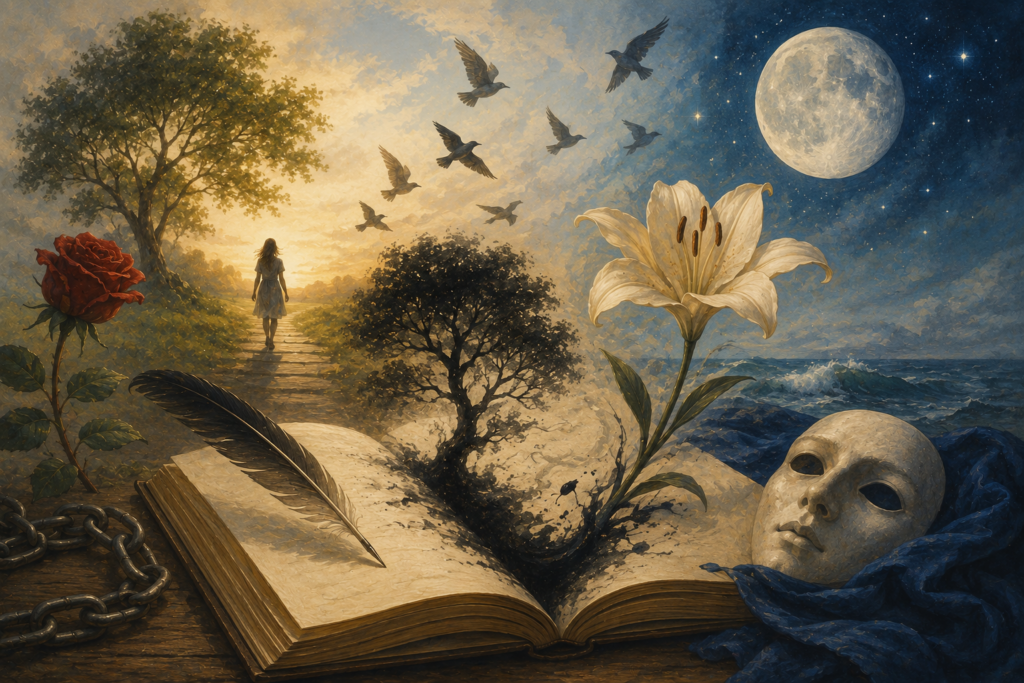
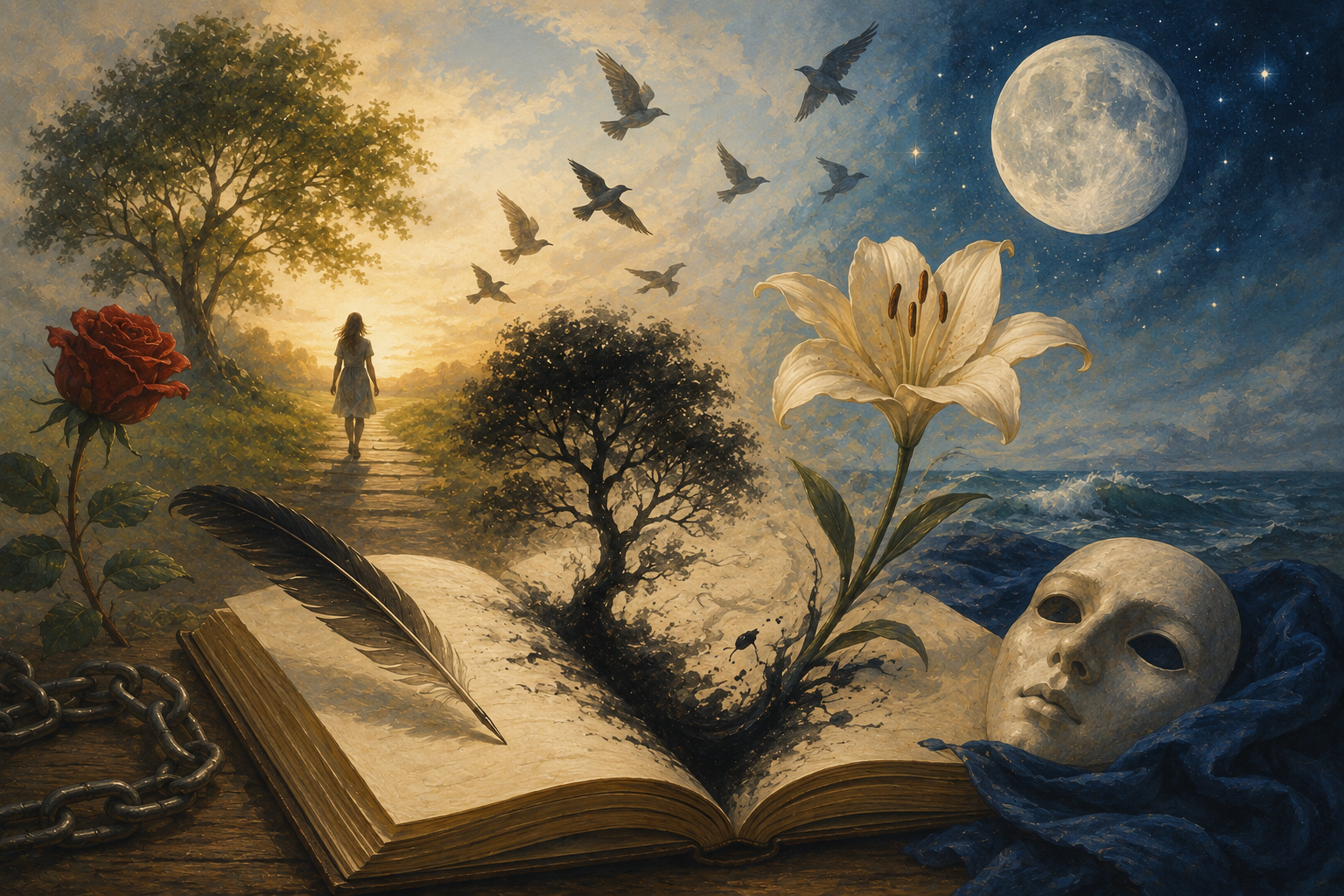
In poetry, a rose may not just be a flower. It might suggest love, beauty, youth, or even loss. A storm may point to anger, fear, or change.

That is the heart of Symbolism in Poetry Explained. Poets use concrete things to express abstract ideas. The object is real, but its meaning reaches deeper.

Symbols help poets say more with fewer words. Since poems are often short, every image matters.

image-slider-with-thumbnail1.jpeg
PlayPause
previous arrow
next arrow
image-slider-with-thumbnail1.jpeg
image-slider-with-thumbnail3.jpeg
image-slider-with-thumbnail4.jpeg
ChatGPT Image Jun 27, 2026, 06_33_13 PM
ChatGPT Image Jun 27, 2026, 06_36_37 PM
ChatGPT Image Jun 27, 2026, 06_38_39 PM
ChatGPT Image Jun 27, 2026, 06_31_22 PM
image-slider-with-thumbnail7.jpeg
ChatGPT Image Jun 27, 2026, 06_29_43 PM
ChatGPT Image Jun 27, 2026, 06_27_44 PM
image-slider-with-thumbnail6.jpeg
ChatGPT Image Jun 27, 2026, 06_15_07 PM
image-slider-with-thumbnail5.jpeg
ChatGPT Image Jun 27, 2026, 06_22_43 PM
ChatGPT Image Jun 27, 2026, 06_25_37 PM
ChatGPT Image Jun 27, 2026, 06_19_43 PM
ChatGPT Image Jun 27, 2026, 06_12_00 PM
ChatGPT Image Jun 27, 2026, 06_08_50 PM
ChatGPT Image Jun 26, 2026, 04_54_23 PM
ChatGPT Image Jun 27, 2026, 05_53_51 PM
ChatGPT Image Jun 28, 2026, 08_35_55 AM
previous arrow
next arrow

How Symbols Work in a Poem

Symbols gain meaning from context.

A bird might suggest freedom in one poem. In another poem, it might suggest loneliness if it sits trapped in a cage.

This is why readers should not guess too fast. A symbol does not mean the same thing every time. You need to look at the poem’s tone, images, speaker, and ending.

Learn to read the hidden language the world is always speaking

Unlock the hidden language of symbols — through tarot, dreams, runes, and myth — and learn to read meaning everywhere life speaks in images. A course grounded, Jungian-inspired practice for curious beginners.

Symbolism in Poetry Explained Through Famous Examples

Well-known poems show how powerful a simple symbol can be.

In Robert Frost’s “The Road Not Taken,” the two roads are more than paths in a forest. They suggest life choices. The speaker looks back and wonders how one choice shaped his life.

In Emily Dickinson’s poems, light often points to truth, hope, or inner change. Her images can feel small at first, but they often carry deep emotional weight.

And in William Blake’s “The Tyger,” the tiger is not just an animal. It suggests beauty, terror, power, and mystery. The symbol helps Blake ask hard questions about creation.

These examples show why Symbolism in Poetry Explained matters. A symbol can turn a short poem into a complex idea.
Common Symbols Students See in Poetry

Some symbols appear often, but their meaning still depends on the poem.

  • Light: truth, hope, knowledge, or spiritual insight
  • Darkness: fear, mystery, grief, or confusion
  • Water: life, change, cleansing, or danger
  • Spring: youth, rebirth, or a fresh start
  • Winter: age, death, silence, or emotional coldness
  • Birds: freedom, escape, or the human soul

Do not treat this as a fixed answer key. A poet can use a familiar symbol in a new way.

Why Symbolism in Poetry Explained Helps You Read Better

Symbols help readers move past surface meaning.

Without symbolism, a poem might seem like it is only about a tree, a house, or a bird. With symbolism, that same poem may reveal grief, memory, desire, or fear.

Symbolism in Poetry Explained also helps you slow down. You start to ask better questions, such as: Why does this image repeat? Why does the poem focus on this object? What feeling does it create?

Those questions lead to stronger reading.

How to Write About Symbolism in an Essay

Good essay analysis explains how the symbol works, not just what it means.

A weak sentence might say, “The road symbolizes choices.” That is a start, but it does not go far enough.

A stronger sentence might say, “The two roads symbolize life choices because the speaker must pick one path without knowing where the other would lead.”

That sentence connects the symbol to the poem’s action. It also shows why the symbol matters.
When you write about symbolism, follow this simple pattern:

  • Name the symbol.
  • Explain what it suggests.
  • Connect it to the poem’s larger meaning.

For more support, use this step-by-step poetry analysis guide before you draft your essay.

Symbolism in Poetry Explained for AP Literature and College Essays

Advanced readers need to connect symbols to theme.

In AP Literature and college classes, teachers do not want a simple symbol chart. They want to see how the symbol builds meaning across the poem.

For example, if a poem repeats the image of a locked door, you might ask what the door blocks. Does it keep someone safe? Does it trap the speaker? Or does it suggest a secret?

This is where Symbolism in Poetry Explained becomes useful for essays. Symbols often help reveal the poem’s main conflict or message.

Common Mistakes to Avoid

Symbolism can be powerful, but it is easy to overread.

One mistake is claiming every object is a symbol. Some details simply create setting or mood.

Another mistake is using a meaning that does not fit the poem. If you say water means peace, but the poem shows a flood, your claim will feel weak.

A better approach is to prove your idea with words from the poem. Let the poem guide your interpretation.

Helpful Resources for Learning More

Strong readers keep building their poetry skills.

The Poetry Foundation has many poems, poet biographies, and helpful reading tools. You can also read a clear overview of symbolism from Britannica.

These books can help students understand poetry with more confidence.

  • How to Read a Poem by Edward Hirsch
  • A Poetry Handbook by Mary Oliver

FAQ: Symbolism in Poetry Explained

What is symbolism in poetry?

Symbolism in poetry is when an object, image, place, or action stands for a deeper idea. A flower may suggest beauty, love, or loss, depending on the poem.

How do I find a symbol in a poem?

Look for images that repeat, feel important, or carry strong emotion. Then ask what larger idea that image may suggest.

Can a symbol have more than one meaning?

Yes. Many symbols have layered meanings. The best answer depends on the poem’s words, tone, and context.

Why is Symbolism in Poetry Explained important for essays?

It helps you write deeper analysis. Instead of only naming a symbol, you can explain how it supports the poem’s theme.

Key Takeaway

Symbolism in Poetry Explained is really about seeing how small details carry big meaning. When you learn to spot symbols and support your ideas with evidence, poetry becomes clearer, richer, and easier to write about.

Ekphrasis Poetry Prompt: The Missing Magnet

ekphrasis poetry prompt magnet

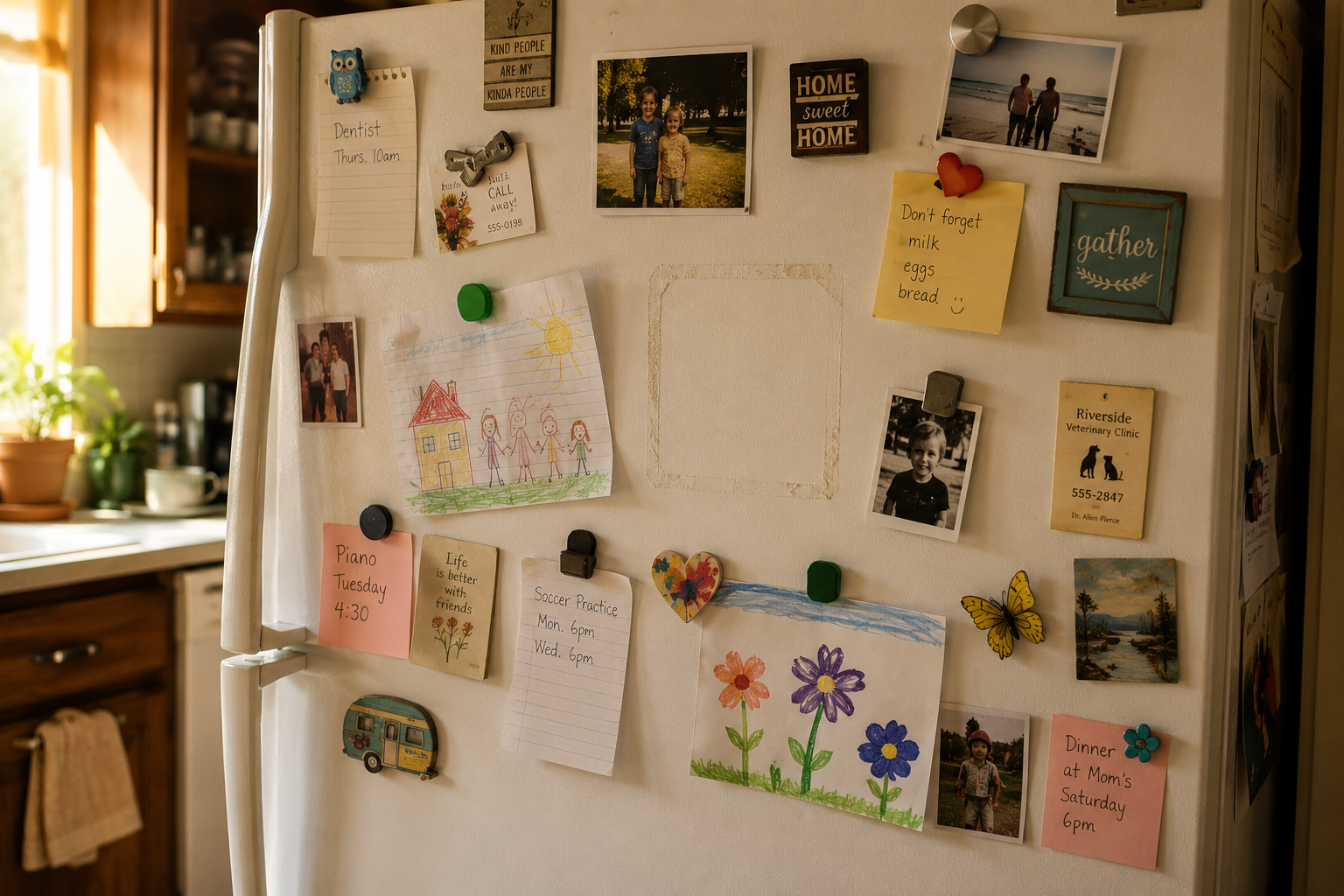
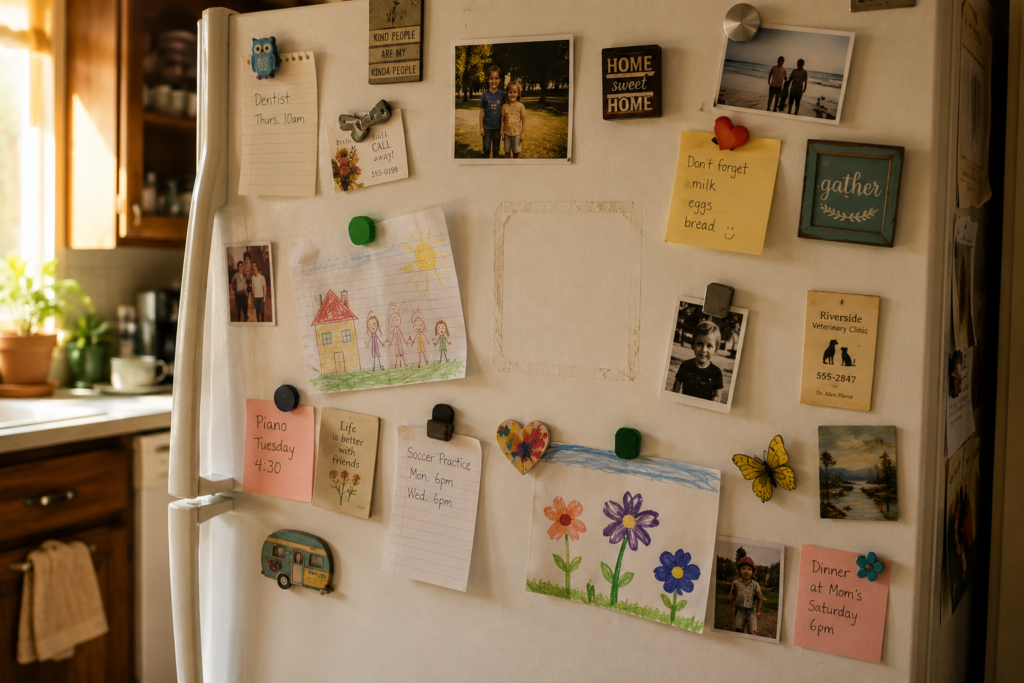
An ekphrasis poetry prompt does not require a dramatic image. Sometimes the most ordinary objects carry the deepest stories. A refrigerator door may seem like an unlikely source of inspiration, yet it often serves as a record of daily life. Photographs, notes, reminders, children’s artwork, and keepsakes gather there over the years. They become a quiet archive of a household’s history.

In this image, the refrigerator door displays a collection of familiar items. Family photos sit beside grocery lists and appointment cards. Children’s drawings fade with age. Near the center, however, an empty space remains where something once hung. The absence immediately draws attention. What occupied that spot? Why was it removed? Who took it away?

That unanswered question creates the heart of this ekphrasis poetry prompt.

ekphrasis poetry prompt magnet

If you are new to writing poetry from images, our guide on how to analyze poetry can help you think more deeply about symbolism and meaning:

Why This Ekphrasis Poetry Prompt Inspires Stories

A successful ekphrasis poetry prompt invites curiosity. The image does not provide a complete narrative. Instead, it offers clues.

The refrigerator door functions almost like a scrapbook. Every photograph represents a memory. Every note marks a moment in time. The empty space introduces tension because it suggests change.

Perhaps someone moved away. Perhaps a relationship ended. Or perhaps a child grew up and left home. The missing item could represent loss, growth, forgiveness, regret, or hope.

Poetry often begins with questions rather than answers. This image provides many questions for a writer to explore.

Looking Closely at the Details

Before writing, spend several minutes examining the image.

Notice the faded edges of photographs. Look at the handwriting on notes. Consider why some items remain while others disappear. Think about who placed these objects on the refrigerator and who sees them each day.

Small details often produce powerful poems.

As you observe, pay attention to literary devices such as symbolism, imagery, and metaphor. If you would like a refresher on these techniques, see our guide to literary devices in poetry:

You may also enjoy exploring examples of image-inspired poetry through the resources available at the Poetry Foundation:

https://www.poetryfoundation.org

Ekphrasis Poetry Prompt: The Missing Magnet

Study the image carefully.

Then write a poem that begins with this line:

“The empty spot on the refrigerator door mattered more than everything around it.”

As you continue, consider one of the following possibilities:

  • Write from the perspective of the person who removed the missing item.
  • Write from the perspective of someone who notices the empty space years later.
  • Imagine the object that once occupied that place.
  • Describe the memories attached to the missing item.
  • Explore how ordinary objects become symbols of larger life changes.

Allow the poem to focus on memory, absence, family history, or the passage of time.

Taking the Prompt Further

After completing your first draft, challenge yourself to write a second poem from a different perspective.

A parent and a child may tell very different stories about the same photograph. A refrigerator might remember events differently than the people who stand before it. Even the missing object could become a speaker in the poem.

These shifts in perspective often reveal unexpected emotional depth.

Final Thoughts

This ekphrasis poetry prompt reminds us that poetry does not always emerge from extraordinary scenes. A refrigerator door covered with everyday objects can hold years of memories. One missing item can raise questions that linger long after the image disappears.

The best poems often begin by noticing something small. In this case, that small detail is simply an empty space waiting to be filled with a story.

Ekphrastic Poetry Prompt: The Unopened Letter

ekphrastic poetry prompt letter

An effective ekphrastic poetry prompt does not always require a dramatic painting, a sweeping landscape, or a moment of obvious conflict. Sometimes the most compelling poems emerge from ordinary scenes that invite questions rather than provide answers.

Imagine a quiet room. A wooden chair stands beside a small table. A mug sits half-forgotten. Reading glasses rest near an unopened letter. No one is present. Nothing appears to be happening. Yet the image suggests a story waiting beneath the surface.

This ekphrastic poetry prompt asks you to enter that silence and discover what lies behind the objects.

ekphrastic poetry prompt letter

How to Approach This Ekphrastic Poetry Prompt

Begin by observing the details. What do the objects reveal about the unseen person who occupies this space? Why has the letter remained unopened? Is the writer absent temporarily, or forever?

You might choose to write from the perspective of the person who received the letter. You could also become the letter itself, waiting patiently for someone to break the seal. Another possibility is to write from the viewpoint of an observer who notices the scene years later.

If you need help examining imagery and symbolism, consider reviewing this guide on analyzing poetry:

Writing Ideas for This Ekphrastic Poetry Prompt

As you draft your poem, consider questions such as:

  • What message might the letter contain?
  • How long has it been waiting?
  • What emotions fill the room despite the absence of people?
  • What happened immediately before this moment?
  • What might happen next?

The strength of this image lies in its uncertainty. The unanswered questions create space for imagination.

Literary Devices to Explore in This Ekphrastic Poetry Prompt

This scene works especially well with symbolism, imagery, personification, and metaphor. The letter might symbolize regret, hope, forgiveness, opportunity, or loss. The chair could suggest waiting. The glasses might represent understanding that has not yet arrived.

If you would like to deepen your use of poetic techniques, this resource on literary devices can help:

For additional inspiration on ekphrastic poetry, the Poetry Foundation offers valuable examples and articles about poetry and poetic interpretation:

https://www.poetryfoundation.org

The Prompt

Study the image carefully.

Then write a poem inspired by the unopened letter on the table. Focus on the tension between what is known and what remains hidden. Let the ordinary objects reveal an extraordinary story.

Do not worry about finding the “correct” interpretation. The most interesting poems often emerge from possibilities rather than certainty.

Sometimes a single unopened envelope contains an entire world.

Ekphrastic Poetry Prompt: The Empty Diner at the Edge of Town

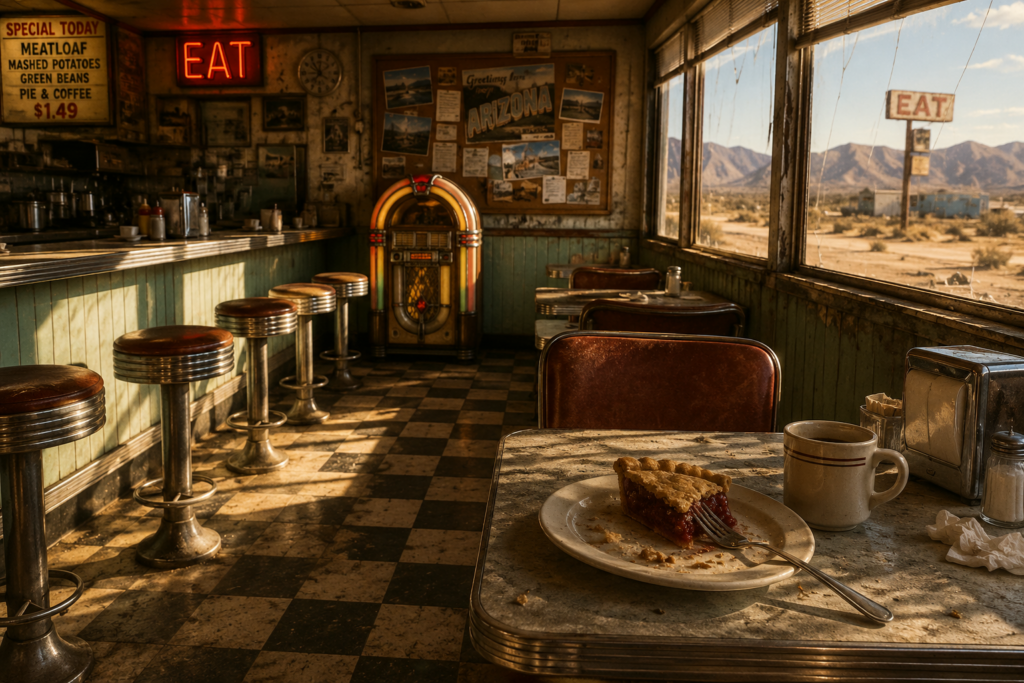
Ekphrastic Poetry Prompt diner

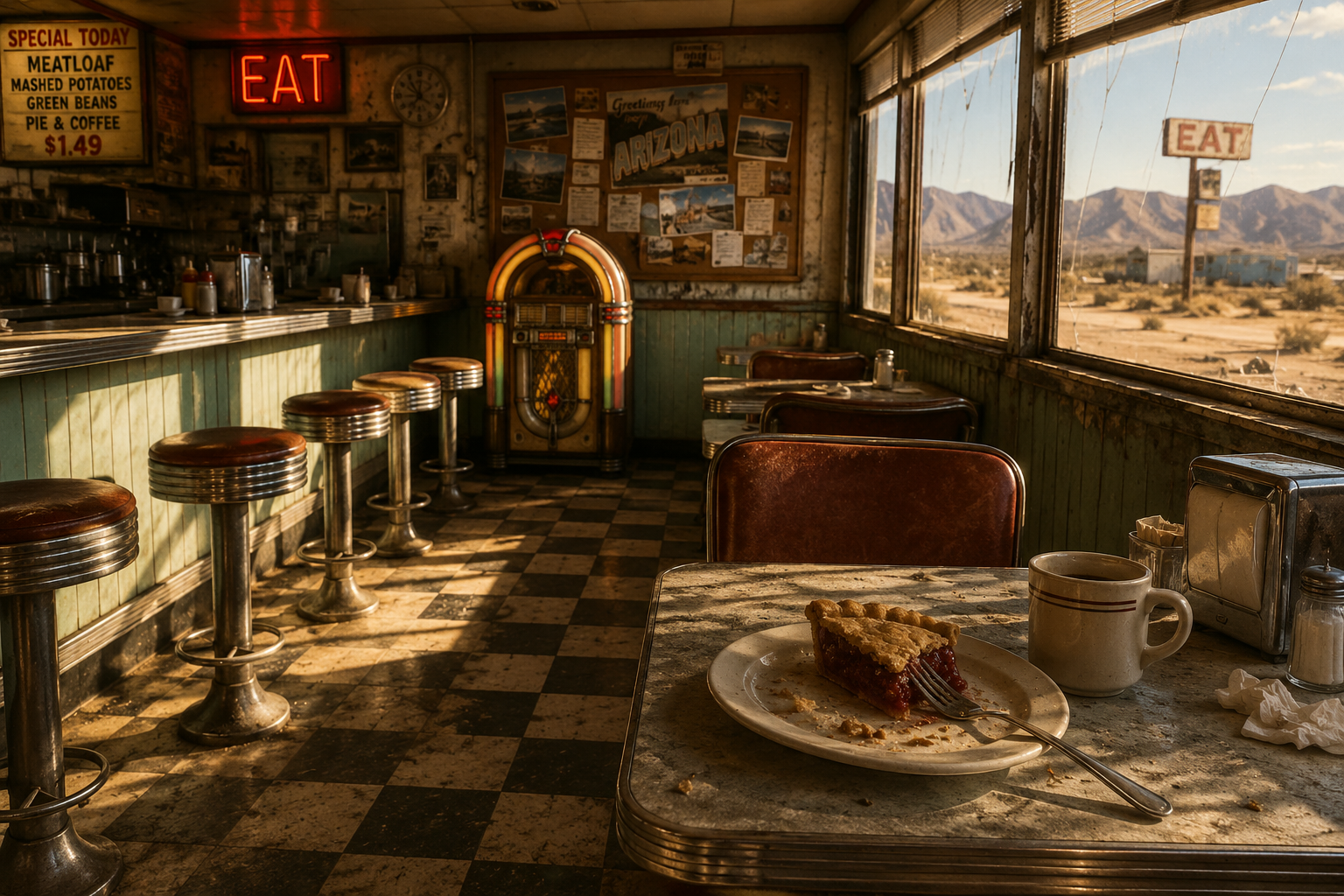
This ekphrastic poetry prompt begins with an image that feels familiar yet unsettling. Picture an abandoned roadside diner somewhere along a lonely highway. Dust covers the chrome stools. A slice of pie sits untouched on a table. Sunlight stretches across the checkerboard floor. The jukebox still glows, though no one remains to choose a song.

Unlike dramatic landscapes or fantastical scenes, this image draws its power from ordinary objects. Every item seems to hint at a story that stopped before it reached its ending. That sense of absence creates fertile ground for poetry.

If you are new to reading and writing poetry, you may find this guide helpful: https://rapidreadspress.com/how-to-analyze-poetry-step-by-step/

Ekphrastic Poetry Prompt diner

Why This Ekphrastic Poetry Prompt Invites Storytelling

A strong ekphrastic poetry prompt does more than provide something to describe. It encourages questions.

Who ordered the pie?

Why was it left behind?

Who pinned the postcards to the bulletin board?

Why does the jukebox still glow?

Poetry often begins when a writer notices what is missing rather than what is present. The empty diner asks readers to imagine the people who once filled the room. Their stories linger in the objects they left behind.

As you study the image, resist the urge to explain everything. Allow mystery to remain. Sometimes a poem gains strength when it leaves space for the reader’s imagination.

Entering the World of This Ekphrastic Poetry Prompt

Choose a perspective before you begin writing.

You might write from the viewpoint of the waitress who worked her final shift.

You might become the traveler who arrives years after the diner closed.

Or you might speak as the jukebox, remembering every song it ever played.

You might even write from the perspective of the abandoned slice of pie waiting for someone who never returned.

The goal is not accuracy. The goal is emotional truth.

Focus on sensory details. What does the room smell like? What sounds echo through the empty building? How does the afternoon light change the mood of the scene?

Literary Techniques for This Ekphrastic Poetry Prompt

Because the image contains so many meaningful objects, symbolism can play a major role in your poem.

The pie might represent a broken promise.

The postcards might symbolize dreams of escape.

The empty stools might suggest loneliness.

The glowing jukebox might stand for memory refusing to fade.

If you would like ideas for using imagery, symbolism, and metaphor, explore this guide to literary devices in poetry: https://rapidreadspress.com/literary-devices-in-poetry/

Writing Questions for This Ekphrastic Poetry Prompt

Use one or more of these questions as a starting point:

  • What happened just before the diner became empty?
  • Who was expected to arrive but never did?
  • Which object in the room holds the most important memory?
  • What would the diner say if it could speak?
  • What does the silence reveal that conversation once concealed?

Choose the question that creates the strongest emotional response and follow it wherever it leads.

A Challenge for Your Poem

Write a poem that never directly mentions abandonment, loneliness, memory, or loss.

Instead, reveal those ideas through images and details. Let the pie, the postcards, the sunlight, and the jukebox carry the emotional weight.

For additional inspiration and examples of contemporary poetry, visit the Academy of American Poets at https://poets.org/.

The best poems often emerge from ordinary places. This ekphrastic poetry prompt invites you to discover the hidden stories waiting inside an empty diner where the coffee has gone cold, the music has stopped, and the questions remain.

Ekphrasis Poetry Prompt: The Empty Chair in the Field

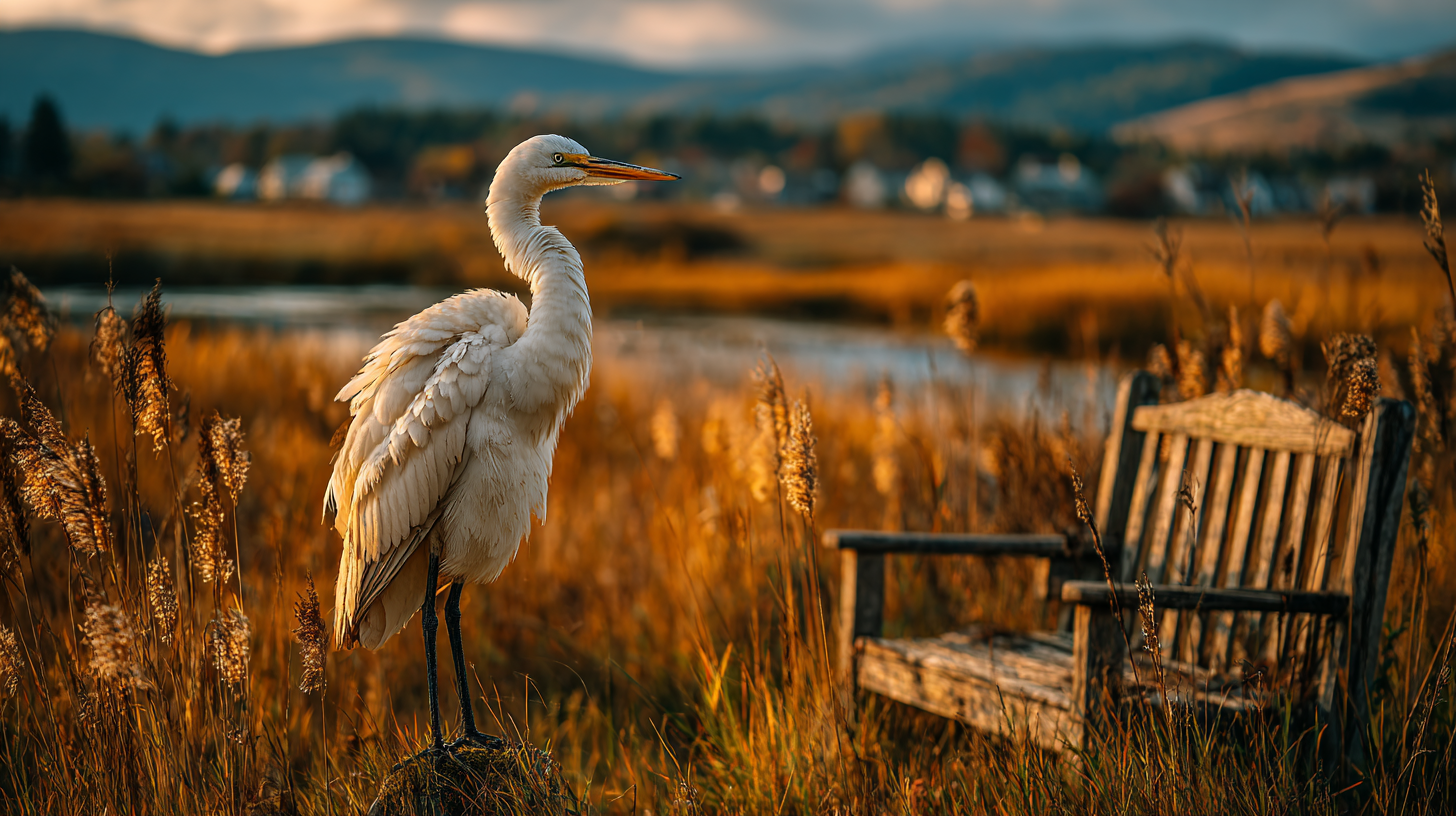
ekphrasis poetry prompt the empty chair

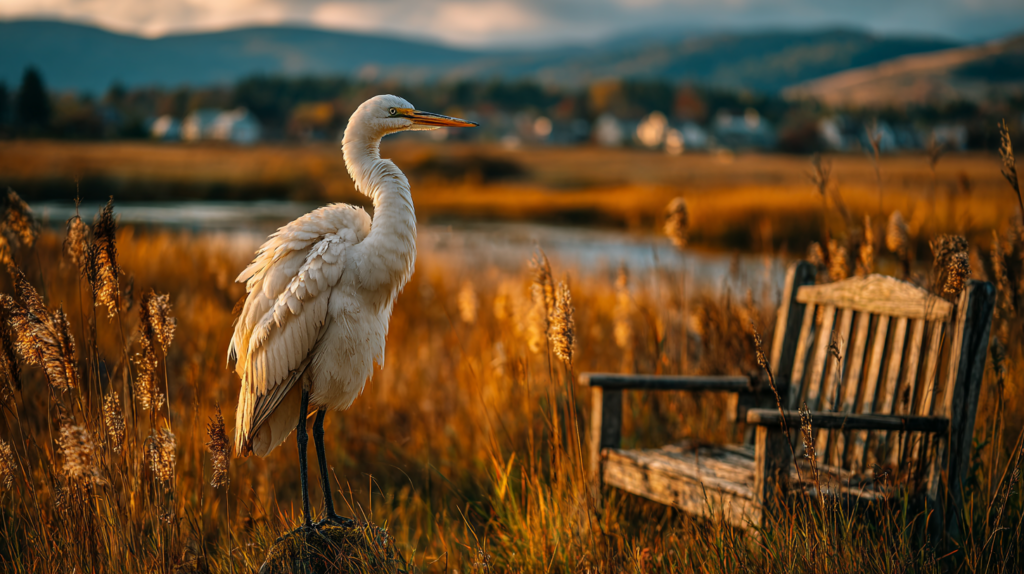
If you are looking for an ekphrasis poetry prompt that invites reflection, memory, and imagination, today’s image offers a rich place to begin. Picture a solitary white heron standing near an abandoned wooden chair in a field of golden grass. Mountains rise in the distance while the late afternoon sun casts long shadows across the landscape.

Ekphrastic poetry begins with close observation. The image becomes a doorway into emotion, story, symbolism, and personal insight. Whether you write free verse, formal poetry, or prose poetry, this scene provides many possible directions.

ekphrasis poetry prompt the empty chair

How to Approach This Ekphrasis Poetry Prompt

Before you begin writing, spend a few minutes studying the image. Notice the relationship between the bird and the chair. Ask yourself why the chair sits alone in the field. Consider who may have left it there and why the heron seems drawn to it.

An effective ekphrasis poetry prompt encourages curiosity rather than certainty. You do not need to explain the image. Instead, explore its possibilities.

You may find it helpful to review our guide on analyzing poetic imagery and meaning: https://rapidreadspress.com/how-to-analyze-poetry-step-by-step/

Writing Ideas for This Ekphrasis Poetry Prompt

The chair could symbolize absence, waiting, memory, or loss. The heron might represent patience, wisdom, solitude, or a messenger from another world.

Consider writing from one of these perspectives:

  • The heron observing the chair.
  • The former owner of the chair.
  • A traveler discovering the scene years later.
  • The chair itself telling its story.
  • An observer who believes the bird is guarding a secret.

You might focus on sensory details. What does the grass sound like in the wind? How does the sunlight change the mood of the landscape? What memories does the scene awaken?

Literary Devices for This Ekphrasis Poetry Prompt

Strong ekphrastic poems often rely on imagery, symbolism, metaphor, and personification. The contrast between the living bird and the abandoned chair creates natural tension that can drive a poem forward.

If you would like a refresher on poetic techniques, see our guide to literary devices: https://rapidreadspress.com/literary-devices-in-poetry/

For additional information about ekphrastic poetry as a literary form, the Poetry Foundation provides an excellent overview of poetry and poetic traditions: https://www.poetryfoundation.org/

The Prompt

Study the image carefully.

Write a poem about the relationship between the heron and the empty chair. Do not explain where they came from. Instead, allow the reader to discover their connection through images, actions, and details.

Challenge yourself to leave one important question unanswered by the end of the poem.

Final Thoughts

This ekphrasis poetry prompt works well because it balances mystery with simplicity. The image contains only a few elements, yet each one invites interpretation. Sometimes the most powerful poems emerge from scenes that appear quiet at first glance.

Take your time with the image. Let the landscape speak before you begin writing. Then follow the thread of curiosity wherever it leads.

Ekphrastic Poetry Prompt: The Conservatory Above the Sea of Flowers

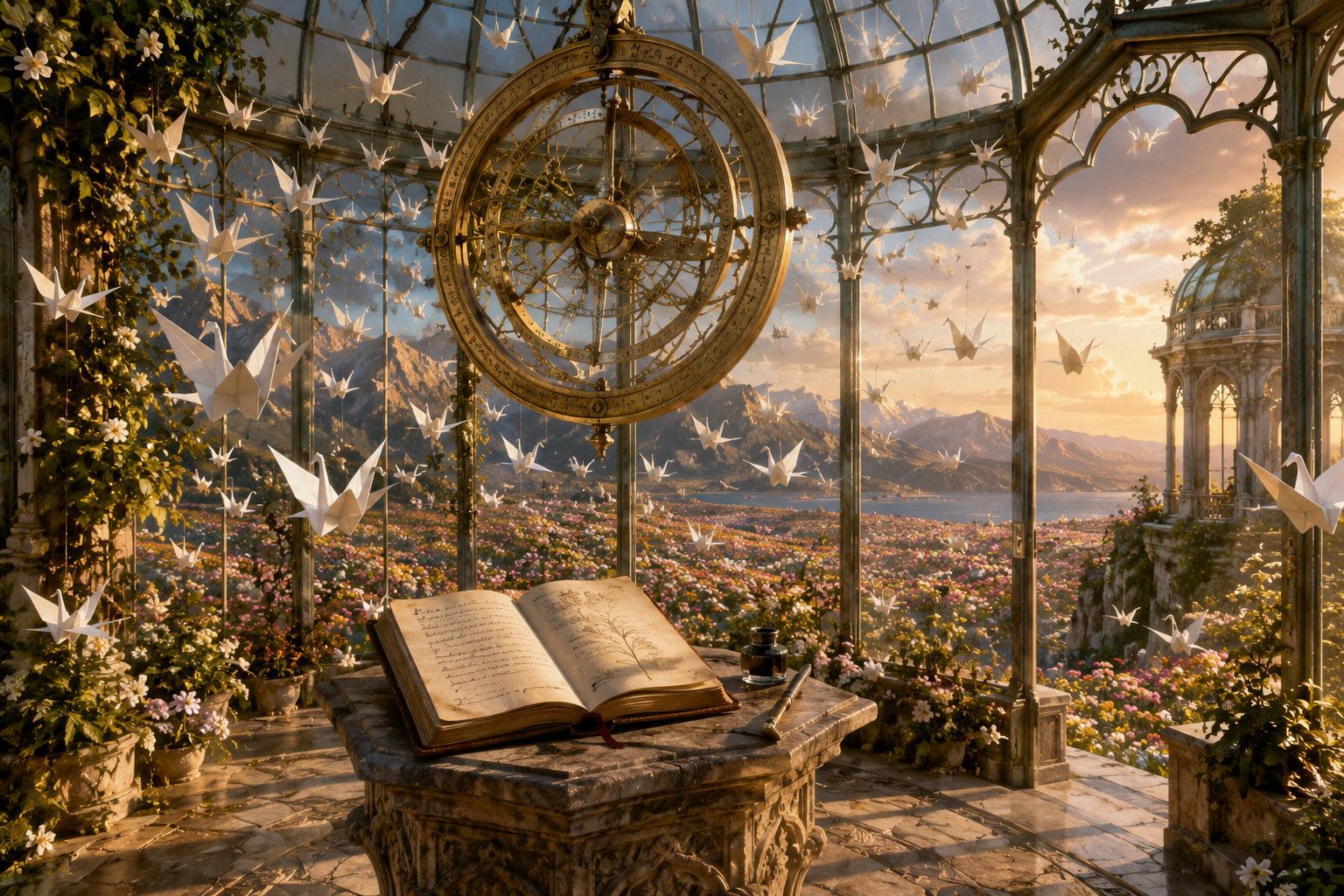
ekphrastic poetry prompt flowers

Have you ever looked at an image and felt as though it was trying to tell you a story?

This ekphrastic poetry prompt invites you to step into a dreamlike scene filled with mystery, beauty, and unanswered questions. Ekphrastic writing encourages poets to respond to visual art with words. Instead of describing every detail, the goal is to explore the emotions, memories, and ideas the image awakens.

If you are new to the practice, our guide on how to analyze poetry step by step can help you notice the details that often inspire stronger poems: https://rapidreadspress.com/how-to-analyze-poetry-step-by-step/

ekphrastic poetry prompt flowers

Why This Ekphrastic Poetry Prompt Works

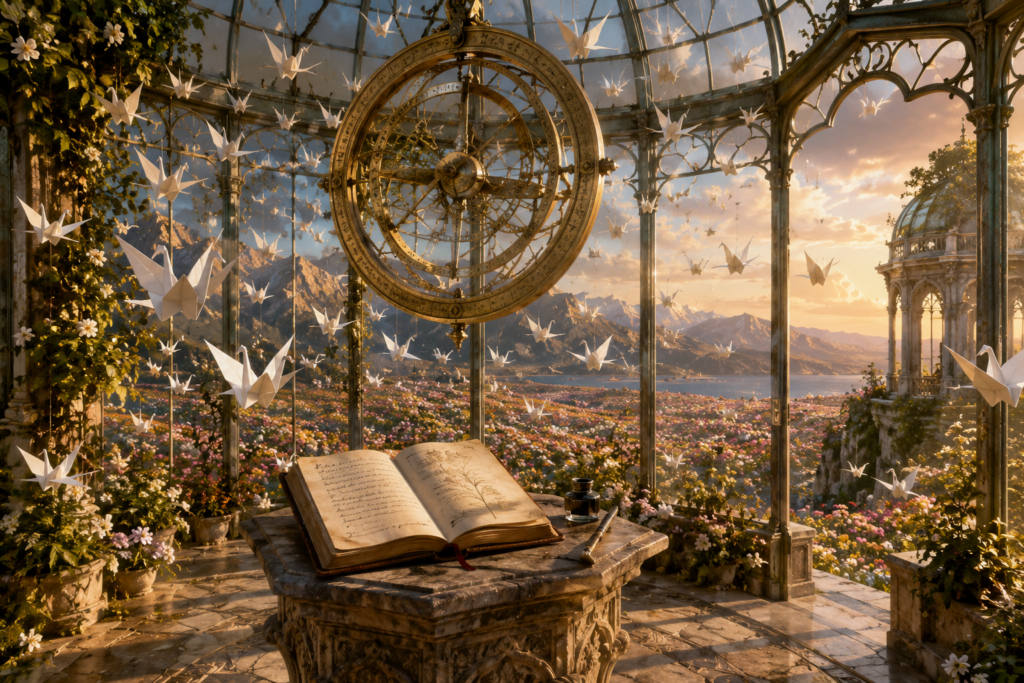
The image presents a strange but inviting setting. A glass conservatory sits above an endless field of flowers. White paper cranes move through the air. A giant astrolabe hangs suspended as if time itself has paused. An open journal waits on a stone pedestal.

Each object raises questions.

Who built this place? Why are the cranes gathering? What has been written in the journal? Is the astrolabe measuring stars, memories, or something else entirely?

Strong poetry often begins with curiosity. This ekphrastic poetry prompt gives you several symbolic elements that can spark a narrative, a meditation, or a lyrical exploration.

The Image

Imagine standing inside the conservatory. Sunlight filters through the glass walls. The scent of flowers drifts upward from the valley below. Hundreds of paper cranes circle overhead while the brass astrolabe slowly turns.

An open journal rests before you.

One page contains a message.

You cannot see all of the words.

You can only read the first sentence.

Write the poem that follows.

Writing From This Ekphrastic Poetry Prompt

You do not need to explain every detail in the scene. Focus on the element that captures your attention most strongly.

Perhaps the journal belongs to a traveler who never returned. Maybe the paper cranes carry messages from lost loved ones. The astrolabe could represent fate, memory, hope, or a search for direction.

As you write, pay attention to imagery and symbolism. If you would like a refresher on poetic techniques, our guide to literary devices in poetry offers useful examples: https://rapidreadspress.com/literary-devices-in-poetry/

Questions to Explore

What is written in the journal?

Why do the paper cranes circle the conservatory?

Who visits this place?

What does the astrolabe measure?

What emotion fills the space?

Or, what happens when the final crane lands?

You may answer one question or many. The strongest poems often grow from a single image that refuses to leave your mind.

A Creative Challenge

Write your poem in the voice of the conservatory itself.

What has it witnessed over the years?

What secrets does it keep?

How does it feel when visitors arrive searching for answers?

Changing the speaker can transform a familiar description into something surprising and memorable.

Learn More About Ekphrastic Poetry

Many poets throughout history have responded to visual art. The Academy of American Poets provides an excellent introduction to the tradition and examples of famous ekphrastic works: https://poets.org/glossary/ekphrasis

Whether your poem becomes a story, a reflection, or a meditation on wonder, this ekphrastic poetry prompt offers a rich visual world filled with symbols waiting for interpretation.

Take a few minutes to study the scene. Then begin with the first sentence you can imagine appearing in that journal and see where it leads.

Best Classic Moon Symbolism in Literature: Meaning, Themes, and Books to Read

Moon symbolism

The Best Classic Moon Symbolism in literature often points to mystery, change, hidden truth, and emotion. Writers use the moon because it feels familiar, but it also feels strange and powerful.

From Gothic novels to Romantic poems, the moon can light up secrets that characters try to hide. It can also show fear, love, madness, or hope in a quiet way.

Moon symbolism

In this Guide

  • What moon symbolism means in classic literature
  • How Gothic writers use the moon
  • Moon symbolism in poetry
  • Famous examples from novels and plays
  • Common moon themes
  • Books to read for moon symbolism
  • FAQs about moon symbolism

What Is Best Classic Moon Symbolism?

The moon often acts like a mirror for a character’s inner life.

In classic literature, the moon is rarely just part of the setting. It can show that a scene is strange, emotional, secret, or unsafe.

The Best Classic Moon Symbolism works because the moon changes shape. It grows, fades, disappears, and returns. That makes it a strong symbol for change, time, memory, and unstable feelings.

The moon also rules the night. Since night often hides what daylight reveals, moonlight can create tension. It lets readers see a little, but not everything.

For more help with symbols in fiction, read our guide on how to find symbolism in a story.

Best Classic Moon Symbolism in Gothic Literature

Gothic writers use the moon to make fear feel beautiful and dangerous.

In Gothic literature, moonlight often falls on castles, graveyards, windows, and wild landscapes. It gives scenes a dreamlike look, but it can also make them feel unsafe.

In Dracula by Bram Stoker, the night world matters. The moon helps build a mood of danger because Dracula’s power grows after dark. Moonlit scenes remind readers that evil can move quietly when people feel most helpless.
In Frankenstein by Mary Shelley, moonlight often appears during lonely or fearful moments. Victor sees the world through guilt and dread, so the moon can feel cold instead of calm.

This is why the Best Classic Moon Symbolism in Gothic fiction often connects to fear, isolation, and the unknown. The moon does not comfort the characters. It watches them.

Best Classic Moon Symbolism in Romantic and Victorian Poetry

Poets often turn the moon into a symbol of longing, beauty, and deep thought.

Romantic poets loved nature because they saw it as a path to feeling and imagination. The moon gave them a perfect image for quiet sadness, wonder, and spiritual mystery.

Percy Bysshe Shelley’s poem To the Moon presents the moon as tired and wandering. It feels almost human. You can read the poem at the Poetry Foundation.

Emily Dickinson also uses the moon in striking ways. In poems like “The Moon was but a Chin of Gold,” the moon becomes strange, almost like a face in the sky. Her moon is not simple or soft. It feels alive and hard to explain.

The Best Classic Moon Symbolism in poetry often depends on mood. A moon can feel romantic in one poem and lonely in another. The symbol changes with the speaker’s mind.

Famous Examples of Moon Symbolism in Classic Literature

Many famous works use the moon to show love, secrecy, or a shift in power.

In Shakespeare’s A Midsummer Night’s Dream, the moon is tied to romance, magic, and confusion. Lovers meet in the woods at night, where moonlight helps create a world that feels playful but unstable.

In Nathaniel Hawthorne’s The Scarlet Letter, moonlight matters during scenes of guilt and hidden truth. The night does not fully hide sin. Instead, the moon gives just enough light to make secrets feel visible.

In Jane Eyre by Charlotte Brontë, the moon often has a guiding role. Jane sometimes sees it as calm and almost motherly. It can reflect her need for safety, love, and moral direction.

These examples show why moon symbolism stays popular in classrooms. It helps readers track a character’s fear, desire, or private struggle without a long speech.

Best Classic Moon Symbolism and Common Themes

The moon can carry many meanings, but a few themes appear again and again.

Change is one of the most common meanings. Because the moon has phases, it often points to growth, decline, or a coming shift.

Mystery is another key theme. Moonlight reveals shapes but not details. That makes it perfect for scenes where characters do not fully understand what they face.

Madness also appears in older literature and folklore. The word “lunatic” comes from an old belief that the moon could affect the mind. You can learn more about the moon’s cultural history through Britannica’s overview of the Moon.

Love is a softer meaning. Moonlit scenes can feel private and emotional, which is why writers often place lovers under the moon.

The Best Classic Moon Symbolism does not have one fixed meaning. The scene, character, and genre all shape what the moon suggests.

How to Spot Best Classic Moon Symbolism in a Story

Look at what happens when the moon appears.

Ask what the moon changes in the scene. Does it make the setting feel peaceful, eerie, romantic, or tense?

Notice who sees the moon. A lonely character may read the moon as cold. A hopeful character may see it as beautiful.

Pay attention to light and shadow. Moonlight often sits between darkness and full truth. That makes it useful when a story deals with secrets.

If you want a simple method, use this symbolism reading guide to practice with any poem, novel, or short story.

Recommended Books for Studying Best Classic Moon Symbolism

These books are strong choices for students who want clear examples of moon imagery and symbolism.

  • Dracula by Bram Stoker
  • Jane Eyre by Charlotte Brontë
  • The Poems of Emily Dickinson by Emily Dickinson

Dracula is useful if you want to study moonlight, fear, and Gothic mood. The night scenes show how setting can shape terror.

Jane Eyre gives a different kind of moon symbol. The moon often feels moral, emotional, and personal.

Emily Dickinson’s poetry is a great choice for close reading. Her moon images are short, strange, and rich with meaning.

FAQs About Moon Symbolism in Literature

What does the moon usually symbolize in literature?

The moon often symbolizes mystery, change, emotion, secrecy, or the hidden self. Its meaning depends on the scene and the character.

Why do Gothic writers use the moon so often?

Gothic writers use the moon because it creates fear and beauty at the same time. Moonlight makes a scene visible but still unclear.

Is moon symbolism always romantic?

No. The moon can suggest romance, but it can also suggest danger, madness, loneliness, or guilt.

How can I analyze moon symbolism for school?

Start with the mood of the scene. Then ask what the moon reveals, what it hides, and how the character reacts to it.

Key Takeaway: Best Classic Moon Symbolism Still Matters

The Best Classic Moon Symbolism works because the moon feels both close and mysterious. It lights the dark without removing the dark completely.

That is why writers keep returning to it. The moon can show love, fear, change, and secret truth in one quiet image.

When you see the moon in a classic text, pause for a moment. It may be telling you what the characters cannot say out loud.

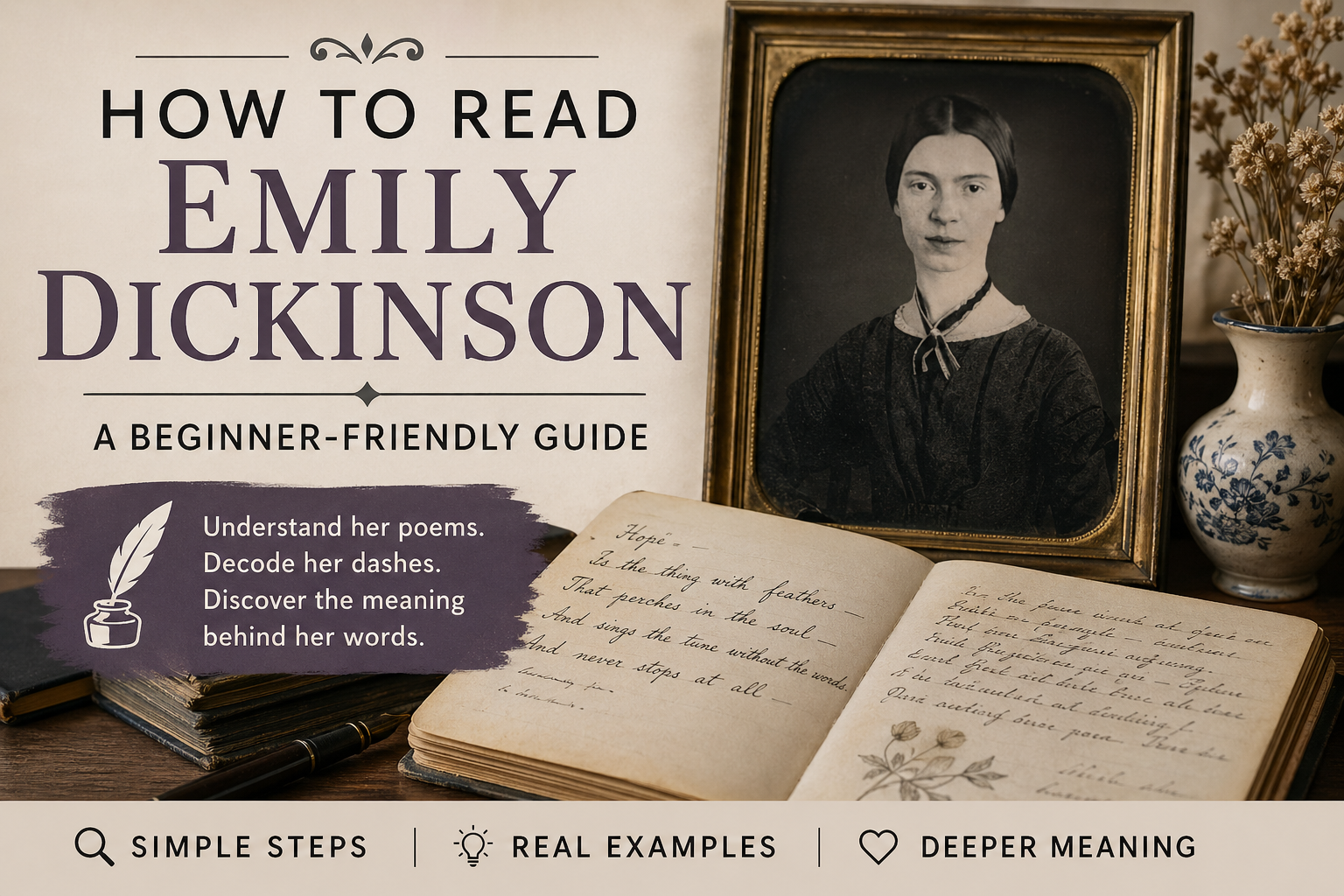
How to Read Emily Dickinson: A Beginner-Friendly Guide

how to read Emily Dickinson

A clear, step-by-step way to understand Dickinson’s poems—even if they feel confusing at first

Emily Dickinson can feel strange the first time you read her. The short lines, the dashes, the capital letters, and the deep ideas can make even simple poems feel hard to follow. But once you learn how to read Emily Dickinson, her poems become surprisingly clear, powerful, and even personal. This guide will walk you through a simple method you can use right away, with real examples from her most famous poems.

This article contains affilate links.

In this Guide

  • Why Emily Dickinson feels difficult
  • Step 1: Read the poem slowly
  • Step 2: Look at punctuation and dashes
  • Step 3: Identify the speaker and situation
  • Step 4: Find the central idea or theme
  • Step 5: Notice imagery and symbolism
  • Step 6: Paraphrase the poem
  • Step 7: Connect it to a bigger meaning
  • FAQs about reading Emily Dickinson
  • Key takeaway
how to read Emily Dickinson

Why Learning How to Read Emily Dickinson Matters

Emily Dickinson’s poetry looks simple, but it carries deep meaning in very small spaces.

When you learn how to read Emily Dickinson, you are learning how to slow down and notice details. Her poems often deal with death, hope, faith, and the inner life, which makes them widely taught in schools. For example, in “Hope is the thing with feathers,” she turns hope into a bird. That sounds simple, but the meaning grows as you read more closely.

If you already know how to use strategies like those in our guides on how to read literature like a scholar or how to analyze poetry step by step, this approach will feel familiar. Dickinson just asks you to apply those skills more carefully.

Step 1: Read the Poem Slowly

Take your time. Dickinson rewards slow reading.

When learning how to read Emily Dickinson, the biggest mistake is rushing. Her poems are short, so each word matters.
For example, in “Because I could not stop for Death,” the opening line seems calm:
“Because I could not stop for Death – He kindly stopped for me –”

At first, it sounds polite. But if you slow down, you notice something strange: Death is personified as a polite driver. That small detail changes the tone completely.

👉 If you need help building this habit, our guide on what is close reading in literature pairs perfectly with Dickinson.

Step 2: Pay Attention to Dashes and Punctuation

Dickinson’s punctuation is not random. It shapes meaning.

One of the keys to how to read Emily Dickinson is understanding her famous dashes. They often signal pauses, shifts in thought, or emotional tension.

In “I’m Nobody! Who are you?” she writes:
“How dreary – to be – Somebody!”

Those dashes slow the line down and emphasize the feeling. Without them, the line loses its rhythm and emotional weight.

Think of the dashes as moments to pause and reflect.

You can explore punctuation and tone more deeply in our post on tone vs mood in literature.

image-slider-with-thumbnail1.jpeg
PlayPause
previous arrow
next arrow
image-slider-with-thumbnail1.jpeg
image-slider-with-thumbnail3.jpeg
image-slider-with-thumbnail4.jpeg
ChatGPT Image Jun 27, 2026, 06_33_13 PM
ChatGPT Image Jun 27, 2026, 06_36_37 PM
ChatGPT Image Jun 27, 2026, 06_38_39 PM
ChatGPT Image Jun 27, 2026, 06_31_22 PM
image-slider-with-thumbnail7.jpeg
ChatGPT Image Jun 27, 2026, 06_29_43 PM
ChatGPT Image Jun 27, 2026, 06_27_44 PM
image-slider-with-thumbnail6.jpeg
ChatGPT Image Jun 27, 2026, 06_15_07 PM
image-slider-with-thumbnail5.jpeg
ChatGPT Image Jun 27, 2026, 06_22_43 PM
ChatGPT Image Jun 27, 2026, 06_25_37 PM
ChatGPT Image Jun 27, 2026, 06_19_43 PM
ChatGPT Image Jun 27, 2026, 06_12_00 PM
ChatGPT Image Jun 27, 2026, 06_08_50 PM
ChatGPT Image Jun 26, 2026, 04_54_23 PM
ChatGPT Image Jun 27, 2026, 05_53_51 PM
ChatGPT Image Jun 28, 2026, 08_35_55 AM
previous arrow
next arrow

Step 3: Identify the Speaker and Situation

Who is speaking, and what is happening?

Dickinson rarely tells a full story. Instead, she drops you into a moment.

In “Because I could not stop for Death,” the speaker is already riding in a carriage with Death. We are not told how it started.

That means you have to ask:

  • Who is the speaker?
  • What is happening right now?
  • What is the emotional tone?

This step connects closely to our guide on how to analyze characters in literature, even though the “character” may be more symbolic than realistic.

Step 4: Find the Central Idea or Theme

Every Dickinson poem circles around a central idea.

When practicing how to read Emily Dickinson, try to summarize the poem in one sentence.

For example, “Hope is the thing with feathers” explores the idea that hope is constant and resilient, even in hardship.

Look at these lines:
“And never stops – at all –”

That simple phrase captures the theme. Hope continues no matter what.

If you want to go deeper, our post on how to identify theme in literature gives a helpful framework for this step.

Step 5: Notice Imagery and Symbolism

Dickinson uses simple images to express complex ideas.

A big part of how to read Emily Dickinson is recognizing symbolism.

In “Hope is the thing with feathers,” the bird represents hope. But it is not just any bird. It:

  • Sings
  • Endures storms
  • Never asks for anything

That tells us hope is persistent, self-sustaining, and quiet.

👉 See more in our guide on how to find symbolism in a story.

Step 6: Paraphrase the Poem in Your Own Words

Put the poem into plain language.

This is one of the most effective ways to master how to read Emily Dickinson.

Take a line like:
“The Carriage held but just Ourselves – And Immortality.”

A paraphrase might be:
The speaker is riding with Death, and the journey represents entering eternity.

When you rewrite the poem this way, it becomes clearer.

Our guide on how to write a literary analysis essay can help you turn this understanding into strong writing.

Step 7: Connect the Poem to a Bigger Meaning

Ask why the poem matters.
Dickinson’s poems often move from a small moment to a big idea about life.

In “Because I could not stop for Death,” the carriage ride becomes a reflection on the nature of mortality and eternity.

This is where interpretation happens. You move from understanding the poem to explaining its significance.

👉 For practice, you can pair this step with our literary devices list to identify how the meaning is created.

If you want to go further with how to read Emily Dickinson, these are excellent resources:

More resources:

  1. Poetry Foundation: https://www.poetryfoundation.org/poets/emily-dickinson
  2. Academy of American Poets (https://poets.org/)

FAQs About How to Read Emily Dickinson

Why is Emily Dickinson so hard to understand?

Her poems are compressed and leave out context. She expects readers to fill in the gaps.

What do the dashes mean?

They create pauses, emphasize ideas, and show shifts in thought or emotion.

Do Dickinson’s poems have one correct meaning?

No. Many poems allow for multiple interpretations, as long as they are supported by the text.

Where should beginners start?

Start with well-known poems like “Hope is the thing with feathers” and “Because I could not stop for Death.”

Key Takeaway

Learning how to read Emily Dickinson is about slowing down and noticing details. Her poems may look simple, but they reward careful reading. When you pay attention to punctuation, imagery, and theme, her work becomes clear and deeply meaningful.

Literary Devices in Poetry: A Complete Guide

Literary Devices in Poetry

How to recognize the tools poets use to create meaning, emotion, and beauty

Poetry can sometimes feel confusing when you first read it. The language may seem strange, the lines may be short, and the meaning may not be obvious at first. Many students feel lost because poems do not always tell a clear story the way a novel does. But once you understand literary devices in poetry, poems become much easier to understand and much more enjoyable to read.

Poets use literary devices as tools. These tools help them create images, express emotions, and communicate ideas in powerful ways. When you learn to recognize these tools, you begin to see how a poem works instead of just guessing what it means.

Key idea: Literary devices are the tools poets use to create meaning.

In this guide, we will look at the most important literary devices in poetry, how to recognize them, and how they help you understand a poem more deeply.

In this Guide 📚

What are literary devices in poetry
Why poets use literary devices
Imagery
Metaphor
Simile
Symbolism
Personification
Sound devices
How literary devices create theme
How to analyze literary devices in poetry

Literary Devices in Poetry
Image by Carla Paton

What Are Literary Devices in Poetry?

Literary devices in poetry are techniques that poets use to create meaning, emotion, and imagery. These devices include metaphor, simile, symbolism, imagery, personification, alliteration, and many others.
When poets write, they do not usually explain everything directly. Instead, they show ideas through language. Literary devices help them do this.

For example, instead of saying “I feel sad,” a poet might describe a dark sky, a cold wind, or a dying flower. These images help the reader feel the emotion rather than just read about it.

If you want a deeper introduction to reading literature, you can also read this guide on how to read literature like a scholar:
https://rapidreadspress.com/how-to-read-literature-like-a-scholar/

Why Do Poets Use Literary Devices?

Poets use literary devices because poetry is meant to be felt as well as understood. Literary devices help poets compress meaning into a small number of words.

A poem is usually short, so every word matters. Literary devices allow poets to say more with fewer words.

For example, in Emily Dickinson’s poem:
“Hope is the thing with feathers
That perches in the soul”

Dickinson does not define hope in a dictionary way. Instead, she uses a metaphor. She compares hope to a bird. This image helps the reader understand that hope is alive, gentle, and always present.
This is why literary devices in poetry are not decorations. They are the meaning.

For a step-by-step guide to poetry analysis, see:
https://rapidreadspress.com/how-to-analyze-poetry-step-by-step/

image-slider-with-thumbnail1.jpeg
PlayPause
previous arrow
next arrow
image-slider-with-thumbnail1.jpeg
image-slider-with-thumbnail3.jpeg
image-slider-with-thumbnail4.jpeg
ChatGPT Image Jun 27, 2026, 06_33_13 PM
ChatGPT Image Jun 27, 2026, 06_36_37 PM
ChatGPT Image Jun 27, 2026, 06_38_39 PM
ChatGPT Image Jun 27, 2026, 06_31_22 PM
image-slider-with-thumbnail7.jpeg
ChatGPT Image Jun 27, 2026, 06_29_43 PM
ChatGPT Image Jun 27, 2026, 06_27_44 PM
image-slider-with-thumbnail6.jpeg
ChatGPT Image Jun 27, 2026, 06_15_07 PM
image-slider-with-thumbnail5.jpeg
ChatGPT Image Jun 27, 2026, 06_22_43 PM
ChatGPT Image Jun 27, 2026, 06_25_37 PM
ChatGPT Image Jun 27, 2026, 06_19_43 PM
ChatGPT Image Jun 27, 2026, 06_12_00 PM
ChatGPT Image Jun 27, 2026, 06_08_50 PM
ChatGPT Image Jun 26, 2026, 04_54_23 PM
ChatGPT Image Jun 27, 2026, 05_53_51 PM
ChatGPT Image Jun 28, 2026, 08_35_55 AM
previous arrow
next arrow

Imagery in Poetry

Imagery is one of the most important literary devices in poetry. Imagery is language that appeals to the senses. It helps the reader see, hear, feel, smell, or taste what is happening in the poem.

Consider these lines from William Wordsworth:
“I wandered lonely as a cloud
That floats on high o’er vales and hills”

This image helps us see the speaker floating above the landscape. The image also creates a feeling of calm and quiet.

When you look for imagery, ask yourself:
What do I see?
What do I hear?
What do I feel?

Imagery often helps reveal the tone and mood of a poem. If you want to better understand tone and mood, this guide will help:
https://rapidreadspress.com/tone-vs-mood-in-literature-whats-the-difference/

Metaphor and Simile

Metaphor and simile are comparisons. They show how two different things are similar.

A simile uses the words “like” or “as.”
A metaphor does not.

Example of simile from Robert Burns:
“O my Luve’s like a red, red rose”

Example of metaphor from Langston Hughes:
“Life is a broken-winged bird
That cannot fly”

These comparisons help readers understand ideas through images. Instead of explaining life in abstract terms, Hughes compares life to a bird that cannot fly. This creates a strong emotional image.

When you find a metaphor or simile, ask what the comparison is trying to show you.

Symbolism in Poetry

Symbolism is when an object represents a larger idea.

In Robert Frost’s poem “The Road Not Taken,” the road is not just a road. It represents life choices.

Symbols often represent ideas like:
Life
Death
Hope
Freedom
Time
Innocence

If you want to learn more about symbolism, you can read this guide:
https://rapidreadspress.com/how-to-find-symbolism-in-a-story/

Personification

Personification is when human qualities are given to animals, objects, or ideas.

Example from Emily Dickinson:
“Because I could not stop for Death –
He kindly stopped for me”

Death is described as a polite person. This changes how we think about death. Instead of something frightening, it becomes something calm and inevitable.

Personification helps poets turn abstract ideas into characters.

Sound Devices in Poetry

Poetry is meant to be heard as well as read. Sound devices are very important literary devices in poetry.

Common sound devices include:
Alliteration – repetition of beginning sounds
Assonance – repetition of vowel sounds
Consonance – repetition of consonant sounds
Rhyme – repetition of end sounds

Example of alliteration from Edgar Allan Poe:
“While I nodded, nearly napping”

The repetition of the “n” sound creates rhythm and mood.

Sound devices help create music in poetry, which affects how the poem feels.

Literary Devices in Poetry
Image by Carla Paton

How Literary Devices Create Theme

Literary devices are not just small techniques. They help create the theme of the poem.

Theme is the main idea or message of a poem. Poets develop theme through imagery, symbolism, metaphor, and other literary devices.

For example, in many poems, night may symbolize death or loneliness, while morning may symbolize hope or new beginnings.

If you want to learn more about theme, read:
https://rapidreadspress.com/how-to-identify-theme-in-literature/

How to Analyze Literary Devices in Poetry

When analyzing literary devices in poetry, follow this simple process:

First, read the poem slowly.
Second, look for imagery and comparisons.
Third, look for symbols.
Fourth, think about how these devices connect to the theme.

You can also use close reading strategies here:
https://rapidreadspress.com/what-is-close-reading-in-literature/

The meaning of a poem is often hidden inside its literary devices.

If you are writing about poetry in an essay, these resources may help:
https://rapidreadspress.com/product/literary-analysis-essay-examples/
https://rapidreadspress.com/product/the-literary-analysis-essay-toolkit/

How to Read a Poem by Terry Eagleton
Poetry Handbook by Mary Oliver
Perrine’s Literature: Structure, Sound, and Sense

AffiliateThese are excellent resources for understanding literary devices in poetry and learning how to analyze poems more confidently. (Affilate links)

More resources:
Poetry Foundation: https://www.poetryfoundation.org/learn/glossary-terms

Key Takeaway

Literary devices in poetry are the tools poets use to create meaning, emotion, and theme. When you learn to recognize imagery, metaphor, symbolism, personification, and sound devices, poetry becomes clearer and more meaningful. Instead of feeling confusing, poems begin to feel like puzzles that you know how to solve.

FAQ – Literary Devices in Poetry

What are literary devices in poetry?

Literary devices in poetry are techniques such as metaphor, simile, imagery, symbolism, and sound devices that poets use to create meaning and emotion.

What are the most common literary devices in poetry?

The most common literary devices in poetry include imagery, metaphor, simile, symbolism, personification, alliteration, and rhyme.

Why are literary devices important in poetry?

Literary devices are important because they help poets express complex ideas and emotions in a small number of words.

How do you identify literary devices in poetry?

Look for descriptive language, comparisons, repeated sounds, and objects that may represent larger ideas.

error

Enjoy this article? Please spread the word :)

Follow by Email
BLUESKY
fb-share-icon
Reddit
LinkedIn
Share
RSS