Best Books About Female Rage: Powerful Stories Students Should Read

Best Books about Female Rage

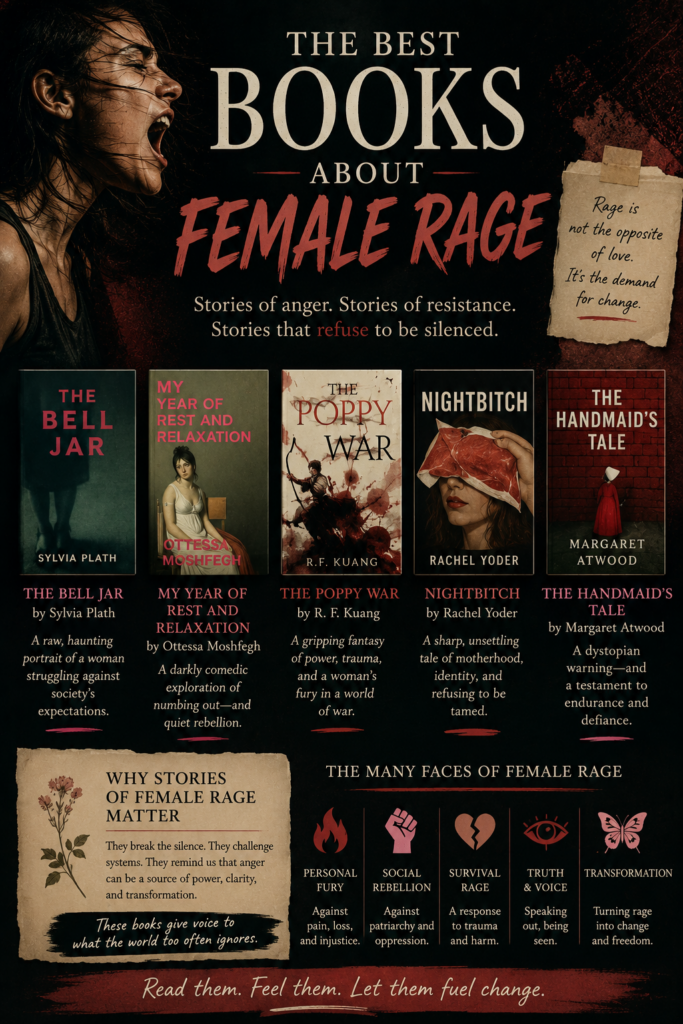
The best books about female rage show what happens when women are ignored, trapped, judged, or pushed too far. These stories do more than show anger. They reveal pain, power, and the cost of silence.

For students, these books can make classic themes feel urgent and real. They also help readers see how literature turns private anger into public meaning.

In this Guide

  • Why female rage matters in literature
  • Best books about female rage for students
  • Classic works that shaped the theme
  • Modern books with fierce female voices
  • Symbols and themes to watch for
  • Books to consider buying
  • FAQs
Best Books about Female Rage

Why the Best Books About Female Rage Matter

Female rage in literature is rarely just anger. It often grows from control, fear, shame, or loss.

The best books about female rage ask a hard question: what happens when a woman is denied a voice? Sometimes she fights back. Sometimes she breaks down. Or sometimes she changes the world around her.

These stories matter because they challenge old ideas about how women “should” act. A calm woman may be praised, but an angry woman is often called dangerous. Literature shows why that label is not always fair.

Female rage can also shape tone and mood. If you want a clear student-friendly guide to that difference, read this explanation of tone vs. mood in literature.

Best Books About Female Rage for Students

These works are useful for high school, AP Literature, and college readers because they connect emotion with theme.

The best books about female rage often pair personal pain with social pressure. That makes them strong choices for essays about gender, power, identity, and justice.

The Yellow Wallpaper by Charlotte Perkins Gilman

This short story is one of the clearest works about female anger under control. The narrator is trapped in a room by her husband and doctor, who claim they know what is best for her.

Her rage does not start as a loud protest. It builds through fear and isolation. The wallpaper becomes a symbol of the life she cannot escape.

This story works well for essays because it shows how silence can become madness. It also shows how medical power can be used against women.

Medea by Euripides

Medea is one of the oldest and most famous stories of female rage. She is betrayed by Jason, and her anger turns into revenge.

Readers may not agree with her choices, but the play forces us to face her pain. She is not a simple villain. She is a woman who has lost status, love, and safety.

You can read more about the myth and its long history through Britannica’s overview of Medea.

Jane Eyre by Charlotte Brontë

Jane’s rage is quieter than Medea’s, but it is just as important. She refuses to accept cruelty, even when she has little power.

Her anger helps her protect her self-worth. She says no when society expects her to obey.

This makes Jane Eyre a strong pick for readers who want a novel about inner strength. Jane’s rage is tied to dignity.

Classic Best Books About Female Rage

Classic literature often hides female rage under manners, silence, or tragedy.

Some of the best books about female rage are classics because they show how long women have had to fight for control over their lives.

The Awakening by Kate Chopin

Edna Pontellier feels trapped by marriage and motherhood. Her anger is not always direct, but it shapes her choices.

The sea becomes a key symbol in the novel. It suggests freedom, danger, and escape.

The Awakening is useful for essays about identity. It also raises hard questions about the cost of freedom.

Wide Sargasso Sea by Jean Rhys

This novel gives a voice to Bertha Mason from Jane Eyre. In Rhys’s version, Bertha is Antoinette, a woman shaped by racism, marriage, and loss.

Her rage comes from being renamed and controlled. The novel asks readers to rethink who gets called “mad.”

For students, this book is a great example of a literary response. It talks back to a classic text.

Beloved by Toni Morrison

Beloved shows rage born from slavery, grief, and memory. Sethe’s anger cannot be separated from the violence done to her body and family.

Morrison does not make rage simple. She shows how trauma lives in a house, a family, and a community.

This novel is often taught in college because it is rich with symbols. The ghost, the house, and the scars all carry deep meaning.

Modern Best Books About Female Rage

Modern writers often make female rage sharper, stranger, and more direct.

The best books about female rage today may use horror, satire, or myth to show anger in bold ways. These books can feel intense, but they speak to real pressures.

The Vegetarian by Han Kang

In The Vegetarian, Yeong-hye stops eating meat after a disturbing dream. Her choice seems small at first, but it becomes a deep refusal.

Her body becomes the place where others try to control her. And her silence feels like protest.

This novel is useful for readers who want to study power inside a family. It also shows how society can punish women who reject their assigned role.

Nightbitch by Rachel Yoder

Nightbitch mixes motherhood, rage, and dark humor. The main character believes she may be turning into a dog.

That strange idea becomes a symbol for anger that has no safe place to go. The novel uses the body to show frustration and hunger for freedom.

This book is best for older students or college readers because of its mature themes.

Circe by Madeline Miller

Circe retells Greek myth from the view of a woman often treated as a side character. Circe’s rage comes from exile, betrayal, and years of being dismissed.

Her power grows as she learns to trust herself. The novel turns anger into self-knowledge.

This makes Circe one of the more accessible modern choices for students who enjoy myth.

Symbols and Themes in the Best Books About Female Rage

Female rage often appears through strong images before it appears in direct speech.

In the best books about female rage, symbols help readers see what characters cannot say out loud. A room, a sea, a body, or a ghost can hold years of pain.

Rooms and houses

Rooms often show limits. In The Yellow Wallpaper, the room becomes a prison. In Beloved, the house holds the past like a wound.

These spaces show how private life can become a place of control.

Bodies

Many books use the female body as a site of conflict. In The Vegetarian, Yeong-hye’s body becomes a protest. In Nightbitch, the body becomes wild and strange.

This theme helps readers see how control over the body can connect to control over the self.

Fire and water

Fire often suggests revenge or destruction. Water often suggests freedom or escape.

In The Awakening, the sea calls to Edna with beauty and danger. In many rage stories, nature reflects a woman’s inner life.

To write about these symbols well, pay close attention to tone. The mood around a symbol can change its meaning. For a quick review, use Rapid Reads Press’s guide to tone and mood.

Recommended Books to Buy or Borrow

If you want to start with the best books about female rage, these titles are strong choices for study or personal reading.

  • The Bell Jar by Sylvia Plath
  • The Vegetarian by Han Kang
  • Circe by Madeline Miller

The Bell Jar is especially useful for students who want to study mental health, gender roles, and voice. You can learn more about Sylvia Plath through the Poetry Foundation’s Sylvia Plath profile.

How to Write About Female Rage in Literature

A strong essay about female rage should avoid one simple claim: “She is angry.” That is only the start.

Ask what causes the anger. Look at who has power. Notice what the character is allowed to say and what she must hide.

Good analysis also looks at form. A play like Medea uses speeches and public conflict. A story like The Yellow Wallpaper uses a private journal voice.

When you write, connect rage to a larger theme. Female rage may reveal injustice, loss, freedom, or identity.

FAQ: Best Books About Female Rage

What are the best books about female rage for AP Literature?

Strong choices include Medea, The Awakening, Beloved, and Jane Eyre. Each one offers rich themes and strong character analysis.

Is female rage always shown as violent?

No. Female rage can be quiet, hidden, or symbolic. It may appear through silence, refusal, or escape.

Why do so many books connect female rage with madness?

Many societies have labeled angry women as “mad” to dismiss them. Literature often questions that label and asks who benefits from it.

What symbols should I look for in books about female rage?

Look for rooms, locked doors, mirrors, bodies, fire, and water. These symbols often show pressure or a desire for freedom.

Are modern books about female rage good for students?

Yes, but some are better for older readers. Books like Circe are accessible, while Nightbitch fits college-level study better.

Key Takeaway

The best books about female rage show anger as more than an emotion. They show it as a response to control, silence, and harm.

These stories help readers understand why rage can be frightening, but also truthful. In literature, female rage often becomes a path to voice, power, and self-knowledge.
Best Novels About Memory and Trauma: Powerful Books That Stay with You

Best Novels about Memory and Trauma

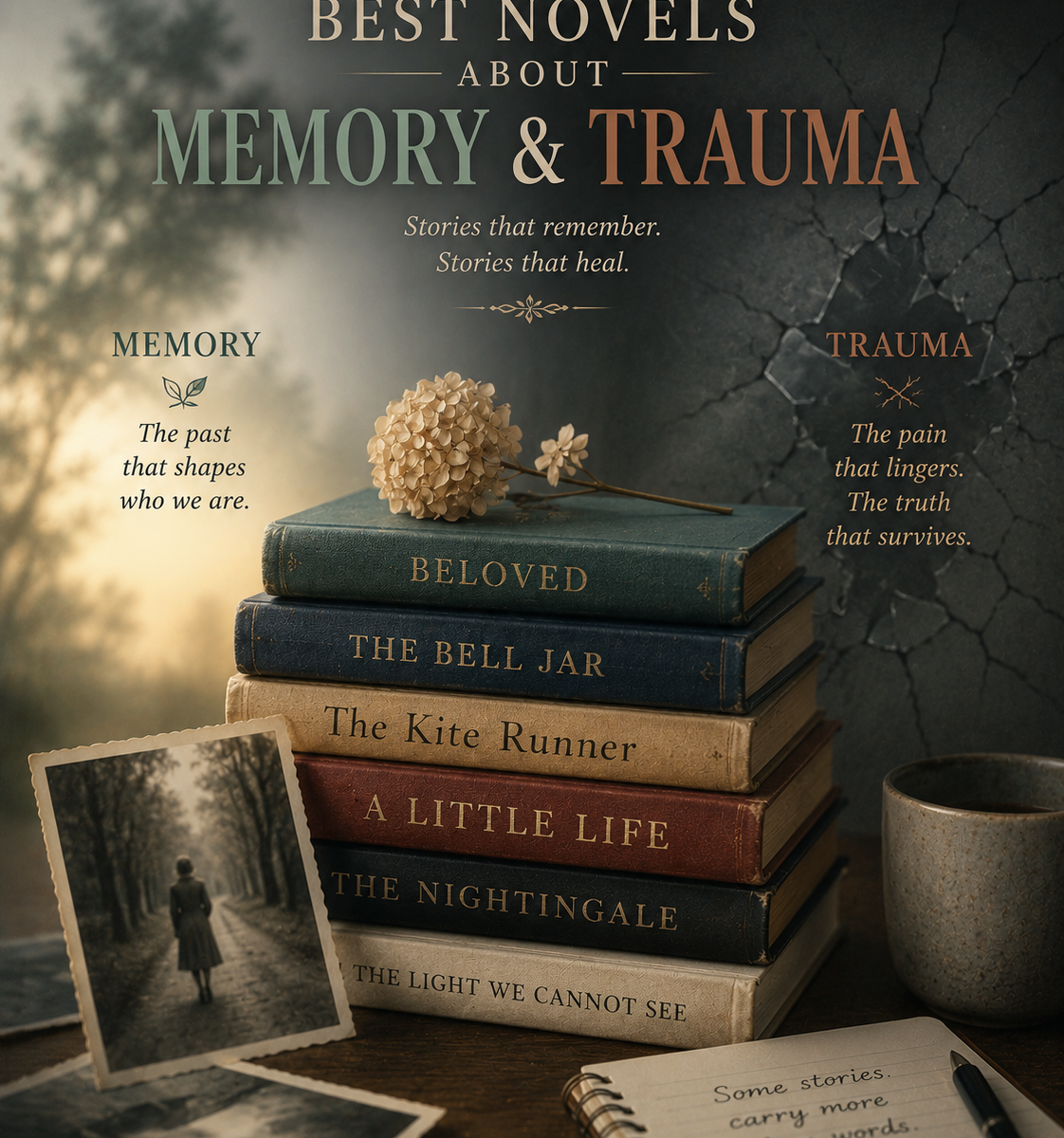
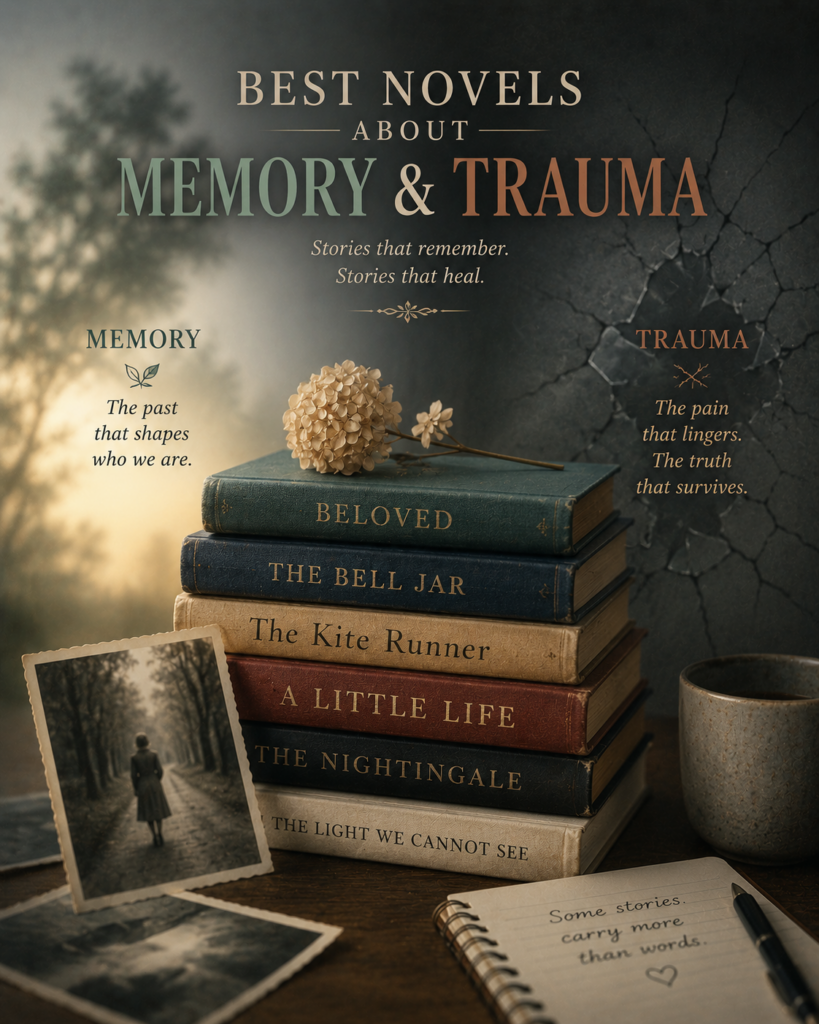
The Best Novels About Memory and Trauma show how the past can shape a person’s life long after the event has ended. These books help readers understand pain, survival, silence, and the strange ways memory can return.

For students, these novels also offer rich themes, symbols, and character studies. They are strong choices for essays, class talks, and deeper reading.

In this Guide

  • Why novels about memory and trauma matter
  • Best novels to read first
  • How trauma changes storytelling
  • Common symbols and themes
  • How students can read these books with care
  • Book suggestions
  • FAQs
  • Key takeaway
Best Novels about Memory and Trauma

Why the Best Novels About Memory and Trauma Matter

These stories help readers see how the past lives inside the present.

The Best Novels About Memory and Trauma do not treat memory like a simple record. In these books, memory can be broken, hidden, repeated, or changed by fear.

That makes the reading experience feel more real. People who suffer often do not remember events in a neat order. A sound, place, smell, or word can bring the past back at once.

These novels also ask hard questions. Can a person heal if they cannot speak about what happened? Can a family move forward if it hides the truth? Or can a nation face its own violent history?

Books like Beloved by Toni Morrison and The Things They Carried by Tim O’Brien explore these questions with great care. They show that trauma is not only personal. It can also be passed through families, wars, and cultures.

Best Novels About Memory and Trauma to Read First

These books are strong starting points because they are often taught and widely discussed.

If you are new to the Best Novels About Memory and Trauma, start with books that use clear emotional conflicts and strong symbols. The stories below are well-known, but they still feel fresh because they ask deep human questions.

Beloved by Toni Morrison

Beloved is one of the most important American novels about memory, slavery, and grief. Set after the Civil War, it follows Sethe, a woman haunted by the past in both real and ghostly ways.

The novel shows how trauma can return through the body, the home, and family bonds. Morrison does not let the past stay buried. She turns memory into a living force.

You can learn more about Morrison’s life and impact through Britannica’s overview of Toni Morrison.

The Things They Carried by Tim O’Brien

This Vietnam War novel blurs the line between fact and fiction. O’Brien writes about soldiers, fear, guilt, and the stories people tell to survive.

Memory in this book is not perfect. It shifts because pain shifts it. That is part of the point.

The title itself is a symbol. The soldiers carry weapons and supplies, but they also carry shame, love, fear, and regret.

Slaughterhouse-Five by Kurt Vonnegut

Slaughterhouse-Five follows Billy Pilgrim, a man who becomes “unstuck in time.” His life moves back and forth between moments, including the bombing of Dresden during World War II.

The strange structure shows how trauma can break normal time. Billy does not simply remember the war. He seems trapped inside it.

This is one reason the novel remains one of the Best Novels About Memory and Trauma for students who want to study form and theme together.

The Remains of the Day by Kazuo Ishiguro

This quiet novel follows Stevens, an English butler who looks back on his life. At first, his memories seem calm and controlled.

As the story unfolds, readers see what he has avoided. His trauma comes through restraint, regret, and missed chances.

The book is a powerful example of emotional repression. It shows that silence can be just as painful as open grief.

Never Let Me Go by Kazuo Ishiguro

This novel may look like science fiction, but its deepest subject is memory. Kathy tells the story of her childhood at a strange boarding school and slowly reveals the truth about her life.

The novel studies how people remember youth when they know loss is near. It is calm on the surface, but deeply sad underneath.

For students, it is a great book for essays about identity, control, and the stories people tell themselves.

How Trauma Changes Storytelling

In many trauma novels, the form of the story reflects the mind of the character.

The Best Novels About Memory and Trauma often avoid a straight timeline. This is not a trick. It helps readers feel how trauma works.

A character may jump from the present to the past without warning. A scene may repeat with new details. A narrator may leave out facts because the truth is too painful.

In Beloved, memories arrive in pieces. In Slaughterhouse-Five, time itself feels broken. And in The Things They Carried, stories are retold because one version is never enough.

This style can feel hard at first. But it teaches readers to notice structure. The way a story is told can matter as much as what happens.

If you are studying older texts too, the same skill helps. Paying close attention to language and structure can make difficult works easier, as explained in this guide to understanding Shakespearean language.

Symbols and Themes in the Best Novels About Memory and Trauma

These novels often use objects, places, and repeated images to show what words cannot fully explain.

One common symbol is the house. In Beloved, the home is not just a setting. It holds grief, fear, and history.

Another key symbol is the body. Trauma often appears through scars, pain, habits, or silence. A character may not speak about the past, but the body still remembers.

Objects also carry meaning. In The Things They Carried, the items soldiers hold become signs of emotional weight. What they carry shows who they are and what they fear.

Time is another major theme. In the Best Novels About Memory and Trauma, the past is not really past. It presses into the present and changes how characters see themselves.

These books also focus on truth. A memory may be honest even if it is not fully accurate. That idea can lead to strong essay topics about narration and trust.

Why Memory Is Not Always Reliable

Memory can protect people, but it can also hide what hurts too much.

Many trauma novels use unreliable narrators. This does not always mean the narrator lies on purpose. Sometimes the narrator cannot face the full truth yet.

In The Remains of the Day, Stevens tells his life story in a careful voice. He seems proper and calm. But readers start to sense the sadness under his control.

In Never Let Me Go, Kathy’s memories feel gentle, but they lead toward a painful truth. Her calm tone makes the novel even more haunting.

This is why the Best Novels About Memory and Trauma reward close reading. Small details often reveal what the narrator cannot say directly.

How Students Can Read These Novels With Care

These books can be powerful, but some scenes may feel heavy.

When you read the Best Novels About Memory and Trauma, give yourself time. Do not rush through painful chapters just to finish the plot.

Take notes on repeated images, changes in time, and moments of silence. Ask what the character avoids. Ask what the book returns to again and again.

It also helps to learn basic facts about trauma. The National Institute of Mental Health page on PTSD offers clear information about how trauma can affect memory and daily life.

For class essays, focus on one clear idea. You might write about the haunted house in Beloved, the broken timeline in Slaughterhouse-Five, or the weight of objects in The Things They Carried.

Amazon Book Suggestions: Best Novels About Memory and Trauma

These titles are easy to find online, in libraries, and in many school reading lists.

If you want to build a reading list, these are strong choices:

  • Beloved by Toni Morrison
  • The Things They Carried by Tim O’Brien
  • Never Let Me Go by Kazuo Ishiguro

Each book gives a different view of memory and pain. Together, they show why the Best Novels About Memory and Trauma matter in modern literature.

Best Novels About Memory and Trauma for Essay Topics

These books offer rich ideas for literary analysis.

For an essay on symbolism, Beloved is a strong choice. You can study the house, the ghost, or the idea of rememory.

For an essay on structure, Slaughterhouse-Five works well. Its broken timeline shows how war changes the mind.

For an essay on narration, The Remains of the Day gives you a lot to explore. Stevens reveals his pain through what he refuses to admit.

If you need help with close reading, use skills that apply across many texts. This guide on how to understand difficult literary language can help you slow down and read with more focus.

FAQs About the Best Novels About Memory and Trauma

What makes a novel about memory and trauma powerful?

A powerful trauma novel shows how the past affects the present. It often uses symbols, broken timelines, or silence to reveal pain.

Are the Best Novels About Memory and Trauma hard to read?

Some can be emotionally difficult. They are worth reading with care, breaks, and class discussion when possible.

Which novel should students start with?

The Things They Carried is a good starting point because its chapters are short and its themes are clear. Beloved is deeper and more complex, but very rewarding.

Why do these novels often use non-linear time?

Trauma does not always feel like a normal memory. A broken timeline can show how the past returns without warning.

Can these books help with AP Literature essays?

Yes. The Best Novels About Memory and Trauma offer strong examples of theme, character, symbolism, and narrative structure.

Key Takeaway

The Best Novels About Memory and Trauma show that the past is never simple. These books help readers see how pain can shape identity, how silence can speak, and how stories can become a path toward truth.

For students, they are more than moving reads. They are some of the richest texts for close reading, essay writing, and serious thought.