

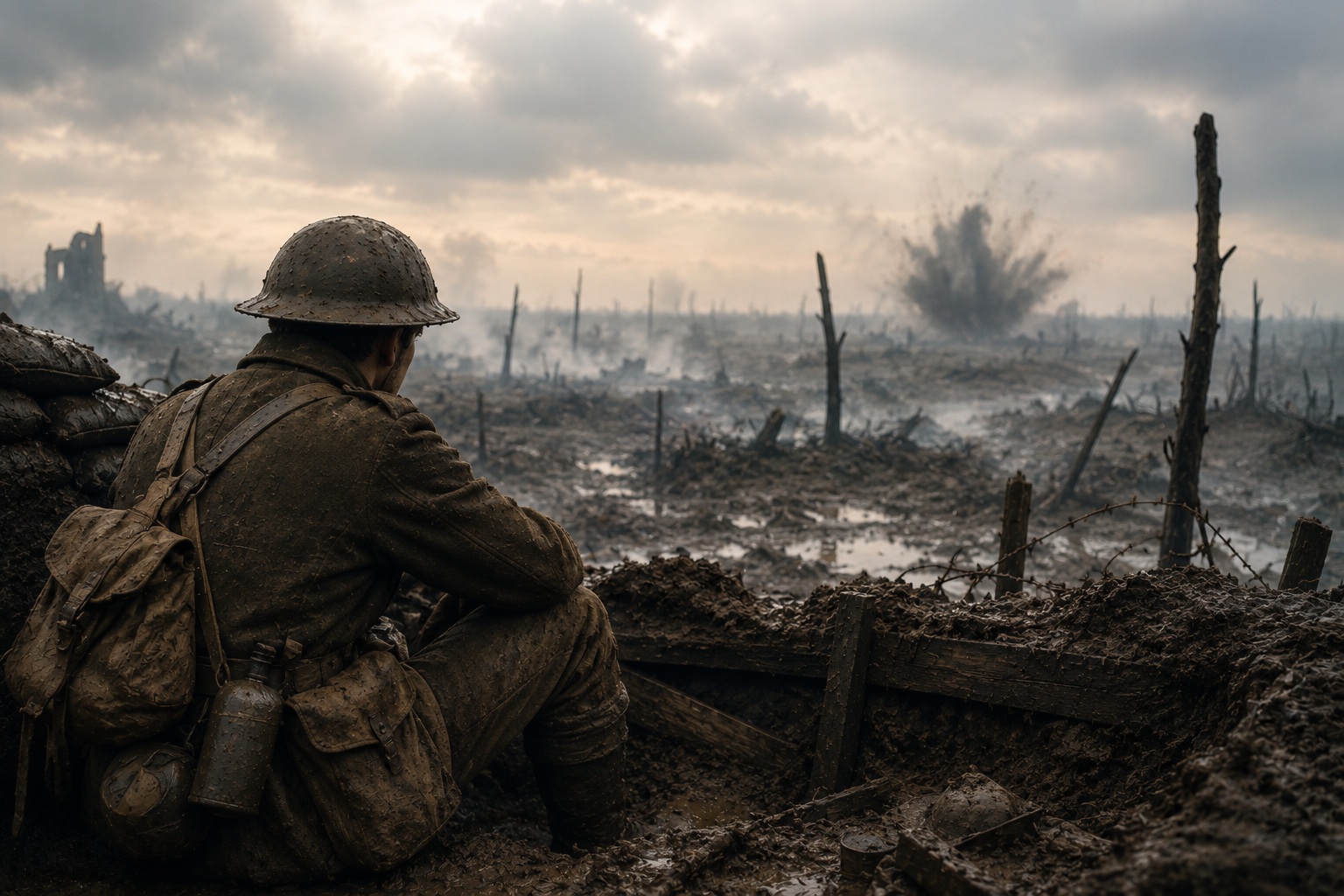
Erich Maria Remarque’s novel can feel simple at first, but its ideas are deep and painful. The themes in All Quiet on the Western Front show how war damages young people, breaks trust in adults, and changes what survival means.
In this Guide
- Why the themes matter
- Major themes to know
- How Remarque develops meaning
- How to write about the novel
- Helpful books and links
- FAQ
Why the themes in All Quiet on the Western Front Matter
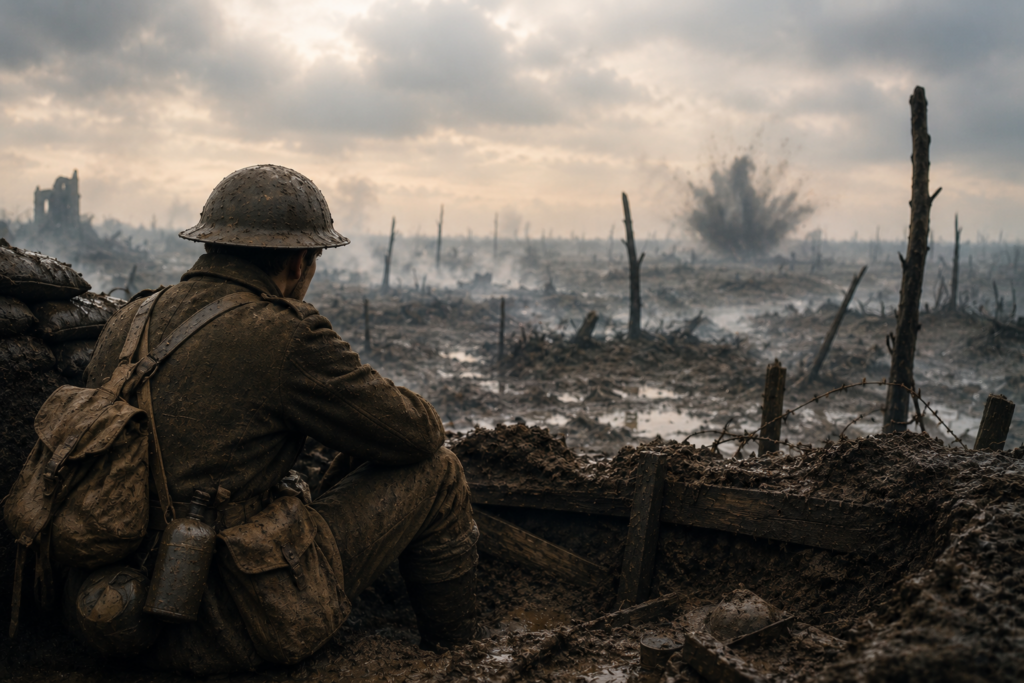
Remarque does not write war as a grand adventure. He shows war as fear, hunger, cold, pain, and moral shock.
The themes in All Quiet on the Western Front matter because they help us see what the novel argues about modern war. The book asks students to look past medals and speeches and notice the cost paid by ordinary soldiers.
If you need a refresher on theme as a literary idea, this guide on how to identify theme in literature can help before you start your essay.
Major themes in All Quiet on the Western Front
The novel builds its meaning through Paul’s daily life at the front, not through long speeches.
These themes in All Quiet on the Western Front work together. Each one shows a different part of war’s damage.
1. The Lost Youth of a Generation
Paul and his classmates enter the army as teenagers. They should be in school, at home, or at the start of adult life.
Instead, they learn how to avoid shells, bury friends, and numb their feelings. Their youth does not slowly fade. It gets taken from them.
This theme fits with the idea of a lost generation. Many young people after World War I felt cut off from old hopes and old values.
2. The Brutality of Modern War
The novel does not make battle look noble. Trenches, gas, shells, rats, and wounds fill the soldiers’ world.
War in the book feels mechanical. Men can die without ever seeing the person who killed them.
That makes the violence feel even more chilling. Like Wilfred Owen’s war poems, Remarque shows that modern war can turn human life into a statistic.
3. Disillusionment with Authority
Paul and his friends were pushed toward war by teachers and leaders. Men like Kantorek sold them patriotic ideas from a safe place.
Once the boys reach the front, those speeches seem false. They see that adults used bright words to hide a brutal reality.
This theme is useful for essays about betrayal. The young soldiers do not only lose friends. They lose faith in the people who told them what to believe.
4. Friendship as Survival
Paul’s bond with Kat is one of the most human parts of the novel. Their friendship gives Paul comfort in a world that feels empty.
The soldiers share food, advice, jokes, and silence. These small acts matter because they help the men stay alive inside.
This does not make war better. It shows that human connection can survive even when society fails.
5. The Loss of Individual Identity
At the front, soldiers are treated less like people and more like parts of an army. Orders matter more than feelings.
Paul’s old identity as a student fades. His new life is built around instinct, danger, and routine.
This theme has a strong link to dehumanization. The men are still human, but war keeps pushing them to act like tools.
6. Nature as Comfort and Contrast
Nature appears in the novel as both beauty and danger. A quiet sky can sit above a field full of bodies.
Sometimes the earth seems to protect the soldiers. At other times, it becomes a grave.
This contrast makes the war feel even more tragic. The natural world keeps its beauty while human beings destroy one another.
How Remarque Develops the Novel’s Themes
Remarque builds theme through scenes that feel direct and personal.
Paul’s narration is plain, but that plain style gives the novel power. He does not need fancy language to show horror.
For example, Paul’s visit home proves how far he has changed. His family loves him, yet he cannot explain the front to them. Home no longer feels like home.
The hospital scenes also deepen the message. Students can see that war continues after battle, through wounds, fear, and grief.
For historical context, Britannica’s overview of World War I can help explain the world behind the novel. You can also read more about Erich Maria Remarque and his life.
Why Students Struggle with the themes in All Quiet on the Western Front
The novel can seem easy because the plot is clear. The hard part is seeing how each event builds a larger meaning.
The themes in All Quiet on the Western Front are often quiet. Remarque does not stop the story to tell readers the lesson.
Students should ask, What does this scene reveal about war? That question turns plot summary into theme analysis.
For extra practice, use this theme study resource as you plan notes or prepare for class discussion.






















How to Write About the themes in All Quiet on the Western Front
A strong essay should not just say that war is bad. It should explain how Remarque shows war’s damage.
When you write about the themes in All Quiet on the Western Front, connect each claim to a scene. Paul’s school days, the front, the hospital, and his return home all help prove the novel’s message.
Try this simple thesis frame:
In All Quiet on the Western Front, Remarque shows that war destroys young soldiers not only through death, but through lost identity and broken trust.
That thesis gives you a clear path. You can write one body paragraph on youth, one on identity, and one on authority.
If you want a broader method, review how to find a theme in a novel and then apply the steps to Remarque’s text.
Comparing the Novel to Other Literature
Comparison can help students see Remarque’s choices more clearly.
In The Things They Carried, Tim O’Brien also shows how war changes memory and identity. Both books ask readers to think about what soldiers carry inside after combat.
In Shakespeare’s Henry V, war can appear tied to honor and national pride. Remarque rejects that heroic vision and asks readers to look at the bodies left behind.
These comparisons work well for AP Literature because they show how writers can treat the same subject in very different ways.
Relevant Books to Look Up on Amazon or at Your Library
These books pair well with Remarque’s novel for essays, projects, or deeper reading.
- All Quiet on the Western Front by Erich Maria Remarque
- The Things They Carried by Tim O’Brien
- A Farewell to Arms by Ernest Hemingway
FAQ: themes in All Quiet on the Western Front
What are the main themes in All Quiet on the Western Front?
The main themes in All Quiet on the Western Front include lost youth, war’s brutality, broken trust in authority, friendship, trauma, and the loss of identity.
What is the most important theme in the novel?
The most important theme is the destruction of young lives by war. Remarque shows that war harms soldiers before, during, and after battle.
How does Paul show the theme of lost youth?
Paul begins as a student with hopes for the future. By the front, he thinks more like a survivor than a young man.
Why is friendship important in the novel?
Friendship gives the soldiers emotional strength. It becomes one of the few good things left in a violent world.
Is All Quiet on the Western Front anti-war?
Yes. The novel strongly challenges romantic ideas about war and shows its human cost.
Key Takeaway
The themes in All Quiet on the Western Front show that war does not only kill bodies. It also damages youth, trust, memory, and hope.












