

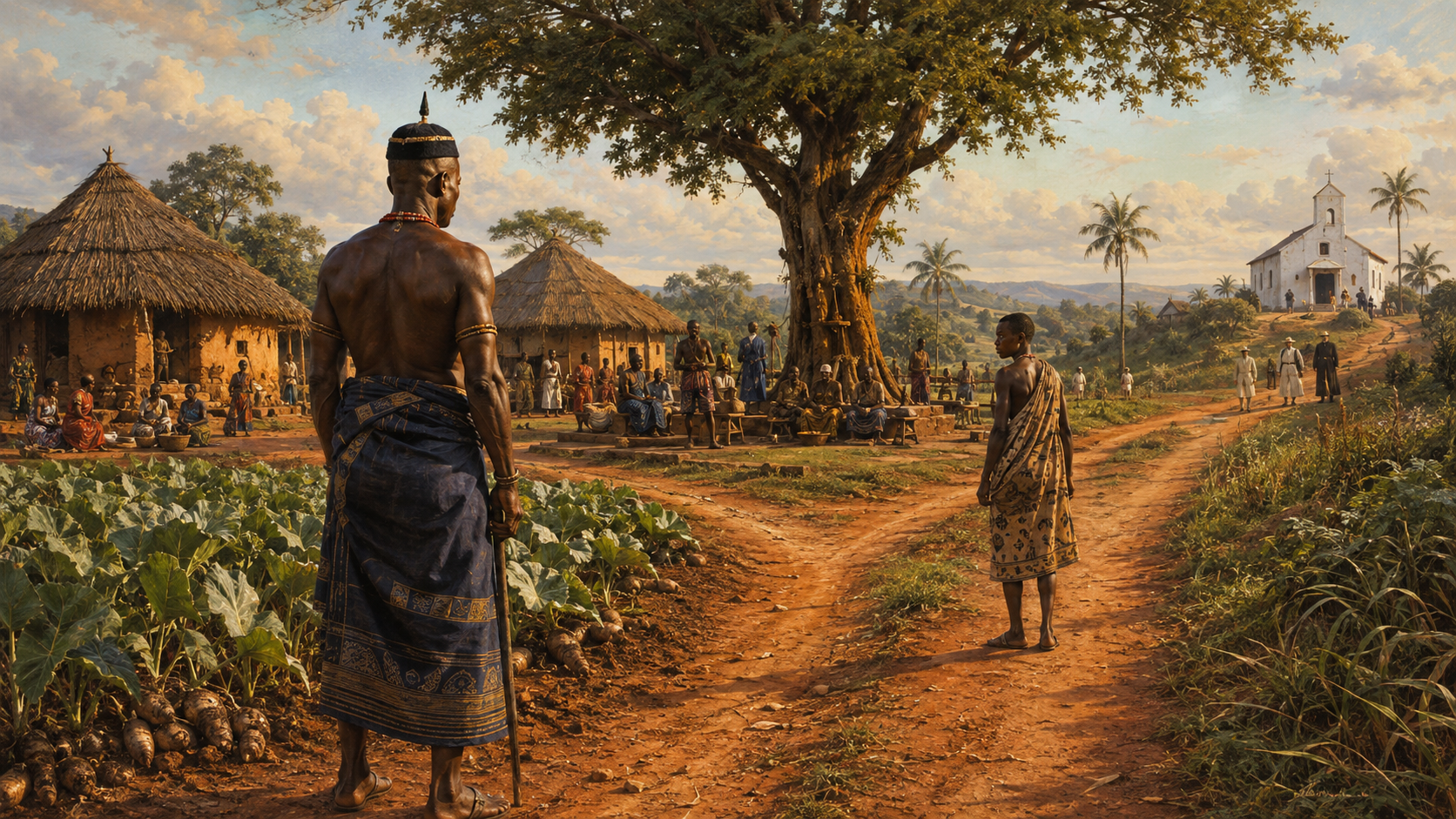
A clear guide to the major ideas, conflicts, and meanings students should notice in Things Fall Apart.
The themes in Things Fall Apart help students see why Chinua Achebe’s novel still matters in English classes today. The book explores culture, power, pride, family, and loss through the fall of one man and the shock faced by a whole community.
This guide breaks down the major ideas in simple terms, with examples you can use for essays, class talks, or AP Literature prep.
In this Guide
Use these sections to trace the novel’s biggest ideas with more confidence.
- Why the themes matter
- Tradition and change
- Masculinity and pride
- Fate and personal choice
- Family and community
- Religion and colonial power
- Language and storytelling
- Tragedy and meaning
- FAQ
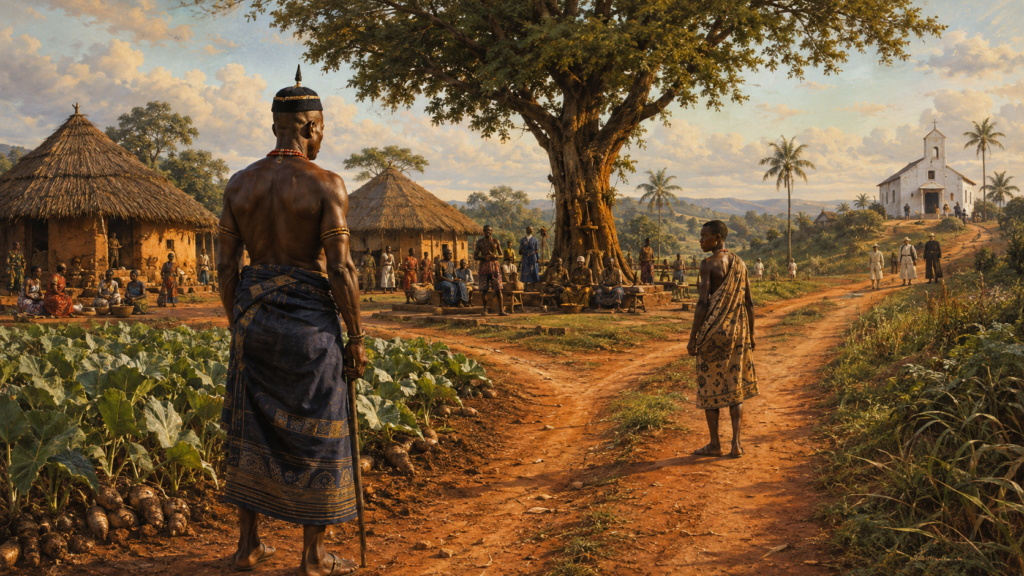
Why the themes in Things Fall Apart matter
Achebe writes about one village, but his ideas reach far beyond Umuofia.
When students study the themes in Things Fall Apart, they should look for tension. Almost every major idea in the novel comes from conflict between old ways and new forces, personal pride and social duty, or strength and fear.
The novel is also a response to how African cultures were often shown in European writing. Achebe gives Igbo life depth, order, beauty, and conflict. That makes the book both a story and a correction.
If you need a broader method for finding theme in any text, this guide on how to identify theme in literature can help.
Major themes in Things Fall Apart: tradition and change
One central theme is the struggle between a stable culture and rapid change.
Umuofia has customs that shape daily life. Marriage, farming, titles, festivals, justice, and religion all follow shared rules. These systems give people a sense of order.
Yet Achebe does not present tradition as perfect. Some customs protect the group, while others cause pain. The killing of Ikemefuna is one clear example. The community treats the act as tradition, but the emotional cost is severe.
Among the themes in Things Fall Apart, tradition and change may be the easiest to track. Watch how characters react when missionaries arrive. Some resist them, while others see them as a path toward dignity or safety.
This conflict is not simple. Achebe shows that change can bring both harm and hope, depending on who controls it.
Core themes in Things Fall Apart about masculinity and pride
Okonkwo’s idea of manhood shapes many of his choices.
Okonkwo fears weakness because he links it to his father, Unoka. To avoid being like him, Okonkwo becomes harsh, violent, and proud. He believes a man must show strength at all times.
Of all the themes in Things Fall Apart, masculinity is one of the most personal. Okonkwo’s strength helps him rise in Umuofia, but his fear of shame traps him.
He beats his wives, rejects tenderness, and takes part in Ikemefuna’s death because he does not want others to see him as weak. His public image matters more to him than his private conscience.
This theme connects well to Shakespeare’s Macbeth. Macbeth also lets pride and a narrow idea of courage push him toward ruin. Both men confuse power with wisdom.
Fate, personal choice, and tragic downfall
The novel asks whether Okonkwo falls because of destiny, society, or his own flaws.
Okonkwo is not unlucky in a simple way. He makes choices. Still, his world also places heavy pressure on him. His culture values titles, honor, courage, and public respect.
His exile after the accidental killing of Ezeudu’s son shows how quickly status can break. Even though the act is not planned, the punishment changes his life.
This gives the novel a tragic shape. Like many tragic heroes, Okonkwo has real greatness and a deep flaw. His flaw is not strength itself, but the fear that makes his strength rigid.
Students can write about this as a conflict between **free will and social pressure**. Okonkwo acts, but he acts inside a world with strict codes.
Family, community, and belonging
Achebe shows that identity comes from family ties and public life.
In Umuofia, the individual is never just an individual. A person belongs to a household, a clan, a lineage, and a set of shared beliefs.
Family life in the novel can be warm, but it can also be tense. Okonkwo loves some of his children, especially Ezinma, yet he struggles to show care. His fear of softness damages his home.
Nwoye’s story is key. He feels hurt by parts of Igbo custom and by his father’s harshness. When the missionaries arrive, he finds a new form of belonging.
This makes family one of the quieter themes in Things Fall Apart. The break between Okonkwo and Nwoye mirrors the larger break in the clan.
Religion, colonial power, and cultural conflict
The arrival of Christianity changes the balance of life in Umuofia.
The missionaries do not enter an empty world. Umuofia already has gods, priests, rituals, and moral laws. Achebe makes this clear so readers do not mistake Igbo religion for chaos.
At first, the new faith attracts people who feel pushed aside. This includes outcasts and those hurt by certain customs. Christianity gives them a new place in the world.
But religion soon joins with political power. The church leads to courts, prisons, messengers, and colonial control. What begins as belief becomes part of a system that weakens the clan.
This is one of the themes in Things Fall Apart that students should handle with care. Achebe does not suggest that one side is simple good and the other simple evil. He shows how belief can comfort people, but power can also use belief as a tool.
For reliable background on Achebe’s life and work, see Britannica’s biography of Chinua Achebe.

Language, storytelling, and historical voice
Achebe uses style to honor Igbo thought and speech.
The novel includes proverbs, folktales, speeches, and oral traditions. These moments show that Umuofia has its own art, logic, and wisdom.
A famous line in the novel says, **proverbs are the palm-oil with which words are eaten**. This means language has social value. It helps people argue, teach, praise, and remember.
The title also matters. It comes from W. B. Yeats’s poem The Second Coming, which you can read at the Poetry Foundation. Achebe uses that title to suggest a world where old centers no longer hold.
Language becomes one of the deepest themes in Things Fall Apart because the story itself challenges colonial speech about Africa. Achebe tells the story from within, not from the outside.
How the themes in Things Fall Apart build tragedy
The novel’s themes work together to create its tragic ending.
The themes in Things Fall Apart do not sit apart from the plot. They push the story forward. Okonkwo’s pride, the clan’s customs, and colonial force all shape the final act.
By the end, Okonkwo sees his world change in ways he cannot control. He wants his clan to fight, but many people no longer share his view. His final act shows both despair and rebellion.
The last scene is bitter because the District Commissioner reduces Okonkwo’s whole life to a small detail for a book. Achebe makes readers feel the damage caused when powerful people control the story of others.
If you want a simple way to track quotes, conflicts, and theme statements as you read, try our student theme study organizer.
Books to pair with Things Fall Apart
These books can deepen your understanding of Achebe’s world and literary purpose.
- Things Fall Apart by Chinua Achebe
- Arrow of God by Chinua Achebe
- The Palm-Wine Drinkard by Amos Tutuola
You can search these titles at your library, school bookstore, or any major bookseller. No special edition is required for most class work.
FAQ about themes in Things Fall Apart
These quick answers can help with review or essay planning.
What are the biggest themes in Things Fall Apart?
The biggest themes in Things Fall Apart include tradition versus change, masculinity, family, religion, colonial power, and tragic downfall.
What is the main message of Things Fall Apart?
One main message is that cultures are complex and fragile. Achebe shows how personal flaws and outside power can break both a person and a community.
How does Okonkwo represent the theme of masculinity?
Okonkwo believes manhood means force, status, and emotional control. This belief helps him gain respect, but it also leads to cruelty and isolation.
Why is religion important in the novel?
Religion shapes law, family life, and identity in Umuofia. The arrival of Christianity creates both comfort for some people and conflict for the clan.
How can I write a thesis about the novel’s themes?
Pick one theme and explain how Achebe develops it through character choices, cultural conflict, and the ending. A strong thesis should make a clear claim, not just name a topic.
Key Takeaway
The themes in Things Fall Apart show how a society can fracture when private fear, public duty, and outside power collide. Achebe’s novel matters because it makes readers see both the strength and the pain inside that collapse.












