What Is Catharsis in Literature?

catharsis in literature

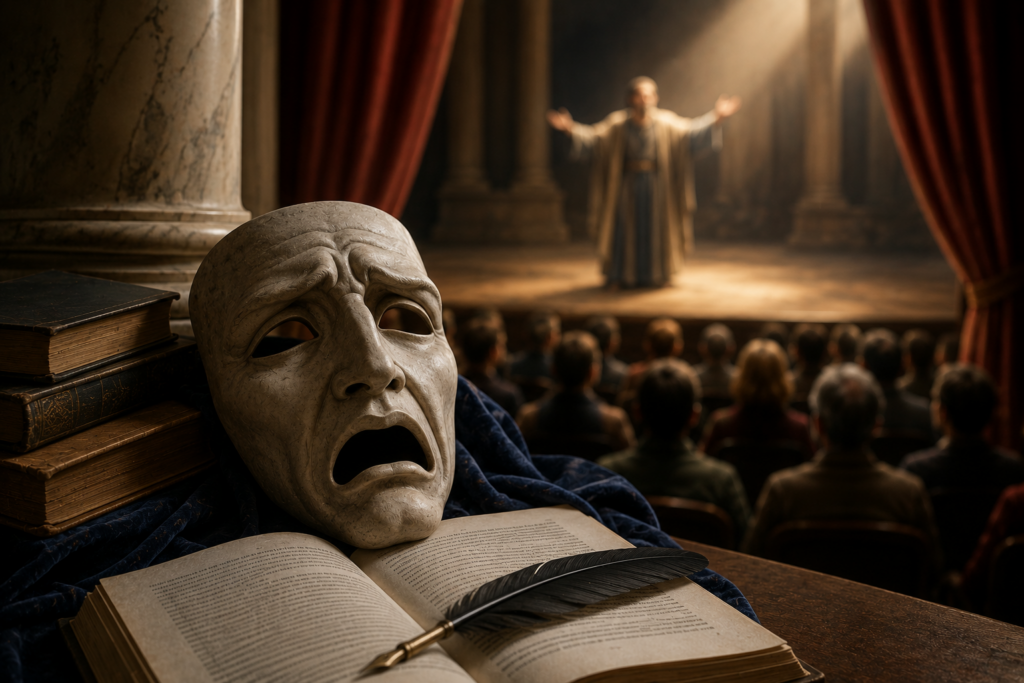
What Is Catharsis in Literature? It is the emotional release a reader or audience feels after a story builds fear, pity, grief, or tension.

This idea helps explain why sad stories can feel meaningful instead of just painful. Catharsis shows how literature can move us, clear our emotions, and make us think.

In this Guide

catharsis in literature

What Is Catharsis in Literature? A Simple Definition

Catharsis is the moment when strong emotions reach a release.

In literature, catharsis often happens after a character faces loss, guilt, fear, or truth. The reader feels the weight of those emotions, then feels a kind of relief when the story reaches its turning point or ending.

When readers ask, What Is Catharsis in Literature?, the simplest answer is this: it is an emotional “clearing out.” A story builds pressure, then lets that pressure break.

This does not always mean the ending is happy. A tragic ending can still feel complete if it helps the reader understand the pain in a deeper way.

Where the Idea Comes From

The word catharsis comes from ancient Greek ideas about tragedy.

Aristotle used the term when he wrote about Greek drama. He believed tragedy could stir feelings like pity and fear, then help the audience release those feelings.

You can read more about the classical meaning of catharsis through Britannica’s overview of catharsis.

Think of a play like Oedipus Rex by Sophocles. The story is painful, but the ending gives the audience a powerful sense of emotional completion.

What Is Catharsis in Literature? Why It Matters

Catharsis matters because it makes emotion feel purposeful.

The best answer to What Is Catharsis in Literature? is not just “a sad feeling.” It is a shaped emotional experience. The author guides the reader through tension so the release feels earned.

This is one reason readers return to tragedy, even when it hurts. A tragic story can help us face fear from a safer distance.

Catharsis can also reveal a theme. If a character’s downfall brings sadness and relief, the story may ask us to think about pride, justice, guilt, or love.

If you want help with deeper reading habits, this guide on how to read literature like a scholar can help you notice patterns like this more clearly.

image-slider-with-thumbnail1.jpeg
PlayPause
previous arrow
next arrow
image-slider-with-thumbnail1.jpeg
image-slider-with-thumbnail3.jpeg
image-slider-with-thumbnail4.jpeg
ChatGPT Image Jun 27, 2026, 06_33_13 PM
ChatGPT Image Jun 27, 2026, 06_36_37 PM
ChatGPT Image Jun 27, 2026, 06_38_39 PM
ChatGPT Image Jun 27, 2026, 06_31_22 PM
image-slider-with-thumbnail7.jpeg
ChatGPT Image Jun 27, 2026, 06_29_43 PM
ChatGPT Image Jun 27, 2026, 06_27_44 PM
image-slider-with-thumbnail6.jpeg
ChatGPT Image Jun 27, 2026, 06_15_07 PM
image-slider-with-thumbnail5.jpeg
ChatGPT Image Jun 27, 2026, 06_22_43 PM
ChatGPT Image Jun 27, 2026, 06_25_37 PM
ChatGPT Image Jun 27, 2026, 06_19_43 PM
ChatGPT Image Jun 27, 2026, 06_12_00 PM
ChatGPT Image Jun 27, 2026, 06_08_50 PM
ChatGPT Image Jun 26, 2026, 04_54_23 PM
ChatGPT Image Jun 27, 2026, 05_53_51 PM
ChatGPT Image Jun 28, 2026, 08_35_55 AM
previous arrow
next arrow

What Is Catharsis in Literature? Examples You May Know

Examples make catharsis easier to see.

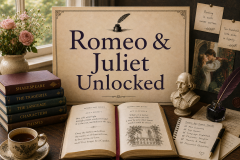
Romeo and Juliet by William Shakespeare

In Romeo and Juliet, the ending is tragic. The young lovers die because of family hatred and rushed choices.

The catharsis comes when the families finally see the cost of their feud. The audience feels grief, but also a painful sense of truth.

Hamlet by William Shakespeare

In Hamlet, the story builds around revenge, doubt, and moral confusion. By the final scene, many characters have died.

The release comes because the hidden crimes are exposed. The ending is dark, but the emotional tension no longer hangs in the air.

Oedipus Rex by Sophocles

A strong way to understand What Is Catharsis in Literature? is to look at Oedipus Rex. Oedipus searches for the truth, only to learn that he is the cause of the suffering in his city.

The audience feels pity for him and fear at how little control people may have over fate. The truth is awful, but the reveal brings emotional release.

Beloved by Toni Morrison

In Beloved, catharsis works through memory and trauma. The novel shows how the past can haunt people who have survived cruelty.

The emotional release is not simple. It comes from facing pain that has been buried for too long.

For more on poetry, drama, and literary terms, the Poetry Foundation glossary is a useful resource.

How to Analyze Catharsis in a Story

Look for the emotional pressure point.

When you study catharsis, ask what emotion the author builds. Is the story full of fear, pity, shame, grief, or anger?

Then ask where that emotion changes. A confession, death, discovery, or final choice may create the release.

Here is a simple tip: mark the moment when you feel the biggest emotional shift. Then connect that moment to the story’s theme.

If you are asked, What Is Catharsis in Literature? on a test or essay, do not stop at the definition. Explain how the release affects the reader and what it reveals about the work.

Books That Show Catharsis Well

These books are easy to find on Amazon, at a school library, or at a local bookstore.

  • Oedipus Rex by Sophocles
  • Hamlet by William Shakespeare

Both works show how tragedy can create powerful emotional release. They are also common in high school, AP Literature, and college classes.

FAQ

What Is Catharsis in Literature?

What Is Catharsis in Literature? It is the emotional release a reader feels after a story builds strong tension or feeling.

Does catharsis only happen in tragedies?

No. Tragedies often use catharsis, but novels, poems, films, and short stories can use it too.

Is catharsis the same as a happy ending?

No. Catharsis is about emotional release, not happiness. A sad ending can still give the reader catharsis.

How do I find catharsis in a book?

Look for the moment when the story’s strongest emotion reaches a peak and then changes. That shift often points to catharsis.

Key Takeaway

What Is Catharsis in Literature? It is the release that comes after a story builds deep emotion. When you read, watch for the moment when tension breaks, because that moment often reveals the heart of the work.

Important Wuthering Heights Quotes Explained for Students

Wuthering Heights Quotes

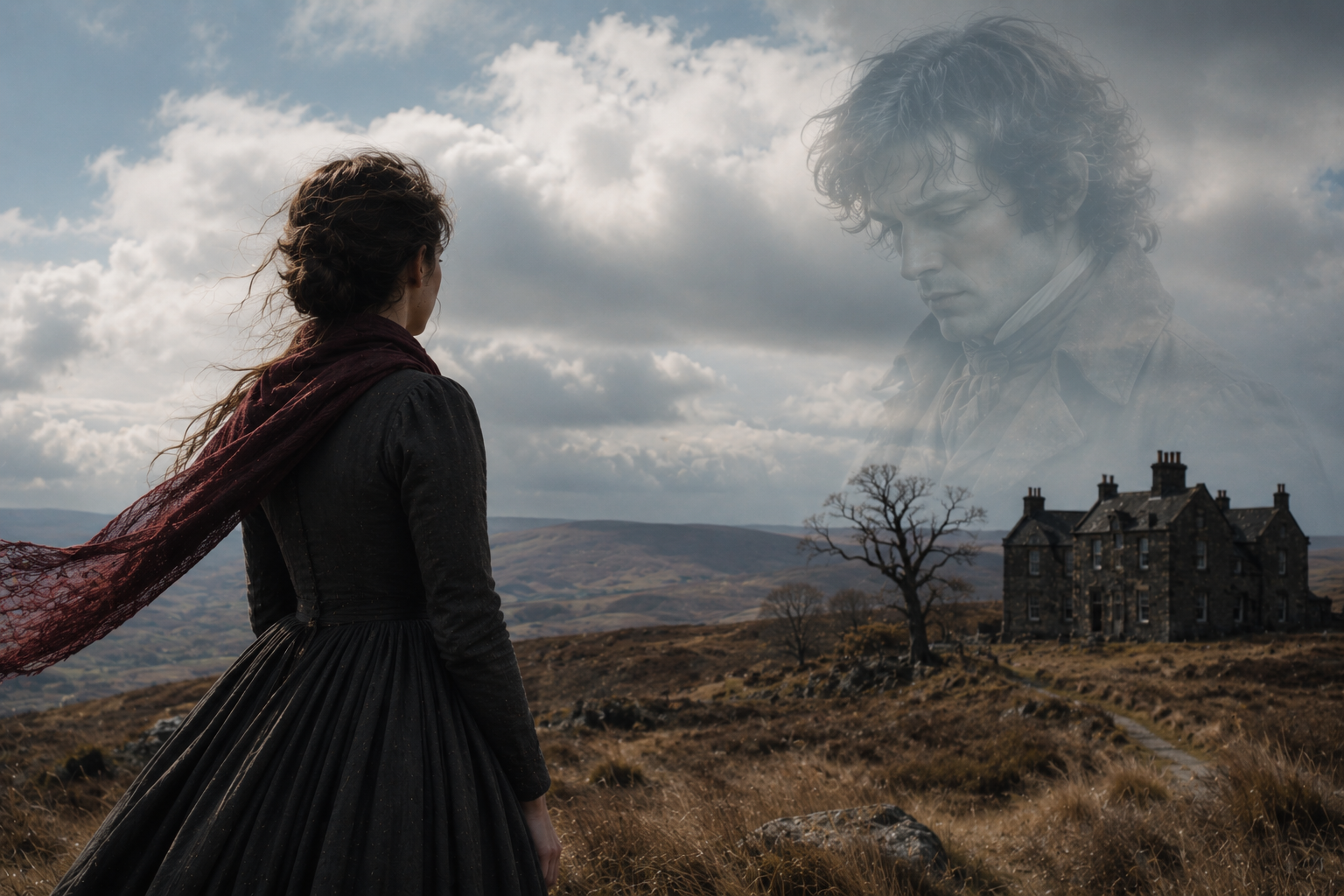
Emily Brontë’s Wuthering Heights is full of lines that feel intense, strange, and hard to forget. This guide to Wuthering Heights quotes explained will help you understand key passages and use them with confidence in essays.

You will see how each quote connects to love, revenge, class, setting, and Gothic mood.

In this Guide

Wuthering Heights Quotes

Wuthering Heights Quotes Explained: Love and Obsession

Brontë often makes love feel powerful, but not always healthy.

One of the most famous lines in the novel is Catherine’s claim:

“Whatever our souls are made of, his and mine are the same.”

Catherine says this about Heathcliff. The line shows that she sees him as part of herself, not just as someone she loves.

This is why the quote works so well in essays about identity. Catherine does not describe love as kindness or trust. She describes it as a shared soul.

That sounds romantic at first. Yet the novel shows how dangerous this bond can become, since Catherine and Heathcliff hurt each other and the people around them.

Another short line deepens the same idea:

“I am Heathcliff.”

This quote is easy to remember, but it is not simple. Catherine feels that Heathcliff is her true self, while Edgar represents comfort and social status.

For a strong essay, explain the conflict inside Catherine. She wants both deep passion and a safer life. Brontë shows that she cannot fully have both.

This is one reason Wuthering Heights quotes explained can help students move beyond plot summary. The quotes reveal how the characters think about love as possession, not peace.

Wuthering Heights Quotes Explained: Revenge and Pain

Heathcliff’s love turns into revenge, and the novel asks what that revenge costs.

After Catherine dies, Heathcliff speaks one of his most haunting lines:

“Be with me always.”

He does not ask for rest. He asks to be haunted.

This quote shows the Gothic side of the novel. Death does not end desire. Grief becomes a force that follows the living.

Heathcliff’s pain also appears in this short cry:

“I cannot live without my soul!”

He calls Catherine his soul. That makes his grief feel huge, but it also shows his lack of a separate self.

In an essay, you could argue that Heathcliff’s revenge is not strength. It is a sign that he cannot escape Catherine, even after her death.

This part of Wuthering Heights quotes explained is useful for prompts about destructive passion. Like Captain Ahab in Moby-Dick, Heathcliff lets one obsession shape his whole life.

Wuthering Heights Quotes Explained: Setting and Gothic Mood

The houses and moors are not just background. They shape the mood and meaning of the novel.

The name Wuthering Heights already suggests harsh weather. The word “wuthering” points to strong winds and rough conditions.

That rough setting matches the Earnshaw household. The home feels wild, bitter, and full of conflict.

Thrushcross Grange feels different. It is linked to manners, wealth, and order. Yet Brontë does not present it as pure happiness.

Students can compare the two houses to the way Shakespeare uses places in Macbeth. A castle can seem safe, but it may hide fear and violence.

When you use Wuthering Heights quotes explained for setting, do more than say the moors are gloomy. Show how the weather and houses mirror the characters’ inner lives.

For more background on the novel’s place in English literature, you can read this overview from Britannica.

Important Quotes About Identity and Class

Class pressure shapes many choices in the novel, especially Catherine’s choice to marry Edgar.

Catherine knows that marrying Heathcliff would lower her social position. This creates one of the novel’s central conflicts.

“It would degrade me to marry Heathcliff.”

This quote can sound cruel, and it is. Yet it also shows how much Catherine has absorbed the class values around her.

She loves Heathcliff deeply, but she fears what life with him would mean in society. Brontë makes the reader see how class can twist personal desire.

Heathcliff’s later rise in power does not heal this wound. Instead, he uses money and control to punish others.

This is a strong quote for essays about social class. It proves that the novel is not only a love story. It is also a story about status, shame, and power.

How to Use Wuthering Heights Quotes Explained in Essays

A quote only helps if you explain how it supports your claim.

Do not drop a quote into a paragraph and move on. Set it up, include the quote, then explain its meaning in your own words.

Here is a simple pattern:

  • Make a claim about a theme or character.
  • Add a short quote that proves the claim.
  • Explain one key word or image from the quote.
  • Connect the quote back to your thesis.

For example, if your thesis says Catherine’s love is tied to identity, the line “I am Heathcliff” is powerful. You could focus on the word “am” because it turns love into being.

If you want more help with structure, read our guide on how to write a literary analysis essay.

You can also use a student literature guide to track quotes, themes, and quick notes as you read.

More Wuthering Heights Quotes Explained for Close Reading

These shorter quotes can work well in timed essays because they are easy to remember.

“Treachery and violence are spears pointed at both ends.”

This line suggests that cruelty harms both the victim and the person who uses it. It fits Heathcliff’s revenge plot, since his cruelty damages his own life too.

“I wish I were a girl again.”

Catherine’s words show a desire to escape adult pressure. She longs for an earlier self, before marriage, class choice, and illness trapped her.

“He’s more myself than I am.”

This quote repeats the theme of shared identity. Catherine sees Heathcliff as closer to her real nature than her own social role.

Wuthering Heights quotes explained in this way can help you write deeper analysis. Focus on conflict inside the words, not just the obvious meaning.

Suggested Books for Students

If you want to study the novel more deeply, these books are worth searching for on Amazon or at your library:

  • Wuthering Heights by Emily Brontë
  • The Brontës: Wild Genius on the Moors by Juliet Barker

You may also find useful author context through Poetry Foundation’s Emily Brontë page.

FAQ: Wuthering Heights Quotes Explained

What are the best Wuthering Heights quotes explained for exams?

The best quotes are short and rich. Try “I am Heathcliff,” “Be with me always,” and “Whatever our souls are made of, his and mine are the same.”

What themes do the main quotes show?

The major themes include obsessive love, revenge, class pressure, identity, and the power of place.

How many quotes should I use in an essay?

Use a few strong quotes rather than many weak ones. Each quote should get clear analysis.

Is Wuthering Heights a romance?

It has romance, but it is also Gothic and tragic. The novel shows love as intense, harmful, and hard to control.

How can I make my quote analysis stronger?

Zoom in on one word, image, or contrast. Then connect it to your main argument.

Key Takeaway

Wuthering Heights quotes explained help you see that Brontë’s novel is not just about love. It is about how love can become identity, pain, and power. 🌿

Themes in Wuthering Heights: A Student-Friendly Guide

Wuthering Heights themes

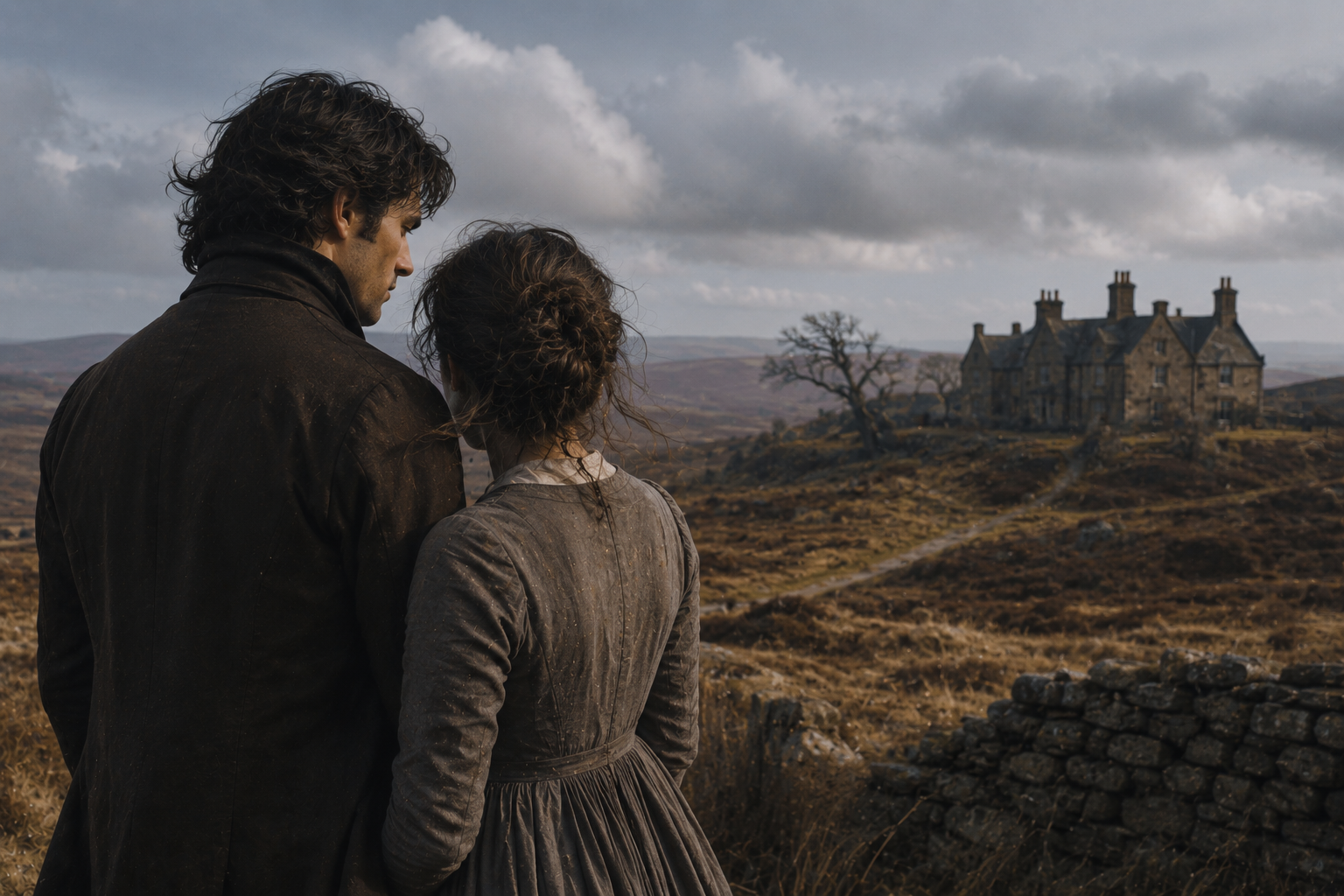
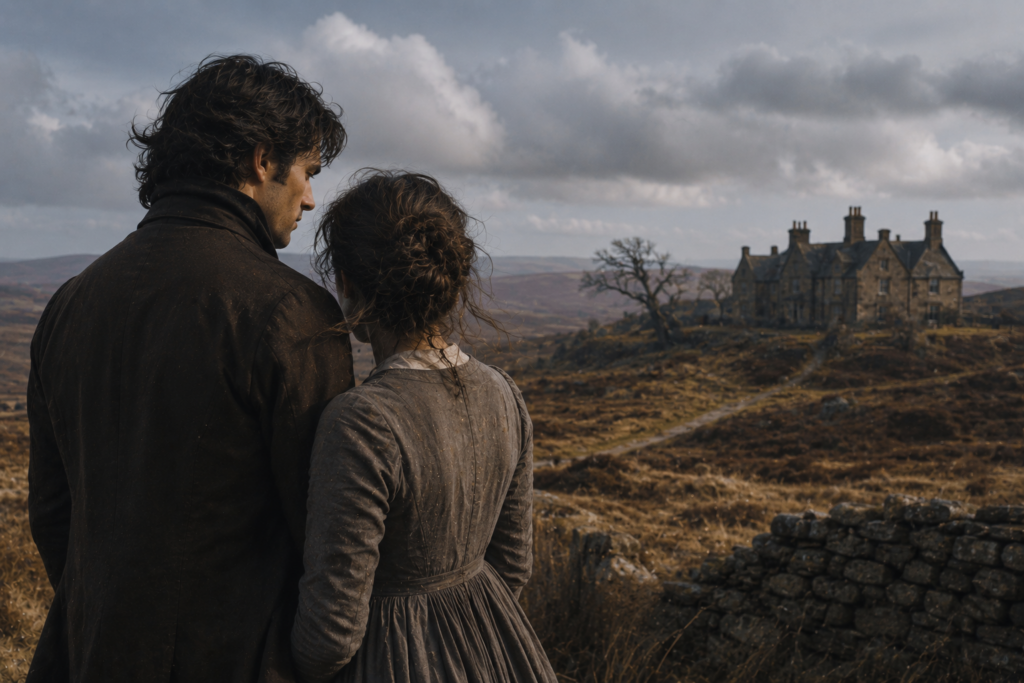
Wuthering Heights can feel wild, painful, and strange at first. This guide explains the major themes in Wuthering Heights so students can see how Emily Brontë builds meaning through love, revenge, class, and setting.

If you need help with theme in general, start with this quick guide on how to identify theme in literature.

In this Guide

  • Why the novel feels so intense
  • Love and possession
  • Revenge and damage
  • Class and social shame
  • Nature and the moors
  • Abuse and inherited pain
  • Essay tips and FAQs
Wuthering Heights themes

Why the themes in Wuthering Heights feel so intense

Brontë turns private emotions into forces that shape whole lives.

The themes in Wuthering Heights stand out because the novel does not treat love as soft or simple. Love often looks like hunger, pride, and control.

The setting also makes every conflict feel larger. The lonely houses and open moors reflect the mood of the story. For background on the novel and its place in English literature, see Britannica on Wuthering Heights.

Themes in Wuthering Heights: love that becomes possession

The novel asks whether love can survive when it turns selfish.

Catherine and Heathcliff share a bond that feels deep, but it is also troubling. They do not love each other in a calm or healthy way. Their bond becomes tied to pride, pain, and identity.

Catherine says she is Heathcliff, which shows how much she connects him to her own self. Yet she still chooses Edgar because he offers comfort and status. This choice harms everyone around them.

This theme is useful for essays because it shows that **love is not always moral**. In this novel, love can lead to cruelty when people refuse to care about others.

You can compare this to Romeo and Juliet, where love also clashes with society. But in Shakespeare’s play, the lovers seem innocent. In Brontë’s novel, love often harms the people it touches.

Themes in Wuthering Heights: revenge and damage

Revenge drives the plot, but it never brings peace.

One of the darkest themes in Wuthering Heights is the way pain moves from one person to another. Heathcliff suffers as a child, then later uses his power to punish others.

He takes revenge on Hindley, Edgar, Isabella, and the next generation. His actions show how cruelty can spread if no one stops the cycle.

Brontë does not excuse Heathcliff, but she does show how he is shaped by rejection and abuse. That makes him complex. He is both victim and villain.

For students, a strong thesis might argue that the novel shows **revenge as self-destruction**. Heathcliff gains property and control, but he loses any chance at rest.

Class, power, and social shame

Social rank shapes choices more than many characters admit.

Catherine’s choice to marry Edgar is tied to class. She believes Edgar can give her a better life, while Heathcliff would lower her social position.

These themes in Wuthering Heights help explain why the love story becomes a social conflict. Catherine does not only choose between two men. She chooses between wild freedom and social comfort.

Heathcliff’s unclear background also matters. As an outsider, he is treated as less valuable. His later rise in power feels like revenge against a system that once mocked him.

This theme connects well to novels like Great Expectations by Charles Dickens, where class shapes desire and shame. Both novels ask whether status can truly make a person whole.

Nature, the moors, and wildness

The landscape is more than a backdrop. It helps shape the novel’s meaning.

The moors suggest freedom, danger, and emotional force. Catherine and Heathcliff seem most alive when they are connected to that wild space.

Many themes in Wuthering Heights depend on this contrast between wildness and social order. Wuthering Heights feels rough and stormy. Thrushcross Grange feels polished and controlled.

Neither place is perfect. The Heights can be violent, while the Grange can feel shallow. Brontë uses both houses to show different kinds of damage.

This is a smart point for AP Literature essays. A setting can reveal theme when it reflects conflict, mood, or values. If you want a refresher, review this guide to finding theme in a literary work.

Abuse, family, and inherited pain

The novel shows how harm can pass from one generation to the next.

Hindley mistreats Heathcliff. Heathcliff later mistreats Hareton. Linton also suffers because adults use him for their own plans.

This pattern makes the second half of the novel important. Young Catherine and Hareton offer a possible break from the past. Their bond is not perfect, but it has more patience and kindness than the love before it.

That shift matters. Brontë suggests that people can inherit pain, but they do not have to repeat it forever.

Identity and belonging

Several characters struggle to know where they fit.

Heathcliff never fully belongs in the Earnshaw home, even after Mr. Earnshaw brings him there. His outsider status shapes how others treat him and how he sees himself.

Catherine also feels split. She is drawn to Heathcliff’s wildness, but she wants Edgar’s social world. Her divided identity helps explain her inner conflict.

These ideas make the novel feel modern. Students often notice that the characters suffer when society gives them narrow roles and labels.

How to write about the themes in Wuthering Heights

A strong theme essay should make an argument, not just name a topic.

When you write about the themes in Wuthering Heights, avoid saying only that the novel is about love or revenge. Ask what Brontë says about those ideas.

For example, this is a weak theme statement: The novel has a theme of revenge.

This is stronger: Brontë shows that revenge can give a person power, but it also traps that person in the same pain that caused the revenge.

Use scenes as proof. You might discuss Catherine’s choice to marry Edgar, Heathcliff’s treatment of Hareton, or the contrast between the two houses.

For a simple study tool, you can also use our printable literature theme resources to organize quotes and claims before you write.

Helpful books for deeper study

If you want more background, these books can help:

  • Wuthering Heights by Emily Brontë
  • The Madwoman in the Attic by Sandra M. Gilbert and Susan Gubar
  • Emily Brontë: A Life in 20 Poems by Nick Holland

You can also read about Emily Brontë’s poetry at the Poetry Foundation, which helps show her interest in nature, death, and intense feeling.

FAQ: themes in Wuthering Heights

What are the main themes in Wuthering Heights?

The major themes include destructive love, revenge, class pressure, nature, and inherited pain.

What is the most important theme in the novel?

Many readers see destructive love as the central theme because it shapes Catherine, Heathcliff, and both families.

How does setting connect to theme?

The moors and houses reflect emotional conflict. The wild setting often mirrors the characters’ inner lives.

Is Heathcliff a hero or villain?

He is both complex and dangerous. Brontë shows his suffering, but she also shows the harm he chooses to cause.

What theme should I use for an essay?

Revenge is a strong choice because it connects to plot, character change, and the novel’s ending.

Key Takeaway

The themes in Wuthering Heights show that love, pain, and power can shape families across time. Brontë’s novel is powerful because it refuses easy answers.

Symbols in Death of a Salesman: What They Mean and Why They Matter

Symbols in Death of a Salesman

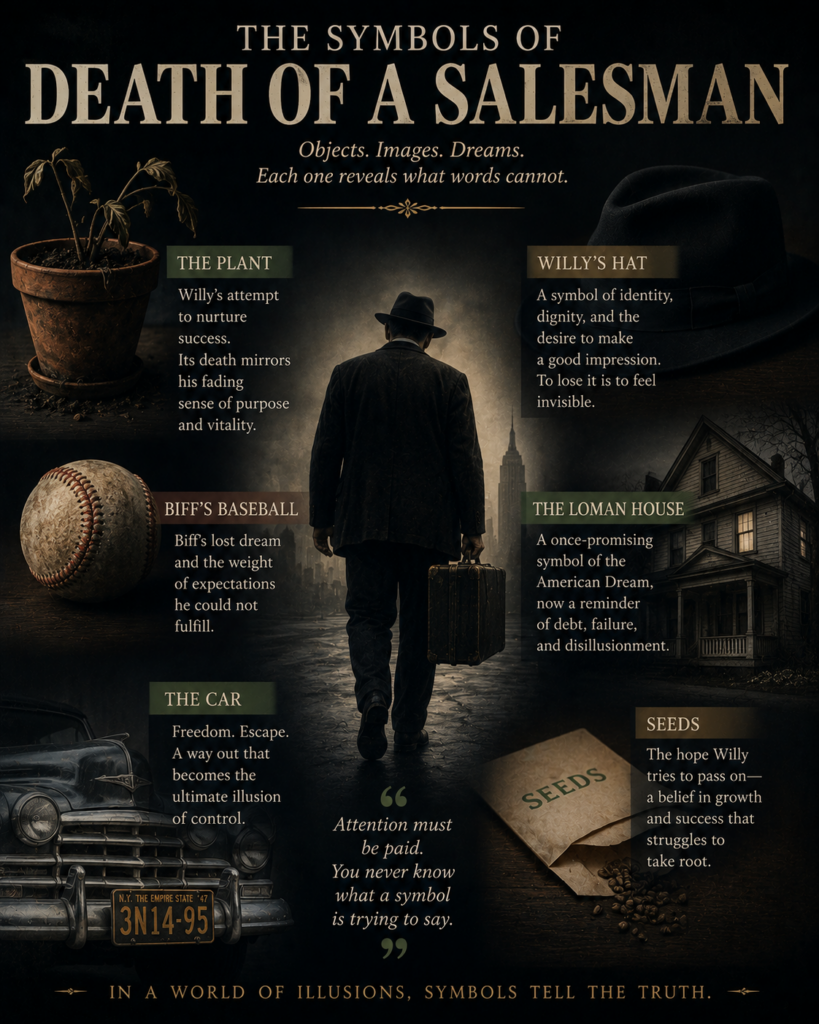
The symbols in Death of a Salesman help Arthur Miller show what Willy Loman wants, fears, and hides from himself. This guide explains the most important images in the play and connects each one to a major theme.

In this Guide

Symbols in Death of a Salesman

Why symbols in Death of a Salesman matter

Miller uses everyday objects to reveal deep pain.

A pair of stockings, a bag of seeds, or the sound of a flute may seem simple at first. Yet each one shows the gap between Willy’s dreams and his real life.

That is why the symbols in Death of a Salesman are so useful for students. They make the play easier to understand because they turn big ideas into clear images.

This is common in literature. In The Great Gatsby, the green light suggests Gatsby’s dream. In Macbeth, blood points to guilt. Miller does the same thing, but with objects from an ordinary home.

Major symbols in Death of a Salesman and what they mean

These symbols show Willy’s hopes, guilt, and fear of failure.

The major symbols in Death of a Salesman are tied to the American Dream. Willy believes success should bring money, respect, and love. The symbols show how that belief breaks down.

Seeds

The seeds are one of the clearest symbols in the play. Near the end, Willy tries to plant seeds in the dark.

On the surface, he wants a garden. On a deeper level, he wants proof that his life has meant something.

The seeds connect to the theme of legacy. Willy fears he has left nothing behind for Biff and Happy. His garden becomes a symbol of the future he failed to grow.

Stockings

Stockings carry guilt. Willy gives new stockings to The Woman, but Linda has to mend her old ones at home.

That image hurts because it reminds Willy of his affair. It also shows how money and shame mix in his mind.

The stockings connect to the theme of betrayal. Willy betrays Linda, but he also betrays the values he claims to protect.

The diamonds

Diamonds are linked to Ben, Willy’s older brother. Ben walked into the jungle and came out rich.

To Willy, the diamonds prove that success is real and visible. They are hard, bright, and valuable.

The problem is that Willy measures life by wealth. The diamonds connect to the theme of false success, since they make money look like the final proof of worth.

The rubber hose

The rubber hose is one of the darkest symbols in the play. Linda finds it near the gas pipe.

It points to Willy’s plan to die by suicide. It also shows that his despair has been hidden inside the house for a long time.

The hose connects to the theme of private suffering. Willy talks big in public, but at home his pain becomes impossible to ignore.

The car

The car stands for Willy’s work life. He travels as a salesman, so the road should mean freedom.

Instead, the car becomes a sign of danger and exhaustion. Willy crashes it, loses focus while he drives, and later uses it as part of his final plan.

The car connects to the theme of the cost of work. Willy’s job drains him until the tool of his career becomes a tool of destruction.

The flute

The flute music opens the play and returns throughout it. It is tied to Willy’s father, who made and sold flutes.

The sound suggests a world before crowded cities and business pressure. It feels softer than Willy’s harsh sales world.

The flute connects to the theme of lost roots. Willy has left behind a simpler life, but he has not found peace in the modern one.

The refrigerator and household objects

The refrigerator keeps breaking, even though Willy is still paying for it. Other household items bring the same problem.

These objects show the trap of consumer life. Willy buys things to feel modern and successful, but debt follows him.

This symbol connects to the theme of empty progress. New products do not fix Willy’s deeper problems.

How symbols in Death of a Salesman connect to theme

Symbolism matters most when it points to the play’s main ideas.

When you study symbols in Death of a Salesman, do not stop at the object. Ask what the object reveals about Willy, his family, or the world he lives in.

The seeds show that Willy wants a future. The stockings show guilt. The diamonds show his belief that money equals value.

These images all connect to the same central problem. Willy has built his life around a dream that does not love him back.

If you want a simple method for spotting clues like these, read our guide on how to find symbolism in a story.

How to write about symbols in Death of a Salesman

A strong paragraph links the object to a theme and a character choice.

For most essays, the symbols in Death of a Salesman work best when you use a clear claim. Do not write that seeds are important. Write that the seeds show Willy’s need to leave proof of his life behind.

Then use a scene. Mention Willy planting seeds in the dark. Explain how that action shows panic, hope, and failure at once.

A good sentence might look like this: The seeds symbolize Willy’s desperate wish to create a legacy after a life that feels wasted.

You can also pair this article with our quick symbolism study notes if you want a faster review before class.

Common mistakes to avoid

Symbolism should make the play clearer, not more confusing.

One mistake is to treat every object as a hidden code. Not every detail needs a secret meaning.

Another mistake is to name the symbol but skip the theme. A symbol matters because it shows something larger, such as guilt, ambition, or family pressure.

It also helps to connect the symbol to a moment in the play. A symbol without a scene can feel weak in an essay.

Helpful books to pair with this guide

These books can help you understand Miller’s play and its background.

  • Death of a Salesman by Arthur Miller
  • Arthur Miller: His Life and Work by Martin Gottfried

For more background on the author, see Britannica’s overview of Arthur Miller.

FAQ about symbols in Death of a Salesman

These quick answers can help you review before a quiz or essay.

What are the main symbols in Death of a Salesman?

The main symbols in Death of a Salesman include seeds, stockings, diamonds, the rubber hose, the car, and the flute.

What do the seeds symbolize?

The seeds symbolize Willy’s wish to leave a legacy. He wants proof that his life has produced something lasting.

What do the stockings symbolize?

The stockings symbolize guilt and betrayal. They remind Willy of his affair and his failure to care for Linda with honesty.

Why is the rubber hose important?

The rubber hose symbolizes Willy’s hidden despair. It shows that his mental pain has become dangerous.

How do symbols support the American Dream theme?

They show how Willy links success to money, status, and being liked. The symbols reveal how that dream damages him and his family.

Key takeaway

The best symbols in Death of a Salesman turn ordinary objects into signs of broken dreams. They matter because they show the emotional cost of chasing success without knowing what success should mean.

Themes in Death of a Salesman: A Student-Friendly Guide

Themes in Death of a Salesman

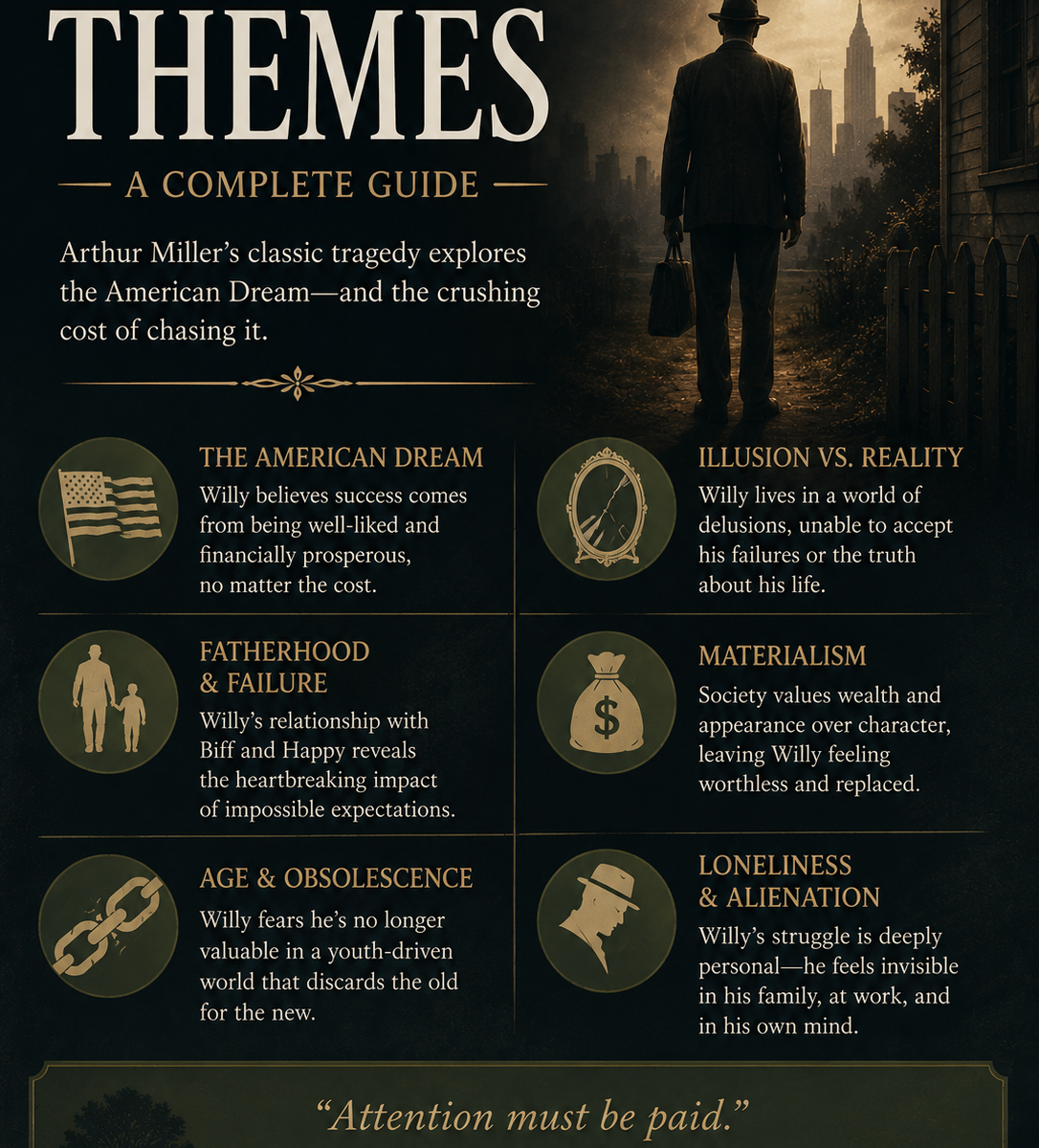
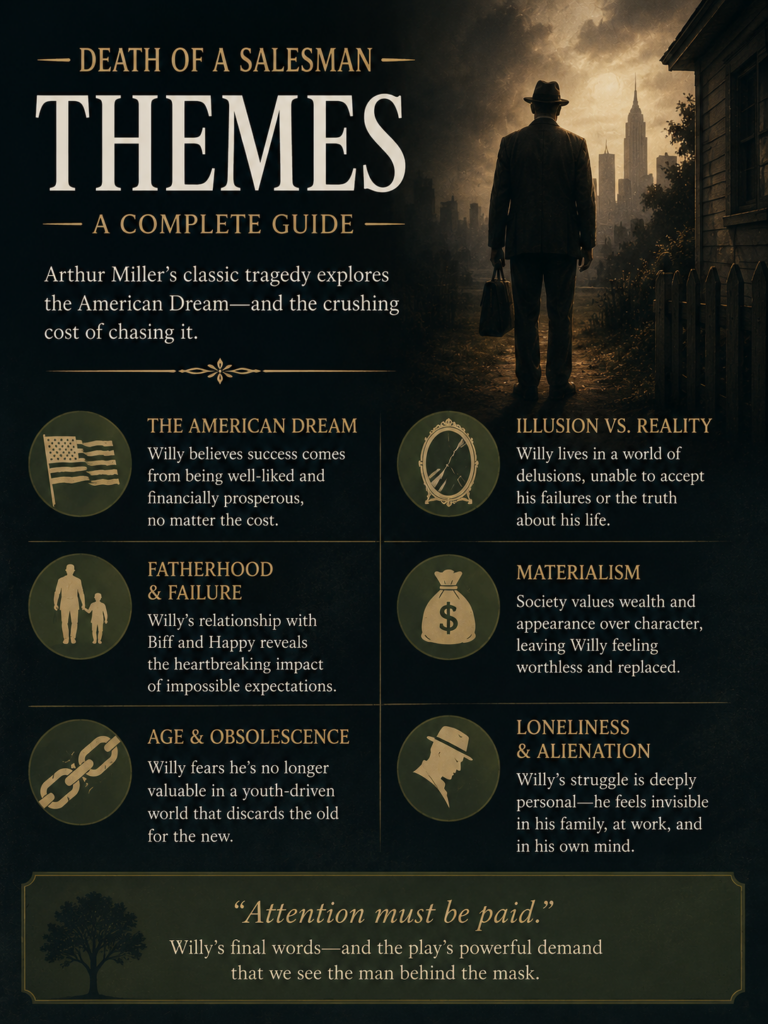
Death of a Salesman is a short play with big questions about dreams, work, family, and self-worth. This guide explains the themes in Death of a Salesman in a clear way so students can read the play with more confidence.

Arthur Miller does not give easy answers. He asks us to look closely at what happens when a person builds a life on a dream that may not be true.

In this Guide

Use these sections to review the play, plan an essay, or prepare for class discussion.

Themes in Death of a Salesman

Why the themes in Death of a Salesman Matter

The play is not only about one salesman. It is about a culture that tells people their value depends on success.

When students study the themes in Death of a Salesman, they often notice that Willy Loman wants more than money. He wants respect. He wants proof that his life mattered.

A theme is not just a topic like money or family. It is the deeper message a work builds around that topic. If you want a quick refresher, see our guide on how to identify theme in literature.

Themes in Death of a Salesman: The American Dream and False Success

Willy believes success comes from charm, popularity, and being well-liked. The play slowly shows how dangerous that belief can be.

Of all the themes in Death of a Salesman, the American Dream is the most famous. Willy thinks America should reward him if he works hard and presents himself well. Yet his life proves that the dream can be unfair, narrow, and cruel.

Biff sees this more clearly than Willy. He knows he has failed by his father’s standards, but he also knows those standards are broken. His conflict shows that a person can only heal by telling the truth.

This theme connects well with The Great Gatsby by F. Scott Fitzgerald. Both works question the dream of wealth and status. Both show people who chase an image of success and lose themselves along the way.

Themes in Death of a Salesman: Family, Love, and Pressure

The Loman family loves each other, but love often turns into pressure. That pressure shapes every major conflict in the play.

The themes in Death of a Salesman become painful inside the home. Willy wants his sons to succeed because he sees them as proof of his own worth. Biff wants freedom, but he also wants his father to understand him.

Linda often tries to protect Willy. Her care is real, but it also keeps some hard truths hidden. Happy copies Willy’s false confidence, which suggests that family patterns can repeat if no one breaks them.

The play asks a hard question: can love still hurt people? Miller’s answer seems to be yes, especially when love comes with impossible demands.

Illusion Versus Reality

Willy often chooses the story he wants over the truth he needs. That gap creates much of the tragedy.

Many themes in Death of a Salesman depend on the battle between illusion and reality. Willy remembers the past as brighter than it was. He also imagines success as something close, even when the facts say otherwise.

The play uses symbols to show this struggle. Seeds suggest Willy’s wish to leave something behind. Stockings remind him of guilt. The flute music points to a simpler life he never chose.

This conflict is clear in Biff’s final honesty. He does not become a perfect hero, but he sees the truth more clearly than his father. That makes his insight important.

Themes in Death of a Salesman: Identity and Self-Worth

Willy’s tragedy grows from the way he ties his identity to his job. When the job rejects him, he feels like his whole life has failed.

The themes in Death of a Salesman show how easy it is to confuse what a person does with who a person is. Willy is not just a worker, yet he has been taught to measure himself as one.

His last name, Loman, sounds like low man. That detail fits his place in the business world. He wants to feel large, but the system makes him feel small.

This theme can remind students of The Metamorphosis by Franz Kafka. Gregor Samsa is also valued for his work until he can no longer perform. Both texts ask what happens when human worth depends on usefulness.

Capitalism, Work, and Human Value

Miller’s play criticizes a world that treats people like products. Willy sells goods, but he also feels forced to sell himself.

The play does not say work is bad. It asks why a person must lose dignity just to survive. Willy gives years to his company, but that loyalty does not protect him.

This makes the play a social critique as well as a family tragedy. For more background on the play and Miller’s place in American drama, visit Britannica’s overview of Death of a Salesman.

Students should notice how work affects every family member. Money problems shape the mood of the house, and success feels like a test no one can pass.

How to Write About themes in Death of a Salesman

A strong essay should connect theme to character choices, symbols, and conflict. Do not just name a theme. Show how the play builds it.

For example, you could argue that Willy’s dream fails because it depends on appearance instead of truth. You could also argue that Biff’s honesty offers the only real escape from the family’s cycle.

If you need help turning ideas into a thesis, review our step-by-step theme guide. You can also explore our student literature study resources for more support with close reading and essay prep.

Here is a simple thesis frame:

  • In Death of a Salesman, Arthur Miller shows that the American Dream becomes harmful when it teaches people to value image over truth.
  • Through Willy and Biff, Miller suggests that self-worth must come from honesty rather than public approval.

Relevant Books for Further Reading

If you want more context, these books pair well with the play:

  • Death of a Salesman by Arthur Miller
  • The Crucible by Arthur Miller
  • A Raisin in the Sun by Lorraine Hansberry

FAQ About the themes in Death of a Salesman

What are the main themes in Death of a Salesman?

The main themes include the American Dream, family pressure, illusion versus reality, self-worth, and the value of work.

What is the most important theme in the play?

The American Dream is often seen as the central theme. Willy believes success will prove his worth, but that belief destroys him.

How does Biff connect to the play’s themes?

Biff challenges Willy’s false dream. His honesty shows that truth can be painful but necessary.

Is Willy Loman a tragic hero?

Many readers see him as a modern tragic figure. He is flawed, but his pain reflects larger problems in society.

Key Takeaway

The themes in Death of a Salesman matter because they still feel real. Miller shows how dreams can inspire people, but he also shows how a false dream can break a family and a life.

error

Enjoy this article? Please spread the word :)

Follow by Email
BLUESKY
fb-share-icon
Reddit
LinkedIn
Share
RSS