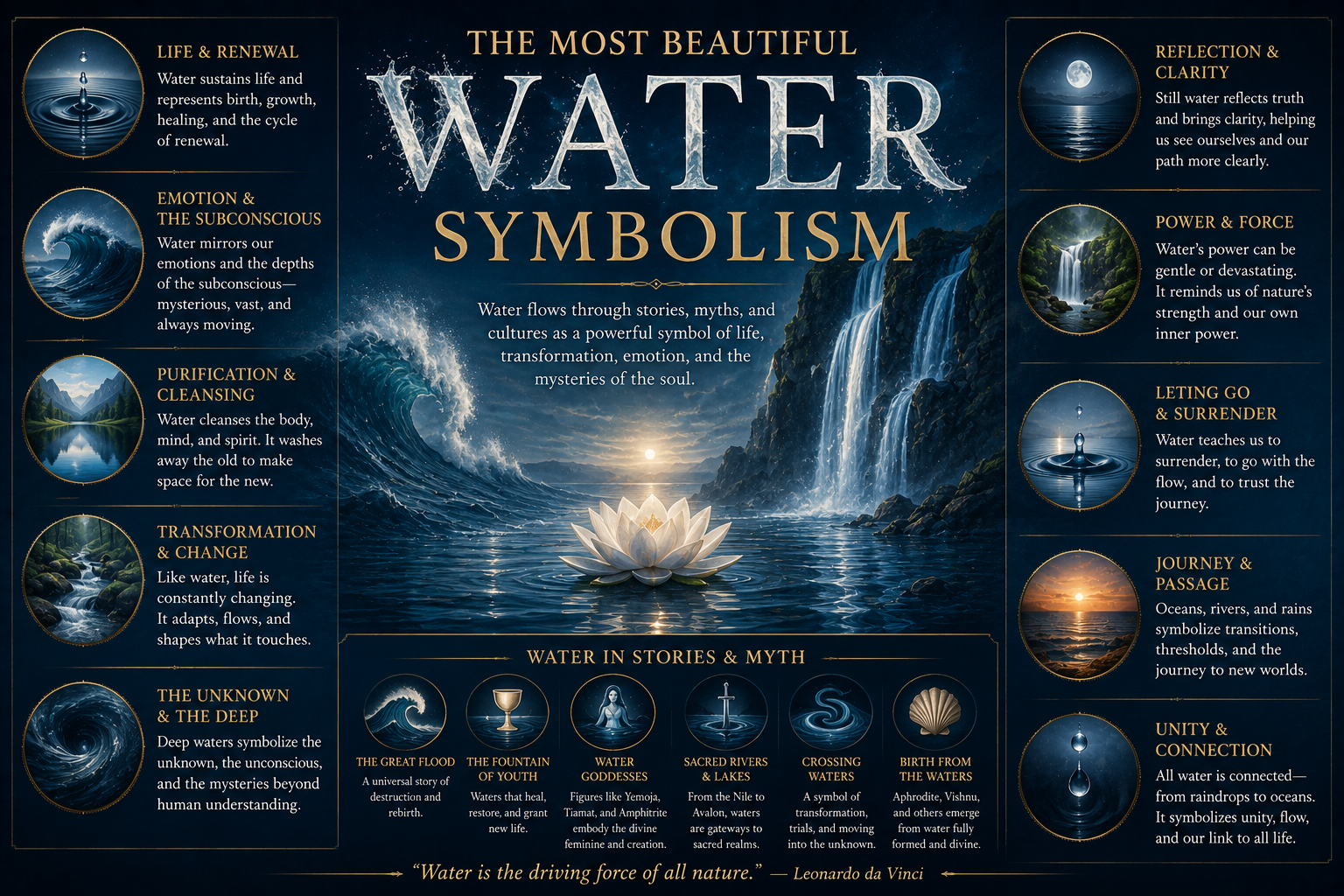

Best Psychological Water Symbolism helps readers see how water can show fear, guilt, freedom, memory, and hidden desire. In many stories, water is not just a setting. It becomes a mirror for the character’s inner life.
When you understand this symbol, scenes with rivers, rain, oceans, and baths start to feel deeper. You can spot what a character feels, even when they cannot say it out loud.
In this Guide
- What psychological water symbolism means
- Why writers use water to show the mind
- Best Psychological Water Symbolism in famous literature
- Common meanings of water in stories
- Recommended books to read
- How to analyze water symbolism
- FAQs
- Key takeaway
What Is Best Psychological Water Symbolism?
Water often shows what is happening inside a character’s mind.
Best Psychological Water Symbolism means the strongest uses of water as a sign of emotion, memory, trauma, or change. A calm lake may suggest peace. A stormy sea may suggest panic or loss of control.
Water can also show the unconscious mind. This means thoughts and feelings buried below the surface. A character may stand near water when they face something they do not fully understand.
This symbol works because water is always changing. It can heal, hide, clean, drown, or carry someone away. That makes it a powerful tool for writers.
Why Water Connects So Strongly to the Mind
Water feels emotional because people link it with birth, danger, tears, and survival.
In literature, water often stands between two states of life. A character may enter water and come out changed. They may cross a river and leave an old self behind.
Water also has depth. What sits on the surface is not always the full truth. This makes water a strong image for secrets, guilt, and hidden pain.
If you want a simple way to practice this skill, read our guide on how to find symbolism in a story. It can help you notice repeated images and connect them to theme.
Best Psychological Water Symbolism in Famous Literature
Many classic works use water to show inner conflict.
In Shakespeare’s Hamlet, Ophelia’s drowning is one of the most famous water scenes in literature. Her death connects water with grief, silence, and emotional collapse. The water seems peaceful, but the meaning is tragic.
In Kate Chopin’s The Awakening, the sea stands for freedom and danger. Edna feels drawn to the ocean because it gives her a sense of self. Yet the same water also becomes linked to escape and death.
In Toni Morrison’s Beloved, water often connects to birth, memory, and trauma. The past does not stay still. It moves like water through the lives of the characters.
Best Psychological Water Symbolism often appears when a character cannot speak directly about pain. The image says what the character cannot.
Best Psychological Water Symbolism and Guilt
Water often appears when characters want to wash away guilt.
In Shakespeare’s Macbeth, blood and water create a powerful contrast. Macbeth hopes water can clean his hands after murder. But his guilt cannot be washed away so easily.
Lady Macbeth later tries to rub imagined blood from her hands. The scene shows that guilt lives in the mind, not just on the body. Water fails because the damage is moral and psychological.
This is a key part of Best Psychological Water Symbolism. Water can suggest cleansing, but it can also show that true cleansing is impossible.
Best Psychological Water Symbolism and Rebirth
Water can also mark a new beginning.
In many stories, a character enters water before a major change. This can feel like a baptism. The old self goes under, and a new self rises.
Sometimes this rebirth is hopeful. Other times, it is painful. A river crossing may show that a character has passed a point of no return.
In Mark Twain’s Adventures of Huckleberry Finn, the Mississippi River offers Huck a kind of freedom. The river gives him space to think outside the rules of society. Still, it does not remove danger from his world.
Water as Fear, Death, and the Unknown
Water can be beautiful and terrifying at the same time.
The ocean is often tied to the unknown because it is wide, deep, and hard to control. Writers use it to show fear of death, fear of desire, or fear of losing the self.
In Samuel Taylor Coleridge’s The Rime of the Ancient Mariner, the sea becomes a place of guilt and punishment. The mariner is trapped by water, yet he cannot drink it. You can read the poem at the Poetry Foundation.
This kind of scene shows why Best Psychological Water Symbolism works so well. Water can trap a character inside their own fear.
Water as Memory and Trauma
Water often returns when the past refuses to stay buried.
Memory does not move in a straight line. It comes back in waves. That is why water is a strong symbol for trauma, grief, and family history.
In Beloved, Morrison uses water imagery to connect pain, birth, and memory. The symbol feels physical because trauma lives in the body as well as the mind.
In this sense, Best Psychological Water Symbolism is not only about what water means. It is about how water moves through a story and changes the mood.
Common Themes in Best Psychological Water Symbolism
Water can carry many meanings, but the context matters most.
One common theme is cleansing. A character may wash, bathe, or stand in rain because they want relief. The scene may show healing, or it may show that healing has not come yet.
Another theme is loss of control. Floods, storms, and rough seas often show fear or emotional chaos. The water becomes a force the character cannot master.
A third theme is hidden truth. Deep water can suggest secrets below the surface. A quiet pond may seem calm, but it may hide danger.
For more background on symbolism as a literary idea, Britannica offers a useful overview of symbolism in literature and art.
Recommended Books with Strong Water Symbolism
These books are useful if you want to study Best Psychological Water Symbolism in a clear way.
The Awakening by Kate Chopin
This short novel uses the sea to explore freedom, desire, and identity. It is one of the best choices for students who want to study water as a psychological symbol.
Beloved by Toni Morrison
This novel uses water to connect memory, trauma, birth, and survival. It is more complex, but it gives readers a rich example of symbolism tied to history and pain.
Macbeth by William Shakespeare
This play shows how water can fail as a symbol of cleansing. Macbeth’s guilt is too deep for water to remove.
How to Analyze Best Psychological Water Symbolism
Start with the scene itself. Ask where the water appears and what the character feels at that moment.
Then look at the type of water. Rain, rivers, baths, oceans, and floods do not always mean the same thing. A quiet river may suggest escape, while a storm may suggest inner panic.
Next, watch for change. Does the character enter the water, avoid it, cross it, or drown in it? The action matters as much as the image.
You can also ask what the water cannot do. If water fails to clean, heal, or save, the writer may be showing deep guilt or lasting trauma.
If you need help with this process, use our step-by-step article on finding symbolism in fiction.
Best Psychological Water Symbolism in Student Essays
Water symbolism can make a strong essay topic because it connects image, character, and theme.
A good thesis should not say only that water “means emotion.” That is too broad. Instead, explain what kind of emotion the water reveals and how it shapes the character’s journey.
For example, an essay on The Awakening might argue that the sea shows Edna’s desire for freedom, but also the danger of a world that gives her few choices.
An essay on Macbeth might argue that water shows the limits of physical cleansing when the real stain is guilt.
Strong essays about Best Psychological Water Symbolism focus on details. Quote the scene, explain the image, and connect it to the larger theme.
FAQs About Best Psychological Water Symbolism
What does water usually symbolize in literature?
Water often symbolizes emotion, cleansing, danger, memory, or change. The exact meaning depends on the scene and the character.
Why is water linked to psychology?
Water has depth, movement, and mystery. These traits make it a strong symbol for the unconscious mind and hidden feelings.
Can water symbolize both life and death?
Yes. Water can give life, but it can also drown. That tension makes it one of literature’s most flexible symbols.
What is a good book for studying water symbolism?
The Awakening by Kate Chopin is a strong choice. The sea plays a major role in the main character’s inner life.
How do I write about water symbolism without being too vague?
Focus on the exact scene. Explain what kind of water appears, what the character feels, and how the image connects to the theme.
Key Takeaway
Best Psychological Water Symbolism shows how water can reveal the parts of a character that words may hide. It can suggest guilt, fear, freedom, memory, or change.
The next time you see rain, rivers, oceans, or baths in a story, slow down. The water may be telling you what the character’s mind cannot say. 🌊