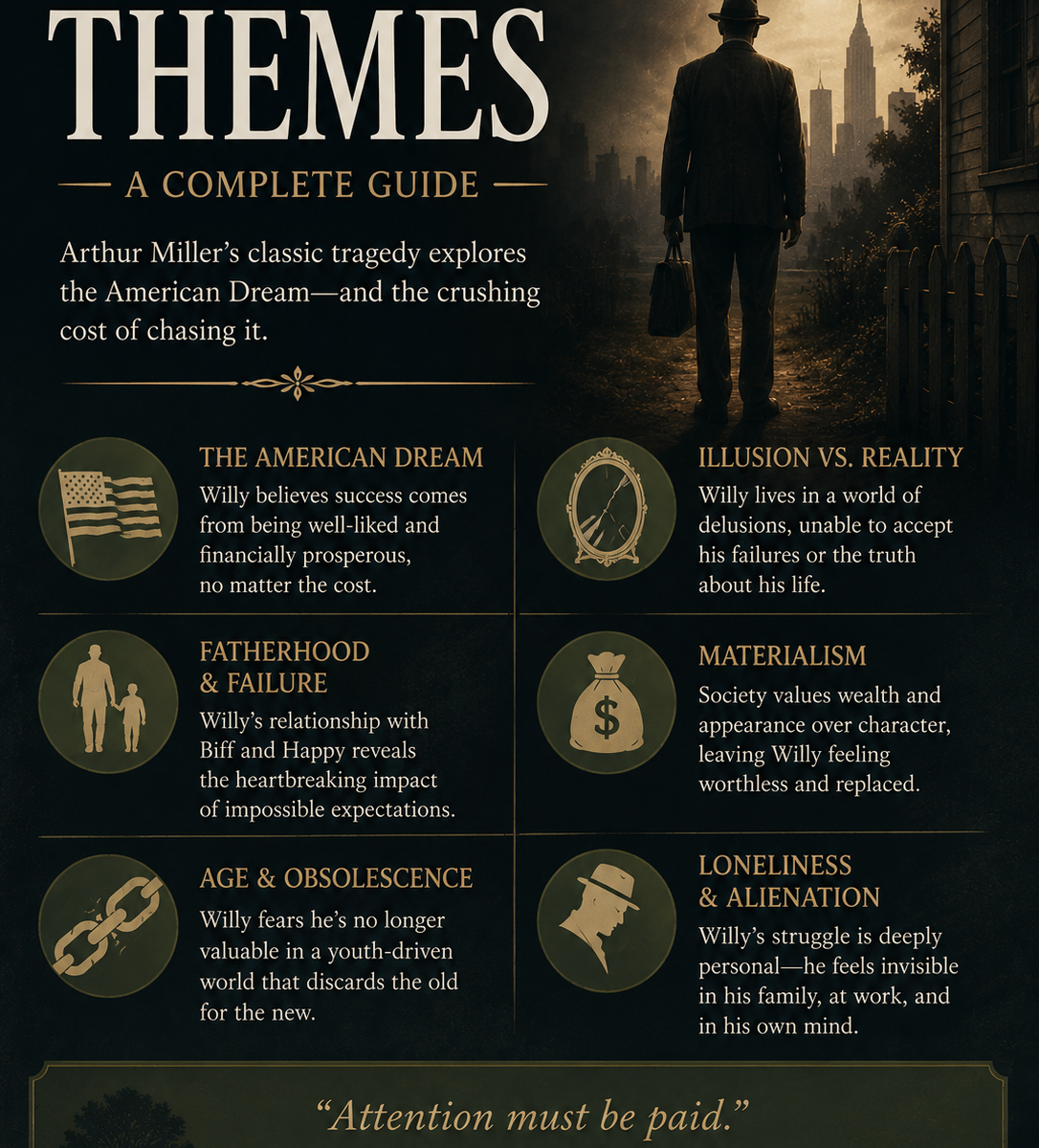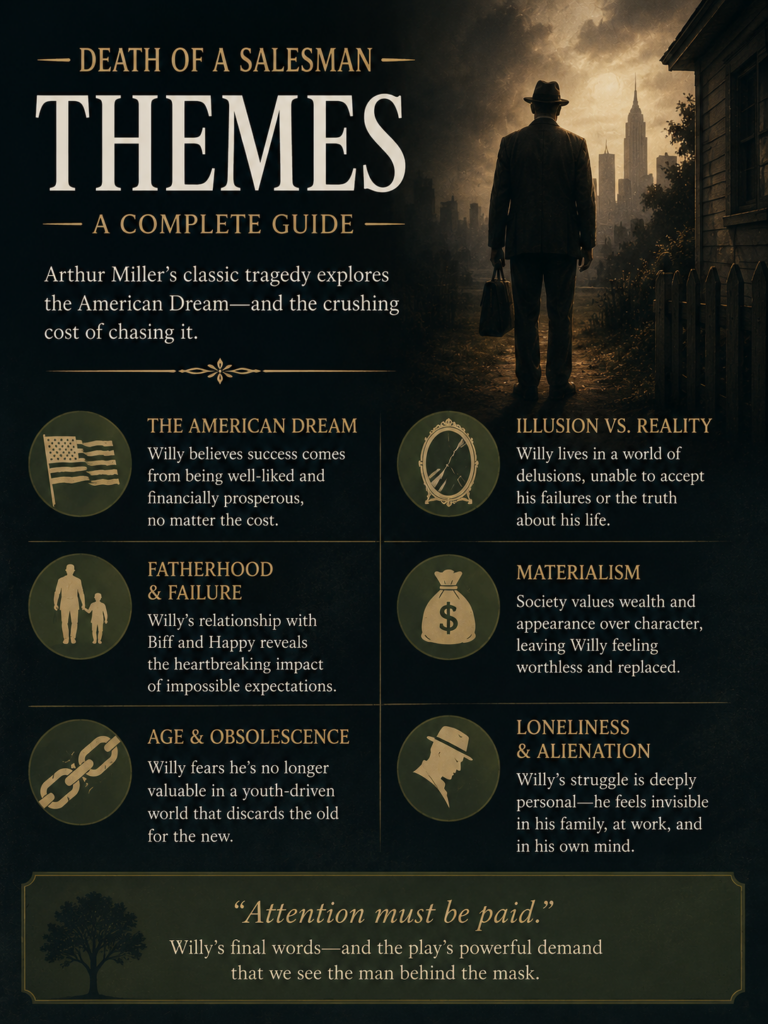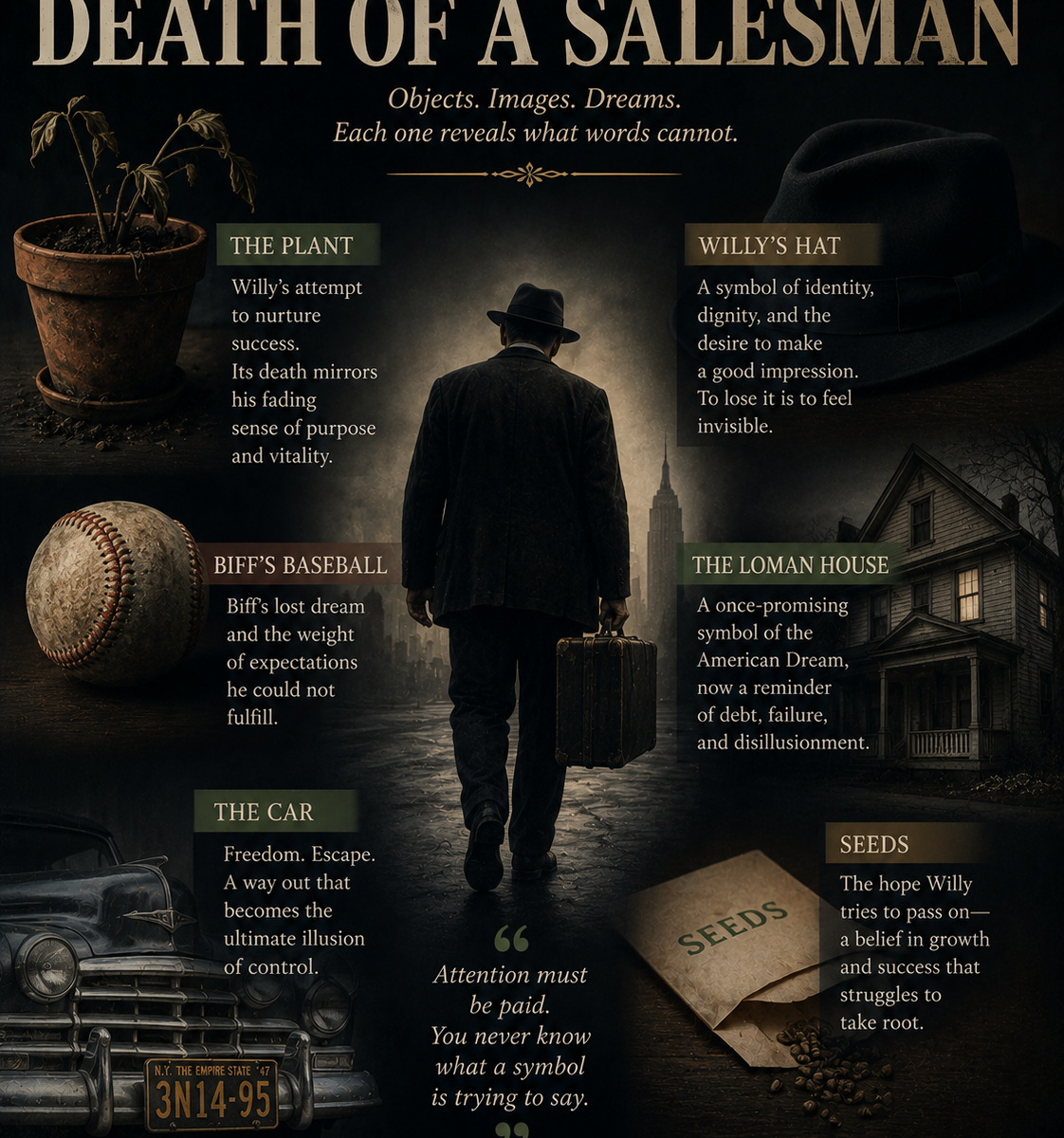
The symbols in Death of a Salesman help Arthur Miller show what Willy Loman wants, fears, and hides from himself. This guide explains the most important images in the play and connects each one to a major theme.
In this Guide
- Why the symbols matter
- Major symbols and meanings
- How symbols connect to themes
- How to write about symbolism
- Helpful books
- FAQ
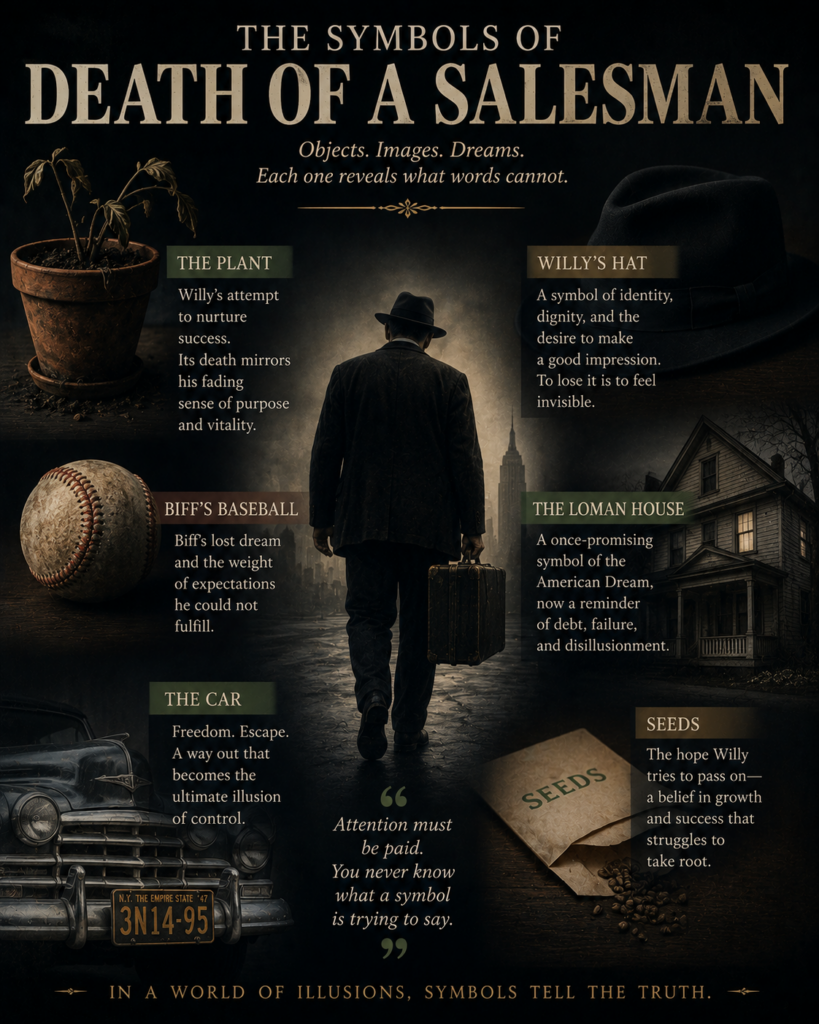
Why symbols in Death of a Salesman matter
Miller uses everyday objects to reveal deep pain.
A pair of stockings, a bag of seeds, or the sound of a flute may seem simple at first. Yet each one shows the gap between Willy’s dreams and his real life.
That is why the symbols in Death of a Salesman are so useful for students. They make the play easier to understand because they turn big ideas into clear images.
This is common in literature. In The Great Gatsby, the green light suggests Gatsby’s dream. In Macbeth, blood points to guilt. Miller does the same thing, but with objects from an ordinary home.
Major symbols in Death of a Salesman and what they mean
These symbols show Willy’s hopes, guilt, and fear of failure.
The major symbols in Death of a Salesman are tied to the American Dream. Willy believes success should bring money, respect, and love. The symbols show how that belief breaks down.
Seeds
The seeds are one of the clearest symbols in the play. Near the end, Willy tries to plant seeds in the dark.
On the surface, he wants a garden. On a deeper level, he wants proof that his life has meant something.
The seeds connect to the theme of legacy. Willy fears he has left nothing behind for Biff and Happy. His garden becomes a symbol of the future he failed to grow.
Stockings
Stockings carry guilt. Willy gives new stockings to The Woman, but Linda has to mend her old ones at home.
That image hurts because it reminds Willy of his affair. It also shows how money and shame mix in his mind.
The stockings connect to the theme of betrayal. Willy betrays Linda, but he also betrays the values he claims to protect.
The diamonds
Diamonds are linked to Ben, Willy’s older brother. Ben walked into the jungle and came out rich.
To Willy, the diamonds prove that success is real and visible. They are hard, bright, and valuable.
The problem is that Willy measures life by wealth. The diamonds connect to the theme of false success, since they make money look like the final proof of worth.
The rubber hose
The rubber hose is one of the darkest symbols in the play. Linda finds it near the gas pipe.
It points to Willy’s plan to die by suicide. It also shows that his despair has been hidden inside the house for a long time.
The hose connects to the theme of private suffering. Willy talks big in public, but at home his pain becomes impossible to ignore.
The car
The car stands for Willy’s work life. He travels as a salesman, so the road should mean freedom.
Instead, the car becomes a sign of danger and exhaustion. Willy crashes it, loses focus while he drives, and later uses it as part of his final plan.
The car connects to the theme of the cost of work. Willy’s job drains him until the tool of his career becomes a tool of destruction.
The flute
The flute music opens the play and returns throughout it. It is tied to Willy’s father, who made and sold flutes.
The sound suggests a world before crowded cities and business pressure. It feels softer than Willy’s harsh sales world.
The flute connects to the theme of lost roots. Willy has left behind a simpler life, but he has not found peace in the modern one.
The refrigerator and household objects
The refrigerator keeps breaking, even though Willy is still paying for it. Other household items bring the same problem.
These objects show the trap of consumer life. Willy buys things to feel modern and successful, but debt follows him.
This symbol connects to the theme of empty progress. New products do not fix Willy’s deeper problems.
How symbols in Death of a Salesman connect to theme
Symbolism matters most when it points to the play’s main ideas.
When you study symbols in Death of a Salesman, do not stop at the object. Ask what the object reveals about Willy, his family, or the world he lives in.
The seeds show that Willy wants a future. The stockings show guilt. The diamonds show his belief that money equals value.
These images all connect to the same central problem. Willy has built his life around a dream that does not love him back.
If you want a simple method for spotting clues like these, read our guide on how to find symbolism in a story.
How to write about symbols in Death of a Salesman
A strong paragraph links the object to a theme and a character choice.
For most essays, the symbols in Death of a Salesman work best when you use a clear claim. Do not write that seeds are important. Write that the seeds show Willy’s need to leave proof of his life behind.
Then use a scene. Mention Willy planting seeds in the dark. Explain how that action shows panic, hope, and failure at once.
A good sentence might look like this: The seeds symbolize Willy’s desperate wish to create a legacy after a life that feels wasted.
You can also pair this article with our quick symbolism study notes if you want a faster review before class.
Common mistakes to avoid
Symbolism should make the play clearer, not more confusing.
One mistake is to treat every object as a hidden code. Not every detail needs a secret meaning.
Another mistake is to name the symbol but skip the theme. A symbol matters because it shows something larger, such as guilt, ambition, or family pressure.
It also helps to connect the symbol to a moment in the play. A symbol without a scene can feel weak in an essay.
Helpful books to pair with this guide
These books can help you understand Miller’s play and its background.
- Death of a Salesman by Arthur Miller
- Arthur Miller: His Life and Work by Martin Gottfried
For more background on the author, see Britannica’s overview of Arthur Miller.
FAQ about symbols in Death of a Salesman
These quick answers can help you review before a quiz or essay.
What are the main symbols in Death of a Salesman?
The main symbols in Death of a Salesman include seeds, stockings, diamonds, the rubber hose, the car, and the flute.
What do the seeds symbolize?
The seeds symbolize Willy’s wish to leave a legacy. He wants proof that his life has produced something lasting.
What do the stockings symbolize?
The stockings symbolize guilt and betrayal. They remind Willy of his affair and his failure to care for Linda with honesty.
Why is the rubber hose important?
The rubber hose symbolizes Willy’s hidden despair. It shows that his mental pain has become dangerous.
How do symbols support the American Dream theme?
They show how Willy links success to money, status, and being liked. The symbols reveal how that dream damages him and his family.
Key takeaway
The best symbols in Death of a Salesman turn ordinary objects into signs of broken dreams. They matter because they show the emotional cost of chasing success without knowing what success should mean.