Your tears may have come at the worst possible time: in a hallway, across a kitchen table, during a phone call, or beside someone who suddenly saw more of you than you meant to show.

The Prompt
Write about the last time you cried in front of someone else.
This flash memoir prompt last time cried front someone asks you to return to a moment when emotion became visible. That can be uncomfortable, but it can also lead to honest writing. Tears change a scene. They shift the room, the conversation, and sometimes the relationship.
You do not have to explain your whole life to write this piece. You only need one moment. Who was there? Where were you standing or sitting? What happened in the seconds before you realized you were crying?
Why This Memory Matters
Crying in front of someone else can feel like losing control, but in memoir, that loss of control often reveals the truth of the scene. Maybe you cried because you were hurt. Maybe you cried from relief. Maybe you had been holding yourself together for so long that one kind question broke the seal.
The person who saw you cry matters too. A parent, teacher, friend, nurse, stranger, partner, or child can change the meaning of the memory. Were they gentle? Awkward? Silent? Did they look away, hand you a tissue, make a joke, or cry too?
This kind of memory can uncover a story about trust. It may show who felt safe to you, who did not, or who surprised you. It may also reveal something about how you were taught to handle emotion. Some people grew up hearing, “Don’t cry.” Others were comforted right away. Many of us carry mixed lessons.
A strong flash memoir does not need a dramatic event. The real story might be the tiny action that followed the tears. A hand on your shoulder. A door closing softly. Someone saying your name in a different voice. These details help readers feel the moment without needing a long explanation.
How to Approach This Prompt
For this flash memoir prompt last time cried front someone, begin with a physical detail. Do not start by explaining the whole problem. Start with the body.
Maybe your throat tightened. Maybe your face felt hot. Or maybe you stared at the floor because eye contact would make the tears fall faster. Write that first.
Then narrow the memory to one scene. Keep yourself in one place if you can. A car parked outside a school. A doctor’s office. A living room after everyone else went to bed. The smaller the scene, the easier it is to make it vivid.
Write what you noticed before you write what it meant. What color was the room? What did the other person do with their hands? Was there a sound in the background, like a dishwasher, traffic, or a phone buzzing on the table?
If you want help paying closer attention to small details, the same habits used when you annotate literature can help with memoir. Notice what repeats. Notice what feels charged. Notice where the silence sits.
You can also think of the other person in the scene the way you might study a character. What did their reaction reveal? If that idea interests you, this guide to analyzing characters in literature can give you a useful lens for real-life people too.
Avoid trying to tell the entire relationship history at once. You can hint at it through one action. If your sister passed you a napkin without looking at you, that may say more than three paragraphs of background.
A Quick Example
I cried in front of my boss in the copy room, which felt like the least dignified place possible. The printer had jammed again, and I was holding a stack of half-warm papers against my chest. She asked, “Are you okay?” in a voice so normal and kind that I could not answer. My eyes filled before I could turn away. I hated the buzzing light above us. I hated the smell of toner. She did not ask for details. She just closed the copy room door and said, “Take a minute.” That made me cry harder. It was not because of the printer. It was because someone had finally noticed I was not fine, and she did not make me prove it.
Try It Yourself
Set a timer for ten minutes and write the scene without stopping. Use the prompt exactly as it is: write about the last time you cried in front of someone else.
Do not worry about sounding polished. Focus on what happened in the room. Let the meaning rise from the details. If you get stuck, return to the body: your face, your hands, your breath, your voice.
You might find that the memory is softer than you expected. You might also find that it still stings. Either response is welcome on the page. The goal is not to judge the tears. The goal is to remember them clearly enough to understand what they carried.
This flash memoir prompt last time cried front someone works best when you let the scene stay small. One person. One moment. One visible emotion. That is enough for a powerful piece of writing.
Want More Flash Memoir Prompts?
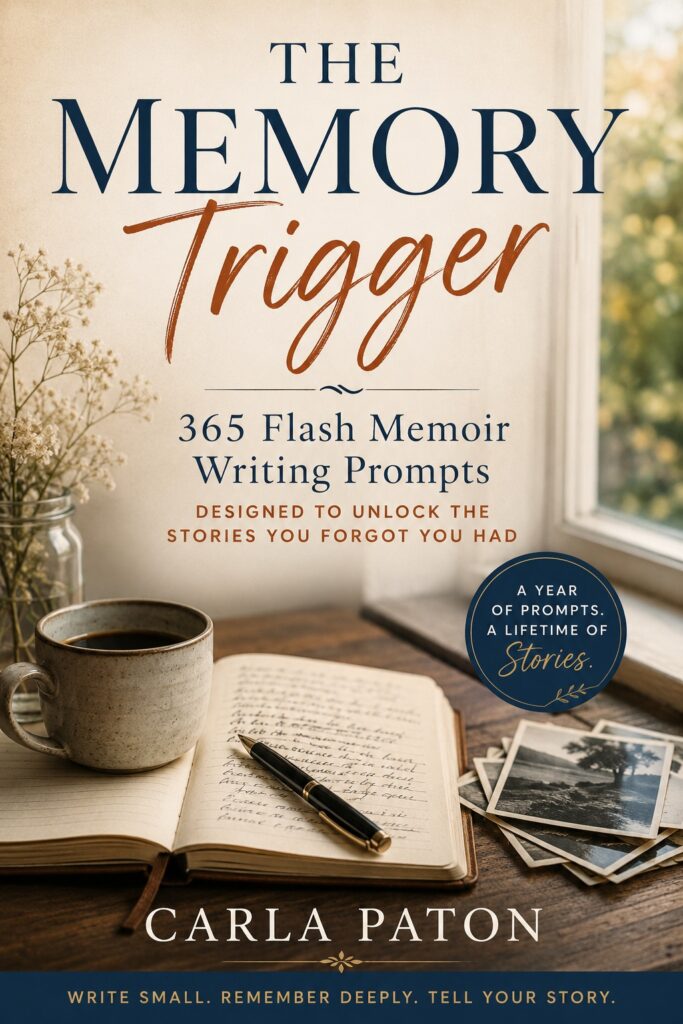
Explore all 365 prompts in The Memory Trigger: 365 Flash Memoir Writing Prompts.