
Best Books for Dark Academia

Dark Academia books
Dark Academia books

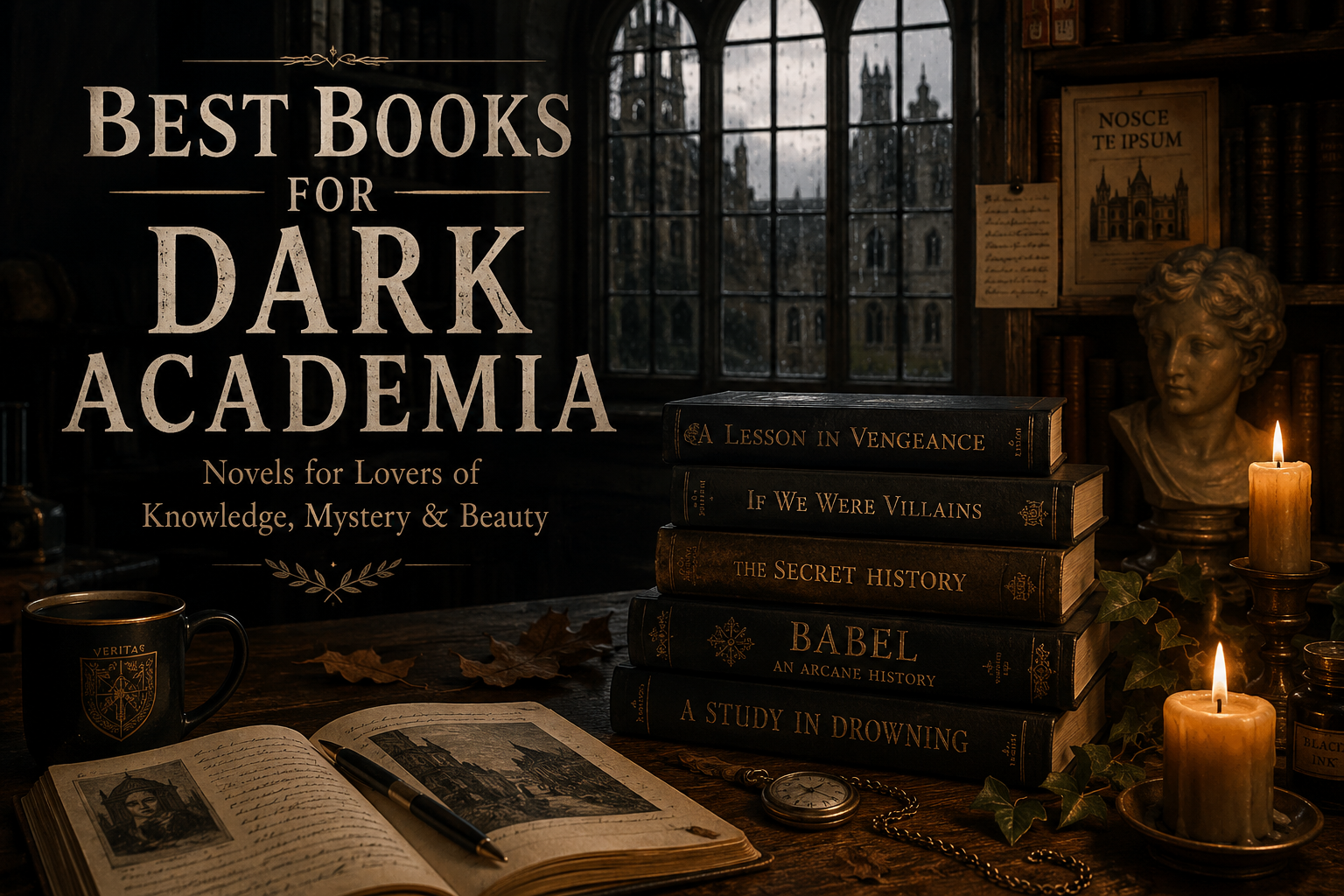
The Best Books for Dark Academia mix mystery, ambition, beauty, and danger. These stories often take place in schools, libraries, old houses, or elite circles where knowledge feels powerful and risky.

If you like candlelit study rooms, secret clubs, moral questions, and characters who want too much, this guide will help you find your next read.

In this Guide

  • What makes dark academia books so popular
  • Best Books for Dark Academia to read first
  • Major themes and symbols
  • Books worth buying or borrowing
  • How students can read dark academia well
  • FAQs

What Makes the Best Books for Dark Academia So Compelling?

Dark academia is about learning, but it is also about obsession.

The Best Books for Dark Academia often show smart characters who chase beauty, status, or truth. At first, their world looks polished. Soon, it starts to crack.

These books often include old campuses, Latin phrases, rare books, art, poetry, and hidden guilt. The setting matters because it makes learning feel grand, but also cold.

Dark academia also asks a hard question: What happens when intelligence is not matched by kindness?

Best Books for Dark Academia: Classic and Modern Picks

These books capture the mood of dark academia in different ways, from elite schools to haunted minds.

The Secret History by Donna Tartt

Many readers see The Secret History as the heart of dark academia. It follows a group of college students who study Greek classics under a strange and powerful professor.

The book explores beauty, guilt, and the danger of feeling above normal rules. It is one of the Best Books for Dark Academia because it turns scholarship into suspense.

If We Were Villains by M.L. Rio

This novel follows theater students who live and breathe Shakespeare. Their friendships are intense, and their roles begin to blur with real life.

The book is a strong choice for students who enjoy drama, rivalry, and literary clues. It also shows how art can shape identity in harmful ways.

Frankenstein by Mary Shelley

Frankenstein is not set in a modern university, but it fits the dark academia mood well. Victor Frankenstein wants knowledge so badly that he forgets his duty to others.

The novel warns readers about ambition without care. It is also a major work in Gothic literature, a tradition you can learn more about through Britannica’s overview of the Gothic novel.

The Picture of Dorian Gray by Oscar Wilde

This novel is full of art, beauty, style, and moral decay. Dorian wants to stay young while his portrait carries the damage of his choices.

It belongs with the Best Books for Dark Academia because it asks what people will trade for beauty and pleasure.

Jane Eyre by Charlotte Brontë

Jane Eyre has a strong Gothic mood, a mysterious house, and a heroine who values education and self-respect. Jane’s inner life matters as much as the plot.

The novel works well for students who want dark atmosphere but also moral strength.

Babel by R.F. Kuang

Babel is a modern dark academia novel about language, empire, and power. It takes place in Oxford and asks who benefits from elite education.

This book is a great pick for readers who want dark academia with sharp social criticism.

Major Themes in the Best Books for Dark Academia

Dark academia feels stylish, but its deepest power comes from its themes.

In the Best Books for Dark Academia, ambition often becomes dangerous. Characters want to be brilliant, rare, or admired. That desire can push them toward lies and harm.

Class is another major theme. Many dark academia stories show who gets access to elite schools, private libraries, and powerful mentors. The mood may feel romantic, but the system can be unfair.

Secrecy also plays a key role. Hidden rooms, private languages, and secret groups create suspense. They also show how knowledge can divide people.

For another look at wealth, image, and moral decline, read our Great Gatsby analysis. Gatsby is not a dark academia novel, but it shares the same interest in status and illusion.

Symbolism in the Best Books for Dark Academia

Symbols help dark academia feel rich, strange, and memorable.

Books and libraries often stand for power. They suggest wisdom, but they can also suggest control. A locked library may mean that knowledge is not open to everyone.

Old buildings often symbolize tradition. A stone campus or decaying mansion can look beautiful while hiding fear, guilt, or corruption.

Mirrors and portraits often show divided identity. In The Picture of Dorian Gray, the portrait becomes a symbol of the soul. It shows the truth that Dorian refuses to face.

Storms, fog, and candlelight also shape the mood. They make the world feel uncertain, which fits stories about secrets and guilt.

Books Worth Buying or Borrowing for a Dark Academia Shelf

If you want to start a small shelf, begin with books that show the range of the genre.

Here are a few strong choices you can find at many bookstores, libraries, or on Amazon without needing any special edition:

  • The Secret History by Donna Tartt
  • If We Were Villains by M.L. Rio

These titles are easy entry points because they have strong plots, literary references, and tense student groups.

How to Read the Best Books for Dark Academia in School

Dark academia books are fun to read, but they also reward close attention.

When you read the Best Books for Dark Academia, track what the main character wants. Then ask what they are willing to risk to get it.

Pay attention to setting. A classroom, library, or old house is never just a backdrop. It often reflects power, fear, or desire.

Notice references to art, poetry, and myth. These allusions can reveal what the characters admire. They can also show how characters use culture to excuse bad choices.

If you study poetry with dark academia themes, the Poetry Foundation’s page on T.S. Eliot is a helpful place to start. Eliot’s work often explores decay, memory, and modern anxiety.

Why the Best Books for Dark Academia Still Matter

Dark academia is not just an aesthetic. It speaks to real fears about success, pressure, and belonging.

Students may connect with these stories because school can feel intense. Grades, image, talent, and social status can seem like everything.

The Best Books for Dark Academia remind readers that knowledge should not come at the cost of empathy. A brilliant mind can still make cruel choices.

That warning is part of what makes the genre last.

FAQs About the Best Books for Dark Academia

Here are quick answers to common questions about the genre.

What are the Best Books for Dark Academia for beginners?

The Best Books for Dark Academia for beginners include The Secret History, If We Were Villains, and Frankenstein. These books show the genre’s mood, themes, and moral questions clearly.

Is dark academia always set at a school?

No. Many dark academia stories take place at schools or universities, but the genre can also include old houses, museums, libraries, and artistic circles.

Why is Frankenstein considered dark academia?

Frankenstein fits because it focuses on dangerous knowledge, ambition, and isolation. Victor wants to master life itself, but he ignores the human cost.

Are dark academia books good for AP Literature?

Yes, many are useful for AP Literature because they deal with theme, symbolism, character flaws, and moral conflict. Classics like Frankenstein and Jane Eyre are especially strong choices.

Key Takeaway

The Best Books for Dark Academia are not only about old libraries and clever students. They show how beauty, learning, and ambition can become dangerous when people forget compassion.

If you want books with mood, mystery, and serious ideas, dark academia is a rich place to begin. 📚
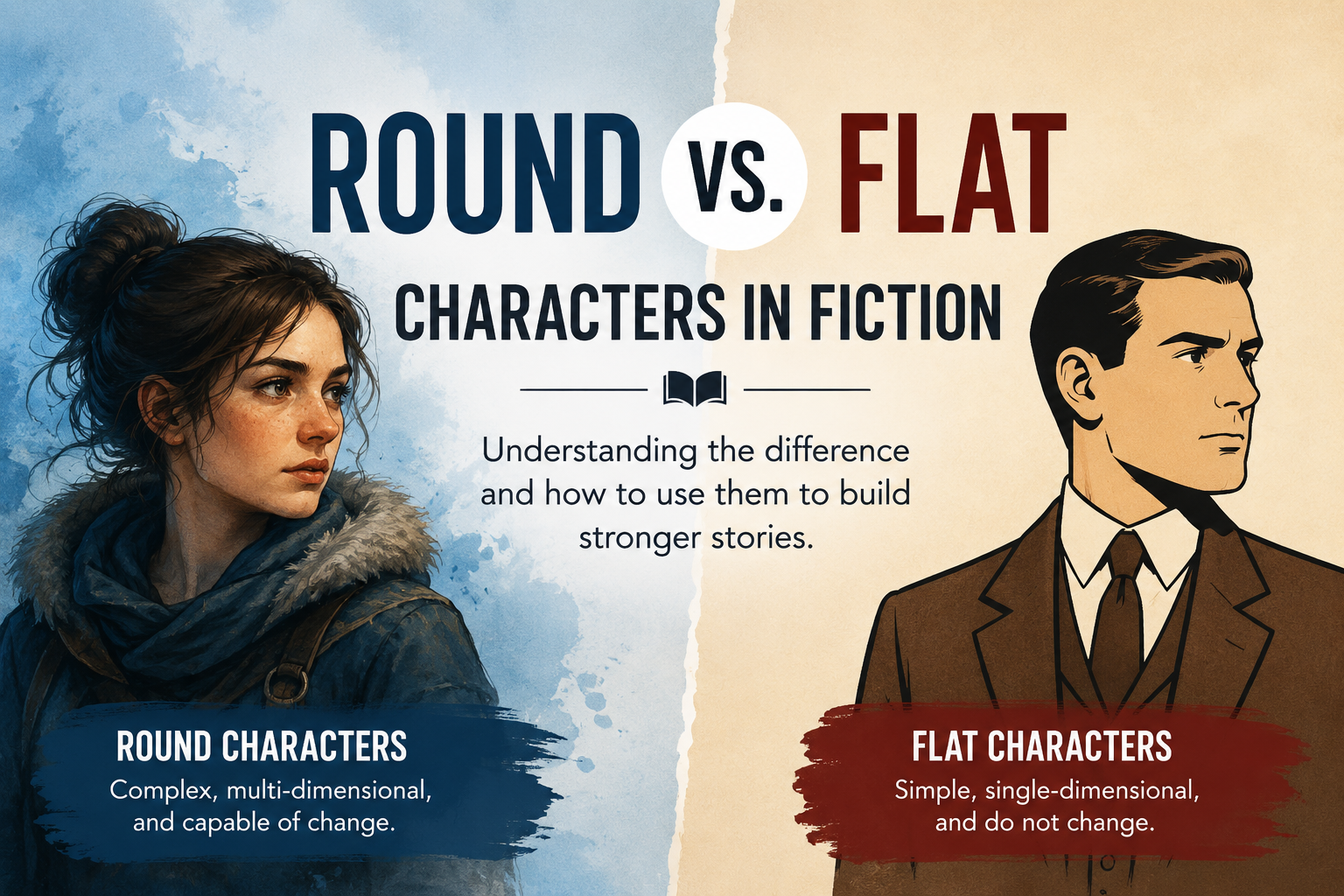
Round vs Flat Characters in Fiction: A Clear Guide

Round vs Flat Characters

Round vs Flat Characters in Fiction is a key idea in literary analysis. Once you know the difference, you can explain why some characters feel real and complex while others serve a clear, simple role.

This guide breaks the idea down in plain language, with examples from famous books and tips you can use in essays.

In this Guide

  • What round characters are
  • What flat characters are
  • Round vs Flat Characters in Fiction examples
  • How to use the idea in literary analysis
  • Common mistakes to avoid
  • Book suggestions
  • FAQ
Round vs Flat Characters

What Are Round Characters?

Round characters feel complex, layered, and close to real people.

A round character has more than one side. They may have mixed feelings, personal flaws, hidden fears, or changing beliefs.

Round characters often surprise us, but their actions still make sense. They are not random. Their choices grow out of who they are.

Elizabeth Bennet in Pride and Prejudice is a strong example. She is smart and funny, but she also misjudges Darcy. Her pride affects how she sees others.

By the end of the novel, Elizabeth learns more about herself. That growth makes her feel human.

You can read more background on the novel through Britannica’s overview of Pride and Prejudice.

What Are Flat Characters?

Flat characters are simple, clear, and easy to understand.

A flat character usually has one main trait. They do not have deep inner conflict, and they may not change much.

This does not mean they are badly written. Flat characters can be useful. They can add humor, reveal a theme, or push the plot forward.

Mr. Collins in Pride and Prejudice is a good example. He is proud, awkward, and eager to please Lady Catherine. He does not have much depth, but he plays an important role.

Flat characters often help readers see the main characters more clearly.

Round vs Flat Characters in Fiction: The Main Difference

Round vs Flat Characters in Fiction comes down to depth and complexity.

A round character has an inner life. A flat character has a simpler role. One is built with layers, while the other is shaped around a clear purpose.

Think of Scrooge in A Christmas Carol. At first, he may seem flat because he is greedy and cold. But as the story moves forward, we see his fear, regret, and pain.

Scrooge becomes round because the story reveals why he acts the way he does. His change also matters to the whole meaning of the book.

In contrast, some minor characters in the same story stay simple. They may show kindness, poverty, or social pressure without much personal depth.

That contrast helps the story work.

Round vs Flat Characters in Fiction Examples from Literature

Examples make Round vs Flat Characters in Fiction much easier to understand.

In To Kill a Mockingbird, Scout Finch is round. She grows as she learns about justice, fear, and unfair treatment. Her view of the world changes.

Atticus Finch also has depth. He is calm and moral, but he faces pressure from his town. His choices show courage without making him perfect.

In Animal Farm, many characters are flatter on purpose. Napoleon often stands for power and control. Boxer stands for loyalty and hard work.

George Orwell uses flat characters to support satire. The point is not deep psychology. The point is political meaning.

In Harry Potter, Harry is round because he has fear, anger, love, and doubt. Some side characters are flatter, but they still help build the world.

Why Writers Use Both Round and Flat Characters

Good fiction does not need every character to be round.

If every character had a deep backstory, many stories would feel crowded. Flat characters help keep the focus on the main conflict.

A round character often carries the emotional weight of the story. A flat character may create pressure, offer comic relief, or show a social idea.

In Romeo and Juliet, Romeo and Juliet feel more complex than many side characters. Their feelings change quickly, and their choices shape the tragedy.

Characters like the Nurse have strong traits that are easy to spot. She is lively and practical, which makes her memorable even if she is less complex.

Round vs Flat Characters in Fiction and Character Change

Round vs Flat Characters in Fiction is related to change, but it is not the same thing.

A round character does not always change. Some round characters stay the same, but readers still see many sides of them.

A flat character can change in a small way, but still remain simple. The key question is depth, not just change.

For example, a villain may become nicer at the end of a story. If we do not learn much about their mind, fears, or motives, they may still feel flat.

On the other hand, Hamlet is round even before he makes final choices. He thinks deeply, doubts himself, and struggles with grief.

How to Analyze Round vs Flat Characters in Fiction

Round vs Flat Characters in Fiction can help you write stronger literary analysis.

Start by asking what the character wants. Then look at what makes the character hard to define. A round character often has tension inside them.

Ask these questions:

  • Does the character have more than one clear trait?
  • Does the character face inner conflict?
  • Does the character change how readers understand the theme?
  • Does the character mostly serve one purpose?

If you want a fuller method, see our guide on how to analyze characters in literature.

When you write about the distinction, do not just label the character. Explain why the label matters.

For example, do not only say, “Scrooge is round.” Say, “Scrooge is round because Dickens reveals his fear of loneliness, which helps the story argue that people can change.”

Common Mistakes with Round vs Flat Characters in Fiction

Many students think “round” means good and “flat” means bad. That is not true.

A flat character can be well written if the role is clear. A round character can still fail if the author does not make the person believable.

Another mistake is to confuse flat characters with minor characters. A minor character can be round if the story gives them depth.

Readers also mix up flat characters with static characters. A static character does not change much. A flat character lacks deep complexity.

The terms overlap sometimes, but they do not mean the same thing.

How to Use Round vs Flat Characters in Fiction in an Essay

Round vs Flat Characters in Fiction gives you a useful tool for claims about theme.

Your essay should connect character type to meaning. Ask why the author made a character simple or complex.

Here is a strong sentence frame:

“The author presents [character] as a [round/flat] character in order to show [theme or idea].”

Example:

“Orwell presents Boxer as a mostly flat character in order to show how loyalty can be used by those in power.”

This kind of sentence does more than name a term. It links the character to the author’s message.

Books to Look Up on Amazon

These books are useful if you want more practice with Round vs Flat Characters in Fiction.

  • Pride and Prejudice by Jane Austen
  • A Christmas Carol by Charles Dickens
  • Animal Farm by George Orwell

Each book gives clear chances to compare deep characters with simpler ones.

Quick Reference: Round vs Flat Characters in Fiction

Round vs Flat Characters in Fiction is easiest to remember this way:

  • Round characters have depth, conflict, and layers.
  • Flat characters have a simple role or main trait.
  • Both types can be useful in a strong story.

For more general background on fiction as a literary form, see Britannica’s article on the novel.

FAQ: Round vs Flat Characters in Fiction

What is the difference between round and flat characters?

A round character has depth and complexity. A flat character is simpler and usually has one main role or trait.

Can a flat character be important?

Yes. Flat characters can support the plot, reveal a theme, or make the main character stand out.

Is a round character always a main character?

No. Main characters are often round, but some minor characters can also have depth.

Is a flat character the same as a static character?

No. A static character does not change much. A flat character lacks depth. A character can be both, but the terms are different.

How do I write about round and flat characters in an essay?

Explain how the character type helps show a theme. Do not stop at the label.

Key Takeaway

Round vs Flat Characters in Fiction is not about good versus bad writing. It is about how much depth a character has and how that character helps the story make meaning.

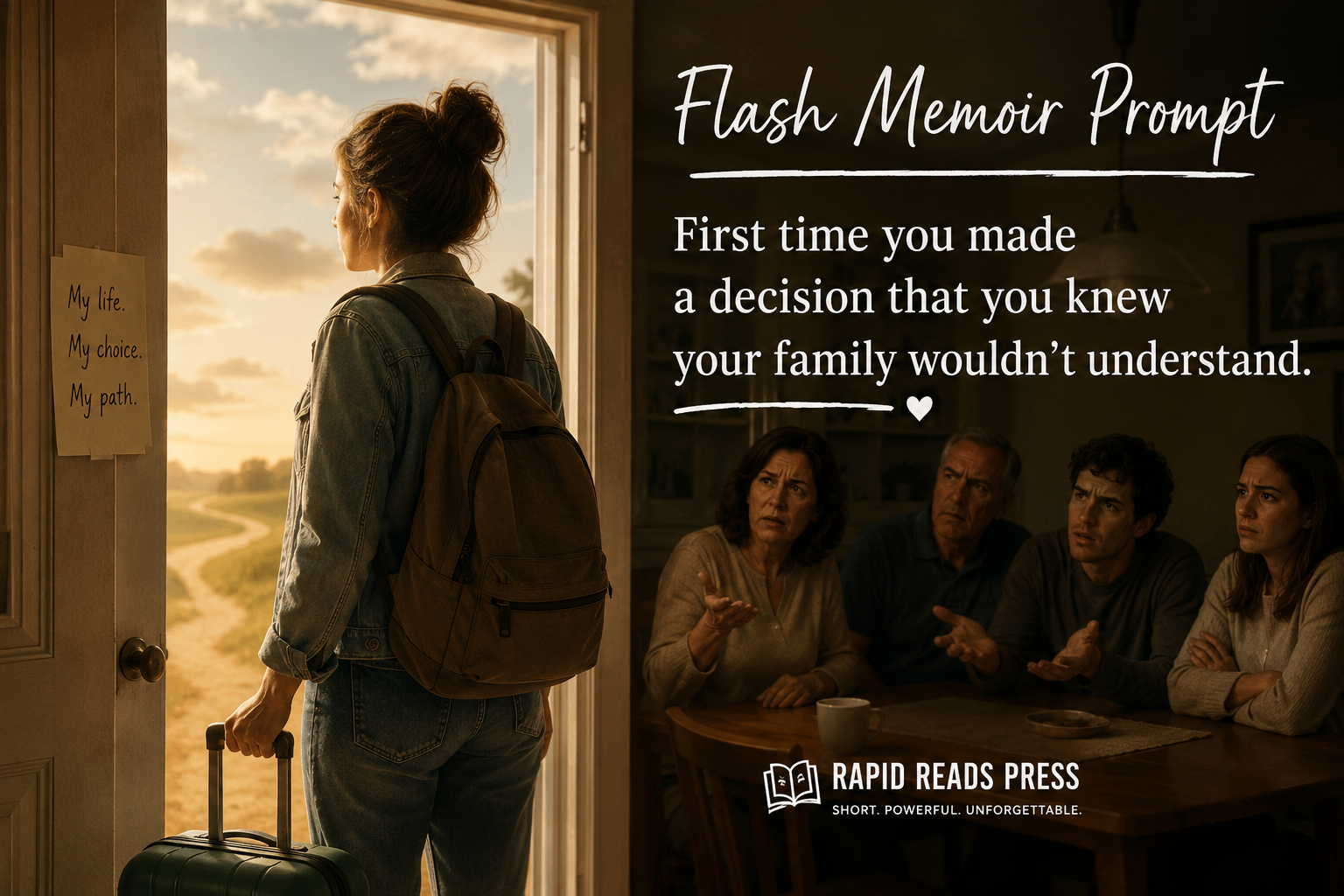
Flash Memoir Prompt: First Time You Made a Decision that You Knew Your Family Wouldn’t Understand

flash memoir prompt decision

A quiet flash memoir prompt for the first time you made a decision you knew your family would not understand, told through one brave moment, one clear scene, and the truth you could not explain yet.

Maybe you remember the room before you remember the words. The kitchen light felt too bright. Your phone sat heavy in your hand. Someone in your family was asking what you had decided, and you already knew your answer would sound wrong to them.

This flash memoir prompt first time made decision knew you would be misunderstood is about that tense little space between loyalty and self-trust. It asks you to write about the moment when you chose something that made sense to you, even if it made no sense to the people who loved you.

flash memoir prompt decision

The Prompt

Write about the first time you made a decision that you knew your family wouldn’t understand.

This prompt can open a powerful memory because it holds conflict right away. There is a choice. There is a family. There is a gap between what others expect and what you know you need.

You do not have to write about a dramatic fight or a life-changing announcement. The most honest version may live in a small scene. Maybe you chose a college far from home. Maybe you quit something everyone praised you for. Maybe you kept a relationship private, changed your plans, refused a tradition, or said no when everyone expected yes.

The heart of this prompt is not whether your family was right or wrong. The heart is the first time you felt the cost of having your own mind.

Why This Memory Matters

Family can shape our first ideas about safety, success, duty, and love. When you make a decision your family will not understand, you may feel guilt before anyone even says a word.

That feeling is worth writing about. It shows the reader who you were at the moment you began to separate your own voice from the voices around you.

This kind of memory may uncover a story about independence. It may also reveal fear, tenderness, or regret. You might find that your family’s reaction was less harsh than you expected. You might find that their silence hurt more than shouting.

In flash memoir, the power often comes from staying close to one moment. Instead of explaining your whole family history, you can show your father clearing his throat, your sister staring at the table, or your mother folding the same dish towel twice.

Those small actions can carry the weight of the scene. If you enjoy studying how people reveal themselves through action, you may also like this guide on how to analyze characters in literature. The same skill can help memoir writers notice what people say without saying it directly.

How to Approach This Prompt

For this flash memoir prompt first time made decision knew others would question, begin with a physical detail. Do not start by explaining the entire decision. Start with the thing your body remembers.

What did your hands do? Where were you sitting? Was there food on the table? Was the room quiet, messy, hot, cold, crowded, or strange?

Then narrow the memory to one scene. Choose the moment before you told them, the moment after, or the moment when you decided not to explain yourself anymore.

Try this opening move: “I knew they would not understand when…” Then finish the sentence with a concrete image instead of an abstract feeling.

For example:

“I knew they would not understand when I saw my mother place the nursing school brochure beside my untouched plate.”

That kind of sentence gives the reader a scene. It also gives you a doorway into the memory.

Write what you noticed before you explain what it meant. Let the scene breathe a little. If you jump too quickly to the lesson, you may miss the emotional texture of the moment.

Also, avoid trying to tell the whole story at once. You do not need to explain every family argument, every expectation, or every reason behind your choice. Flash memoir works best when one moment stands in for something larger.

If you want a simple structure, try this:

Start with the scene. Show the decision. End with what you could not say out loud at the time.

That is enough for a strong first draft.

A Quick Example

I knew they would not understand when my uncle laughed and said, “Art school?” like I had told him I planned to live on the moon. We were in my grandmother’s dining room, and the plastic cover on the table stuck to my wrist. Everyone had been talking about my cousin’s new job at the hospital. Then my mother asked if I had sent in my scholarship forms. I said yes, but not for nursing. The room went quiet in a way that felt practiced. My father looked down at his plate. I wanted to explain that drawing was the only place I felt awake, but the words sounded childish in my head. So I just said, “I already mailed it.” My voice shook, but I did not take it back.

Try It Yourself

Set a timer for ten minutes and write the scene as if you are back inside it. Do not worry about making the decision look wise. Do not try to defend yourself on the page.

Focus on what happened in the room, car, hallway, or phone call. Let the reader feel the pressure before you name it.

If the memory still feels charged, write around the edges first. Describe the weather that day. Describe what you wore. Describe the object closest to you. Often, the truth enters through the side door.

When you revise, look for one sentence that feels especially honest. It may be quiet. It may be uncomfortable. Keep that sentence and build the piece around it.

This flash memoir prompt first time made decision knew your family would not understand is not asking you to judge your family or prove you were right. It is asking you to remember the first time you heard your own inner voice and chose to follow it anyway.

Want More Flash Memoir Prompts?

If this prompt helped you find a memory with tension and heart, keep going. A daily prompt can give you a small, steady way to build scenes from your life without having to tell everything at once.

Explore all 365 prompts in The Memory Trigger: 365 Flash Memoir Writing Prompts.

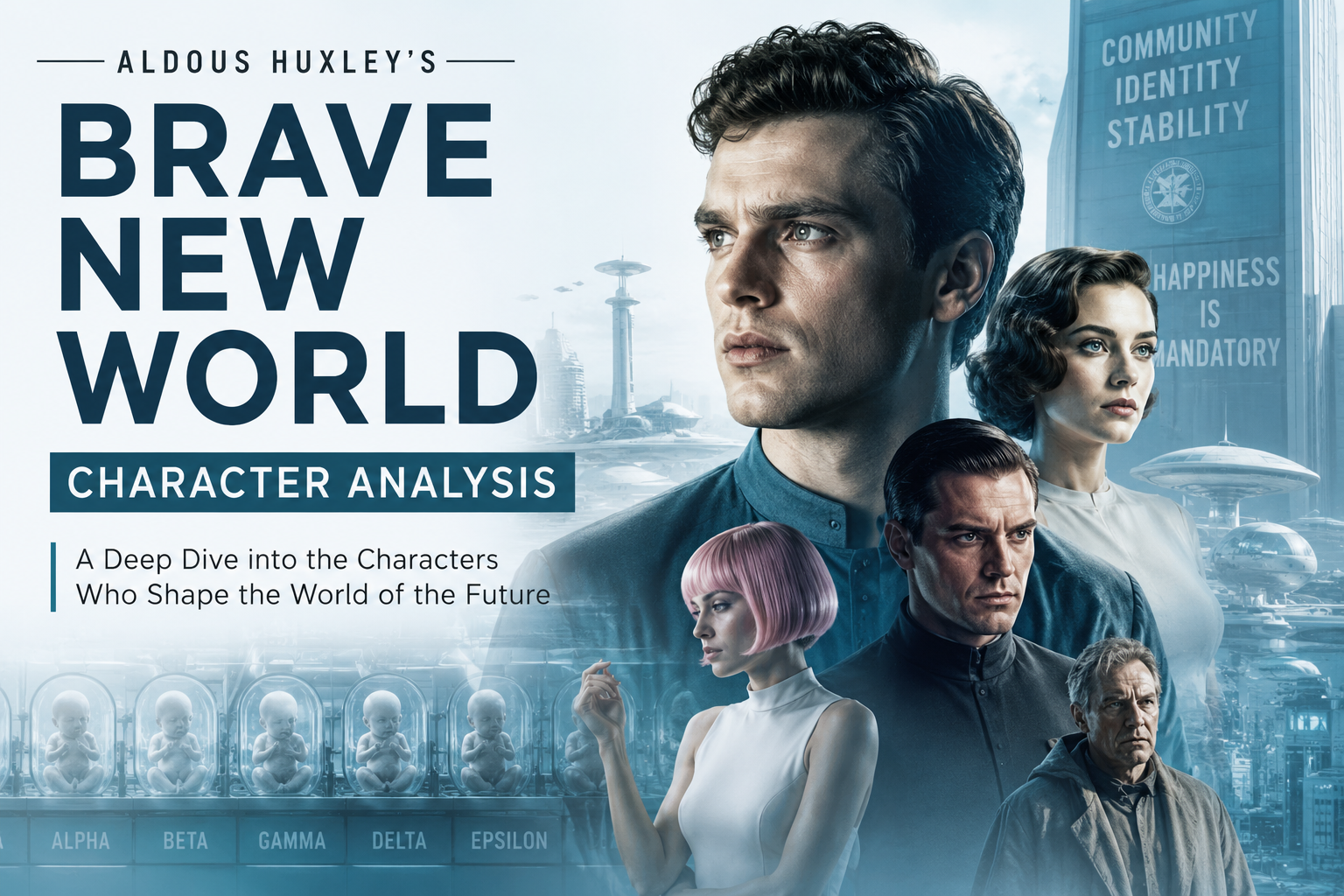
Brave New World Character Analysis: Key People, Motivations, and Conflicts

Brave New World

Brave New World character analysis helps readers see how Aldous Huxley builds a world where comfort costs people their freedom. Each major character shows a different response to control, pleasure, and pain.

This guide breaks down the main characters, their motives, and the conflicts that shape the novel.

In this Guide

  • Why character analysis matters in the novel
  • Bernard Marx and the need to feel special
  • John the Savage and the search for meaning
  • Lenina Crowne and social conditioning
  • Mustapha Mond and the price of stability
  • How to use this analysis in essays
  • FAQ
Brave New World

Brave New World character analysis: why characters matter

The novel uses characters to test the values of the World State.

In Brave New World, people are trained to avoid deep love, strong grief, and private thought. The main characters matter because they reveal cracks in that system.

A strong Brave New World character analysis should not only ask what each person does. It should ask why they act, what they fear, and what their choices show about the society around them.

If you want a simple method for studying motives and conflicts, see our guide on how to analyze characters in literature.

Brave New World character analysis of Bernard Marx

Bernard wants to be different, but he also wants the approval of the world he criticizes.

Bernard Marx is an Alpha, so he has high status. Yet he feels insecure because he does not fit the ideal Alpha image. People mock his body, and that shame shapes much of his behavior.

At first, Bernard seems brave because he questions soma, casual relationships, and public life. He wants private feeling in a society that fears privacy.

But Bernard’s rebellion is shaky. Once he gains fame through John, he enjoys attention. He becomes proud, rude, and eager to use the same social system that once hurt him.

His main conflict is between the desire for truth and the desire for status. This makes him a flawed but useful character for essays.

Bernard is similar to some uneasy figures in modern literature who dislike society but still crave its rewards. Like Winston in 1984, he feels trapped by a system that controls human desire. Unlike Winston, Bernard’s courage fades fast.

Brave New World character analysis of John the Savage

John is the novel’s clearest outsider, and his pain exposes the World State’s emptiness.

John grows up on the Savage Reservation, where he learns pain, shame, religion, and longing. He also reads Shakespeare, which gives him a rich language for love and suffering.

When John enters the World State, he hopes to find wonder. Instead, he finds a clean, safe world that avoids deep human feeling.

John’s main motive is to live with meaning. He wants love to be sacred, not casual. He wants suffering to count, not vanish through soma.

His conflict with the World State is moral and emotional. He cannot accept a life built on comfort without truth.

John’s tragedy comes from his extreme idealism. He sees clearly that this world is false, but he cannot find a healthy way to live outside it.

For background on Huxley and the novel’s place in literature, Britannica offers a helpful overview of Brave New World.

Brave New World character analysis of Lenina Crowne

Lenina is not a villain. She shows how deeply the World State shapes normal people.

Lenina Crowne follows the rules of her society. She takes soma, repeats slogans, and believes that desire should be simple.

Still, Lenina is not flat. She has real feelings for John, even if she cannot understand his values. Her attraction to him proves that human longing still exists beneath social training.

Her main conflict is between conditioning and emotion. She feels drawn to John, but she can only express love in the terms her culture has taught her.

This makes Lenina a strong character for quote-based analysis. Her words often sound shallow, but they reveal a world where language itself has been shaped by power.

She is very different from a character like Elizabeth Bennet in Pride and Prejudice, who studies people and questions social pressure. Lenina has been taught not to question much at all.

Brave New World character analysis of Mustapha Mond

Mustapha Mond understands the truth, yet he chooses control.

Mond is one of the World Controllers. He knows about science, history, art, and religion. He is not fooled by the system, and he helps run it.

This makes him one of the most important characters in the novel. He can explain why the World State removed old forms of freedom.

Mond’s main motive is stability. He believes art, faith, and deep love create conflict. To him, peace is worth the loss of truth.

His conflict with John is the heart of the novel’s argument. John says people need the right to suffer, choose, and believe. Mond says most people are happier without those burdens.

A useful Brave New World character analysis should treat Mond with care. He is not simple. He is frightening because his logic can sound calm and reasonable.

Helmholtz Watson and the need for real expression

Helmholtz shows what happens when talent outgrows a controlled culture.

He has success, charm, and intelligence. Unlike Bernard, he is not driven by social shame. His problem is deeper.

He feels that his words should matter more. As a writer, he wants language to carry real feeling, but his world gives him shallow topics and easy slogans.

Helmholtz connects with John because both care about powerful language. Yet Helmholtz is more balanced than John. He can face exile with a sense of purpose.

His conflict is between creative force and social limits. He proves that even high-status people can feel trapped by a world that fears depth.

Linda and the pain of not belonging

Linda shows the human cost of a society that cannot deal with age, grief, or shame.

She was raised in the World State, then left behind on the Reservation. She cannot fully belong to either place.

On the Reservation, people judge her behavior. In the World State, people reject her body because she looks old and worn.

Her motive is simple. She wants comfort and escape. Soma gives her that escape, but it also removes her from real life.

Linda’s story helps students see that the World State’s promise of happiness is cruel. It only works for people who stay useful, young, and controlled.

Major character conflicts in the novel

The strongest conflicts in the novel are not only between people. They are between values.

John vs. Mond is the key debate. John defends truth and suffering. Mond defends peace and pleasure.

Bernard vs. society shows the weak side of rebellion. Bernard wants freedom, but he also wants fame.

Lenina vs. John shows two different ideas of love. Lenina sees desire as normal and easy. John sees love as sacred and full of duty.

Helmholtz vs. the World State shows the need for art. He wants language that can hold real emotion.

How to Use This Brave New World character analysis in essays

A good essay should connect character choices to the novel’s larger ideas.

Start with a clear claim. For example: Bernard Marx is not a true rebel because his desire for status is stronger than his desire for freedom.

Then use short quotes and explain them. Do not drop a quote and move on. Show how the words reveal motive, conflict, or change.

For more support, try our character analysis strategy guide before you draft your response.

You can also use our literature study resources to plan discussion posts, essays, and quote notes.

Suggested books for deeper study

These books can help you compare Huxley’s ideas with other works about control and freedom.

  • Brave New World by Aldous Huxley
  • 1984 by George Orwell
  • Fahrenheit 451 by Ray Bradbury

For more on Huxley’s life and ideas, see Britannica’s page on Aldous Huxley.

FAQ: Brave New World character analysis

Who is the most important character in Brave New World?

John is often the most important because he directly challenges the World State. His clash with Mond reveals the novel’s main debate.

Is Bernard Marx a hero?

Bernard is not a clear hero. He questions society, but he also enjoys power when it benefits him.

What does Lenina Crowne represent?

Lenina represents social conditioning. She has real feelings, but she can only express them through the values she has been taught.

Why is Mustapha Mond important?

Mond explains the World State’s logic. He shows why comfort can become dangerous when it replaces freedom.

What is the best focus for a Brave New World character analysis essay?

Focus on one character’s main conflict. Then connect that conflict to a larger theme, such as freedom, stability, or truth.

Key Takeaway

A strong Brave New World character analysis shows that each major character tests the cost of comfort. Huxley’s novel asks whether a painless life is worth it if people must give up truth, art, and real love.

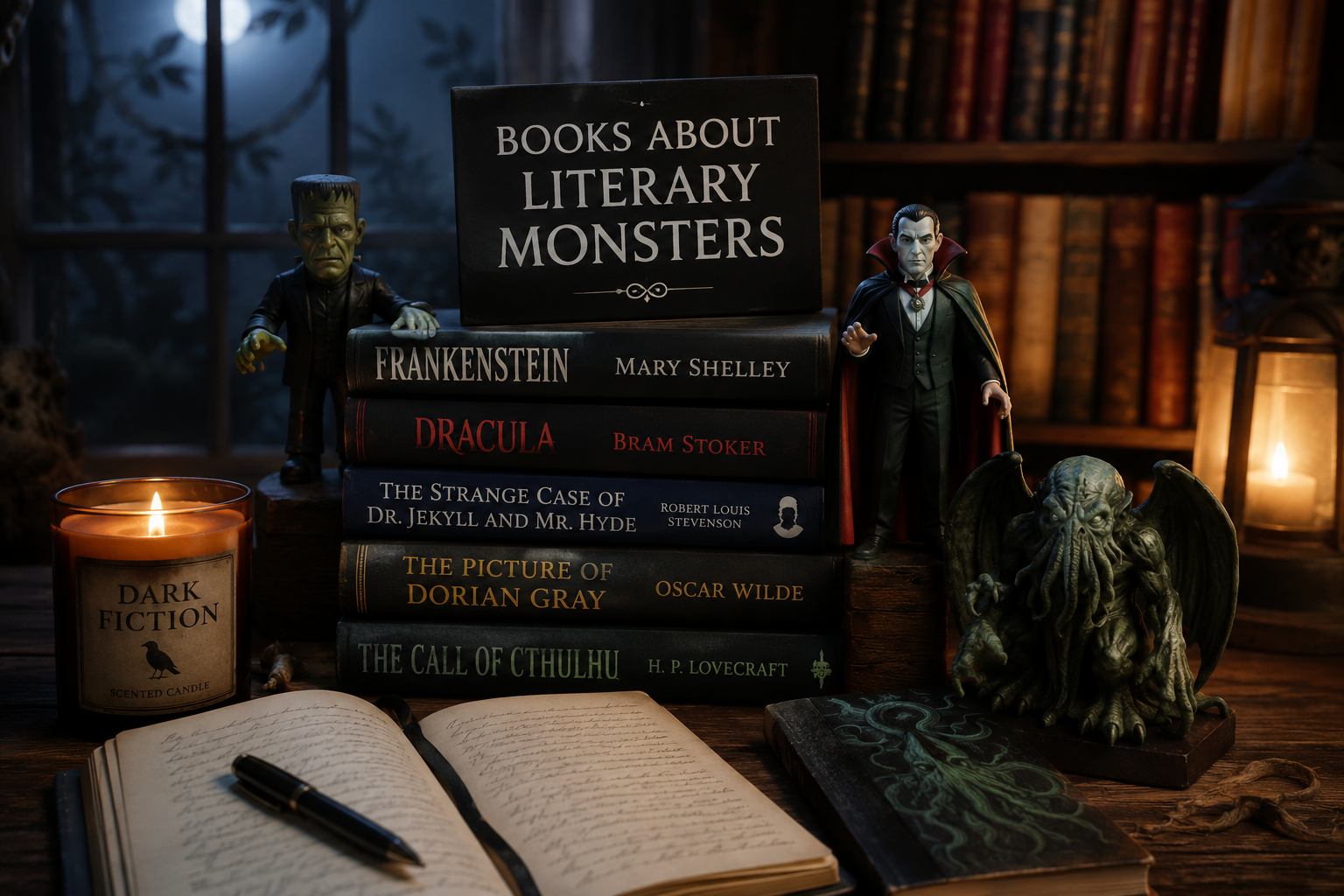
Books About Literary Monsters: Why Fiction’s Creatures Still Haunt Us

Books about literary monsters

Books About Literary Monsters help us face fear, guilt, power, and loneliness through unforgettable creatures. These stories are not just scary. They ask deep questions about what makes someone human.

From Frankenstein to Dracula, literary monsters have shaped classrooms, film, and pop culture for generations.

In this Guide

  • What makes literary monsters so powerful
  • Classic monster books students should know
  • Recommended books to read next
  • Major themes and symbols
  • How to read monster stories in class
  • FAQs about literary monsters
  • Key takeaway
Books about literary monsters

What Makes Books About Literary Monsters So Powerful?

Great monster stories turn fear into meaning.

Books About Literary Monsters often use creatures to show what people hide. A monster can stand for anger, shame, illness, greed, or social fear.

That is why these stories last. The creature may look strange, but the problem behind it often feels very human.

Mary Shelley’s creature in Frankenstein is a strong example. He is frightening, but he is also lonely. Readers begin to ask if the real monster is the creature or the society that rejects him.

This is what makes literary monsters different from simple horror villains. They do not only scare us. They make us think.

Classic Books About Literary Monsters Students Should Know

Many famous monster stories began as serious works of literature.

Books About Literary Monsters appear in many periods of literary history. Some come from ancient epics. Others come from Gothic novels or modern fiction.

Frankenstein by Mary Shelley is one of the most important examples. Published in 1818, it explores science, ambition, family, and the pain of rejection. You can learn more about the novel’s background through Britannica’s overview of Frankenstein.

Dracula by Bram Stoker gives readers a vampire who stands for fear of disease, desire, and the unknown. Count Dracula is not just a monster. He is a force that threatens the safe world of the characters.

The Strange Case of Dr. Jekyll and Mr. Hyde by Robert Louis Stevenson explores the monster inside the self. Mr. Hyde shows what can happen when hidden desires break free.

Beowulf also belongs in this conversation. Grendel is a monster, but he is not random. He reflects violence, exile, and the fear of a world outside human order.

Best Books About Literary Monsters to Read Next

These books are strong choices for students, book clubs, and curious readers.

If you want to build a shelf of Books About Literary Monsters, start with works that give the creature emotional weight. A good monster story should leave you with questions after the final page.

Here are a few useful titles to search for on Amazon or at your local library:

  • Frankenstein by Mary Shelley
  • Dracula by Bram Stoker
  • Grendel by John Gardner

Grendel is especially useful for students who know Beowulf. John Gardner retells the old story from the monster’s point of view. This shift makes readers question who gets called a monster and why.

For poetry lovers, monster themes can also appear in shorter works through images of death, isolation, or the unknown. If you want to practice close reading, this guide to New Criticism and Emily Dickinson shows how to focus on language, form, and meaning.

Themes in Books About Literary Monsters

Monster stories often reveal what a culture fears most.

One major theme is isolation. Frankenstein’s creature becomes violent after he is denied love and friendship. His pain grows because no one accepts him.

Another key theme is double identity. Dr. Jekyll and Mr. Hyde show that a person can have a public self and a hidden self. The monster becomes a symbol of what society asks people to repress.

Power is also central to many monster tales. Victor Frankenstein wants to control life itself. Dracula wants control over bodies, homes, and blood. These stories warn readers about power without care.

In Books About Literary Monsters, fear often points to a deeper conflict. The monster may stand for class anxiety, gender roles, race, science, death, or moral guilt.

Why Monsters Are Symbols, Not Just Creatures

A literary monster usually means more than it seems to mean.

A vampire may symbolize desire or corruption. A ghost may symbolize guilt. A beast may symbolize human violence.

This is why teachers often ask students to look beyond the plot. The question is not only, “What does the monster do?” The better question is, “What fear does the monster reveal?”

For example, Dracula enters homes and disrupts families. That makes him a symbol of invasion. He crosses borders, changes bodies, and breaks social rules.

Frankenstein’s creature has a different meaning. He shows the danger of creating life without love or duty. He also shows how cruelty can shape a person.

How to Read Books About Literary Monsters in Class

Strong close reading can turn a scary story into a rich literary study.

When you read Books About Literary Monsters, start with the creature’s first appearance. Notice how the author describes its body, voice, movement, and setting.

Then ask who tells the story. A monster may look different based on the narrator’s fear or bias. In Frankenstein, the creature speaks for himself, which changes how we judge him.

Pay close attention to repeated images. Blood, darkness, mirrors, scars, and doors often matter in monster fiction. These details can reveal the story’s deeper pattern.

Why Books About Literary Monsters Still Matter Today

Modern readers still need monster stories because fear has not gone away.

Our fears change over time, but the pattern remains. People still worry about technology, identity, illness, isolation, and power.

That is why Books About Literary Monsters still feel fresh. They let readers face hard ideas through story. A monster gives fear a shape, which makes it easier to examine.

These books also teach empathy. Sometimes the monster is dangerous. Sometimes the monster is wounded. The best stories force readers to hold both truths at once.

FAQs About Books About Literary Monsters

What are Books About Literary Monsters?

Books About Literary Monsters are works of fiction that use creatures, villains, or strange beings to explore deeper ideas. They often focus on fear, identity, guilt, or society.

Is Frankenstein’s creature a monster or a victim?

He is both. He commits violent acts, but he is also rejected and abandoned. That tension makes the novel powerful.

Why do teachers assign monster stories?

Teachers assign them because they are rich in symbols and themes. They help students study character, setting, narration, and social fear.

Are literary monsters always supernatural?

No. Some are human. Mr. Hyde, for example, is monstrous because he reveals the dark side of Dr. Jekyll.

What is the best monster book to start with?

Frankenstein is a strong starting point. It is famous, readable, and full of ideas that still matter.

Key Takeaway

Books About Literary Monsters endure because they make fear meaningful.

The best monster stories do more than shock us. They ask what society rejects, what people hide, and what it means to be human.

When you read these books, do not stop at the creature. Look at the world that created it. That is where the real story often begins.

Flash Memoir Prompt: First Time You Wore Something that Made You Feel Like a Different Version of Yourself

Flash memoir prompt clothes

A warm writing invitation about the first time clothing changed how you stood, moved, or saw yourself in the mirror.

You may still remember the weight of it: a borrowed jacket, a stiff uniform, a dress that felt too grown-up, a pair of shoes that made noise on the floor. Maybe you caught your reflection and paused. For one second, you were still yourself, but also someone new.

This flash memoir prompt first time wore something made you feel different is about more than fashion. It is about identity, courage, disguise, belonging, and the strange power of fabric to tell us who we are allowed to become.

Flash memoir prompt clothes

The Prompt

Write about the first time you wore something that made you feel like a different version of yourself.

This prompt can unlock a clear and powerful memory because clothing is physical. You can describe how it felt on your skin, how it fit, how others looked at you, and what changed inside you when you put it on.

You do not have to write about a dramatic outfit. The memory might be small: a hand-me-down coat, a sports jersey, a graduation robe, makeup for the first time, a tie for a funeral, or a uniform for your first job. The meaning often lives in the small details.

Why This Memory Matters

Clothes can make us feel visible, hidden, older, braver, awkward, proud, or trapped. A simple shirt can carry a whole story.

Maybe the outfit helped you act like the person you wanted to become. Maybe it made you feel like you were pretending. Maybe someone else chose it for you, and the memory still holds anger or shame. Maybe you wore it because you needed to fit in, even if it did not feel like you.

This flash memoir prompt first time wore something made you feel like a different person can reveal a turning point. It asks: Who were you before you put it on? Who did you become after? Even if the change lasted only one afternoon, that moment may still matter.

For student writers, this is also a useful way to practice finding a theme in a personal story. If you want help thinking about deeper meaning, you might enjoy this guide on how to identify theme in literature. The same skill can help when you read your own memories closely.

How to Approach This Prompt

Begin with one physical detail. Do not start by explaining your whole life or telling the reader what the outfit meant. Start with the zipper that stuck, the tag scratching your neck, the sleeves hanging past your wrists, or the click of heels on tile.

Then narrow the memory to one scene. Where were you? A bedroom, school hallway, church bathroom, locker room, store dressing room, or front porch? Keep the camera close.

Write what you noticed before you explain what it meant. If people stared, describe that. If no one noticed, describe that too. Sometimes the private change matters more than the public reaction.

You might ask yourself these questions before you draft:

  • Who chose the clothing?
  • Did you want to wear it?
  • What did you think when you saw yourself?
  • How did your body move differently?
  • What did the outfit make possible?

If you are using this as classroom writing practice, you can also annotate your own draft the way you would annotate a story. Mark the sensory details, emotional shift, and strongest sentence. This simple guide to how to annotate literature can help you practice noticing what a piece of writing is doing.

Avoid trying to tell every clothing memory you have. Choose the one moment where something changed. Flash memoir works best when it feels small on the outside and large on the inside.

A Quick Example

The first time I wore my dad’s old leather jacket, I was sixteen and trying to look like I had somewhere to go. The jacket smelled like cold air, motor oil, and the peppermint gum he kept in his truck. It was too wide in the shoulders, so I pulled my hands into the sleeves and pretended that was the style. When I walked into school, nobody said anything. That disappointed me more than I wanted to admit. But in the bathroom mirror, under the buzzing light, I saw a version of myself who looked less afraid. I stood up straighter. I fixed my hair. For the rest of the day, I kept one hand in the pocket, holding onto the torn lining like proof.

Try It Yourself

Set a timer for ten minutes. Write the scene as if you are back in the room where you first put the item on. Let the mirror, the fabric, and your body lead the memory.

Do not worry about making the piece perfect. Your first draft only needs to find the moment. You can shape the meaning later.

If you get stuck, write one sentence that begins with, “When I saw myself, I thought…” Then keep going. This flash memoir prompt first time wore something made you see yourself differently is really an invitation to explore change, even if that change began with a button, a hem, or a pair of shoes.

Want More Flash Memoir Prompts?

If this memory opened a door, keep writing. Explore all 365 prompts in The Memory Trigger: 365 Flash Memoir Writing Prompts.

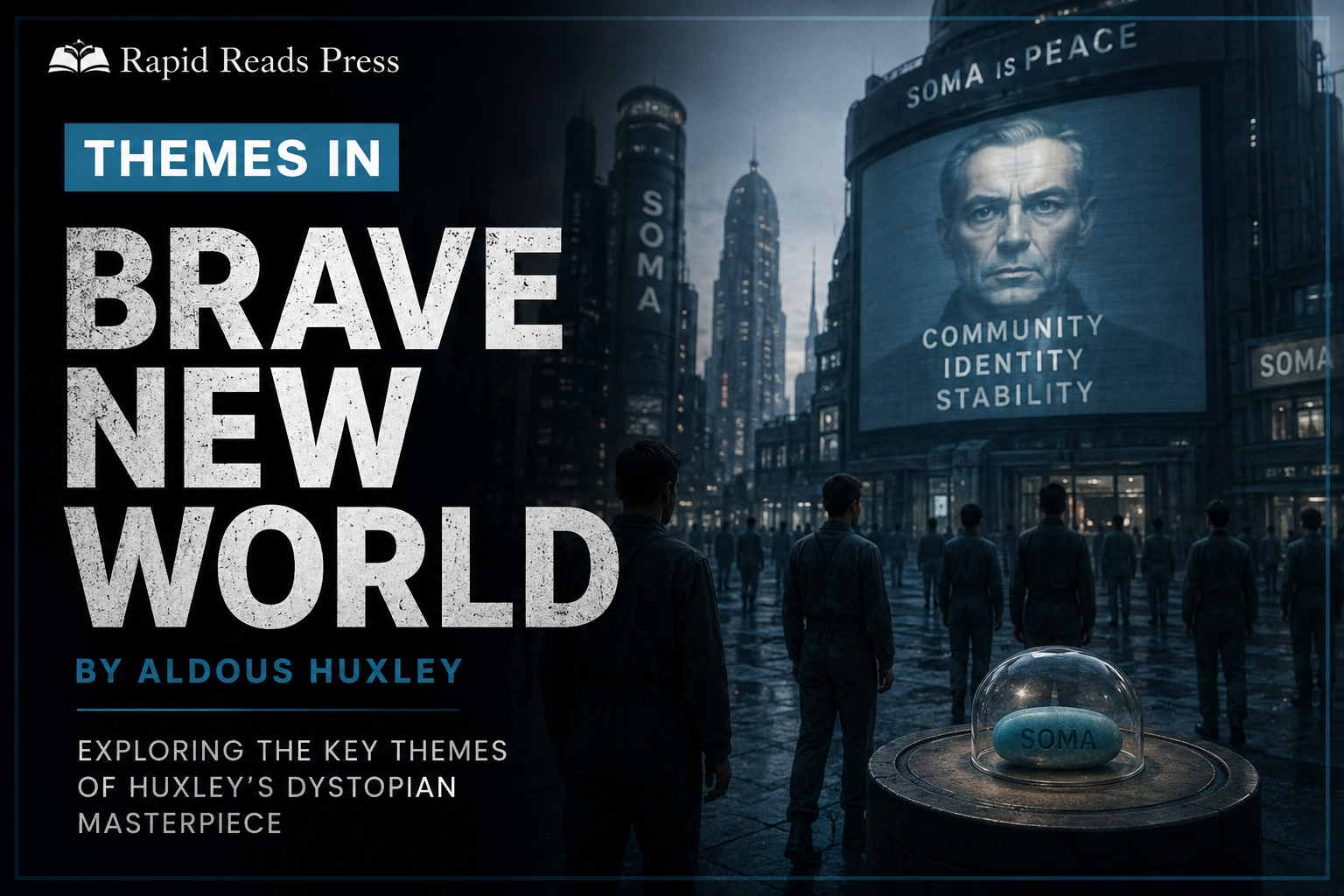
Themes in Brave New World: A Student-Friendly Guide

Themes in Brave New World

The themes in Brave New World help readers see why Aldous Huxley’s novel still feels sharp today. This guide breaks down the major ideas in the book so students can connect plot, character, and meaning without getting lost.

In this Guide

Use this as a quick map before you read or review.

  • Why the novel still matters
  • Social control and comfort
  • Pleasure and distraction
  • Identity and family
  • Science and technology
  • Freedom and truth
  • How to write about the novel
  • FAQ
Themes in Brave New World

Why themes in Brave New World Still Matter

Huxley’s world looks strange at first, but its fears are easy to recognize.

Brave New World was published in 1932, but many of its questions feel modern. What happens when comfort becomes more important than freedom? Can a society be peaceful and still deeply wrong?

Studying the themes in Brave New World helps students see that the novel is not only about the future. It is also about choices people make in any age.

For brief background on the novel and Huxley, Britannica offers a helpful overview of Brave New World.

Social Control and the themes in Brave New World

The World State controls people by making control feel normal.

In many dystopian stories, governments use fear. In Brave New World, the government often uses pleasure, routine, and comfort instead.

Citizens are trained from birth to accept their social class. They do not choose their work, values, or relationships in a free way. The state creates people to fit a system, then teaches them to love their place in it.

This is one of the key themes in Brave New World because it asks a hard question: if people do not know they are controlled, are they still trapped?

Students often compare this to George Orwell’s 1984. Orwell shows control through fear and punishment. Huxley shows control through comfort and desire.

Pleasure, Distraction, and the themes in Brave New World

In Huxley’s novel, happiness can become a tool of power.

The people in the World State are taught to avoid pain at all costs. They use soma, attend feelies, and repeat slogans that make deep thought seem useless.

Among the themes in Brave New World, this one is especially important for modern readers. Huxley suggests that nonstop pleasure can weaken the mind if it replaces thought, grief, love, and choice.

The novel does not say that happiness is bad. It warns that fake happiness can hide real loss.

Ray Bradbury’s Fahrenheit 451 explores a related fear. In that novel, entertainment keeps people from asking serious questions. Huxley’s world does the same, but in a smoother and more cheerful way.

Identity, Family, and the themes in Brave New World

The World State breaks identity down before people can build it for themselves.

In this society, family is treated as shameful. Words like “mother” and “father” make people uncomfortable. Children grow in bottles, not homes.

The themes in Brave New World become clearer when we notice what the society removes. It removes parents, privacy, lasting love, and personal history. Without these, people have little space to form a deep self.

Bernard Marx feels different from others, which makes him uneasy and proud. Helmholtz Watson wants language to mean more. John, raised outside the World State, believes in love, suffering, and moral choice.

Each character shows a different struggle with identity. None of them fits the system well.

Science, Technology, and the themes in Brave New World

The novel does not attack science itself. It attacks science without moral limits.

The World State uses technology to create people, shape behavior, and keep society stable. Babies are sorted before birth. Children are conditioned through repeated lessons. Adults are managed by drugs and pleasure.

One reason themes in Brave New World work so well is that Huxley does not make technology look evil by itself. The danger comes from how people use it.

This connects well to Mary Shelley’s Frankenstein. Both novels ask whether invention should move faster than responsibility.

In class essays, be careful not to say “technology is bad.” A stronger claim is this: Huxley warns that technology becomes dangerous when it serves control instead of human dignity.

Freedom, Truth, and the Cost of Happiness

Huxley asks whether comfort is worth the loss of truth.

Mustapha Mond, one of the World Controllers, understands the trade-off. He knows that art, religion, family, and deep truth have been sacrificed for social stability.

John cannot accept that bargain. He believes people need the freedom to suffer, choose, fail, and seek meaning. His famous demand for “the right to be unhappy” shows the deep conflict at the heart of the novel.

This conflict makes the themes in Brave New World more than simple warnings. The book asks readers to decide what makes life fully human.

Symbols That Support the Novel’s Themes

Many of Huxley’s symbols point back to control, identity, and lost freedom.

Soma is one of the clearest symbols in the novel. It stands for escape without growth. People take it when they feel upset, but it prevents them from facing pain in a real way.

Ford is another major symbol. The World State treats Henry Ford almost like a god because mass production shapes its values. People are made to be useful parts in a larger machine.

If you want a simple method for spotting symbols in this novel or any other text, see our guide on how to find symbolism in a story.

How to Write About themes in Brave New World

A strong essay connects a theme to specific choices Huxley makes.

Do not just name a theme. Show how it appears through setting, character, conflict, and symbol.

For example, instead of writing, “The book is about control,” try a sharper claim: “Huxley shows that control is most powerful when people mistake it for happiness.”

Then use evidence. You might discuss soma, conditioning, the caste system, or John’s conflict with Mustapha Mond.

If you want more help with literature essays, explore our RapidReads Press study resources for student-friendly tools.

Related Books to Read Next

These books pair well with Huxley’s novel for class discussion or essays.

  • 1984 by George Orwell
  • Fahrenheit 451 by Ray Bradbury

You can search these titles through your school library, local library, or major booksellers such as Amazon. No special edition is required for most student reading.

FAQ About themes in Brave New World

Here are quick answers to common student questions.

What are the main themes in Brave New World?

The main themes include social control, false happiness, identity, technology, and freedom. Each theme shows what people lose when stability becomes the highest goal.

What is the most important theme in the novel?

The most important theme is the conflict between happiness and freedom. Huxley asks whether a painless life is worth living if people cannot choose truth.

Is Brave New World against science?

No. The novel warns against science used without ethics. Huxley’s concern is not invention, but control.

How does soma connect to the novel’s meaning?

Soma represents escape, comfort, and control. It keeps people calm, but it also keeps them from facing real emotions.

Key Takeaway

Brave New World warns that comfort can become dangerous when it replaces freedom, truth, and human connection. That is why the novel still matters, especially for students learning how literature questions the world around them.

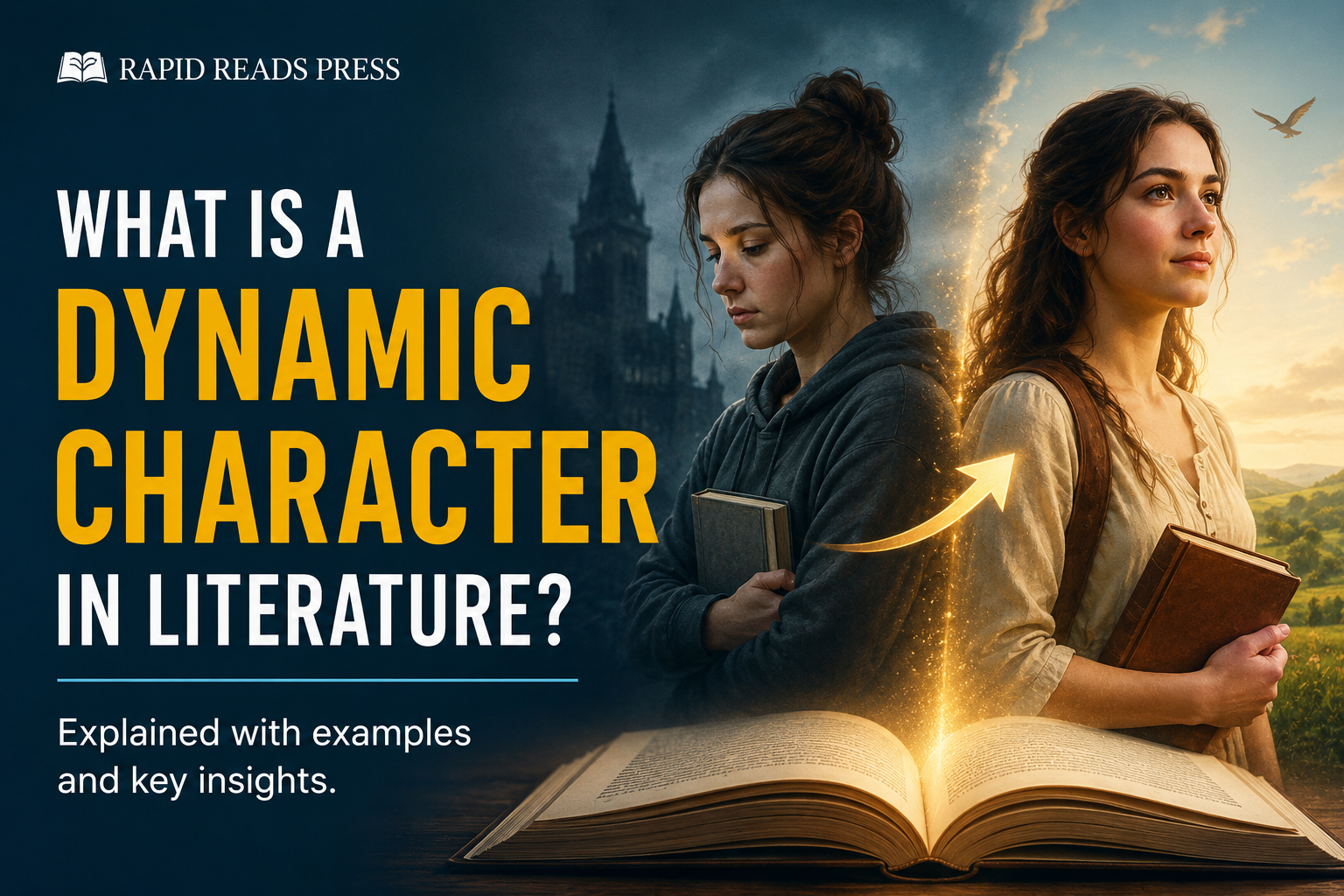
What Is a Dynamic Character in Literature?

dynamic character

It is a character who changes in an important way over the course of a story.

This guide explains the idea in simple terms, shows why it matters, and gives clear examples from books many students know.

In this Guide

  • What a dynamic character means
  • Why dynamic characters matter
  • Dynamic character examples
  • How to spot a dynamic character
  • Books to read for practice
  • FAQ
dynamic character

A Clear Definition

A dynamic character changes in a deep and meaningful way.

The change may involve beliefs, values, goals, or how the character sees the world. It is not just a new haircut, a new job, or a new location.

When students ask, What Is a Dynamic Character in Literature?, the simplest answer is this: a dynamic character learns, grows, falls apart, or becomes someone different because of the story’s events.

For example, Ebenezer Scrooge in A Christmas Carol begins as selfish and cold. By the end, he becomes generous and caring. His change is central to the story.

Why It Matters

Dynamic characters help readers see how conflict can shape a person.

A story feels more powerful when a character has to face hard choices. Those choices can reveal fear, pride, courage, guilt, or love.

What Is a Dynamic Character in Literature? It is often the answer to why a story feels meaningful. The plot may show what happens, but the character’s change shows why it matters.

In many novels, the main character’s growth connects to the theme. If a story is about forgiveness, the dynamic character may need to let go of anger. If a story is about identity, the character may need to understand who they truly are.

If you want a deeper method for studying characters, this guide on how to analyze characters in literature can help you build stronger notes.

Dynamic vs. Static Characters

A dynamic character changes. A static character stays mostly the same.

A static character is not always boring or unimportant. Some static characters help highlight the growth of another character.

In Pride and Prejudice, Elizabeth Bennet is a dynamic character because she changes how she judges Darcy. She learns that her first opinion was not fully fair.

Mr. Collins, on the other hand, stays mostly the same. His lack of growth makes him a useful contrast to Elizabeth’s self-awareness.

So, What Is a Dynamic Character in Literature? Think of a character whose inner life shifts in a clear way from the beginning to the end.

Recognizable Examples

Many famous books use dynamic characters to carry the emotional weight of the story.

Ebenezer Scrooge in A Christmas Carol changes from greedy to generous. His journey shows that moral change is possible.

Elizabeth Bennet in Pride and Prejudice learns to question her own pride and quick judgments. Her growth makes the love story feel earned.

Harry Potter in the Harry Potter series grows from a lonely boy into a braver and more self-aware young man. His change happens across many books, not all at once.

For more context on classic authors and works, you can visit Britannica’s page on Charles Dickens or explore author materials at the Poetry Foundation.

How to Spot a Dynamic Character

Look for a clear before-and-after pattern.

Ask what the character wants at the start. Then ask what the character understands by the end.

A dynamic character often faces a conflict that forces a choice. That choice may expose a flaw, teach a lesson, or push the character toward change.

When thinking about What Is a Dynamic Character in Literature?, focus on inner change. A character may travel far, lose money, or gain power, but those events only matter if they change the character in a real way.

Here are helpful questions:

  • What does the character believe at the beginning?
  • What conflict challenges that belief?
  • What does the character understand at the end?
  • Does the change connect to the theme?

Common Mistakes Students Make

One common mistake is calling every main character dynamic.

A character can be important and still remain static. The key is not how much page time the character gets. The key is whether the character changes in a meaningful way.

Another mistake is confusing mood with growth. A character who feels sad in one chapter and happy in the next has not necessarily changed. A dynamic character has a deeper shift in values, beliefs, or self-understanding.

If you need a full approach, use this character analysis guide to connect traits, conflict, and theme.

Books That Help You Study Dynamic Characters

These books are useful if you want to practice spotting character change:

  • A Christmas Carol by Charles Dickens
  • Pride and Prejudice by Jane Austen

Both books make character growth easy to see, which helps if you are new to literary analysis.

FAQ: What Is a Dynamic Character in Literature?

What Is a Dynamic Character in Literature?

A dynamic character is a character who changes in an important internal way during a story. The change may affect beliefs, values, choices, or self-knowledge.

Does a dynamic character have to become a better person?

No. A dynamic character can improve, but they can also become worse. The main point is that they change in a meaningful way.

Can a minor character be dynamic?

Yes. A minor character can be dynamic if the story shows a clear inner change. Main characters are just more likely to get that kind of attention.

Is a dynamic character the same as a round character?

No. A round character is complex and feels realistic. A dynamic character changes. A character can be both, but the terms do not mean the same thing.

Key Takeaway

What Is a Dynamic Character in Literature? It is a character who changes in a meaningful way because of the story’s conflict.

When you read, track what a character believes at the start and what they understand at the end. That simple habit can lead to stronger essays and better literary analysis. 📚

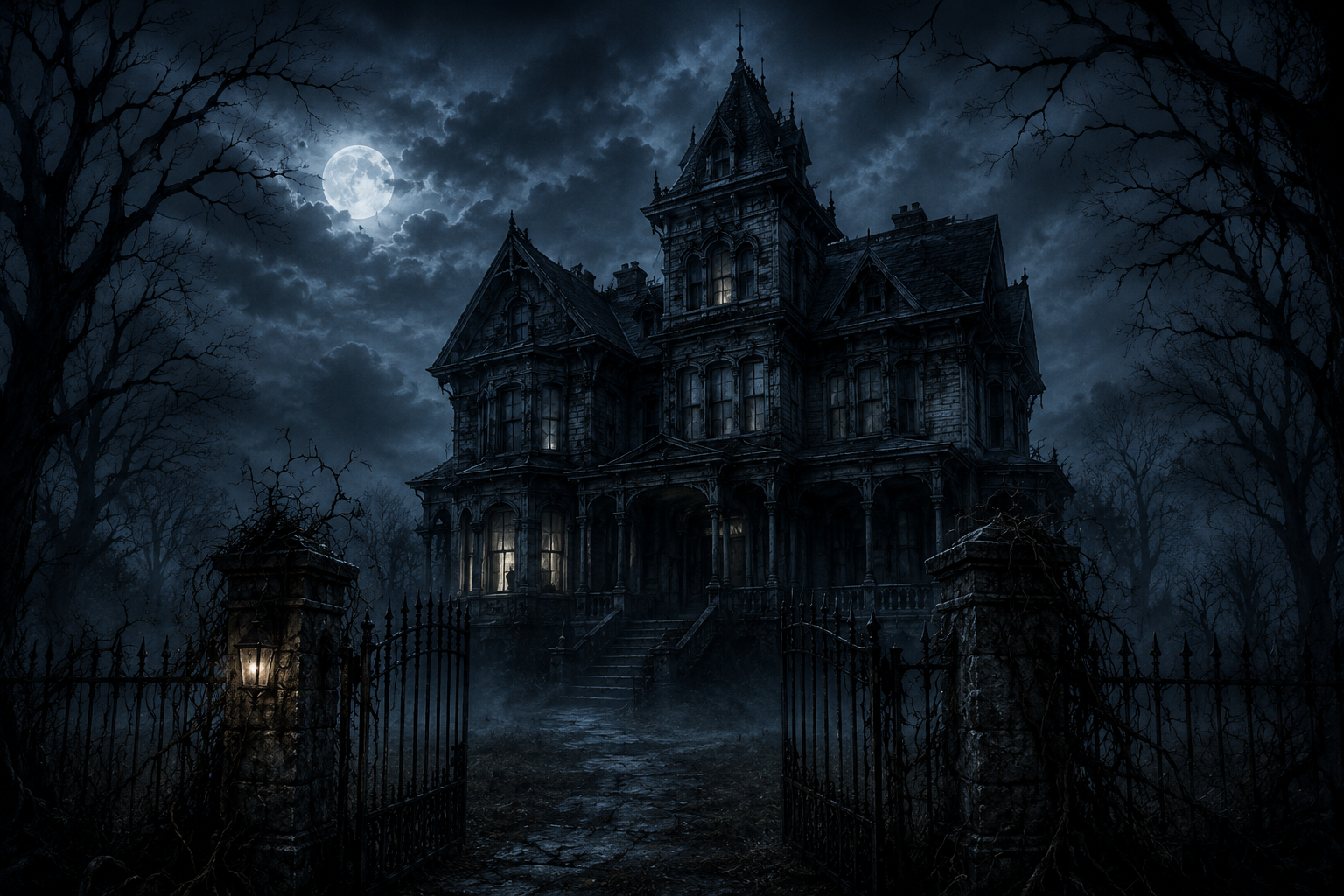
Most Disturbing Haunted Houses

Most disturbing haunted houses

The Most Disturbing Haunted Houses in literature do more than scare us. They trap grief, guilt, secrets, and fear inside their walls.

These houses feel alive because they reflect the minds of the people who enter them. That is why haunted house stories still matter in classrooms, book clubs, and late-night reading sessions. 👻

Most disturbing haunted houses

In this Guide

Why the Most Disturbing Haunted Houses Stay With Us

A great haunted house is scary because it feels personal.

The Most Disturbing Haunted Houses do not rely only on ghosts. They use silence, locked rooms, strange noises, and family history to create dread.

In many stories, the house becomes a mirror. It shows what characters fear most, even when they refuse to say it out loud.

This is why haunted houses work so well in Gothic fiction. If you want a helpful way to read symbols like rooms, doors, and shadows, try this guide on how to read literature like a scholar.

Most Disturbing Haunted Houses in Classic Literature

Classic literature gave us some of the most famous cursed homes ever written.

One of the Most Disturbing Haunted Houses is Hill House in Shirley Jackson’s The Haunting of Hill House. The house is not just haunted. It seems to choose its victim.

Eleanor arrives at Hill House lonely and unsure of herself. The house feeds on that weakness. By the end, it is hard to tell where Eleanor’s mind ends and the house begins.

Edgar Allan Poe’s The Fall of the House of Usher offers another chilling example. The Usher home is cracked, decaying, and linked to a family that seems doomed from the start.

Poe makes the house feel like a body. Its collapse feels like the end of a family line. You can learn more about Poe’s life and literary importance from the Poetry Foundation.

Henry James also gives readers a deeply uneasy house in The Turn of the Screw. Bly is a large country estate, but its size makes it feel unsafe. The governess does not know whom to trust, and the house seems full of hidden threats.

These stories connect to the larger Gothic tradition. For background, see Britannica’s overview of Gothic fiction.

Modern Most Disturbing Haunted Houses Worth Reading

Modern haunted house stories often focus on trauma, memory, and identity.

Some Most Disturbing Haunted Houses are not ancient castles or ruined mansions. They can be family homes, rented rooms, or quiet places that look normal from the street.

Toni Morrison’s Beloved gives us 124, a house haunted by a painful past. The haunting is not just supernatural. It comes from slavery, loss, and the memories that refuse to fade.

In Daphne du Maurier’s Rebecca, Manderley is not a ghost house in the usual sense. Still, it is haunted by Rebecca’s presence. The new Mrs. de Winter feels judged by every room.

Silvia Moreno-Garcia’s Mexican Gothic offers a more recent example. High Place feels sick at its core. The house holds family control, greed, and decay inside its walls.

These homes prove that the Most Disturbing Haunted Houses do not need a sheet-covered ghost. They need pressure, fear, and secrets that will not stay buried.

What the Most Disturbing Haunted Houses Symbolize

Haunted houses often stand for problems people try to hide.

The Most Disturbing Haunted Houses are full of symbols. A locked door may point to shame. A broken window may suggest a damaged mind. A dark hallway may show fear of the unknown.

Many haunted houses also explore family guilt. In The Fall of the House of Usher, the house reflects a family that has turned inward for too long.

Other stories use the house to show isolation. Hill House traps Eleanor because she already feels cut off from the world. The building gives shape to her loneliness.

Some haunted houses reveal social violence. In Beloved, the haunting shows how history enters private life. The home is not safe because the past was never resolved.

When you read a haunted house story, ask what the house wants. Ask what it hides. Ask why the character stays.

These books are strong choices for students, Gothic fiction fans, and readers who want more than a quick scare.

  • The Haunting of Hill House by Shirley Jackson: A masterclass in fear, loneliness, and psychological horror.
  • Mexican Gothic by Silvia Moreno-Garcia: A rich modern Gothic novel about power, family secrets, and a house that feels infected.

You can search for these titles on Amazon, at your local library, or through your school library catalog.

How Students Can Read Haunted Houses Closely

A haunted house story rewards slow, careful reading.

To study the Most Disturbing Haunted Houses, pay attention to setting first. Notice how the author describes the air, the light, the doors, and the sounds.

Next, watch how the main character reacts to the house. Fear often tells us more about the character than the ghost does.

It also helps to track repeated details. If a room, stain, mirror, or staircase appears more than once, it probably matters.

For a stronger reading method, revisit this guide to reading literature like a scholar.

FAQs About the Most Disturbing Haunted Houses

Here are quick answers to common questions about haunted houses in literature.

What makes the Most Disturbing Haunted Houses so scary?

They connect the supernatural to real fears. Grief, guilt, abuse, and loneliness often make the house feel dangerous.

Is every haunted house story Gothic?

No, but many are. Gothic stories often use old homes, secrets, fear, and dark family history.

Why do writers make houses seem alive?

A living house can show a character’s inner world. It turns private fear into something readers can see.

What is the best haunted house novel to start with?

The Haunting of Hill House is a great starting point. It is short, tense, and rich with meaning.

Key Takeaway

The Most Disturbing Haunted Houses in literature are not scary only because of ghosts. They disturb us because they make fear feel familiar.

A haunted house can hold a family’s shame, a nation’s history, or one person’s deepest pain. That is what makes these stories last.

Best Classic Morality and Guilt Books

Best Classic Morality and Guilt Books

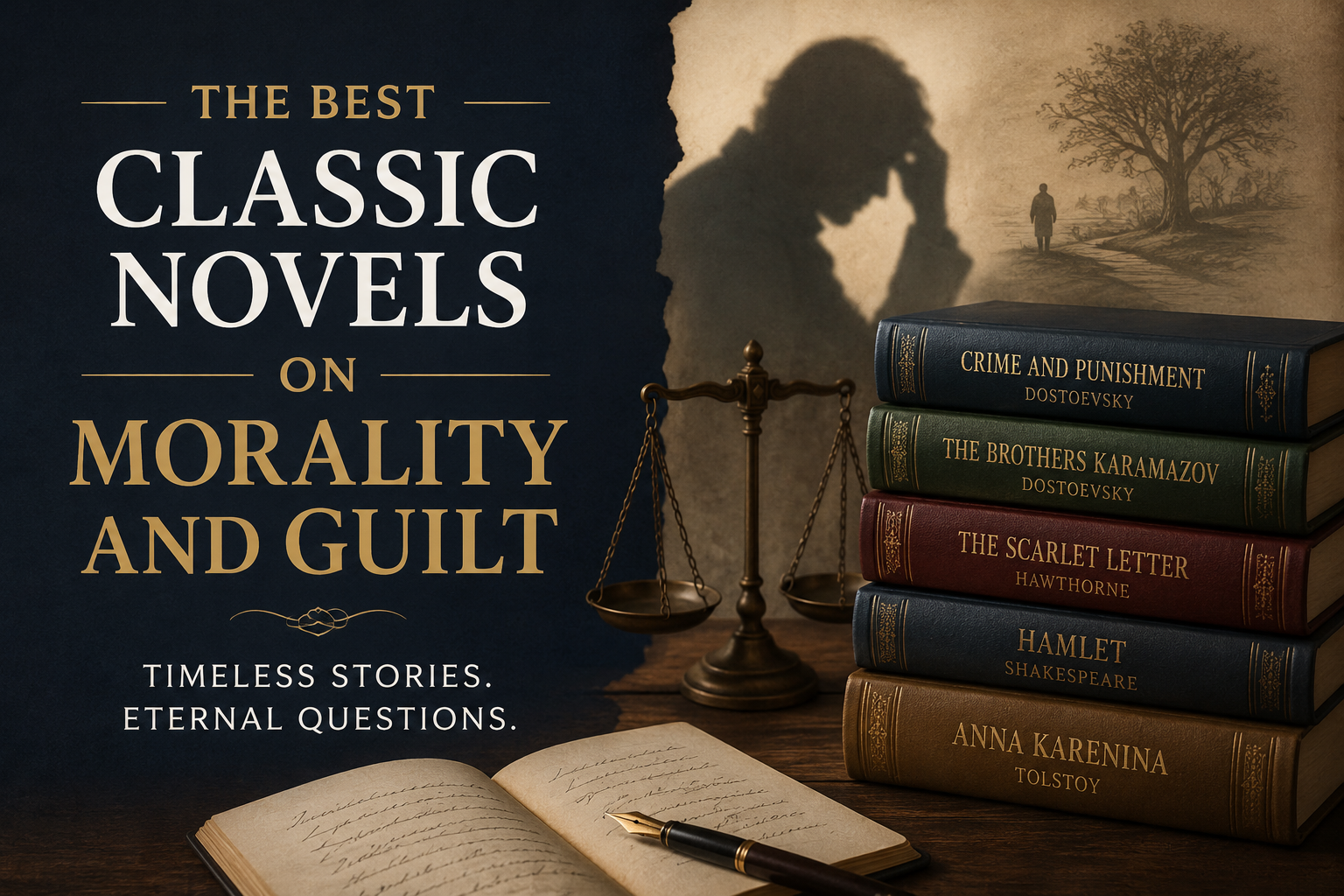
Best Classic Morality and Guilt stories ask a hard question: what happens when a person knows they have done wrong? These classics help students see how shame, choice, and conscience shape unforgettable characters.

From murder to betrayal, these books show that guilt is not just a feeling. It can become a force that changes a whole life.

In this Guide

  • Why morality and guilt matter in classic literature
  • Best Classic Morality and Guilt books to read first
  • Common symbols and themes
  • How to study these works
  • Recommended books
  • FAQs

Why Best Classic Morality and Guilt Stories Still Matter

The strongest classics make guilt feel personal.

Best Classic Morality and Guilt works still matter because they deal with choices that never go away. People still lie, hide secrets, harm others, and face the pain of regret.

These stories also help readers think about justice. Is punishment enough? Can a person change after doing wrong?

In many classics, guilt becomes a hidden judge. A character may escape the law, but they cannot escape their own mind.

Best Classic Morality and Guilt Books to Read First

Start with books where the moral conflict is clear and powerful.

A strong Best Classic Morality and Guilt reading list should include stories with deep inner conflict. These books are often taught in high school, AP Literature, and college because they reward close reading.

Crime and Punishment by Fyodor Dostoevsky

Raskolnikov commits murder and tries to prove he is above ordinary moral rules. His guilt slowly breaks down his pride.

This novel is one of the most important Best Classic Morality and Guilt texts because it turns a crime into a battle inside the soul. You can read more background at Britannica.

The Scarlet Letter by Nathaniel Hawthorne

Hester Prynne is publicly shamed for adultery, while another guilty character hides in silence. The novel asks whether public shame or private guilt hurts more.

Its famous red letter becomes one of the clearest symbols of sin, judgment, and identity in American literature.

Macbeth by William Shakespeare

Macbeth kills King Duncan to gain power. After that, guilt follows him through fear, visions, and violence.

Lady Macbeth also shows how guilt can turn inward. Her need to wash imagined blood from her hands is one of Shakespeare’s most famous images.

Symbols and Themes in Best Classic Morality and Guilt Literature

Symbols often show what characters cannot say out loud.

In Best Classic Morality and Guilt literature, symbols make inner pain visible. Blood, stains, locked rooms, and letters often stand for moral damage.

In Macbeth, blood shows guilt that cannot be washed away. In The Scarlet Letter, the letter A changes meaning as Hester changes.

One major theme is the split between public life and private truth. A character may look calm, but guilt grows beneath the surface.

Another key theme is confession. Many classics ask whether telling the truth can free a person, even if it brings punishment.

How to Study Best Classic Morality and Guilt Texts

Close reading helps you see how guilt works on the page.

When you read Best Classic Morality and Guilt texts, track the moments when a character tries to excuse their actions. Those moments often reveal the deepest moral conflict.

Pay attention to repeated images. If blood, darkness, illness, or silence appears more than once, the author is likely building meaning.

It also helps to mark key passages. If you want a simple method, use this guide on how to annotate literature while you read.

For poetry and shorter works, the same skills apply. The Poetry Foundation has helpful author pages and poem texts, including works that explore conscience and sin at Poetry Foundation.

Recommended Best Classic Morality and Guilt Books

These books are worth reading, buying, or borrowing for study.

These Best Classic Morality and Guilt picks are useful for essays because each one has strong symbols and clear moral questions.

  • Crime and Punishment by Fyodor Dostoevsky
  • The Scarlet Letter by Nathaniel Hawthorne

If you want one play, choose Macbeth by William Shakespeare. It is short, intense, and rich with guilt imagery.

Best Classic Morality and Guilt Questions for Class Discussion

Good questions turn reading into real debate.

A Best Classic Morality and Guilt discussion should move beyond plot. Ask what the text says about blame, truth, and change.

Is guilt useful if it leads to growth? Or does it only destroy the person who feels it?

You can also ask whether society judges fairly. In some classics, public punishment looks moral, but the reader sees hypocrisy behind it.

FAQ

What makes Best Classic Morality and Guilt books important?

They show how people deal with wrong choices. They also help readers think about justice, shame, and forgiveness.

Which classic is easiest to start with?

Macbeth is a good first choice. It is short, dramatic, and full of clear guilt symbols.

Why do so many classics focus on guilt?

Guilt creates strong conflict. It pushes characters to hide, confess, or fall apart.

How can I write an essay about morality and guilt?

Choose one character and track how guilt changes them. Then connect that change to symbols or repeated images.

Key Takeaway

Best Classic Morality and Guilt literature stays powerful because it studies the cost of human choices. These stories remind us that the hardest punishment often begins inside the mind.

error

Enjoy this article? Please spread the word :)

Follow by Email
BLUESKY
fb-share-icon
Reddit
LinkedIn
Share
RSS