

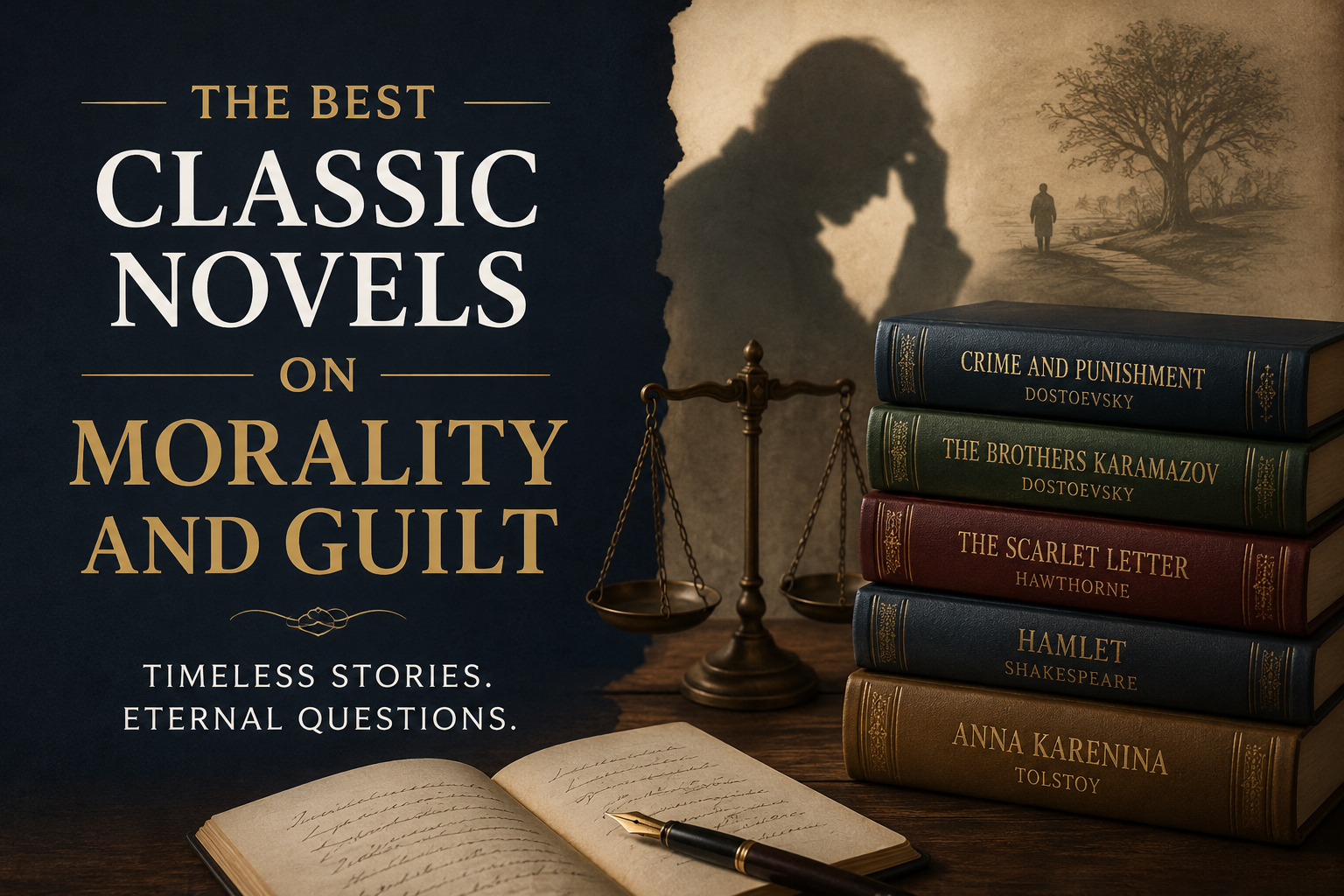
Best Classic Morality and Guilt stories ask a hard question: what happens when a person knows they have done wrong? These classics help students see how shame, choice, and conscience shape unforgettable characters.
From murder to betrayal, these books show that guilt is not just a feeling. It can become a force that changes a whole life.
In this Guide
- Why morality and guilt matter in classic literature
- Best Classic Morality and Guilt books to read first
- Common symbols and themes
- How to study these works
- Recommended books
- FAQs
Why Best Classic Morality and Guilt Stories Still Matter
The strongest classics make guilt feel personal.
Best Classic Morality and Guilt works still matter because they deal with choices that never go away. People still lie, hide secrets, harm others, and face the pain of regret.
These stories also help readers think about justice. Is punishment enough? Can a person change after doing wrong?
In many classics, guilt becomes a hidden judge. A character may escape the law, but they cannot escape their own mind.
Best Classic Morality and Guilt Books to Read First
Start with books where the moral conflict is clear and powerful.
A strong Best Classic Morality and Guilt reading list should include stories with deep inner conflict. These books are often taught in high school, AP Literature, and college because they reward close reading.
Crime and Punishment by Fyodor Dostoevsky
Raskolnikov commits murder and tries to prove he is above ordinary moral rules. His guilt slowly breaks down his pride.
This novel is one of the most important Best Classic Morality and Guilt texts because it turns a crime into a battle inside the soul. You can read more background at Britannica.
The Scarlet Letter by Nathaniel Hawthorne
Hester Prynne is publicly shamed for adultery, while another guilty character hides in silence. The novel asks whether public shame or private guilt hurts more.
Its famous red letter becomes one of the clearest symbols of sin, judgment, and identity in American literature.
Macbeth by William Shakespeare
Macbeth kills King Duncan to gain power. After that, guilt follows him through fear, visions, and violence.
Lady Macbeth also shows how guilt can turn inward. Her need to wash imagined blood from her hands is one of Shakespeare’s most famous images.
Symbols and Themes in Best Classic Morality and Guilt Literature
Symbols often show what characters cannot say out loud.
In Best Classic Morality and Guilt literature, symbols make inner pain visible. Blood, stains, locked rooms, and letters often stand for moral damage.
In Macbeth, blood shows guilt that cannot be washed away. In The Scarlet Letter, the letter A changes meaning as Hester changes.
One major theme is the split between public life and private truth. A character may look calm, but guilt grows beneath the surface.
Another key theme is confession. Many classics ask whether telling the truth can free a person, even if it brings punishment.
How to Study Best Classic Morality and Guilt Texts
Close reading helps you see how guilt works on the page.
When you read Best Classic Morality and Guilt texts, track the moments when a character tries to excuse their actions. Those moments often reveal the deepest moral conflict.
Pay attention to repeated images. If blood, darkness, illness, or silence appears more than once, the author is likely building meaning.
It also helps to mark key passages. If you want a simple method, use this guide on how to annotate literature while you read.
For poetry and shorter works, the same skills apply. The Poetry Foundation has helpful author pages and poem texts, including works that explore conscience and sin at Poetry Foundation.
Recommended Best Classic Morality and Guilt Books
These books are worth reading, buying, or borrowing for study.
These Best Classic Morality and Guilt picks are useful for essays because each one has strong symbols and clear moral questions.
- Crime and Punishment by Fyodor Dostoevsky
- The Scarlet Letter by Nathaniel Hawthorne
If you want one play, choose Macbeth by William Shakespeare. It is short, intense, and rich with guilt imagery.
Best Classic Morality and Guilt Questions for Class Discussion
Good questions turn reading into real debate.
A Best Classic Morality and Guilt discussion should move beyond plot. Ask what the text says about blame, truth, and change.
Is guilt useful if it leads to growth? Or does it only destroy the person who feels it?
You can also ask whether society judges fairly. In some classics, public punishment looks moral, but the reader sees hypocrisy behind it.
FAQ
What makes Best Classic Morality and Guilt books important?
They show how people deal with wrong choices. They also help readers think about justice, shame, and forgiveness.
Which classic is easiest to start with?
Macbeth is a good first choice. It is short, dramatic, and full of clear guilt symbols.
Why do so many classics focus on guilt?
Guilt creates strong conflict. It pushes characters to hide, confess, or fall apart.
How can I write an essay about morality and guilt?
Choose one character and track how guilt changes them. Then connect that change to symbols or repeated images.
Key Takeaway
Best Classic Morality and Guilt literature stays powerful because it studies the cost of human choices. These stories remind us that the hardest punishment often begins inside the mind.


Get the Free Close Reading Worksheet Pack
Join my email list and receive the printable worksheet pack you can use with any novel or poem.
No spam. Just helpful guides for reading literature well.












