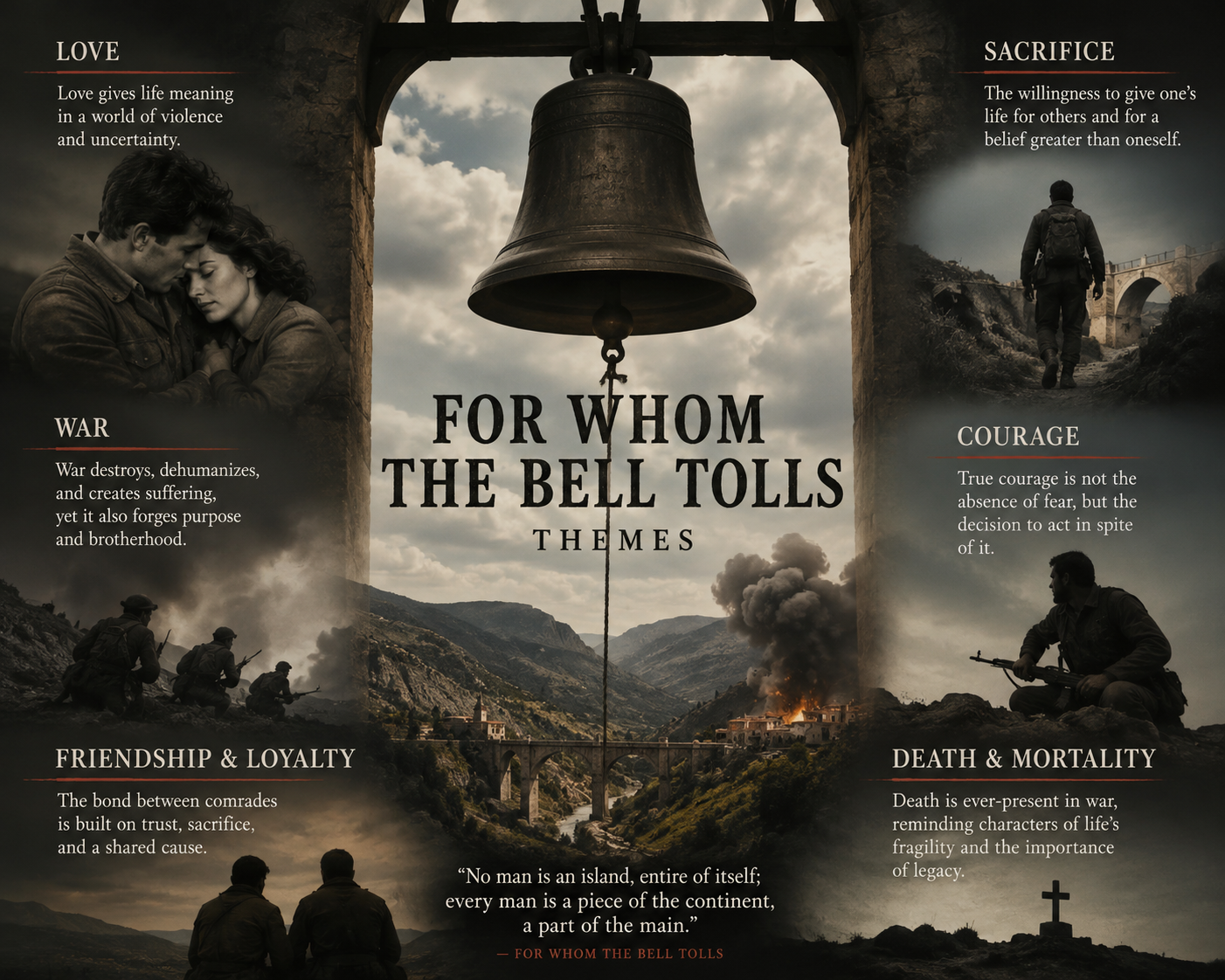
Ernest Hemingway’s novel can feel simple at first, but its ideas run deep. This guide explains the major themes in For Whom the Bell Tolls so students can track the book’s conflicts, symbols, and meaning with more confidence.
The novel follows Robert Jordan during the Spanish Civil War, but it is not only a war story. It asks what people owe to others, what love can mean under pressure, and how a person faces death.
In this Guide
- Why the novel’s themes matter
- Duty, sacrifice, and loyalty
- Love during war
- Death and courage
- Politics, violence, and belief
- How to write about the themes
- FAQ
Why the themes in For Whom the Bell Tolls matter
Hemingway uses war to test ideas that matter far beyond the battlefield.
The themes in For Whom the Bell Tolls help readers see the novel as more than a mission story. Robert Jordan must blow up a bridge, but the real conflict is moral. He must decide what his life is worth and what another person’s life is worth.
The title comes from a famous meditation by John Donne. Donne argues that no person is truly alone. You can read more about Donne’s work at the Poetry Foundation.
That idea shapes the whole novel. One death affects everyone. One choice can change a group. One act of courage can cost everything.
Themes in For Whom the Bell Tolls: duty and sacrifice
Duty is one of the strongest forces in the novel, but Hemingway never makes it simple.
Robert Jordan believes in the Republican cause, yet he also knows that war can turn people into tools. His orders matter, but so do the lives of the guerrilla fighters who help him.
This theme raises a hard question: When is sacrifice noble, and when is it wasteful?
Students often compare this to Antigone by Sophocles. Antigone follows a duty to family and the gods, even when the state punishes her. Robert Jordan faces a similar pressure between public duty and private feeling.
The themes in For Whom the Bell Tolls show that sacrifice has value only when it stays tied to human care. Hemingway does not praise blind obedience. He asks readers to judge the cost.
Love as a force against fear
Love gives the novel warmth, but it does not erase danger.
Robert Jordan’s relationship with Maria develops in a world shaped by violence. Their love is fast, intense, and fragile. It offers hope, yet it also makes death feel more painful.
Hemingway presents love as a form of resistance. War tries to reduce people to soldiers, victims, or enemies. Love reminds them that they are still human.
This is one reason the themes in For Whom the Bell Tolls can feel so personal. The love story is not a break from the war plot. It helps define what Jordan is fighting to protect.
For a student essay, it helps to connect love to character choices. If you want help with that skill, see our guide on how to analyze characters in literature.
Death, courage, and the value of one moment
Death is always near in the novel, so courage becomes a daily choice.
Robert Jordan thinks about death often. Other characters do too. Some fear it, some accept it, and some try to hide from it through anger or pride.
Hemingway does not show courage as the absence of fear. Courage means acting with fear still present. That idea is common in war literature, but Hemingway gives it a quiet style.
The themes in For Whom the Bell Tolls ask students to notice small moments of bravery. A character may show courage through action, silence, loyalty, or mercy.
This theme connects to Hemingway’s famous style. His sentences often stay plain, but the feelings under them are strong. The result is a tone that feels controlled, even when the scene is painful.

Politics, belief, and moral confusion
The Spanish Civil War gives the novel its setting, but Hemingway avoids easy heroes and villains.
Robert Jordan supports the Republican side against fascism. Still, the novel shows violence and cruelty among people on his own side too. That choice makes the story more honest and harder to simplify.
Readers can learn more about the historical background from Britannica’s overview of the Spanish Civil War.
The themes in For Whom the Bell Tolls include political belief, but Hemingway focuses on what belief does to people. A cause can inspire courage. It can also excuse terrible acts.
Pablo is a strong example. He once fought bravely, but fear and loss have changed him. Pilar, by contrast, often sees danger clearly and still acts with strength.
Community and human connection
The novel’s title points to one of its deepest ideas: no life exists alone.
Robert Jordan enters the guerrilla group as an outsider. Over time, he becomes tied to them through trust, tension, and shared risk. His mission depends on people he did not know before.
This theme matters because Hemingway shows war as both isolating and communal. People face death alone, but their choices affect others.
The themes in For Whom the Bell Tolls make the reader ask who counts as “us.” Jordan’s answer grows wider as the novel moves forward.
How setting shapes the themes in For Whom the Bell Tolls
The mountains are not just a backdrop. They shape the mood and meaning of the novel.
The cold, rough landscape makes the characters seem cut off from the rest of the world. At the same time, it creates a tight space where every choice matters.
The bridge is the key symbol. It is a military target, but it also stands for connection and separation. To destroy it is to help one side, but the act also leads to loss.
When you study the themes in For Whom the Bell Tolls, pay close attention to setting. Hemingway often lets place carry meaning without direct explanation.
Symbols students should notice
Hemingway’s symbols are usually clear, but they gain power through context.
The bell in the title suggests shared grief and shared fate. The bridge suggests duty, danger, and the cost of action. The mountains suggest isolation and pressure.
Maria’s cut hair also matters. It shows the physical mark of trauma, but it does not define her whole identity. Hemingway lets her become more than what happened to her.
These symbols support the themes in For Whom the Bell Tolls without turning the novel into a puzzle. They help give shape to ideas the characters may not fully say.
How to write about themes in For Whom the Bell Tolls
A strong theme paragraph should start with a clear claim, not a broad summary.
For example, instead of saying, “The book is about war,” you could write: “Hemingway presents war as a test of human connection, because Robert Jordan must balance his mission with his care for others.”
Then use a specific scene. Discuss Robert Jordan’s choices, Pilar’s stories, Pablo’s fear, or Maria’s hope. Link the scene back to the larger meaning.
If you need a simple study aid, our literature theme guide resources can help you organize quotes and claims before you draft.
The best essays on the themes in For Whom the Bell Tolls do not try to cover everything. Choose one main idea and trace how Hemingway develops it.
Relevant books for further reading
If you want more context, these books pair well with Hemingway’s novel:
- Homage to Catalonia by George Orwell
- A Farewell to Arms by Ernest Hemingway
Both books deal with war, memory, and the pressure of history on private life.
FAQ: themes in For Whom the Bell Tolls
What are the main themes in For Whom the Bell Tolls?
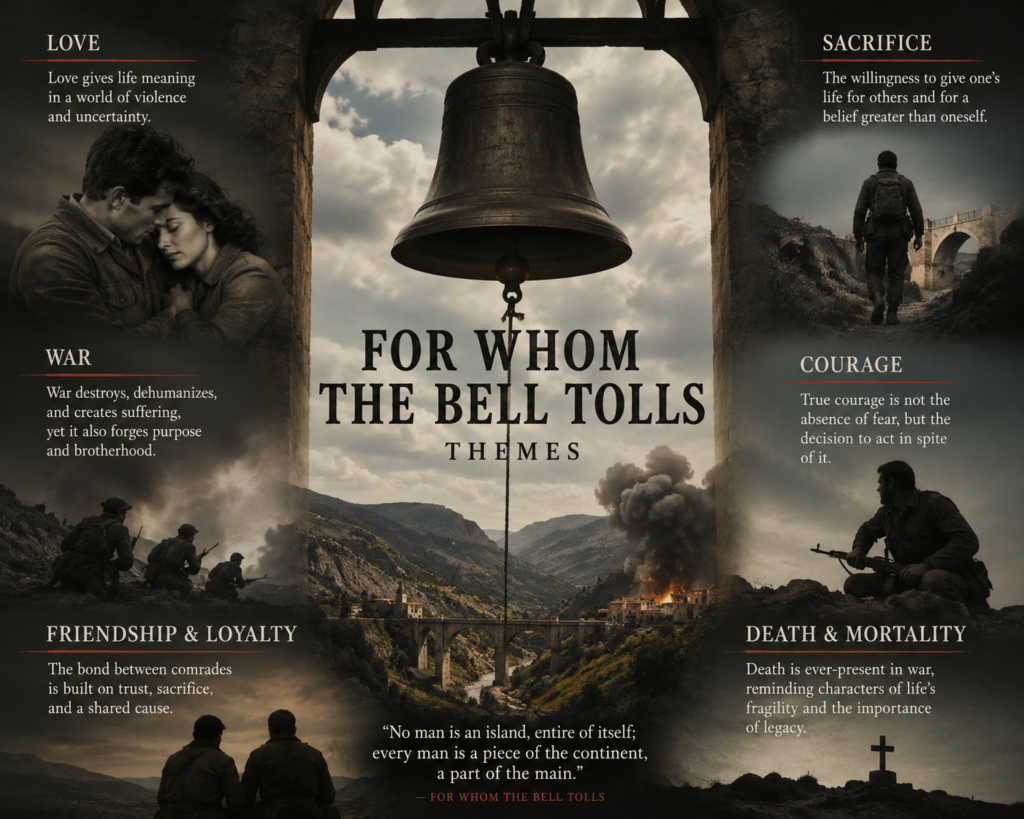
The main themes include duty, sacrifice, love, death, courage, political belief, and human connection.
Why is the title important?
The title suggests that every death affects the whole human community. It comes from John Donne’s idea that no person is truly separate from others.
Is For Whom the Bell Tolls anti-war?
It is not a simple anti-war novel, but it shows war as costly, painful, and morally complex. Hemingway respects courage while showing the damage war causes.
How does Maria connect to the novel’s themes?
Maria represents survival, love, and the effort to reclaim life after trauma. Her bond with Robert Jordan adds emotional weight to his choices.
What is a good thesis about the novel’s themes?
A strong thesis could argue that Hemingway presents sacrifice as meaningful only when it grows from love, shared duty, and respect for human life.
Key Takeaway
The themes in For Whom the Bell Tolls center on a clear but painful truth: one person’s life is tied to many others. Hemingway’s novel asks students to see courage not as glory, but as human care under pressure.