Themes in All Quiet on the Western Front: A Student-Friendly Guide

All Quiet on the Western Front themes

Erich Maria Remarque’s novel can feel simple at first, but its ideas are deep and painful. The themes in All Quiet on the Western Front show how war damages young people, breaks trust in adults, and changes what survival means.

In this Guide

  • Why the themes matter
  • Major themes to know
  • How Remarque develops meaning
  • How to write about the novel
  • Helpful books and links
  • FAQ
All Quiet on the Western Front themes

Why the themes in All Quiet on the Western Front Matter

Remarque does not write war as a grand adventure. He shows war as fear, hunger, cold, pain, and moral shock.

The themes in All Quiet on the Western Front matter because they help us see what the novel argues about modern war. The book asks students to look past medals and speeches and notice the cost paid by ordinary soldiers.

If you need a refresher on theme as a literary idea, this guide on how to identify theme in literature can help before you start your essay.

Major themes in All Quiet on the Western Front

The novel builds its meaning through Paul’s daily life at the front, not through long speeches.

These themes in All Quiet on the Western Front work together. Each one shows a different part of war’s damage.

1. The Lost Youth of a Generation

Paul and his classmates enter the army as teenagers. They should be in school, at home, or at the start of adult life.

Instead, they learn how to avoid shells, bury friends, and numb their feelings. Their youth does not slowly fade. It gets taken from them.

This theme fits with the idea of a lost generation. Many young people after World War I felt cut off from old hopes and old values.

2. The Brutality of Modern War

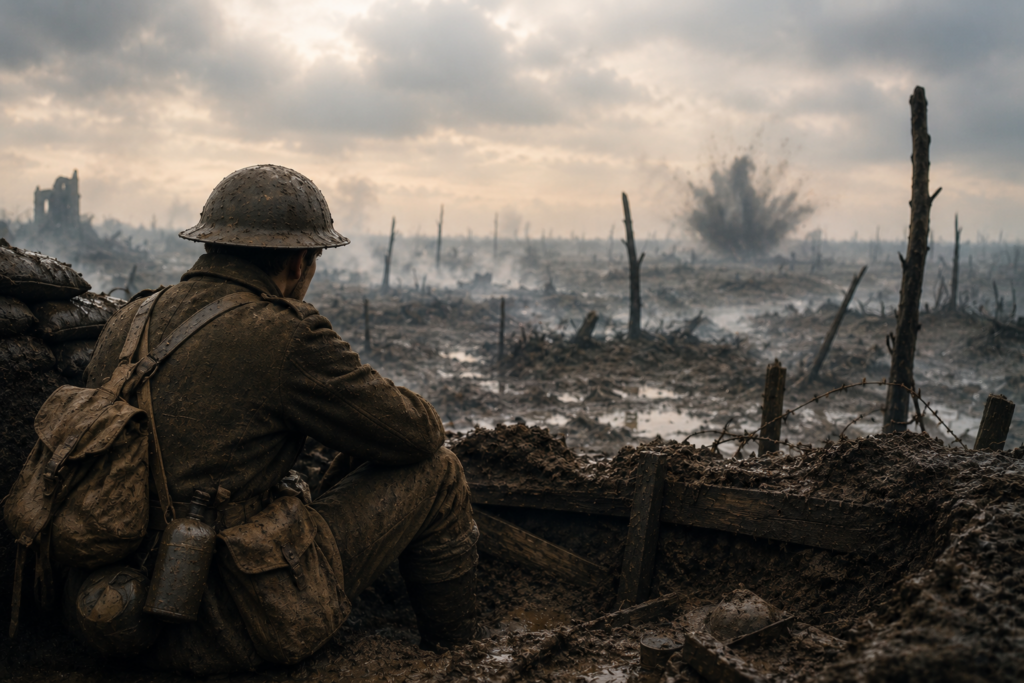
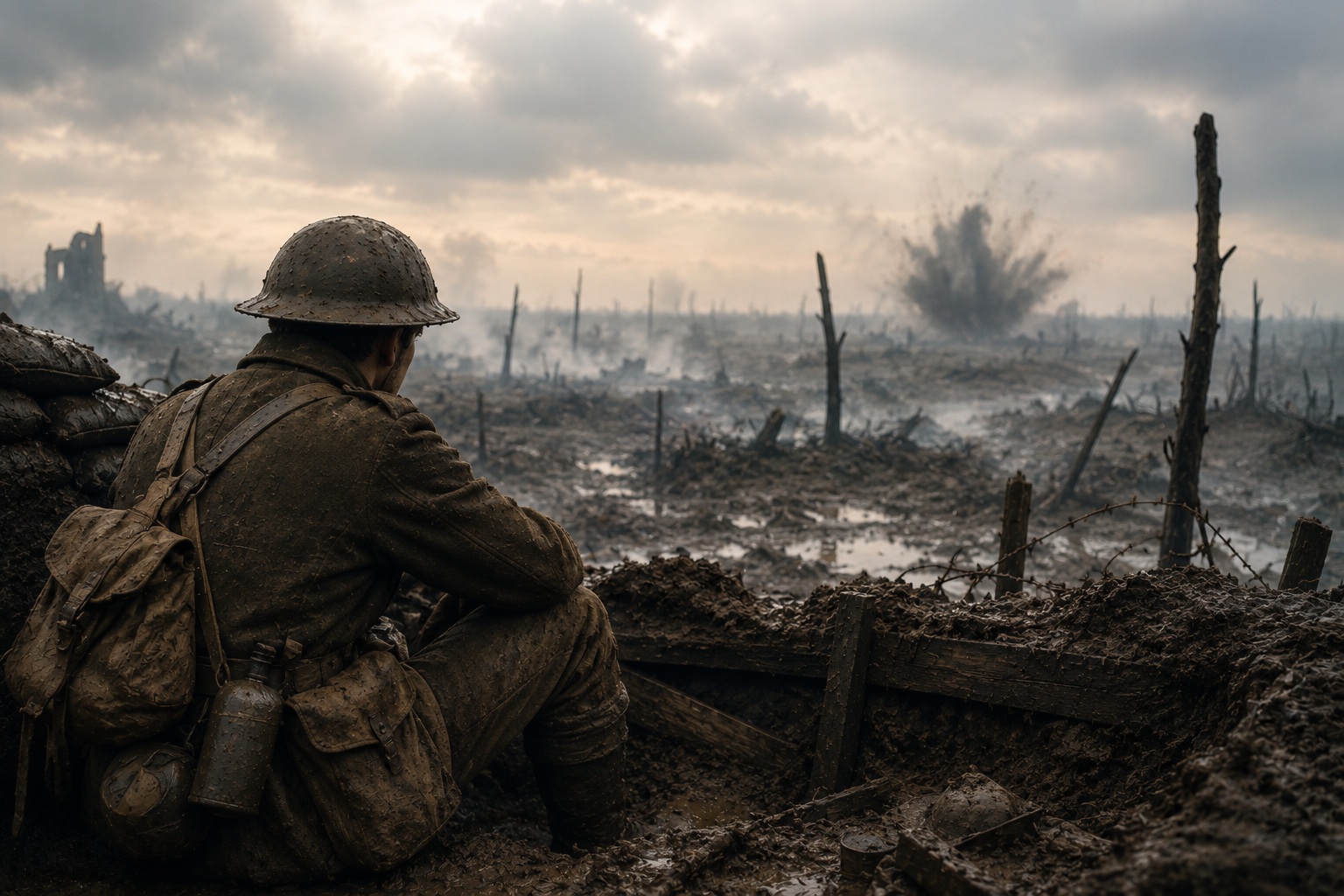
The novel does not make battle look noble. Trenches, gas, shells, rats, and wounds fill the soldiers’ world.

War in the book feels mechanical. Men can die without ever seeing the person who killed them.

That makes the violence feel even more chilling. Like Wilfred Owen’s war poems, Remarque shows that modern war can turn human life into a statistic.

3. Disillusionment with Authority

Paul and his friends were pushed toward war by teachers and leaders. Men like Kantorek sold them patriotic ideas from a safe place.

Once the boys reach the front, those speeches seem false. They see that adults used bright words to hide a brutal reality.

This theme is useful for essays about betrayal. The young soldiers do not only lose friends. They lose faith in the people who told them what to believe.

4. Friendship as Survival

Paul’s bond with Kat is one of the most human parts of the novel. Their friendship gives Paul comfort in a world that feels empty.

The soldiers share food, advice, jokes, and silence. These small acts matter because they help the men stay alive inside.

This does not make war better. It shows that human connection can survive even when society fails.

5. The Loss of Individual Identity

At the front, soldiers are treated less like people and more like parts of an army. Orders matter more than feelings.

Paul’s old identity as a student fades. His new life is built around instinct, danger, and routine.

This theme has a strong link to dehumanization. The men are still human, but war keeps pushing them to act like tools.

6. Nature as Comfort and Contrast

Nature appears in the novel as both beauty and danger. A quiet sky can sit above a field full of bodies.

Sometimes the earth seems to protect the soldiers. At other times, it becomes a grave.

This contrast makes the war feel even more tragic. The natural world keeps its beauty while human beings destroy one another.

How Remarque Develops the Novel’s Themes

Remarque builds theme through scenes that feel direct and personal.

Paul’s narration is plain, but that plain style gives the novel power. He does not need fancy language to show horror.

For example, Paul’s visit home proves how far he has changed. His family loves him, yet he cannot explain the front to them. Home no longer feels like home.

The hospital scenes also deepen the message. Students can see that war continues after battle, through wounds, fear, and grief.

For historical context, Britannica’s overview of World War I can help explain the world behind the novel. You can also read more about Erich Maria Remarque and his life.

Why Students Struggle with the themes in All Quiet on the Western Front

The novel can seem easy because the plot is clear. The hard part is seeing how each event builds a larger meaning.

The themes in All Quiet on the Western Front are often quiet. Remarque does not stop the story to tell readers the lesson.

Students should ask, What does this scene reveal about war? That question turns plot summary into theme analysis.

For extra practice, use this theme study resource as you plan notes or prepare for class discussion.

image-slider-with-thumbnail1.jpeg
PlayPause
previous arrow
next arrow
image-slider-with-thumbnail1.jpeg
image-slider-with-thumbnail3.jpeg
image-slider-with-thumbnail4.jpeg
ChatGPT Image Jun 27, 2026, 06_33_13 PM
ChatGPT Image Jun 27, 2026, 06_36_37 PM
ChatGPT Image Jun 27, 2026, 06_38_39 PM
ChatGPT Image Jun 27, 2026, 06_31_22 PM
image-slider-with-thumbnail7.jpeg
ChatGPT Image Jun 27, 2026, 06_29_43 PM
ChatGPT Image Jun 27, 2026, 06_27_44 PM
image-slider-with-thumbnail6.jpeg
ChatGPT Image Jun 27, 2026, 06_15_07 PM
image-slider-with-thumbnail5.jpeg
ChatGPT Image Jun 27, 2026, 06_22_43 PM
ChatGPT Image Jun 27, 2026, 06_25_37 PM
ChatGPT Image Jun 27, 2026, 06_19_43 PM
ChatGPT Image Jun 27, 2026, 06_12_00 PM
ChatGPT Image Jun 27, 2026, 06_08_50 PM
ChatGPT Image Jun 26, 2026, 04_54_23 PM
ChatGPT Image Jun 27, 2026, 05_53_51 PM
ChatGPT Image Jun 28, 2026, 08_35_55 AM
previous arrow
next arrow

How to Write About the themes in All Quiet on the Western Front

A strong essay should not just say that war is bad. It should explain how Remarque shows war’s damage.

When you write about the themes in All Quiet on the Western Front, connect each claim to a scene. Paul’s school days, the front, the hospital, and his return home all help prove the novel’s message.

Try this simple thesis frame:

In All Quiet on the Western Front, Remarque shows that war destroys young soldiers not only through death, but through lost identity and broken trust.

That thesis gives you a clear path. You can write one body paragraph on youth, one on identity, and one on authority.

If you want a broader method, review how to find a theme in a novel and then apply the steps to Remarque’s text.

Comparing the Novel to Other Literature

Comparison can help students see Remarque’s choices more clearly.

In The Things They Carried, Tim O’Brien also shows how war changes memory and identity. Both books ask readers to think about what soldiers carry inside after combat.

In Shakespeare’s Henry V, war can appear tied to honor and national pride. Remarque rejects that heroic vision and asks readers to look at the bodies left behind.

These comparisons work well for AP Literature because they show how writers can treat the same subject in very different ways.

Relevant Books to Look Up on Amazon or at Your Library

These books pair well with Remarque’s novel for essays, projects, or deeper reading.

  • All Quiet on the Western Front by Erich Maria Remarque
  • The Things They Carried by Tim O’Brien
  • A Farewell to Arms by Ernest Hemingway

FAQ: themes in All Quiet on the Western Front

What are the main themes in All Quiet on the Western Front?

The main themes in All Quiet on the Western Front include lost youth, war’s brutality, broken trust in authority, friendship, trauma, and the loss of identity.

What is the most important theme in the novel?

The most important theme is the destruction of young lives by war. Remarque shows that war harms soldiers before, during, and after battle.

How does Paul show the theme of lost youth?

Paul begins as a student with hopes for the future. By the front, he thinks more like a survivor than a young man.

Why is friendship important in the novel?

Friendship gives the soldiers emotional strength. It becomes one of the few good things left in a violent world.

Is All Quiet on the Western Front anti-war?

Yes. The novel strongly challenges romantic ideas about war and shows its human cost.

Key Takeaway

The themes in All Quiet on the Western Front show that war does not only kill bodies. It also damages youth, trust, memory, and hope.

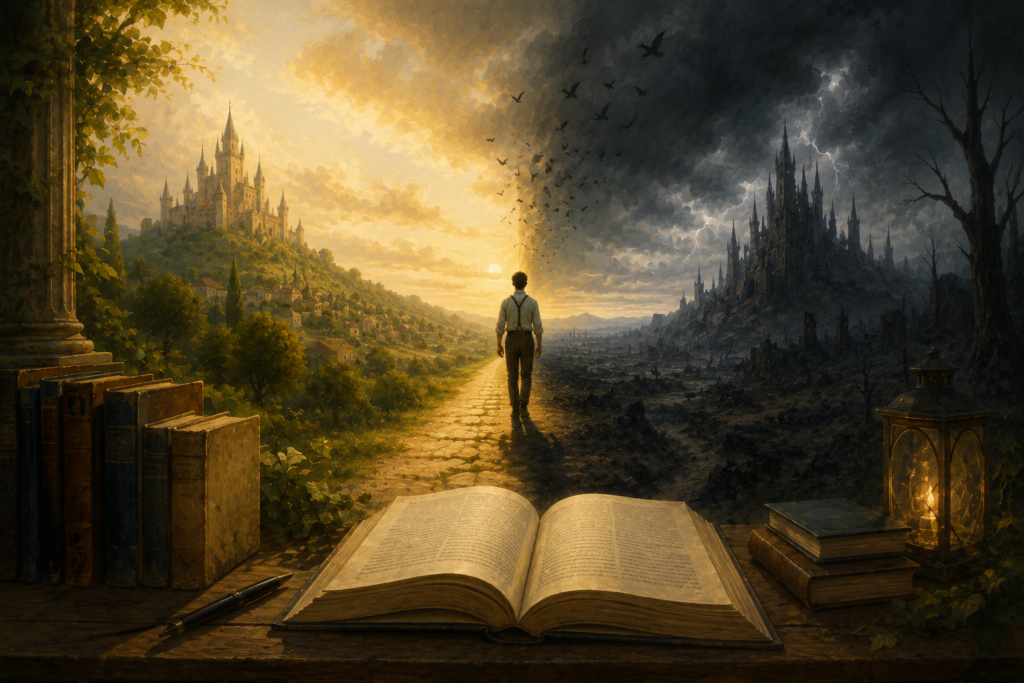
Books About Good vs Evil

Good vs Evil
Good vs Evil

Books about good vs. evil have shaped how readers think about courage, choice, and human nature. These stories ask a simple question with no easy answer: what makes a person do right or wrong?

From ancient myths to modern novels, this conflict helps students see how literature turns moral struggle into powerful drama.

In this Guide

Why Books About Good vs Evil Still Matter

Stories about moral conflict help readers test their own values from a safe distance.

Books about good vs. evil are not only about heroes fighting villains. The best ones show that good and evil can exist inside the same person.

This is why these stories work so well in school. They lead to strong essays, rich class talks, and deeper character study.

In many novels, the “evil” force is not just a monster or ruler. It can be fear, pride, greed, or the pressure to obey.

That makes the conflict feel real. Most readers will never face a dragon, but they will face moments when the right choice is hard.

Classic Books About Good vs Evil

Classic literature often uses clear conflict to explore messy moral questions.

Classic Books About Good vs. Evil include works in which the hero must choose between comfort and duty. These stories often show that goodness takes effort.

In The Lord of the Rings by J.R.R. Tolkien, the One Ring stands for power that corrupts. Frodo does not win because he is strong. He wins because he keeps choosing the hard path.

In Dr. Jekyll and Mr. Hyde by Robert Louis Stevenson, good and evil live inside one body. The novel asks if people can fully hide their darker side.

And in To Kill a Mockingbird by Harper Lee, evil appears through racism and injustice. Atticus Finch shows that goodness can mean standing firm when a whole town turns away.

These books last because they do not give easy answers. They show that moral courage often has a cost.

Modern Books About Good vs Evil for Students

Modern stories often make the line between good and evil harder to see.

Many modern Books About Good vs Evil focus on systems, not just people. A character may face a cruel government, a violent culture, or a society built on silence.

In The Hunger Games by Suzanne Collins, Katniss fights a government that turns suffering into entertainment. The story asks what people owe each other when survival is on the line.

In Harry Potter by J.K. Rowling, evil grows through fear, prejudice, and the hunger for control. Harry’s choices matter because he refuses to become like the enemy he fights.

And in The Book Thief by Markus Zusak, goodness appears in small acts during a brutal time. A hidden person, a shared book, and a quiet risk can become acts of moral strength.

These works are useful for students because they connect moral conflict to identity, power, and fear.

Common Symbols in Books About Good vs Evil

Symbols help writers turn moral struggle into images readers can remember.

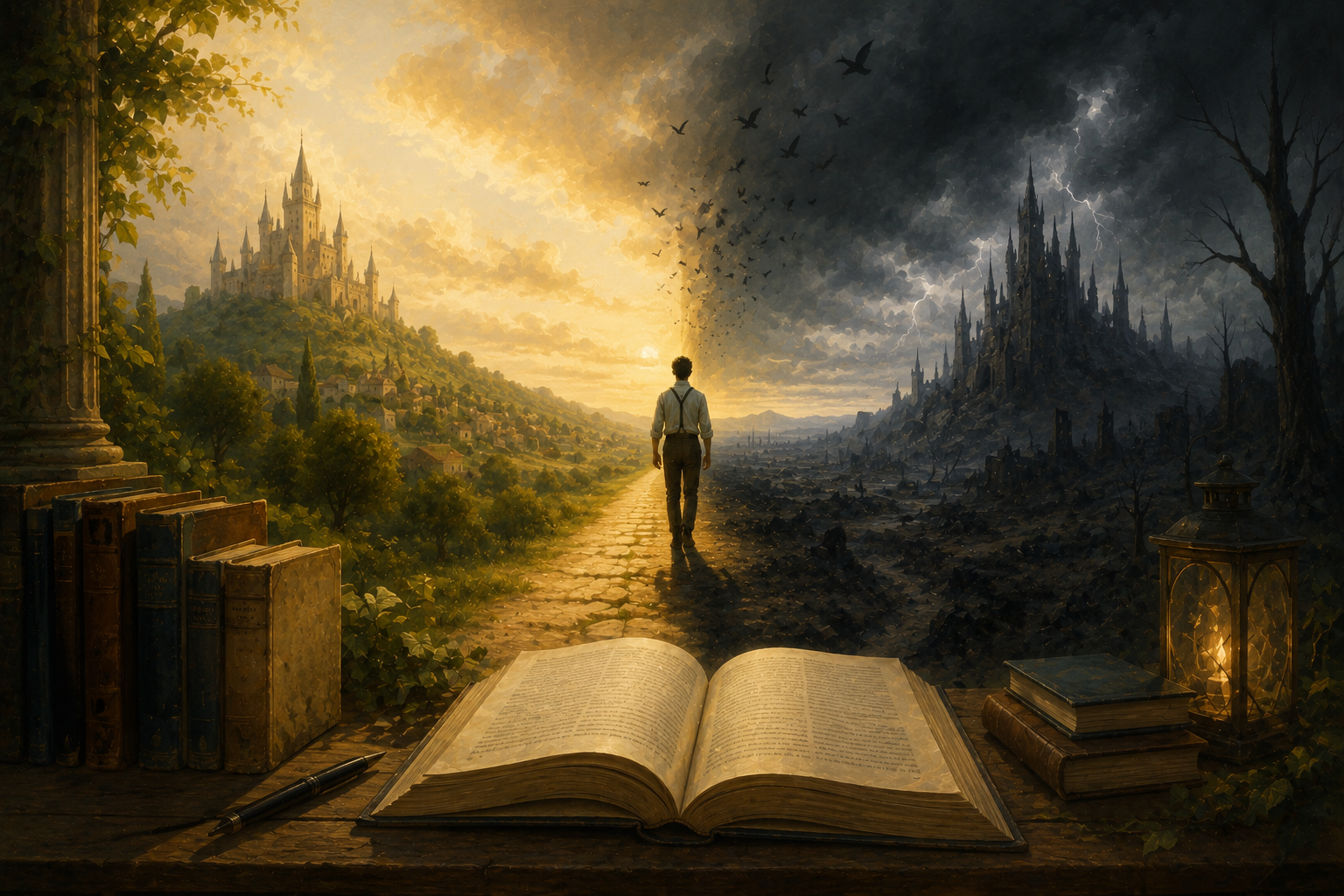
In many Books About Good vs Evil, light often points to truth, hope, or moral clarity. Darkness may suggest fear, secrecy, or corruption.

But strong literature does not always keep symbols simple. A bright place can hide danger. A dark setting can protect someone who needs safety.

Objects also carry moral weight. Tolkien’s Ring is one of the clearest examples. It looks small, but it holds a huge pull toward evil.

Doors, roads, forests, and storms can also show a character’s inner struggle. A journey through wild land may reflect a journey through doubt.

For more on how setting can shape meaning, see our guide to nature and isolation in Western writing.

Writers also use names, colors, and seasons to show moral change. A cold winter may suggest loss, while spring can point to renewal.

Major Themes in Books About Good vs Evil

The best moral conflicts are less about winning and more about choosing.

One major theme in Books About Good vs Evil is temptation. A character may want power, safety, or revenge, even when that desire harms others.

Another key theme is free will. Many stories ask whether people are born good or evil, or whether their choices define them.

Redemption also matters. Some characters fall into darkness but still have a chance to change. This makes the story more human.

Justice is a common concern, too. In works like To Kill a Mockingbird, goodness is tied to truth, fairness, and moral duty.

For a deeper look at how thinkers define evil, students can explore the Stanford Encyclopedia of Philosophy entry on evil.

These books are strong choices for students who want clear conflict and rich themes.

If you want to read more Books About Good vs Evil, start with works that offer both action and moral depth.

  • The Lord of the Rings by J.R.R. Tolkien
  • Dr. Jekyll and Mr. Hyde by Robert Louis Stevenson
  • The Book Thief by Markus Zusak

The Lord of the Rings is best for readers who enjoy epic journeys and symbolic objects. It also works well for essays about temptation and sacrifice.

Dr. Jekyll and Mr. Hyde is short, but it has deep ideas about identity. It is a strong pick for students who like Gothic fiction.

The Book Thief shows moral courage in everyday choices. It is moving without losing sight of history.

For background on William Blake, whose poetry often explores innocence and moral conflict, visit the Poetry Foundation’s William Blake page.

How to Analyze Books About Good vs Evil in an Essay

A strong essay should focus on choices, not just labels.

When you write about Books About Good vs Evil, avoid saying one character is “good” and another is “bad” without proof. Look at actions, motives, and change over time.

Ask what the story rewards. Does it value mercy? Does it punish pride? Or does it show that silence can help evil grow?

Pay close attention to setting. A lonely place, a harsh landscape, or a closed room can reveal fear and conflict. You can connect this idea to our article on isolation in Western writing.

Use symbols to support your claim. If light appears during moments of truth, explain how that pattern shapes the theme.

FAQs About Books About Good vs Evil

What are Books About Good vs Evil?

They are stories built around moral conflict. This conflict may be between characters, inside one person, or within a society.

Why do students study good vs evil in literature?

Students study it because it reveals character, theme, and conflict. It also helps readers think about real moral choices.

Is good vs evil always simple in books?

No. Strong literature often shows that people are complex. A “good” person may fail, and a flawed person may seek redemption.

What is a good short book about good vs evil?

Dr. Jekyll and Mr. Hyde is a strong short choice. It is easy to read, but its ideas are deep.

What symbols often appear in these stories?

Common symbols include light, darkness, roads, mirrors, and powerful objects. These images help show moral struggle.

Key Takeaway

Books about good vs. evil matter because they show that moral choices shape who we become. The strongest stories do not just ask who wins. They ask what each character is willing to lose for what is right.

What Is Absurdism in Literature?

Absurdism in Literature

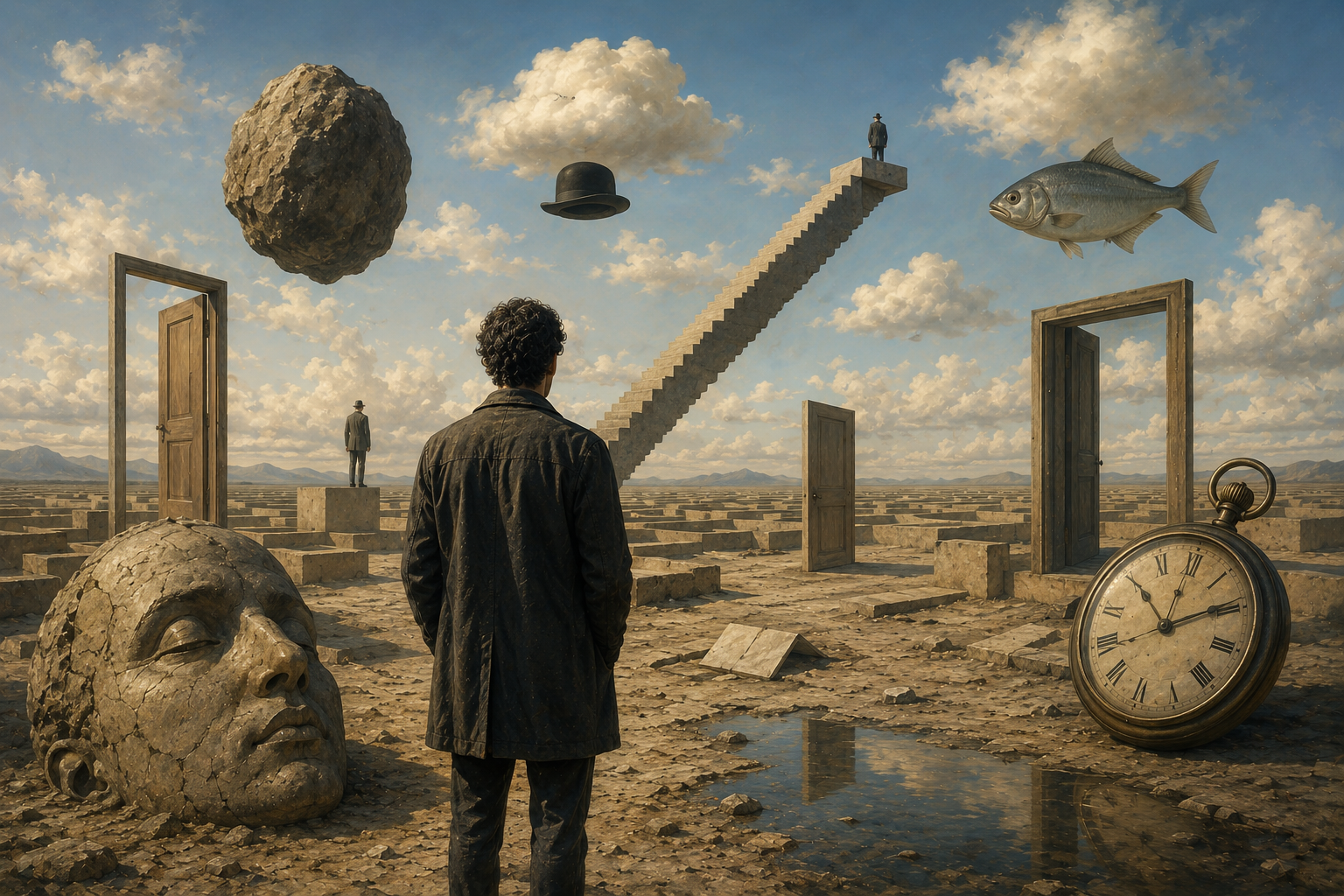
If you have ever asked, “What Is Absurdism in Literature?” the short answer is this: absurdism shows a world where life feels strange, unfair, or without clear meaning.

Writers use it to explore how people act when the universe gives them no easy answers.

In this Guide

What Is Absurdism in Literature? A Simple Definition

Absurdism is a literary idea about the clash between humans and a silent universe.

Put simply, what is absurdism in literature? It is the belief that people search for meaning, but the world does not always provide it.

That does not mean absurdist stories are pointless. In fact, they often ask deep questions about life, choice, death, and freedom.

An absurdist work may feel strange on purpose. Events may not make sense. Characters may repeat the same actions. Dialogue may sound simple but carry a heavy meaning.

What Is Absurdism in Literature? Why It Matters

Absurdism helps readers face hard questions without neat answers.

When students learn what is absurdism in literature, they start to notice how stories can question the rules of life itself.

Many works of literature show heroes who fight for love, justice, or success. Absurdist works often show people who face a world that does not reward them in a clear way.

This makes absurdism powerful. It captures confusion, fear, humor, and courage in a world that can feel random.

For more help with deeper reading skills, see this guide on how to read literature with a scholar’s mindset.

Absurdism vs. Existentialism

These two ideas are close, but they are not the same.

Existentialism often says people can create their own meaning through choice. Absurdism says people may search for meaning, but the universe may stay silent.

Think of it this way: existentialism asks, “How should I live?” Absurdism asks, “What if life has no clear answer, but I must live anyway?”

Albert Camus is one of the most famous writers linked to absurdism. You can read more about him through Britannica’s overview of Albert Camus.

Examples That Explain What Is Absurdism in Literature?

Famous works can make this idea much easier to see.

These works make what is absurdism in literature feel clear because they place ordinary people in strange or unfair situations.

The Stranger by Albert Camus

In The Stranger, Meursault seems emotionally distant from the world around him.

He does not react the way society expects. His story asks whether life has meaning, or whether people invent meaning after the fact.

Waiting for Godot by Samuel Beckett

In this play, two men wait for someone named Godot.

Godot never arrives. The waiting becomes the point, which makes the play funny, sad, and deeply strange.

For background on this style of drama, see Britannica’s guide to the Theatre of the Absurd.

The Metamorphosis by Franz Kafka

Gregor Samsa wakes up as a giant insect.

No one explains why it happens. The story focuses on how his family reacts and how Gregor loses his place in the world.

Common Signs of Absurdism in a Story

Absurdist literature often has clues you can spot as you read.

  • Characters face events that seem random or unfair.
  • The story may avoid a clear lesson.
  • Dialogue can feel repetitive or odd.
  • Humor may appear during serious moments.
  • The ending may leave questions open.

These signs do not mean the writer was careless. They often show how strange life can feel when people want meaning but cannot find proof of it.

How to Analyze What Is Absurdism in Literature?

A strong analysis begins with the gap between what a character wants and what the world gives back.

If an essay prompt asks, “What is absurdism in literature?” do not stop at the definition. Look at how the text creates discomfort.

Ask yourself: What does the character hope for? What blocks that hope? Does the story offer an answer, or does it leave the character stuck?

Then look at tone. Absurdist works often mix pain with humor. That mix can reveal the writer’s view of human life.

You can also use close reading strategies from this post on reading literature like a scholar.

Books to Read Next

If you want to explore absurdism, start with short works that are often taught in high school and college classes.

  • The Stranger by Albert Camus
  • Waiting for Godot by Samuel Beckett

FAQ: What Is Absurdism in Literature?

What is absurdism in literature in one sentence?

Absurdism in literature shows people searching for meaning in a world that gives no clear answer.

Is absurdism always depressing?

No. Absurdist works can be dark, but they can also be funny. The humor often comes from how strange life can feel.

Who is the most famous absurdist writer?

Albert Camus is one of the best-known writers linked to absurdism, though Samuel Beckett and Franz Kafka are also major names.

How is absurdism useful in an essay?

It helps you explain conflict, tone, and theme when a story does not offer a simple moral.

Key Takeaway

The best answer to “What Is Absurdism in Literature?” is this: it is a way of writing about people who want meaning, even when life refuses to explain itself.

When you read an absurdist work, watch how characters respond to confusion. Their reaction is often where the real meaning begins. 📚

Themes in Beloved: A Student-Friendly Guide

Beloved Themes

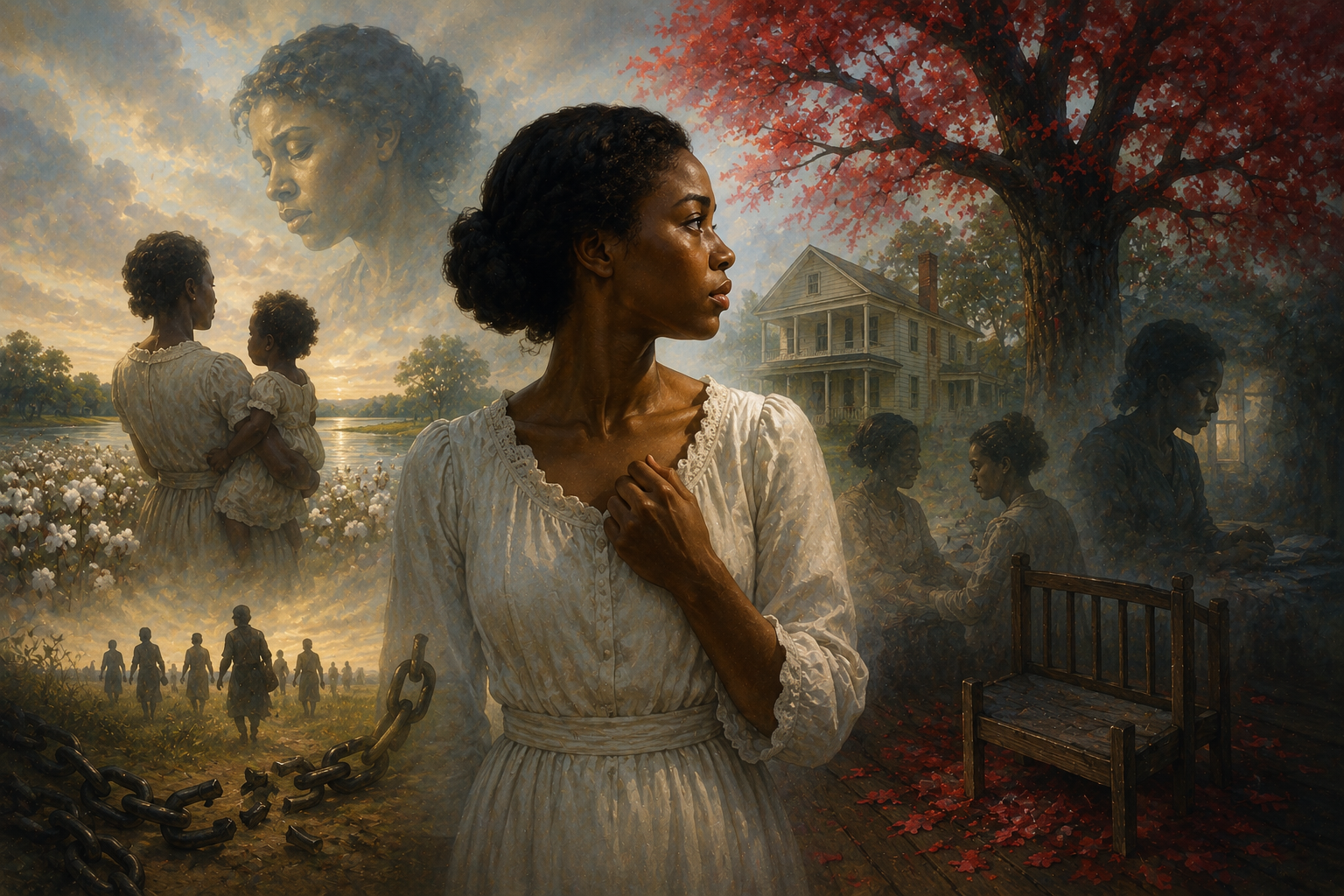
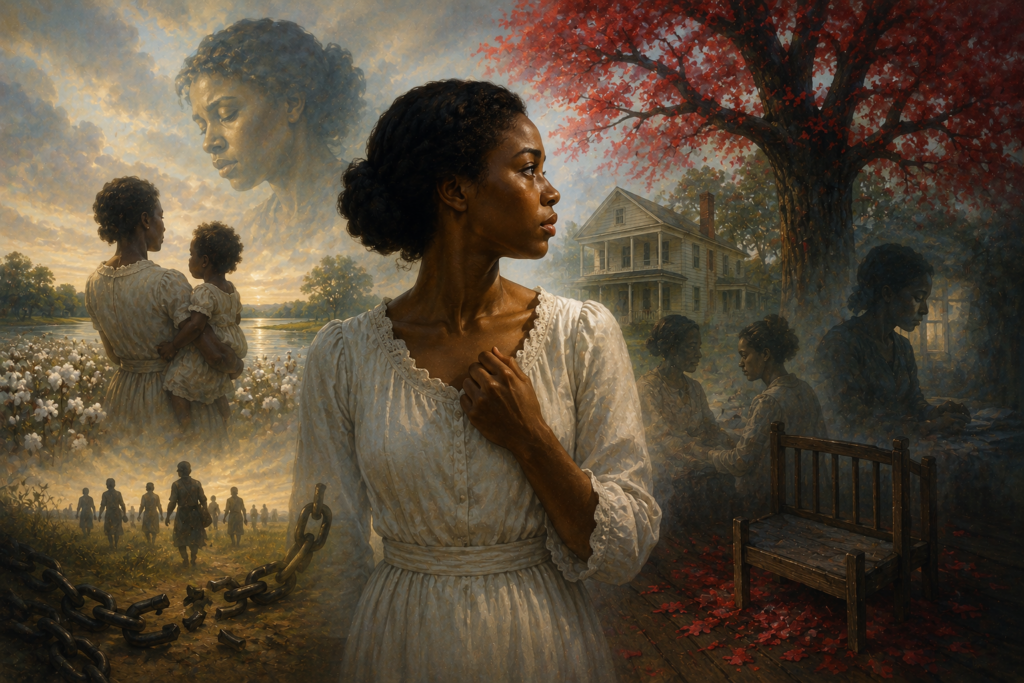
The themes in Beloved help readers understand why Toni Morrison’s novel feels so powerful and hard to forget. This guide explains the major ideas, conflicts, and deeper meanings students should notice as they read.

In this Guide

Use this guide to review the novel before class, a quiz, or an essay.

  • Why the novel’s themes matter
  • Memory and the past
  • Motherhood and difficult love
  • Freedom and ownership
  • Identity and voice
  • Community and healing
  • Symbols that build meaning
  • Essay tips and FAQs
Beloved Themes

Why the themes in Beloved matter

Morrison’s novel is not only about one family. It is about how slavery leaves pain in bodies, homes, and memories.

The story centers on Sethe, a formerly enslaved woman who lives with the past every day. The house at 124 is haunted, but the haunting is also emotional.

The themes in Beloved also show how history can stay alive even when people try to hide it. That makes the novel useful for essays about trauma, memory, family, and survival.

If you need help with theme as a concept, start with our guide on how to identify theme in literature.

Themes in Beloved: Memory and the past

Memory is one of the strongest forces in the novel.

Sethe tries to live in the present, but her past keeps returning. Morrison calls these painful returns “rememory,” which means the past is not really gone.

This theme matters because the novel shows memory as both painful and necessary. Sethe wants to forget, yet healing cannot start until the truth is faced.

A helpful comparison is Hamlet. Prince Hamlet also lives under the weight of a past crime. In both works, the past shapes the present and refuses to stay silent.

Themes in Beloved: Motherhood and difficult love

Morrison presents motherhood as powerful, protective, and deeply painful.

Sethe’s love for her children is intense because slavery tried to take away her right to be a mother. Her most shocking choice comes from that fear.

This is one of the most painful themes in Beloved because it asks students to think about love under extreme violence. The novel does not give easy answers. It asks why a mother might see death as safer than slavery.

In The Scarlet Letter, Hester Prynne also faces public judgment as a mother. Morrison’s novel is much darker, but both books ask how society judges women who protect their children.

Themes in Beloved: Freedom and ownership

The novel shows that legal freedom is not the same as full freedom.

Sethe escapes slavery, but she still carries its wounds. Her body, memories, and family life have all been marked by people who treated human beings as property.

Among the themes in Beloved, freedom is one of the most complex. Morrison shows that freedom must include safety, self-respect, and control over one’s own life.

This theme connects to many slave narratives and historical accounts. For background on Morrison’s life and major works, see Britannica’s overview of Toni Morrison.

Identity and voice in the novel

Morrison shows how slavery attacks a person’s sense of self.

Names matter in Beloved. Sethe’s past, Baby Suggs’s sermons, and Beloved’s mysterious presence all point to the question of who gets to define a person.

Voice also matters. Morrison lets different characters shape the story, which helps readers see pain from more than one angle. This style can feel hard at first, but it fits the novel’s subject.

When people have been silenced, telling a story becomes an act of power.

Community and healing

No one in the novel heals alone.

Baby Suggs once brings people together in the Clearing, where they learn to love their bodies and voices. That scene stands against the cruelty of slavery.

Later, the community’s role becomes important again. The women who come to 124 help break the hold of the past.

Morrison does not suggest that healing is simple. She shows that care from others can help people face what they could not face alone.

Symbols that build theme

Morrison uses symbols to make the novel’s ideas feel physical.

The house at 124 is more than a setting. It shows how trauma can fill a home and shape daily life.

Beloved herself is also symbolic. She can be read as a ghost, a lost child, or the return of a buried history.

Water often connects to birth, escape, and return. These symbols help students move from plot summary to analysis.

How to write about themes in Beloved

A strong essay should explain what Morrison suggests, not just name a topic.

Do not write, “The theme is memory.” That is too broad. A better claim would be: Morrison shows that painful memory must be faced before healing can begin.

When you write about themes in Beloved, connect each claim to a scene, symbol, or repeated idea. Use short quotes, then explain how the language supports your point.

These resources can help you build context before an essay or class discussion.

  • Beloved by Toni Morrison
  • Playing in the Dark by Toni Morrison
  • The Toni Morrison Book Club by Juda Bennett, Winnifred Brown-Glaude, Cassandra Jackson, and Piper Kendrix Williams

You can also read about Morrison through the Nobel Prize biography of Toni Morrison.

FAQ

These quick answers can help you review before a test or essay.

What are the main themes in Beloved?

The main themes in Beloved include memory, trauma, motherhood, freedom, identity, and community healing.

Why is memory so important in Beloved?

Memory shows that the past still affects the present. Sethe cannot heal by hiding from what happened.

Is Beloved a symbol?

Yes. Beloved can represent Sethe’s lost child and the larger history of slavery that refuses to disappear.

What is a good essay topic for Beloved?

You could write about how Morrison uses haunting to show the lasting effects of slavery.

Key Takeaway

The themes in Beloved ask readers to face hard truths about love, memory, and survival. Morrison shows that healing begins when buried stories are finally heard.

Existential Themes in Fiction

Existential themes
Existential themes

Existential Themes in Fiction help readers ask big questions about life, choice, freedom, fear, and meaning. These themes can feel heavy at first, but many famous novels and stories use them in clear, powerful ways.

If you are studying literature or choosing a book for class, this guide will help you spot existential ideas and explain them with confidence.

In this Guide

  • What existential themes mean
  • Why these themes matter in stories
  • Common signs to look for
  • Examples from well-known books
  • How to write about existential themes
  • Book suggestions
  • FAQ

What Are Existential Themes in Fiction?

Existential themes focus on how people face life when there are no easy answers.

At the center of these stories is a simple but deep question: What does life mean? Characters may feel lost, trapped, or unsure of who they are.

Existential Themes in Fiction often show people who must make hard choices. They cannot depend on society, religion, family, or tradition to give them a clear path.

This does not always mean the story is hopeless. Many works show that meaning can come from action, honesty, love, or personal courage.

For more background on the philosophy behind these ideas, you can read Britannica’s overview of existentialism.

Why Existential Themes in Fiction Matter

These themes matter because they connect literature to real human fears.

Students often meet existential ideas in books where characters feel alone or confused. That can sound dark, but it is also very real.

People ask hard questions at many points in life. Who am I? What should I do? Does my choice matter?

Existential Themes in Fiction help readers see those questions in action. Instead of giving a lecture, the story lets us watch a character struggle.

This makes the theme easier to understand. We see how fear, freedom, and choice shape a person’s life.

Common Signs of Existential Themes in Fiction

You can spot existential ideas by watching what a character fears and chooses.

One common sign is isolation. A character may feel cut off from friends, family, or the world.

Another sign is a crisis of meaning. The character may ask why life matters or why people follow certain rules.

A third sign is moral choice. The character may need to act without a clear guide.

If you need help separating theme from plot, this guide on how to identify theme in literature can help you build a stronger reading method.

Major Existential Themes in Fiction

Most existential stories return to a few core ideas about human life.

Freedom and Responsibility

Existential fiction often shows that freedom is not always easy. If a person is free to choose, that person must also face the results.

This can create fear. A character may want someone else to decide, but the story forces them to act.

Alienation and Loneliness

Many characters feel like outsiders. They may live in a crowded city or belong to a family, yet still feel alone.

This theme asks whether people can truly understand one another.

The Search for Meaning

Some stories show characters who no longer trust old answers. They may question work, faith, law, or social success.

The key point is not always to find one final answer. Often, the search itself reveals the character’s deepest values.

Absurdity

Absurdity appears when life seems strange, unfair, or without clear order. A character may try to make sense of events that do not make sense.

This theme is common in modern fiction, especially after war or social crisis.

Examples of Existential Themes in Fiction

Famous books often make existential ideas easier to see.

The Stranger by Albert Camus

Camus’s novel is one of the clearest examples of Existential Themes in Fiction. The main character, Meursault, seems emotionally distant from the world around him.

He does not react the way society expects. Because of this, readers must ask what makes a life moral or meaningful.

The novel also explores absurdity. The world does not explain itself, and Meursault does not pretend that it does.

The Metamorphosis by Franz Kafka

In Kafka’s story, Gregor Samsa wakes up transformed into a giant insect. The strange event is never explained.

This makes the story feel absurd, but its emotional truth is clear. Gregor feels useless, unwanted, and trapped by duty.

The story shows alienation in a sharp way. Gregor is near his family, but he becomes more alone with each scene.

Crime and Punishment by Fyodor Dostoevsky

Raskolnikov believes he can place himself above normal moral rules. His crime becomes a test of his ideas.

The novel explores guilt, freedom, and responsibility. It shows that ideas have real costs when people act on them.

This is a strong choice for students who want to study moral conflict in depth.

Hamlet by William Shakespeare

Hamlet is not usually called an existential novel, but the play has many existential questions. He wonders about death, action, truth, and the purpose of life.

His famous “To be, or not to be” speech asks whether life is worth the pain it brings. That question sits at the heart of many existential works.

You can explore Shakespeare’s works through the British Library’s Shakespeare resources.

How to Analyze Existential Themes in Fiction for Class

A strong analysis connects a character’s choices to the story’s larger message.

Start with the character’s conflict. Ask what the character wants, fears, or avoids.

Next, look for moments of choice. Existential stories often turn on a decision that reveals who the character is.

Then connect the choice to a theme. For example, if a character rejects social rules, the theme may focus on freedom or alienation.

Existential Themes in Fiction are not just “sad ideas.” They are about how people respond when life feels uncertain.

If you plan to write an essay, choose one main theme and prove it with short quotes. Do not try to cover every idea in the book.

Practical Takeaways for Students

Existential literature becomes easier when you know what to track.

Watch for questions about meaning. These may appear in dialogue, inner thoughts, or major plot choices.

Notice how the setting affects the mood. Empty rooms, courts, cities, and prisons can all show isolation.

Pay close attention to endings. Many existential works do not solve every problem, but the ending can show what the character has learned or refused to learn.

When studying Existential Themes in Fiction, do not panic if the book feels strange. That feeling may be part of the point.

Books to Search for on Amazon

These books are useful for students who want strong examples of existential ideas.

  • The Stranger by Albert Camus
  • The Metamorphosis by Franz Kafka
  • Crime and Punishment by Fyodor Dostoevsky

These works are common in high school, AP Literature, and college courses. They also give readers rich material for essays about choice, guilt, alienation, and meaning.

FAQ About Existential Themes in Fiction

What does existential mean in literature?

It means the story explores life’s biggest questions, such as freedom, death, choice, and meaning.

Are Existential Themes in Fiction always depressing?

No. Some stories are dark, but many show that people can create meaning through honest choices.

What is the easiest existential book to start with?

The Metamorphosis by Franz Kafka is a good start because it is short and clear in its main conflict.

How do I write a thesis about existential themes?

Focus on one idea. For example, you might argue that a character’s isolation reveals the story’s view of human freedom.

Key Takeaway

Existential Themes in Fiction help readers study how people face fear, freedom, and uncertainty. The best way to understand them is to track a character’s choices and ask what those choices say about life.

How to Write an Invisible Man Literary Analysis Essay

Invisible Man essay

Writing an Invisible Man literary analysis essay can feel hard because Ralph Ellison’s novel is full of symbols and sharp social questions. This guide shows you how to build a sharp thesis and use evidence with purpose.

In This Guide

Use this as a quick map before you start your essay.

  • Why Invisible Man works well for literary analysis
  • How to choose a focused topic
  • How to write a strong thesis statement
  • What evidence to use from the novel
  • How to shape a clear essay outline
  • Common mistakes to avoid
  • Helpful books and resources
  • FAQ for students
Invisible Man essay

Why Invisible Man Works Well for Literary Analysis

Ellison’s novel rewards essays that track patterns, not just plot events.

Invisible Man is rich because it asks deep questions about identity, race, power, and self-knowledge. The narrator wants to be seen as a full human being, but many people treat him as a symbol or tool.

That tension gives you many strong essay paths. You can study the narrator’s journey, the role of blindness, the use of speeches, or the way objects gain meaning.

Like the green light in The Great Gatsby, Ellison’s symbols grow more complex as the story moves on. A strong essay shows how that growth changes the reader’s view of the novel.

If you need a refresher on essay basics before you start, review this guide on how to write a literary analysis essay.

How to Choose an Invisible Man Literary Analysis Essay Topic

A good topic starts narrow, then opens into a bigger idea.

The best Invisible Man literary analysis essay does not try to explain the whole novel. It picks one pattern and asks what that pattern reveals. This keeps your essay focused and easier to prove.

Start with a question. Why does the narrator keep meeting groups that claim to help him? What does invisibility mean by the end of the novel? How do speeches shape public identity?

Here are focused topic ideas you can adapt:

  • Invisibility and identity: How the narrator learns that others refuse to see his full self.
  • Blindness as a symbol: How physical and moral blindness shape the novel’s conflicts.
  • The briefcase: How the objects inside it track the narrator’s changing hopes.
  • The Brotherhood: How political language can erase the person it claims to defend.
  • The prologue and epilogue: How the narrator’s underground space becomes a place of thought.

Each topic has room for argument. That is the key. A topic like symbols in the novel is too wide, but the briefcase as a record of false promises can become a strong essay.

How to Build a Thesis for an Invisible Man Literary Analysis Essay

Your thesis should make a claim that another reader could question.

Your Invisible Man literary analysis essay needs more than a theme statement. Do not write only that the novel is about racism or identity. Those ideas matter, but they are too broad by themselves.

A stronger thesis explains how Ellison builds meaning through a literary choice. That choice might be symbolism, irony, point of view, structure, or imagery.

Use this simple frame:

In Invisible Man, Ellison uses [literary device or pattern] to show [larger meaning].

Here are thesis statement examples you can revise for your own essay:

  • Example thesis: In Invisible Man, Ellison uses the narrator’s repeated speeches to show how public language can hide fear, ambition, and confusion.
  • Example thesis: The narrator’s briefcase becomes a symbol of false progress because it carries rewards that seem meaningful but often trap him in roles made by others.
  • Example thesis: Ellison connects blindness to power in order to show that many characters fail to see the narrator as a person, even when they claim to guide him.
  • Example thesis: By placing the narrator underground in the prologue and epilogue, Ellison suggests that retreat can become a form of self-examination rather than defeat.

Notice that each thesis names a literary feature and explains its meaning. That gives your body paragraphs a clear job.

Evidence to Use in an Invisible Man Literary Analysis Essay

Strong evidence comes from patterns, not random quotes.

The best evidence for an Invisible Man literary analysis essay often appears in repeated images or key scenes. Look for moments where the narrator sees himself one way, while others define him another way.

You might use evidence from these parts of the novel:

  • The battle royal: This scene shows how white power turns the narrator’s ambition into a cruel performance.
  • The college chapters: The narrator learns that respectability can depend on silence and control.
  • Liberty Paints: The factory can support an essay about racial imagery and hidden labor.
  • The Brotherhood chapters: These scenes show how group ideals can erase personal truth.
  • The Harlem riot: The chaos forces the narrator to face how little control he has had over his public role.

When you quote, do not drop the line and move on. Explain the words. Ask what the image, tone, or contrast does in that scene.

For background on the novel’s publication and importance, see Britannica’s overview of Invisible Man.

Sample Invisible Man Literary Analysis Essay Outline

A clear outline helps you turn ideas into a paper that feels organized.

This outline keeps your Invisible Man literary analysis essay focused from the first paragraph to the last.

Introduction: Name the novel, author, and main issue. End with a thesis that states your argument.

Body paragraph 1: Start with a topic sentence about your first pattern or scene. Use a quote, then explain how it supports your thesis.

Body paragraph 2: Move to a new scene that deepens the argument. Show change, contrast, or cause.

Body paragraph 3: Use your strongest point near the end. Link it to the novel’s larger meaning.

Conclusion: Do not repeat the thesis word for word. Show what the reader understands by the end of your analysis.

If you want a faster way to plan claims, quotes, and commentary, the Literary Analysis Essay Toolkit gives you printable steps for building stronger paragraphs.

How to Write Body Paragraphs That Analyze

Analysis explains why the evidence matters.

A weak paragraph tells what happens. A strong paragraph shows how Ellison’s choices shape meaning.

Try this pattern: topic sentence, short context, quote, close reading, link back to thesis. You do not need a long quote. A short phrase can work better if you explain it well.

For example, if you write about invisibility, do not only say that the narrator feels unseen. Ask how Ellison turns invisibility into a social problem. Who refuses to see him? What do they gain from that refusal?

This is where many essays improve fast. The more time you spend on the words of the novel, the less your paper sounds like plot summary.

Common Mistakes in an Invisible Man Literary Analysis Essay

Most weak essays have good ideas, but they lose focus.

One common mistake is writing a character report. The narrator matters, but your essay should study how Ellison presents him.

Another mistake is treating themes as facts. Instead of saying the novel is about identity, show how a symbol or scene develops that idea.

Watch out for quote overload, too. Your teacher wants your thinking, not a page of copied lines. Use fewer quotes and give each one more attention.

A final problem is moral summary. Yes, the novel deals with injustice. Your job is to explain how the novel makes the reader feel and understand that injustice through form, voice, and symbol.

Helpful Books and Resources

Good support texts can help you understand context without replacing your own argument.

Here are useful books to look for in a library or bookstore:

  • Invisible Man by Ralph Ellison
  • Shadow and Act by Ralph Ellison

You can also read more about Ellison’s life through Britannica’s Ralph Ellison biography. Context can help, but keep your essay centered on the novel’s language.

FAQ: Invisible Man Literary Analysis Essay

These quick answers can help you make smart choices before you draft.

What is the best topic for an Invisible Man literary analysis essay?

The best topic is narrow and arguable. Invisibility, blindness, the briefcase, or the Brotherhood can all work if you connect them to a clear claim.

What should my thesis include?

Your thesis should name a literary choice and explain its meaning. It should answer the question, So what?

Can I write about race in Invisible Man?

Yes. Race is central to the novel, but your essay should still analyze Ellison’s craft, not only the social issue.

How many quotes should I use?

Use enough evidence to prove your point, but do not overpack the paragraph. One strong quote with clear analysis can do more than several weak ones.

Key Takeaway

A strong Invisible Man literary analysis essay makes a focused claim, studies Ellison’s craft, and explains how each piece of evidence supports the argument.

Start small, read closely, and let the novel’s patterns guide your thesis.

Best Novels About Parallel Worlds: A Guide to Other Realities in Fiction

Parallel Worlds

The Best Novels About Parallel Worlds do more than send characters into strange places. They help readers ask big questions about choice, identity, power, and home.

From Narnia to Wonderland, these stories make the impossible feel close. They also give students rich material for essays, class talks, and close reading.

In this Guide

  • Why parallel world novels still matter
  • Best novels about parallel worlds for students
  • Common symbols and themes
  • How tone and mood work in these books
  • Book suggestions to buy or borrow
  • FAQs
  • Key takeaway
Parallel Worlds

Why the Best Novels About Parallel Worlds Still Matter

Parallel worlds turn abstract ideas into places readers can enter.

In these novels, a wardrobe can open into a frozen kingdom. A rabbit hole can lead to a world where logic falls apart. A hidden city can sit right under the one we know.

For students, the Best Novels About Parallel Worlds are useful because they make theme easy to see. The “other world” often shows what the real world tries to hide.

These books also fit inside the larger tradition of fantasy. For more background, see Britannica’s short guide to fantasy as a literary genre.

Best Novels About Parallel Worlds for Students

These books are strong choices for high school, AP Literature, and college readers.

Alice’s Adventures in Wonderland by Lewis Carroll

Carroll’s novel sends Alice into a world where rules shift without warning. Wonderland is funny, but it can also feel tense.

The book works well for essays about nonsense, childhood, and authority. Alice keeps asking for order, but the world around her refuses to give it.

You can learn more about the novel’s background through Britannica’s page on Alice’s Adventures in Wonderland.

The Lion, the Witch and the Wardrobe by C. S. Lewis

Narnia is one of the most famous parallel worlds in children’s literature. The wardrobe is a simple object, but it becomes a doorway into danger and wonder.

This novel is often read as a story about courage and moral choice. The cold world of Narnia reflects a place trapped by fear.

The Golden Compass by Philip Pullman

Pullman’s world looks close to our own, but it has daemons, armored bears, and a deep fight over knowledge. The novel feels bold because its fantasy world has political force.

It is a good pick for students who want a more complex parallel world. It raises questions about truth, control, and what adults owe to children.

A Wrinkle in Time by Madeleine L’Engle

This novel blends science fiction with fantasy. Meg travels across space and enters places that feel like alternate versions of reality.

The book is useful for studying love, fear, and the pressure to conform. Its strange worlds help show Meg’s inner struggle.

Piranesi by Susanna Clarke

Piranesi lives in a vast House filled with halls, statues, and tides. The world feels calm at first, but its mystery grows darker.

This is one of the Best Novels About Parallel Worlds for older students. It rewards close reading and works well for college-level discussion.
What the Best Novels About Parallel Worlds Have in Common

The strongest parallel world stories use the second world for more than escape.

A good parallel world has rules. It may feel magical, but it still follows a pattern. Readers learn those rules as the main character does.

Most of these stories also use contrast. The real world may feel dull or harsh. The parallel world may feel bright, cruel, or full of secrets.

That contrast helps reveal character. When a hero crosses into another world, the author can test what that person values most.

Symbols and Themes in the Best Novels About Parallel Worlds

Parallel world novels often use simple objects with deep meaning.

Doors and portals are the most common symbols. A wardrobe, rabbit hole, or hidden gate marks the move from ordinary life into mystery.

Mirrors and doubles can suggest split identity. A character may meet a version of life that feels both strange and familiar.

Maps and paths often stand for choice. In many of the Best Novels About Parallel Worlds, the journey matters as much as the final answer.

The major themes are often identity and freedom. These books ask who we become when the normal world no longer controls us.

How the Best Novels About Parallel Worlds Shape Tone and Mood

Parallel worlds can change a story’s emotional feel in one scene.

Wonderland can seem playful, then suddenly unfair. Narnia can feel magical, then turn cold and dangerous. Piranesi’s House feels peaceful, but that peace hides loss.

This is where tone and mood matter. If you want a clear review of the difference, read our guide to tone and mood in literature.

When you read the Best Novels About Parallel Worlds, notice how the setting changes your feelings. That shift often points to the author’s deeper message.

Amazon Book Suggestions: Best Novels About Parallel Worlds to Buy or Borrow

If you want to build a small reading list, start with books that offer rich worlds and strong themes.

  • The Golden Compass by Philip Pullman
  • Piranesi by Susanna Clarke

You can search these titles on Amazon, check your school library, or borrow them from a local library. Both books are strong choices for students who want layered fantasy with serious ideas.

FAQ About the Best Novels About Parallel Worlds

What is a parallel world novel?

A parallel world novel features a second reality that exists beside, beneath, or beyond the normal world. Characters often cross into it through a portal, a secret path, or a strange event.

Why do authors use parallel worlds?

Authors use parallel worlds to explore real problems in a fresh way. A made-up world can reveal fear, injustice, hope, or hidden truth.

Are parallel world novels only fantasy?

No. Many are fantasy, but some mix science fiction, mystery, or literary fiction. The key idea is the presence of another reality.

Which parallel world novel is best for AP Literature?

Piranesi is a strong AP Literature choice because it has rich symbols, a complex setting, and deep questions about memory and identity.

What should students look for while reading?

Look for portals, rules, contrasts, and changes in mood. These details often reveal the story’s theme.

Conclusion: Why These Other Worlds Stay With Us

The Best Novels About Parallel Worlds stay with readers because they make us see our own world in a new light. They give us wonder, but they also ask hard questions.

For students, these books are more than fun escapes. They are powerful texts for studying theme, setting, symbol, and character growth.

Key Takeaway

Parallel worlds help fiction ask real questions. The stranger the world looks, the more it may reveal about our own.

What Is Existentialism in Literature?

Existentialism in Literature

If you have ever asked, “What Is Existentialism in Literature?” you are really asking how stories handle freedom, fear, choice, and meaning.

Existentialist literature often shows characters who feel lost in a world that gives no easy answers. These works can seem dark, but they also push readers to think deeply about life.

In this Guide

  • What existentialism means in literature
  • Why it matters to readers
  • Common traits of existentialist stories
  • Famous examples from literature
  • Books to read next
  • FAQ and a key takeaway

What Is Existentialism in Literature?

Existentialism in literature is about characters who must create meaning in a world that may feel empty, unfair, or confusing.

The short answer to “What Is Existentialism in Literature?” is this: it is literature that asks what it means to be human when no one can give you a final answer.

These stories often focus on personal choice. A character may face guilt, isolation, fear, or moral pressure. Instead of finding a simple lesson, the character must decide how to live.

Existentialism is also a major idea in philosophy. For a clear background, you can read Britannica’s overview of existentialism.

Why What Is Existentialism in Literature? Matters for Readers

Existentialist literature matters because it takes human struggle seriously.

When students ask, “What Is Existentialism in Literature?” they are often trying to understand why a book feels so tense or unsettled. The answer usually comes from the character’s search for purpose.

Many literary works do not give comfort right away. They show people who must act without knowing if they are right. That can feel painful, but it also feels honest.

This is why existentialist texts work well in AP Literature and college classes. They invite close analysis of theme, tone, character, and conflict.

What Is Existentialism in Literature? Key Traits to Notice

You can often spot existentialism by the questions a story asks.

A common trait is alienation. The character feels cut off from society, family, faith, or even the self. This does not always mean the character is alone. It means the character feels separate from the world around them.

Another key trait is freedom. Existentialist characters often learn that freedom can be scary. If no one else can choose for them, they must accept the weight of their own actions.

Many works also focus on absurdity. This means life may seem strange or without clear order. The character wants meaning, but the world does not provide it in a neat way.

So, What Is Existentialism in Literature? It is not just sadness or confusion. It is a serious look at how people respond when life does not hand them a clear purpose.
What Is Existentialism in Literature? Examples from Famous Works

Some of the best examples are short, powerful, and easy to connect to major themes.

Albert Camus’s The Stranger is one of the most famous existentialist novels. Meursault, the main character, seems emotionally distant from the world. His actions force readers to ask whether society punishes him for his crime, his honesty, or his refusal to pretend.

Franz Kafka’s The Metamorphosis also fits many existentialist ideas. Gregor Samsa wakes up as an insect, and his life becomes strange and cruel. The story shows alienation, family pressure, and the fear that a person’s value can vanish.

Fyodor Dostoevsky’s Notes from Underground presents a bitter narrator who attacks reason, pride, and social progress. His voice is hard to like, but it reveals a mind trapped by freedom and self-hatred.

When readers ask, “What Is Existentialism in Literature?” these works give strong answers because they show the idea through character, not just theory.

Existentialism vs. Nihilism

These two ideas are easy to mix up, but they are not the same.

Nihilism often says life has no meaning. Existentialism starts with that fear, then asks what a person can do next.

In other words, existentialism does not always end in despair. Many existentialist works suggest that humans can build meaning through choice, love, honesty, or courage.

This matters because What Is Existentialism in Literature? is not the same as “Why is this book depressing?” A dark story can still leave room for human dignity.

How to Analyze Existentialism in a Text

Start with the character’s choices.

Ask what pressure the character faces. Does the character feel trapped by society, religion, family, law, or the body? Then ask what the character does with that pressure.

Pay close attention to tone. Existentialist works may feel cold, tense, absurd, or deeply personal. That tone often helps reveal the author’s view of human life.

If you want a stronger method for literary analysis, read our guide on how to read literature with a scholar’s eye.

Recommended Books for Existentialist Literature

These books are useful if you want to see existentialist ideas in action.
  • The Stranger by Albert Camus
  • The Metamorphosis by Franz Kafka

For poetry with modern anxiety and spiritual struggle, you might also explore T. S. Eliot. The Poetry Foundation’s page on T. S. Eliot is a helpful place to start.

Practical Reading Tip

When you read an existentialist work, track every moment when a character must choose.

Write down what the character wants, what blocks them, and what their choice reveals. This simple habit can help you answer “What Is Existentialism in Literature?” with evidence instead of a vague idea.

For deeper practice, pair this with close reading strategies for literature.

FAQ: What Is Existentialism in Literature?

What Is Existentialism in Literature? in simple terms?

It is literature about people who search for meaning in a world that does not give easy answers.

Is existentialist literature always sad?

No. It can be dark, but it can also show courage, freedom, and personal growth.

What is the main theme of existentialism?

The main theme is that people must make choices and create meaning for themselves.

Is Hamlet existentialist?

Hamlet came before existentialism as a movement, but it has existential questions about death, action, doubt, and identity.

Key Takeaway

What Is Existentialism in Literature? It is the study of characters who face freedom, fear, and uncertainty as they search for meaning. The best way to understand it is to watch what a character chooses when no answer feels safe.

Themes in Invisible Man: A Student-Friendly Guide

Invisible Man Themes

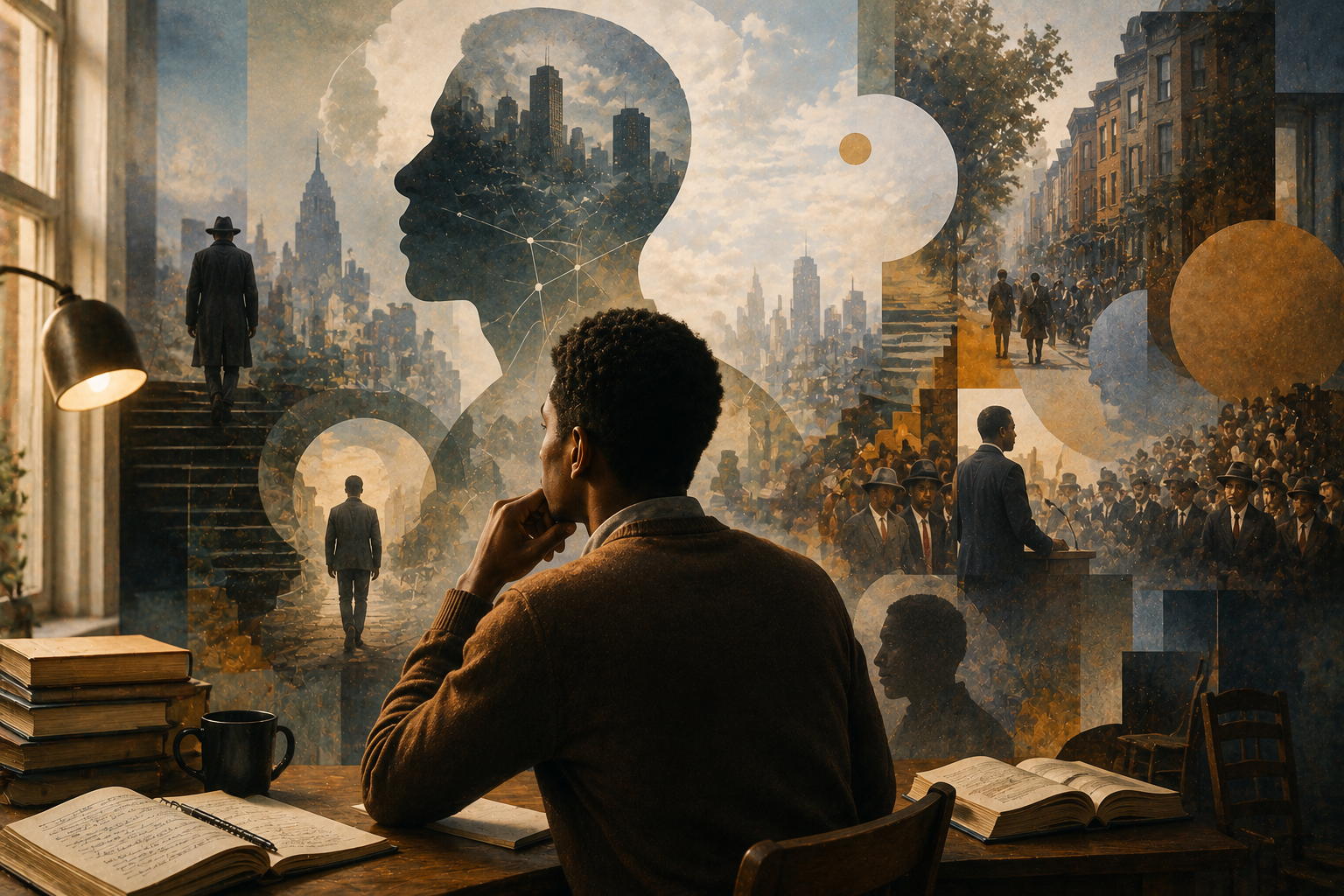
Ralph Ellison’s Invisible Man is a rich novel about race, identity, power, and the search for a true self. This guide explains the major themes in Invisible Man in clear language for high school, AP Literature, and college students.

In this Guide

Use these sections to find the idea you need fast.

  • Why the themes matter
  • Invisibility and identity
  • Racism and power
  • Self-knowledge and voice
  • Education and false promises
  • Politics and betrayal
  • Dreams and truth
  • Writing about the novel
  • FAQ
Invisible Man Themes

Why the themes in Invisible Man still matter

The novel speaks to students because it shows how hard it can be to define yourself in a world that tries to define you first.

Invisible Man was published in 1952, but its questions still feel current. Who gets seen? Who gets ignored? And who controls the story people tell about you?

The themes in Invisible Man matter because the narrator’s fight is both personal and social. He wants respect, but he also wants to understand who he is without lies from others.

For background on Ellison’s life and career, see this helpful Britannica overview of Ralph Ellison.

Major themes in Invisible Man: invisibility and identity

Invisibility in the novel is not about magic. It is about being unseen as a full human being.

The narrator says he is invisible because people do not see his real self. They see a symbol, a threat, a tool, or a problem. This is one of the central themes in Invisible Man.
At school, in the city, and inside political groups, people keep trying to give him a role. Each role seems to offer success, but each one hides part of who he is.
This theme connects well to Hamlet, where the main character also struggles with who he is and what role he must play. In both works, identity becomes a conflict, not a simple fact.

Student tip: When you write about invisibility, do not stop at the title. Ask who refuses to see the narrator clearly and why that refusal gives them power.

Themes in Invisible Man: racism and power

Ellison shows racism as more than personal dislike. He shows it as a system that shapes schools, jobs, politics, and public life.

The narrator meets people who claim to help him, but many use him for their own goals. Some use polite words. Others use open violence. Both forms limit his freedom.

The Battle Royal scene shows this clearly. Young Black men are forced into pain and shame for the amusement of white leaders. The scene reveals how power can hide behind ceremony.

These themes in Invisible Man also connect to W.E.B. Du Bois’s idea of double consciousness, the sense of seeing yourself through the eyes of a racist society. Ellison does not repeat Du Bois in a simple way, but the link can help students think deeper.

The search for self-knowledge and voice

The narrator’s journey is a long lesson in how hard it is to know yourself when others keep speaking for you.

At the start, he often trusts authority figures. He believes the right speech, the right school, or the right group will give him a place in the world.

Over time, he learns that borrowed ideas can harm him. He must sort truth from slogans. He must build a voice that is his own.

This is why the ending matters. The narrator is underground, but he is not just hiding. He is thinking, judging, and preparing to speak with more honesty.

Education, books, and false promises

Education in the novel can open doors, but it can also teach people to obey unfair rules.

The narrator values school and learning. At first, he believes education will protect him. Yet the college does not fully protect him from racism or control.

The novel asks students to think about what education is for. Is it meant to free the mind, or to train people to fit into an unfair system?

This makes the themes in Invisible Man useful for essay writing. You can study how Ellison treats education as both a hope and a trap.

Politics, brotherhood, and betrayal

The Brotherhood promises unity and justice, but the narrator learns that a group can use noble language while it hides selfish plans.

At first, the Brotherhood gives him a public voice. He becomes a speaker and feels useful. The group seems to care about change.

Yet the Brotherhood often treats people like pieces on a board. The narrator’s community becomes less important than the group’s strategy.

This theme can remind students of Animal Farm, where political language hides control. In both books, words like equality can lose meaning when leaders chase power.

Dreams, illusions, and painful truth

Ellison fills the novel with dreams, masks, and strange events to show how hard truth can be to face.

The narrator often believes in promises that later fall apart. He trusts leaders, systems, and public roles. Each illusion breaks under pressure.

This theme is close to The Great Gatsby. Gatsby believes in a dream that cannot survive reality. The narrator of Invisible Man also learns that dreams can guide people or blind them.

The difference is that Ellison’s novel ties illusion to race, power, and survival. Truth is not just personal. It has a social cost.

How to write about themes in Invisible Man

A strong essay should connect a theme to scenes, symbols, and changes in the narrator.

Do not write only that the book is about racism or identity. Instead, show how Ellison develops that idea across the novel.

For example, you could trace how the narrator moves from trust in public approval to a deeper search for truth. That path reveals several themes in Invisible Man at once.

If you need help shaping a claim, use our guide on how to write a literary analysis essay. It can help you turn a theme into a focused thesis.

You can also use a quick theme review resource if you want extra support before a quiz, class discussion, or essay draft.

Suggested books for deeper study

These books can help students understand Ellison’s ideas in a wider literary and historical context.

  • Shadow and Act by Ralph Ellison
  • The Souls of Black Folk by W.E.B. Du Bois

For a reliable short reference on the novel, you can also read the Britannica entry on Invisible Man.

FAQ about themes in Invisible Man

These quick answers help with review before class, a test, or an essay.

What is the main theme of Invisible Man?

The main theme is the struggle to be seen as a full person. The narrator must reject false roles and search for his own identity.

Why is invisibility important in the novel?

Invisibility shows how racism and power can erase a person’s real self. People look at the narrator, but they do not truly see him.

What are the most important themes in Invisible Man for an essay?

Good essay choices include invisibility, identity, racism, education, power, and self-knowledge. Choose one and connect it to key scenes.

How does the Brotherhood connect to the novel’s themes?

The Brotherhood shows how political groups can use people while they claim to help them. It reveals the danger of losing your voice to a cause.

Key Takeaway

The themes in Invisible Man show a young man’s fight to see himself clearly in a world built to misread him. The novel asks students to notice power, question easy answers, and value a voice that comes from hard-won truth.

Most Beautiful Small Town Secrets: What Literature Teaches Us About Hidden Places

Small Town Secrets

Most Beautiful Small Town Secrets are more than pretty streets, quiet porches, and local legends. In literature, they often reveal the private fears, hopes, and choices that shape a whole community.

Small towns can look peaceful from the outside, but stories show us what lives under the surface.

In this Guide

  • Why small town secrets matter in literature
  • Classic examples from famous books
  • Symbols and themes to watch for
  • Recommended books to read
  • FAQ for students and readers
Small Town Secrets

Why Most Beautiful Small Town Secrets Matter in Literature

Small towns make secrets feel personal because everyone seems to know everyone.

Writers use small towns to show how public life and private life can clash. A character may smile at church, wave at a neighbor, or sit in a classroom, yet hide pain that no one wants to see.

That is why Most Beautiful Small Town Secrets work so well in fiction. Beauty creates contrast. The town may look calm, but the story asks us to look closer.

This setting also helps students notice social pressure. In a small town, gossip can act like a law. Reputation can matter as much as truth.

Most Beautiful Small Town Secrets in Classic Literature

Many classic books use quiet towns to explore deep conflict.

In To Kill a Mockingbird by Harper Lee, Maycomb seems slow and familiar. Yet the town hides racism, fear, and moral courage. The beauty of childhood memories sits beside serious injustice.

In Winesburg, Ohio by Sherwood Anderson, the town is full of lonely people. Each person carries a private story. These Most Beautiful Small Town Secrets are not always shocking, but they are deeply human.

In Thornton Wilder’s Our Town, Grover’s Corners appears simple. The play shows daily life, family love, and the passing of time. Its secret is that ordinary life is more precious than people realize.

You can read more about Winesburg, Ohio through Britannica’s overview.

Symbols Behind Most Beautiful Small Town Secrets

Small town stories often use simple objects to carry deeper meaning.

A locked room may stand for shame. A garden may suggest hope. A main street may show the public face of the town, while a back road may reveal what people hide.

In Most Beautiful Small Town Secrets, houses often matter. A bright porch can seem warm, but it can also hide family tension. A broken fence can suggest a broken boundary between private life and public talk.

Weather also plays a strong role. Summer heat can build pressure. A storm can mark a moment when truth breaks through.

These symbols help readers see that setting is never just background. It can act like a mirror for the characters.

Key Themes in Most Beautiful Small Town Secrets

Small towns in literature often ask big moral questions.

One major theme is appearance versus reality. A town may seem safe, polite, or pure, but the plot reveals what people refuse to face.

Another theme is belonging. Characters may want to fit in, but the town’s rules can limit who they become. This is common in coming-of-age stories.

Memory is also important. Many small town stories look back at childhood, family history, or old choices. The past does not stay buried for long.

Emily Dickinson’s poetry is a helpful match here because she often finds mystery in small spaces and quiet moments. If you want a student-friendly guide, read how to read Emily Dickinson.

These books are strong choices for students who want rich settings and hidden conflict.

  • Winesburg, Ohio by Sherwood Anderson
  • To Kill a Mockingbird by Harper Lee

Winesburg, Ohio is best for readers who like linked stories and quiet sadness. It shows how one town can hold many private worlds.

To Kill a Mockingbird is best for readers who want a clear plot with moral conflict. It shows how small town life can protect old beliefs, even when those beliefs hurt people.

For poetry that captures hidden feeling in plain language, Emily Dickinson is also worth reading. The Poetry Foundation’s Emily Dickinson page gives helpful background.

How Students Can Read Small Town Secrets More Closely

Start by asking what the town wants people to believe.

Then ask what the story slowly reveals. Pay attention to who has power, who gets judged, and who stays silent.

Look for repeated places. A courthouse, school, cemetery, or front porch can tell you what the town values.

It also helps to track gossip. In many stories, gossip shows fear more than truth. It can reveal what the town refuses to discuss in public.

Why Most Beautiful Small Town Secrets Still Feel Modern

These stories still matter because every community has a public face.

Today, that public face may appear on social media, school websites, or local news. The idea is the same. People and places often show only part of the truth.

Most Beautiful Small Town Secrets remind us to read beyond first impressions. A pretty setting can hold grief, courage, love, and change.

FAQ About Most Beautiful Small Town Secrets

What does “Most Beautiful Small Town Secrets” mean in literature?

It refers to hidden truths inside peaceful or charming small town settings. These secrets often reveal conflict, pain, or moral growth.

Why do writers use small towns so often?

Small towns make relationships feel close and intense. A secret can affect the whole community.

What is a good book about small town secrets for students?

To Kill a Mockingbird is a strong choice because it connects setting, justice, and character growth in a clear way.

Are small town secrets always dark?

No. Some secrets reveal kindness, love, or hidden strength. The secret may be painful, but it can also lead to truth.

Key Takeaway

Most Beautiful Small Town Secrets show that quiet places can hold powerful stories. In literature, the smallest setting can reveal the biggest truths about people.

error

Enjoy this article? Please spread the word :)

Follow by Email
BLUESKY
fb-share-icon
Reddit
LinkedIn
Share
RSS