Common Symbols in Classic Literature: A Student-Friendly Guide
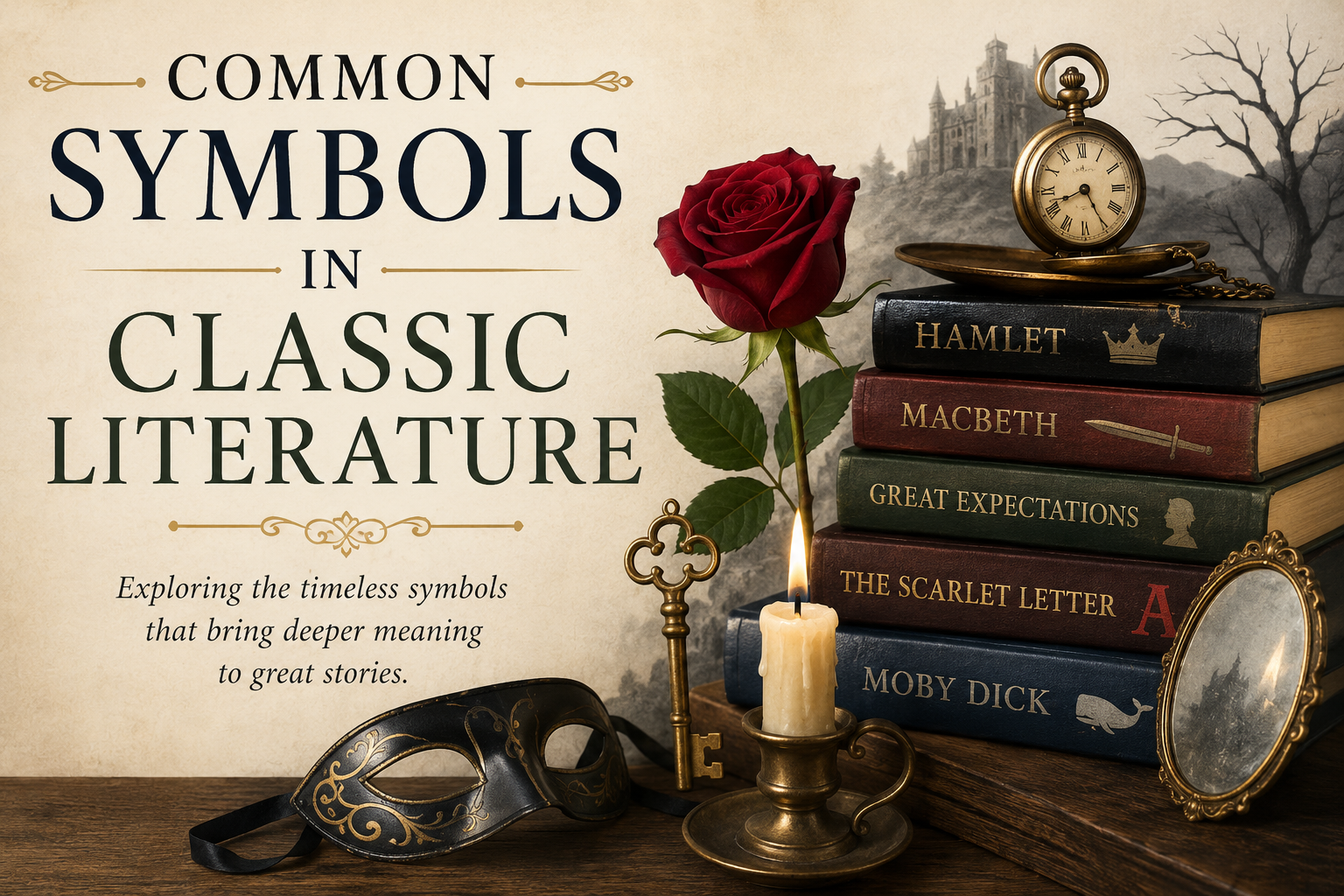
Common Symbols in Classic Literature can help you see deeper meaning in novels, plays, and poems. When you know what certain objects, colors, or places often suggest, you can read with more confidence and write stronger essays.
This guide explains key symbols, gives clear literary examples, and shows how to use them without overthinking every detail.
In this Guide
- Why symbols matter in classic literature
- Common symbols and what they often mean
- Examples from famous books
- How to analyze symbols in essays
- Books that help you practice
- FAQ and key takeaway
Why Common Symbols in Classic Literature Matter
Symbols help writers say more with less.
A symbol is something that stands for more than itself. It can be an object, place, color, animal, or action that points to a bigger idea.
For students, Common Symbols in Classic Literature are useful because they often connect to major themes. A river may suggest change. A locked room may suggest secrets. A storm may suggest conflict or fear.
Symbols do not always mean the same thing in every book. Context matters. Still, knowing common patterns gives you a strong place to start.
Common Symbols in Classic Literature: Light and Darkness
Light and darkness often show knowledge, truth, danger, or moral conflict.
Light often points to truth, hope, or understanding. Darkness often points to fear, confusion, or hidden evil.
In Frankenstein by Mary Shelley, light can suggest knowledge and discovery. Victor Frankenstein wants to “bring light” to science, but his search leads to pain and guilt.
In Heart of Darkness by Joseph Conrad, darkness is not just a setting. It raises questions about cruelty, power, and what people hide inside themselves.
When you see light or darkness in a classic text, ask what the character understands at that moment. Also ask what the writer may be hiding from the reader.
Common Symbols in Classic Literature: Colors
Colors can carry emotional and social meaning.
Red often suggests passion, sin, blood, or shame. White can suggest purity, innocence, emptiness, or coldness. Green often points to hope, envy, nature, or desire.
In The Scarlet Letter by Nathaniel Hawthorne, the red letter “A” is one of the most famous symbols in American literature. It marks Hester Prynne’s shame, but it also becomes a sign of strength.
In The Great Gatsby by F. Scott Fitzgerald, the green light at the end of Daisy’s dock stands for Gatsby’s dream. It also shows how that dream stays just out of reach.
Colors are among the most important Common Symbols in Classic Literature because they can appear many times across a story. Track when a color appears and how the mood changes around it.
Common Symbols in Classic Literature: Nature
Nature often reflects a character’s inner life.
Writers use weather, seasons, gardens, and wild places to show emotion or change. Spring may suggest youth or rebirth. Winter may suggest death, loss, or loneliness.
In Wuthering Heights by Emily Brontë, the wild moors reflect the fierce emotions of the characters. The setting feels harsh, open, and hard to control.
In King Lear by William Shakespeare, the storm shows Lear’s mental collapse. The weather outside mirrors the chaos inside him.
When you study Common Symbols in Classic Literature, pay close attention to setting. A landscape may reveal more than a character says out loud.
Common Symbols in Classic Literature: Animals
Animals often reveal power, fear, guilt, or instinct.
A snake may suggest danger or betrayal. A bird may suggest freedom or a trapped soul. A dog may suggest loyalty, but it can also show violence, depending on the story.
In Macbeth, Shakespeare uses animal images to show disorder and fear. After Duncan’s murder, nature seems broken, which suggests that Macbeth’s crime has damaged the moral order.
In Lord of the Flies by William Golding, the “beast” becomes a symbol of the boys’ fear. It also points to the violence inside human nature.
Animal symbols work best when you connect them to a theme. Do not stop at “the bird means freedom.” Ask who wants freedom and what blocks it.
Common Symbols in Classic Literature: Objects
Objects can carry a story’s biggest ideas.
A letter, ring, mirror, or weapon can gain meaning as the story moves on. The object may start as a normal item, then become tied to guilt, love, power, or memory.
In The Lord of the Rings by J.R.R. Tolkien, the ring stands for power and temptation. It shows how even good people can change when power takes hold.
In Jane Eyre by Charlotte Brontë, the locked room and hidden spaces at Thornfield Hall suggest secrets, fear, and social limits.
Common Symbols in Classic Literature often gain meaning through repetition. If an object appears at key moments, the author likely wants you to notice it.
Common Symbols in Classic Literature: Journeys and Roads
A journey often shows growth, escape, or a search for truth.
Roads and travel can show a character’s movement from innocence to experience. A physical trip may also reflect an inner change.
In The Odyssey by Homer, Odysseus’s journey is about more than getting home. It tests his pride, loyalty, and wisdom.
In The Adventures of Huckleberry Finn by Mark Twain, the river becomes a path toward freedom. Yet it also shows the moral problems of the society around Huck and Jim.
Journey symbols are useful in essays because they often connect to character growth. Ask what the character learns before and after the journey.
How to Analyze Common Symbols in Classic Literature
A symbol should connect to the whole story, not just one scene.
Start with the basic meaning. What is the object, color, place, or action? Then ask how it changes as the story goes on.
Look for repetition. If a symbol appears more than once, note when it appears and who is present. This can reveal a pattern.
Connect the symbol to a theme. A green light is not important only because it is green. It matters because it connects to dreams, wealth, and longing.
If you want a deeper step-by-step method, read this guide on how to find symbolism in a story.
How to Use Symbols in Literature Essays
Strong symbol analysis stays close to the text.
Do not write that a symbol “obviously” means one thing. Instead, prove your idea with evidence from the story.
A simple essay sentence might look like this:
In The Great Gatsby, the green light symbolizes Gatsby’s dream of a perfect future with Daisy, but its distance shows that the dream is impossible to fully reach.
This works because it names the symbol, explains the meaning, and links it to a theme.
For AP Literature or college essays, you should also explain how the symbol affects the reader. Does it create hope? Does it create doubt? Does it make the ending feel tragic?
Best Books for Studying Common Symbols in Classic Literature
These books give students strong practice with symbolism.
- The Great Gatsby by F. Scott Fitzgerald
- The Scarlet Letter by Nathaniel Hawthorne
- Lord of the Flies by William Golding
Each book uses symbols in a clear way, which makes them helpful for essays and class discussion. They are also common choices in high school and college literature courses.
You can also explore trusted resources like the Poetry Foundation’s definition of symbol and Britannica’s overview of Symbolism for more background.
Quick Study Tips for Symbolism
A few simple habits can make symbol analysis much easier.
Mark repeated objects, colors, and places as you read. Write a short note each time one appears.
Ask what changes near the symbol. Does the mood shift? Does a character act in a new way?
Do not force a meaning. Some details are just details. A symbol matters when the story gives it weight.
When in doubt, return to theme. The best symbol analysis explains how one detail supports the bigger message of the work.
FAQ About Common Symbols in Classic Literature
What are the most common symbols in classic literature?
Some of the most common symbols are light, darkness, colors, nature, animals, objects, and journeys. Their meaning depends on the story’s context.
How do I know if something is a symbol?
Look for repetition, strong description, or a link to a major theme. If the author keeps drawing attention to it, it may be symbolic.
Can one symbol have more than one meaning?
Yes. A strong symbol can hold more than one idea. For example, the scarlet letter in Hawthorne’s novel suggests shame, strength, and identity.
Why do teachers ask students to find symbols?
Symbols help students understand theme, character, and conflict. They also lead to stronger literary analysis.
Should I memorize Common Symbols in Classic Literature?
You can learn common patterns, but do not rely on memorization alone. Always use the text to support your interpretation.
Key Takeaway
Common Symbols in Classic Literature are tools for deeper reading, not secret codes with fixed answers. Notice patterns, connect them to theme, and use evidence from the text to explain your ideas clearly.