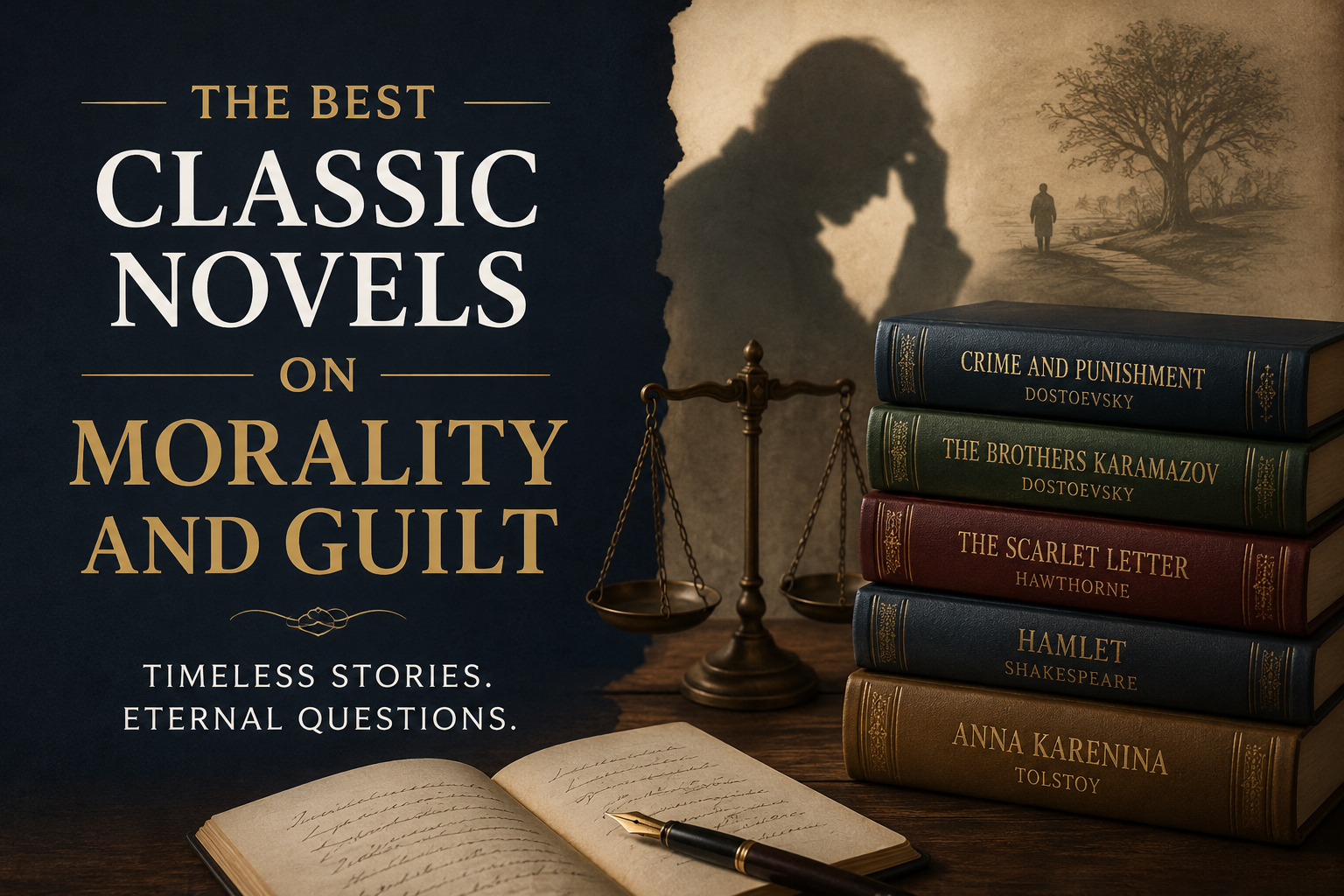
Some books leave us unsettled because they force us to ask what we would do in a hard moment. Most Disturbing Morality and Guilt stories show characters trapped between choice, shame, and consequence.
These works matter because they do more than shock us. They make us think about justice, fear, and the hidden parts of the human mind.
In this Guide
- Why these stories stay with readers
- Classic examples in literature
- Recommended books to read
- Symbols and themes to watch for
- How students can read these works
- FAQs
- Key takeaway
Why Most Disturbing Morality and Guilt Stories Stay With Us
The most haunting stories often begin with one choice that cannot be taken back.
Most Disturbing Morality and Guilt literature works because it places readers close to a character’s inner conflict. We may not agree with the character, but we understand the pressure that shapes the choice.
Guilt also feels personal. A ghost, a trial, or a confession can stand for something deeper: the fear that truth will come out.
That is why these stories often feel more disturbing than simple horror. The danger comes from the mind, not just from the outside world.
Most Disturbing Morality and Guilt in Classic Literature
Classic literature uses guilt to show how fragile the human conscience can be.
In Crime and Punishment by Fyodor Dostoevsky, Raskolnikov believes he can commit murder for a higher purpose. After the crime, his mind begins to break under guilt.
This is one of the clearest examples of Most Disturbing Morality and Guilt because the novel does not let readers escape the crime. We stay inside Raskolnikov’s fear, pride, and shame.
You can learn more about the author through this Britannica profile of Fyodor Dostoevsky.
In Shakespeare’s Macbeth, guilt turns into visions and madness. Macbeth and Lady Macbeth gain power, but their minds become haunted by what they have done.
Lady Macbeth’s famous sleepwalking scene shows guilt as something the body cannot hide. Her need to wash her hands becomes a symbol of moral stain.
In Edgar Allan Poe’s “The Tell-Tale Heart,” the narrator tries to prove he is sane. Yet the sound of the imagined beating heart reveals the guilt he cannot bury.
For more help with symbols like blood, darkness, and sound, students may find this guide to literary devices in poetry and literature useful.
Recommended Books About Most Disturbing Morality and Guilt
These books are strong choices for students who want to explore moral conflict in serious literature.
- Crime and Punishment by Fyodor Dostoevsky
- Macbeth by William Shakespeare
- The Picture of Dorian Gray by Oscar Wilde
The Picture of Dorian Gray is a powerful example of Most Disturbing Morality and Guilt because the main character hides his sins from the world. His portrait shows the truth that his face does not.
These books are often available through Amazon, school libraries, and local bookstores. If you read them for class, choose an edition with notes to help with older language.
Symbols and Themes in Most Disturbing Morality and Guilt Stories
Writers often use symbols to make guilt visible.
Blood is one of the most common symbols. In Macbeth, blood stands for murder, blame, and memory.
Darkness often shows moral confusion. A character may act at night because the hidden setting matches a hidden sin.
Sound can also carry guilt. In “The Tell-Tale Heart,” the beating heart becomes louder because the narrator’s mind cannot stay calm.
These symbols help shape Most Disturbing Morality and Guilt into something readers can see or hear. They turn private shame into a public sign.
For more on how writers build meaning through images and figures of speech, see this guide to common literary devices.
How to Read Most Disturbing Morality and Guilt in Literature
Do not read these stories only to judge the character.
Ask what the character believes before the moral choice happens. Then ask how that belief changes after guilt appears.
Pay attention to repeated images. A stain, a sound, or a locked room may reveal what the character refuses to say.
It also helps to notice the ending. Some works offer punishment, while others leave readers with doubt.
That doubt is often the point. Most Disturbing Morality and Guilt stories do not always give easy answers.
Why Students Should Care About These Stories
These works help students think about choice and responsibility.
They also show that literature is not just about plot. It is about what people hide, fear, and regret.
For AP Literature or college classes, Most Disturbing Morality and Guilt can connect to major themes like justice, identity, and power.
These stories also build strong essay topics. A student can write about symbols, character change, or the way guilt shapes the plot.
FAQs About Most Disturbing Morality and Guilt in Literature
What does Most Disturbing Morality and Guilt mean in literature?
It refers to stories where characters face serious moral choices and suffer from guilt after those choices. These works often explore crime, shame, and conscience.
Why are guilt stories so powerful?
They feel real because guilt is a human emotion. Even when the plot is extreme, the inner conflict can feel familiar.
What is a good book to start with?
Macbeth is a strong starting point because it is short, dramatic, and full of clear symbols. The Picture of Dorian Gray is also a good choice for students.
Is guilt always shown as punishment?
No. Sometimes guilt leads to confession or madness. In other stories, guilt stays hidden and slowly destroys the character.
Can poetry explore morality and guilt too?
Yes. Many poems use images, tone, and symbols to explore regret. The Poetry Foundation is a helpful place to find examples.
Key Takeaway
Most Disturbing Morality and Guilt stories haunt us because they make moral failure feel close and human.
They remind us that the scariest part of literature is not always the crime itself. Sometimes, it is the silence after it.