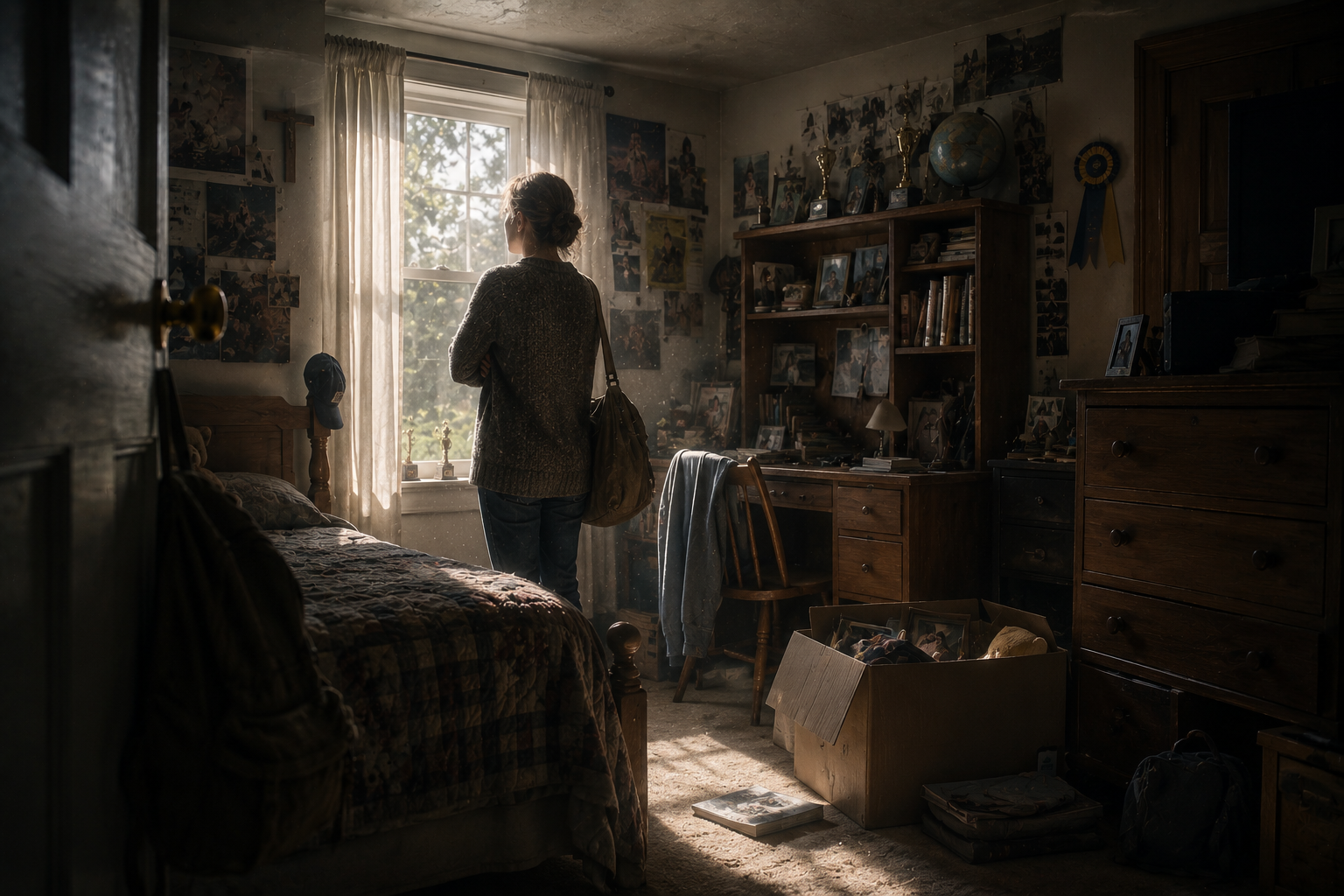
The door may have stuck, the carpet may have looked smaller, or the room may have belonged to someone else by then. This flash memoir prompt last time childhood bedroom asks you to return to one room and notice what it held, what it lost, and what you were finally ready to see.
The Prompt
Write about the last time you were in your childhood bedroom.
This prompt works because a bedroom is never just a room. It is where you slept, hid, dreamed, cried, changed clothes, taped things to the wall, and became a person in private.
The last time you saw that room may have been quiet. Maybe you packed boxes before a move. Maybe you visited after years away. Maybe you stood in the doorway after a parent sold the house. The memory may seem small at first, but it can open into a sharp story about leaving, growing up, or seeing your younger self with new eyes.
If you are looking for a flash memoir prompt last time childhood bedroom, try to stay with one moment instead of explaining your whole childhood. One scene is enough.
Why This Memory Matters
Childhood bedrooms hold strange evidence. A dent in the wall can bring back a fight. A faded poster can remind you who you wanted to become. A closet can hold the version of you that needed privacy before you had the words for it.
The last visit matters because it often comes with a shift. You may enter as an adult and notice the room no longer fits you. The ceiling may seem lower. The bed may look narrow. The shelves may feel like a museum display from a life you used to live.
This prompt can uncover more than nostalgia. It may reveal grief, relief, embarrassment, humor, or gratitude. You might remember a room you could not wait to leave. You might miss a room that was never perfect. You might realize that the person you were back then had more courage than you knew.
Objects can carry meaning in memoir the same way they do in fiction. If one item in the room feels important, like a lamp, a trophy, a cracked mirror, or a shoebox, you may find it useful to read about how to find symbolism in a story. Memoir often discovers meaning through things you can touch.
How to Approach This Prompt
Begin with a physical detail. Do not start by saying what the room meant. Start with what you saw.
Maybe the room smelled like dust and old paint. Maybe the sunlight hit the floor in the same square it always had. Maybe your mother had turned it into a sewing room, and your old bed was gone. Let the detail pull you into the scene.
Then narrow the memory. Choose one moment: your hand on the doorknob, your knees on the floor as you opened a box, your last look through the window, or the sound of your voice in the empty room.
Write what you noticed before you explain what it meant. This keeps the memory alive for the reader. If you tell us, “I felt sad because my childhood was over,” the scene may feel distant. If you show us that you found a glow-in-the-dark star still stuck to the ceiling, the sadness can arrive on its own.
Avoid trying to tell the whole story of your family, your move, or your childhood home. Flash memoir is small on purpose. It asks you to trust one focused memory.
If you want to study your own draft after you write it, try marking the strongest details and the places where your emotion changes. This guide on how to annotate literature can also help you look closely at your own writing, almost as if it were a short piece you found in a book.
A Quick Example
The last time I stood in my childhood bedroom, the walls were already white. My father had painted over the purple I picked in seventh grade, the purple my mother called “a little dramatic” while she rolled it on anyway. The room echoed because the furniture was gone. I opened the closet and found one plastic star stuck to the inside of the door, left over from the pack I had pressed onto the ceiling with my thumb. I laughed first. Then I shut the closet slowly. I had spent years wanting to leave that house, but in that empty room I wanted to apologize to the girl who waited so long to become someone else.
Try It Yourself
Set a timer for ten minutes and write from this flash memoir prompt last time childhood bedroom. Begin with the room as it looked that final time, not as it looked in every year before.
Let one object lead you. If you get stuck, write the sentence, “I did not expect to notice…” and keep going. You may find the real memory inside that answer.
Do not worry about making the piece neat at first. A flash memoir can start as a few vivid lines. Later, you can shape it into a scene with a clear beginning and a quiet turn at the end.
Most of all, let the room be honest. It does not have to be sweet. It does not have to be painful. It only has to be yours.
Want More Flash Memoir Prompts?
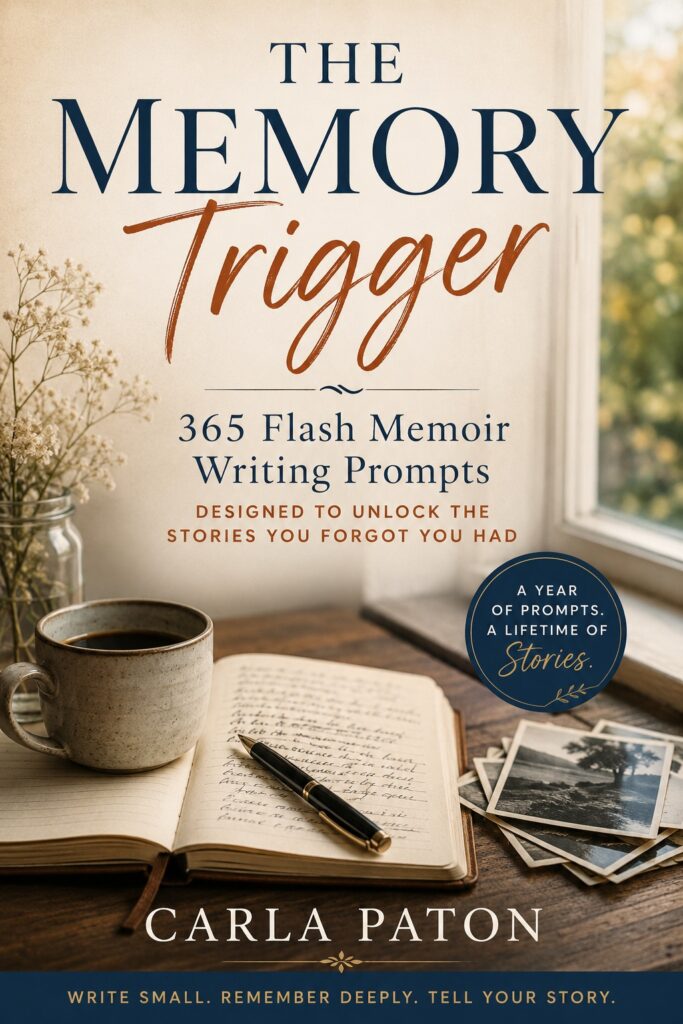
If this prompt helped you return to one room with fresh attention, keep going. Explore all 365 prompts in The Memory Trigger: 365 Flash Memoir Writing Prompts.