Themes in The Things They Carried: A Student-Friendly Guide

Themes in Things They Carried

A clear guide to the major ideas, conflicts, and meanings students should notice in The Things They Carried.

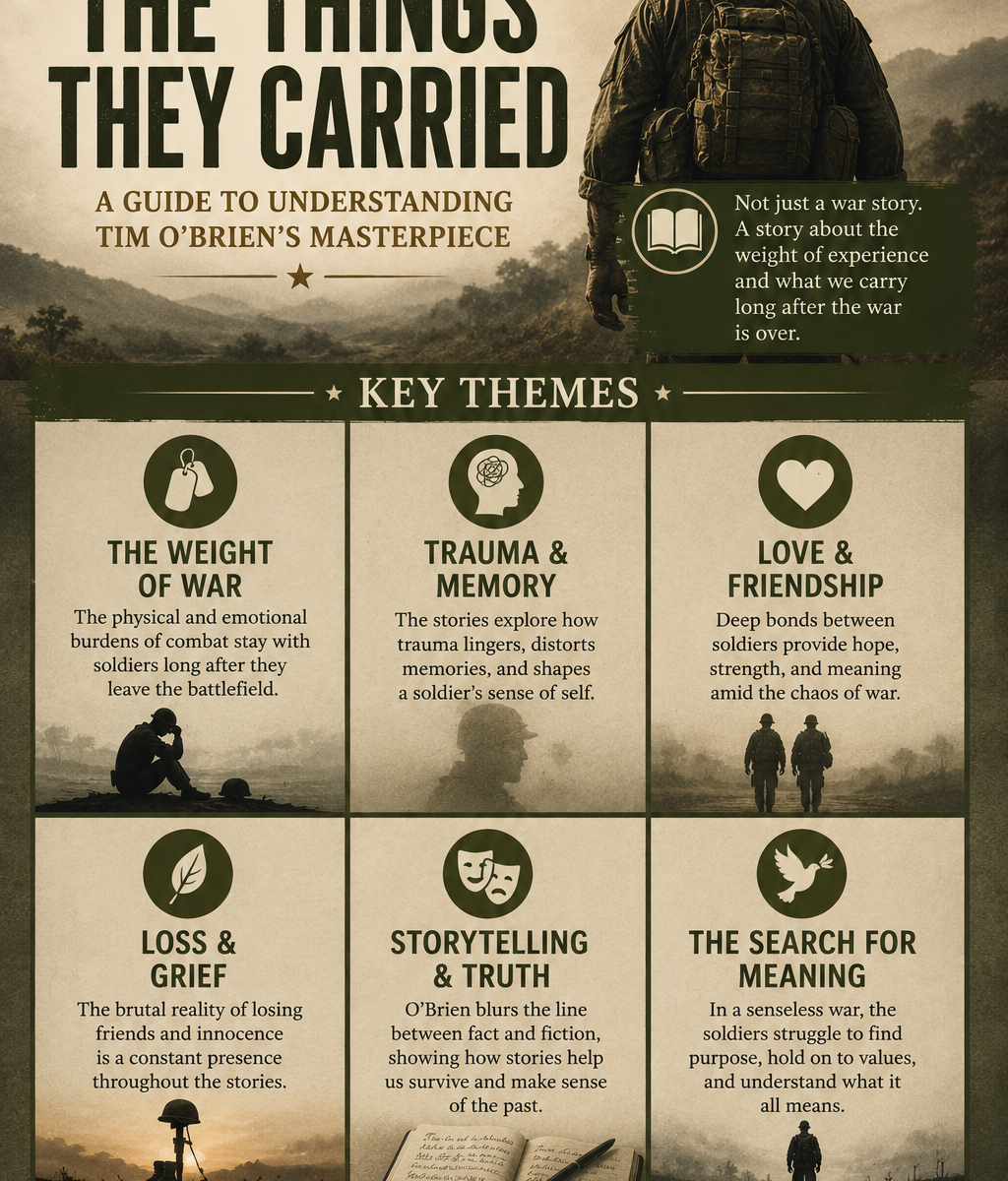
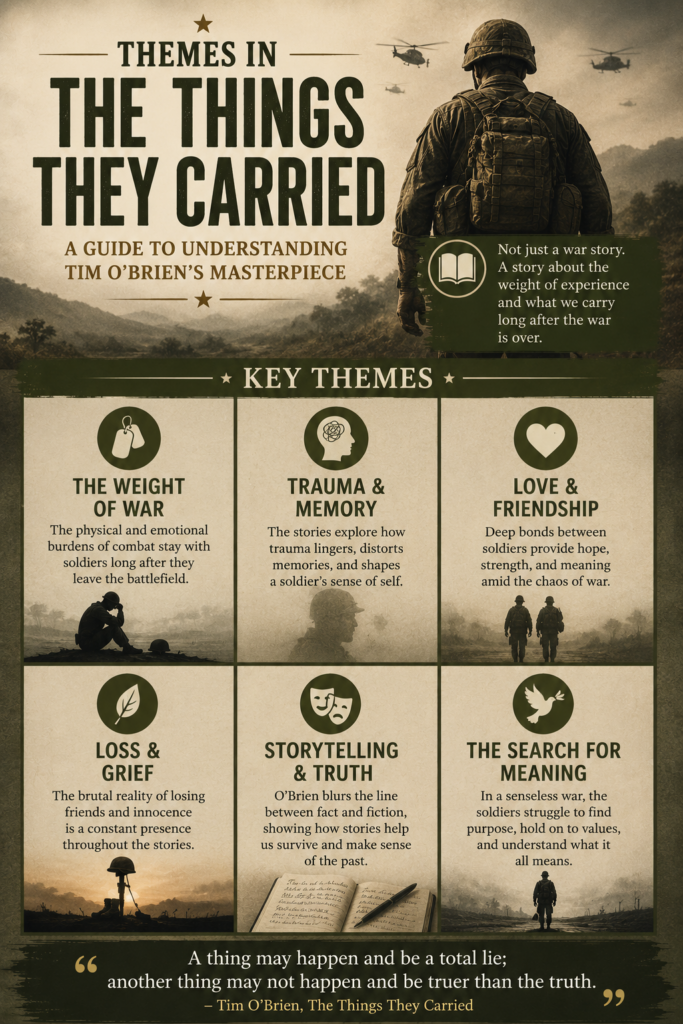
The themes in The Things They Carried help readers see the deep cost of war on the mind, body, and heart. Tim O’Brien does not just write about combat. He writes about fear, memory, guilt, truth, and the stories people need in order to survive.

In this Guide

Use this guide as a map before class discussion, essay prep, or a close reading quiz.

  • Why the themes matter
  • War and fear
  • Storytelling and truth
  • Guilt and shame
  • Courage and masculinity
  • Love, loss, and memory
  • How to write about the novel
  • FAQ
Themes in Things They Carried

Why the Themes in The Things They Carried Matter

The novel asks what soldiers carry after the war ends.

At first, the title seems simple. The soldiers carry guns, food, letters, photos, and gear. Yet the real weight is emotional.

They carry fear, regret, secrets, and memories. Those burdens do not fit in a backpack, but they shape every choice the men make.

When students study the themes in The Things They Carried, they should look at both kinds of weight. Physical objects often point to hidden pain.

This is a key reason the book works so well in AP Literature and college courses. It turns small details into big questions about truth, trauma, and survival.

Major themes in The Things They Carried

The novel has no single easy message about war.

The major themes in The Things They Carried overlap. Fear connects to shame. Shame connects to courage. Memory connects to truth.

O’Brien writes the book as linked stories, not as a straight plot. This form helps readers feel how memory works. The past comes back in pieces.

These themes in The Things They Carried also make the novel feel personal. Even when the setting is Vietnam, the deeper questions matter far beyond one war.

For background on the real conflict behind the novel, Britannica’s overview of the Vietnam War is a helpful place to start.

War and the Weight of Fear

Fear is one of the strongest forces in the novel.

The soldiers fear death, wounds, traps, and mistakes. They also fear looking weak in front of each other.

This kind of fear changes how they act. Some men joke. Some turn quiet. And some try to prove they are brave, even when they are not.

O’Brien shows that fear in war is not rare. It is constant. It becomes part of daily life.

This theme also appears in novels like All Quiet on the Western Front by Erich Maria Remarque. Both books show war as a place where young men lose their old ideas about honor.

Storytelling, Memory, and Truth

O’Brien wants readers to question what truth means in a story.

One of the most famous ideas in the book is that a story can feel true even if every fact is not exact. O’Brien calls attention to the difference between happening-truth and story-truth.

This does not mean the book says facts do not matter. It means memory can hold emotional truth in ways a report cannot.

A soldier may not remember every detail in order. Yet he may remember the guilt, sound, heat, or fear with painful force.

This is one of the most important themes in The Things They Carried because the whole book is built around memory. Stories help the narrator return to the past, face it, and give it shape.

For more on the author, see Britannica’s brief biography of Tim O’Brien.

Guilt, Shame, and Moral Confusion

The novel treats guilt as a wound that does not heal fast.

Many characters feel guilt for things they did, did not do, or could not stop. This guilt is not always logical, but it is real.

Lieutenant Jimmy Cross feels guilt after Ted Lavender dies. He thinks his daydreams about Martha made him fail as a leader.

O’Brien also explores guilt through stories about killing. The narrator cannot escape the image of a dead young man, even as others try to make the moment seem normal.

The moral world of the novel is muddy. Characters often do not know what the right choice is. Even after they choose, they may not be sure what the choice means.

This is different from a simple hero story. Like Macbeth, the book shows how guilt can replay in the mind long after the act itself.

Masculinity and the Pressure to Be Brave

The soldiers are often trapped by what they think manhood requires.

In the novel, courage is not always pure. Sometimes men act brave because they fear shame more than danger.

O’Brien says he went to war partly because he was embarrassed not to. That detail makes courage more complex.

The book asks a sharp question: Is it brave to go along with what others expect, or brave to resist?

This theme matters for students because it breaks apart a common idea about war. The novel does not treat bravery as simple strength. It shows bravery as fear, pride, doubt, and pain mixed together.

Love, Loss, and Emotional Burdens

Love is another thing the characters carry.

Jimmy Cross carries Martha’s letters and photos. He turns them into a dream of comfort, but that dream cannot protect him from war.

Other characters carry memories of home, family, and old selves. Those memories can help them survive, but they can also hurt.

Loss appears over and over. Some deaths happen fast. Some losses happen slowly, as men become less like the people they were before Vietnam.

This is why the title matters so much. The men do not just carry supplies. They carry emotional lives that war keeps breaking open.

How to Write About themes in The Things They Carried

A strong essay connects theme to choices the author makes.

When you write about the themes in The Things They Carried, do not stop at naming a theme. Explain how O’Brien builds it through objects, structure, voice, and repeated memories.

A weak claim says, war is bad. A stronger claim says O’Brien shows war as a force that blurs truth, creates guilt, and leaves soldiers with memories they cannot set down.

Use short quotes and explain them closely. Look at what the object, image, or story reveals about a character’s inner life.

If you need help turning a theme into a thesis, use our guide on how to write a literary analysis essay. It can help you move from notes to a clear argument.

For a quick study boost, you can also use the RapidReads Press theme study guide to track key scenes and build better paragraphs.

Essay Examples: Turning Theme into Analysis

Good analysis makes a theme specific.

Here is a basic idea: The book is about memory.

Here is a stronger version: In The Things They Carried, O’Brien presents memory as both a burden and a survival tool, since stories force the narrator to relive trauma while also helping him face it.

That second sentence gives you more to prove. You can point to the book’s repeated scenes, shifting truth claims, and return to dead characters through story.

Another essay could focus on shame. You might argue that O’Brien presents shame as more powerful than patriotism because men often choose danger to avoid public judgment.

For more help with essay structure, this literary analysis essay guide can help you build topic sentences and evidence.

Books to Search for on Amazon

These related books can deepen your understanding of war literature.

Going After Cacciato by Tim O’Brien is another novel that mixes war, memory, and imagination.

Dispatches by Michael Herr offers a vivid nonfiction look at the Vietnam War and its psychological strain.

These books pair well with the themes in The Things They Carried because they also ask how people describe events that seem almost impossible to explain.

FAQ: themes in The Things They Carried

Here are quick answers to common student questions.

What are the main themes in The Things They Carried?

The main themes in The Things They Carried include the burden of war, fear, guilt, shame, memory, storytelling, and the pressure to seem brave.

What does the title mean?

The title refers to both physical items and emotional burdens. The soldiers carry weapons and supplies, but they also carry grief, fear, and memory.

Why is storytelling so important in the novel?

Storytelling helps the narrator return to painful memories. It also lets him explore a deeper kind of truth than facts alone can show.

Is The Things They Carried anti-war?

The book strongly shows the damage war causes. It does not preach in a simple way, but it does question ideas about glory, courage, and honor.

How can I write a thesis about the novel?

Choose one theme and explain how O’Brien develops it. Mention a method, such as symbols, repeated stories, or the narrator’s voice.

Key Takeaway

The novel shows that the heaviest burdens are often invisible.

The themes in The Things They Carried reveal war as a lasting mental and emotional weight. O’Brien’s stories ask readers to see truth not only in what happened, but in what people carry afterward.

Themes in Their Eyes Were Watching God: A Student-Friendly Guide

Their Eyes Were Watching God Themes

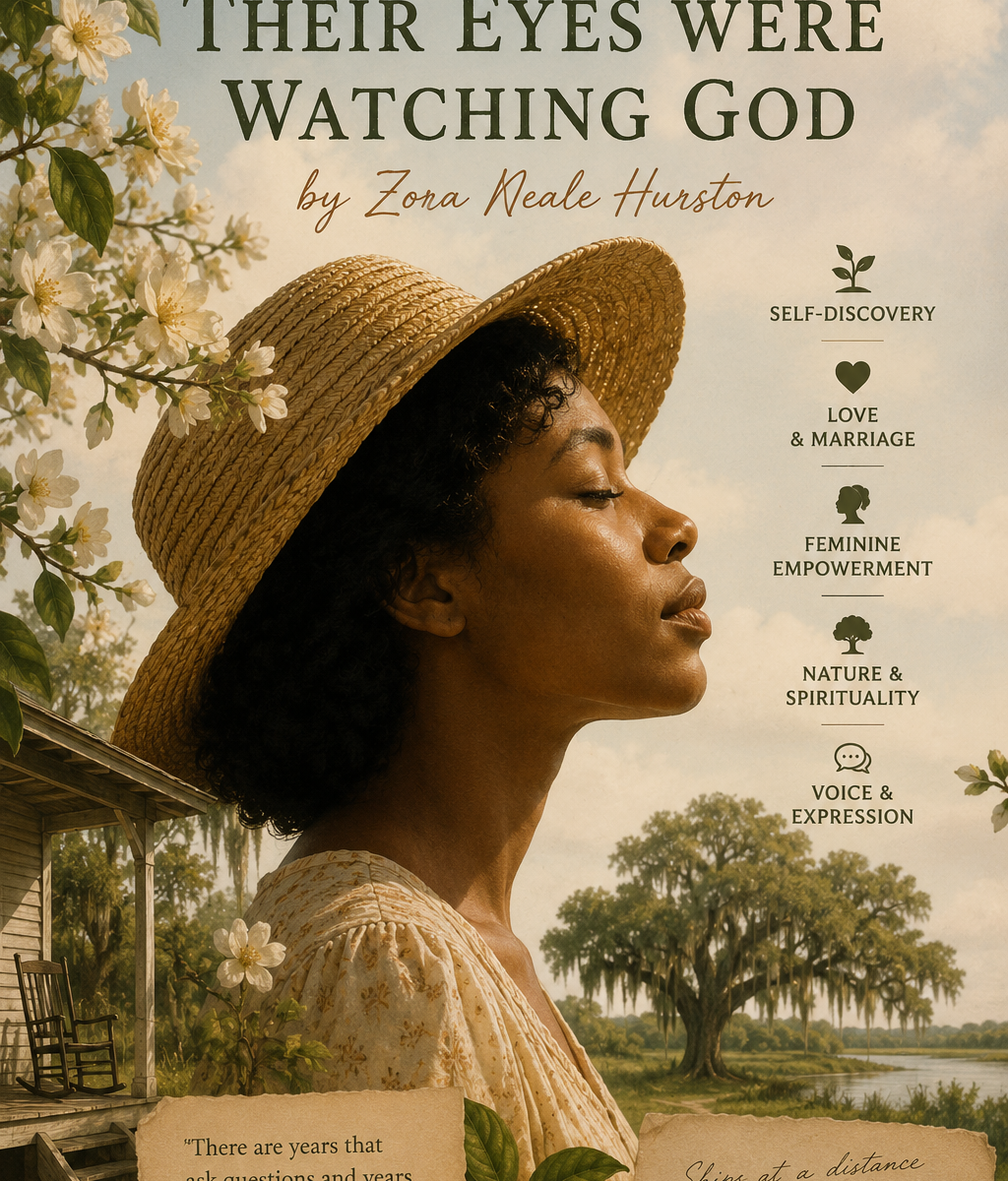
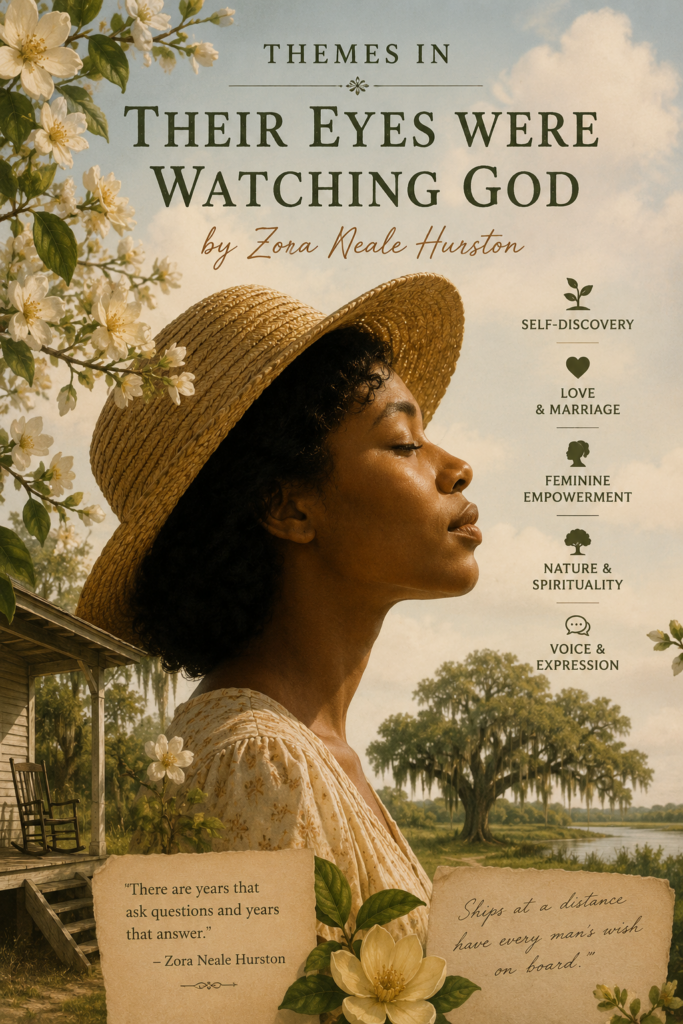
Zora Neale Hurston’s novel follows Janie Crawford as she searches for love, voice, and a life that feels like her own. The themes in Their Eyes Were Watching God help students see why Janie’s story still matters in classrooms today.

In this Guide

Use this guide to focus your reading and prepare for class discussion.

Their Eyes Were Watching God Themes

Why the themes in Their Eyes Were Watching God Matter

The novel is not just about what happens to Janie. It is about what she learns as she moves through love, pain, and freedom.

The themes in Their Eyes Were Watching God show how hard it can be to find yourself when others keep trying to define you. Janie’s life is shaped by family pressure, marriage, gossip, race, and gender roles.

Hurston also writes with deep respect for Black Southern speech and culture. You can learn more about her life and work through Britannica’s profile of Zora Neale Hurston.

Major themes in Their Eyes Were Watching God

These are the main ideas students should track as they read the novel.

Self-discovery and voice

Janie’s biggest journey is the search for her own voice. At first, other people speak for her or decide what her life should mean.

Logan Killicks sees her as labor. Jody Starks sees her as a symbol of his power. Tea Cake gives her more space to speak, but Janie still must learn to stand on her own.

This theme is clear at the end when Janie tells her story to Pheoby. Her voice becomes proof that she survived and grew.

Love and control

Love and power are often tied together in the novel. Hurston asks whether love can be real if one person tries to control the other.

Janie’s first marriage gives her safety but no joy. Her second marriage gives her status but takes away freedom. With Tea Cake, love feels more alive, but it is not perfect.

A useful comparison is Jane Eyre by Charlotte Brontë. Like Janie, Jane wants love, but she also wants respect and self-rule.

Gender roles and power

Janie lives in a world where men often expect women to stay quiet. Jody makes this clear when he keeps Janie off the porch and away from public talk.

The porch becomes more than a place. It shows who has a voice and who gets pushed aside.

Janie’s growth comes when she stops living only by other people’s rules. She does not reject love, but she refuses to disappear inside it.

Race, community, and judgment

The novel shows Black community life with humor, beauty, conflict, and pressure. Eatonville is a place of pride, but it is also full of gossip and judgment.

People watch Janie closely because she does not always fit what they expect. Her return in overalls shocks the town because they judge her before they hear her story.

This is one reason the frame story matters. Janie’s own account pushes back against the town’s narrow view of her life.

Nature, God, and fate

Nature is powerful in the novel. The pear tree, the mule, the horizon, and the hurricane all point to forces larger than daily life.

The hurricane is one of the clearest examples. It reminds readers that human plans can be broken by forces no one can control.

The title itself points to this idea. During the storm, the characters look toward God because they know human power has limits.

Symbols That Support the themes in Their Eyes Were Watching God

Hurston’s symbols help turn ideas into images students can remember.

The pear tree represents Janie’s early dream of love. She sees beauty, union, and desire in the natural world.

The horizon stands for possibility. Janie keeps reaching toward a life that feels wider than the one others choose for her.

The mule shows burden and mistreatment. It connects to the way people, especially women, can be used by others.

These symbols make the themes in Their Eyes Were Watching God easier to trace. If you want more help with this skill, read our guide on how to find symbolism in a story.

How Hurston’s Style Builds Meaning

The way Hurston tells the story is just as important as the plot.

Hurston uses a frame story, which means Janie tells her past from a later point in her life. This gives Janie control over her own story.

The novel also shifts between poetic narration and spoken dialogue. This mix helps readers hear both Janie’s inner life and the life of her community.

For context on the wider literary movement around Hurston’s era, see Poetry Foundation’s introduction to the Harlem Renaissance.

How to Write About themes in Their Eyes Were Watching God

A strong essay should connect a theme to Janie’s growth, not just name the theme.

When you write about themes in Their Eyes Were Watching God, start with a clear claim. For example, you might argue that Janie’s voice becomes stronger each time she leaves a life that limits her.

Then use key scenes. Good choices include Janie under the pear tree, Jody silencing her in the store, the hurricane, and Janie’s final talk with Pheoby.

You can also connect theme and symbol. The horizon works well because it follows Janie’s desire for freedom across the novel. For extra practice, use this symbolism reading strategy as you gather evidence.

Related Books Students May Find Helpful

These books can help you compare voice, identity, and freedom across different works.

  • Their Eyes Were Watching God by Zora Neale Hurston
  • Jane Eyre by Charlotte Brontë
  • The Color Purple by Alice Walker

FAQ About themes in Their Eyes Were Watching God

These quick answers can help with review before a quiz or essay.

What are the main themes in Their Eyes Were Watching God?

The main themes include self-discovery, voice, love, power, gender roles, race, community, nature, and fate.

Why is Janie’s voice important?

Janie’s voice shows her growth. By telling her own story, she claims the meaning of her life.

What does the pear tree symbolize?

The pear tree symbolizes Janie’s dream of love, beauty, and emotional connection.

How does the hurricane connect to the title?

The hurricane shows that people are not fully in control. In that moment, the characters look toward God and face the power of nature.

Is Tea Cake the answer to Janie’s search?

Not fully. Tea Cake helps Janie experience a freer kind of love, but Janie’s final strength comes from within herself.

Key Takeaway

Janie’s story is about more than romance. The deepest themes in Their Eyes Were Watching God show a woman learning to speak, choose, and live as herself.

Themes in The Outsiders: A Student-Friendly Guide

The Outsiders themes

S.E. Hinton’s The Outsiders is short, but it gives students a lot to study. The themes in The Outsiders focus on class conflict, loyalty, violence, and the search for identity.

This guide explains the big ideas behind the story so you can discuss them with confidence in class or in an essay.

In this Guide

  • Why the novel’s themes matter
  • Major ideas students should know
  • Class conflict between Greasers and Socs
  • Loyalty, family, and friendship
  • Violence and loss
  • How to write about the novel
  • FAQ and key takeaway
The Outsiders themes

Why the themes in The Outsiders Matter

A theme is a message a story builds through choices, conflict, and change.

The themes in The Outsiders matter because the novel is not just about rival groups. It asks why people judge each other and what happens when pain turns into violence.

Ponyboy’s world may seem simple at first: Greasers versus Socs. As the story moves on, that line becomes less clear. The novel shows that people are more complex than their labels.

Major themes in The Outsiders Students Should Know

The novel’s biggest ideas connect to real questions about belonging and fairness.

Several themes in The Outsiders appear again and again. The most important ones include **social class**, **loyalty**, **violence**, identity, and the loss of innocence.

These ideas help explain why the story still feels fresh to students. The setting may belong to the 1960s, but the problems feel familiar in school, families, and friendships today.

For background on the novel and its place in young adult literature, you can read Britannica’s overview of The Outsiders.

Social Class as One of the themes in The Outsiders

Class conflict drives much of the novel’s tension.

The Greasers and Socs live close to each other, but they do not have the same lives. The Socs have money, clean cars, and social power. The Greasers face poverty and public judgment.

Hinton shows that class shapes how people see themselves. Ponyboy knows that adults and strangers often expect Greasers to be trouble.

Yet the Socs are not shown as fully happy either. Cherry helps Ponyboy see that wealth does not erase pain. This makes the class conflict more human and less simple.

A useful comparison is Romeo and Juliet. Shakespeare’s play also shows two groups trapped by old hatred. In both works, young people pay the price for a conflict they did not start.

Loyalty, Family, and Chosen Bonds

In the novel, family is not only about blood.

Ponyboy, Sodapop, and Darry are brothers, but their home life is hard after their parents die. Darry acts strict because he fears losing his family. Ponyboy often mistakes that fear for anger.

The Greasers also form a chosen family. They protect each other because the world often does not protect them.

Johnny’s bond with the group is especially important. His home is unsafe, so the Greasers become the people he trusts. His story shows why loyalty can feel like survival.

If you want to study how Ponyboy, Johnny, or Darry reveal theme, this guide on how to analyze characters in literature can help.

Violence and the Cost of Conflict

The novel does not treat violence as exciting or harmless.

Fights in The Outsiders often begin because characters feel trapped, scared, or ashamed. Violence may seem like power, but it leaves grief behind.

The church fire changes the way we see Johnny and Ponyboy. They risk their lives to save children, which proves they are not the criminals others expect them to be.

Bob’s death, Johnny’s injuries, and Dally’s final moments show the cost of a world built on revenge. Hinton makes readers ask what might have happened if the characters had more support.

Identity and Seeing People Clearly

Ponyboy learns that people cannot be understood by group names alone.

At first, the labels seem fixed: Greaser and Soc. Over time, Ponyboy sees that these labels hide real feelings.

Cherry tells Ponyboy that things are rough all over. That line matters because it does not erase class differences, but it does challenge hate. It asks Ponyboy to see people more clearly.

This theme resembles part of To Kill a Mockingbird by Harper Lee. Both novels ask readers to look past easy judgments and notice the person beneath the label.

Innocence, Loss, and the Meaning of Stay Gold

The phrase “stay gold” is one of the novel’s most famous ideas.

Johnny tells Ponyboy to “stay gold” near the end of the story. He wants Ponyboy to keep his kindness, wonder, and sense of beauty.

This idea connects to Robert Frost’s poem “Nothing Gold Can Stay,” which Ponyboy and Johnny discuss. You can read about Frost at the Poetry Foundation.

The message is sad, but it is not hopeless. Ponyboy cannot stay innocent in the same way, but he can still choose empathy.

How to Write About themes in The Outsiders

Strong theme writing connects an idea to evidence from the story.

When you write about themes in The Outsiders, avoid a sentence like “This book has loyalty.” That is too plain. Try a claim that explains what the novel says about loyalty.

For example: Hinton shows that loyalty can protect people, but it can also keep them stuck in dangerous conflicts.

Then use scenes with the Greasers, Johnny, or Darry as evidence. Explain how the scene proves your point. Do not just retell the plot.

If you want a simple study tool for planning theme paragraphs, try our literature theme analysis worksheet.

Books That Pair Well with The Outsiders

These books can help students compare similar ideas about class, identity, and growing up.

  • That Was Then, This Is Now by S.E. Hinton
  • To Kill a Mockingbird by Harper Lee
  • Romeo and Juliet by William Shakespeare

Each title gives students a way to compare conflict across time and place.

FAQ About themes in The Outsiders

These short answers can help with homework, class notes, or essay prep.

What are the main themes in The Outsiders?

The main themes in The Outsiders include social class, loyalty, violence, identity, and loss of innocence.

What is the most important theme in The Outsiders?

Many readers see social class as the most important theme because the Greaser and Soc conflict shapes the whole story.

What does “stay gold” mean?

It means to keep your goodness and sense of wonder, even after pain or loss.

How does Ponyboy change?

Ponyboy learns to question labels and see people with more empathy.

Key Takeaway

The themes in The Outsiders show that people are more than their group, their money, or their worst moment.

Hinton’s novel reminds students that empathy is not weak. It is the first step toward understanding.