

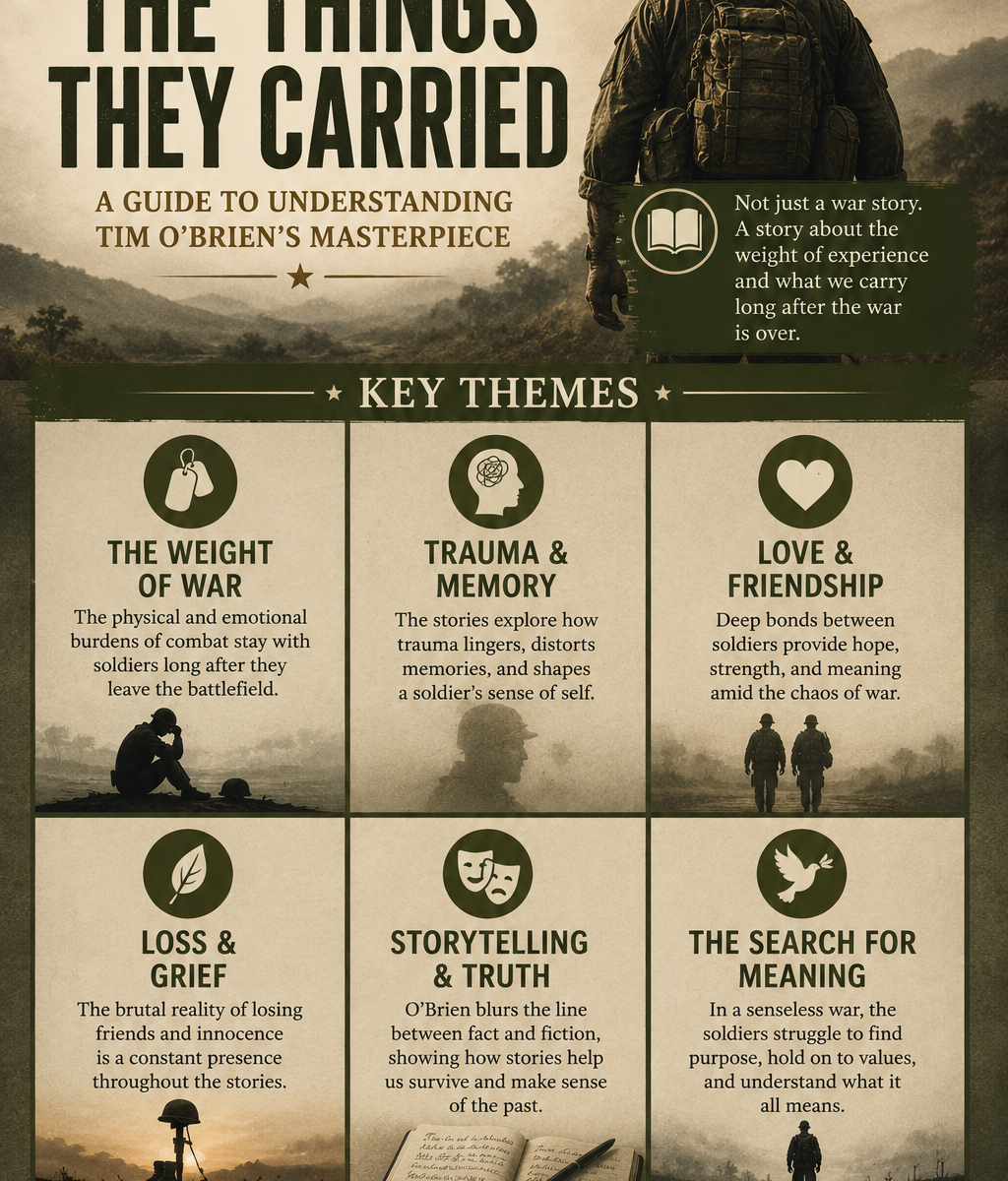
A clear guide to the major ideas, conflicts, and meanings students should notice in The Things They Carried.
The themes in The Things They Carried help readers see the deep cost of war on the mind, body, and heart. Tim O’Brien does not just write about combat. He writes about fear, memory, guilt, truth, and the stories people need in order to survive.
In this Guide
Use this guide as a map before class discussion, essay prep, or a close reading quiz.
- Why the themes matter
- War and fear
- Storytelling and truth
- Guilt and shame
- Courage and masculinity
- Love, loss, and memory
- How to write about the novel
- FAQ
Why the Themes in The Things They Carried Matter
The novel asks what soldiers carry after the war ends.
At first, the title seems simple. The soldiers carry guns, food, letters, photos, and gear. Yet the real weight is emotional.
They carry fear, regret, secrets, and memories. Those burdens do not fit in a backpack, but they shape every choice the men make.
When students study the themes in The Things They Carried, they should look at both kinds of weight. Physical objects often point to hidden pain.
This is a key reason the book works so well in AP Literature and college courses. It turns small details into big questions about truth, trauma, and survival.
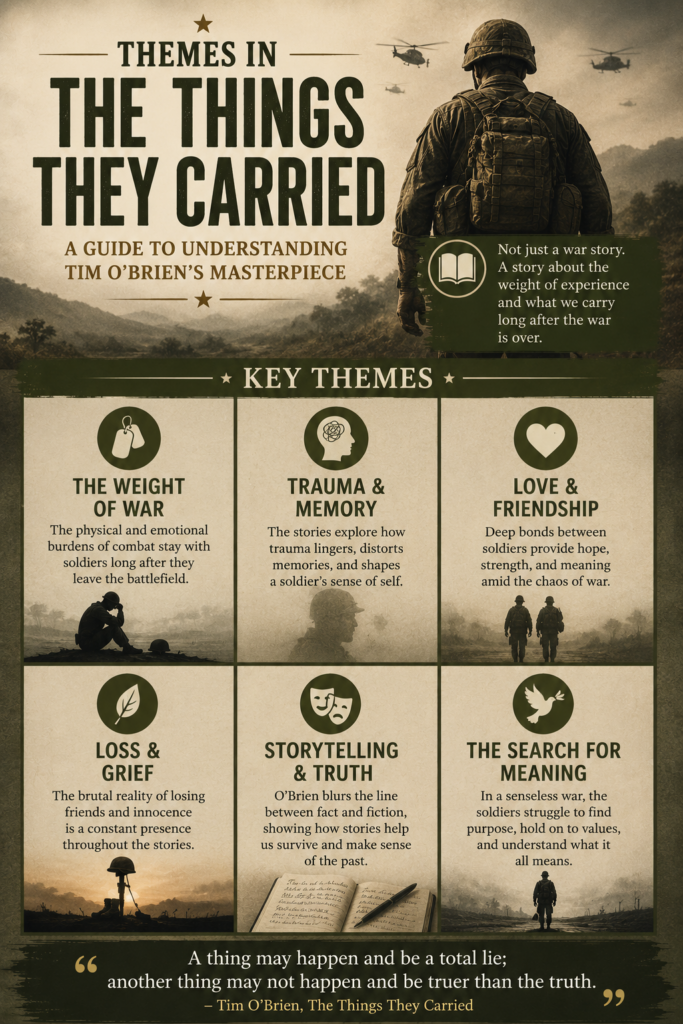
Major themes in The Things They Carried
The novel has no single easy message about war.
The major themes in The Things They Carried overlap. Fear connects to shame. Shame connects to courage. Memory connects to truth.
O’Brien writes the book as linked stories, not as a straight plot. This form helps readers feel how memory works. The past comes back in pieces.
These themes in The Things They Carried also make the novel feel personal. Even when the setting is Vietnam, the deeper questions matter far beyond one war.
For background on the real conflict behind the novel, Britannica’s overview of the Vietnam War is a helpful place to start.
War and the Weight of Fear
Fear is one of the strongest forces in the novel.
The soldiers fear death, wounds, traps, and mistakes. They also fear looking weak in front of each other.
This kind of fear changes how they act. Some men joke. Some turn quiet. And some try to prove they are brave, even when they are not.
O’Brien shows that fear in war is not rare. It is constant. It becomes part of daily life.
This theme also appears in novels like All Quiet on the Western Front by Erich Maria Remarque. Both books show war as a place where young men lose their old ideas about honor.
Storytelling, Memory, and Truth
O’Brien wants readers to question what truth means in a story.
One of the most famous ideas in the book is that a story can feel true even if every fact is not exact. O’Brien calls attention to the difference between happening-truth and story-truth.
This does not mean the book says facts do not matter. It means memory can hold emotional truth in ways a report cannot.
A soldier may not remember every detail in order. Yet he may remember the guilt, sound, heat, or fear with painful force.
This is one of the most important themes in The Things They Carried because the whole book is built around memory. Stories help the narrator return to the past, face it, and give it shape.
For more on the author, see Britannica’s brief biography of Tim O’Brien.
Guilt, Shame, and Moral Confusion
The novel treats guilt as a wound that does not heal fast.
Many characters feel guilt for things they did, did not do, or could not stop. This guilt is not always logical, but it is real.
Lieutenant Jimmy Cross feels guilt after Ted Lavender dies. He thinks his daydreams about Martha made him fail as a leader.
O’Brien also explores guilt through stories about killing. The narrator cannot escape the image of a dead young man, even as others try to make the moment seem normal.
The moral world of the novel is muddy. Characters often do not know what the right choice is. Even after they choose, they may not be sure what the choice means.
This is different from a simple hero story. Like Macbeth, the book shows how guilt can replay in the mind long after the act itself.
Masculinity and the Pressure to Be Brave
The soldiers are often trapped by what they think manhood requires.
In the novel, courage is not always pure. Sometimes men act brave because they fear shame more than danger.
O’Brien says he went to war partly because he was embarrassed not to. That detail makes courage more complex.
The book asks a sharp question: Is it brave to go along with what others expect, or brave to resist?
This theme matters for students because it breaks apart a common idea about war. The novel does not treat bravery as simple strength. It shows bravery as fear, pride, doubt, and pain mixed together.
Love, Loss, and Emotional Burdens
Love is another thing the characters carry.
Jimmy Cross carries Martha’s letters and photos. He turns them into a dream of comfort, but that dream cannot protect him from war.
Other characters carry memories of home, family, and old selves. Those memories can help them survive, but they can also hurt.
Loss appears over and over. Some deaths happen fast. Some losses happen slowly, as men become less like the people they were before Vietnam.
This is why the title matters so much. The men do not just carry supplies. They carry emotional lives that war keeps breaking open.
How to Write About themes in The Things They Carried
A strong essay connects theme to choices the author makes.
When you write about the themes in The Things They Carried, do not stop at naming a theme. Explain how O’Brien builds it through objects, structure, voice, and repeated memories.
A weak claim says, war is bad. A stronger claim says O’Brien shows war as a force that blurs truth, creates guilt, and leaves soldiers with memories they cannot set down.
Use short quotes and explain them closely. Look at what the object, image, or story reveals about a character’s inner life.
If you need help turning a theme into a thesis, use our guide on how to write a literary analysis essay. It can help you move from notes to a clear argument.
For a quick study boost, you can also use the RapidReads Press theme study guide to track key scenes and build better paragraphs.
Essay Examples: Turning Theme into Analysis
Good analysis makes a theme specific.
Here is a basic idea: The book is about memory.
Here is a stronger version: In The Things They Carried, O’Brien presents memory as both a burden and a survival tool, since stories force the narrator to relive trauma while also helping him face it.
That second sentence gives you more to prove. You can point to the book’s repeated scenes, shifting truth claims, and return to dead characters through story.
Another essay could focus on shame. You might argue that O’Brien presents shame as more powerful than patriotism because men often choose danger to avoid public judgment.
For more help with essay structure, this literary analysis essay guide can help you build topic sentences and evidence.
Books to Search for on Amazon
These related books can deepen your understanding of war literature.
Going After Cacciato by Tim O’Brien is another novel that mixes war, memory, and imagination.
Dispatches by Michael Herr offers a vivid nonfiction look at the Vietnam War and its psychological strain.
These books pair well with the themes in The Things They Carried because they also ask how people describe events that seem almost impossible to explain.
FAQ: themes in The Things They Carried
Here are quick answers to common student questions.
What are the main themes in The Things They Carried?
The main themes in The Things They Carried include the burden of war, fear, guilt, shame, memory, storytelling, and the pressure to seem brave.
What does the title mean?
The title refers to both physical items and emotional burdens. The soldiers carry weapons and supplies, but they also carry grief, fear, and memory.
Why is storytelling so important in the novel?
Storytelling helps the narrator return to painful memories. It also lets him explore a deeper kind of truth than facts alone can show.
Is The Things They Carried anti-war?
The book strongly shows the damage war causes. It does not preach in a simple way, but it does question ideas about glory, courage, and honor.
How can I write a thesis about the novel?
Choose one theme and explain how O’Brien develops it. Mention a method, such as symbols, repeated stories, or the narrator’s voice.
Key Takeaway
The novel shows that the heaviest burdens are often invisible.
The themes in The Things They Carried reveal war as a lasting mental and emotional weight. O’Brien’s stories ask readers to see truth not only in what happened, but in what people carry afterward.


Get the Free Close Reading Worksheet Pack
Join my email list and receive the printable worksheet pack you can use with any novel or poem.
No spam. Just helpful guides for reading literature well.












