Types of Conflict in Literature: A Student Guide with Clear Examples

Types of Conflict in Literature

Understanding the Types of Conflict in Literature makes stories easier to read and analyze. Conflict is the struggle that pushes a character to act, change, or fail.

When you know what kind of conflict drives a story, you can write stronger essays and choose books that fit your interests.

In this Guide

Use this guide to move from basic definitions to real literary examples.

  • Why conflict matters in literature
  • The main types of conflict
  • Internal conflict
  • External conflict
  • How to identify conflict in a text
  • Examples from popular books
  • Book suggestions
  • FAQ
Types of Conflict in Literature

Why Types of Conflict in Literature Matter

Conflict gives a story its energy.

Without conflict, a story can feel flat. A character may want something, but there must be a problem in the way.

When students study the Types of Conflict in Literature, they learn to ask better questions. What does the character want? Who or what blocks that goal? What changes because of the struggle?

Conflict also helps reveal theme. In Romeo and Juliet, the conflict between the lovers and their families shows how hate can destroy love. In To Kill a Mockingbird, the conflict between justice and racism helps readers see the cost of doing what is right.

The Main Types of Conflict in Literature

Most stories use more than one conflict, but one usually stands out.

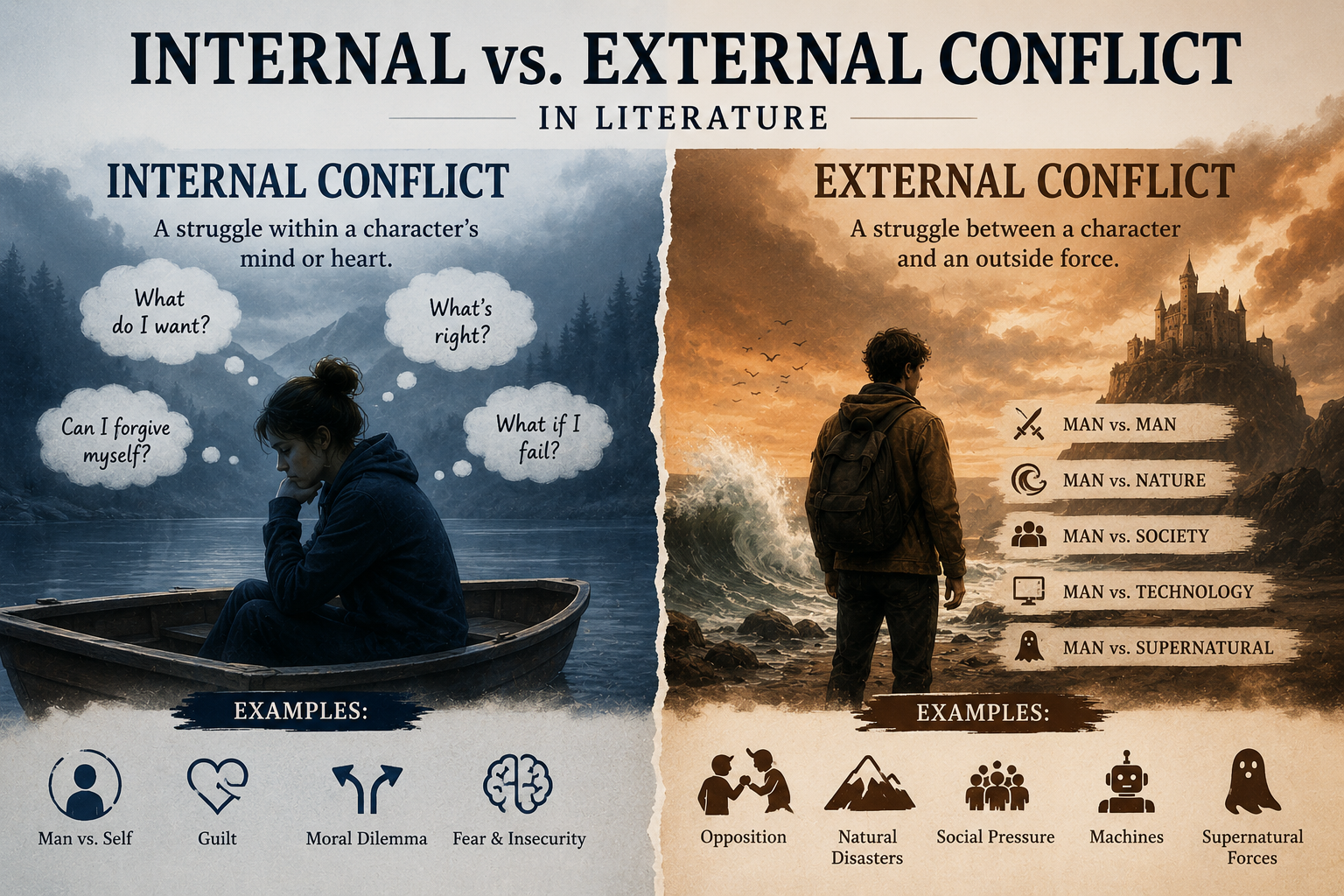
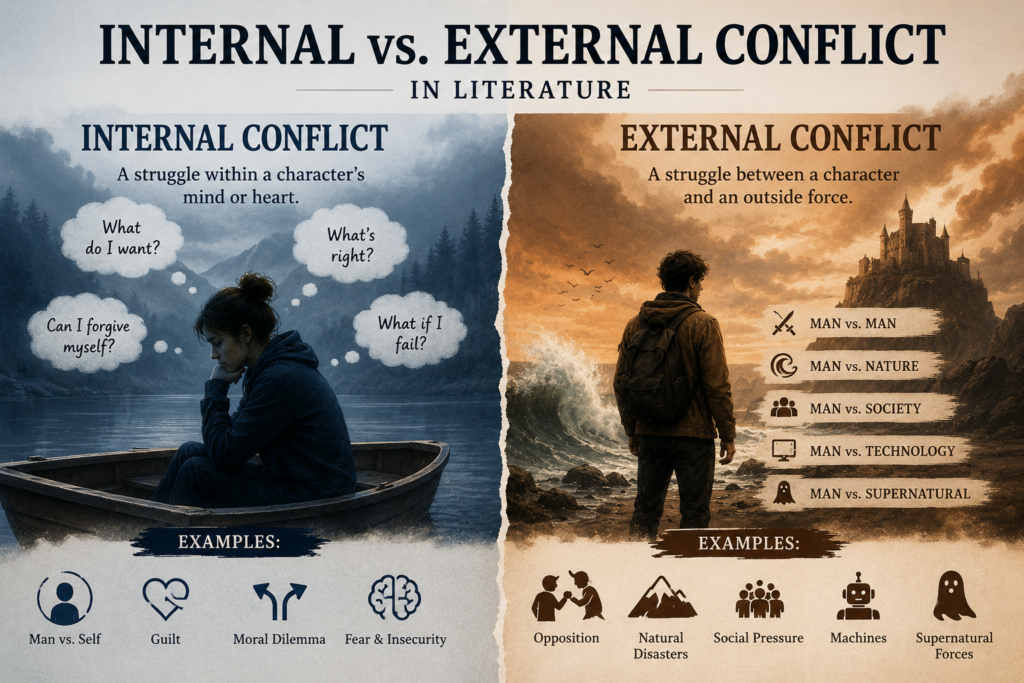
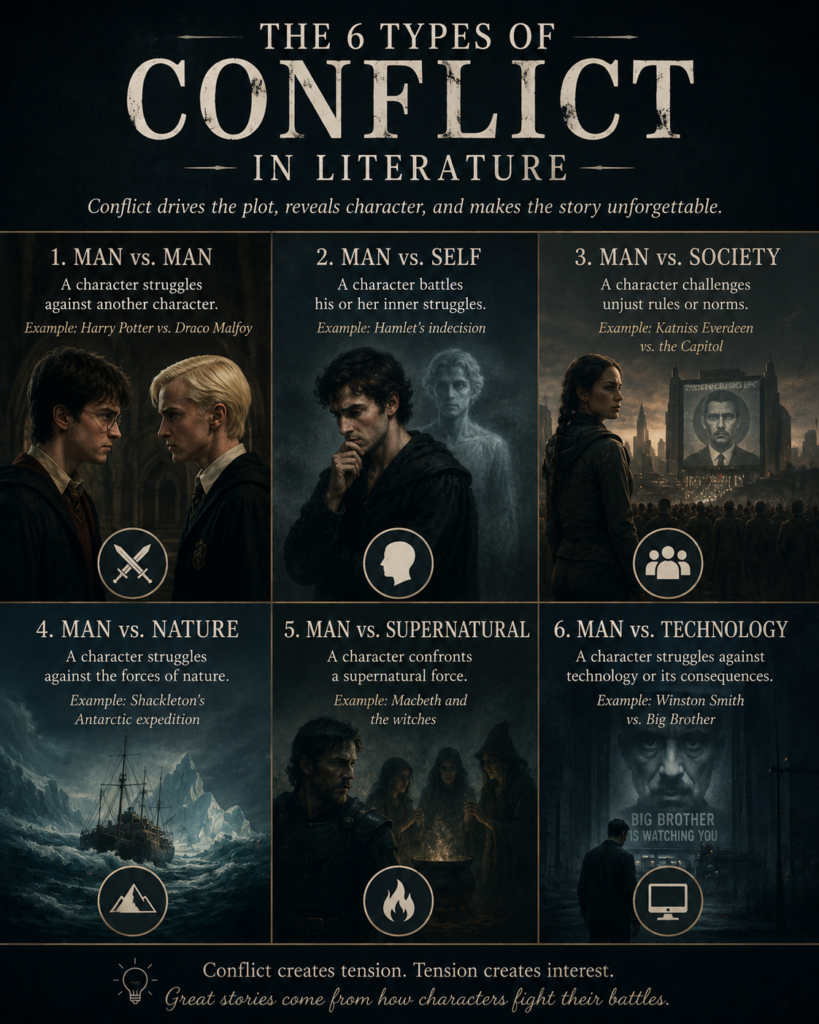
The Types of Conflict in Literature can be split into two broad groups: internal conflict and external conflict.

Internal conflict happens inside a character. The character may face fear, guilt, doubt, or a hard choice.

External conflict happens between a character and an outside force. That force may be another person, a group, nature, technology, fate, or something supernatural.

Many great books combine both. A character may fight an enemy while also fighting fear inside their own mind.

Internal Conflict: Character vs. Self

This type of conflict takes place inside the character’s mind or heart.

In a character vs. self conflict, the main struggle is personal. The character may not know what choice to make. They may feel torn between what they want and what they believe is right.

In Hamlet by William Shakespeare, Hamlet struggles with grief, revenge, and doubt. His enemy is not only Claudius. Hamlet also battles his own thoughts.

In The Catcher in the Rye by J.D. Salinger, Holden Caulfield struggles with sadness and fear of growing up. Much of the novel’s conflict comes from his inner pain.

This conflict is useful in essays because it often connects to character growth. Ask yourself: does the character learn from the struggle, or do they stay trapped?

External Conflict: Character vs. Character

This conflict happens when one character blocks another character’s goal.

Character vs. character conflict is common because people often disagree, compete, or hurt each other. The conflict can be physical, emotional, or moral.

In Harry Potter and the Sorcerer’s Stone by J.K. Rowling, Harry faces Voldemort as a major outside threat. Their conflict grows across the series as Harry learns more about courage and sacrifice.

In Othello by William Shakespeare, Iago works against Othello through lies and manipulation. The conflict is not just about power. It also shows how jealousy can break trust.

When you see this conflict, look at what each character wants. The clash between their goals often drives the plot.

External Conflict: Character vs. Society

This conflict places one person against the rules or beliefs of a group.

In character vs. society conflict, the problem is larger than one enemy. The character may face unfair laws, social pressure, prejudice, or strict traditions.

In The Hunger Games by Suzanne Collins, Katniss Everdeen fights against the Capitol’s cruel control. Her conflict is not only with individual villains. She faces a whole system built on fear.

In Fahrenheit 451 by Ray Bradbury, Guy Montag lives in a society that burns books. His conflict grows when he starts to question the world around him.

This is one of the most powerful Types of Conflict in Literature because it often asks moral questions. What should a person do when society is wrong?

External Conflict: Character vs. Nature

This conflict happens when a character struggles against the natural world.

Nature can include storms, hunger, cold, wild animals, or disease. The key point is that the character faces a force that cannot be reasoned with.

In The Old Man and the Sea by Ernest Hemingway, Santiago struggles with the sea and a great marlin. His battle shows patience, pride, and human endurance.

In Hatchet by Gary Paulsen, Brian must survive alone in the wilderness after a plane crash. The natural world tests his body and mind.

Character vs. nature stories often focus on survival. They may also show how small humans can feel when faced with forces beyond control.

External Conflict: Character vs. Technology

This conflict focuses on machines, science, or systems created by humans.

Character vs. technology is common in science fiction, but it can appear in other genres too. The conflict may involve artificial intelligence, surveillance, weapons, or a machine that changes human life.

In Frankenstein by Mary Shelley, Victor Frankenstein creates life through science and then loses control of what he has made. The novel asks if humans should create something just because they can.

In many dystopian stories, technology helps those in power control people. The danger is not only the machine. The danger is how people use it.

This type of conflict is useful for modern readers because it connects to real questions about privacy, power, and responsibility.

External Conflict: Character vs. Fate or the Supernatural

This conflict involves forces that feel beyond normal human power.

A character may face destiny, prophecy, ghosts, gods, curses, or unseen forces. The struggle often asks whether people control their lives or follow a path already set for them.

In Macbeth by William Shakespeare, the witches give Macbeth a prophecy. He chooses violent actions, but the supernatural pushes him toward ambition and fear.

In Greek tragedy, fate often plays a major role. You can learn more about the tradition of tragic drama through Britannica’s overview of tragedy.

This conflict works well in analysis because it blends choice and pressure. Ask whether the character causes the downfall or becomes trapped by forces outside human control.

How to Identify Types of Conflict in Literature

You can find conflict by tracking what the character wants and what stands in the way.

A quick way to spot the Types of Conflict in Literature is to focus on the main problem. If the problem comes from inside the character, it is internal. If the problem comes from outside, it is external.

Try asking these questions as you read:

  • What does the main character want?
  • What blocks that goal?
  • Is the struggle inside the character or outside the character?
  • Does the conflict change the character?
  • What larger idea does the conflict reveal?

If you want to build stronger reading habits, this guide on how to read literature like a scholar can help you notice deeper patterns in a text.

Types of Conflict in Popular Books

Well-known books often use several conflicts at once.

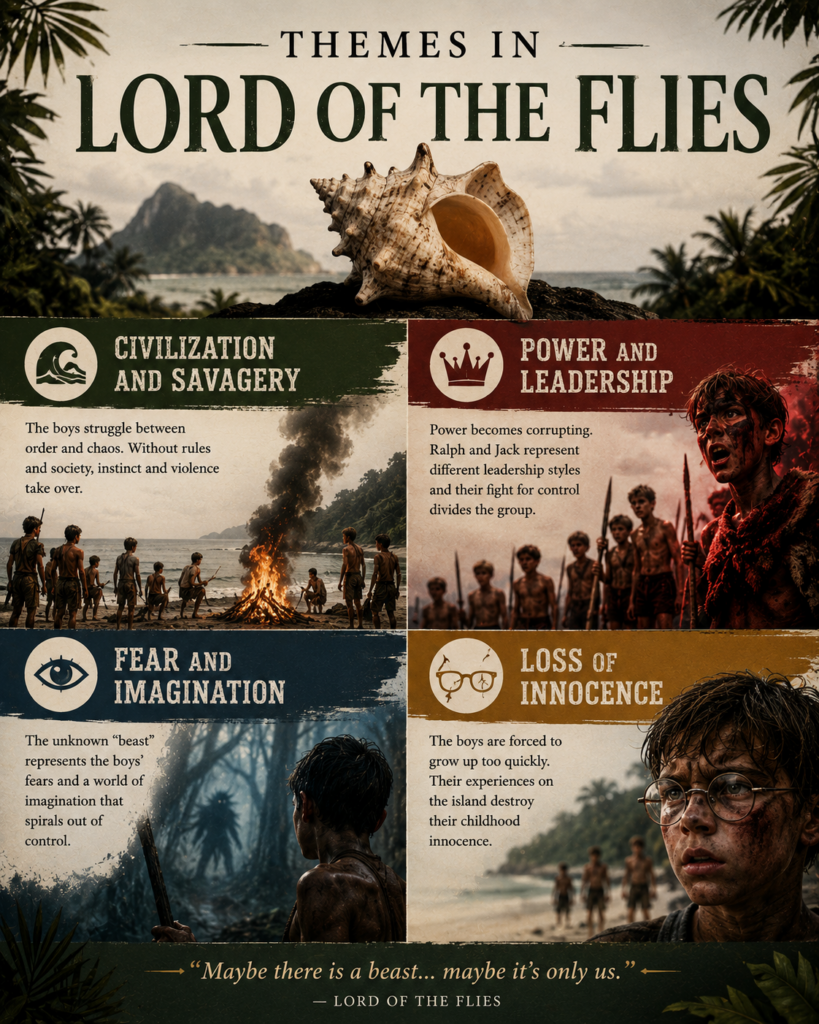
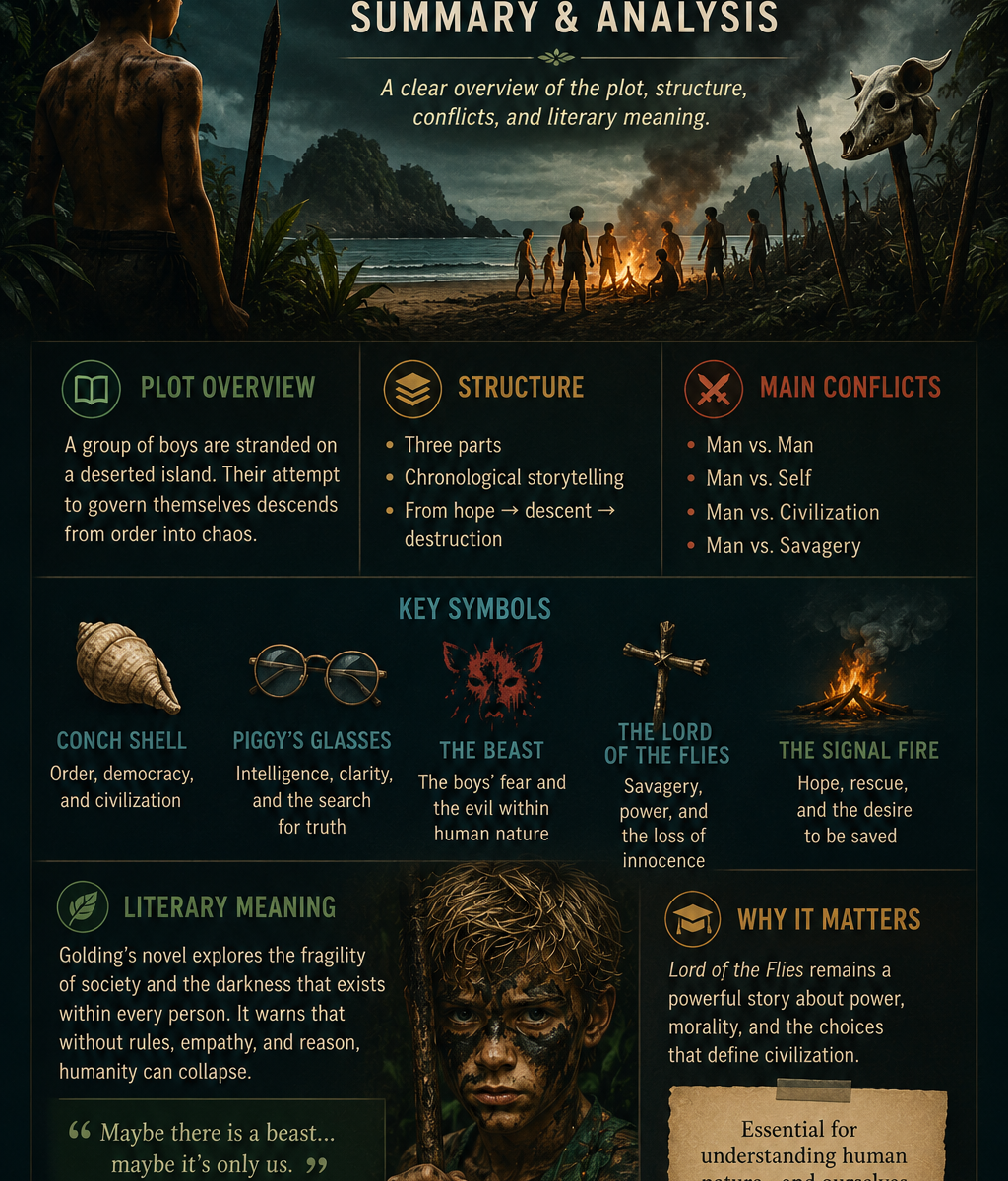
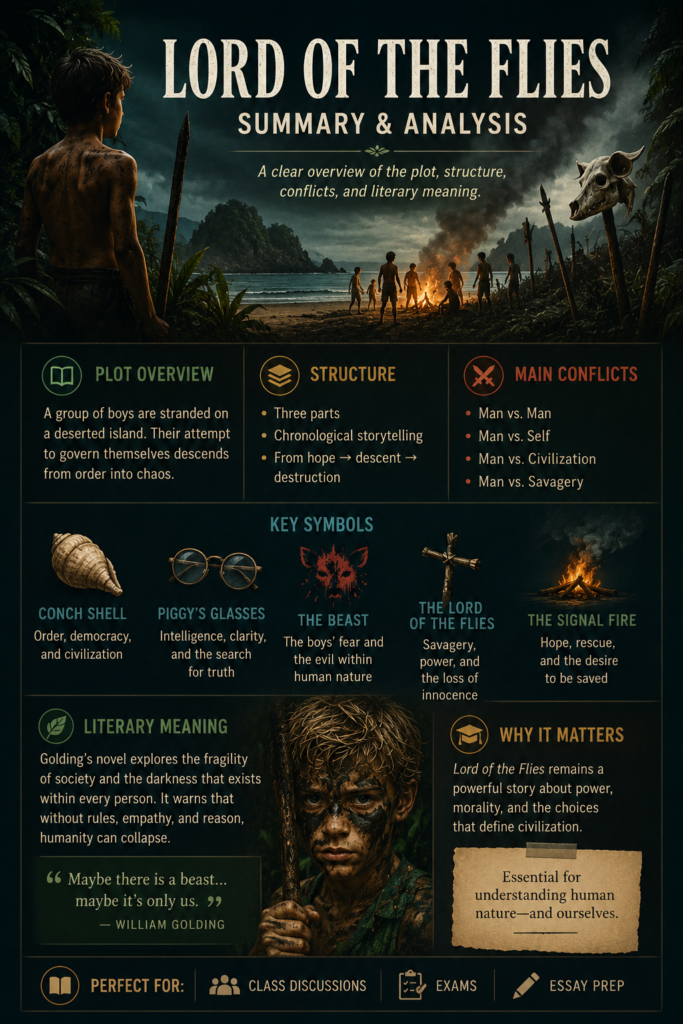
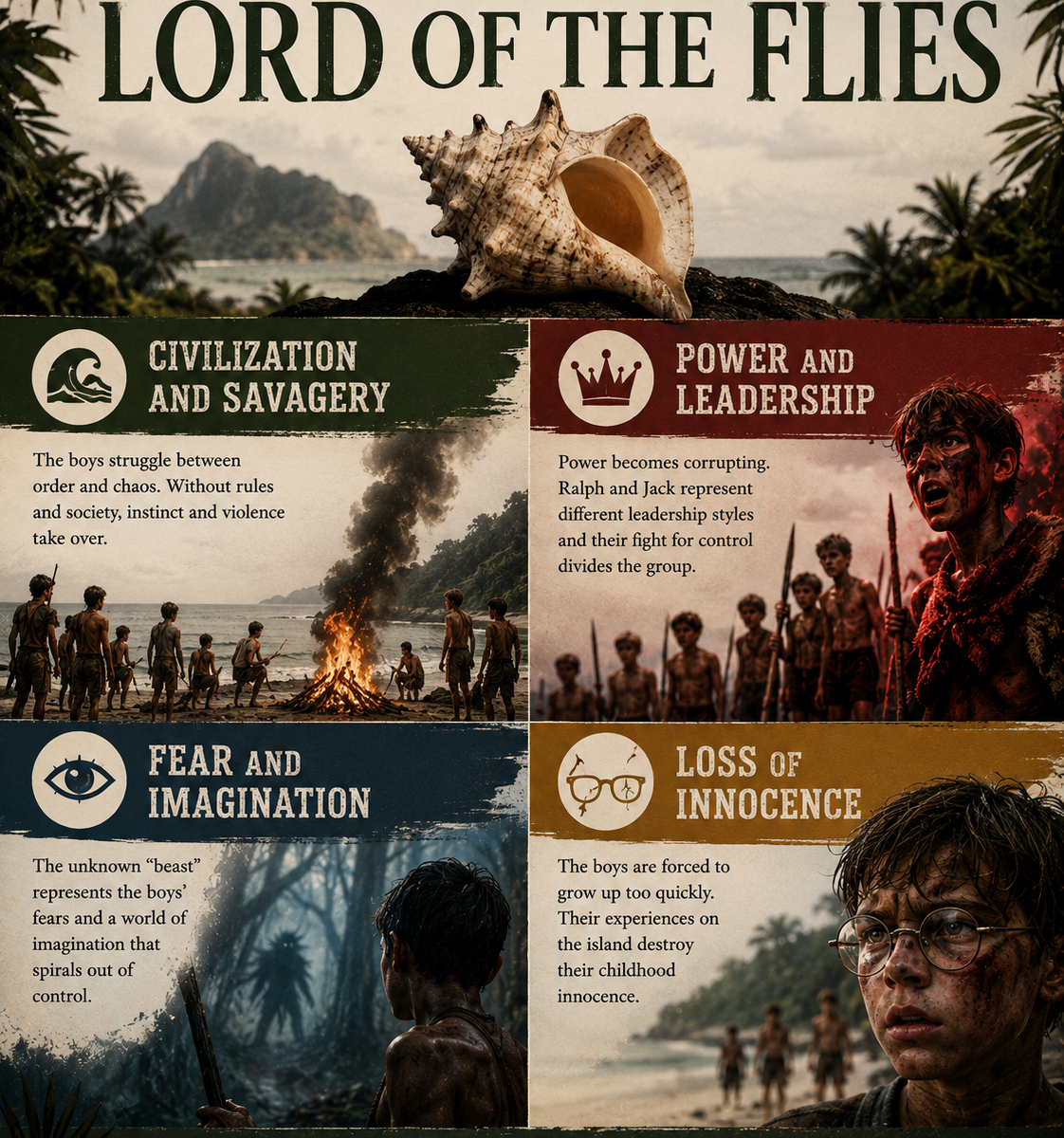
In Lord of the Flies by William Golding, the boys face nature on the island, but their deeper conflict is with each other and their own fear. The novel shows how quickly order can fall apart.

In Things Fall Apart by Chinua Achebe, Okonkwo faces personal pride, family pressure, and the arrival of colonial power. His conflicts help reveal the strain between tradition and change.

In The Great Gatsby by F. Scott Fitzgerald, Gatsby struggles against class barriers and his own dream of the past. The conflict shows how desire can turn into illusion.

These examples show why the Types of Conflict in Literature matter for essays. Conflict is rarely just a problem. It is often the key to the book’s meaning.

How Conflict Shapes Theme

Conflict and theme often work together.

Theme is the message or insight a story gives about life. Conflict helps create that message because characters reveal who they are under pressure.

In Animal Farm by George Orwell, the animals fight against human control, but they later face corruption inside their own new society. The conflict helps show how power can twist noble ideas.

In The Odyssey, Odysseus faces monsters, storms, and temptation. His long journey shows the value of loyalty and cleverness.

When you write about the Types of Conflict in Literature, do not stop at naming the conflict. Explain what it teaches the reader.

Common Mistakes Students Make with Types of Conflict in Literature

Many students can name conflict, but strong analysis goes one step deeper.

One common mistake is to choose the first conflict that appears. A story may start with one problem but focus on a deeper one later.

Another mistake is to ignore internal conflict. A character may seem to fight a person or society, but the real struggle may be fear, guilt, or pride.

Students also sometimes list the conflict without linking it to theme. A better answer explains how the conflict changes the character or reveals the author’s message.

For deeper reading practice, use scholar-style reading strategies to connect conflict with symbols, setting, and character choices.

Books That Help You Study Conflict

These books are strong choices for students who want clear examples of conflict.

  • Lord of the Flies by William Golding
  • Things Fall Apart by Chinua Achebe

Both novels are often available through school libraries, local bookstores, and Amazon. They also work well for essays because each book includes internal and external conflict.

Helpful Outside Resources

Use trusted literary sources when you need background or context.

The Poetry Foundation is useful for poems, poet biographies, and literary terms. Britannica also offers clear background on major forms, authors, and literary history.

FAQ About Types of Conflict in Literature

Here are quick answers to common student questions.

What are the main Types of Conflict in Literature?

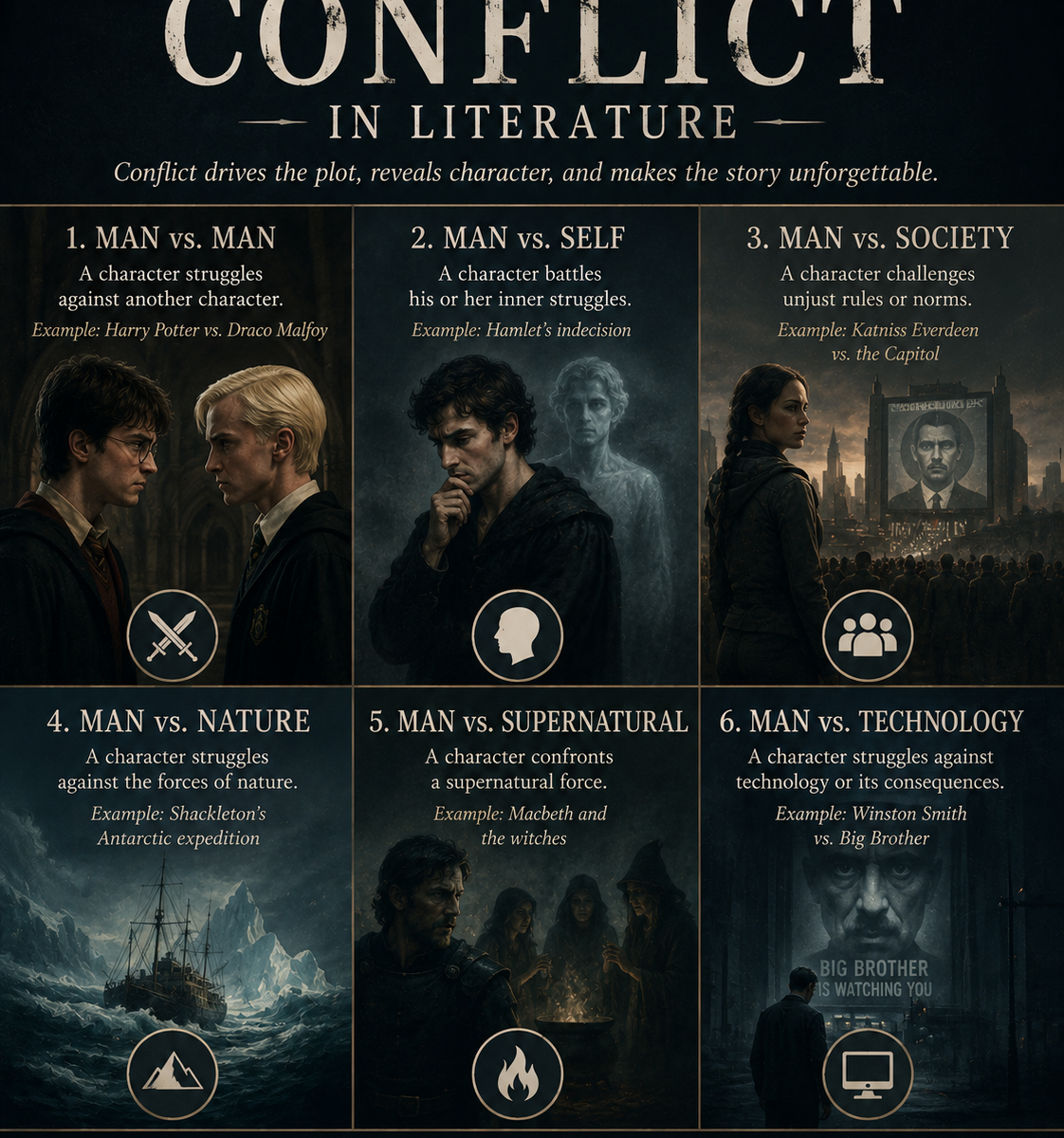
The main types are internal conflict and external conflict. External conflict can include character vs. character, society, nature, technology, fate, or the supernatural.

Can a story have more than one conflict?

Yes. Most strong stories use more than one conflict. One conflict may drive the plot, while another shows the character’s inner struggle.

Why is conflict important in a story?

Conflict creates tension and gives characters a reason to act. It also helps reveal theme and character growth.

How do I write about conflict in an essay?

Name the conflict, give a clear example, and explain why it matters. Connect it to the character’s change or the story’s main idea.

Key Takeaway

The Types of Conflict in Literature help readers see what drives a story. Once you understand the main struggle, you can better explain character, theme, and meaning.

Themes in Death of a Salesman: A Student-Friendly Guide

Themes in Death of a Salesman

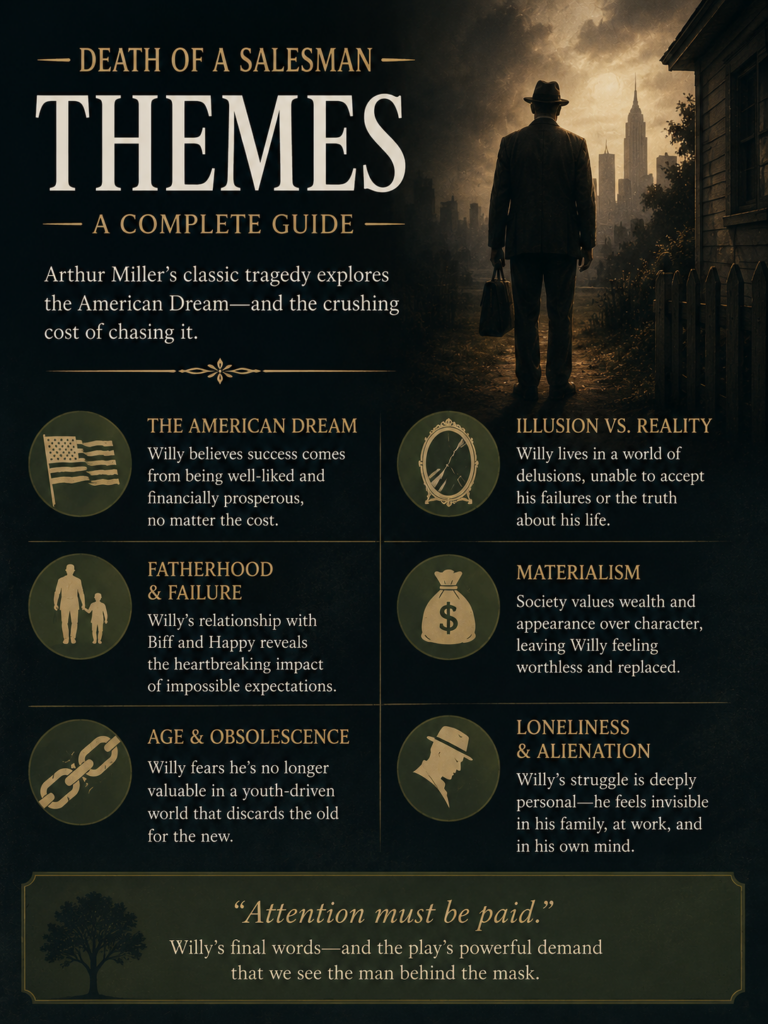
Death of a Salesman is a short play with big questions about dreams, work, family, and self-worth. This guide explains the themes in Death of a Salesman in a clear way so students can read the play with more confidence.

Arthur Miller does not give easy answers. He asks us to look closely at what happens when a person builds a life on a dream that may not be true.

In this Guide

Use these sections to review the play, plan an essay, or prepare for class discussion.

Themes in Death of a Salesman

Why the themes in Death of a Salesman Matter

The play is not only about one salesman. It is about a culture that tells people their value depends on success.

When students study the themes in Death of a Salesman, they often notice that Willy Loman wants more than money. He wants respect. He wants proof that his life mattered.

A theme is not just a topic like money or family. It is the deeper message a work builds around that topic. If you want a quick refresher, see our guide on how to identify theme in literature.

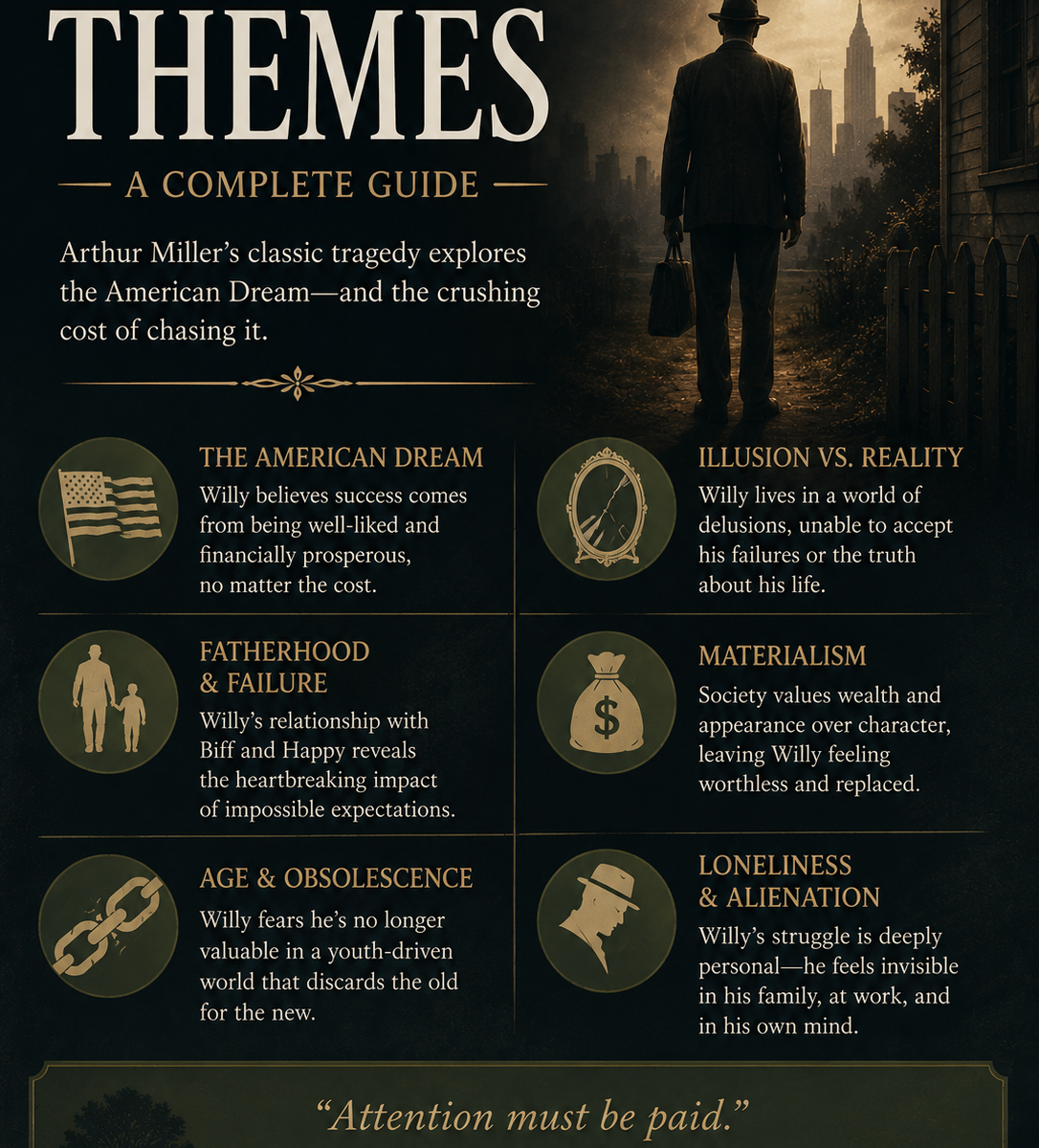
Themes in Death of a Salesman: The American Dream and False Success

Willy believes success comes from charm, popularity, and being well-liked. The play slowly shows how dangerous that belief can be.

Of all the themes in Death of a Salesman, the American Dream is the most famous. Willy thinks America should reward him if he works hard and presents himself well. Yet his life proves that the dream can be unfair, narrow, and cruel.

Biff sees this more clearly than Willy. He knows he has failed by his father’s standards, but he also knows those standards are broken. His conflict shows that a person can only heal by telling the truth.

This theme connects well with The Great Gatsby by F. Scott Fitzgerald. Both works question the dream of wealth and status. Both show people who chase an image of success and lose themselves along the way.

Themes in Death of a Salesman: Family, Love, and Pressure

The Loman family loves each other, but love often turns into pressure. That pressure shapes every major conflict in the play.

The themes in Death of a Salesman become painful inside the home. Willy wants his sons to succeed because he sees them as proof of his own worth. Biff wants freedom, but he also wants his father to understand him.

Linda often tries to protect Willy. Her care is real, but it also keeps some hard truths hidden. Happy copies Willy’s false confidence, which suggests that family patterns can repeat if no one breaks them.

The play asks a hard question: can love still hurt people? Miller’s answer seems to be yes, especially when love comes with impossible demands.

Illusion Versus Reality

Willy often chooses the story he wants over the truth he needs. That gap creates much of the tragedy.

Many themes in Death of a Salesman depend on the battle between illusion and reality. Willy remembers the past as brighter than it was. He also imagines success as something close, even when the facts say otherwise.

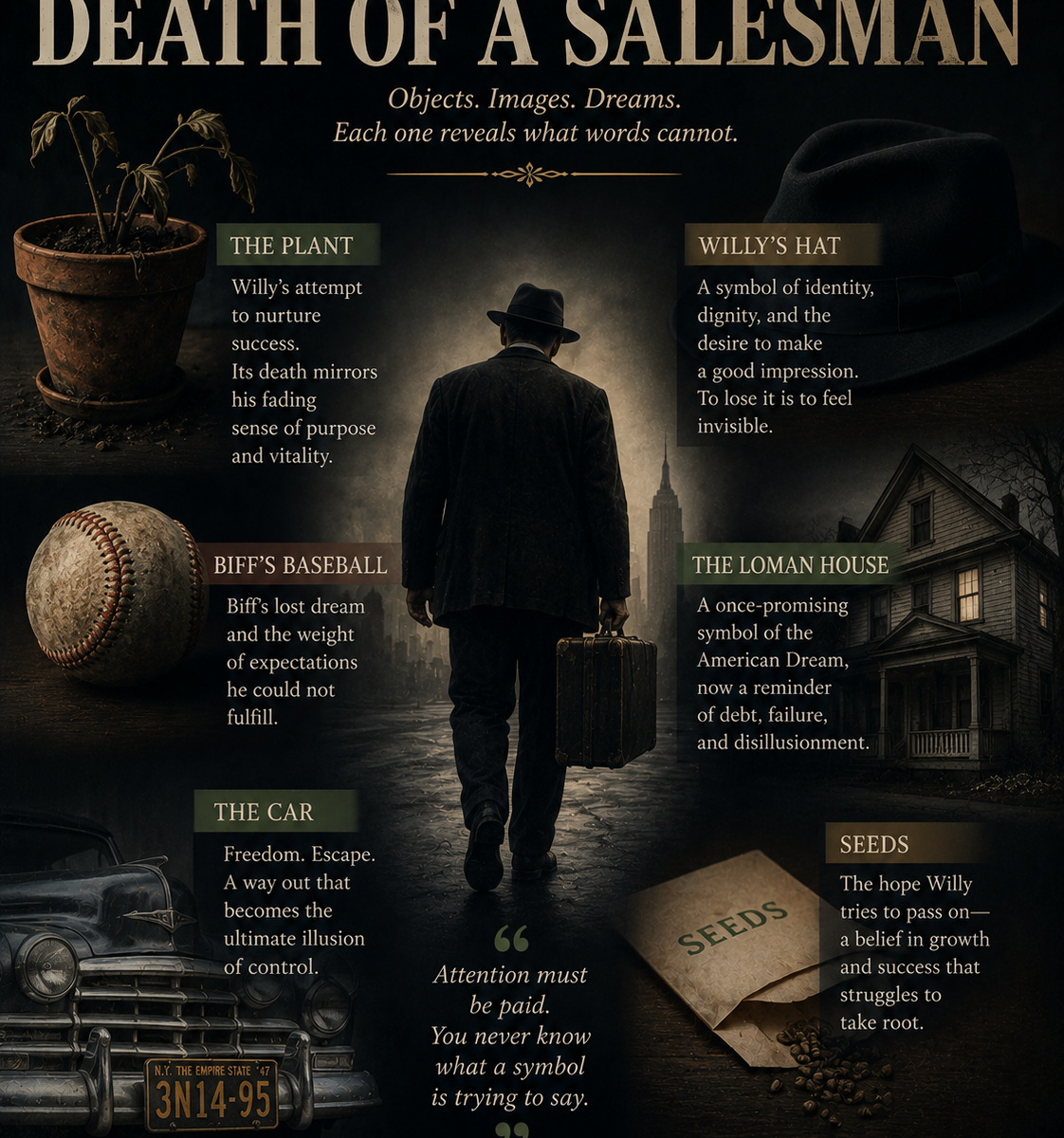
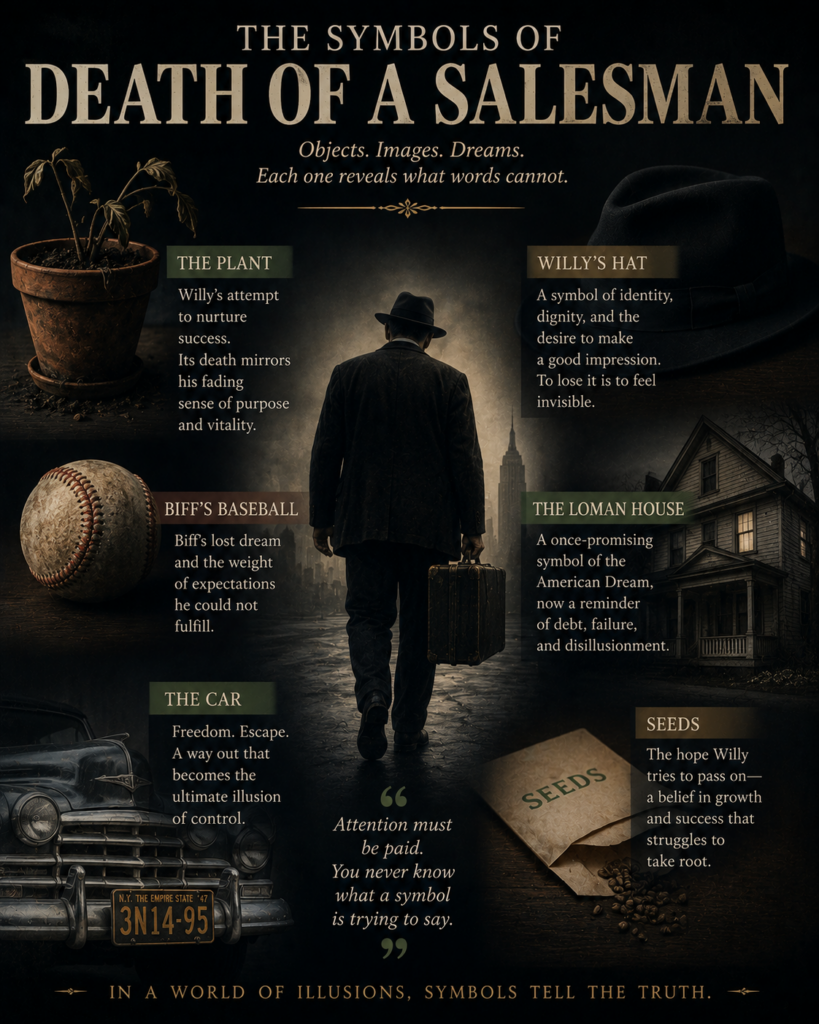
The play uses symbols to show this struggle. Seeds suggest Willy’s wish to leave something behind. Stockings remind him of guilt. The flute music points to a simpler life he never chose.

This conflict is clear in Biff’s final honesty. He does not become a perfect hero, but he sees the truth more clearly than his father. That makes his insight important.

Themes in Death of a Salesman: Identity and Self-Worth

Willy’s tragedy grows from the way he ties his identity to his job. When the job rejects him, he feels like his whole life has failed.

The themes in Death of a Salesman show how easy it is to confuse what a person does with who a person is. Willy is not just a worker, yet he has been taught to measure himself as one.

His last name, Loman, sounds like low man. That detail fits his place in the business world. He wants to feel large, but the system makes him feel small.

This theme can remind students of The Metamorphosis by Franz Kafka. Gregor Samsa is also valued for his work until he can no longer perform. Both texts ask what happens when human worth depends on usefulness.

Capitalism, Work, and Human Value

Miller’s play criticizes a world that treats people like products. Willy sells goods, but he also feels forced to sell himself.

The play does not say work is bad. It asks why a person must lose dignity just to survive. Willy gives years to his company, but that loyalty does not protect him.

This makes the play a social critique as well as a family tragedy. For more background on the play and Miller’s place in American drama, visit Britannica’s overview of Death of a Salesman.

Students should notice how work affects every family member. Money problems shape the mood of the house, and success feels like a test no one can pass.

How to Write About themes in Death of a Salesman

A strong essay should connect theme to character choices, symbols, and conflict. Do not just name a theme. Show how the play builds it.

For example, you could argue that Willy’s dream fails because it depends on appearance instead of truth. You could also argue that Biff’s honesty offers the only real escape from the family’s cycle.

If you need help turning ideas into a thesis, review our step-by-step theme guide. You can also explore our student literature study resources for more support with close reading and essay prep.

Here is a simple thesis frame:

  • In Death of a Salesman, Arthur Miller shows that the American Dream becomes harmful when it teaches people to value image over truth.
  • Through Willy and Biff, Miller suggests that self-worth must come from honesty rather than public approval.

Relevant Books for Further Reading

If you want more context, these books pair well with the play:

  • Death of a Salesman by Arthur Miller
  • The Crucible by Arthur Miller
  • A Raisin in the Sun by Lorraine Hansberry

FAQ About the themes in Death of a Salesman

What are the main themes in Death of a Salesman?

The main themes include the American Dream, family pressure, illusion versus reality, self-worth, and the value of work.

What is the most important theme in the play?

The American Dream is often seen as the central theme. Willy believes success will prove his worth, but that belief destroys him.

How does Biff connect to the play’s themes?

Biff challenges Willy’s false dream. His honesty shows that truth can be painful but necessary.

Is Willy Loman a tragic hero?

Many readers see him as a modern tragic figure. He is flawed, but his pain reflects larger problems in society.

Key Takeaway

The themes in Death of a Salesman matter because they still feel real. Miller shows how dreams can inspire people, but he also shows how a false dream can break a family and a life.

Most Influential Mirror Symbolism in Literature: What Reflections Reveal

mirror symbolism in Literature

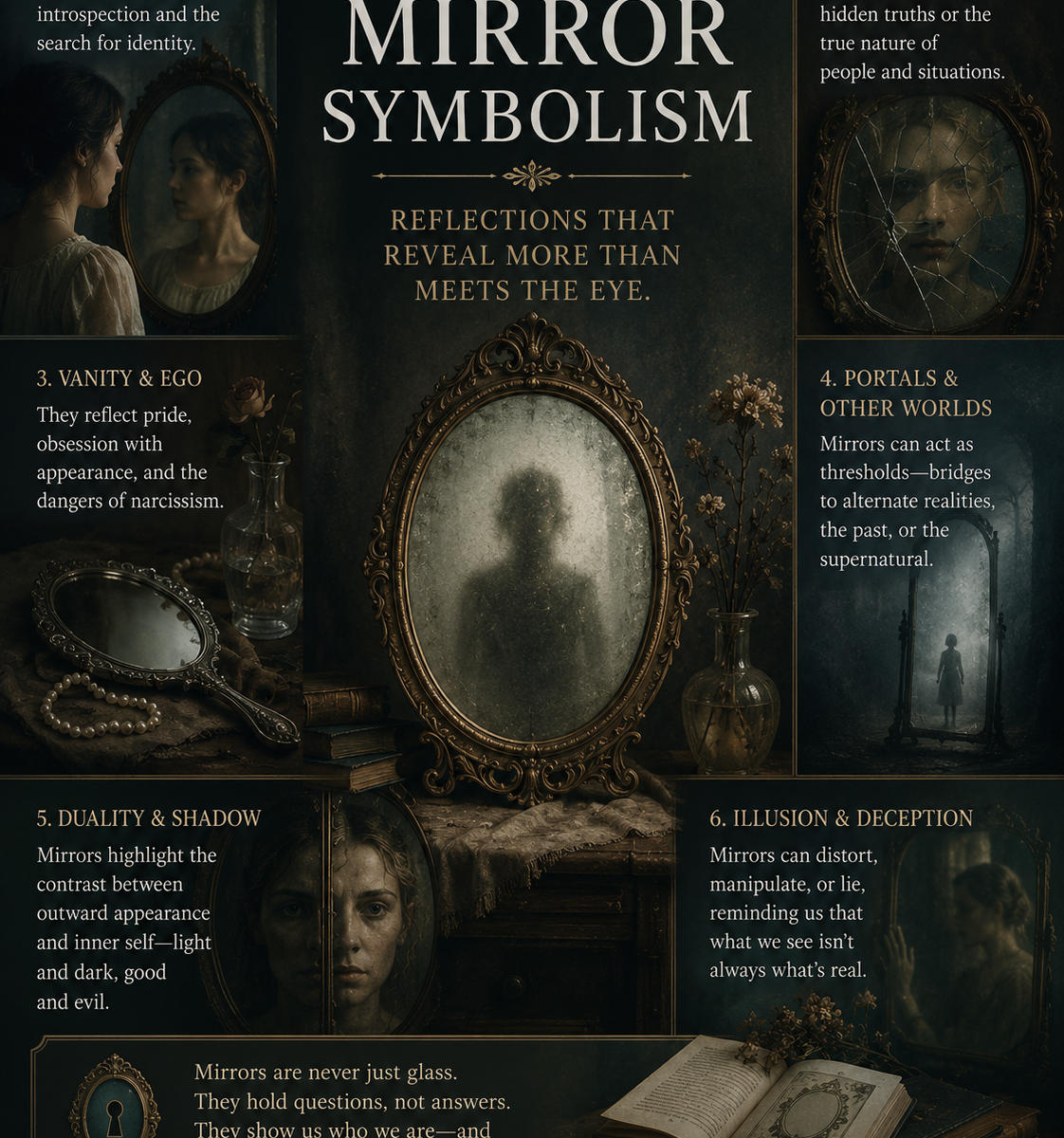
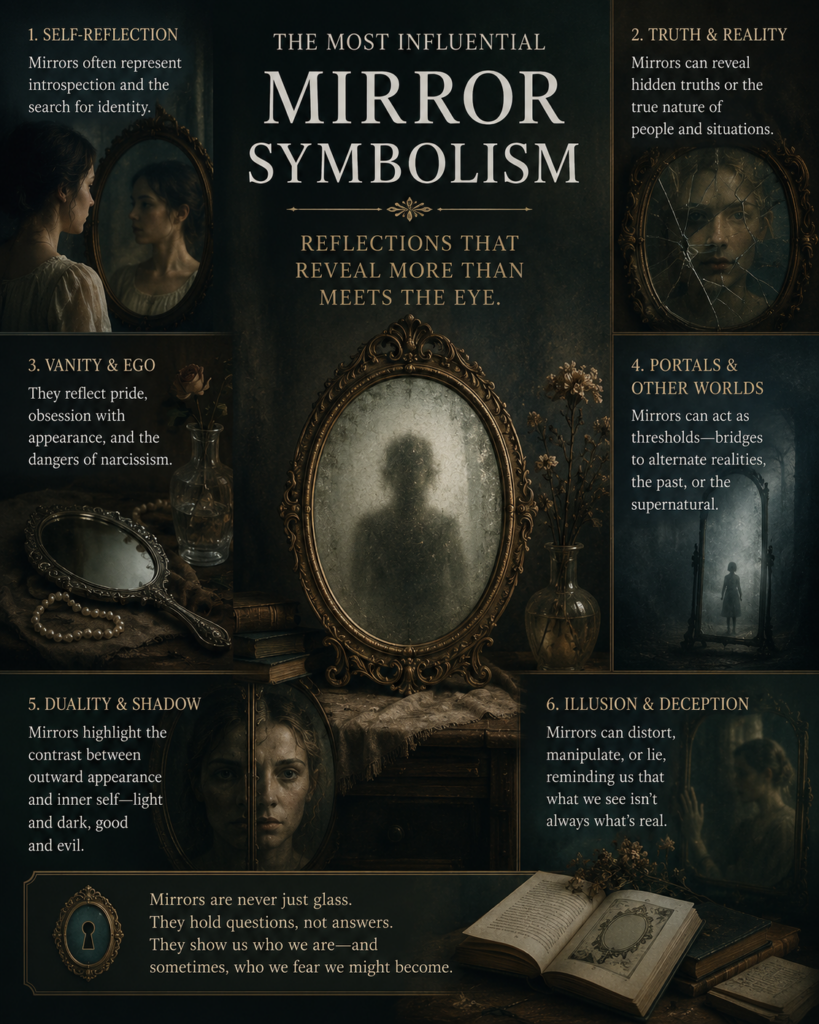
Mirrors in stories do more than show a face. The Most Influential Mirror Symbolism often reveals truth, fear, desire, or a hidden part of the self.

From fairy tales to modern poems, mirror scenes help readers see what a character cannot say out loud. That is why this symbol still feels fresh in classrooms and book clubs today.

In this Guide

  • Why mirror symbolism matters
  • Most Influential Mirror Symbolism in classic literature
  • Mirror symbolism in poems and fairy tales
  • Common themes linked to mirrors
  • Recommended books with mirror symbolism
  • How to analyze mirror scenes
  • FAQs about mirror symbolism
mirror symbolism in Literature

Why the Most Influential Mirror Symbolism Still Matters

Mirrors are simple objects, but writers use them to ask hard questions.

The Most Influential Mirror Symbolism often deals with identity. A character looks into a mirror and faces a version of the self that may feel strange, broken, proud, or false.

This makes mirrors useful in stories about growing up, guilt, beauty, madness, and truth. A mirror can show what society values, but it can also show what society hides.

Readers often remember mirror scenes because they feel private. A character alone with a reflection can reveal more than a long speech.

Most Influential Mirror Symbolism in Classic Literature

Classic works use mirrors to expose desire, fear, and the danger of self-image.

One famous example appears in “Snow White.” The magic mirror does not just answer a question about beauty. It shows how power and jealousy can grow from obsession.

The queen needs the mirror to confirm her worth. When it stops doing that, she turns cruel. This is one reason the Most Influential Mirror Symbolism often connects beauty with control.

In Mary Shelley’s Frankenstein, the creature sees his reflection and understands how others may see him. That moment is painful because it joins self-awareness with rejection.

Oscar Wilde’s The Picture of Dorian Gray does not center on a mirror, but the portrait works like one. It reflects Dorian’s inner corruption while his face stays young.

This is a key mirror-like symbol. It asks whether a person can hide from the truth if the surface still looks perfect.

Mirror Symbolism in Poems and Fairy Tales

Poets and fairy-tale writers often use mirrors to make truth feel sharp.

Sylvia Plath’s poem “Mirror” is one of the clearest examples of the Most Influential Mirror Symbolism in modern literature. The mirror speaks as if it has no feelings, yet the poem feels deeply emotional.

The speaker says it reflects “faithfully.” Still, that honesty hurts the woman who looks into it. You can read the poem at the Poetry Foundation.

In fairy tales, mirrors often know what humans refuse to admit. They may act like judges, warnings, or magical doors.

Lewis Carroll’s Through the Looking-Glass turns the mirror into a passage. Alice steps through it and enters a world where logic shifts. Here, the mirror suggests a second reality that sits just behind ordinary life.

Common Themes in the Most Influential Mirror Symbolism

Mirror symbols often return to the same deep concerns.

Identity is the most common theme. A mirror can make a character ask, “Who am I really?” This matters in stories where people feel split between public image and private truth.

Vanity also appears often. When a character trusts the mirror too much, the story may warn against pride or shallow judgment.

Self-knowledge is another major idea. The Most Influential Mirror Symbolism often marks the moment when a character can no longer avoid the truth.

Mirrors can also show social pressure. A character may not see the real self, but instead the version shaped by beauty rules, class, gender, or power.

For more help with symbols in general, read our guide on how to find symbolism in a story.

Recommended Books with Powerful Mirror Symbolism

These works are strong choices for students who want to study reflection, identity, and truth.

  • Through the Looking-Glass by Lewis Carroll
  • Frankenstein by Mary Shelley

Both books show why the Most Influential Mirror Symbolism lasts across time. Carroll uses the mirror as a doorway into strange logic. Shelley uses reflection to show pain, isolation, and self-awareness.

If you want a shorter text, pair either book with Sylvia Plath’s “Mirror.” It works well for poetry study, AP Literature practice, or a quick close reading lesson.

How to Analyze the Most Influential Mirror Symbolism

A good mirror scene usually changes how we understand a character.

Start by asking what the mirror shows. Does it reveal beauty, fear, age, guilt, or desire?

Then ask what the character feels. A calm reaction means something very different from panic, shame, or anger.

Look at the setting too. A mirror in a bedroom feels private. A magic mirror in a palace may connect reflection with power.

The Most Influential Mirror Symbolism becomes clearer when you ask what truth the character wants to avoid. If the mirror forces that truth into view, it is likely doing important symbolic work.

Mirror Symbolism and Literary Culture

Mirrors remain popular because they fit the way people think about image today.

Modern readers live in a world full of photos, screens, and self-presentation. That makes mirror symbolism feel even more relevant.

Stories with mirrors ask whether the image we show is the same as the person we are. This question appears in old myths, Gothic novels, poems, and young adult fiction.

The Most Influential Mirror Symbolism also links literature with art history and psychology. For background on symbolism as a larger movement, see Britannica’s overview of Symbolism.

FAQs About Most Influential Mirror Symbolism

What does a mirror usually symbolize in literature?

A mirror often symbolizes identity, truth, vanity, or self-knowledge. It can show how a character sees the self or how society judges that character.

Why do writers use mirrors in stories?

Writers use mirrors because they create strong visual moments. A reflection can reveal inner conflict without long explanation.

What is the best example of mirror symbolism?

“Snow White” is one of the best-known examples. Sylvia Plath’s “Mirror” is one of the strongest literary examples for close reading.

Can a mirror symbolize lies?

Yes. A mirror can seem truthful, but it may also reflect a false image, a shallow value system, or a character’s distorted view of the self.

How do I write about mirror symbolism in an essay?

Focus on what the mirror shows, how the character reacts, and what theme the scene supports. Connect the symbol to the larger meaning of the work.

Key Takeaway

The Most Influential Mirror Symbolism in literature helps readers see hidden truths. In literature, a mirror is rarely just glass. It reflects identity, pressure, fear, and the difficult act of knowing yourself.

When a character looks into a mirror, pay attention. The story may be showing its deepest truth in plain sight.

What Is Tone in Writing? A Beginner-Friendly Guide

What is tone in writing

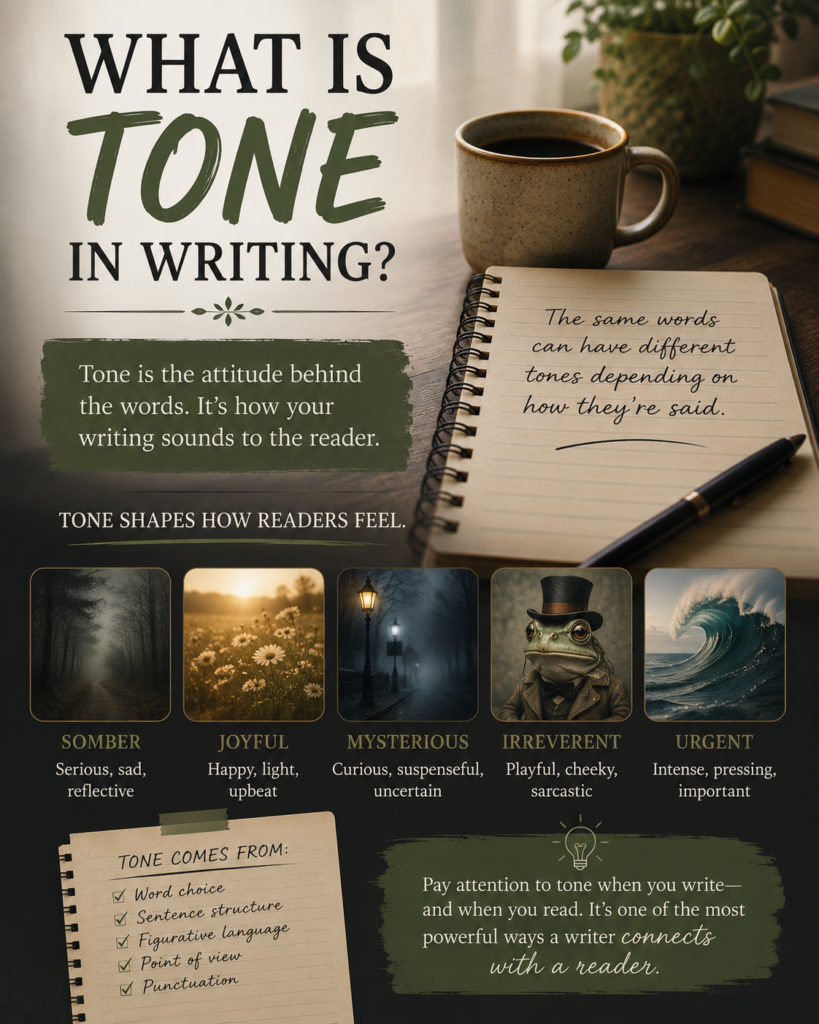
What Is Tone in Writing? It is the attitude a writer shows toward a subject, character, or audience.

Tone helps readers hear the “voice” behind the words. It can make a story feel serious, playful, angry, hopeful, or cold.

In this Guide

What is tone in writing

What Is Tone in Writing?

Tone is the writer’s attitude.

A simple answer to What Is Tone in Writing? is this: tone shows how the author feels about what is happening. That feeling comes through word choice, sentence style, details, and dialogue.

For example, a narrator might describe a storm as “wild and beautiful.” That sounds excited or impressed. Another narrator might call the same storm “cruel and endless.” That sounds fearful or bitter.

Tone is not always direct. A writer may never say, “I feel angry.” Instead, the anger appears in sharp words, short sentences, or harsh images.

What Is Tone in Writing? Why It Matters in Literature

Tone changes how readers understand a scene.

When students ask What Is Tone in Writing?, they are really asking how a writer guides our reaction. Tone can make a character seem foolish, brave, selfish, or kind.

In literature, tone also helps reveal theme. A sad tone may show loss. A mocking tone may point out pride or weakness. A hopeful tone may suggest that change is possible.

On an essay or AP Literature exam, tone is often the key to a strong analysis. If you can explain the tone, you can explain how the author creates meaning.

What Is Tone in Writing? Examples from Famous Literature

Examples make tone easier to hear.

In Edgar Allan Poe’s “The Tell-Tale Heart,” the tone is tense and nervous. The narrator keeps trying to prove he is sane, but his words make him sound more unstable.

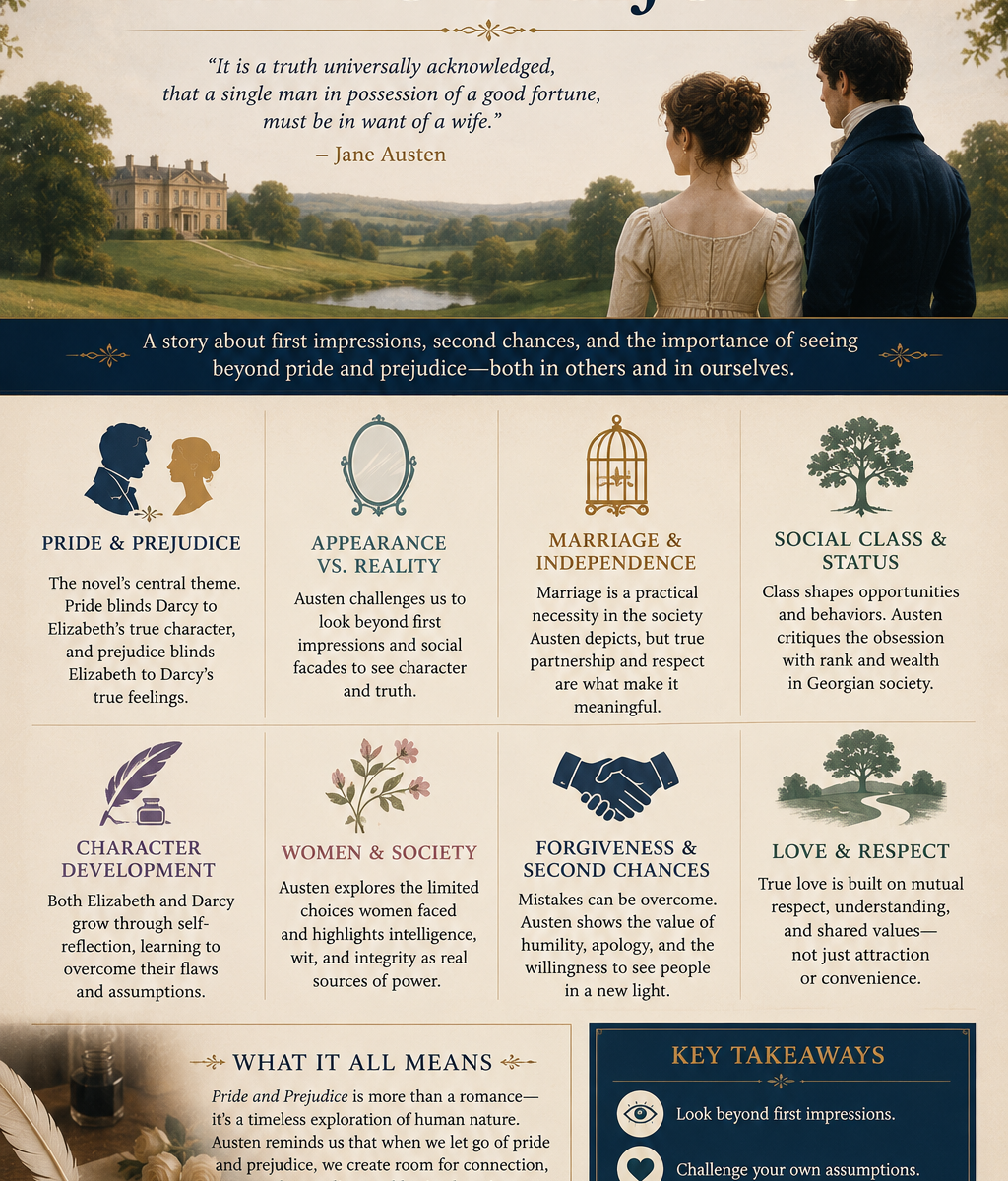
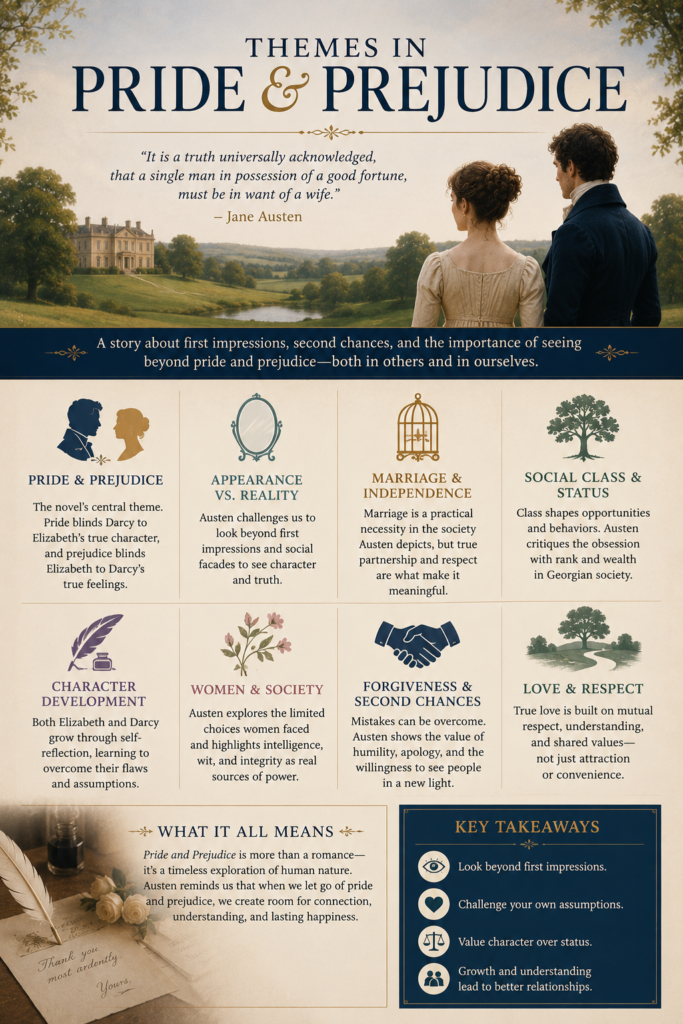
In Jane Austen’s Pride and Prejudice, the tone is often witty and ironic. Austen gently mocks pride, social rules, and quick judgments.

In George Orwell’s 1984, the tone is bleak and serious. The cold language helps readers feel the danger of a world where the government controls truth.

The best way to answer What Is Tone in Writing? is to look at how the author’s attitude shapes each passage. Tone is not just what happens. It is how the writing feels about what happens.

What Is Tone in Writing? Tone vs. Mood

Mood and tone are related, but they are not the same.

Tone is the author’s attitude. Mood is the feeling created in the reader.

For example, a story might have a fearful tone because the narrator describes danger with panic. That tone can create a scary mood for the reader.

If you want a deeper breakdown, read our guide on tone vs. mood in literature.

What Is Tone in Writing? How to Spot It While Reading

You can find tone by paying close attention to small choices.

Start with word choice. Ask if the words sound warm, cold, respectful, bitter, excited, or calm.

Then look at sentence style. Short sentences can sound tense or blunt. Longer sentences can feel thoughtful or emotional, depending on the words around them.

Dialogue also gives clues. A character who says, “How wonderful,” may sound sincere in one scene and sarcastic in another.

When you ask What Is Tone in Writing?, do not stop at naming a tone word. Always connect that word to proof from the text.

Common Tone Words Students Can Use

Tone words help you describe the author’s attitude with more care.

  • Serious
  • Playful
  • Angry
  • Hopeful
  • Mocking
  • Sad
  • Respectful
  • Suspicious

Try to avoid vague words like “good” or “bad.” A stronger tone word makes your analysis clearer.

A Practical Tip for Reading Tone

Use this quick method when you read a passage.

Circle two or three words that show attitude. Then write one tone word in the margin.

After that, ask: “How does this tone affect the meaning of the passage?” This turns a simple observation into real literary analysis.

For more help with poetry terms, the Poetry Foundation’s glossary entry on tone is a useful resource. You can also explore broad literary background through Britannica’s overview of literature.

Helpful Books to Read for Tone

These books are useful for seeing tone in action.

  • Pride and Prejudice by Jane Austen
  • 1984 by George Orwell

As you read, pause after key scenes and ask how the author’s attitude comes through.

FAQ: What Is Tone in Writing?

What Is Tone in Writing?

Tone is the author’s attitude toward the subject, characters, or audience. It shows through words, details, and style.

How is tone different from mood?

Tone is the writer’s attitude. Mood is the feeling the reader gets from the text. For a full explanation, see this guide to the difference between tone and mood.

Can a story have more than one tone?

Yes. A story may start with a playful tone and later become serious. Tone can shift as events change.

Why does tone matter in an essay?

Tone helps you explain how the author creates meaning. It gives you a clear path from evidence to interpretation.

Key Takeaway

What Is Tone in Writing? It is the attitude behind the words. To analyze it well, name the tone, prove it with text, and explain why it matters.

Themes in The Things They Carried: A Student-Friendly Guide

Themes in Things They Carried

A clear guide to the major ideas, conflicts, and meanings students should notice in The Things They Carried.

The themes in The Things They Carried help readers see the deep cost of war on the mind, body, and heart. Tim O’Brien does not just write about combat. He writes about fear, memory, guilt, truth, and the stories people need in order to survive.

In this Guide

Use this guide as a map before class discussion, essay prep, or a close reading quiz.

  • Why the themes matter
  • War and fear
  • Storytelling and truth
  • Guilt and shame
  • Courage and masculinity
  • Love, loss, and memory
  • How to write about the novel
  • FAQ
Themes in Things They Carried

Why the Themes in The Things They Carried Matter

The novel asks what soldiers carry after the war ends.

At first, the title seems simple. The soldiers carry guns, food, letters, photos, and gear. Yet the real weight is emotional.

They carry fear, regret, secrets, and memories. Those burdens do not fit in a backpack, but they shape every choice the men make.

When students study the themes in The Things They Carried, they should look at both kinds of weight. Physical objects often point to hidden pain.

This is a key reason the book works so well in AP Literature and college courses. It turns small details into big questions about truth, trauma, and survival.

Major themes in The Things They Carried

The novel has no single easy message about war.

The major themes in The Things They Carried overlap. Fear connects to shame. Shame connects to courage. Memory connects to truth.

O’Brien writes the book as linked stories, not as a straight plot. This form helps readers feel how memory works. The past comes back in pieces.

These themes in The Things They Carried also make the novel feel personal. Even when the setting is Vietnam, the deeper questions matter far beyond one war.

For background on the real conflict behind the novel, Britannica’s overview of the Vietnam War is a helpful place to start.

War and the Weight of Fear

Fear is one of the strongest forces in the novel.

The soldiers fear death, wounds, traps, and mistakes. They also fear looking weak in front of each other.

This kind of fear changes how they act. Some men joke. Some turn quiet. And some try to prove they are brave, even when they are not.

O’Brien shows that fear in war is not rare. It is constant. It becomes part of daily life.

This theme also appears in novels like All Quiet on the Western Front by Erich Maria Remarque. Both books show war as a place where young men lose their old ideas about honor.

Storytelling, Memory, and Truth

O’Brien wants readers to question what truth means in a story.

One of the most famous ideas in the book is that a story can feel true even if every fact is not exact. O’Brien calls attention to the difference between happening-truth and story-truth.

This does not mean the book says facts do not matter. It means memory can hold emotional truth in ways a report cannot.

A soldier may not remember every detail in order. Yet he may remember the guilt, sound, heat, or fear with painful force.

This is one of the most important themes in The Things They Carried because the whole book is built around memory. Stories help the narrator return to the past, face it, and give it shape.

For more on the author, see Britannica’s brief biography of Tim O’Brien.

Guilt, Shame, and Moral Confusion

The novel treats guilt as a wound that does not heal fast.

Many characters feel guilt for things they did, did not do, or could not stop. This guilt is not always logical, but it is real.

Lieutenant Jimmy Cross feels guilt after Ted Lavender dies. He thinks his daydreams about Martha made him fail as a leader.

O’Brien also explores guilt through stories about killing. The narrator cannot escape the image of a dead young man, even as others try to make the moment seem normal.

The moral world of the novel is muddy. Characters often do not know what the right choice is. Even after they choose, they may not be sure what the choice means.

This is different from a simple hero story. Like Macbeth, the book shows how guilt can replay in the mind long after the act itself.

Masculinity and the Pressure to Be Brave

The soldiers are often trapped by what they think manhood requires.

In the novel, courage is not always pure. Sometimes men act brave because they fear shame more than danger.

O’Brien says he went to war partly because he was embarrassed not to. That detail makes courage more complex.

The book asks a sharp question: Is it brave to go along with what others expect, or brave to resist?

This theme matters for students because it breaks apart a common idea about war. The novel does not treat bravery as simple strength. It shows bravery as fear, pride, doubt, and pain mixed together.

Love, Loss, and Emotional Burdens

Love is another thing the characters carry.

Jimmy Cross carries Martha’s letters and photos. He turns them into a dream of comfort, but that dream cannot protect him from war.

Other characters carry memories of home, family, and old selves. Those memories can help them survive, but they can also hurt.

Loss appears over and over. Some deaths happen fast. Some losses happen slowly, as men become less like the people they were before Vietnam.

This is why the title matters so much. The men do not just carry supplies. They carry emotional lives that war keeps breaking open.

How to Write About themes in The Things They Carried

A strong essay connects theme to choices the author makes.

When you write about the themes in The Things They Carried, do not stop at naming a theme. Explain how O’Brien builds it through objects, structure, voice, and repeated memories.

A weak claim says, war is bad. A stronger claim says O’Brien shows war as a force that blurs truth, creates guilt, and leaves soldiers with memories they cannot set down.

Use short quotes and explain them closely. Look at what the object, image, or story reveals about a character’s inner life.

If you need help turning a theme into a thesis, use our guide on how to write a literary analysis essay. It can help you move from notes to a clear argument.

For a quick study boost, you can also use the RapidReads Press theme study guide to track key scenes and build better paragraphs.

Essay Examples: Turning Theme into Analysis

Good analysis makes a theme specific.

Here is a basic idea: The book is about memory.

Here is a stronger version: In The Things They Carried, O’Brien presents memory as both a burden and a survival tool, since stories force the narrator to relive trauma while also helping him face it.

That second sentence gives you more to prove. You can point to the book’s repeated scenes, shifting truth claims, and return to dead characters through story.

Another essay could focus on shame. You might argue that O’Brien presents shame as more powerful than patriotism because men often choose danger to avoid public judgment.

For more help with essay structure, this literary analysis essay guide can help you build topic sentences and evidence.

Books to Search for on Amazon

These related books can deepen your understanding of war literature.

Going After Cacciato by Tim O’Brien is another novel that mixes war, memory, and imagination.

Dispatches by Michael Herr offers a vivid nonfiction look at the Vietnam War and its psychological strain.

These books pair well with the themes in The Things They Carried because they also ask how people describe events that seem almost impossible to explain.

FAQ: themes in The Things They Carried

Here are quick answers to common student questions.

What are the main themes in The Things They Carried?

The main themes in The Things They Carried include the burden of war, fear, guilt, shame, memory, storytelling, and the pressure to seem brave.

What does the title mean?

The title refers to both physical items and emotional burdens. The soldiers carry weapons and supplies, but they also carry grief, fear, and memory.

Why is storytelling so important in the novel?

Storytelling helps the narrator return to painful memories. It also lets him explore a deeper kind of truth than facts alone can show.

Is The Things They Carried anti-war?

The book strongly shows the damage war causes. It does not preach in a simple way, but it does question ideas about glory, courage, and honor.

How can I write a thesis about the novel?

Choose one theme and explain how O’Brien develops it. Mention a method, such as symbols, repeated stories, or the narrator’s voice.

Key Takeaway

The novel shows that the heaviest burdens are often invisible.

The themes in The Things They Carried reveal war as a lasting mental and emotional weight. O’Brien’s stories ask readers to see truth not only in what happened, but in what people carry afterward.

Themes in Their Eyes Were Watching God: A Student-Friendly Guide

Their Eyes Were Watching God Themes

Zora Neale Hurston’s novel follows Janie Crawford as she searches for love, voice, and a life that feels like her own. The themes in Their Eyes Were Watching God help students see why Janie’s story still matters in classrooms today.

In this Guide

Use this guide to focus your reading and prepare for class discussion.

Their Eyes Were Watching God Themes

Why the themes in Their Eyes Were Watching God Matter

The novel is not just about what happens to Janie. It is about what she learns as she moves through love, pain, and freedom.

The themes in Their Eyes Were Watching God show how hard it can be to find yourself when others keep trying to define you. Janie’s life is shaped by family pressure, marriage, gossip, race, and gender roles.

Hurston also writes with deep respect for Black Southern speech and culture. You can learn more about her life and work through Britannica’s profile of Zora Neale Hurston.

Major themes in Their Eyes Were Watching God

These are the main ideas students should track as they read the novel.

Self-discovery and voice

Janie’s biggest journey is the search for her own voice. At first, other people speak for her or decide what her life should mean.

Logan Killicks sees her as labor. Jody Starks sees her as a symbol of his power. Tea Cake gives her more space to speak, but Janie still must learn to stand on her own.

This theme is clear at the end when Janie tells her story to Pheoby. Her voice becomes proof that she survived and grew.

Love and control

Love and power are often tied together in the novel. Hurston asks whether love can be real if one person tries to control the other.

Janie’s first marriage gives her safety but no joy. Her second marriage gives her status but takes away freedom. With Tea Cake, love feels more alive, but it is not perfect.

A useful comparison is Jane Eyre by Charlotte Brontë. Like Janie, Jane wants love, but she also wants respect and self-rule.

Gender roles and power

Janie lives in a world where men often expect women to stay quiet. Jody makes this clear when he keeps Janie off the porch and away from public talk.

The porch becomes more than a place. It shows who has a voice and who gets pushed aside.

Janie’s growth comes when she stops living only by other people’s rules. She does not reject love, but she refuses to disappear inside it.

Race, community, and judgment

The novel shows Black community life with humor, beauty, conflict, and pressure. Eatonville is a place of pride, but it is also full of gossip and judgment.

People watch Janie closely because she does not always fit what they expect. Her return in overalls shocks the town because they judge her before they hear her story.

This is one reason the frame story matters. Janie’s own account pushes back against the town’s narrow view of her life.

Nature, God, and fate

Nature is powerful in the novel. The pear tree, the mule, the horizon, and the hurricane all point to forces larger than daily life.

The hurricane is one of the clearest examples. It reminds readers that human plans can be broken by forces no one can control.

The title itself points to this idea. During the storm, the characters look toward God because they know human power has limits.

Symbols That Support the themes in Their Eyes Were Watching God

Hurston’s symbols help turn ideas into images students can remember.

The pear tree represents Janie’s early dream of love. She sees beauty, union, and desire in the natural world.

The horizon stands for possibility. Janie keeps reaching toward a life that feels wider than the one others choose for her.

The mule shows burden and mistreatment. It connects to the way people, especially women, can be used by others.

These symbols make the themes in Their Eyes Were Watching God easier to trace. If you want more help with this skill, read our guide on how to find symbolism in a story.

How Hurston’s Style Builds Meaning

The way Hurston tells the story is just as important as the plot.

Hurston uses a frame story, which means Janie tells her past from a later point in her life. This gives Janie control over her own story.

The novel also shifts between poetic narration and spoken dialogue. This mix helps readers hear both Janie’s inner life and the life of her community.

For context on the wider literary movement around Hurston’s era, see Poetry Foundation’s introduction to the Harlem Renaissance.

How to Write About themes in Their Eyes Were Watching God

A strong essay should connect a theme to Janie’s growth, not just name the theme.

When you write about themes in Their Eyes Were Watching God, start with a clear claim. For example, you might argue that Janie’s voice becomes stronger each time she leaves a life that limits her.

Then use key scenes. Good choices include Janie under the pear tree, Jody silencing her in the store, the hurricane, and Janie’s final talk with Pheoby.

You can also connect theme and symbol. The horizon works well because it follows Janie’s desire for freedom across the novel. For extra practice, use this symbolism reading strategy as you gather evidence.

Related Books Students May Find Helpful

These books can help you compare voice, identity, and freedom across different works.

  • Their Eyes Were Watching God by Zora Neale Hurston
  • Jane Eyre by Charlotte Brontë
  • The Color Purple by Alice Walker

FAQ About themes in Their Eyes Were Watching God

These quick answers can help with review before a quiz or essay.

What are the main themes in Their Eyes Were Watching God?

The main themes include self-discovery, voice, love, power, gender roles, race, community, nature, and fate.

Why is Janie’s voice important?

Janie’s voice shows her growth. By telling her own story, she claims the meaning of her life.

What does the pear tree symbolize?

The pear tree symbolizes Janie’s dream of love, beauty, and emotional connection.

How does the hurricane connect to the title?

The hurricane shows that people are not fully in control. In that moment, the characters look toward God and face the power of nature.

Is Tea Cake the answer to Janie’s search?

Not fully. Tea Cake helps Janie experience a freer kind of love, but Janie’s final strength comes from within herself.

Key Takeaway

Janie’s story is about more than romance. The deepest themes in Their Eyes Were Watching God show a woman learning to speak, choose, and live as herself.

Common Symbols in Classic Literature

literature symbols
literature symbols

Common Symbols in Classic Literature: A Student-Friendly Guide

Common Symbols in Classic Literature can help you see deeper meaning in novels, plays, and poems. When you know what certain objects, colors, or places often suggest, you can read with more confidence and write stronger essays.

This guide explains key symbols, gives clear literary examples, and shows how to use them without overthinking every detail.

In this Guide

  • Why symbols matter in classic literature
  • Common symbols and what they often mean
  • Examples from famous books
  • How to analyze symbols in essays
  • Books that help you practice
  • FAQ and key takeaway

Why Common Symbols in Classic Literature Matter

Symbols help writers say more with less.

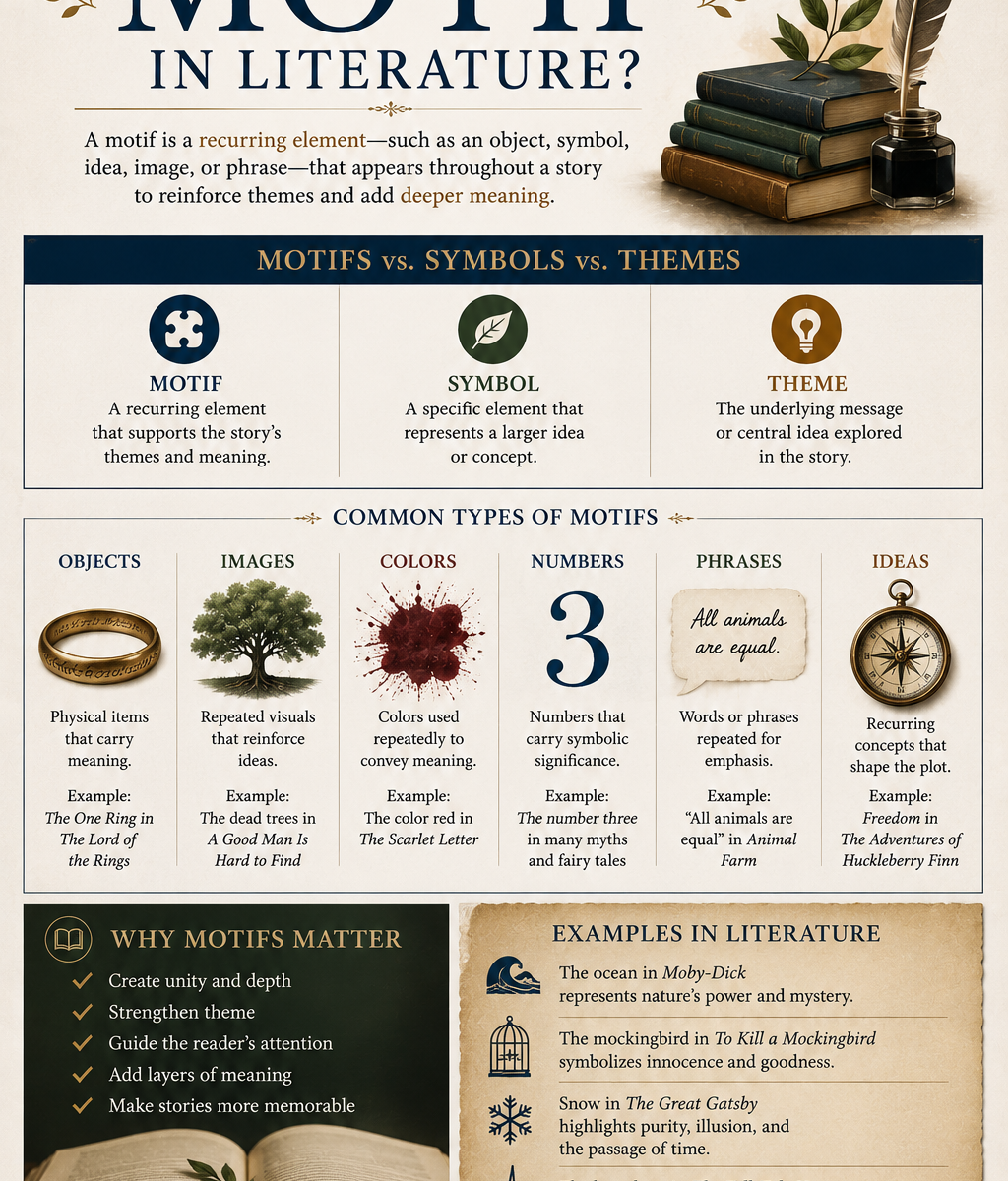
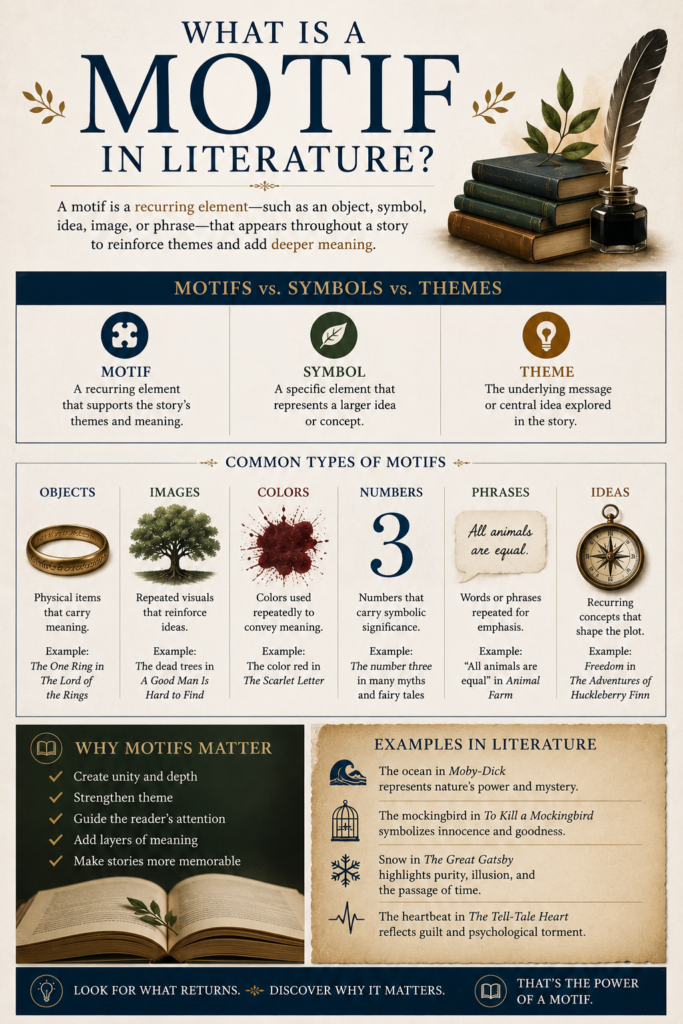
A symbol is something that stands for more than itself. It can be an object, place, color, animal, or action that points to a bigger idea.

For students, Common Symbols in Classic Literature are useful because they often connect to major themes. A river may suggest change. A locked room may suggest secrets. A storm may suggest conflict or fear.

Symbols do not always mean the same thing in every book. Context matters. Still, knowing common patterns gives you a strong place to start.

Common Symbols in Classic Literature: Light and Darkness

Light and darkness often show knowledge, truth, danger, or moral conflict.

Light often points to truth, hope, or understanding. Darkness often points to fear, confusion, or hidden evil.

In Frankenstein by Mary Shelley, light can suggest knowledge and discovery. Victor Frankenstein wants to “bring light” to science, but his search leads to pain and guilt.

In Heart of Darkness by Joseph Conrad, darkness is not just a setting. It raises questions about cruelty, power, and what people hide inside themselves.

When you see light or darkness in a classic text, ask what the character understands at that moment. Also ask what the writer may be hiding from the reader.

Common Symbols in Classic Literature: Colors

Colors can carry emotional and social meaning.

Red often suggests passion, sin, blood, or shame. White can suggest purity, innocence, emptiness, or coldness. Green often points to hope, envy, nature, or desire.

In The Scarlet Letter by Nathaniel Hawthorne, the red letter “A” is one of the most famous symbols in American literature. It marks Hester Prynne’s shame, but it also becomes a sign of strength.

In The Great Gatsby by F. Scott Fitzgerald, the green light at the end of Daisy’s dock stands for Gatsby’s dream. It also shows how that dream stays just out of reach.

Colors are among the most important Common Symbols in Classic Literature because they can appear many times across a story. Track when a color appears and how the mood changes around it.

Common Symbols in Classic Literature: Nature

Nature often reflects a character’s inner life.

Writers use weather, seasons, gardens, and wild places to show emotion or change. Spring may suggest youth or rebirth. Winter may suggest death, loss, or loneliness.

In Wuthering Heights by Emily Brontë, the wild moors reflect the fierce emotions of the characters. The setting feels harsh, open, and hard to control.

In King Lear by William Shakespeare, the storm shows Lear’s mental collapse. The weather outside mirrors the chaos inside him.

When you study Common Symbols in Classic Literature, pay close attention to setting. A landscape may reveal more than a character says out loud.

Common Symbols in Classic Literature: Animals

Animals often reveal power, fear, guilt, or instinct.

A snake may suggest danger or betrayal. A bird may suggest freedom or a trapped soul. A dog may suggest loyalty, but it can also show violence, depending on the story.

In Macbeth, Shakespeare uses animal images to show disorder and fear. After Duncan’s murder, nature seems broken, which suggests that Macbeth’s crime has damaged the moral order.

In Lord of the Flies by William Golding, the “beast” becomes a symbol of the boys’ fear. It also points to the violence inside human nature.

Animal symbols work best when you connect them to a theme. Do not stop at “the bird means freedom.” Ask who wants freedom and what blocks it.

Common Symbols in Classic Literature: Objects

Objects can carry a story’s biggest ideas.

A letter, ring, mirror, or weapon can gain meaning as the story moves on. The object may start as a normal item, then become tied to guilt, love, power, or memory.

In The Lord of the Rings by J.R.R. Tolkien, the ring stands for power and temptation. It shows how even good people can change when power takes hold.

In Jane Eyre by Charlotte Brontë, the locked room and hidden spaces at Thornfield Hall suggest secrets, fear, and social limits.

Common Symbols in Classic Literature often gain meaning through repetition. If an object appears at key moments, the author likely wants you to notice it.

Common Symbols in Classic Literature: Journeys and Roads

A journey often shows growth, escape, or a search for truth.

Roads and travel can show a character’s movement from innocence to experience. A physical trip may also reflect an inner change.

In The Odyssey by Homer, Odysseus’s journey is about more than getting home. It tests his pride, loyalty, and wisdom.

In The Adventures of Huckleberry Finn by Mark Twain, the river becomes a path toward freedom. Yet it also shows the moral problems of the society around Huck and Jim.

Journey symbols are useful in essays because they often connect to character growth. Ask what the character learns before and after the journey.

How to Analyze Common Symbols in Classic Literature

A symbol should connect to the whole story, not just one scene.

Start with the basic meaning. What is the object, color, place, or action? Then ask how it changes as the story goes on.

Look for repetition. If a symbol appears more than once, note when it appears and who is present. This can reveal a pattern.

Connect the symbol to a theme. A green light is not important only because it is green. It matters because it connects to dreams, wealth, and longing.

If you want a deeper step-by-step method, read this guide on how to find symbolism in a story.

How to Use Symbols in Literature Essays

Strong symbol analysis stays close to the text.

Do not write that a symbol “obviously” means one thing. Instead, prove your idea with evidence from the story.

A simple essay sentence might look like this:

In The Great Gatsby, the green light symbolizes Gatsby’s dream of a perfect future with Daisy, but its distance shows that the dream is impossible to fully reach.

This works because it names the symbol, explains the meaning, and links it to a theme.

For AP Literature or college essays, you should also explain how the symbol affects the reader. Does it create hope? Does it create doubt? Does it make the ending feel tragic?

Best Books for Studying Common Symbols in Classic Literature

These books give students strong practice with symbolism.

  • The Great Gatsby by F. Scott Fitzgerald
  • The Scarlet Letter by Nathaniel Hawthorne
  • Lord of the Flies by William Golding

Each book uses symbols in a clear way, which makes them helpful for essays and class discussion. They are also common choices in high school and college literature courses.

You can also explore trusted resources like the Poetry Foundation’s definition of symbol and Britannica’s overview of Symbolism for more background.

Quick Study Tips for Symbolism

A few simple habits can make symbol analysis much easier.

Mark repeated objects, colors, and places as you read. Write a short note each time one appears.

Ask what changes near the symbol. Does the mood shift? Does a character act in a new way?

Do not force a meaning. Some details are just details. A symbol matters when the story gives it weight.

When in doubt, return to theme. The best symbol analysis explains how one detail supports the bigger message of the work.

FAQ About Common Symbols in Classic Literature

What are the most common symbols in classic literature?

Some of the most common symbols are light, darkness, colors, nature, animals, objects, and journeys. Their meaning depends on the story’s context.

How do I know if something is a symbol?

Look for repetition, strong description, or a link to a major theme. If the author keeps drawing attention to it, it may be symbolic.

Can one symbol have more than one meaning?

Yes. A strong symbol can hold more than one idea. For example, the scarlet letter in Hawthorne’s novel suggests shame, strength, and identity.

Why do teachers ask students to find symbols?

Symbols help students understand theme, character, and conflict. They also lead to stronger literary analysis.

Should I memorize Common Symbols in Classic Literature?

You can learn common patterns, but do not rely on memorization alone. Always use the text to support your interpretation.

Key Takeaway

Common Symbols in Classic Literature are tools for deeper reading, not secret codes with fixed answers. Notice patterns, connect them to theme, and use evidence from the text to explain your ideas clearly.