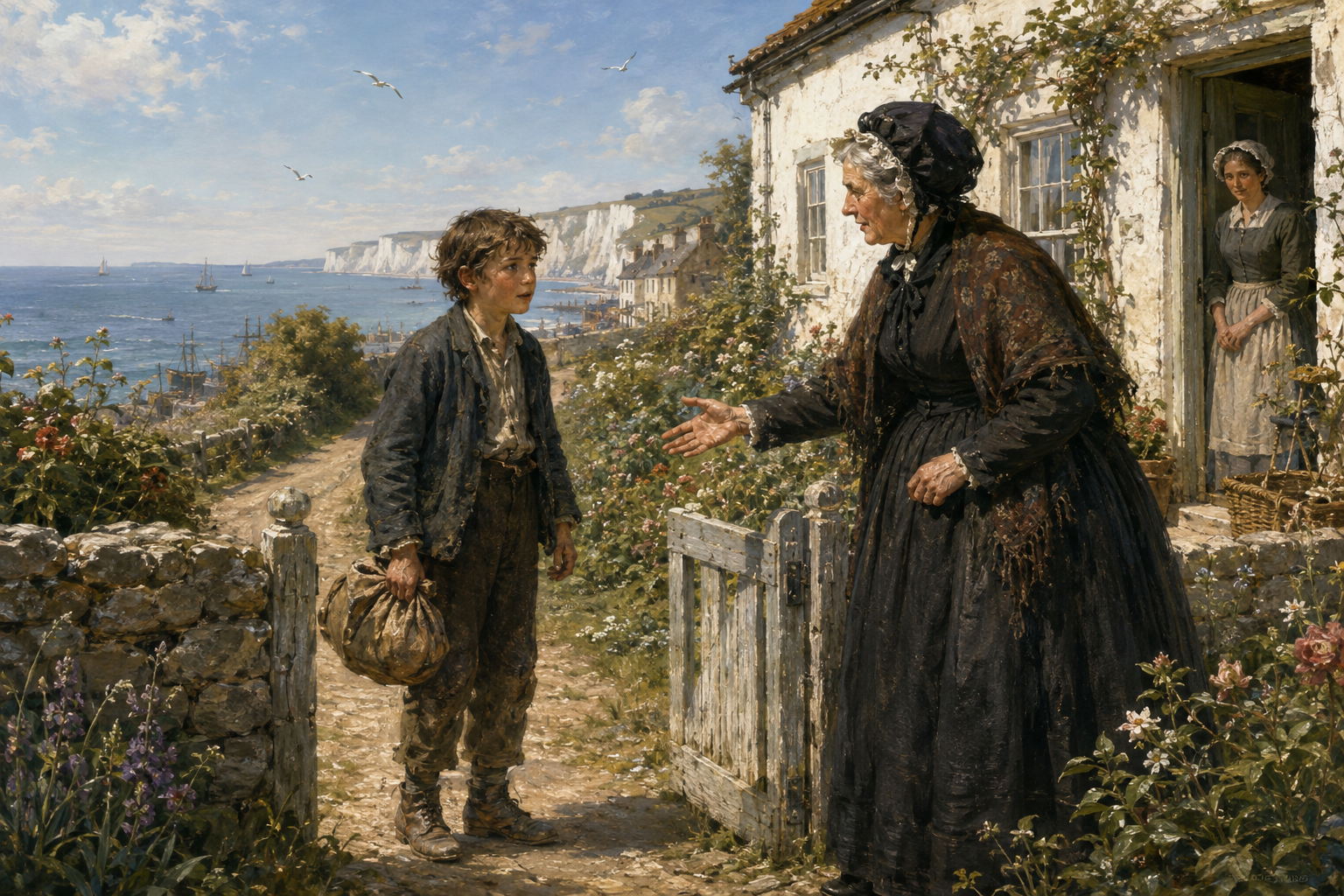
Symbols in A Tale of Two Cities: What They Mean and Why They Matter

Symbols in A Tale of Two Cities

Charles Dickens fills his novel with images that point to larger ideas. The symbols in A Tale of Two Cities help readers see anger, sacrifice, injustice, and hope more clearly.

This guide explains the most important symbols and shows how each one connects to theme. It is built for students who want clear examples they can use in class or essays.

In this Guide

  • Why symbolism matters in the novel
  • The broken wine cask
  • Light and darkness
  • Knitting and the revolution
  • La Guillotine
  • Imprisonment
  • Resurrection
  • How to write about the symbols
  • FAQ
Symbols in A Tale of Two Cities

Why symbols in A Tale of Two Cities matter

Symbols help Dickens turn big social problems into clear images.

The French Revolution can feel huge and complex. Dickens makes it easier to understand by using objects, colors, and repeated images.

Many symbols in A Tale of Two Cities show how private pain connects to public violence. A broken wine cask is not just a spill. It becomes a warning about hunger and rage.

If you need a simple method for spotting deeper meaning, read our guide on how to find symbolism in a story.

The broken wine cask as one of the key symbols in A Tale of Two Cities

The spilled wine shows how hunger can turn into violence.

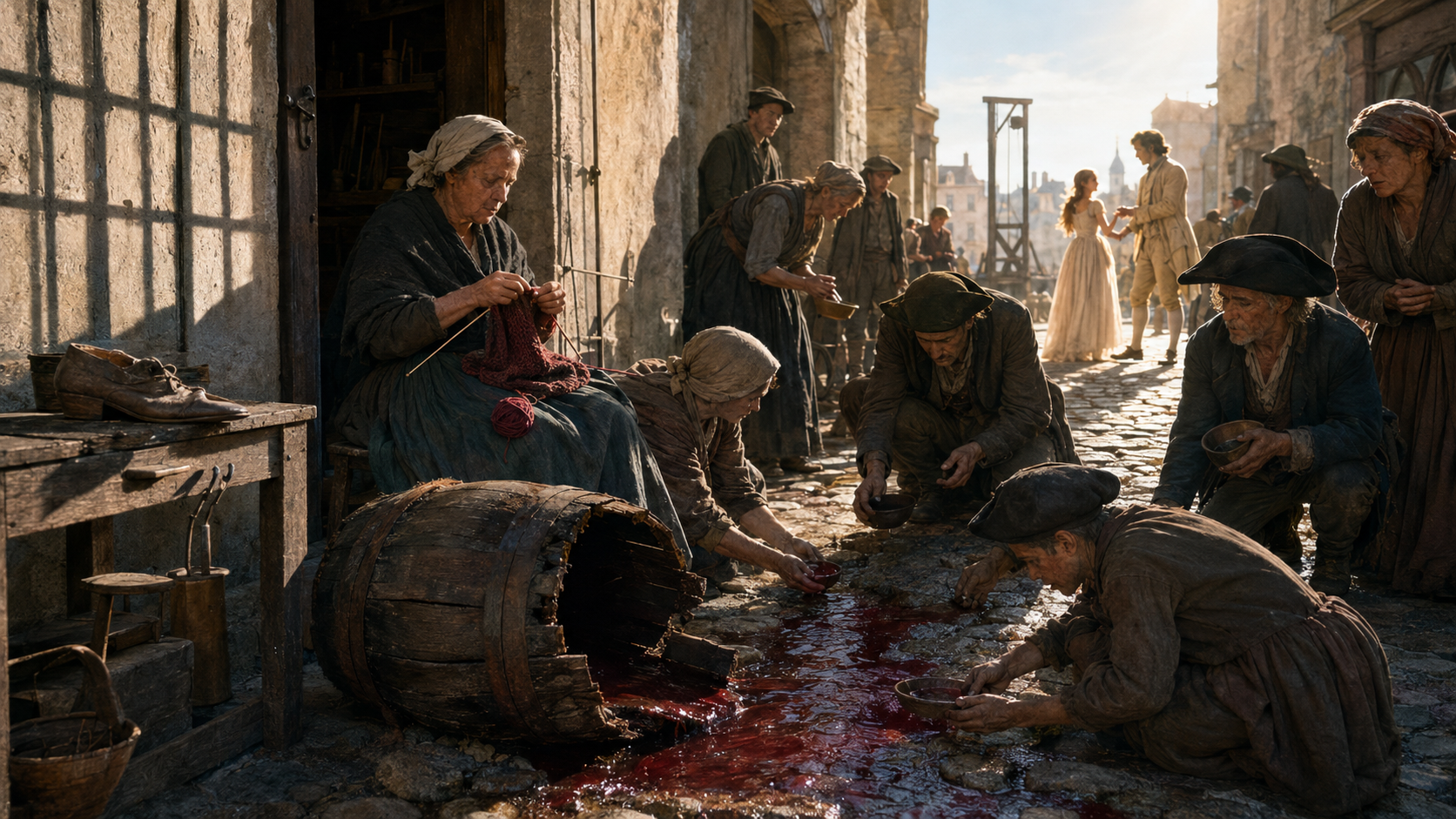
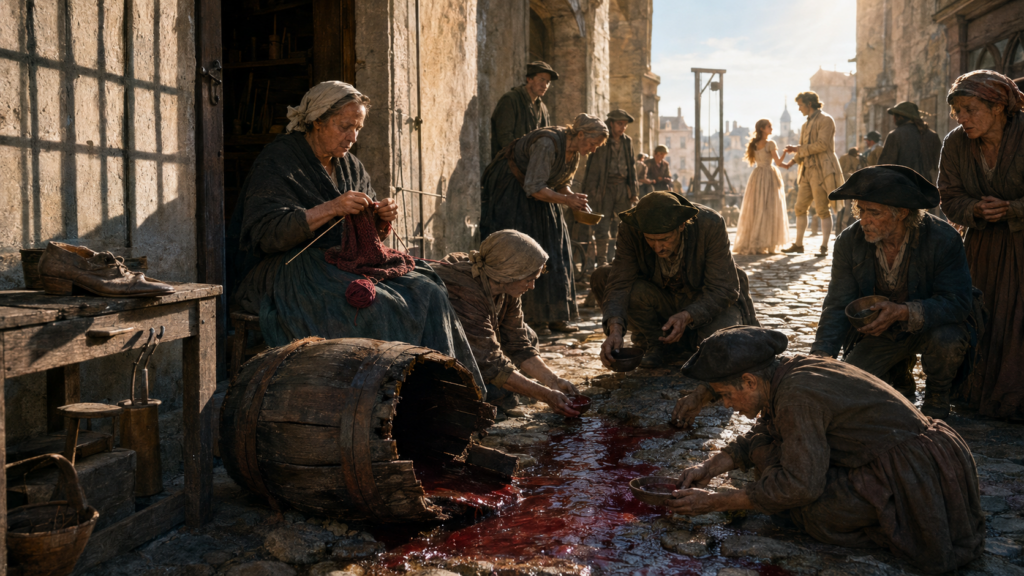
Early in the novel, a wine cask breaks in the street of Saint Antoine. Poor people rush to drink from the muddy ground. The scene is sad, messy, and tense.

The wine looks like blood. Dickens even shows someone writing the word blood on a wall. This moment points ahead to the bloodshed of the French Revolution.

The symbol matters because it links poverty with revenge. The people are not violent for no reason. They are starving, ignored, and pushed too far.

Like the green light in The Great Gatsby, the wine means more than it first seems to mean. It turns a simple object into a sign of desire and danger.

Light and darkness in the symbols in A Tale of Two Cities

Light often points to love, truth, and moral hope.

Dickens uses darkness to show fear, secrecy, and despair. Dr. Manette’s prison past is tied to dark rooms and hidden memories.

Lucie Manette is often linked with light. Her love helps bring her father back into the world after years in prison. She does not fix history, but she gives him a reason to live.

This symbol connects to the theme of **resurrection**. Light suggests that broken people can return to life, even after deep suffering.

The contrast also helps Dickens build mood. A dark street or prison cell makes the reader feel the danger before it reaches the characters.

Knitting as a symbol of revenge

Madame Defarge’s knitting turns a quiet act into a threat.

Knitting may seem harmless at first. In the novel, it becomes a record of names marked for death.

Madame Defarge uses her knitting to hide plans for revenge. This makes the symbol cold and frightening. It shows how hate can become patient and exact.

The symbol also connects to fate. Once a name enters her work, that person seems trapped. The image reminds readers of the Fates in Greek myth, who were tied to the thread of human life.

Here, Dickens shows a dark truth about justice. When justice becomes revenge, it can lose mercy.

La Guillotine and the symbol of public violence

The guillotine shows how a revolution can turn into a machine.

In the novel, La Guillotine is treated almost like a living force. Crowds gather around it. People watch death as if it were a show.

This symbol connects to the theme of mob power. The revolution begins with real anger against cruelty. Yet the guillotine shows how quickly a fight for justice can become cruel too.

Dickens does not excuse the old French nobility. He shows their pride and abuse. But he also warns that violence can spread until no one controls it.

For brief historical background on Dickens and his world, see Britannica’s biography of Charles Dickens.

Prison and chains as symbols in A Tale of Two Cities

Prison stands for both physical pain and mental trauma.

Dr. Manette spends years in the Bastille. Even after he is free, part of him remains trapped by fear and memory.

His shoemaking is a key sign of that trauma. When stress returns, he falls back into the habit he learned in prison. The past still has power over him.

This is one of the most human symbols in A Tale of Two Cities. It shows that freedom is not just about leaving a cell. A person also needs healing.

The Bastille itself becomes a symbol of unfair power. Its fall marks a political change, but Dickens asks whether people can escape cruelty without repeating it.

Resurrection as the central image of the novel

Resurrection means return, renewal, and moral rebirth.

The novel opens with the idea of being recalled to life. Dr. Manette is brought back from mental ruin. Charles Darnay is saved from death more than once.

Sydney Carton gives the deepest form of resurrection. He begins as a wasted man who sees little value in himself. By the end, he chooses a sacrifice that gives his life meaning.

This image connects to Christian ideas of selfless love. It also connects to a broader human hope: people can change.

The best symbols in A Tale of Two Cities work this way. They are not just clues. They help readers feel the novel’s moral struggle.

How to study symbols in A Tale of Two Cities for essays

A strong essay links each symbol to a theme and a scene.

Do not just say that wine stands for blood. Explain how the wine scene reveals hunger, anger, and the coming violence.

Try this simple pattern: name the symbol, describe where it appears, then explain what it shows about the novel’s message. Keep the focus on meaning.

For more help, review this step-by-step guide to finding symbolism. If you want extra practice, our literature study resources can help you build stronger notes.

Suggested books for deeper study

These books can help you understand Dickens, revolution, and literary symbols.

  • A Tale of Two Cities by Charles Dickens
  • Charles Dickens by Claire Tomalin

You can also explore the British Library’s Charles Dickens resources for helpful context.

FAQ about symbols in A Tale of Two Cities

Here are short answers to common student questions.

What are the main symbols in A Tale of Two Cities?

The main symbols include the broken wine cask, light and darkness, knitting, La Guillotine, prisons, and resurrection.

What does the wine symbolize in the novel?

The wine symbolizes hunger, blood, and the violence that will come with the French Revolution.

Why is knitting important in A Tale of Two Cities?

Knitting shows Madame Defarge’s revenge. It also suggests fate, since the names she records seem marked for death.

What does resurrection mean in the novel?

Resurrection means a return to life or purpose. Dr. Manette, Darnay, and Carton all connect to this idea.

How should I write about symbolism in an essay?

Choose one symbol, connect it to a clear theme, and use a specific scene as proof.

Key takeaway

The symbols in A Tale of Two Cities matter because they turn history into feeling. Dickens uses objects and images to show how suffering can lead to revenge, but also how love can lead to renewal.

Themes in A Tale of Two Cities: A Student-Friendly Guide

A Tale of Two Cities Themes

The themes in A Tale of Two Cities help students see why Dickens’s novel still matters. This guide explains the major ideas, conflicts, and meanings behind the story in clear language.

Charles Dickens writes about a world split by anger, fear, love, and hope. If you can track those ideas, the novel becomes much easier to understand.

In this Guide

  • Why theme matters in the novel
  • Sacrifice
  • Revolution
  • Justice and revenge
  • Resurrection
  • Class conflict
  • Family and loyalty
  • How to study the themes
  • FAQ
A Tale of Two Cities Themes

Why the themes in A Tale of Two Cities matter

Dickens uses theme to connect private lives with public violence.

A Tale of Two Cities is set in London and Paris during the time of the French Revolution. The story moves between homes, courts, prisons, and streets full of fear.

The themes in A Tale of Two Cities show how history affects real people. Dickens does not treat revolution as a simple event. He shows both the need for change and the danger of hatred.

Students often find the plot complex at first. Theme gives you a path through it. Once you notice repeated ideas like sacrifice, resurrection, and revenge, the novel becomes clearer.

Sacrifice and the themes in A Tale of Two Cities

Sacrifice is one of the novel’s most powerful ideas.

Sydney Carton is the clearest example. At first, he seems wasted and careless. He believes his life has little value.

By the end, Carton gives his life so Charles Darnay can live. His choice is not just brave. It gives meaning to a life he thought was ruined.

This theme links to a common idea in literature: a broken person can still act with grace. In Les Misérables, Jean Valjean also changes through mercy and self-giving love.

One of the key themes in A Tale of Two Cities is that sacrifice can restore hope. Dickens does not say sacrifice erases pain. He shows that it can create a future for others.

Revolution and the themes in A Tale of Two Cities

The novel asks when revolution becomes justice, and when it becomes cruelty.

Dickens does not ignore the suffering of the people with low income in France. The aristocracy has abused its power for years. The people have real reasons to be angry.

Yet the Revolution soon turns violent. The oppressed become willing to destroy anyone linked to the old system. The guillotine becomes a symbol of fear, not freedom.

This is why the themes in A Tale of Two Cities are not simple. Dickens supports justice, but he warns against mob rage. When people lose mercy, even a noble cause can become brutal.

For more historical background, Britannica’s overview of the French Revolution gives helpful context for the world of the novel.

Justice, revenge, and moral blindness

Dickens draws a sharp line between justice and revenge.

Justice seeks what is right. Revenge seeks payback no matter the cost. In the novel, that difference matters.

Madame Defarge has suffered deeply. Her anger comes from real trauma. But her desire for revenge grows so strong that she no longer sees people as individuals.

Charles Darnay becomes a target because of his family name. He rejects his family’s cruelty, but the Revolution still judges him by blood. That is moral blindness.

Among the themes in A Tale of Two Cities, this one is especially useful for essays. Dickens shows that pain can explain revenge, but it does not make revenge right.

From Idea to Novel Blueprint

Resurrection and new life

Resurrection means a return from death, despair, or spiritual loss.

Dr. Manette is “recalled to life” after years in prison. He is alive, but he has lost much of himself. Love helps him return to the world.

Sydney Carton also connects to resurrection. His final act gives him moral rebirth. He does not escape death, but he gains purpose.

The novel’s first book is even called “Recalled to Life.” That phrase prepares readers for one of the deepest themes in A Tale of Two Cities. People can be damaged, but they are not always beyond repair.

This idea also appears in A Christmas Carol, another Dickens work. Scrooge is not physically dead, but he needs a new moral life.

Class conflict and social inequality

The novel shows what can happen when a society treats the poor as disposable.

The French aristocrats live with comfort while common people starve. The Marquis St. Evrémonde is cold and cruel. He sees the poor as beneath him.

Dickens uses this conflict to show why revolution becomes possible. A society built on arrogance cannot stay stable forever.

Still, Dickens does not praise violence as the answer. He shows that class abuse creates rage, and rage can destroy the innocent with the guilty.

That balance makes the themes in A Tale of Two Cities rich for AP Literature and college essays. The book can criticize oppression while also warning against hatred.

Family, loyalty, and love

Love gives many characters the strength to survive.

Lucie Manette is often seen as gentle, but her role matters. Her love helps restore her father after prison. She becomes a source of peace in a violent world.

Charles Darnay shows loyalty by rejecting his family’s corrupt past. He tries to live by a better moral code, even when history catches up with him.

Carton’s love for Lucie also changes him. He does not win her in a romantic sense. Instead, his love leads him toward selfless action.

In this way, the themes in A Tale of Two Cities connect personal love to social hope. Dickens suggests that history may be cruel, but human love can still matter.

Fate, history, and personal choice

The novel asks whether people are trapped by history or free to choose.

Many characters seem caught in forces larger than themselves. The Revolution, family guilt, prison, and public anger shape their lives.

Yet Dickens also shows the power of choice. Darnay chooses to reject his family’s values. Carton chooses sacrifice. Lucie chooses care and loyalty.

This makes the novel more hopeful than it first appears. People cannot control history, but they can control their moral response to it.

For author background, see Britannica’s entry on Charles Dickens.

How to study the themes in A Tale of Two Cities

The best way to study theme is to connect ideas to characters, scenes, and symbols.

Start with a repeated idea. Then ask where it appears and how it changes. For example, resurrection appears with Dr. Manette early in the novel and with Carton near the end.

If you need a simple method, read our guide on how to identify theme in literature. It can help you turn notes into a clear thesis.

When you write about the themes in A Tale of Two Cities, avoid vague claims like “the theme is love.” Try a fuller claim: “Dickens shows that love can restore people who have been damaged by violence and loss.”

Books that pair well with A Tale of Two Cities

These books can help students compare similar ideas across literature.

  • Les Misérables by Victor Hugo
  • Great Expectations by Charles Dickens
  • Animal Farm by George Orwell

Each book explores power, justice, and moral choice in a different way. They are useful for comparison essays and class discussion.

FAQ about themes in A Tale of Two Cities

What is the main theme of A Tale of Two Cities?

The main theme is sacrifice. Sydney Carton’s final choice shows how love and selflessness can give life meaning.

What does resurrection mean in the novel?

Resurrection means return or renewal. Dr. Manette returns from prison, while Carton finds moral renewal through sacrifice.

How does Dickens show the danger of revenge?

He shows revenge through Madame Defarge and the Revolution’s violence. Revenge turns justice into cruelty when mercy disappears.

Why is class conflict important?

Class conflict explains why the Revolution begins. Dickens shows that a society with deep injustice can create deep anger.

Is A Tale of Two Cities against revolution?

Not exactly. Dickens understands why people revolt, but he warns that revolution without mercy can become another form of tyranny.

Key takeaway

The themes in A Tale of Two Cities show a world shaped by injustice, but not defeated by it. Dickens argues that sacrifice, mercy, and love can still create hope in violent times.

The Remains of the Day Character Analysis: Key People, Motivations, and Conflicts

The Remains of the Day characters

In this The Remains of the Day character analysis, we look at the people who shape Kazuo Ishiguro’s quiet, painful novel. The focus is on motives, conflict, and the choices that make the ending feel so powerful.

This guide is useful for discussion posts, essays, and quote-based analysis.

In this Guide

Use these sections to move from plot facts to stronger character claims.

  • Why Stevens matters most
  • What drives Stevens
  • Miss Kenton’s role
  • Lord Darlington’s influence
  • Farraday and change
  • Main conflicts
  • Minor characters
  • Essay tips and related books
The Remains of the Day characters

The Remains of the Day Character Analysis: Why Stevens Matters

Stevens is the center of the novel because his voice controls what readers know.

A strong The Remains of the Day character analysis starts with Stevens as an unreliable narrator. He tells his life story with care, but he hides pain from himself. He often calls his choices professional, even when they cost him love or moral judgment.

Stevens believes that a great butler must show dignity. To him, dignity means self-control, loyalty, and no public emotion. The problem is that he takes this idea so far that it traps him.

Readers can compare Stevens to Nick Carraway in The Great Gatsby. Both men tell a story from memory, and both leave gaps. Yet Stevens is more closed off because he has spent his whole life turning feeling into duty.

Stevens’s Main Motivation: Dignity at Any Cost

Stevens wants to believe his life had meaning, so he clings to service as proof.

His greatest motive is the wish to be a perfect butler. He wants to serve a “great gentleman” and take part in important history from behind the scenes. This gives him pride, but it also makes him blind.

When his father becomes weak and ill, Stevens still chooses work. During a major event at Darlington Hall, he keeps serving guests instead of staying near his dying father. He later presents this as a test of dignity.

That scene is key in The Remains of the Day character analysis because it shows the cost of Stevens’s code. His self-control looks noble on the surface. Under it, he avoids grief.

Stevens also uses language to protect himself. He says little, corrects himself often, and avoids direct blame. His careful speech reveals a man who fears emotional truth.

The Remains of the Day Character Analysis: Miss Kenton and Emotional Honesty

Miss Kenton matters because she sees the feeling Stevens refuses to name.

Miss Kenton, later Mrs. Benn, is warm, sharp, and morally alert. She works as housekeeper at Darlington Hall and often challenges Stevens. She notices when he hides behind rules.

This part of The Remains of the Day character analysis often centers on their missed romance. Miss Kenton tries to build closeness through small acts. Stevens responds with formality.

One famous pattern is their private talks about flowers, rooms, and household staff. These moments should lead to honesty. Instead, Stevens treats them like work problems.

Miss Kenton is not just a love interest. She is a mirror. Through her, readers see what Stevens could have been if he had chosen human connection over perfect service.

Her later life also adds sadness. She leaves Darlington Hall, marries, and builds a life away from Stevens. By the time Stevens understands what he lost, the past cannot be fixed.

Lord Darlington: Power, Class, and Moral Failure

Lord Darlington shapes Stevens’s life because Stevens builds his identity around serving him.

Lord Darlington is an English aristocrat with status and influence. Stevens sees him as noble for much of his life. Over time, readers learn that Darlington supported dangerous political causes and trusted the wrong people.

Stevens’s loyalty becomes a moral problem. He wants to believe Darlington was honorable, so he avoids facing the harm tied to the household. This makes the novel about more than private regret.

In The Remains of the Day character analysis, Darlington helps reveal the danger of blind service. Stevens gives up his own judgment because he thinks his role is to obey.

This is one reason the novel works well in AP Literature essays. It connects personal conflict with history, class, and responsibility.

Mr. Farraday and Doctor Carlisle: Change Outside Darlington Hall

These characters show Stevens that the old world has changed.

Mr. Farraday, the American owner of Darlington Hall, is informal and playful. He jokes with Stevens and expects a more relaxed kind of service. Stevens struggles because he does not know how to adjust.

Farraday highlights the gap between old English formality and a newer social world. Stevens’s discomfort with banter is small, but it points to a larger fear. His whole way of life may no longer matter.

Doctor Carlisle helps Stevens face reality near the end of the trip. He suspects Stevens once served at Darlington Hall and sees through some of Stevens’s careful claims. Carlisle gives readers a more grounded view of Stevens.

For students, The Remains of the Day character analysis should treat these figures as more than side characters. They test Stevens’s story and show the pressure of change.

The Remains of the Day Character Analysis: Core Conflicts

The novel’s conflicts are quiet, but they cut deep.

The biggest conflict is duty versus feeling. Stevens wants to be professional, but that goal blocks love, grief, and honest speech. His conflict is mostly internal.

Another conflict is loyalty versus conscience. Stevens believes loyalty is a virtue. Yet loyalty to Lord Darlington keeps him from judging serious moral failure.

The best The Remains of the Day character analysis also looks at memory versus truth. Stevens tells the past in a controlled way. As the novel moves on, his story cracks.

This conflict is like what we see in many first-person novels. A narrator may speak with confidence while the reader slowly sees what the narrator cannot admit.

Minor Characters Who Matter

Small roles help reveal the pressure placed on Stevens.

Stevens’s father is one of the most important minor characters. He represents the old standard of service that Stevens worships. His decline forces Stevens to choose between family love and public duty.

The former Jewish maids also matter. When Lord Darlington dismisses them, Miss Kenton is disturbed. Stevens avoids moral protest, which shows his loyalty has limits in the wrong direction.

The villagers Stevens meets on his trip offer a different view of dignity. They value honesty and civic voice. Stevens, by contrast, has spent his life outside direct public action.

These minor figures make The Remains of the Day character analysis richer because they reveal what Stevens misses.

How to Use The Remains of the Day Character Analysis in Essays

Good essays connect character choices to the novel’s larger ideas.

Do not just say Stevens is repressed. Explain how Ishiguro shows repression through speech, memory, and missed chances. Use short quotes that reveal his self-control or denial.

A strong thesis might argue that Stevens’s idea of dignity gives his life structure but also destroys his chance at love and moral clarity. That kind of claim links character to theme.

If you need a step-by-step method, read our guide on how to analyze characters in literature. It can help you turn notes into a clear essay plan.

You can also use our quote-based character analysis study tool to organize claims, evidence, and commentary before you draft.

Helpful Context for Readers

Author background can help, but the text should still lead your analysis.

Kazuo Ishiguro is known for narrators who reveal truth slowly. You can learn more about his life and major works through Britannica’s overview of Kazuo Ishiguro.

The Nobel Prize site also offers useful context on his style and themes: Kazuo Ishiguro facts from Nobel Prize.

Use context to support your reading, not replace it. The strongest The Remains of the Day character analysis still depends on close attention to scenes and language.

These books pair well with Ishiguro’s novel for class study or independent reading.

  • The Remains of the Day by Kazuo Ishiguro
  • Never Let Me Go by Kazuo Ishiguro

FAQ: The Remains of the Day Character Analysis

These quick answers can help with study sessions and class prep.

Who is the most important character in The Remains of the Day?

Stevens is the most important character. His memory, voice, and self-deception shape the whole novel.

What motivates Stevens?

Stevens is motivated by dignity and service. He wants to believe that perfect loyalty gives his life meaning.

Why is Miss Kenton important?

Miss Kenton reveals Stevens’s emotional limits. She also shows the life he might have had if he had chosen honesty.

What is the main conflict in the novel?

The main conflict is duty versus feeling. Stevens’s loyalty to work keeps him from love and moral courage.

How can I write a strong essay about these characters?

Focus on one clear claim. Then use quotes that show how a character’s words, choices, and silence reveal theme.

Key Takeaway

The Remains of the Day character analysis shows that Stevens’s tragedy is not loud. It comes from small choices, careful words, and a life spent hiding from the truth.

Themes in The Remains of the Day: A Student-Friendly Guide

Themes in The Remains of the Day

The themes in The Remains of the Day show how duty can hide pain, how memory can bend the truth, and how a life of service can cost a person more than expected. This student-friendly guide explains the major ideas and conflicts you should notice as you read Kazuo Ishiguro’s novel.

In this Guide

Use this roadmap to find the ideas that matter most for class discussion and essays.

Themes in The Remains of the Day

Why the themes in The Remains of the Day Matter

Ishiguro’s novel is quiet on the surface, but it asks hard questions about identity, truth, and loss.

Stevens, the narrator, tells the story of his life as a butler. He takes pride in his work at Darlington Hall, yet his memories show the cost of that pride.

These themes in The Remains of the Day matter because they turn a private life into a moral problem. Stevens must face what he served, what he ignored, and what he never allowed himself to feel.

For background on Ishiguro’s life and career, see this short overview from Britannica. The Nobel Prize page for Kazuo Ishiguro also gives helpful context for his major works.

Major themes in The Remains of the Day

The novel links personal regret with larger questions about class, history, and moral choice.

Here are the main themes students should track while they read:

  • Duty as a mask: Stevens uses service to avoid painful feelings.
  • Regret: His trip forces him to see what he has lost.
  • Class: The world of great houses depends on strict social ranks.
  • Memory: Stevens retells the past in ways that protect him.
  • Political blindness: Loyalty to Lord Darlington keeps Stevens from judging real harm.
  • Emotional repression: Stevens treats feeling as weakness, even when love is near.

Together, the themes in The Remains of the Day show a man who confuses dignity with self-erasure. That confusion gives the novel its quiet sadness.

Themes in The Remains of the Day: Duty and Selfhood

Stevens builds his identity around being a perfect butler, but that role slowly replaces his inner life.

One of the novel’s strongest ideas is that duty can become a way to avoid freedom. Stevens believes a great butler must serve without question. He thinks personal feeling should never disturb professional control.

This belief shapes his choices. When his father dies, Stevens keeps working. When Miss Kenton reaches out with warmth, he stays formal. And when Lord Darlington supports dangerous politics, Stevens hides behind the idea that servants do not judge their employers.

The tragedy is not that Stevens works hard. The tragedy is that he lets work decide what he is allowed to feel.

This theme connects to F. Scott Fitzgerald’s The Great Gatsby. Gatsby also builds his life around an ideal. In both novels, a dream that seems noble leads to deep loss.

Themes in The Remains of the Day: Memory and Regret

Stevens tells the past as if he can control it, but his own words reveal what he tries to hide.

The novel is structured around memory. Stevens travels through England and looks back on his years at Darlington Hall. At first, he seems calm and careful. Over time, gaps and weak excuses start to appear.

He wants to believe that Lord Darlington was honorable. He wants to believe that his own choices were proper. Yet his memories do not fully support those beliefs.

Regret enters slowly. Stevens does not burst into confession. Instead, he circles around the truth until the reader can see it clearly.

This is why the novel fits well with AP Literature essays about unreliable narration. Stevens is not a liar in a simple sense. He is a man who has practiced self-protection for so long that truth feels almost unsafe.

Class, Power, and Political Blindness

The novel shows how class can train people to obey power without asking enough questions.

Darlington Hall represents an old English social order. Lords make decisions in grand rooms. Servants carry out the work that supports that world.

Stevens is proud of his place in this system. He sees service to a powerful man as a way to serve history itself. That idea makes him feel important, but it also limits his judgment.

One of the sharpest themes in The Remains of the Day is political blindness. Lord Darlington’s Nazi sympathies are not a small mistake. They show how charm, status, and tradition can cover moral failure.

Stevens avoids responsibility by saying he was only a servant. The novel asks whether that excuse is enough. Most readers will feel that it is not.

Love, Emotion, and What Stevens Cannot Say

The novel’s love story is powerful because so much of it remains unspoken.

Miss Kenton offers Stevens chances for closeness. She teases him, challenges him, and tries to reach the person behind the professional mask.

Stevens responds with rules. He focuses on duties, staff matters, and proper conduct. His restraint may look dignified, but it also blocks real human contact.

The final meeting between Stevens and Miss Kenton is painful because it shows how time changes the meaning of choice. What once seemed like discipline now looks like fear.

Shakespeare’s Hamlet offers a useful comparison. Hamlet waits too long to act, while Stevens waits too long to feel. Both works show how delay can shape a whole life.

How to Write About the Novel’s Themes

A strong essay should connect theme to character, structure, and specific moments from the text.

When you write about themes in The Remains of the Day, avoid broad claims like Stevens is sad. Explain how Ishiguro creates that sadness through memory, restraint, and missed chances.

You might focus on one question: What does Stevens gain by repressing emotion, and what does he lose? That question can lead to a clear thesis about dignity and regret.

Use short quoted moments from key scenes. The death of Stevens’s father, Miss Kenton’s private talks with him, and the later meeting at the end all offer strong evidence.

These books pair well with Ishiguro’s novel because they also explore memory, regret, and moral choice.

  • The Remains of the Day by Kazuo Ishiguro
  • Never Let Me Go by Kazuo Ishiguro

You can search for these titles on Amazon, at your school library, or through a local bookstore.

FAQ: Themes in The Remains of the Day

These quick answers can help before a quiz, seminar, or essay draft.

What are the main themes in The Remains of the Day?

The main themes are duty, regret, memory, class, political blindness, and emotional repression. Most of them connect through Stevens’s belief that service matters more than personal truth.

Why is duty such an important theme?

Duty gives Stevens pride, but it also keeps him from asking moral questions. He uses professionalism to avoid pain and responsibility.

Is Stevens an unreliable narrator?

Yes, but not because he lies in an obvious way. He edits his memories and avoids facts that threaten his view of himself.

What does the ending mean?

The ending suggests that Stevens finally sees part of what he has lost. Still, he turns back toward service, which makes the ending sad and complex.

How can I write a thesis about the novel?

Choose one main idea and link it to Stevens’s choices. For more help, review this literary analysis essay guide.

Key Takeaway

The novel is about a man who mistakes control for dignity until memory forces him to face the cost.

The themes in The Remains of the Day reveal how a quiet life can contain deep conflict. Ishiguro shows that what people refuse to say can shape them as much as what they do.

Never Let Me Go quotes explained: Important Passages for Essays

Never Let Me Go Quotes

Kazuo Ishiguro’s Never Let Me Go can feel quiet at first, but its most important passages carry deep fear and sadness. This guide offers Never Let Me Go quotes explained in a student-friendly way, with careful paraphrases for longer copyrighted passages.

You can use these ideas to build stronger claims about memory, identity, love, and ethics.

In this Guide

  • Why the novel’s passages matter
  • Hailsham, childhood, and hidden truth
  • Art, souls, and human worth
  • Language, control, and donations
  • Love, hope, and the ending
  • Essay tips and student resources
  • FAQ
Never Let Me Go Quotes

Never Let Me Go quotes explained: Why these passages matter

The best passages in the novel do not shout. They often sound calm, even when they reveal something cruel.

A good set of Never Let Me Go quotes explained should focus on what Ishiguro hides beneath ordinary speech. Kathy tells her story in a plain voice, so readers must notice tone, gaps, and repeated words.

Key idea: the novel’s power comes from contrast. Soft memories sit beside a system that treats people as tools.

This is one reason the book works well for AP Literature essays. A small detail can lead to a large point about obedience or human value.

Never Let Me Go quotes explained: Hailsham and childhood

Hailsham looks like a normal school, but it trains children to accept a future chosen for them.

One key passage to study is the moment when Miss Lucy suggests the students have been “told and not told” about their lives. That short phrase matters because it shows how control can work through partial truth.

The students know enough to feel uneasy. They do not know enough to resist.

This part of Never Let Me Go quotes explained can support an essay about innocence. Ishiguro shows that childhood is not pure safety here. It is a space where adults shape what children believe.

You might compare Hailsham with Lowood School in Charlotte Brontë’s Jane Eyre. Both places use rules to form young lives, but Ishiguro makes the control feel quieter.

Never Let Me Go quotes explained: Art, souls, and being seen

The students’ art seems harmless at first, but it becomes one of the novel’s sharpest moral questions.

The guardians collect the students’ best work because they hope it will prove the children have souls. This idea is painful because it assumes their humanity needs proof.

For students, this part of Never Let Me Go quotes explained is useful for essays about dehumanization. If someone must prove they are fully human, the society around them has already failed.

Essay angle: art in the novel is not just self-expression. It becomes evidence in a moral debate that should never need evidence.

Mary Shelley’s Frankenstein offers a strong comparison. The creature reads, feels, and asks for care, yet others still reject him as less than human.

Never Let Me Go quotes explained: Language and control

Ishiguro uses gentle words to hide violence.

Words like “donor,” “carer,” and “completion” soften what is being done to the clones. These terms make the system sound calm and medical instead of brutal.

When you write about Never Let Me Go quotes explained, pay close attention to diction. Diction means word choice, and in this novel, word choice is part of the system’s control.

The book shows how language can train people to accept harm. If a society changes the words for cruelty, people may stop seeing the cruelty clearly.

Students often connect this to George Orwell’s 1984, where language also shapes thought. You do not need to quote Orwell to make the link. Focus on how both books show the danger of controlled speech.

Never Let Me Go quotes explained: Love, hope, and the idea of a “possible”

The search for a “possible” shows how badly the characters want a life beyond the one assigned to them.

A “possible” is someone the clones believe might be the original model for one of them. The word matters because it carries hope, but it also reduces identity to a copy.

Ruth’s trip to find her possible is full of longing. She wants proof that she came from someone with a future that feels real.

Kathy and Tommy’s later hope for a deferral also matters. Their love is sincere, but the system does not reward sincerity.

This is a strong place to discuss tragedy. The novel does not need a dramatic villain at the end. The tragedy is that the characters have learned to ask for only a little more time.

How to use Never Let Me Go quotes explained in an essay

A strong essay should not drop a passage into a paragraph and move on. You need to explain how the words create meaning.

Use Never Let Me Go quotes explained as a starting point for close reading. Choose one short phrase, name the literary device, and connect it to a theme.

For example, you might focus on the word “completion.” Explain that it sounds peaceful, then show how it hides death and loss.

If you need help shaping your paragraphs, read our guide on how to write a literary analysis essay. It can help you move from observation to argument.

If you want a quick study aid, try our printable quote tracker for literature essays.

Student thesis ideas for Never Let Me Go quotes explained

These sample claims can help you start, but make them your own.

  • Ishiguro uses calm narration to show how cruelty can become normal.
  • The novel presents art as proof of humanity, but it also questions why such proof is demanded.
  • The euphemisms in the donation system reveal how language can hide moral harm.
  • Kathy’s memories show that love still matters, even in a world built to deny freedom.

Each claim should lead to close analysis. If your paragraph only retells the plot, return to the exact words of the passage.

For author context, see the Britannica overview of Kazuo Ishiguro. You can also read the Nobel Prize facts page on Ishiguro for a brief note on his literary importance.

These sources can support background research, but your essay should still focus on the text itself.

Amazon book suggestions for better context

  • Never Let Me Go by Kazuo Ishiguro
  • Frankenstein by Mary Shelley

These books pair well because both ask what society owes to people it creates, controls, or rejects.

FAQ: Never Let Me Go quotes explained

What is the most important theme in Never Let Me Go?

One major theme is human worth. The novel asks why some lives are valued less than others.

Can I use long quotes from the novel in my essay?

Use short quotes when possible, and explain them well. Long quotes often weaken analysis unless your teacher asks for them.

What does Hailsham symbolize?

Hailsham symbolizes controlled innocence. It protects the students, but it also prepares them to accept injustice.

Why is Kathy’s narration so calm?

Her calm voice shows how deeply the system has shaped her. It also makes the horror feel more real.

How do I write about the ending?

Focus on restraint. The ending is powerful because Kathy faces loss without dramatic rebellion.

Key Takeaway

Never Let Me Go quotes explained should show how Ishiguro turns quiet language into moral pressure. The novel asks readers to notice what the characters have been taught not to question.

Themes in Lord of the Flies: A Student-Friendly Guide

themes in Lord of the Flies

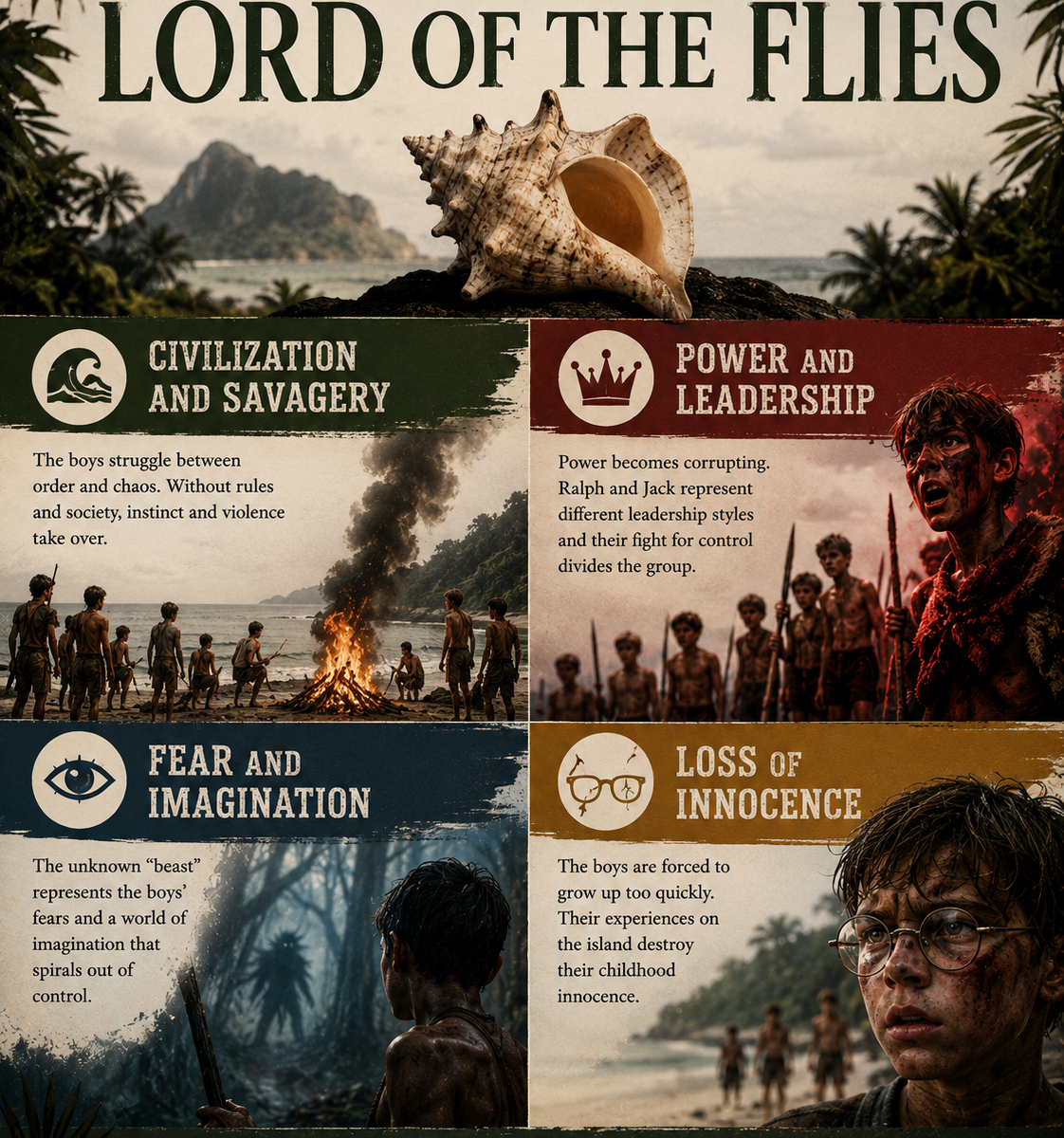
William Golding’s novel may look like a survival story, but it is really about human nature under pressure. This guide explains the major themes in Lord of the Flies so students can read the novel with more confidence.

You will see how power, fear, violence, and social order shape the boys’ choices on the island.

In this Guide

  • Why the themes matter
  • Civilization and savagery
  • Power and leadership
  • Fear and imagination
  • Loss of innocence
  • Symbols, essay ideas, and FAQs
themes in Lord of the Flies

Why the Themes in Lord of the Flies Matter

The novel asks a sharp question: what happens when rules disappear?

The main themes in Lord of the Flies help readers see that the island is more than a setting. It becomes a test of society, morality, and fear.

At first, the boys try to copy the adult world. They hold meetings, choose a leader, and use the conch to give each person a turn to speak. Yet that order starts to break down when fear grows and Jack gains power.

This is why the book often appears in high school and AP Literature classes. It gives students a clear way to study conflict, symbols, and character change.

Major Themes in Lord of the Flies: Civilization vs. Savagery

This is the central conflict of the novel.

One of the most important themes in Lord of the Flies is the struggle between order and violence. Ralph stands for rules, rescue, and shared responsibility. Jack stands for force, hunting, and control.

The conch shows civilization at first. When the boys respect it, they listen to each other. When they ignore it, the group loses its moral center.

Golding does not suggest that savagery comes from the island itself. The boys bring it with them. This makes the novel darker because the danger is not only outside them. It is inside them too.

A similar idea appears in Shakespeare’s Macbeth. Macbeth does not begin as a monster, but ambition and fear pull him toward violence. In both works, pressure reveals what a person may become.

The Theme of Power and Leadership

The boys’ leaders show two very different ways to gain control.

Ralph becomes leader because other boys trust him. He wants shelters, a signal fire, and a plan for rescue. His power depends on cooperation.

Jack uses fear, excitement, and punishment. He offers meat and the thrill of the hunt. His leadership feels easier because it gives the boys quick rewards.

This theme matters because Golding shows how fragile fair leadership can be. A group may choose safety and rules, but fear can make a harsh leader seem strong.

When you write about the themes in Lord of the Flies, it helps to compare Ralph and Jack. Their conflict is not just personal. It shows two models of society.

Fear, Imagination, and the Beast

The beast is powerful because the boys believe in it.

Fear is one of the most useful themes in Lord of the Flies for essays because it affects nearly every major event. The littluns fear a beast. The older boys try to explain it, but they cannot fully control the panic.

The beast also becomes a tool. Jack uses fear of the beast to gain loyalty. If the boys feel unsafe, they look to him for protection.

Simon understands the truth before the others do. The beast is not a real monster hiding in the jungle. It is the darkness within people.

This idea connects to Arthur Miller’s The Crucible. In that play, fear spreads through a community and makes people act against reason. Golding shows a similar pattern on the island.

Loss of Innocence in Lord of the Flies

The island changes the boys, but it also reveals them.

At the start, the boys act like schoolchildren on an adventure. They swim, explore, and treat the island like a game. That innocent mood does not last.

The deaths of Simon and Piggy mark a painful shift. After these moments, the reader can no longer see the island as a simple place of play.

Ralph’s final tears matter because he now understands what people can do. He cries for Piggy, for Simon, and for the end of his own innocence.

Among the major themes in Lord of the Flies, this one often feels the most personal. Students can trace how childhood trust gives way to guilt and grief.

The Theme of Human Nature

Golding presents a dark view of what people may become without moral limits.

The novel does not claim that every person is evil all the time. Ralph, Piggy, and Simon all show care or reason. Yet the book suggests that goodness needs support from rules, empathy, and courage.

Simon is the clearest moral figure. He helps the littluns, seeks truth, and sees beyond the group’s fear. His death shows how a crowd can destroy a person who stands apart.

This is one reason the themes in Lord of the Flies still matter. The novel asks readers to think about school groups, politics, teams, and any place where people follow a crowd.

Symbols That Support the Themes in Lord of the Flies

Golding uses simple objects to carry big ideas.

The conch stands for order and shared speech. When it breaks, the boys have lost more than a shell. They have lost the system that kept them human.

Piggy’s glasses stand for reason and practical knowledge. They help start the fire, which means they also connect to rescue and hope. When the glasses are stolen, reason is pushed aside.

The signal fire stands for connection to the outside world. When the boys care for it, they still want rescue. When they forget it, they drift further from civilized life.

The Lord of the Flies, the pig’s head on a stick, stands for corruption and inner evil. It gives shape to the fear that has haunted the group.

For a reliable background on the author and novel, students can visit Britannica’s page on William Golding.

How to Write About Themes in Lord of the Flies

A strong theme essay should make a claim, not just name a topic.

Do not write only that the novel is about power. Instead, explain what Golding says about power. For example: Golding shows that fear can make violent leadership seem attractive.

Then support your claim with scenes. You might use the election, Jack’s tribe, the killing of Simon, or the breaking of the conch.

If you need help shaping a thesis and using evidence, see our guide on how to write a literary analysis essay.

You can also build a paragraph around a symbol. For example, Piggy’s glasses show how reason can be useful, but also easy to steal when violence takes over.

For extra practice, you can use our student literature study resources to plan theme notes and essay ideas.

Helpful Books to Read Next

These books can help you understand the novel and its larger literary context.

  • Lord of the Flies by William Golding
  • How to Read Literature Like a Professor by Thomas C. Foster

For more context on major literary terms, the Poetry Foundation glossary is a helpful reference.

FAQ: Themes in Lord of the Flies

What is the main theme of Lord of the Flies?

The main theme is the conflict between civilization and savagery. Golding shows how quickly order can break down when fear and violence take control.

What does the beast symbolize?

The beast symbolizes the darkness within human beings. It is not just a creature the boys fear. It reflects their own capacity for violence.

How does Golding show loss of innocence?

Golding shows it through the boys’ shift from play to cruelty. Simon’s and Piggy’s deaths make the loss clear.

Why is the conch important?

The conch stands for rules, speech, and democracy. When it is destroyed, civilized order has fully collapsed.

How can I write a thesis about this novel?

Choose one theme, make a clear claim about Golding’s message, and connect it to key scenes. For more help, use this literary analysis essay guide.

Key Takeaway

The major themes in Lord of the Flies show that civilization is fragile. Golding’s novel warns that fear, power, and group pressure can reveal the darkest parts of human nature.

What Is a Motif in Literature?

Motif in Literature
Motif in Literature

What Is a Motif in Literature?

What Is a Motif in Literature? A motif is a repeated detail, image, word, object, or idea that helps build meaning in a story.

Once you know how to spot motifs, you can see how authors guide readers toward deeper themes without stating them directly.

In this Guide

  • What a motif means
  • Why motifs matter
  • Motif vs. theme
  • Famous motif examples
  • How to spot motifs while reading
  • Books that help you practice
  • FAQ

What Is a Motif in Literature? A Simple Definition

A motif is a repeated pattern that adds meaning to a text.

A motif can be an object, color, phrase, sound, place, or action that appears more than once. It is not random. The author repeats it for a reason.

The answer to What Is a Motif in Literature? is simple: it is a clue that points toward a larger idea.

For example, if a novel keeps showing locked doors, the motif may suggest secrets, fear, or limits. The door itself matters, but the repeated pattern matters more.

Why Motifs Matter in Literature

Motifs help readers notice what a story is really about.

Authors use motifs to connect scenes that may seem separate. A repeated image can remind you of a character’s struggle or a story’s main conflict.

Motifs also make literature feel richer. They give a text shape and rhythm. When a motif appears again, it often carries more meaning than it did before.

This is why teachers often ask students to track repeated details. A motif can lead you straight to a strong theme statement.

If you want to compare motifs with other tools writers use, this literary devices list is a helpful place to start.

What Is a Motif in Literature? Motif vs. Theme

A motif repeats. A theme reveals a message.

This is one of the most common points of confusion. A motif is a pattern inside the story. A theme is the deeper idea the story explores.

Think of it this way: rain might be a motif. The theme might be that grief changes how people see the world.

In Macbeth, blood appears again and again. Blood is a motif. It connects to themes of guilt, violence, and moral collapse.

You can read more about Shakespeare’s play through Britannica’s overview of Macbeth.

What Is a Motif in Literature? Common Examples Students Know

Many famous books use motifs that are easy to recognize once you look for them.

In The Great Gatsby by F. Scott Fitzgerald, the green light is a key motif. It appears across the water and comes to represent Gatsby’s hope, longing, and dream of a perfect future.

In To Kill a Mockingbird by Harper Lee, mockingbirds act as a motif tied to innocence. The repeated idea helps readers think about who gets harmed even when they have done no wrong.

In Lord of the Flies by William Golding, the conch shell becomes a motif connected to order and rules. As the boys lose respect for it, their society begins to break apart.

In poetry, a repeated image can work the same way. The Poetry Foundation offers many poems where repeated images carry meaning. You can explore examples at the Poetry Foundation.

How a Motif Builds Theme

A motif often acts like a bridge between details and big ideas.

When a writer repeats a detail, that detail starts to collect meaning. By the end of the story, it may reveal something about love, power, identity, or fear.

For example, a story may repeat images of mirrors. At first, they may seem like simple objects. Later, they may connect to a character’s struggle with self-image or truth.

This is why motifs are useful in essays. They give you evidence you can point to. You can quote the repeated detail, then explain how it supports the theme.

How to Spot a Motif While Reading

Look for details that return at important moments.

When students ask, What Is a Motif in Literature?, the best answer is often found through practice. Notice what keeps coming back.

Pay attention to repeated colors, objects, phrases, weather, places, or actions. Then ask what those details seem to suggest.

A good test is this: if the detail appeared only once, it might just be description. If it returns and gains meaning, it may be a motif.

For more help with related terms, see this guide to common literary devices.

Books to Practice Finding Motifs

These books make motif practice clear and useful.

  • The Great Gatsby by F. Scott Fitzgerald
  • Macbeth by William Shakespeare

Both texts use repeated images in ways that connect strongly to theme. They are also common in high school and college literature classes.

FAQ: What Is a Motif in Literature?

What is a motif in literature in simple words?

A motif is something that repeats in a story and helps create meaning. It can be an image, object, word, or idea.

How is a motif different from a symbol?

A symbol stands for something beyond itself. A motif repeats across the text and often includes symbols, images, or ideas.

Can a character be a motif?

A character is usually not a motif. But a repeated action, phrase, or role connected to a character can become one.

Why do teachers ask about motifs?

Motifs help students find themes. They also give strong evidence for literary analysis essays.

What Is a Motif in Literature? Why should I care?

It helps you read with more insight. Motifs show how small details connect to the story’s bigger message.

Key Takeaway

What Is a Motif in Literature? It is a repeated detail that helps reveal deeper meaning.

Here is a simple reading tip: when something shows up more than once, mark it. Then ask, “What idea does this pattern point toward?” That question can lead you to a stronger analysis.

Themes in Pride and Prejudice: A Student-Friendly Guide

Themes in Pride and Prejudice

Jane Austen’s novel may look like a love story, but its ideas run much deeper. This guide explains the major themes in Pride and Prejudice so students can see how love, class, pride, and choice shape the whole book.

In this Guide

Use this quick map to find the part you need for class, notes, or an essay.

  • Why the ideas matter
  • Pride, prejudice, and self-knowledge
  • Love and marriage
  • Class and reputation
  • Money and limited choices
  • Gender and power
  • Family and education
  • Essay tips and FAQ
Themes in Pride and Prejudice

Why the themes in Pride and Prejudice matter

The novel’s themes help explain why a book from 1813 still feels fresh today.

Austen writes about people who judge too fast, protect their social rank, and search for a life with dignity. Those issues still matter in schools, friendships, and families.

The themes in Pride and Prejudice also help students see Austen’s craft. She does not preach. She uses wit, dialogue, and character change to make her ideas clear.

For helpful background on Austen’s life and era, see this overview from Britannica.

Theme 1: Pride, prejudice, and self-knowledge

Elizabeth and Darcy both have to face the truth about themselves.

Pride is not always bad in the novel. A person needs self-respect. But Darcy’s pride makes him cold, while Elizabeth’s confidence makes her judge him too quickly.

Prejudice means more than unfair dislike. It also means forming an opinion before you know the facts. Elizabeth believes Wickham because he seems charming. Darcy misreads Elizabeth’s family and social rank.

A central part of the themes in Pride and Prejudice is the need to grow. Elizabeth changes because she can admit error. Darcy changes because he can see how his behavior has hurt others.

This is similar to Pip in Great Expectations. Pip must learn that status does not equal worth. Both novels ask students to notice how a character’s wrong ideas shape the plot.

Theme 2: Love, marriage, and good judgment

Austen shows that love works best when feeling and reason stay linked.

Marriage is a major plot force in the novel. Mrs. Bennet wants her daughters married because their future is at risk. But Austen does not treat marriage as only a business deal.

Elizabeth refuses Mr. Collins because she knows a loveless match would harm her. Charlotte Lucas accepts him because she wants security. Neither choice is simple.

Another key part of the themes in Pride and Prejudice is the question of good judgment. Elizabeth and Darcy reach a strong love only after they face hard truths.

For quicker review, students can use Pride and Prejudice study resources alongside class notes.

Class and reputation as themes in Pride and Prejudice

Social rank affects how characters speak, marry, and judge one another.

Darcy has wealth and status, so others expect him to act with control. The Bennet family has less rank, so their behavior gets watched more closely.

Lady Catherine believes social class should decide marriage. She sees Elizabeth as beneath Darcy. Austen exposes how cruel that belief can be.

Reputation matters too. Lydia’s elopement threatens the whole family because society blames women more harshly than men. This shows a world where public opinion has real power.

The British Library offers useful context on Austen’s world and works at its Jane Austen page.

Theme 4: Money, security, and limited choices

Money is never just background in this novel.

The Bennet estate is entailed, which means the daughters cannot inherit it. This fact creates pressure from the first chapters.

The themes in Pride and Prejudice often connect love to economics. Characters may want romance, but they also need food, shelter, and respect.

Charlotte’s marriage to Mr. Collins can feel sad to modern readers. Yet Austen asks us to see her reason. Charlotte has few safe options, so she chooses stability.

This does not mean Austen supports every practical match. Instead, she shows how unfair systems limit personal freedom.

Theme 5: Gender and power in daily life

Austen shows how women must work within rules they did not create.

The Bennet sisters need marriage because the law and custom do not give them many paths. Their education, income, and public image all affect their futures.

Elizabeth stands out because she speaks with wit and courage. She refuses to obey Lady Catherine. She also refuses to marry without respect.

Among the themes in Pride and Prejudice, gender may be the easiest to connect to class discussion. Students can ask who has power, who lacks it, and how each character responds.

If you want help tracing those patterns, this guide on how to analyze characters in literature can help you build stronger claims.

Theme 6: Family, education, and influence

Family shapes each character’s choices, but it does not fully control them.

Mr. and Mrs. Bennet both affect their daughters. Mr. Bennet is clever, but he often avoids responsibility. Mrs. Bennet cares about security, but her panic causes trouble.

Elizabeth’s mind has been shaped by reading, talk, and sharp observation. Darcy’s values have been shaped by privilege and family pride.

This is one reason many themes in Pride and Prejudice feel personal. Austen shows that people inherit ideas, but they can still revise them.

How to write about themes in Pride and Prejudice

A strong theme paragraph needs a clear claim and proof from the story.

Do not write only that pride is a theme. Go further. Say what Austen suggests about pride, such as: pride becomes harmful when it blocks empathy and honest self-judgment.

Use a character, a choice, and a result. For example, Darcy insults Elizabeth, then later learns why his pride damaged his chance at love.

When writing about themes in Pride and Prejudice, connect the theme to Austen’s message. A theme is not just a topic. It is an idea the novel develops.

You can also review character analysis strategies to make your theme essay more focused.

Helpful books for deeper study

These books can support essays, class projects, or AP Literature prep.

  • Pride and Prejudice by Jane Austen
  • Jane Austen: A Life by Claire Tomalin

To understand the themes in Pride and Prejudice more fully, read the novel slowly and track how each major character changes.

FAQ about themes in Pride and Prejudice

These quick answers can help before a quiz, essay, or class discussion.

What are the main themes in Pride and Prejudice?

The main themes include pride, prejudice, marriage, class, money, gender roles, family influence, and self-knowledge.

What is Austen’s message about marriage?

Austen suggests that marriage should include respect and good judgment. Love matters, but so do character and security.

Why does social class matter so much in the novel?

Class affects how people judge each other and who they see as a proper match. Austen shows that this system can be unfair.

How does Elizabeth change?

Elizabeth learns that cleverness does not make her always right. Her growth comes from honest self-reflection.

Is Darcy’s pride completely bad?

No. Darcy has dignity, but his pride becomes harmful when it makes him look down on others.

Key Takeaway

The best way to read Pride and Prejudice is to watch how judgment changes. Austen shows that love and wisdom grow when people become honest about themselves.

Lord of the Flies Summary and Analysis for Students

Lord of the Flies Summary

A clear overview of the plot, structure, conflicts, and literary meaning.

This Lord of the Flies summary and analysis gives students a clear path through William Golding’s famous novel. It covers the plot, main conflicts, key symbols, and deeper meaning without making the book feel harder than it is.

If you need a guided entry point for class, exams, or essay prep, this guide will help you see both what happens and why it matters.

In this Guide

  • Quick overview of the novel
  • Plot summary
  • Structure and conflict
  • Symbols and themes
  • Literary meaning
  • Study tips, book suggestions, and FAQ
Lord of the Flies Summary

Lord of the Flies Summary and Analysis: Quick Overview

Golding turns a survival story into a dark study of human nature.

Lord of the Flies follows a group of British schoolboys who crash on an empty island during a war. At first, the island seems like a place of freedom, but fear and power soon break their fragile order.

Ralph becomes the elected leader, with Piggy as his smart but ignored adviser. Jack, who leads the choirboys, wants control and becomes more focused on hunting than rescue.

A clear Lord of the Flies summary and analysis must notice this shift: the boys do not just lose rules. They lose trust, empathy, and a shared sense of right and wrong.

For basic background on Golding’s life and career, see Britannica’s William Golding biography.

Lord of the Flies Summary and Analysis: Plot by Chapters

The plot moves from hope to fear, then from fear to violence.

The novel opens after a plane crash leaves the boys without adults. Ralph and Piggy find a conch shell, which becomes a tool for calling meetings and giving people the right to speak.

The boys vote Ralph as chief. Jack accepts this at first, but he feels wounded because he wants power. Ralph wants shelters and a signal fire, while Jack wants meat and status.

Soon, the younger boys fear a beast on the island. Ralph tries to keep the group focused on rescue, but the fear spreads. A fire set by the boys burns out of control, and one small child may die.

Jack becomes skilled at hunting pigs. The hunters paint their faces, which lets them act with less shame. The paint works like a mask, much as costumes in plays can free characters from normal rules.

A ship passes the island, but the signal fire is out because Jack and his hunters left their post. Ralph is furious. This moment shows the main split between rescue and power.

Simon, the quiet and thoughtful boy, later finds the pig’s head that Jack’s group has placed on a stick. This head is called the Lord of the Flies. It seems to speak to Simon and tells him that the real beast is inside the boys.

Simon then discovers that the supposed beast on the mountain is only a dead parachutist. When he tries to tell the others, the boys mistake him for the beast during a wild dance and kill him.

After Simon’s death, Jack’s tribe grows stronger. They steal Piggy’s glasses, which are needed to make fire. Ralph and Piggy go to ask for them back, but Roger rolls a rock that kills Piggy and breaks the conch.

In the final chase, Jack’s tribe hunts Ralph across the island. They set the forest on fire to force him out. A naval officer arrives because of the smoke, and the boys are rescued, but their innocence is gone.

The best Lord of the Flies summary and analysis sees the ending as bitter, not simply happy. Rescue comes, but only after the island has shown what fear and violence can do.

Structure of the Novel

The structure works like a slow collapse.

Golding begins with an island that feels open and bright. The boys form meetings, choose a chief, and speak about rules. The conch gives the early chapters a sense of order.

As the story moves forward, the structure becomes darker. Meetings fail. The signal fire goes out. Jack’s tribe replaces speech with chants and force.

By the end, the island looks almost like a war zone. The fire that should have signaled rescue becomes a weapon. That reversal is one reason the structure feels so sharp.

Like Macbeth, the novel shows how the hunger for power can damage judgment. Like Animal Farm, it asks how a community can fall apart when fear and control replace fairness.

Lord of the Flies Summary and Analysis: Major Conflicts

The conflicts are simple on the surface, but they carry deep meaning.

The main conflict is between Ralph and Jack. Ralph stands for rescue, shared rules, and speech. Jack stands for force, hunting, and control.

There is also a conflict inside the group. The boys want safety, but they are drawn to the thrill of violence. Golding shows how a crowd can make people do things they might fear doing alone.

The beast creates another conflict. At first, the boys think it is an outside monster. Simon understands that the real danger comes from within their own hearts.

This part of the Lord of the Flies summary and analysis matters for essays because conflict in the novel is not just action. It reveals what Golding thinks about human nature.

Symbols in Lord of the Flies

Golding’s symbols turn ordinary objects into moral tests.

The conch shell stands for order and civil speech. When the conch breaks, the boys no longer respect shared rules.

Piggy’s glasses stand for reason and practical knowledge. They help the boys make fire, but Jack wants them for power, not wisdom.

The signal fire stands for hope and a link to the adult world. When the boys care about the fire, they care about rescue. When they abandon it, they drift toward the island’s violence.

The beast stands for fear. It also shows how people can invent enemies when they do not understand themselves.

The Lord of the Flies, the pig’s head on a stick, is the most disturbing symbol. It suggests decay, evil, and the cruel truth Simon sees before his death.

Key Themes for Students

The novel asks what happens when social rules lose power.

One major theme is civilization versus savagery. Golding does not show this as a simple split between good and bad people. He shows how quickly order can weaken.

Fear is another key theme. The boys fear the beast, but that fear makes them easier to control. Jack uses fear to gain loyalty.

The novel also explores the loss of innocence. The boys begin with games and meetings, but they end with murder and a hunt. Their childhood does not protect them from moral failure.

If you want to move from summary to evidence, try this guide to close reading in literature. It can help you connect symbols, word choice, and theme in your own notes.

Lord of the Flies Summary and Analysis: Literary Meaning

The novel’s meaning is harsh, but it is not hopeless.

Golding suggests that people need more than rules. They need moral courage and respect for others. Without those, rules can become empty sounds.

The boys are not evil because they are children. They are human, and that is the troubling point. Golding asks readers to face the darker parts of human behavior.

A good Lord of the Flies summary and analysis should not stop at the plot. The novel matters because it studies how fear, pride, and group pressure can break a community.

Golding later received the Nobel Prize in Literature. You can read more about his award at The Nobel Prize official site.

How to Study Lord of the Flies

Focus on patterns, not just events.

Track how the conch, fire, and glasses change in meaning. Each object starts with a useful role, then becomes part of a larger moral struggle.

Pay close attention to scenes with crowds. Golding often shows how chants, fear, and shared excitement pull the boys away from reason.

When you write about the novel, use short quotes and explain them closely. For help with that skill, see how close reading works in literature.

Relevant Books to Read Next

These books connect well with Golding’s ideas about power and society.

  • Animal Farm by George Orwell
  • The Coral Island by R. M. Ballantyne
  • Fahrenheit 451 by Ray Bradbury

The Coral Island is especially useful because Golding partly responds to its more hopeful view of boys stranded on an island.

FAQ: Lord of the Flies Summary and Analysis

What is the main idea of Lord of the Flies?

The main idea is that human beings can turn violent when fear, pride, and power replace moral responsibility.

What should a Lord of the Flies summary and analysis include?

It should include the crash, Ralph and Jack’s conflict, Simon’s discovery, Piggy’s death, the final hunt, and the novel’s themes.

Why is the conch important?

The conch stands for order, speech, and shared rules. When it breaks, the boys’ society fully falls apart.

Is Jack the villain of the novel?

Jack acts as the main antagonist, but Golding’s point is larger. Jack shows a violent desire for power that can exist in many people.

Why does Simon matter so much?

Simon understands that the beast is not a monster outside the group. It is the darkness inside human nature.

Key Takeaway

A strong Lord of the Flies summary and analysis shows that the novel is not only about boys on an island. It is about how quickly fear can weaken order, and why moral courage matters.

Internal vs External Conflict Explained: A Student Guide to Literary Conflict

Internal vs External Conflict

If a story feels tense, conflict is usually the reason. Internal vs External Conflict Explained helps you see whether a character struggles inside their own mind or against a force outside them.

This guide explains the difference in plain language, shows examples from literature, and helps you use conflict in stronger essays.

In this Guide

Internal vs External Conflict

Internal vs External Conflict Explained: The Basic Difference

Conflict is the struggle that drives a story forward.

An internal conflict happens inside a character. It may involve guilt, fear, doubt, desire, or a hard choice.

An external conflict happens between a character and an outside force. That force may be another person, society, nature, or fate.

The easiest way to keep Internal vs External Conflict Explained in your mind is this: internal conflict is private, while external conflict is visible.

A character can have both at the same time. In fact, many strong stories use both because outer problems often expose inner struggles.

What Is Internal Conflict?

Internal conflict is a battle within the character.

A character may want two things that cannot both happen. They may feel pressure to act, but fear the result.

In Shakespeare’s Hamlet, Hamlet struggles with grief, anger, doubt, and the need for revenge. His outer problem is Claudius, but his inner problem is his own hesitation.

That inner struggle makes him more complex. He is not just a prince with a mission. He is a person trapped by thought, pain, and fear.

You can read more about the play through Britannica’s overview of Hamlet.

What Is External Conflict?

External conflict is a struggle against something outside the character.

This kind of conflict is often easier to spot. A character may fight a villain, face unfair laws, survive a storm, or resist social pressure.

In The Hunger Games by Suzanne Collins, Katniss faces the Capitol, the arena, and the other tributes. These are external conflicts because they exist outside her mind.

Yet Katniss also has internal conflict. She must decide how far she will go to survive without losing her sense of right and wrong.

That mix of inner and outer pressure is one reason the story feels so intense.

Internal vs External Conflict Explained Through Literary Examples

Examples make the difference much easier to see.

In Macbeth, Macbeth’s external conflict includes battles, enemies, and threats to his power. His internal conflict comes from ambition, guilt, and fear.

His wife pushes him toward murder, but the deepest struggle happens inside him. He knows what he wants, but he also knows the cost.

In The Great Gatsby, Gatsby’s external conflict includes class barriers and his rivalry with Tom Buchanan. His internal conflict comes from his dream of repeating the past.

This is where Internal vs External Conflict Explained becomes useful. Gatsby’s real tragedy is not only that society blocks him. It is also that he cannot let go of an impossible dream.

For helpful background, see Britannica’s entry on The Great Gatsby.

Internal vs External Conflict Explained for Essay Analysis

Conflict helps you move from plot summary to real analysis.

Use Internal vs External Conflict Explained as a lens. Do not just say what happens. Ask what the conflict reveals about the character, theme, or author’s message.

Start by asking where the pressure comes from. Is it inside the character, outside the character, or both?

Then ask what choice the character faces. A good conflict usually forces a decision, even if the character avoids it for a while.

You can also ask how the conflict changes the character. Does the character grow, break, lie to themselves, or see the world more clearly?

For a deeper method, try our guide on how to read literature like a scholar. It can help you connect conflict to symbols, themes, and character arcs.

Common Mistakes in Internal vs External Conflict Explained

The most common mistake is treating every problem as the same kind of conflict.

If a character feels guilty, that is internal. If a character is chased by an enemy, that is external.

Another mistake is ignoring how the two types connect. A storm, war, or argument may create pressure, but the character’s response can reveal fear, pride, or guilt.

Strong essays often explain that link. The outer conflict shows what the character faces. The inner conflict shows who the character is.

Amazon Books That Show Conflict Well

These books are useful if you want to study conflict in action.

  • Macbeth by William Shakespeare: A strong example of ambition, guilt, and violence.
  • The Hunger Games by Suzanne Collins: A clear example of survival, power, and moral choice.

You can find these titles on Amazon, at school libraries, or through most public library systems.

FAQ: Internal vs External Conflict Explained

What is the main difference between internal and external conflict?

Internal conflict happens inside a character’s mind or heart. External conflict happens between a character and an outside force.

Can a story have both types of conflict?

Yes. Most strong stories use both. The external conflict creates pressure, while the internal conflict shows how the character reacts.

Why is Internal vs External Conflict Explained important for essays?

It helps you write about more than plot. You can explain how conflict reveals theme, character, and meaning.

Is fear an internal or external conflict?

Fear itself is internal. The thing causing the fear may be external, such as a villain, law, storm, or social rule.

Key Takeaway

Internal vs External Conflict Explained comes down to where the struggle happens. Internal conflict is inside the character, external conflict comes from outside, and the best analysis often shows how both work together.

error

Enjoy this article? Please spread the word :)

Follow by Email
BLUESKY
fb-share-icon
Reddit
LinkedIn
Share
RSS