

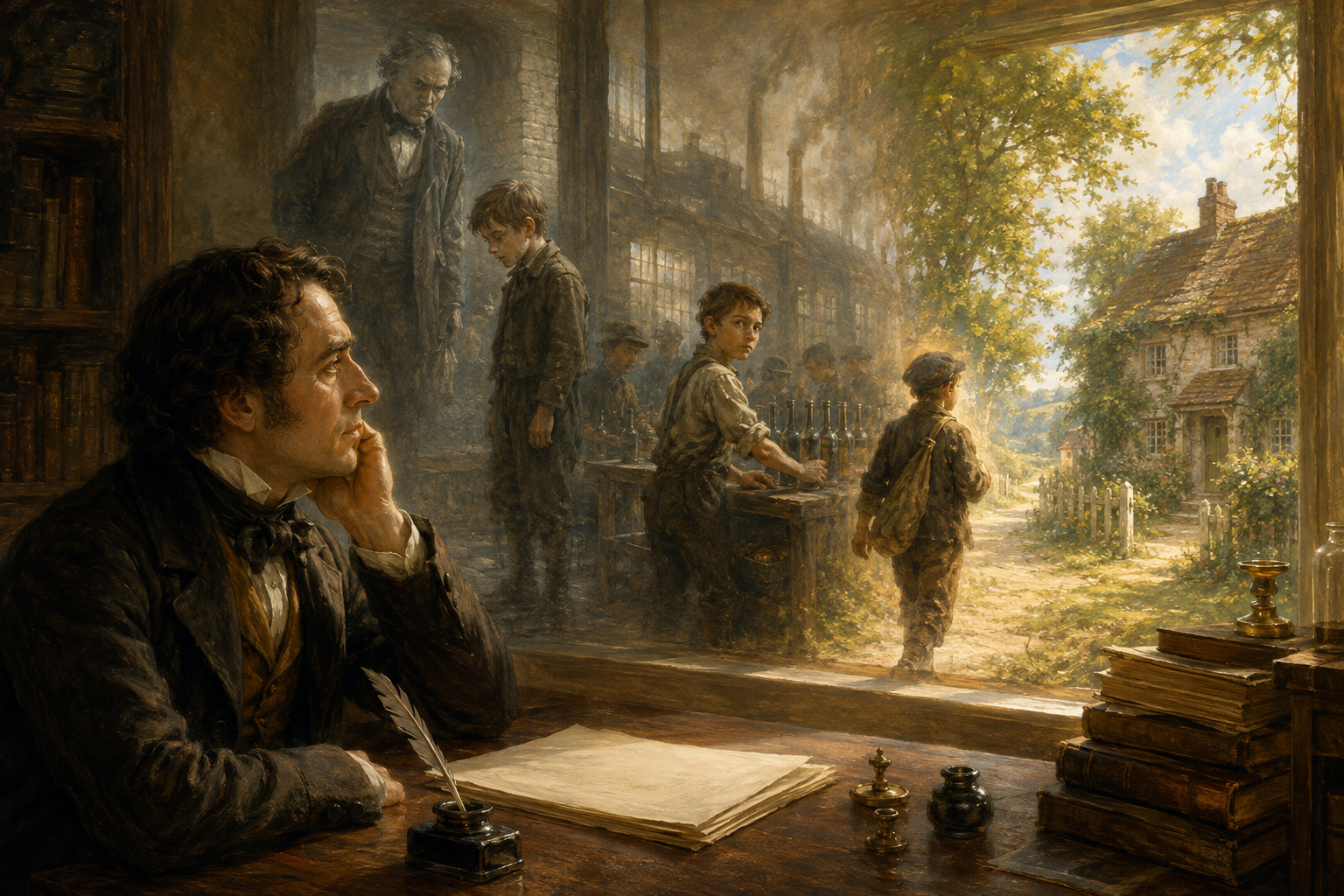
David Copperfield is a long novel, but its ideas are clear once you know what to watch for. This guide explains the themes in David Copperfield in a student-friendly way, with examples you can use for essays, class notes, and AP Literature review.
In this Guide
Use this list to jump to the ideas that matter most.
- Why the themes matter
- Major themes in David Copperfield
- Childhood, memory, and identity
- Power, cruelty, and control
- Class, money, and ambition
- Women, marriage, and choice
- Symbols and repeated patterns
- Essay ideas and FAQ
Why the themes in David Copperfield matter
The novel is not just about David’s life. It is about how people become who they are.
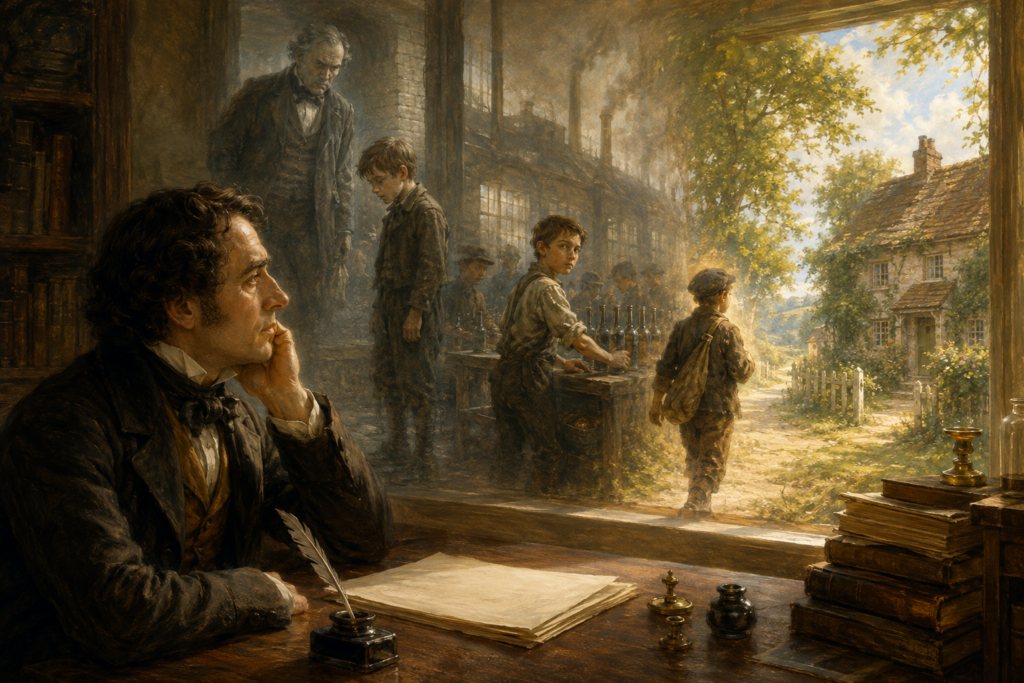
Charles Dickens tells the story as David looks back on his past. Because of that, memory shapes almost every event. David is both the main character and the storyteller, so readers see how he understands his pain, mistakes, and growth.
The themes in David Copperfield help students see the novel as more than a plot summary. They show how Dickens thinks about family, work, class, love, and moral strength.
This matters for essays because Dickens often links private life to social problems. David’s personal struggles reveal larger issues in Victorian England, much like Jane Eyre links one young woman’s life to questions about class and gender.
Major themes in David Copperfield students should know
The biggest ideas in the novel all connect to growth.
The major themes in David Copperfield include childhood hardship, moral education, social class, gender roles, and the search for a stable home. Dickens shows that growing up is not simple. It takes pain, help, work, and self-knowledge.
David faces loss very early. He also meets adults who either protect him or harm him. The contrast between kind guides and cruel figures helps Dickens ask a key question: what kind of world helps a child become good?
These themes in David Copperfield also show why the novel is often called a bildungsroman. That term means a coming-of-age story. Like Great Expectations, the novel follows a young person from childhood toward mature self-understanding.
Childhood, memory, and identity
David’s childhood shapes the adult he becomes.
Dickens begins with David’s birth and early home life. This makes childhood feel like the root of the whole story. David’s first memories are full of love, fear, confusion, and longing.
When Mr. Murdstone enters the home, David’s childhood changes fast. The house becomes strict and cold. David learns that adults can use rules as weapons.
Childhood and memory form one of the key themes in David Copperfield because David tells the story from the future. He does not just remember events. He tries to understand what they meant.
This is useful for AP Literature. Ask how David’s adult voice changes the way readers see his younger self. A narrator who looks back can judge events in ways a child could not.
You can compare this to To Kill a Mockingbird, where Scout’s adult memory shapes the story of her childhood. In both books, memory turns personal experience into moral meaning.
Cruelty, neglect, and abuse of power
Dickens often shows power through the way adults treat the weak.
Mr. Murdstone is one of the clearest examples of cruel power. He claims to value discipline, but his control damages David and his mother. Dickens does not present him as a strong moral guide. He shows him as harsh, proud, and cold.
At Salem House, David meets another form of abuse. School should help children grow, but it can also shame and harm them. Dickens uses these scenes to attack systems that punish children without care.
Abuse of power is one of the darker themes in David Copperfield. It appears in homes, schools, workplaces, and marriages. Dickens asks readers to notice who has control and who suffers because of it.
Uriah Heep is different from Mr. Murdstone, but he also seeks power. He hides ambition behind false humility. His behavior shows that cruelty can appear as open force or as quiet manipulation.
Education, work, and moral growth
David learns from books, labor, failure, and friendship.
Education in the novel is not only about school. David’s formal education matters, but his moral education matters more. He must learn how to judge people, how to work, and how to act with discipline.
His time at the factory is painful. It shows how close a child can come to being trapped by poverty. Dickens knew this kind of shame from his own life, which gives these scenes strong emotional force.
David’s career as a writer also matters. Work gives him purpose. It helps him move from helplessness toward independence.
Moral growth is one of the most important themes in David Copperfield because David does not become wise all at once. He misreads people. He makes poor choices. And he learns slowly.
This makes him feel human. Dickens suggests that maturity comes from honest reflection, not from perfect behavior.
Class, money, and social mobility
The novel shows how money can protect people, trap them, or tempt them.
David’s life changes based on his class position. At times, he has family support. At other times, he feels poor and powerless. Dickens uses these shifts to show how unstable social life can be.
Class and money shape many relationships in the novel. Some characters gain respect because they have wealth. Others have good hearts but little status.
Mr. Micawber is a comic figure, but his money problems are serious. He dreams big and speaks with hope, yet debt follows him. Dickens makes him funny without ignoring the stress of poverty.
Uriah Heep wants to rise in society, but Dickens shows his ambition as corrupt. David also rises, but the novel presents his success as tied to work and moral growth. That contrast is important.
The themes in David Copperfield do not say that ambition is always bad. Instead, Dickens asks what kind of ambition a person has. Does it build a life, or does it harm others?

Women, marriage, and limited choices
Dickens shows women with sympathy, but the novel also reflects Victorian limits.
David’s mother, Clara, is gentle and loving, but she has little power once Mr. Murdstone takes control. Her weakness is not treated as a joke. It becomes a source of tragedy.
Dora is often seen as childlike. David loves her, but their marriage shows the limits of romantic fantasy. He must learn that love based only on charm may not create a strong partnership.
Agnes offers another model. She is steady, wise, and morally clear. Some modern readers find her too ideal, but she still plays a key role in David’s growth.
Gender is one of the themes in David Copperfield that students should handle with care. Dickens criticizes cruelty toward women, but he also often places women in narrow roles.
For essays, you might ask how the novel views the “ideal woman.” Does Dickens challenge Victorian gender roles, or does he repeat them? A strong answer can do both.
Names, masks, and hidden selves
Characters often reveal themselves through the gap between appearance and truth.
Dickens gives many characters names that feel symbolic. Mr. Murdstone sounds hard and heavy. Uriah Heep’s name feels unpleasant before readers even know him well.
Names and masks help Dickens show moral identity. Some people pretend to be humble, kind, or respectable. Their actions tell the truth.
This pattern connects to the themes in David Copperfield because David must learn to read people better. He starts as a trusting child. Over time, he becomes more aware of false appearances.
If you want help with this skill, review how to find symbolism in a story. It can help you move from noticing details to explaining their meaning.
How to study themes in David Copperfield for essays
A strong theme essay should connect an idea to character change.
Do not just write, “The theme is childhood.” That is a topic, not a full theme. A stronger claim would say that Dickens shows childhood as a fragile stage that depends on adult kindness and protection.
When you write about the themes in David Copperfield, choose one main idea and track it through several scenes. Look for changes. Ask how David sees the issue early in life and how he sees it later.
Useful evidence can come from major turning points. David’s home life with the Murdstones, his factory work, his friendship with the Micawbers, and his marriages all reveal key ideas.
You can also link theme to form. Since David tells his own story, his voice matters. The act of narration becomes part of the meaning.
For quick review support, pair your notes with student-friendly literature study resources from RapidReads Press.
Helpful context and sources
Good background can make the novel easier to understand.
For a clear overview of the novel, see the Britannica entry on David Copperfield. It gives useful facts about publication, plot, and major characters.
For broader context on Dickens and Victorian life, the British Library page on Charles Dickens is a strong place to start.
Recommended books to search for
These books can help if you want more depth.
- David Copperfield by Charles Dickens
- Charles Dickens: A Life by Claire Tomalin
FAQ: Themes in David Copperfield
Here are short answers to common student questions.
What are the main themes in David Copperfield?
The main themes in David Copperfield include childhood, memory, class, power, love, and moral growth. Most of them connect to David’s movement from pain toward maturity.
What is the most important theme in the novel?
One of the most important themes is personal growth. David must learn from suffering, work, friendship, and failure before he can understand himself.
How does Dickens show social class?
Dickens shows class through money problems, work, manners, and social respect. Characters rise or fall based on both wealth and moral choices.
Why is memory important in David Copperfield?
Memory matters because David tells the story as an adult. He looks back on childhood and gives past events deeper meaning.
How can I write about theme without summarizing the plot?
Start with a claim about the message of the novel. Then use short plot moments only as proof for that claim.
Key Takeaway
The themes in David Copperfield show that growing up means learning how to read the world, judge character, and build a moral life.
Dickens turns David’s personal story into a larger study of childhood, class, love, and resilience. That is why the novel still gives students so much to discuss. 📚


Get the Free Close Reading Worksheet Pack
Join my email list and receive the printable worksheet pack you can use with any novel or poem.
No spam. Just helpful guides for reading literature well.












