David Copperfield is one of Charles Dickens’s most personal novels, but it can feel long at first. This David Copperfield summary and analysis gives you a clear path through the plot, conflicts, structure, and meaning so you can read with more confidence.
In this Guide
Use this guide as a quick map before, during, or after you read the novel.
- Quick background on Dickens and the novel
- Plot overview from David’s childhood to adulthood
- Structure, point of view, and style
- Main conflicts and character growth
- Themes, symbols, and literary meaning
- FAQ for students
David Copperfield Summary and Analysis: Quick Background
The novel makes more sense when you know how close it was to Dickens’s own life.
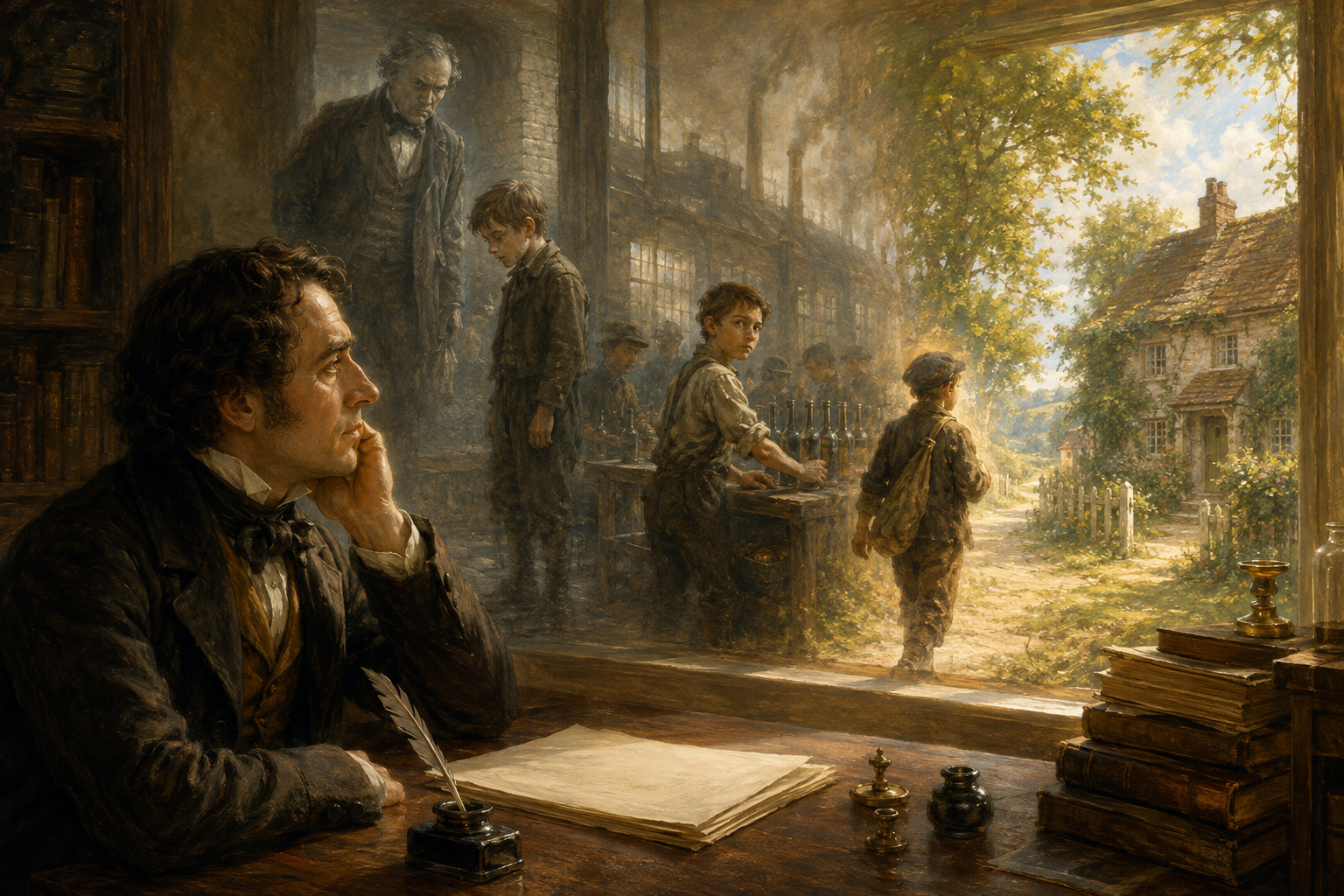
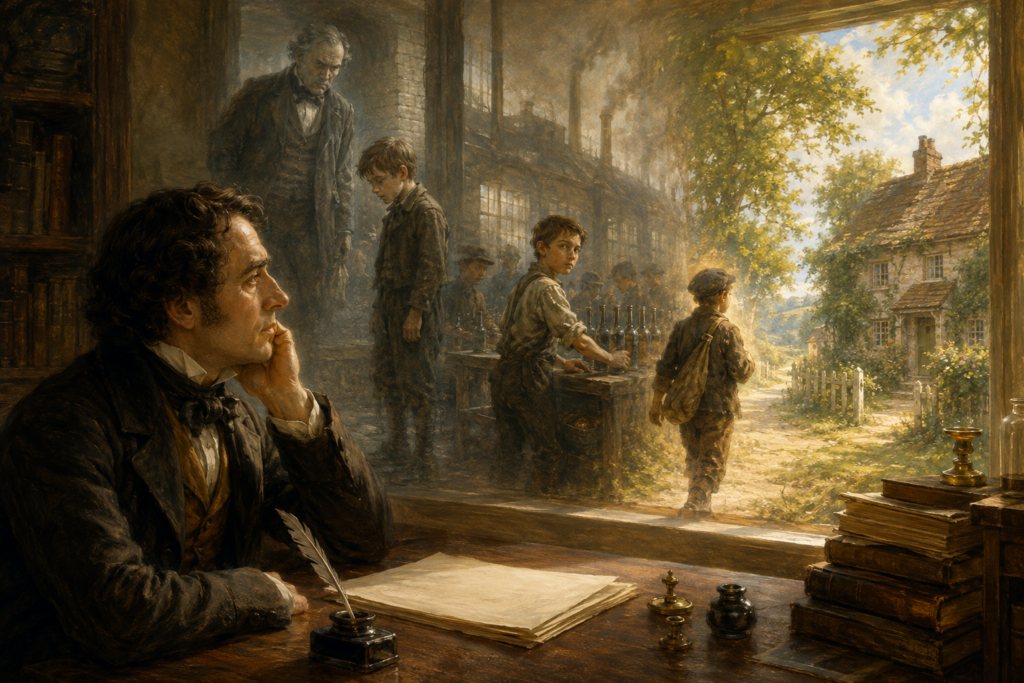
David Copperfield was published in monthly parts from 1849 to 1850. Dickens had also worked in a factory as a child, so David’s pain in the warehouse scenes comes from a real emotional place.
The novel is a bildungsroman, which means it follows a young person as he grows into adult life. Like Jane Eyre, it shows how childhood pain can shape a person’s values.
You can learn more about Dickens’s life through Britannica’s overview of Charles Dickens.
David Copperfield Summary and Analysis: Plot Overview
A strong plot summary should track David’s growth, not just the events around him.
David is born after his father’s death. His mother, Clara, loves him, and the loyal servant Peggotty gives him warmth and safety.
That peace ends when Clara marries Edward Murdstone. Murdstone and his sister bring fear into the house. They treat David as a problem to control, not as a child to love.
After David bites Murdstone during a harsh lesson, he is sent away to school. There he meets James Steerforth, a charming older student, and Tommy Traddles, a kind friend who later becomes a steady adult.
David’s mother dies, and Murdstone sends him to work in a London warehouse. This part of the novel shows child labor and shame. David feels abandoned, poor, and almost invisible.
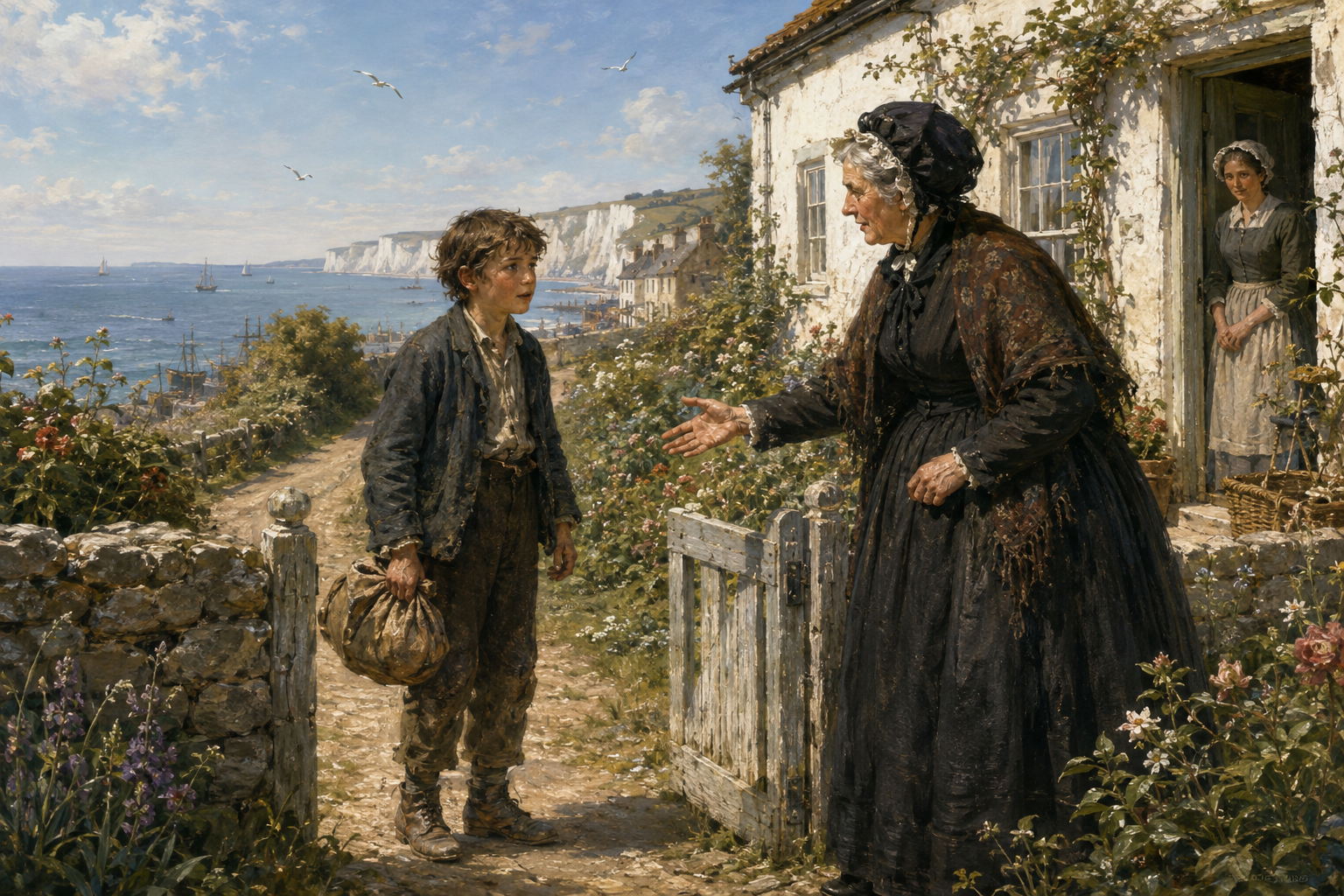
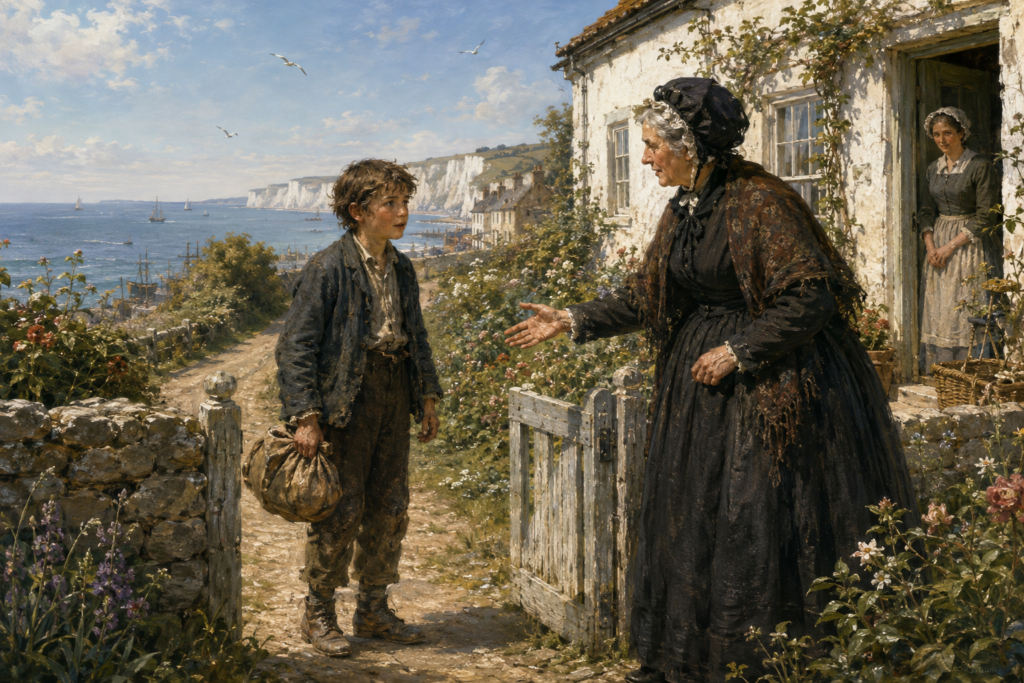
David runs away to Dover to find his great-aunt, Betsey Trotwood. She takes him in, protects him, and helpfully changes the direction of his life.
David then studies, works, and tries to build a future. He meets Agnes Wickfield, whose calm goodness becomes one of the novel’s moral anchors.
A good David Copperfield summary and analysis should also follow the darker side plots. Steerforth seduces Little Em’ly and destroys her hopes. Uriah Heep uses false humility to gain power over the Wickfield family.
David marries Dora Spenlow, but their marriage stays childish and fragile. After Dora dies, David slowly understands that love needs more than sweetness.
At the end, Mr. Micawber exposes Uriah Heep’s fraud. David becomes a successful writer and marries Agnes, who has loved him with patience and wisdom.

Structure and Point of View in David Copperfield
The novel may look loose, but it has a careful life-story shape.
David tells the story as an adult looking back on his younger self. This creates two Davids: the child who suffers and the adult who tries to understand that suffering.
This point of view matters because memory can be selective. David often notices what he felt before he fully understands what happened.
You can compare this to To Kill a Mockingbird, where Scout tells childhood events with adult insight. Both novels ask readers to think about how memory shapes meaning.
Dickens also wrote the novel in parts for magazine readers. That is why it has cliffhangers, side stories, and dramatic turns. Each section had to keep readers ready for the next issue.
David Copperfield Summary and Analysis: Major Conflicts
The main conflicts push David from fear toward self-knowledge.
The first conflict is David against cruelty. Murdstone represents harsh control, and his home becomes a place of fear. Dickens shows that discipline without love can damage a child.
David also faces class pressure and poverty. The warehouse scenes show how fast a child can fall when adults fail him.
Another conflict is David’s poor judgment. He admires Steerforth because Steerforth is confident and exciting. He later learns that charm is not the same as goodness.
Uriah Heep creates a moral conflict. He pretends to be humble, but his words hide greed and ambition. Dickens uses him to show how false virtue can become a weapon.
Character Analysis in David Copperfield
Dickens builds characters through speech, habits, and moral choices.
David Copperfield is kind, sensitive, and often mistaken. His growth comes from learning how to judge people more clearly.
Betsey Trotwood begins as sharp and strange, but she becomes one of David’s strongest protectors. She shows that love does not always look soft.
Agnes Wickfield is the novel’s steady moral guide. She helps David see what is lasting and true.
Dora Spenlow is gentle and sweet, but her marriage to David shows the limits of romantic fantasy.
Mr. Micawber is comic, hopeful, and often foolish with money. Still, he plays a key role when he helps expose Uriah Heep.
Steerforth is rich, charming, and careless. His betrayal of Little Em’ly shows the damage caused by selfish privilege.
Uriah Heep is one of Dickens’s best-known villains. His repeated claims of being humble make him even more disturbing.
David Copperfield Summary and Analysis: Themes and Meaning
This novel asks how a person becomes good after pain and failure.
One major theme is the search for home. David loses safe homes early, then spends much of the novel trying to build one that lasts.
Another key theme is moral education. School teaches David facts, but life teaches him judgment, patience, and responsibility.
The novel also studies class and power. Wealth protects Steerforth until his choices hurt others. Poverty makes David and Little Em’ly more exposed to danger.
For many students, this summary and analysis of David Copperfield should make one point clear: Dickens cares about personal growth, but he also attacks social systems that harm children and low-income people.
For more context on Dickens and Victorian childhood, see this article from the British Library.
Symbols and Literary Devices
Dickens uses pattern and contrast to make the novel easier to remember.
The sea is an important symbol. It connects to danger, change, and fate, especially in the storm near the end of the novel.
Names also carry meaning. Murdstone sounds hard and cold. Uriah Heep’s name feels slippery and uneasy, which matches his behavior.
Dickens often uses foils, or characters who contrast with each other. Agnes and Dora show two different kinds of love. Steerforth and Traddles show two different paths into adulthood.
Humor matters too. Mr. Micawber’s comic speeches lighten the novel, but they also reveal real anxiety about debt and survival.
How to Use This David Copperfield Summary and Analysis
This book gets easier when you read for patterns instead of every small detail.
Use this David Copperfield summary and analysis as a guide, not as a replacement for the novel. While you read, mark scenes where David changes his mind about another person.
Pay close attention to repeated images, names, and settings. If you need help with that skill, read our guide to close reading in literature.
For extra practice, you can pair the novel with this student reading companion as you review chapters and key passages.
Books and Helpful Resources
These books can help if you want more context or a stronger study routine.
- David Copperfield by Charles Dickens
- Charles Dickens: A Life by Claire Tomalin
If you want a broader reading skill book, How to Read Literature Like a Professor by Thomas C. Foster is also useful for students.
FAQ
These quick answers cover common student questions about the novel.
What is the main idea of this David Copperfield summary and analysis?
It explains how David grows from a hurt child into a wiser adult. The novel links personal growth with social criticism.
Is David Copperfield based on Charles Dickens’s life?
Partly, yes. The novel is fiction, but David’s work in the warehouse reflects Dickens’s own painful childhood experience.
Who is the main villain in David Copperfield?
Uriah Heep is the clearest villain because he uses false humility to control others. Murdstone is also cruel and damaging early in David’s life.
Does David Copperfield have a happy ending?
Mostly, yes. David finds love, work, and peace, but the ending still remembers the losses that shaped him.
Key Takeaway
The novel is long, but its central idea is simple.
A David Copperfield summary and analysis should show that Dickens is not just telling a life story. He is asking how kindness, memory, and hard lessons can shape a person’s character.