David Copperfield Summary and Analysis for Students

David Copperfield Summary

David Copperfield is one of Charles Dickens’s most personal novels, but it can feel long at first. This David Copperfield summary and analysis gives you a clear path through the plot, conflicts, structure, and meaning so you can read with more confidence.

In this Guide

Use this guide as a quick map before, during, or after you read the novel.

  • Quick background on Dickens and the novel
  • Plot overview from David’s childhood to adulthood
  • Structure, point of view, and style
  • Main conflicts and character growth
  • Themes, symbols, and literary meaning
  • FAQ for students
David Copperfield Summary

David Copperfield Summary and Analysis: Quick Background

The novel makes more sense when you know how close it was to Dickens’s own life.

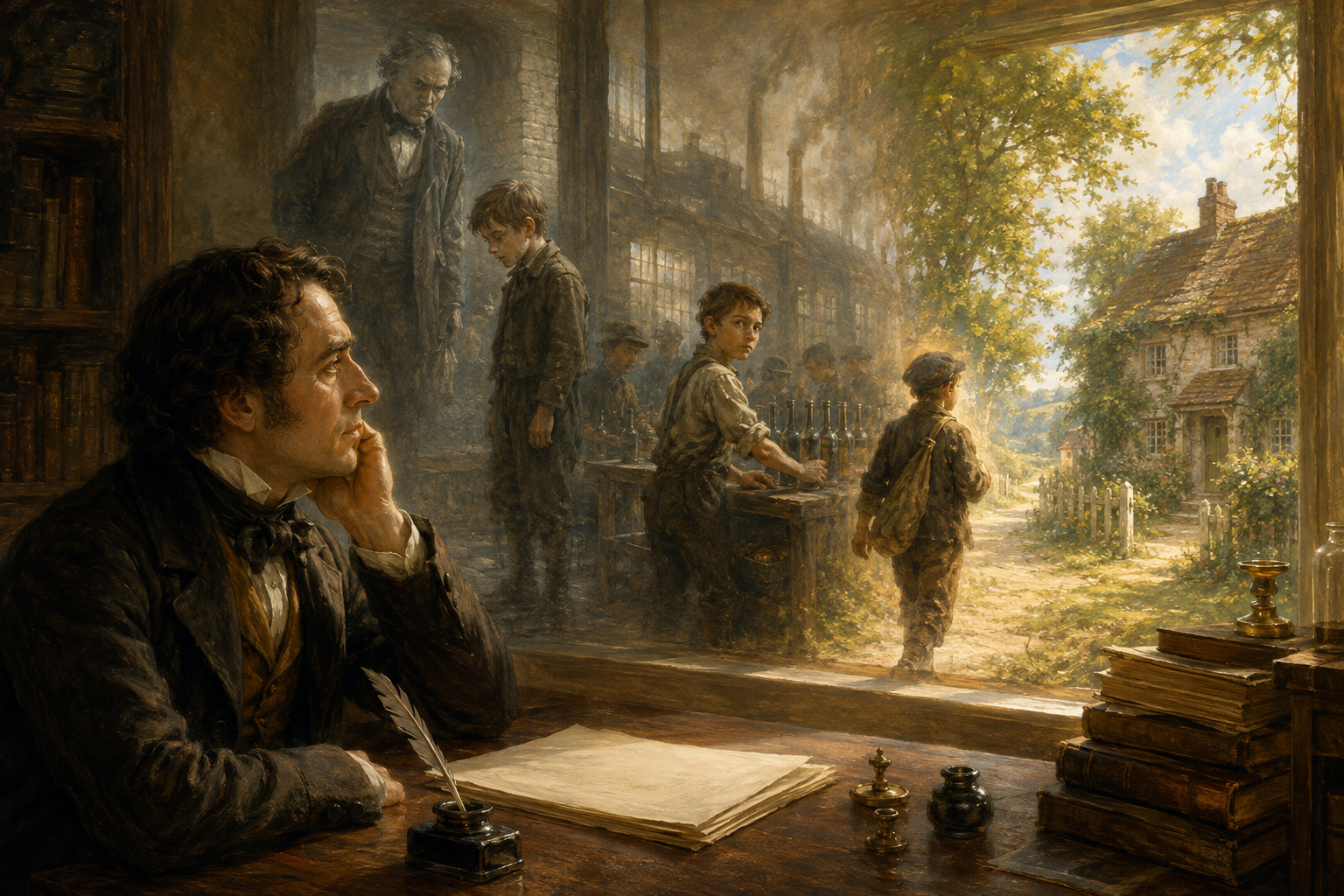
David Copperfield was published in monthly parts from 1849 to 1850. Dickens had also worked in a factory as a child, so David’s pain in the warehouse scenes comes from a real emotional place.

The novel is a bildungsroman, which means it follows a young person as he grows into adult life. Like Jane Eyre, it shows how childhood pain can shape a person’s values.

You can learn more about Dickens’s life through Britannica’s overview of Charles Dickens.

David Copperfield Summary and Analysis: Plot Overview

A strong plot summary should track David’s growth, not just the events around him.

David is born after his father’s death. His mother, Clara, loves him, and the loyal servant Peggotty gives him warmth and safety.

That peace ends when Clara marries Edward Murdstone. Murdstone and his sister bring fear into the house. They treat David as a problem to control, not as a child to love.

After David bites Murdstone during a harsh lesson, he is sent away to school. There he meets James Steerforth, a charming older student, and Tommy Traddles, a kind friend who later becomes a steady adult.

David’s mother dies, and Murdstone sends him to work in a London warehouse. This part of the novel shows child labor and shame. David feels abandoned, poor, and almost invisible.

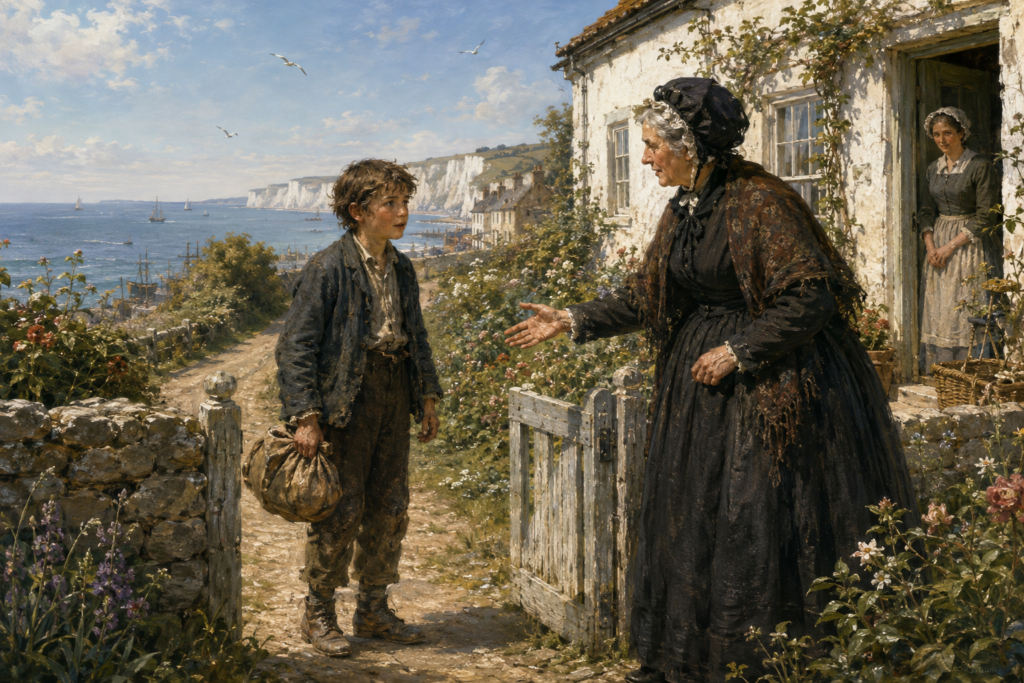
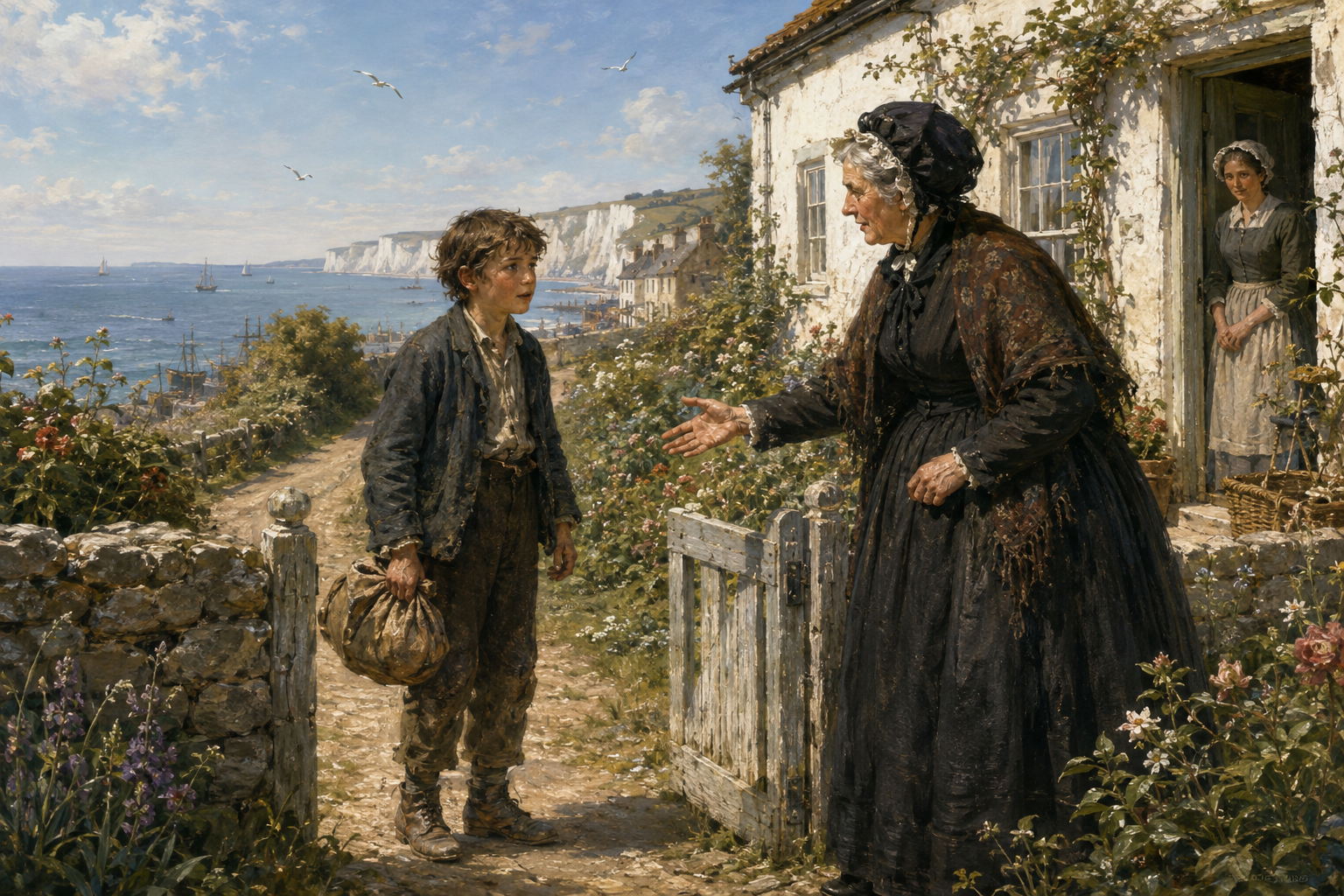
David runs away to Dover to find his great-aunt, Betsey Trotwood. She takes him in, protects him, and helpfully changes the direction of his life.

David then studies, works, and tries to build a future. He meets Agnes Wickfield, whose calm goodness becomes one of the novel’s moral anchors.

A good David Copperfield summary and analysis should also follow the darker side plots. Steerforth seduces Little Em’ly and destroys her hopes. Uriah Heep uses false humility to gain power over the Wickfield family.

David marries Dora Spenlow, but their marriage stays childish and fragile. After Dora dies, David slowly understands that love needs more than sweetness.

At the end, Mr. Micawber exposes Uriah Heep’s fraud. David becomes a successful writer and marries Agnes, who has loved him with patience and wisdom.

Structure and Point of View in David Copperfield

The novel may look loose, but it has a careful life-story shape.

David tells the story as an adult looking back on his younger self. This creates two Davids: the child who suffers and the adult who tries to understand that suffering.

This point of view matters because memory can be selective. David often notices what he felt before he fully understands what happened.

You can compare this to To Kill a Mockingbird, where Scout tells childhood events with adult insight. Both novels ask readers to think about how memory shapes meaning.

Dickens also wrote the novel in parts for magazine readers. That is why it has cliffhangers, side stories, and dramatic turns. Each section had to keep readers ready for the next issue.

David Copperfield Summary and Analysis: Major Conflicts

The main conflicts push David from fear toward self-knowledge.

The first conflict is David against cruelty. Murdstone represents harsh control, and his home becomes a place of fear. Dickens shows that discipline without love can damage a child.

David also faces class pressure and poverty. The warehouse scenes show how fast a child can fall when adults fail him.

Another conflict is David’s poor judgment. He admires Steerforth because Steerforth is confident and exciting. He later learns that charm is not the same as goodness.

Uriah Heep creates a moral conflict. He pretends to be humble, but his words hide greed and ambition. Dickens uses him to show how false virtue can become a weapon.

Character Analysis in David Copperfield

Dickens builds characters through speech, habits, and moral choices.

David Copperfield is kind, sensitive, and often mistaken. His growth comes from learning how to judge people more clearly.

Betsey Trotwood begins as sharp and strange, but she becomes one of David’s strongest protectors. She shows that love does not always look soft.

Agnes Wickfield is the novel’s steady moral guide. She helps David see what is lasting and true.

Dora Spenlow is gentle and sweet, but her marriage to David shows the limits of romantic fantasy.

Mr. Micawber is comic, hopeful, and often foolish with money. Still, he plays a key role when he helps expose Uriah Heep.

Steerforth is rich, charming, and careless. His betrayal of Little Em’ly shows the damage caused by selfish privilege.

Uriah Heep is one of Dickens’s best-known villains. His repeated claims of being humble make him even more disturbing.

David Copperfield Summary and Analysis: Themes and Meaning

This novel asks how a person becomes good after pain and failure.

One major theme is the search for home. David loses safe homes early, then spends much of the novel trying to build one that lasts.

Another key theme is moral education. School teaches David facts, but life teaches him judgment, patience, and responsibility.

The novel also studies class and power. Wealth protects Steerforth until his choices hurt others. Poverty makes David and Little Em’ly more exposed to danger.

For many students, this summary and analysis of David Copperfield should make one point clear: Dickens cares about personal growth, but he also attacks social systems that harm children and low-income people.

For more context on Dickens and Victorian childhood, see this article from the British Library.

Symbols and Literary Devices

Dickens uses pattern and contrast to make the novel easier to remember.

The sea is an important symbol. It connects to danger, change, and fate, especially in the storm near the end of the novel.

Names also carry meaning. Murdstone sounds hard and cold. Uriah Heep’s name feels slippery and uneasy, which matches his behavior.

Dickens often uses foils, or characters who contrast with each other. Agnes and Dora show two different kinds of love. Steerforth and Traddles show two different paths into adulthood.

Humor matters too. Mr. Micawber’s comic speeches lighten the novel, but they also reveal real anxiety about debt and survival.

How to Use This David Copperfield Summary and Analysis

This book gets easier when you read for patterns instead of every small detail.

Use this David Copperfield summary and analysis as a guide, not as a replacement for the novel. While you read, mark scenes where David changes his mind about another person.

Pay close attention to repeated images, names, and settings. If you need help with that skill, read our guide to close reading in literature.

For extra practice, you can pair the novel with this student reading companion as you review chapters and key passages.

Books and Helpful Resources

These books can help if you want more context or a stronger study routine.

  • David Copperfield by Charles Dickens
  • Charles Dickens: A Life by Claire Tomalin

If you want a broader reading skill book, How to Read Literature Like a Professor by Thomas C. Foster is also useful for students.

FAQ

These quick answers cover common student questions about the novel.

What is the main idea of this David Copperfield summary and analysis?

It explains how David grows from a hurt child into a wiser adult. The novel links personal growth with social criticism.

Is David Copperfield based on Charles Dickens’s life?

Partly, yes. The novel is fiction, but David’s work in the warehouse reflects Dickens’s own painful childhood experience.

Who is the main villain in David Copperfield?

Uriah Heep is the clearest villain because he uses false humility to control others. Murdstone is also cruel and damaging early in David’s life.

Does David Copperfield have a happy ending?

Mostly, yes. David finds love, work, and peace, but the ending still remembers the losses that shaped him.

Key Takeaway

The novel is long, but its central idea is simple.

A David Copperfield summary and analysis should show that Dickens is not just telling a life story. He is asking how kindness, memory, and hard lessons can shape a person’s character.
Themes in David Copperfield: A Student-Friendly Guide

David Copperfield Themes

David Copperfield is a long novel, but its ideas are clear once you know what to watch for. This guide explains the themes in David Copperfield in a student-friendly way, with examples you can use for essays, class notes, and AP Literature review.

In this Guide

Use this list to jump to the ideas that matter most.

  • Why the themes matter
  • Major themes in David Copperfield
  • Childhood, memory, and identity
  • Power, cruelty, and control
  • Class, money, and ambition
  • Women, marriage, and choice
  • Symbols and repeated patterns
  • Essay ideas and FAQ
David Copperfield Themes

Why the themes in David Copperfield matter

The novel is not just about David’s life. It is about how people become who they are.

Charles Dickens tells the story as David looks back on his past. Because of that, memory shapes almost every event. David is both the main character and the storyteller, so readers see how he understands his pain, mistakes, and growth.

The themes in David Copperfield help students see the novel as more than a plot summary. They show how Dickens thinks about family, work, class, love, and moral strength.

This matters for essays because Dickens often links private life to social problems. David’s personal struggles reveal larger issues in Victorian England, much like Jane Eyre links one young woman’s life to questions about class and gender.

Major themes in David Copperfield students should know

The biggest ideas in the novel all connect to growth.

The major themes in David Copperfield include childhood hardship, moral education, social class, gender roles, and the search for a stable home. Dickens shows that growing up is not simple. It takes pain, help, work, and self-knowledge.

David faces loss very early. He also meets adults who either protect him or harm him. The contrast between kind guides and cruel figures helps Dickens ask a key question: what kind of world helps a child become good?

These themes in David Copperfield also show why the novel is often called a bildungsroman. That term means a coming-of-age story. Like Great Expectations, the novel follows a young person from childhood toward mature self-understanding.

Childhood, memory, and identity

David’s childhood shapes the adult he becomes.

Dickens begins with David’s birth and early home life. This makes childhood feel like the root of the whole story. David’s first memories are full of love, fear, confusion, and longing.

When Mr. Murdstone enters the home, David’s childhood changes fast. The house becomes strict and cold. David learns that adults can use rules as weapons.

Childhood and memory form one of the key themes in David Copperfield because David tells the story from the future. He does not just remember events. He tries to understand what they meant.

This is useful for AP Literature. Ask how David’s adult voice changes the way readers see his younger self. A narrator who looks back can judge events in ways a child could not.

You can compare this to To Kill a Mockingbird, where Scout’s adult memory shapes the story of her childhood. In both books, memory turns personal experience into moral meaning.

Cruelty, neglect, and abuse of power

Dickens often shows power through the way adults treat the weak.

Mr. Murdstone is one of the clearest examples of cruel power. He claims to value discipline, but his control damages David and his mother. Dickens does not present him as a strong moral guide. He shows him as harsh, proud, and cold.

At Salem House, David meets another form of abuse. School should help children grow, but it can also shame and harm them. Dickens uses these scenes to attack systems that punish children without care.

Abuse of power is one of the darker themes in David Copperfield. It appears in homes, schools, workplaces, and marriages. Dickens asks readers to notice who has control and who suffers because of it.

Uriah Heep is different from Mr. Murdstone, but he also seeks power. He hides ambition behind false humility. His behavior shows that cruelty can appear as open force or as quiet manipulation.

Education, work, and moral growth

David learns from books, labor, failure, and friendship.

Education in the novel is not only about school. David’s formal education matters, but his moral education matters more. He must learn how to judge people, how to work, and how to act with discipline.

His time at the factory is painful. It shows how close a child can come to being trapped by poverty. Dickens knew this kind of shame from his own life, which gives these scenes strong emotional force.

David’s career as a writer also matters. Work gives him purpose. It helps him move from helplessness toward independence.

Moral growth is one of the most important themes in David Copperfield because David does not become wise all at once. He misreads people. He makes poor choices. And he learns slowly.

This makes him feel human. Dickens suggests that maturity comes from honest reflection, not from perfect behavior.

Class, money, and social mobility

The novel shows how money can protect people, trap them, or tempt them.

David’s life changes based on his class position. At times, he has family support. At other times, he feels poor and powerless. Dickens uses these shifts to show how unstable social life can be.

Class and money shape many relationships in the novel. Some characters gain respect because they have wealth. Others have good hearts but little status.

Mr. Micawber is a comic figure, but his money problems are serious. He dreams big and speaks with hope, yet debt follows him. Dickens makes him funny without ignoring the stress of poverty.

Uriah Heep wants to rise in society, but Dickens shows his ambition as corrupt. David also rises, but the novel presents his success as tied to work and moral growth. That contrast is important.

The themes in David Copperfield do not say that ambition is always bad. Instead, Dickens asks what kind of ambition a person has. Does it build a life, or does it harm others?

Women, marriage, and limited choices

Dickens shows women with sympathy, but the novel also reflects Victorian limits.

David’s mother, Clara, is gentle and loving, but she has little power once Mr. Murdstone takes control. Her weakness is not treated as a joke. It becomes a source of tragedy.

Dora is often seen as childlike. David loves her, but their marriage shows the limits of romantic fantasy. He must learn that love based only on charm may not create a strong partnership.

Agnes offers another model. She is steady, wise, and morally clear. Some modern readers find her too ideal, but she still plays a key role in David’s growth.

Gender is one of the themes in David Copperfield that students should handle with care. Dickens criticizes cruelty toward women, but he also often places women in narrow roles.

For essays, you might ask how the novel views the “ideal woman.” Does Dickens challenge Victorian gender roles, or does he repeat them? A strong answer can do both.

Names, masks, and hidden selves

Characters often reveal themselves through the gap between appearance and truth.

Dickens gives many characters names that feel symbolic. Mr. Murdstone sounds hard and heavy. Uriah Heep’s name feels unpleasant before readers even know him well.

Names and masks help Dickens show moral identity. Some people pretend to be humble, kind, or respectable. Their actions tell the truth.

This pattern connects to the themes in David Copperfield because David must learn to read people better. He starts as a trusting child. Over time, he becomes more aware of false appearances.

If you want help with this skill, review how to find symbolism in a story. It can help you move from noticing details to explaining their meaning.

How to study themes in David Copperfield for essays

A strong theme essay should connect an idea to character change.

Do not just write, “The theme is childhood.” That is a topic, not a full theme. A stronger claim would say that Dickens shows childhood as a fragile stage that depends on adult kindness and protection.

When you write about the themes in David Copperfield, choose one main idea and track it through several scenes. Look for changes. Ask how David sees the issue early in life and how he sees it later.

Useful evidence can come from major turning points. David’s home life with the Murdstones, his factory work, his friendship with the Micawbers, and his marriages all reveal key ideas.

You can also link theme to form. Since David tells his own story, his voice matters. The act of narration becomes part of the meaning.

For quick review support, pair your notes with student-friendly literature study resources from RapidReads Press.

Helpful context and sources

Good background can make the novel easier to understand.

For a clear overview of the novel, see the Britannica entry on David Copperfield. It gives useful facts about publication, plot, and major characters.

For broader context on Dickens and Victorian life, the British Library page on Charles Dickens is a strong place to start.

These books can help if you want more depth.

  • David Copperfield by Charles Dickens
  • Charles Dickens: A Life by Claire Tomalin

FAQ: Themes in David Copperfield

Here are short answers to common student questions.

What are the main themes in David Copperfield?

The main themes in David Copperfield include childhood, memory, class, power, love, and moral growth. Most of them connect to David’s movement from pain toward maturity.

What is the most important theme in the novel?

One of the most important themes is personal growth. David must learn from suffering, work, friendship, and failure before he can understand himself.

How does Dickens show social class?

Dickens shows class through money problems, work, manners, and social respect. Characters rise or fall based on both wealth and moral choices.

Why is memory important in David Copperfield?

Memory matters because David tells the story as an adult. He looks back on childhood and gives past events deeper meaning.

How can I write about theme without summarizing the plot?

Start with a claim about the message of the novel. Then use short plot moments only as proof for that claim.

Key Takeaway

The themes in David Copperfield show that growing up means learning how to read the world, judge character, and build a moral life.

Dickens turns David’s personal story into a larger study of childhood, class, love, and resilience. That is why the novel still gives students so much to discuss. 📚

What Is a Bildungsroman?

bildungsroman

If you have ever read a story about a young person who grows up, makes hard choices, and learns who they are, you may have read a bildungsroman. So, What Is a Bildungsroman? It is one of the most common and useful story types in literature.

This guide explains the term in simple language, shows why it matters, and gives examples you may know from class.

In this Guide

bildungsroman

What Is a Bildungsroman? Simple Definition

A bildungsroman is a story about personal growth from youth toward maturity.

The word comes from German. “Bildung” means education or formation, and “roman” means novel. A bildungsroman is often called a coming-of-age novel.

The short answer to What Is a Bildungsroman? is this: it is a novel that follows a character as they grow, learn, and change. The change is not just about age. It is about how the character sees the world.

In many bildungsroman stories, the main character starts with a limited view of life. By the end, they understand more about themselves and their place in society.

What Is a Bildungsroman? Key Traits to Notice

Most bildungsroman novels share a few clear patterns.

When a teacher asks, What Is a Bildungsroman?, they often want you to look for growth over time. The main character usually faces pressure from family, school, class, or society.

A bildungsroman often includes a young main character who feels out of place. That character may struggle with rules, unfair treatment, or a painful truth.

The story also tends to include a turning point. This moment forces the character to see life in a new way.

By the end, the character may not become happy or successful. But they usually gain self-knowledge. That inner change is what matters most.

What Is a Bildungsroman? Why It Matters in Literature

This story type helps readers track how people change under pressure.

The question What Is a Bildungsroman? matters because many major novels use this form. It gives writers a way to explore identity, class, race, gender, and belief without turning the story into a lecture.

For students, the bildungsroman is useful because it connects plot to character development. You can ask, “What did the character believe at the start?” Then ask, “What do they understand by the end?”

This can help with essays, class talks, and close reading. If you want a broader method for studying fiction, see this guide on how to read literature with a scholar’s eye.

Famous Bildungsroman Examples

Some of the most studied novels in English fit this pattern.

Jane Eyre by Charlotte Brontë is a classic bildungsroman. Jane begins as an orphan with little power. As the novel moves forward, she learns to defend her dignity and choose her own path.


Great Expectations by Charles Dickens also fits the form. Pip grows up with dreams of becoming a gentleman. His journey teaches him painful lessons about pride, love, and social class.

To Kill a Mockingbird by Harper Lee can be read as a bildungsroman, too. Scout Finch learns that the adult world can be unfair and cruel. Her growth comes from seeing people with more depth.

The Catcher in the Rye by J.D. Salinger is another common example. Holden Caulfield resists adulthood, but his voice shows fear, grief, and confusion beneath his anger.

If you ask What Is a Bildungsroman? while you read these books, focus on the character’s inner shift. The plot matters, but the growth matters more.

image-slider-with-thumbnail1.jpeg
PlayPause
previous arrow
next arrow
image-slider-with-thumbnail1.jpeg
image-slider-with-thumbnail3.jpeg
image-slider-with-thumbnail4.jpeg
ChatGPT Image Jun 27, 2026, 06_33_13 PM
ChatGPT Image Jun 27, 2026, 06_36_37 PM
ChatGPT Image Jun 27, 2026, 06_38_39 PM
ChatGPT Image Jun 27, 2026, 06_31_22 PM
image-slider-with-thumbnail7.jpeg
ChatGPT Image Jun 27, 2026, 06_29_43 PM
ChatGPT Image Jun 27, 2026, 06_27_44 PM
image-slider-with-thumbnail6.jpeg
ChatGPT Image Jun 27, 2026, 06_15_07 PM
image-slider-with-thumbnail5.jpeg
ChatGPT Image Jun 27, 2026, 06_22_43 PM
ChatGPT Image Jun 27, 2026, 06_25_37 PM
ChatGPT Image Jun 27, 2026, 06_19_43 PM
ChatGPT Image Jun 27, 2026, 06_12_00 PM
ChatGPT Image Jun 27, 2026, 06_08_50 PM
ChatGPT Image Jun 26, 2026, 04_54_23 PM
ChatGPT Image Jun 27, 2026, 05_53_51 PM
ChatGPT Image Jun 28, 2026, 08_35_55 AM
previous arrow
next arrow

How to Read a Bildungsroman

A good reading strategy is to track change from the first chapter to the last.

Start by asking what the main character wants. Then watch how that desire changes after conflict or loss.

Notice who teaches the character, even if the lesson is harsh. A parent, friend, rival, or stranger can shape the main character’s growth.

You can also mark scenes where the character feels shame, anger, or doubt. These moments often reveal the deepest part of the bildungsroman.

For more help with literary analysis, this article on reading literature like a scholar gives simple tools you can use with almost any novel.

Books to Read Next

These books are strong choices if you want to see the bildungsroman in action.

  • Jane Eyre by Charlotte Brontë
  • Great Expectations by Charles Dickens

You can also read more about the term through Britannica’s entry on bildungsroman. For a free public-domain text, visit Project Gutenberg’s edition of Great Expectations.

FAQ: What Is a Bildungsroman?

What Is a Bildungsroman?

A bildungsroman is a novel about a character’s growth from youth toward maturity. It often focuses on identity, self-knowledge, and life lessons.

Is every coming-of-age story a bildungsroman?

Not always. A coming-of-age story may cover one key moment, while a bildungsroman often follows deeper growth over a longer span.

What is the main goal of a bildungsroman?

The main goal is to show how a character changes. The focus is not just what happens, but what the character learns.

Can a bildungsroman have a sad ending?

Yes. The ending does not need to be happy. The character may still gain insight, even after pain or failure.

Key Takeaway

What Is a Bildungsroman? It is a growth story that shows how a character becomes more aware of the world and themselves. When you read one, look for the moments that change how the character thinks, chooses, and sees life.

Jane Eyre Summary and Analysis for Students

Jane Eyre Summary

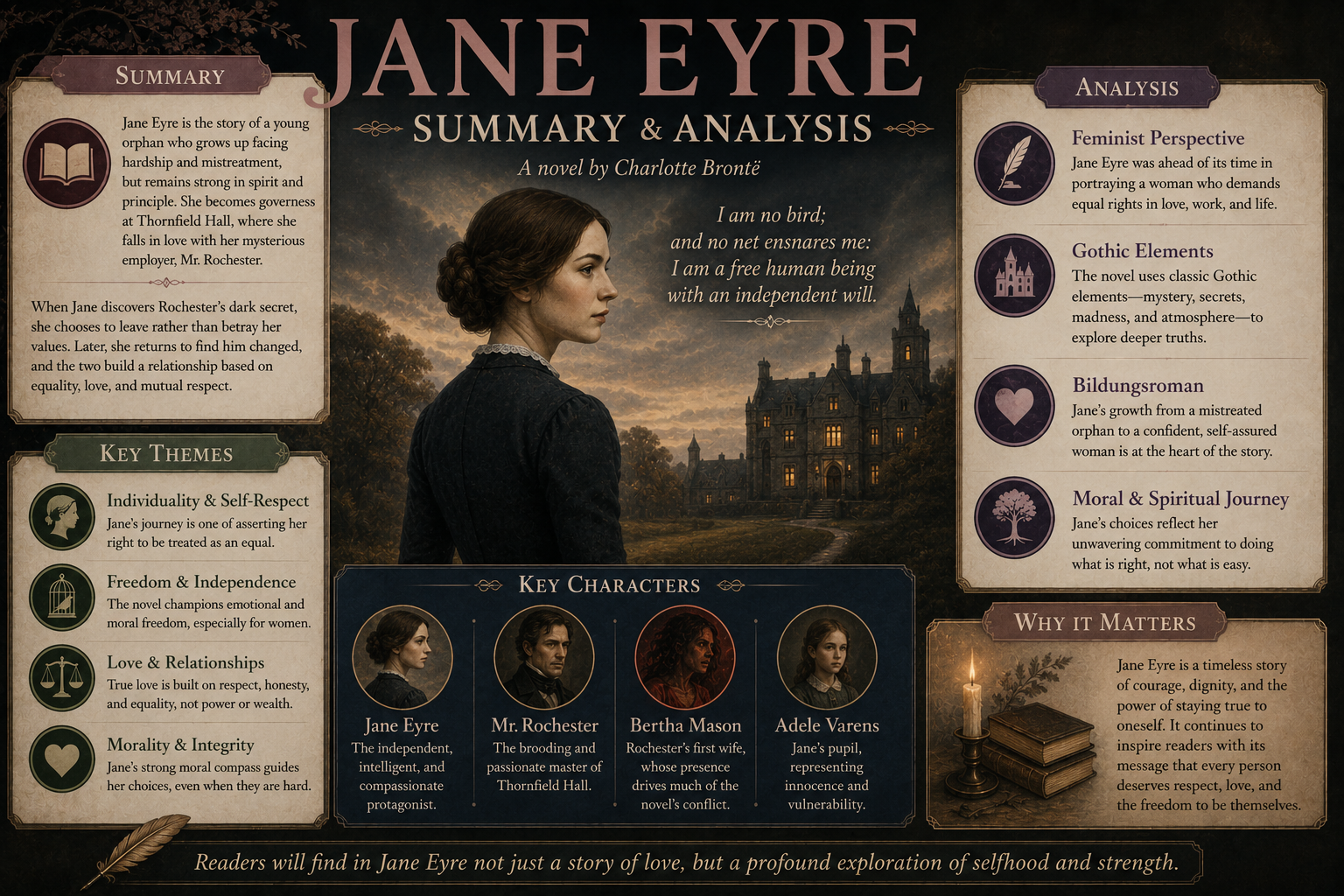
Jane Eyre is one of the most important novels of the Victorian age. This Jane Eyre summary and analysis gives students a clear path through the plot, structure, conflicts, and deeper meaning.

Charlotte Brontë tells a story about a young woman who wants love, faith, and freedom without losing herself.

In this Guide

Use this guide as a map before class, essays, or exams.

  • Quick overview
  • Plot summary by major stage
  • Structure and point of view
  • Main conflicts
  • Themes, symbols, and meaning
  • Helpful books and FAQ
Jane Eyre Summary

Jane Eyre summary and analysis: quick overview

The novel follows Jane from a harsh childhood to a hard-won adult life.

Jane is an orphan raised by cruel relatives at Gateshead. She later goes to Lowood School, becomes a governess at Thornfield Hall, and falls in love with Mr. Rochester.

This Jane Eyre summary and analysis matters because the novel is not just a romance. It is also a story about self-respect, moral choice, and the right to speak.

For a short reference overview, see Britannica on Jane Eyre.

Jane Eyre summary and analysis: plot by major stages

Brontë builds Jane’s life in clear stages, and each place tests her in a new way.

Gateshead: Jane learns she is unwanted

Jane lives with her aunt, Mrs. Reed, and her cousins. They treat her as a burden, not a child with feelings.

The red-room scene is one of the novel’s key moments. Jane is locked in the room where her uncle died, and her fear shows how trapped she feels.

Lowood: Jane learns discipline and loss

At Lowood School, Jane meets Helen Burns, a gentle girl with deep faith. Helen teaches Jane patience, but her death also shows the cruelty of neglect.

Mr. Brocklehurst uses religion to control the girls. Brontë criticizes this false form of faith.

Thornfield: Jane finds love and danger

Jane becomes a governess at Thornfield Hall. She meets Mr. Rochester, who treats her as an equal in conversation.

They fall in love, but the wedding stops when Jane learns Rochester already has a wife, Bertha Mason, hidden in the attic. Jane leaves because she will not become his mistress.

Moor House: Jane faces a different kind of trap

Jane is rescued by the Rivers family, who later turn out to be her cousins. St. John Rivers asks Jane to marry him and serve as a missionary wife.

His offer is respectable, but it has no love. Jane refuses because it would crush her spirit.

Ferndean: Jane returns by choice

Jane later returns to Rochester after a fire destroys Thornfield. Bertha dies in the fire, and Rochester loses his sight and one hand.

Jane marries him only after they can meet on more equal ground. Use this Jane Eyre summary and analysis to notice that Jane’s happy ending depends on freedom, not surrender.

How Jane Eyre is structured

The novel has a life-story shape that helps readers track Jane’s growth.

Jane Eyre is a first-person novel. Jane tells her own story as an adult, so we see both her childhood feelings and her mature judgment.

A Jane Eyre summary and analysis should also note that the book is a Bildungsroman, or coming-of-age novel. Like Great Expectations by Charles Dickens, it follows a young person through pain, mistakes, and self-knowledge.

The setting changes as Jane changes. Gateshead shows rejection, Lowood shows discipline, Thornfield shows desire, and Ferndean shows chosen love.

If you want to study Brontë’s word choices more closely, this guide to close reading in literature can help.

Main conflicts in Jane Eyre

The novel’s conflicts are personal, social, and moral.

Jane versus society is one major conflict. Jane is poor, female, and often powerless, but she refuses to accept shame as her proper place.

Jane versus herself is just as important. She wants love, but she also knows that love without respect can destroy her.

Jane versus Rochester creates the central romantic tension. Rochester loves Jane, but he tries to hide the truth about Bertha, which makes their first union morally wrong.

Jane versus St. John tests her in another way. St. John offers duty without passion, while Rochester offers passion that must be purified by honesty.

Themes in Jane Eyre summary and analysis

Brontë uses Jane’s story to ask what a person needs in order to live with dignity.

Independence and self-respect

Jane’s strongest trait is her sense of inner worth. She has little money or status, but she believes her soul is equal to anyone else’s.

For students, Jane Eyre summary and analysis often begins with this point. Jane does not reject love. She rejects love that demands the loss of self.

Love and equality

Jane and Rochester’s best moments come when they speak honestly. Their worst moments come when power is uneven.

Like Elizabeth Bennet in Pride and Prejudice, Jane must judge whether a man’s love respects her mind as well as her heart.

Religion and moral choice

The novel offers different forms of faith. Helen Burns shows patient faith, Mr. Brocklehurst shows cruel hypocrisy, and St. John shows duty without warmth.

Jane’s faith is tied to conscience. She leaves Rochester because she believes love must answer to moral truth.

Class and gender

Jane lives in a world where class shapes every chance she has. As a governess, she is educated but not rich, so she stands between social groups.

Brontë also shows how women had narrow choices. Jane wants work, love, and respect, not a life chosen for her by others.

Symbols and Gothic elements

The novel uses dark, strange, and intense images to reveal hidden fears.

The red-room stands for childhood trauma and social punishment. Jane is treated as if her anger is a crime.

Thornfield Hall stands for mystery and buried truth. The house looks grand, but it hides pain in its upper rooms.

Fire often marks passion, danger, and change. It destroys Thornfield, but it also clears the way for a more honest life.

These Gothic touches connect Jane Eyre to novels like Wuthering Heights, where setting and emotion feel closely linked.

Literary meaning and why Jane Eyre still matters

Jane’s story still feels modern because she fights for a voice.

This Jane Eyre summary and analysis also shows why the novel is more than a love story. Jane’s final happiness comes because she chooses it from a place of strength.

The famous line about Jane being no bird captures the heart of the book. She refuses to be caged by gender, class, fear, or romance.

To learn more about Charlotte Brontë as a writer, see the Poetry Foundation biography of Charlotte Brontë.

For more study support, our student literature guides can help you review major novels with clearer notes.

Helpful books for Jane Eyre study

These books are useful for students who want more context or a reliable edition.

  • Jane Eyre by Charlotte Brontë, Penguin Classics edition
  • The Madwoman in the Attic by Sandra M. Gilbert and Susan Gubar

You can look for these through a school library, local bookstore, or Amazon Books.

FAQ: Jane Eyre summary and analysis

Here are quick answers to common student questions.

What should a Jane Eyre summary and analysis include?

It should cover Jane’s life stages, her conflicts, major themes, key symbols, and the meaning of her final choice.

What is the main message of Jane Eyre?

The novel argues that love must include equality, honesty, and self-respect.

Why does Jane leave Rochester?

Jane leaves because Rochester is already married. She loves him, but she will not betray her conscience.

Is Jane Eyre a feminist novel?

Many readers see it that way because Jane demands dignity, work, and moral freedom in a world that limits women.

Key Takeaway

A strong Jane Eyre summary and analysis should show how Jane moves from isolation to self-command. The novel’s power comes from one clear idea: Jane wants love, but never at the cost of her soul.

Themes in Jane Eyre: A Student-Friendly Guide

Jane Eyre Themes

A clear guide to the major ideas, conflicts, and meanings students should notice in Jane Eyre.

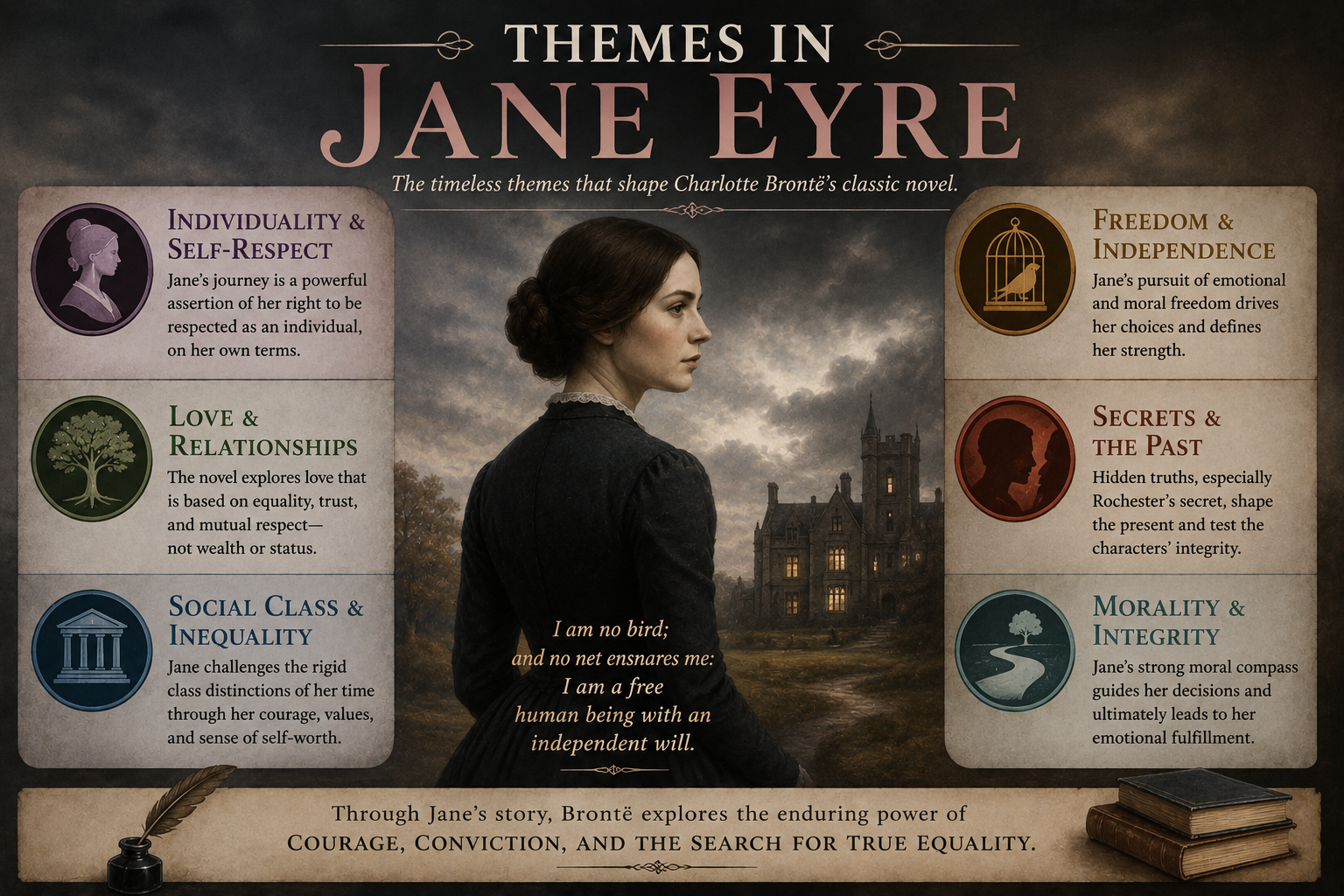
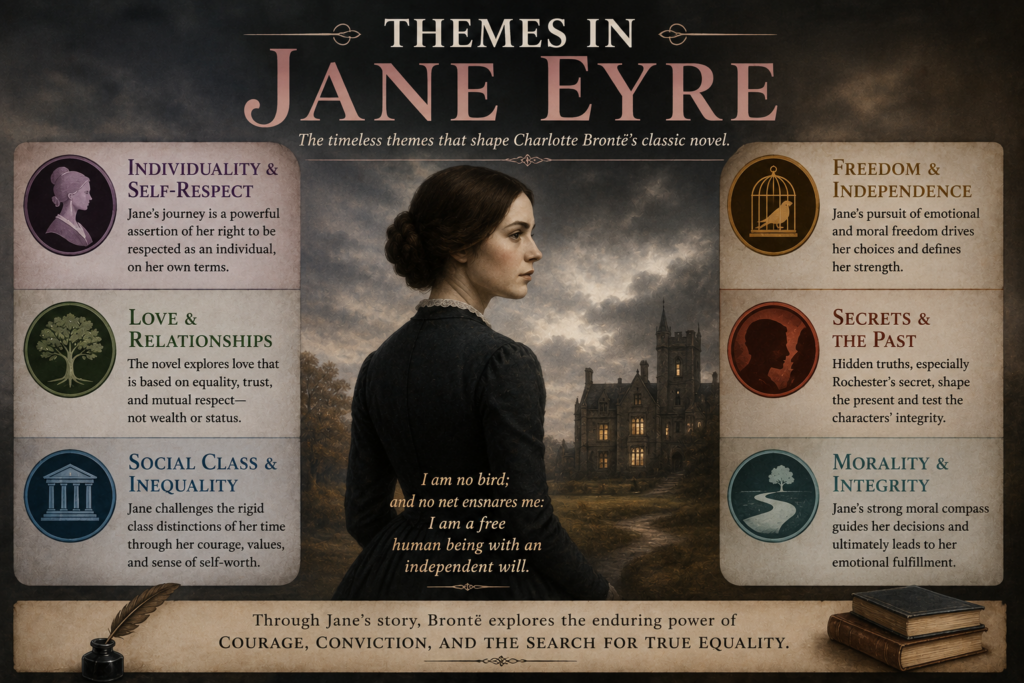
The themes in Jane Eyre help explain why Charlotte Brontë’s novel still matters in English classes today. The book is not just a love story. It is also about self-respect, power, faith, and the search for a true home.

In this Guide

Jane Eyre Themes

Why the themes in Jane Eyre matter

Brontë uses Jane’s life to ask what a person needs in order to live with dignity.

The main themes in Jane Eyre grow from Jane’s biggest conflicts. She wants love, but she will not give up her values to get it. She wants safety, but she also wants freedom.

That balance makes the novel useful for high school, AP Literature, and college essays. You can connect almost every major scene to one question: How does Jane protect her inner self in a world that tries to control her?

One reason students remember the themes in Jane Eyre is that Jane changes without losing her core beliefs. Like Elizabeth Bennet in Pride and Prejudice, she learns about love while also learning what she will not accept.

Themes in Jane Eyre: Independence and Self-Respect

Jane’s strongest desire is not wealth or romance. It is the right to live as her own person.

From the start, Jane knows what it feels like to have no power. At Gateshead, Mrs. Reed and John Reed treat her as less than family. At Lowood, harsh rules and public shame teach Jane how cruel authority can be.

Yet Jane does not become passive. She speaks the truth when she can, even when the cost is high. Her famous moral strength starts in childhood.

This is one of the most important themes in Jane Eyre because Jane’s independence shapes every major choice. She leaves Thornfield after Rochester asks her to live against her conscience. She refuses St. John Rivers because his plan would make her useful but unhappy.

Jane’s self-respect is not loud pride. It is moral independence. She would rather be alone than live as someone else’s possession.

Love and Equality

Brontë presents love as powerful, but never enough by itself.

Jane loves Rochester, and their bond is one of the novel’s central forces. Still, the novel tests that love through secrets, power, and social rank.

Among the major themes in Jane Eyre, love and equality are closely linked. Jane cannot accept a relationship where Rochester has all the control. His wealth, age, and social position place him above her at first.

Jane’s choice to leave Thornfield proves that she values equal love over emotional comfort. She does not stop loving Rochester. She chooses to protect her soul.

By the end, their relationship changes. Jane has family, money, and freedom. Rochester has lost some of his power and must depend on her. This shift matters because Brontë suggests that true love needs mutual respect.

Social Class and Gender Limits

Jane lives in a world where birth and money decide how people are treated.

As a poor orphan, Jane has few options. She becomes a governess, which places her in a strange middle position. She is educated, but not wealthy. She works in a rich home, but she is not fully part of its class.

This makes Thornfield tense. Jane can speak with Rochester as an intellectual equal, but society sees her as beneath him. Blanche Ingram shows the opposite problem. She has status, but little real feeling.

Gender also limits Jane. Victorian women were often expected to depend on men. Jane resists that role. She wants work, thought, movement, and choice.

For more background on Charlotte Brontë and the world that shaped the novel, see Britannica’s overview of Charlotte Brontë.

Religion and Moral Choice

Religion in the novel is not simple. Brontë shows both harmful faith and healing faith.

Mr. Brocklehurst uses religion to control children and shame the poor. His faith looks holy, but his actions are cruel and selfish.

Helen Burns offers a different model. She teaches patience, forgiveness, and spiritual peace. Jane admires Helen, but she does not fully copy her. Jane still believes injustice should be named.

St. John Rivers gives another version of faith. He is disciplined and brave, but he is cold. He wants Jane to marry him for duty, not love.

These themes in Jane Eyre show that Brontë values spiritual integrity over empty rule-following. Jane’s faith helps her choose what is right, but it does not erase her need for human love.

Appearance, Identity, and Inner Worth

Many characters judge by appearance, but the novel asks readers to look deeper.

Jane is often described as plain. Rochester is not shown as a perfect romantic hero either. Brontë avoids the idea that beauty equals goodness.

Blanche Ingram looks like the ideal match for Rochester, but her values are shallow. Jane has less social shine, yet she has honesty, intelligence, and courage.

This theme works well in essays because it connects to point of view. Since Jane tells her own story, readers see her inner world. We learn that identity is not just what others see. It is what a person knows to be true inside.

Home, Belonging, and Freedom

Jane spends much of the novel searching for a place where she can belong without losing herself.

Gateshead is a house, but it is not a home. Lowood gives Jane education and friendship, but it also brings suffering. Thornfield offers love, but it hides a secret that makes it unsafe.

Moor House gives Jane family and stability. Still, St. John’s control threatens her freedom. Ferndean, near the end, becomes the closest thing to a true home because Jane can love Rochester as an equal.

This theme matters because home in the novel is not just a building. It is a place where Jane’s body, mind, and conscience can rest.

Symbols that support themes in Jane Eyre

Brontë uses setting, weather, and repeated images to deepen the novel’s meaning.

Symbols make the themes in Jane Eyre easier to see. The red-room at Gateshead shows fear, punishment, and isolation. Fire often connects to passion, anger, or life. Ice and cold often mark emotional distance.

Thornfield itself becomes a symbol of hidden truth. Its beauty covers a locked secret, much like Rochester’s charm covers his past.

If you want help spotting patterns like these, read our guide on how to find symbolism in a story. It can help you turn symbols into stronger essay points.

You can also use the British Library’s article on Jane Eyre and 19th-century women for context on gender and society.

How to write about the themes in Jane Eyre

A strong essay should not just name a theme. It should explain how Brontë builds that idea through conflict and character choice.

For example, do not only say that independence is important. Show how Jane’s choices at Gateshead, Thornfield, and Moor House prove that she values self-respect over comfort.

Try this sentence frame:

Brontë develops the theme of [idea] by showing how Jane [choice or conflict], which reveals [larger meaning].

You can also connect theme to symbol. The red-room shows Jane’s early powerlessness, while Ferndean shows a quieter form of freedom. This kind of pattern helps an essay feel focused.

For more support, you can explore our Jane Eyre study resources as you plan your notes.

Helpful books for students

If you want a print copy or a study-friendly edition, look for these titles through Amazon, a local bookstore, or your school library:

  • Jane Eyre by Charlotte Brontë
  • The Madwoman in the Attic by Sandra M. Gilbert and Susan Gubar

The first gives you the full novel. The second is more advanced, but it is useful for college-level study of gender and power.

FAQ: Themes in Jane Eyre

What are the main themes in Jane Eyre?

The main themes in Jane Eyre include independence, love, class, gender, religion, identity, and belonging.

What is the most important theme in the novel?

Independence may be the most important theme because nearly every major choice Jane makes protects her self-respect.

How does Jane Eyre show feminism?

The novel shows feminism through Jane’s demand for equality, work, thought, and moral choice in a society that limits women.

Why does Jane leave Rochester?

Jane leaves because staying would break her conscience. She loves Rochester, but she will not give up her moral freedom.

How do symbols connect to theme?

Symbols like the red-room, fire, and Thornfield turn abstract ideas into concrete images. They help readers see fear, passion, and hidden truth.

Key Takeaway

The themes in Jane Eyre all point to one clear idea: real love and real faith must respect the self. Jane’s journey matters because she gains belonging without surrendering her freedom.

error

Enjoy this article? Please spread the word :)

Follow by Email
BLUESKY
fb-share-icon
Reddit
LinkedIn
Share
RSS