Themes in The Joy Luck Club: A Student-Friendly Guide

The Joy Luck Club themes

A clear guide to the major ideas, conflicts, and meanings students should notice in The Joy Luck Club.

Understanding the themes in The Joy Luck Club helps you see why Amy Tan’s novel feels personal and powerful. The book is not only about mothers and daughters, but also about memory, culture, pain, and love.

This guide explains the main ideas in simple terms so you can use them in class discussion, AP Literature writing, or a college essay.

In this Guide

  • Why the themes matter
  • Family and generational conflict
  • Identity and belonging
  • Language and storytelling
  • Memory, trauma, and silence
  • Gender, power, and voice
  • How to write about the themes
  • FAQ
The Joy Luck Club themes

Why Themes in The Joy Luck Club Matter

The novel uses personal stories to explore large questions about family, culture, and selfhood.

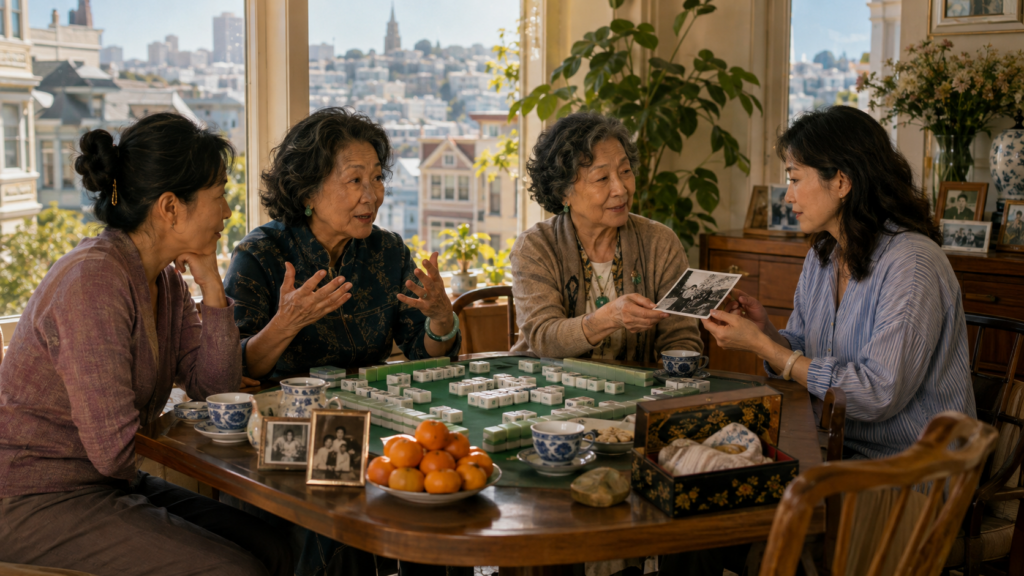
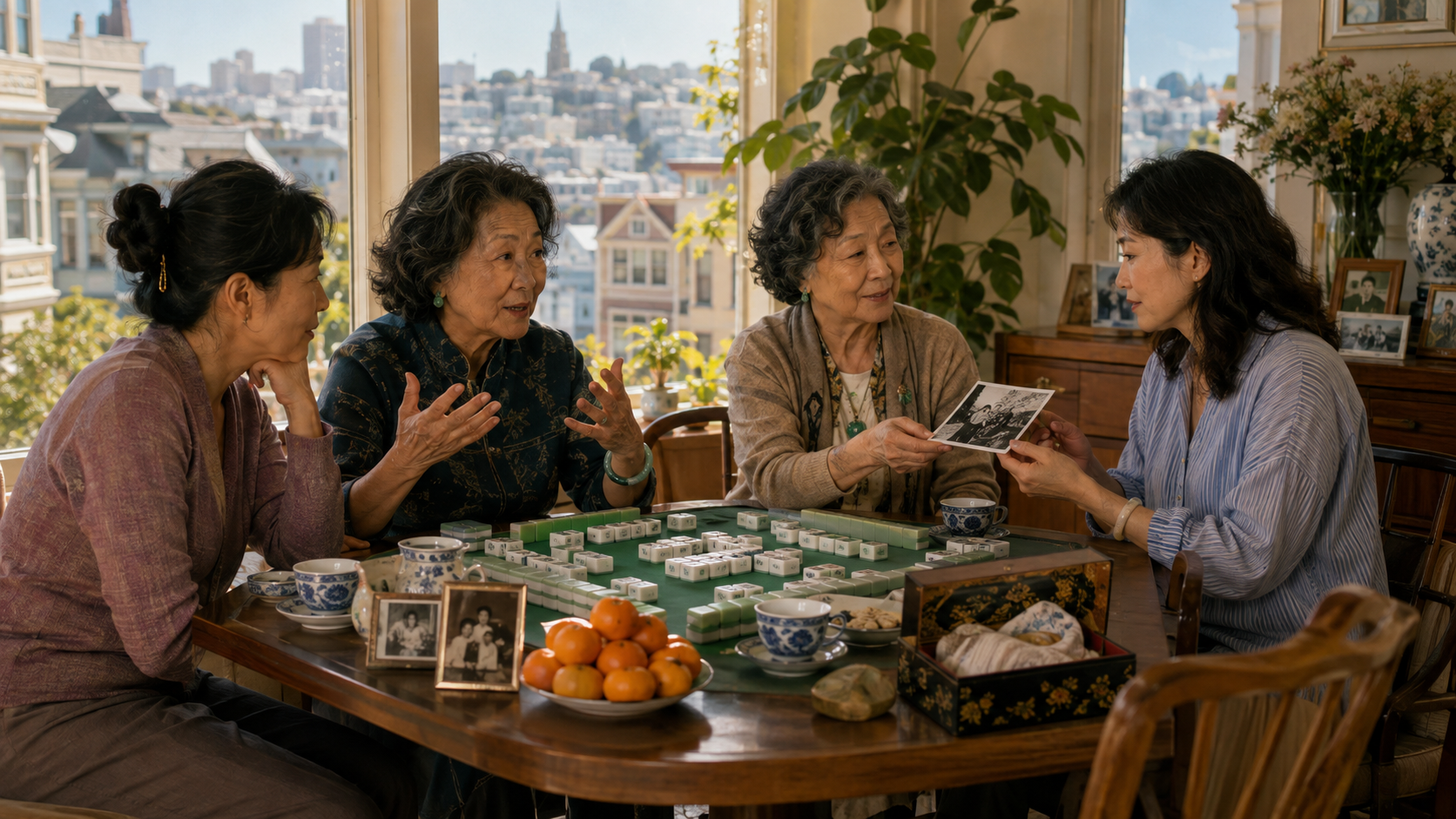
The Joy Luck Club is built from linked stories. Four Chinese immigrant mothers and their American-born daughters each carry different hopes and fears.

The themes in The Joy Luck Club come from these gaps between people who love each other but often misunderstand each other. The mothers know the pain of their past. The daughters often feel judged by lessons they do not fully understand.

This is why the book fits so well in high school and college classes. It shows how private family moments can reveal deep social and cultural conflicts.

For author background, you can review Britannica’s overview of Amy Tan.

Family and Generational Conflict: Core Themes in The Joy Luck Club

Much of the novel’s tension comes from love that feels like pressure.

One of the most important themes in The Joy Luck Club is the conflict between mothers and daughters. The mothers want to protect their daughters from pain. The daughters want room to define themselves.

June thinks her mother, Suyuan, expects too much from her. Waverly feels trapped by Lindo’s pride and criticism. Rose struggles to make choices because she has learned to doubt her own voice.

These conflicts are not simple fights. They come from different life experiences. The mothers survived war, loss, forced marriage, and strict gender roles. Their daughters grow up in America, where they are told to seek independence.

A strong theme statement might say: Tan shows that family love can become painful when parents and children do not share the same language of care.

This theme is common in literature. In Romeo and Juliet, family expectations shape personal choices. In Tan’s novel, the conflict is quieter, but the emotional stakes are just as real.

From Idea to Novel Blueprint

Identity and Belonging: Themes in The Joy Luck Club

The daughters often feel caught between the culture they inherit and the culture they live in each day.

Identity is one of the richest themes in The Joy Luck Club. The daughters are Chinese American, but they do not always know what that means. They may resist their mothers’ traditions, yet they also feel that something is missing when they ignore them.

June’s trip to China near the end of the novel is a key moment. She worries that she is not Chinese enough. Yet the trip helps her understand that identity is not only about language, food, or place.

Identity also comes through family memory. When June meets her half-sisters, she sees that her mother’s story did not end with loss. She becomes part of that story.

Tan avoids an easy answer. Belonging is not a single choice between China and America. It is a process of learning what has shaped you.

This theme connects with works like The House on Mango Street by Sandra Cisneros, where a young narrator also tries to understand home, heritage, and selfhood.

Language and Storytelling

In the novel, stories become a way to pass down truth when direct speech fails.

Many conflicts in the book happen because mothers and daughters do not understand each other’s words or meanings. The mothers may speak in warnings, images, or family stories. The daughters may hear only criticism.

Storytelling gives the mothers power. They use stories to explain what happened to them, but also to teach survival. Lindo’s story of her arranged marriage shows wit and strength. An-mei’s memories of her mother reveal the cost of silence.

These stories also change the daughters. They learn that their mothers are not only strict parents. They are women with deep wounds, clever plans, and lost dreams.

Among the themes in The Joy Luck Club, this one matters because the novel itself acts like a memory box. Each section adds another voice. Together, the voices create a fuller truth.

If you want help linking voice to character choices, see our guide on how to analyze characters in literature.

Memory, Trauma, and Silence

The past does not stay in the past in Tan’s novel.

Several mothers carry memories that they cannot share easily. Suyuan loses her twin daughters during war. Ying-ying suffers in a marriage that steals her sense of self. An-mei learns that women can be harmed by the rules of their society.

These memories shape how the mothers raise their daughters. Sometimes they become protective. Sometimes they become harsh. Often, they do both at once.

Silence is just as important as speech. When painful stories stay hidden, daughters can only guess why their mothers act as they do. This creates distance.

The novel suggests that healing begins when stories are finally told. June does not fully know her mother until after Suyuan dies. That loss makes the final reunion with her sisters even more moving.

This theme is also central in Toni Morrison’s Beloved, where memory and trauma shape family life. Both novels show that buried pain can still guide the present.

Gender, Power, and Voice

Tan shows how women fight for power in worlds that often deny it to them.

The mothers grow up in settings where women have limited control over marriage, family duty, and social status. Their lives teach them that survival often requires strategy.

Lindo learns to escape a forced marriage without open rebellion. An-mei learns the danger of a world that treats women as weak or disposable. Ying-ying must recover a voice she once lost.

The daughters face different limits. They live in America, but they still struggle with self-doubt, unfair expectations, and painful relationships. Rose, for example, must learn to speak for herself in her marriage.

These themes in The Joy Luck Club show that voice is not just speech. Voice means choice. It means the right to name your own pain and your own future.

Fate, Choice, and Personal Strength

The novel often asks whether people are trapped by the past or able to change their lives.

The mothers sometimes speak as if fate has power. They believe in signs, luck, and hidden forces. Yet their stories also show bold choices.

Suyuan creates the Joy Luck Club during a time of fear. That act matters. It turns despair into community and gives women a way to hold on to hope.

Waverly’s chess talent also connects to this theme. Her success depends on skill, but it also depends on confidence and a sense of inner force.

Tan does not reject fate fully. Instead, she shows that people live inside limits but can still act with courage.

How to Write About Themes in The Joy Luck Club

A good essay does more than name a topic. It explains what the novel says about that topic.

Start by turning a topic into a theme statement. Do not write, family is a theme. Write something like: Tan suggests that family love can wound when it is shaped by fear and silence.

Then connect the theme to a character conflict. June and Suyuan work well for this because their relationship changes how readers understand love, expectation, and regret.

You can also focus on structure. The novel’s many voices show that no single character owns the whole truth. This is a strong point for AP Literature essays.

When you discuss themes in The Joy Luck Club, use short quoted phrases if your teacher allows text evidence. Then explain how the detail reveals a larger meaning.

For deeper essay work, our guide to character analysis in literature can help you connect theme, conflict, and motive.

If you want a quick review tool before a test, our student literature study guide pack can support your notes and essay planning.

Helpful Background for Students

A little context can help, but the best analysis still begins with the text.

Amy Tan published The Joy Luck Club in 1989. The novel draws on Chinese American family life, immigration, and mother-daughter bonds, though it is a work of fiction.

For more classroom context, the NEA Big Read page on The Joy Luck Club offers useful background.

These books pair well with Tan’s novel for class projects or further reading.

  • The Bonesetter’s Daughter by Amy Tan
  • The Woman Warrior by Maxine Hong Kingston

FAQ: Themes in The Joy Luck Club

These quick answers can help you review before a quiz, seminar, or essay.

What are the main themes in The Joy Luck Club?

The main themes in The Joy Luck Club include mother-daughter conflict, identity, memory, storytelling, gender, and the search for voice.

What is the most important theme in the novel?

The most important theme is often seen as the struggle between mothers and daughters. Tan shows that love can be hard to understand across culture and age.

How does Amy Tan show identity?

Tan shows identity through family stories, cultural tension, and June’s journey to understand her mother’s past.

Why is storytelling important in the book?

Storytelling helps the mothers share pain, wisdom, and history. It also helps the daughters see their mothers as full people.

Key Takeaway

The lasting themes in The Joy Luck Club show that family stories can hurt, heal, and shape who we become. Tan’s novel asks readers to listen closely, especially when love is hidden inside conflict.
Themes in Beloved: A Student-Friendly Guide

Beloved Themes

The themes in Beloved help readers understand why Toni Morrison’s novel feels so powerful and hard to forget. This guide explains the major ideas, conflicts, and deeper meanings students should notice as they read.

In this Guide

Use this guide to review the novel before class, a quiz, or an essay.

  • Why the novel’s themes matter
  • Memory and the past
  • Motherhood and difficult love
  • Freedom and ownership
  • Identity and voice
  • Community and healing
  • Symbols that build meaning
  • Essay tips and FAQs
Beloved Themes

Why the themes in Beloved matter

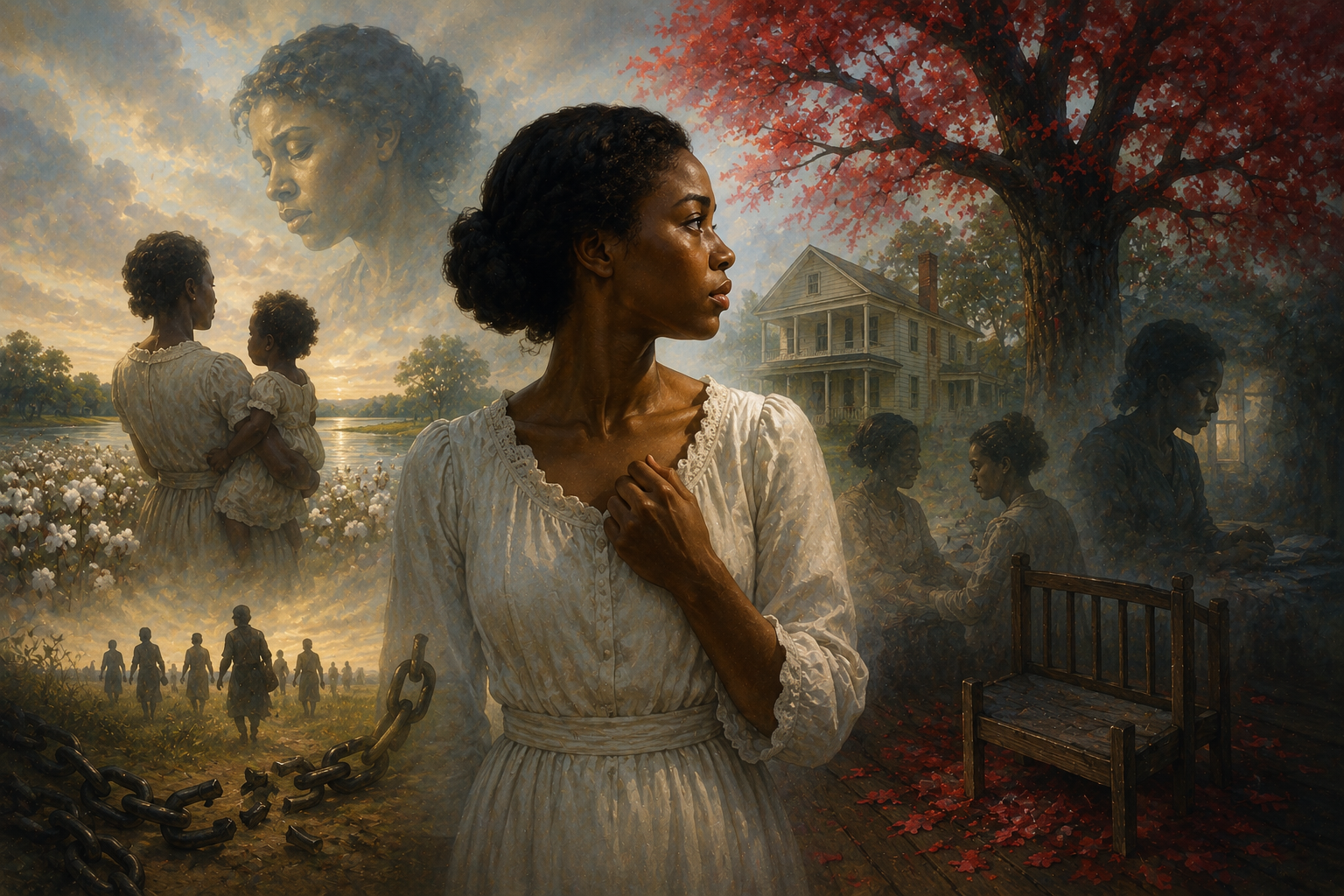
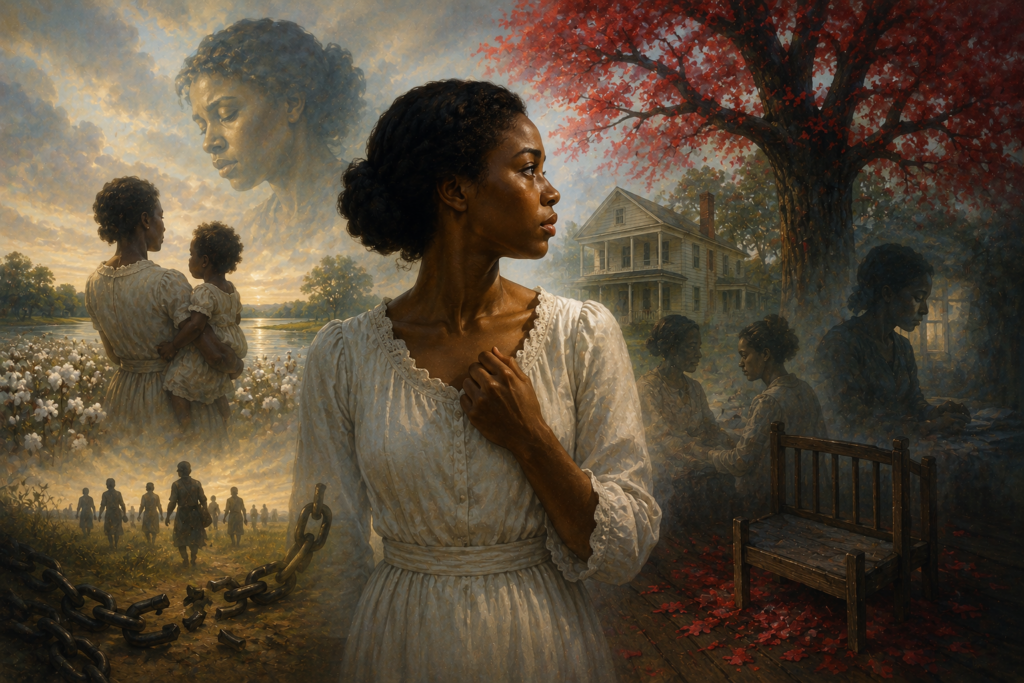
Morrison’s novel is not only about one family. It is about how slavery leaves pain in bodies, homes, and memories.

The story centers on Sethe, a formerly enslaved woman who lives with the past every day. The house at 124 is haunted, but the haunting is also emotional.

The themes in Beloved also show how history can stay alive even when people try to hide it. That makes the novel useful for essays about trauma, memory, family, and survival.

If you need help with theme as a concept, start with our guide on how to identify theme in literature.

Themes in Beloved: Memory and the past

Memory is one of the strongest forces in the novel.

Sethe tries to live in the present, but her past keeps returning. Morrison calls these painful returns “rememory,” which means the past is not really gone.

This theme matters because the novel shows memory as both painful and necessary. Sethe wants to forget, yet healing cannot start until the truth is faced.

A helpful comparison is Hamlet. Prince Hamlet also lives under the weight of a past crime. In both works, the past shapes the present and refuses to stay silent.

Themes in Beloved: Motherhood and difficult love

Morrison presents motherhood as powerful, protective, and deeply painful.

Sethe’s love for her children is intense because slavery tried to take away her right to be a mother. Her most shocking choice comes from that fear.

This is one of the most painful themes in Beloved because it asks students to think about love under extreme violence. The novel does not give easy answers. It asks why a mother might see death as safer than slavery.

In The Scarlet Letter, Hester Prynne also faces public judgment as a mother. Morrison’s novel is much darker, but both books ask how society judges women who protect their children.

Themes in Beloved: Freedom and ownership

The novel shows that legal freedom is not the same as full freedom.

Sethe escapes slavery, but she still carries its wounds. Her body, memories, and family life have all been marked by people who treated human beings as property.

Among the themes in Beloved, freedom is one of the most complex. Morrison shows that freedom must include safety, self-respect, and control over one’s own life.

This theme connects to many slave narratives and historical accounts. For background on Morrison’s life and major works, see Britannica’s overview of Toni Morrison.

Identity and voice in the novel

Morrison shows how slavery attacks a person’s sense of self.

Names matter in Beloved. Sethe’s past, Baby Suggs’s sermons, and Beloved’s mysterious presence all point to the question of who gets to define a person.

Voice also matters. Morrison lets different characters shape the story, which helps readers see pain from more than one angle. This style can feel hard at first, but it fits the novel’s subject.

When people have been silenced, telling a story becomes an act of power.

Community and healing

No one in the novel heals alone.

Baby Suggs once brings people together in the Clearing, where they learn to love their bodies and voices. That scene stands against the cruelty of slavery.

Later, the community’s role becomes important again. The women who come to 124 help break the hold of the past.

Morrison does not suggest that healing is simple. She shows that care from others can help people face what they could not face alone.

Symbols that build theme

Morrison uses symbols to make the novel’s ideas feel physical.

The house at 124 is more than a setting. It shows how trauma can fill a home and shape daily life.

Beloved herself is also symbolic. She can be read as a ghost, a lost child, or the return of a buried history.

Water often connects to birth, escape, and return. These symbols help students move from plot summary to analysis.

How to write about themes in Beloved

A strong essay should explain what Morrison suggests, not just name a topic.

Do not write, “The theme is memory.” That is too broad. A better claim would be: Morrison shows that painful memory must be faced before healing can begin.

When you write about themes in Beloved, connect each claim to a scene, symbol, or repeated idea. Use short quotes, then explain how the language supports your point.

These resources can help you build context before an essay or class discussion.

  • Beloved by Toni Morrison
  • Playing in the Dark by Toni Morrison
  • The Toni Morrison Book Club by Juda Bennett, Winnifred Brown-Glaude, Cassandra Jackson, and Piper Kendrix Williams

You can also read about Morrison through the Nobel Prize biography of Toni Morrison.

FAQ

These quick answers can help you review before a test or essay.

What are the main themes in Beloved?

The main themes in Beloved include memory, trauma, motherhood, freedom, identity, and community healing.

Why is memory so important in Beloved?

Memory shows that the past still affects the present. Sethe cannot heal by hiding from what happened.

Is Beloved a symbol?

Yes. Beloved can represent Sethe’s lost child and the larger history of slavery that refuses to disappear.

What is a good essay topic for Beloved?

You could write about how Morrison uses haunting to show the lasting effects of slavery.

Key Takeaway

The themes in Beloved ask readers to face hard truths about love, memory, and survival. Morrison shows that healing begins when buried stories are finally heard.

Best Novels About Memory and Trauma: Powerful Books That Stay with You

Best Novels about Memory and Trauma

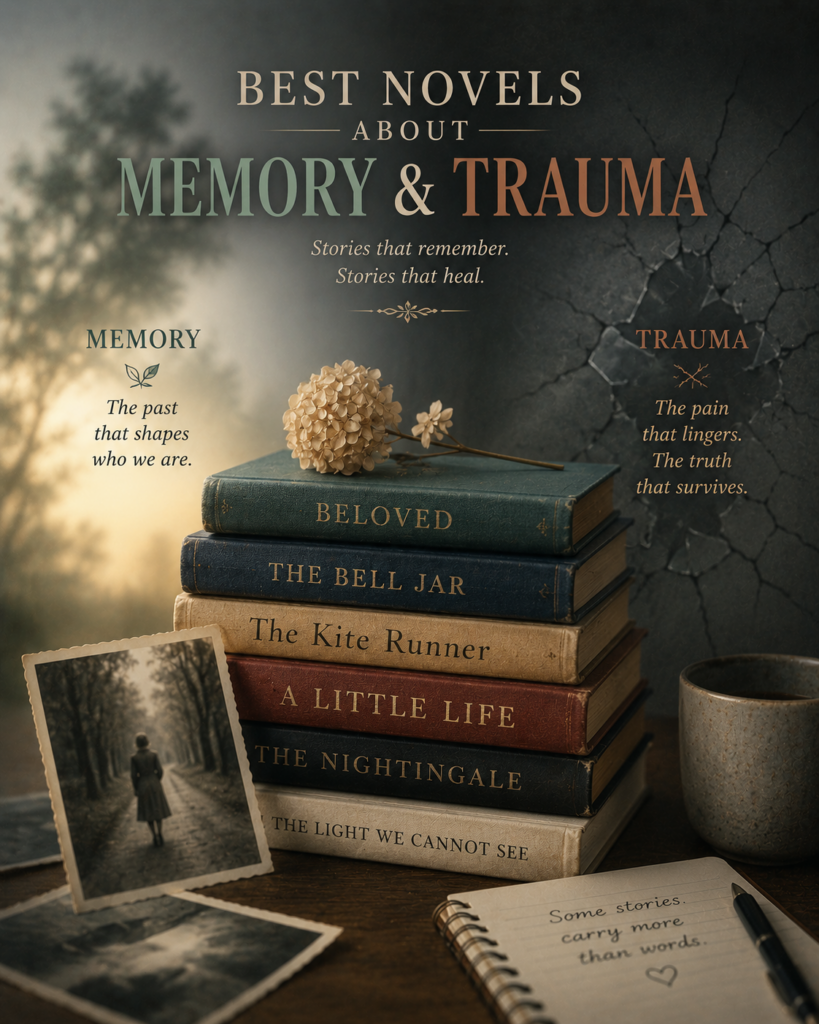
The Best Novels About Memory and Trauma show how the past can shape a person’s life long after the event has ended. These books help readers understand pain, survival, silence, and the strange ways memory can return.

For students, these novels also offer rich themes, symbols, and character studies. They are strong choices for essays, class talks, and deeper reading.

In this Guide

  • Why novels about memory and trauma matter
  • Best novels to read first
  • How trauma changes storytelling
  • Common symbols and themes
  • How students can read these books with care
  • Book suggestions
  • FAQs
  • Key takeaway
Best Novels about Memory and Trauma

Why the Best Novels About Memory and Trauma Matter

These stories help readers see how the past lives inside the present.

The Best Novels About Memory and Trauma do not treat memory like a simple record. In these books, memory can be broken, hidden, repeated, or changed by fear.

That makes the reading experience feel more real. People who suffer often do not remember events in a neat order. A sound, place, smell, or word can bring the past back at once.

These novels also ask hard questions. Can a person heal if they cannot speak about what happened? Can a family move forward if it hides the truth? Or can a nation face its own violent history?

Books like Beloved by Toni Morrison and The Things They Carried by Tim O’Brien explore these questions with great care. They show that trauma is not only personal. It can also be passed through families, wars, and cultures.

Best Novels About Memory and Trauma to Read First

These books are strong starting points because they are often taught and widely discussed.

If you are new to the Best Novels About Memory and Trauma, start with books that use clear emotional conflicts and strong symbols. The stories below are well-known, but they still feel fresh because they ask deep human questions.

Beloved by Toni Morrison

Beloved is one of the most important American novels about memory, slavery, and grief. Set after the Civil War, it follows Sethe, a woman haunted by the past in both real and ghostly ways.

The novel shows how trauma can return through the body, the home, and family bonds. Morrison does not let the past stay buried. She turns memory into a living force.

You can learn more about Morrison’s life and impact through Britannica’s overview of Toni Morrison.

The Things They Carried by Tim O’Brien

This Vietnam War novel blurs the line between fact and fiction. O’Brien writes about soldiers, fear, guilt, and the stories people tell to survive.

Memory in this book is not perfect. It shifts because pain shifts it. That is part of the point.

The title itself is a symbol. The soldiers carry weapons and supplies, but they also carry shame, love, fear, and regret.

Slaughterhouse-Five by Kurt Vonnegut

Slaughterhouse-Five follows Billy Pilgrim, a man who becomes “unstuck in time.” His life moves back and forth between moments, including the bombing of Dresden during World War II.

The strange structure shows how trauma can break normal time. Billy does not simply remember the war. He seems trapped inside it.

This is one reason the novel remains one of the Best Novels About Memory and Trauma for students who want to study form and theme together.

The Remains of the Day by Kazuo Ishiguro

This quiet novel follows Stevens, an English butler who looks back on his life. At first, his memories seem calm and controlled.

As the story unfolds, readers see what he has avoided. His trauma comes through restraint, regret, and missed chances.

The book is a powerful example of emotional repression. It shows that silence can be just as painful as open grief.

Never Let Me Go by Kazuo Ishiguro

This novel may look like science fiction, but its deepest subject is memory. Kathy tells the story of her childhood at a strange boarding school and slowly reveals the truth about her life.

The novel studies how people remember youth when they know loss is near. It is calm on the surface, but deeply sad underneath.

For students, it is a great book for essays about identity, control, and the stories people tell themselves.

How Trauma Changes Storytelling

In many trauma novels, the form of the story reflects the mind of the character.

The Best Novels About Memory and Trauma often avoid a straight timeline. This is not a trick. It helps readers feel how trauma works.

A character may jump from the present to the past without warning. A scene may repeat with new details. A narrator may leave out facts because the truth is too painful.

In Beloved, memories arrive in pieces. In Slaughterhouse-Five, time itself feels broken. And in The Things They Carried, stories are retold because one version is never enough.

This style can feel hard at first. But it teaches readers to notice structure. The way a story is told can matter as much as what happens.

If you are studying older texts too, the same skill helps. Paying close attention to language and structure can make difficult works easier, as explained in this guide to understanding Shakespearean language.

Symbols and Themes in the Best Novels About Memory and Trauma

These novels often use objects, places, and repeated images to show what words cannot fully explain.

One common symbol is the house. In Beloved, the home is not just a setting. It holds grief, fear, and history.

Another key symbol is the body. Trauma often appears through scars, pain, habits, or silence. A character may not speak about the past, but the body still remembers.

Objects also carry meaning. In The Things They Carried, the items soldiers hold become signs of emotional weight. What they carry shows who they are and what they fear.

Time is another major theme. In the Best Novels About Memory and Trauma, the past is not really past. It presses into the present and changes how characters see themselves.

These books also focus on truth. A memory may be honest even if it is not fully accurate. That idea can lead to strong essay topics about narration and trust.

Why Memory Is Not Always Reliable

Memory can protect people, but it can also hide what hurts too much.

Many trauma novels use unreliable narrators. This does not always mean the narrator lies on purpose. Sometimes the narrator cannot face the full truth yet.

In The Remains of the Day, Stevens tells his life story in a careful voice. He seems proper and calm. But readers start to sense the sadness under his control.

In Never Let Me Go, Kathy’s memories feel gentle, but they lead toward a painful truth. Her calm tone makes the novel even more haunting.

This is why the Best Novels About Memory and Trauma reward close reading. Small details often reveal what the narrator cannot say directly.

How Students Can Read These Novels With Care

These books can be powerful, but some scenes may feel heavy.

When you read the Best Novels About Memory and Trauma, give yourself time. Do not rush through painful chapters just to finish the plot.

Take notes on repeated images, changes in time, and moments of silence. Ask what the character avoids. Ask what the book returns to again and again.

It also helps to learn basic facts about trauma. The National Institute of Mental Health page on PTSD offers clear information about how trauma can affect memory and daily life.

For class essays, focus on one clear idea. You might write about the haunted house in Beloved, the broken timeline in Slaughterhouse-Five, or the weight of objects in The Things They Carried.

Amazon Book Suggestions: Best Novels About Memory and Trauma

These titles are easy to find online, in libraries, and in many school reading lists.

If you want to build a reading list, these are strong choices:

  • Beloved by Toni Morrison
  • The Things They Carried by Tim O’Brien
  • Never Let Me Go by Kazuo Ishiguro

Each book gives a different view of memory and pain. Together, they show why the Best Novels About Memory and Trauma matter in modern literature.

Best Novels About Memory and Trauma for Essay Topics

These books offer rich ideas for literary analysis.

For an essay on symbolism, Beloved is a strong choice. You can study the house, the ghost, or the idea of rememory.

For an essay on structure, Slaughterhouse-Five works well. Its broken timeline shows how war changes the mind.

For an essay on narration, The Remains of the Day gives you a lot to explore. Stevens reveals his pain through what he refuses to admit.

If you need help with close reading, use skills that apply across many texts. This guide on how to understand difficult literary language can help you slow down and read with more focus.

FAQs About the Best Novels About Memory and Trauma

What makes a novel about memory and trauma powerful?

A powerful trauma novel shows how the past affects the present. It often uses symbols, broken timelines, or silence to reveal pain.

Are the Best Novels About Memory and Trauma hard to read?

Some can be emotionally difficult. They are worth reading with care, breaks, and class discussion when possible.

Which novel should students start with?

The Things They Carried is a good starting point because its chapters are short and its themes are clear. Beloved is deeper and more complex, but very rewarding.

Why do these novels often use non-linear time?

Trauma does not always feel like a normal memory. A broken timeline can show how the past returns without warning.

Can these books help with AP Literature essays?

Yes. The Best Novels About Memory and Trauma offer strong examples of theme, character, symbolism, and narrative structure.

Key Takeaway

The Best Novels About Memory and Trauma show that the past is never simple. These books help readers see how pain can shape identity, how silence can speak, and how stories can become a path toward truth.

For students, they are more than moving reads. They are some of the richest texts for close reading, essay writing, and serious thought.

Themes in The Things They Carried: A Student-Friendly Guide

Themes in Things They Carried

A clear guide to the major ideas, conflicts, and meanings students should notice in The Things They Carried.

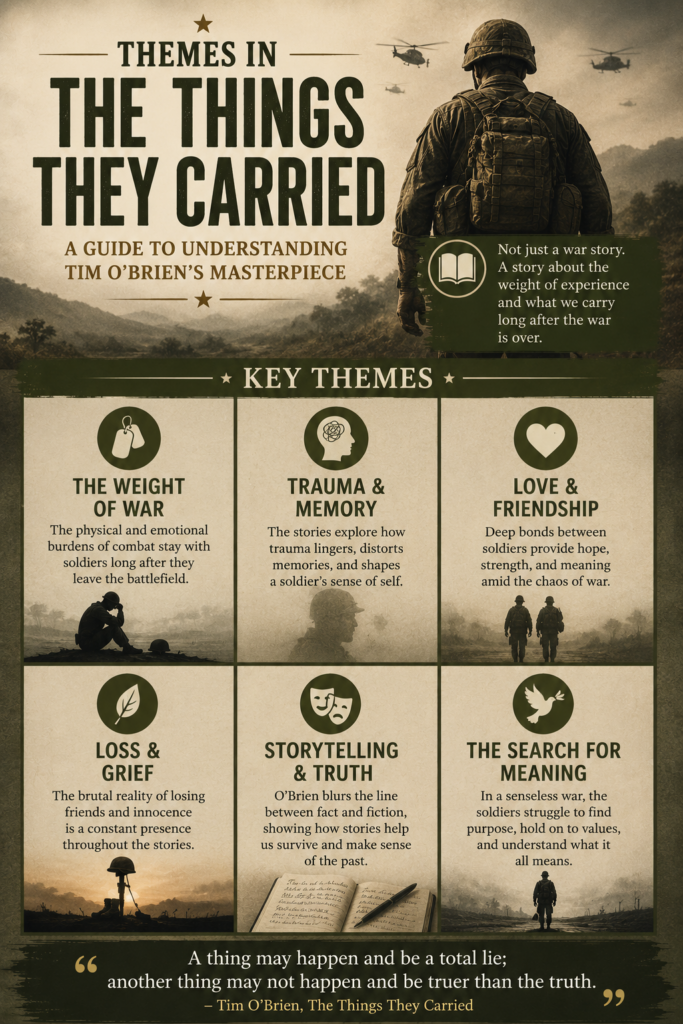
The themes in The Things They Carried help readers see the deep cost of war on the mind, body, and heart. Tim O’Brien does not just write about combat. He writes about fear, memory, guilt, truth, and the stories people need in order to survive.

In this Guide

Use this guide as a map before class discussion, essay prep, or a close reading quiz.

  • Why the themes matter
  • War and fear
  • Storytelling and truth
  • Guilt and shame
  • Courage and masculinity
  • Love, loss, and memory
  • How to write about the novel
  • FAQ
Themes in Things They Carried

Why the Themes in The Things They Carried Matter

The novel asks what soldiers carry after the war ends.

At first, the title seems simple. The soldiers carry guns, food, letters, photos, and gear. Yet the real weight is emotional.

They carry fear, regret, secrets, and memories. Those burdens do not fit in a backpack, but they shape every choice the men make.

When students study the themes in The Things They Carried, they should look at both kinds of weight. Physical objects often point to hidden pain.

This is a key reason the book works so well in AP Literature and college courses. It turns small details into big questions about truth, trauma, and survival.

Major themes in The Things They Carried

The novel has no single easy message about war.

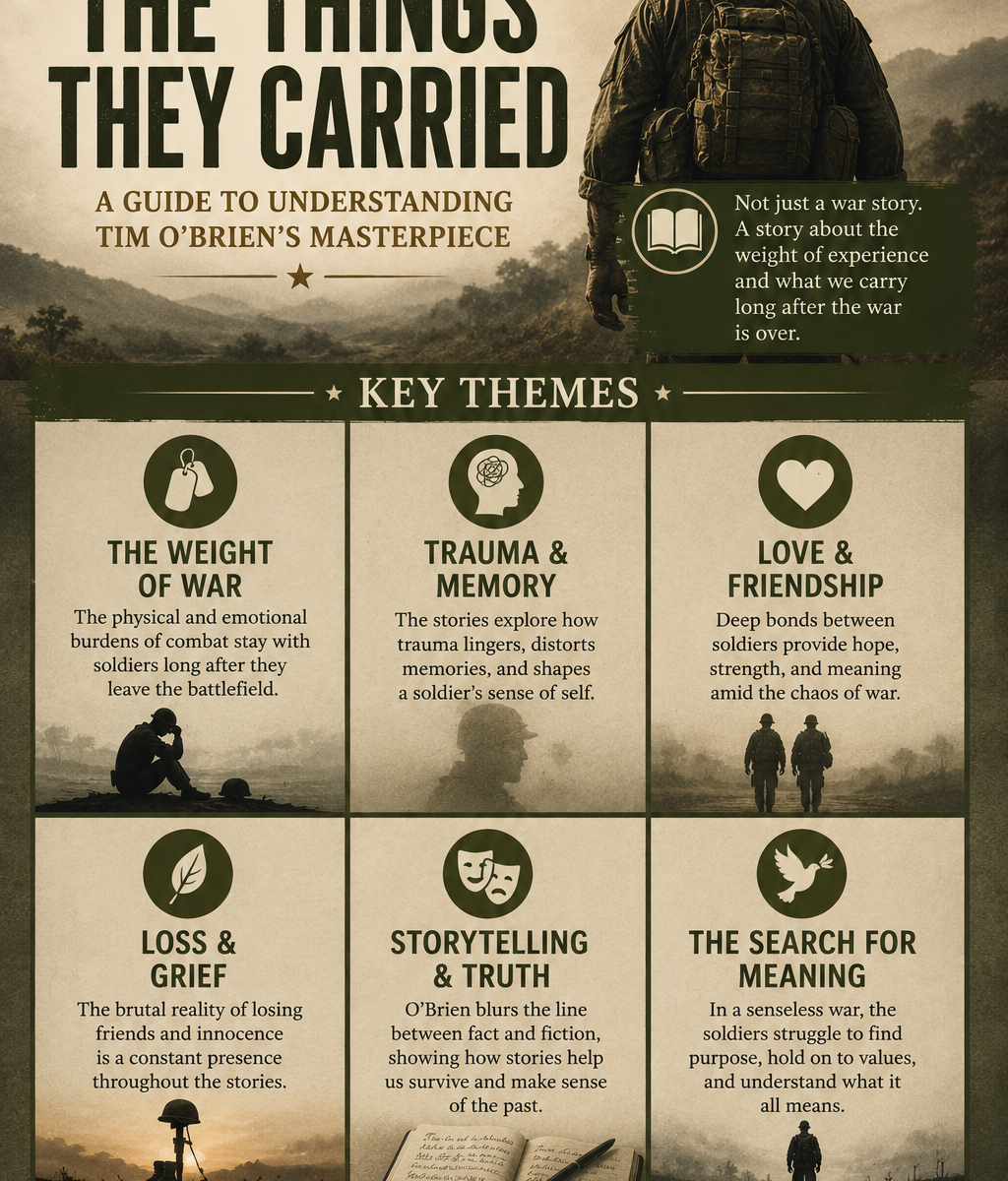
The major themes in The Things They Carried overlap. Fear connects to shame. Shame connects to courage. Memory connects to truth.

O’Brien writes the book as linked stories, not as a straight plot. This form helps readers feel how memory works. The past comes back in pieces.

These themes in The Things They Carried also make the novel feel personal. Even when the setting is Vietnam, the deeper questions matter far beyond one war.

For background on the real conflict behind the novel, Britannica’s overview of the Vietnam War is a helpful place to start.

War and the Weight of Fear

Fear is one of the strongest forces in the novel.

The soldiers fear death, wounds, traps, and mistakes. They also fear looking weak in front of each other.

This kind of fear changes how they act. Some men joke. Some turn quiet. And some try to prove they are brave, even when they are not.

O’Brien shows that fear in war is not rare. It is constant. It becomes part of daily life.

This theme also appears in novels like All Quiet on the Western Front by Erich Maria Remarque. Both books show war as a place where young men lose their old ideas about honor.

Storytelling, Memory, and Truth

O’Brien wants readers to question what truth means in a story.

One of the most famous ideas in the book is that a story can feel true even if every fact is not exact. O’Brien calls attention to the difference between happening-truth and story-truth.

This does not mean the book says facts do not matter. It means memory can hold emotional truth in ways a report cannot.

A soldier may not remember every detail in order. Yet he may remember the guilt, sound, heat, or fear with painful force.

This is one of the most important themes in The Things They Carried because the whole book is built around memory. Stories help the narrator return to the past, face it, and give it shape.

For more on the author, see Britannica’s brief biography of Tim O’Brien.

Guilt, Shame, and Moral Confusion

The novel treats guilt as a wound that does not heal fast.

Many characters feel guilt for things they did, did not do, or could not stop. This guilt is not always logical, but it is real.

Lieutenant Jimmy Cross feels guilt after Ted Lavender dies. He thinks his daydreams about Martha made him fail as a leader.

O’Brien also explores guilt through stories about killing. The narrator cannot escape the image of a dead young man, even as others try to make the moment seem normal.

The moral world of the novel is muddy. Characters often do not know what the right choice is. Even after they choose, they may not be sure what the choice means.

This is different from a simple hero story. Like Macbeth, the book shows how guilt can replay in the mind long after the act itself.

Masculinity and the Pressure to Be Brave

The soldiers are often trapped by what they think manhood requires.

In the novel, courage is not always pure. Sometimes men act brave because they fear shame more than danger.

O’Brien says he went to war partly because he was embarrassed not to. That detail makes courage more complex.

The book asks a sharp question: Is it brave to go along with what others expect, or brave to resist?

This theme matters for students because it breaks apart a common idea about war. The novel does not treat bravery as simple strength. It shows bravery as fear, pride, doubt, and pain mixed together.

Love, Loss, and Emotional Burdens

Love is another thing the characters carry.

Jimmy Cross carries Martha’s letters and photos. He turns them into a dream of comfort, but that dream cannot protect him from war.

Other characters carry memories of home, family, and old selves. Those memories can help them survive, but they can also hurt.

Loss appears over and over. Some deaths happen fast. Some losses happen slowly, as men become less like the people they were before Vietnam.

This is why the title matters so much. The men do not just carry supplies. They carry emotional lives that war keeps breaking open.

How to Write About themes in The Things They Carried

A strong essay connects theme to choices the author makes.

When you write about the themes in The Things They Carried, do not stop at naming a theme. Explain how O’Brien builds it through objects, structure, voice, and repeated memories.

A weak claim says, war is bad. A stronger claim says O’Brien shows war as a force that blurs truth, creates guilt, and leaves soldiers with memories they cannot set down.

Use short quotes and explain them closely. Look at what the object, image, or story reveals about a character’s inner life.

If you need help turning a theme into a thesis, use our guide on how to write a literary analysis essay. It can help you move from notes to a clear argument.

For a quick study boost, you can also use the RapidReads Press theme study guide to track key scenes and build better paragraphs.

Essay Examples: Turning Theme into Analysis

Good analysis makes a theme specific.

Here is a basic idea: The book is about memory.

Here is a stronger version: In The Things They Carried, O’Brien presents memory as both a burden and a survival tool, since stories force the narrator to relive trauma while also helping him face it.

That second sentence gives you more to prove. You can point to the book’s repeated scenes, shifting truth claims, and return to dead characters through story.

Another essay could focus on shame. You might argue that O’Brien presents shame as more powerful than patriotism because men often choose danger to avoid public judgment.

For more help with essay structure, this literary analysis essay guide can help you build topic sentences and evidence.

Books to Search for on Amazon

These related books can deepen your understanding of war literature.

Going After Cacciato by Tim O’Brien is another novel that mixes war, memory, and imagination.

Dispatches by Michael Herr offers a vivid nonfiction look at the Vietnam War and its psychological strain.

These books pair well with the themes in The Things They Carried because they also ask how people describe events that seem almost impossible to explain.

FAQ: themes in The Things They Carried

Here are quick answers to common student questions.

What are the main themes in The Things They Carried?

The main themes in The Things They Carried include the burden of war, fear, guilt, shame, memory, storytelling, and the pressure to seem brave.

What does the title mean?

The title refers to both physical items and emotional burdens. The soldiers carry weapons and supplies, but they also carry grief, fear, and memory.

Why is storytelling so important in the novel?

Storytelling helps the narrator return to painful memories. It also lets him explore a deeper kind of truth than facts alone can show.

Is The Things They Carried anti-war?

The book strongly shows the damage war causes. It does not preach in a simple way, but it does question ideas about glory, courage, and honor.

How can I write a thesis about the novel?

Choose one theme and explain how O’Brien develops it. Mention a method, such as symbols, repeated stories, or the narrator’s voice.

Key Takeaway

The novel shows that the heaviest burdens are often invisible.

The themes in The Things They Carried reveal war as a lasting mental and emotional weight. O’Brien’s stories ask readers to see truth not only in what happened, but in what people carry afterward.

error

Enjoy this article? Please spread the word :)

Follow by Email
BLUESKY
fb-share-icon
Reddit
LinkedIn
Share
RSS