

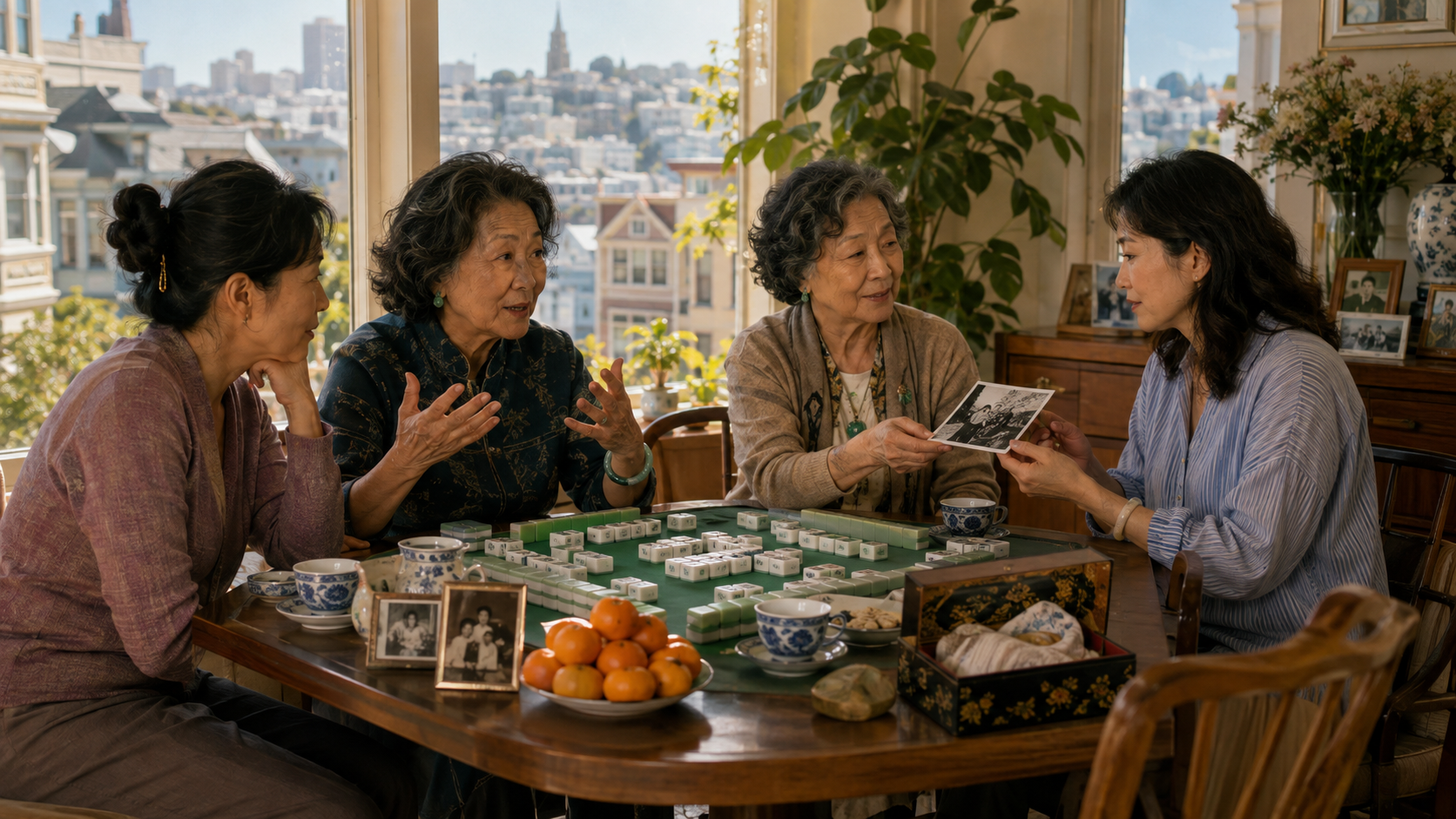
A clear guide to the major ideas, conflicts, and meanings students should notice in The Joy Luck Club.
Understanding the themes in The Joy Luck Club helps you see why Amy Tan’s novel feels personal and powerful. The book is not only about mothers and daughters, but also about memory, culture, pain, and love.
This guide explains the main ideas in simple terms so you can use them in class discussion, AP Literature writing, or a college essay.
In this Guide
- Why the themes matter
- Family and generational conflict
- Identity and belonging
- Language and storytelling
- Memory, trauma, and silence
- Gender, power, and voice
- How to write about the themes
- FAQ
Why Themes in The Joy Luck Club Matter
The novel uses personal stories to explore large questions about family, culture, and selfhood.
The Joy Luck Club is built from linked stories. Four Chinese immigrant mothers and their American-born daughters each carry different hopes and fears.
The themes in The Joy Luck Club come from these gaps between people who love each other but often misunderstand each other. The mothers know the pain of their past. The daughters often feel judged by lessons they do not fully understand.
This is why the book fits so well in high school and college classes. It shows how private family moments can reveal deep social and cultural conflicts.
For author background, you can review Britannica’s overview of Amy Tan.
Family and Generational Conflict: Core Themes in The Joy Luck Club
Much of the novel’s tension comes from love that feels like pressure.
One of the most important themes in The Joy Luck Club is the conflict between mothers and daughters. The mothers want to protect their daughters from pain. The daughters want room to define themselves.
June thinks her mother, Suyuan, expects too much from her. Waverly feels trapped by Lindo’s pride and criticism. Rose struggles to make choices because she has learned to doubt her own voice.
These conflicts are not simple fights. They come from different life experiences. The mothers survived war, loss, forced marriage, and strict gender roles. Their daughters grow up in America, where they are told to seek independence.
A strong theme statement might say: Tan shows that family love can become painful when parents and children do not share the same language of care.
This theme is common in literature. In Romeo and Juliet, family expectations shape personal choices. In Tan’s novel, the conflict is quieter, but the emotional stakes are just as real.

Identity and Belonging: Themes in The Joy Luck Club
The daughters often feel caught between the culture they inherit and the culture they live in each day.
Identity is one of the richest themes in The Joy Luck Club. The daughters are Chinese American, but they do not always know what that means. They may resist their mothers’ traditions, yet they also feel that something is missing when they ignore them.
June’s trip to China near the end of the novel is a key moment. She worries that she is not Chinese enough. Yet the trip helps her understand that identity is not only about language, food, or place.
Identity also comes through family memory. When June meets her half-sisters, she sees that her mother’s story did not end with loss. She becomes part of that story.
Tan avoids an easy answer. Belonging is not a single choice between China and America. It is a process of learning what has shaped you.
This theme connects with works like The House on Mango Street by Sandra Cisneros, where a young narrator also tries to understand home, heritage, and selfhood.
Language and Storytelling
In the novel, stories become a way to pass down truth when direct speech fails.
Many conflicts in the book happen because mothers and daughters do not understand each other’s words or meanings. The mothers may speak in warnings, images, or family stories. The daughters may hear only criticism.
Storytelling gives the mothers power. They use stories to explain what happened to them, but also to teach survival. Lindo’s story of her arranged marriage shows wit and strength. An-mei’s memories of her mother reveal the cost of silence.
These stories also change the daughters. They learn that their mothers are not only strict parents. They are women with deep wounds, clever plans, and lost dreams.
Among the themes in The Joy Luck Club, this one matters because the novel itself acts like a memory box. Each section adds another voice. Together, the voices create a fuller truth.
If you want help linking voice to character choices, see our guide on how to analyze characters in literature.
Memory, Trauma, and Silence
The past does not stay in the past in Tan’s novel.
Several mothers carry memories that they cannot share easily. Suyuan loses her twin daughters during war. Ying-ying suffers in a marriage that steals her sense of self. An-mei learns that women can be harmed by the rules of their society.
These memories shape how the mothers raise their daughters. Sometimes they become protective. Sometimes they become harsh. Often, they do both at once.
Silence is just as important as speech. When painful stories stay hidden, daughters can only guess why their mothers act as they do. This creates distance.
The novel suggests that healing begins when stories are finally told. June does not fully know her mother until after Suyuan dies. That loss makes the final reunion with her sisters even more moving.
This theme is also central in Toni Morrison’s Beloved, where memory and trauma shape family life. Both novels show that buried pain can still guide the present.
Gender, Power, and Voice
Tan shows how women fight for power in worlds that often deny it to them.
The mothers grow up in settings where women have limited control over marriage, family duty, and social status. Their lives teach them that survival often requires strategy.
Lindo learns to escape a forced marriage without open rebellion. An-mei learns the danger of a world that treats women as weak or disposable. Ying-ying must recover a voice she once lost.
The daughters face different limits. They live in America, but they still struggle with self-doubt, unfair expectations, and painful relationships. Rose, for example, must learn to speak for herself in her marriage.
These themes in The Joy Luck Club show that voice is not just speech. Voice means choice. It means the right to name your own pain and your own future.
Fate, Choice, and Personal Strength
The novel often asks whether people are trapped by the past or able to change their lives.
The mothers sometimes speak as if fate has power. They believe in signs, luck, and hidden forces. Yet their stories also show bold choices.
Suyuan creates the Joy Luck Club during a time of fear. That act matters. It turns despair into community and gives women a way to hold on to hope.
Waverly’s chess talent also connects to this theme. Her success depends on skill, but it also depends on confidence and a sense of inner force.
Tan does not reject fate fully. Instead, she shows that people live inside limits but can still act with courage.
How to Write About Themes in The Joy Luck Club
A good essay does more than name a topic. It explains what the novel says about that topic.
Start by turning a topic into a theme statement. Do not write, family is a theme. Write something like: Tan suggests that family love can wound when it is shaped by fear and silence.
Then connect the theme to a character conflict. June and Suyuan work well for this because their relationship changes how readers understand love, expectation, and regret.
You can also focus on structure. The novel’s many voices show that no single character owns the whole truth. This is a strong point for AP Literature essays.
When you discuss themes in The Joy Luck Club, use short quoted phrases if your teacher allows text evidence. Then explain how the detail reveals a larger meaning.
For deeper essay work, our guide to character analysis in literature can help you connect theme, conflict, and motive.
If you want a quick review tool before a test, our student literature study guide pack can support your notes and essay planning.
Helpful Background for Students
A little context can help, but the best analysis still begins with the text.
Amy Tan published The Joy Luck Club in 1989. The novel draws on Chinese American family life, immigration, and mother-daughter bonds, though it is a work of fiction.
For more classroom context, the NEA Big Read page on The Joy Luck Club offers useful background.
Related Books to Consider
These books pair well with Tan’s novel for class projects or further reading.
- The Bonesetter’s Daughter by Amy Tan
- The Woman Warrior by Maxine Hong Kingston
FAQ: Themes in The Joy Luck Club
These quick answers can help you review before a quiz, seminar, or essay.
What are the main themes in The Joy Luck Club?
The main themes in The Joy Luck Club include mother-daughter conflict, identity, memory, storytelling, gender, and the search for voice.
What is the most important theme in the novel?
The most important theme is often seen as the struggle between mothers and daughters. Tan shows that love can be hard to understand across culture and age.
How does Amy Tan show identity?
Tan shows identity through family stories, cultural tension, and June’s journey to understand her mother’s past.
Why is storytelling important in the book?
Storytelling helps the mothers share pain, wisdom, and history. It also helps the daughters see their mothers as full people.
Key Takeaway
The lasting themes in The Joy Luck Club show that family stories can hurt, heal, and shape who we become. Tan’s novel asks readers to listen closely, especially when love is hidden inside conflict.


Get the Free Close Reading Worksheet Pack
Join my email list and receive the printable worksheet pack you can use with any novel or poem.
No spam. Just helpful guides for reading literature well.












