

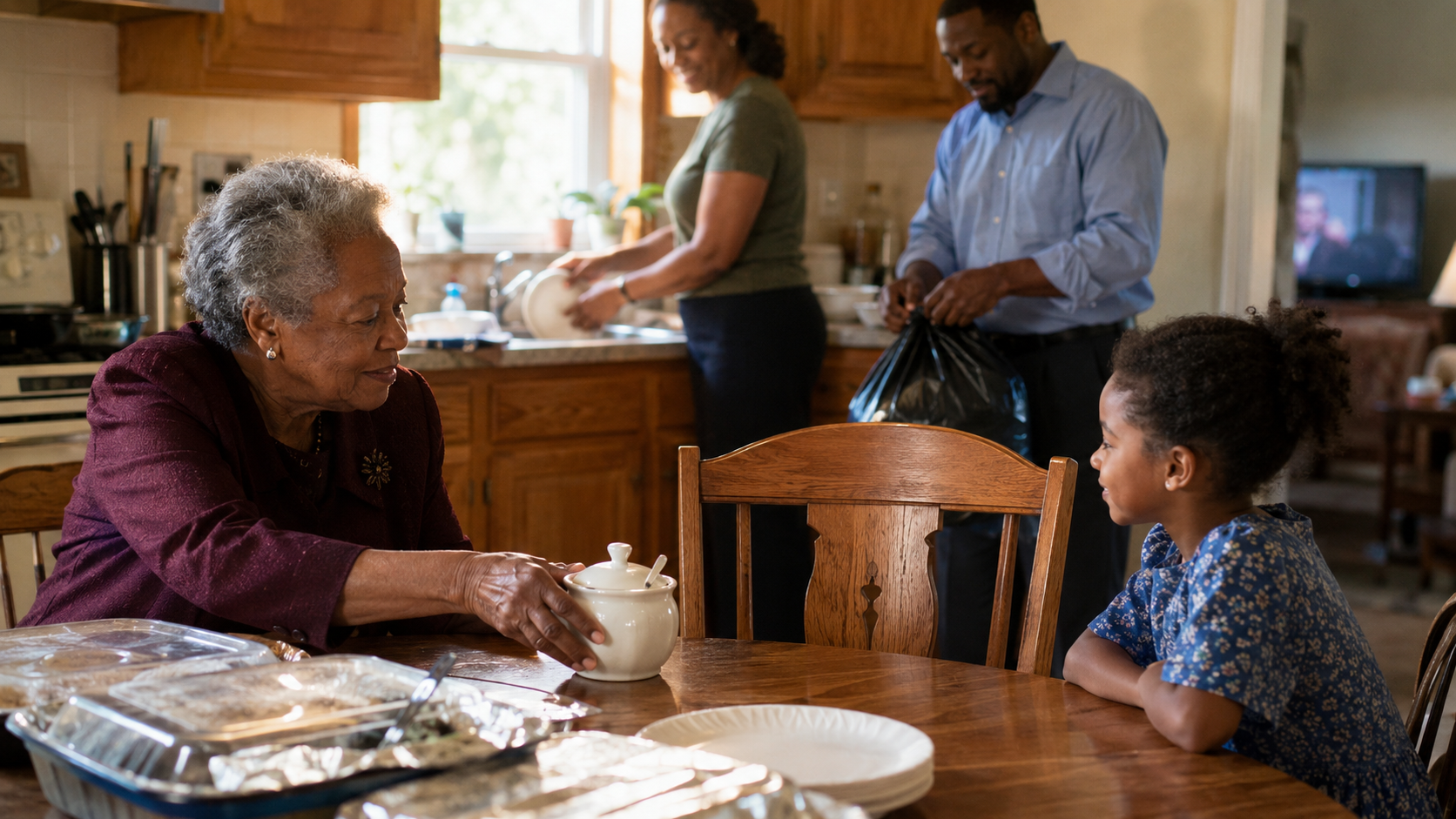
A focused flash memoir prompt about the way your family handled someone’s grief, told through one scene, one sensory detail, and one honest emotional truth.
Maybe you remember the casserole dishes first. Or the way everyone lowered their voices when they stepped into the hallway. Grief often changes the volume of a house before anyone explains what has happened.
This flash memoir prompt way family handled someone’s grief invites you to look at one moment when sadness entered your home, or your extended family, and watch what people did with it. Did they speak openly? Did they make food? Did they avoid the name of the person who was gone? Did someone become practical because feelings felt too large?
You do not have to solve the grief on the page. You only have to notice how your family carried it.

The Prompt
Write about the way your family handled someone’s grief.
This prompt can unlock a meaningful memory because grief often reveals family patterns. Some families gather. Some scatter. Some whisper, joke, clean, cook, pray, argue, or pretend they are fine. The story may not be about the loss itself. It may be about the way people acted around the person who was hurting.
For this flash memoir prompt way family handled someone’s grief, try to choose one scene instead of a full history. A kitchen after a funeral. A car ride home from the hospital. A living room where someone kept folding the same blanket. One small scene can hold more truth than a long explanation.
Why This Memory Matters
The way a family responds to grief can tell you what was allowed in that house. Were tears welcome? Was silence respected? Did people reach for comfort, or did they make themselves useful so they would not have to feel helpless?
You might discover that your family showed love in a language you did not understand at the time. Maybe your aunt never said the right words, but she filled the freezer with soup. Maybe your father left the room whenever your grandmother cried, and only years later did you realize he was crying in the garage.
This kind of memory matters because grief often strips family life down to habit. People fall back on what they know. That can be painful, tender, awkward, or even strangely funny. A flash memoir does not need to turn your family into heroes or villains. It can simply show them as people trying to stand near sorrow without knowing exactly how.
If you are thinking about how emotion sits inside a scene, you may find it useful to consider the difference between tone and mood in literature. In memoir, the room may feel heavy, but your adult voice might sound calm, curious, or forgiving. That contrast can make the piece feel more layered.
How to Approach This Prompt
Begin with a physical detail. Do not start by explaining who died, how long the grief lasted, or what everyone believed about loss. Start with what you saw.
Maybe there was a paper plate bending under potato salad. Maybe someone kept rubbing a thumb over a wedding ring. Maybe the TV stayed on with the sound muted because nobody wanted to sit in silence, but nobody wanted noise either.
Once you have the detail, build one scene around it. Where are you? Who is in the room? What does each person do when grief becomes visible? Let action carry the meaning for a while before you name what it meant.
For example, instead of writing, “My family avoided sadness,” you might write, “When my mother started crying, my uncle stood up and asked who wanted coffee.” That single action says a great deal. It also gives the reader space to feel the meaning rather than be told what to think.
Try to avoid telling the whole story at once. You do not need to cover the illness, the funeral, the months after, and every family conflict connected to it. Flash memoir works best when the frame is small. One afternoon can reveal the larger truth.
If you want to shape the memory into a stronger piece later, tools for organizing scenes and evidence can help. The Literary Analysis Essay Toolkit is designed for students, but its focus on close reading can also help writers study their own scenes with care.


A Quick Example
After my grandfather died, my grandmother sat at the kitchen table in her church shoes while everyone moved around her. My mother washed dishes that were already clean. My uncle took out the trash three times. Nobody said Grandpa’s name until my little cousin asked why his chair was empty. The room froze. My grandmother looked at the chair, then at the window above the sink. For a second I thought she had not heard. Then she reached for the sugar bowl and pushed it toward my cousin. “He always took too much,” she said. Everyone laughed softly, even my mother, who had soap up to her wrists. That was how grief entered our family, not as a scream, but as a chair nobody wanted to move.
Try It Yourself
Set a timer for ten minutes and write from the prompt: Write about the way your family handled someone’s grief. Choose one person who was grieving and one scene where your family responded. Stay close to the room. Notice hands, dishes, shoes, light, sound, or silence.
Do not worry about making the memory neat. Grief rarely arrives in a neat form. Your job is to write what happened, then let the emotional truth rise from the details.
If the memory feels heavy, give yourself permission to stop after one page. You can return later. A flash memoir prompt way family handled someone’s grief should help you explore the past with care, not force you to relive more than you are ready to face.
Want More Flash Memoir Prompts?
Explore all 365 prompts in The Memory Trigger: 365 Flash Memoir Writing Prompts. Each prompt is built to help you enter one focused memory and turn it into a short, honest piece of writing.



Get the Free Close Reading Worksheet Pack
Join my email list and receive the printable worksheet pack you can use with any novel or poem.
No spam. Just helpful guides for reading literature well.












