
Flash Memoir Prompt: Neighbor from Your Childhood Whose Life Seemed Mysterious to You

flash memoir neighbor

A brief writing invitation for remembering a mysterious childhood neighbor through one sharp scene, a few sensory details, and the questions you carried before you understood adult lives.

Maybe there was a house on your street where the curtains stayed closed. Maybe a porch light burned all night. Maybe a neighbor walked past your yard every afternoon with a paper bag, a limp, or a silence that made you stop your bike and wonder.

Childhood is full of half-stories. We notice shoes by a door, a strange smell from a kitchen, a car that never moves, a voice through the wall. We do not know enough to explain what we see, so mystery fills the gaps. This flash memoir prompt neighbor childhood whose life seemed mysterious invites you to return to one of those gaps with care.

flash memoir neighbor

The Prompt

Write about a neighbor from your childhood whose life seemed mysterious to you.

This prompt works because it asks you to remember from the edge of understanding. You do not have to solve the mystery. In fact, the strongest piece may come from what you did not know.

Think of the neighbor who made you curious. The woman who only came out at dusk. The man who kept pigeons in the garage. The older teen who lived with grandparents and never spoke at the bus stop. The family whose arguments carried down the block, then vanished when someone knocked.

Why This Memory Matters

A mysterious neighbor can reveal more than a person you barely knew. They can show what childhood felt like in your town, your building, or your street. They can show what adults whispered about and what children noticed anyway.

When you write about this kind of memory, you may uncover the border between childhood imagination and adult reality. Maybe you were afraid of someone who was simply lonely. Maybe you admired a person because they seemed free. Maybe years later, you learned a detail that changed the whole memory.

You might also discover how your younger self made sense of silence. Children often build stories from clues. A shut gate might become danger. A weekly visitor might become romance. A stack of newspapers might become proof of a secret life.

This is where the emotional truth lives. The facts matter, but so does your child’s version of the facts. A flash memoir prompt neighbor childhood whose life seemed mysterious gives you permission to write from that younger point of view before you explain anything.

If you enjoy studying small details in stories, you might also like this guide on what close reading means in literature. Memoir often works the same way. One detail can open the whole scene.

The Flash Memoirist
previous arrow
next arrow

How to Approach This Prompt

Begin with one physical detail. Do not start by explaining the neighbor’s full history. Start with the thing you can still see.

Maybe it is the sound of a screen door snapping shut. Maybe it is a row of blue glass bottles in a window. Maybe it is a dog that barked from behind a fence but was never seen. Let that detail pull you into the memory.

Then narrow the piece to one scene. You might write about riding your bike past the house, delivering a holiday plate, seeing the neighbor in a grocery store, or hearing music through an open window. One scene gives the memory shape.

Try to write what you noticed before you write what it meant. For example, instead of saying, “He seemed sad,” show the dented lawn chair, the untouched newspaper, or the way he waved without lifting his eyes.

You do not need to tell the whole story at once. Flash memoir is small by design. If you discover a bigger story underneath, let it wait. For now, write the moment when mystery entered your mind.

If you are helping students practice this kind of memory work, annotation can help them slow down and notice clues. This article on how to annotate literature offers simple habits that can also support personal writing.

A Quick Example

Mrs. Calder lived two houses down, in the yellow place with vines over the mailbox. Every Wednesday, a black car stopped in front of her house at exactly four o’clock. A man in a gray suit carried in a paper sack and left seven minutes later without it. My brother said she was a spy. I believed him for most of one summer. Once, my mother sent me over with tomatoes. Mrs. Calder opened the door only wide enough for her face. Behind her, I saw stacks of books, a piano with sheet music open, and a tiny white dog asleep on a pillow. She thanked me in a voice so soft I had to lean forward. Years later, I learned the man delivered medicine. Still, when I remember her, I remember the door, the shadowed room, and the feeling that adults lived inside stories children could only guess at.

Try It Yourself

Set a timer for ten minutes and write about one mysterious neighbor from your childhood. Stay close to the child’s view. What did you see? What did you hear? What did you think was happening?

If you know the truth now, you can add it near the end, but do not rush there. Let the younger version of you wonder for a while. That wonder is the heart of the piece.

You can use this flash memoir prompt neighbor childhood whose life seemed mysterious as a short warm-up or as the start of a longer essay. Either way, keep the focus tight. One house. One person. One memory that still glows at the edge of the street.

Want More Flash Memoir Prompts?

Explore all 365 prompts in The Memory Trigger: 365 Flash Memoir Writing Prompts.
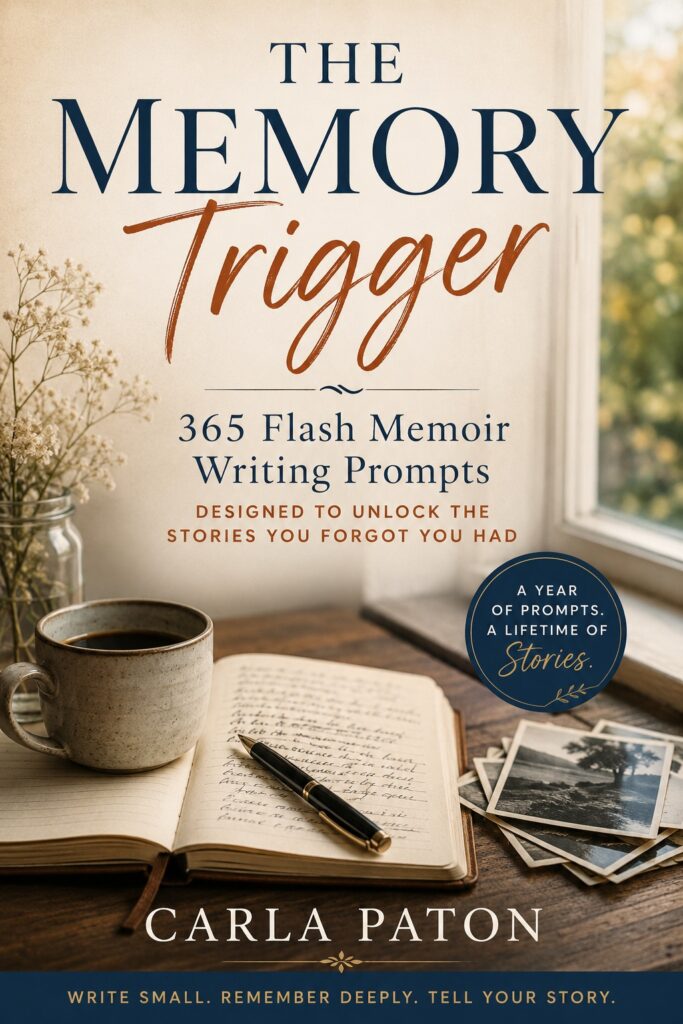
The Memory Trigger

Flash Memoir Prompt: Rules of Your Childhood Home that Were Never Spoken Out Loud

childhood rules

A brief writing invitation for remembering the quiet rules of childhood, the ones you learned by watching faces, hearing footsteps, and knowing when to stay silent.

You may remember the rule before you remember anyone saying it. The way your hand stopped before taking the last biscuit. The way everyone lowered their voice when one person came home. The way a certain chair at the table belonged to someone, even when no one said so.

This flash memoir prompt rules childhood home never spoken invites you to write about the hidden instructions that shaped your early life. Some were tender. Some were funny. Some were unfair. Some taught you how to survive the mood of a room.

childhood rules

The Prompt

Write about the rules of your childhood home that were never spoken out loud.

This prompt can unlock a meaningful memory because unspoken rules often carry more emotional weight than the rules posted on the refrigerator. They lived in looks, routines, pauses, and consequences. You learned them through small moments.

Maybe no one said, “Do not interrupt Dad after work,” but everyone knew. Maybe no one said, “We do not talk about money,” but the room changed when a bill arrived. Maybe no one said, “Keep your good news small,” but you learned to tuck joy away if someone else was having a hard day.

A prompt like this helps you find the story beneath the habit. It asks you to notice what your younger self understood, even without words.

Why This Memory Matters

Childhood homes have their own weather. Some are loud and bright. Some are careful and quiet. Some feel safe in the morning and tense by dinner. The rules you absorbed helped you move through that weather.

Writing about these rules does not mean you have to judge your family. You can simply notice. What did everyone avoid? What was rewarded? What made people proud? What made people go still?

These memories matter because they reveal how children learn belonging. A child may follow a rule to keep peace, earn praise, avoid shame, or protect someone they love. That is story material.

Unspoken rules can also show up through objects. A clean living room that no one sat in. A cookie tin that was never opened without permission. A telephone no one answered after a certain hour. If you enjoy looking for deeper meaning in objects and images, you may also find it helpful to read about how to find symbolism in a story. Memoir often works the same way. A small household detail can hold a whole history.

The focus keyphrase flash memoir prompt rules childhood home never spoken points to something many writers recognize. Our first lessons were not always lectures. Often, they were patterns.

The Flash Memoirist
previous arrow
next arrow

How to Approach This Prompt

Begin with one physical detail. Do not start by explaining your whole family system. Start with the fork beside the plate, the hallway light, the locked cabinet, the sound of a car in the driveway.

Then narrow the memory to one scene. Choose a single moment when you followed the rule, broke the rule, or finally noticed it. The smaller the scene, the stronger the writing can become.

You might write about reaching for the television remote and stopping because your older brother gave you a look. You might write about standing in the kitchen with a report card in your hand, waiting for the right mood. You might write about eating quietly because laughter at the table always seemed to turn into trouble.

Try to write what you noticed before you explain what it meant. Let the reader hear the chair scrape. Let them see the way your mother wiped the counter twice. Let them feel the heat in your face when you realized you had done something wrong, even though no one had told you the rule.

Avoid trying to tell the whole story at once. You do not need to explain every family pattern or every reason behind it. Flash memoir works best when one moment opens a door.

If this scene later grows into a longer personal essay, you can shape it with more structure. For students and writers who want help developing memory into analysis, The Literary Analysis Essay Toolkit can help with close reading, theme, and evidence. Those same skills can sharpen memoir writing too.

A Quick Example

The rule was that nobody sat in my father’s recliner. It was brown vinyl with a split near the right arm, and it faced the television like a throne. No one told me it was forbidden. I learned it when I was seven and climbed into it after school, still wearing my muddy sneakers. My sister froze in the doorway. “Get up,” she whispered, not angry, just scared. I slid out fast, leaving a small damp print on the footrest. When my father came home, he noticed it before he noticed us. He rubbed the mark with his thumb. Nobody spoke. I remember standing near the kitchen, trying to become smaller than the refrigerator hum. Years later, I understood the chair was not just a chair. It was the place where everyone measured his mood.

Try It Yourself

Set a timer for ten minutes and write one scene from this flash memoir prompt rules childhood home never spoken. Pick one rule and stay close to the moment you learned it.

You can begin with this sentence if it helps: “No one ever said the rule, but I knew it when…” Then keep going. Do not worry about making the memory sound polished at first. Let the details arrive in the order they come.

If the memory feels tender, write gently. If it feels funny now, let humor in. If it still feels complicated, you do not have to solve it on the page today. You only have to tell the truth of one small moment.

When you finish, look back at what you wrote. Circle the strongest detail. That detail may be the center of the piece.

Want More Flash Memoir Prompts?

Explore all 365 prompts in The Memory Trigger: 365 Flash Memoir Writing Prompts. This collection gives you a full year of short, focused invitations for writing about real memories with honesty and care.

The Memory Trigger

Flash Memoir Prompt: Piece of Clothing from Your Childhood that You Remember with Unusual Clarity

flash memoir prompt childhood

You can forget whole vacations and still remember the scratchy collar of one childhood shirt, the one you hated, loved, or wore until someone quietly took it away. This flash memoir prompt about a piece of clothing from childhood you remember with unusual clarity invites you to begin with fabric, fit, color, and the small emotional truth stitched into one memory.

flash memoir prompt childhood

The Prompt

Write about a piece of clothing from your childhood that you remember with unusual clarity.

It might be a winter coat, a school uniform, a pair of shoes, a hand-me-down dress, a sports jersey, or pajamas with faded cartoon characters. The item does not need to be dramatic. In fact, the most ordinary clothes often hold the strongest memories.

This kind of prompt works because clothing sits close to the body. You may remember how it felt before you remember why it mattered. Tight sleeves, missing buttons, stiff denim, or the smell of laundry soap can bring back a whole scene.

Why This Memory Matters

A flash memoir prompt about a piece of clothing from childhood you remember with unusual clarity can uncover more than a description of an outfit. It may reveal how you wanted to be seen, how money felt in your family, what made you feel proud, or what made you feel different from other kids.

Clothing can carry a surprising amount of meaning. A shirt might remind you of the first day you felt brave. A coat might bring back embarrassment because it was too small, too bright, or passed down from someone else. A pair of shoes might hold the memory of running away from a bully or walking into a new school.

Try not to rush toward the “lesson” of the memory. Let the clothing do some of the work. If you are interested in how objects carry deeper meaning, you might enjoy this guide on how to find symbolism in a story. The same idea can help in memoir. A real object can become a symbol without you forcing it.

The piece of clothing may also show a younger version of you at a very exact moment. Maybe you were trying to look grown up. Maybe you wanted to disappear. Maybe you felt beautiful for five minutes before someone made a comment.

That is where the memoir begins.

How to Approach This Prompt

Start with one physical detail. Do not begin with your whole childhood or a long explanation of your family. Begin with the hem, the zipper, the knees worn thin, or the tag that scratched your neck.

Then narrow the memory to one scene. Where are you wearing it? Who is there? What is happening in the room, hallway, playground, church, kitchen, or car?

You might write one sentence like this: “The red sweater had three white buttons, and I kept rubbing the middle one with my thumb while I waited for my name to be called.” That sentence gives you a place to stand. From there, you can notice more.

Write what you saw and felt before you explain what it meant. Memoir often gets stronger when the reader can enter the moment with you. If you want a practical way to slow down and notice details, the same habits used to annotate literature can help you study your own memory. Circle the object. Ask what repeats. Notice what feels charged.

You do not need to tell the whole story of your parents, your school years, or your sense of style. Give yourself permission to stay with one piece of clothing and one clear moment. The smaller the frame, the more room there is for feeling.

If the memory feels silly at first, keep going. A sparkly belt, a superhero cape, or a pair of jelly sandals may lead to something tender. Childhood clothing often holds the gap between who we were and who we hoped others would think we were.

The Flash Memoirist
previous arrow
next arrow

A Quick Example

The yellow raincoat was too shiny. I remember that most. It made a squeaking sound when I walked, like I was announcing myself to the whole second-grade hallway. My mother loved it because it had a hood and big silver snaps. I hated it because Melissa Crane said I looked like a crossing guard. That afternoon, it rained hard enough to flood the curb. Everyone else stood under the awning, waiting for rides. I walked straight into the rain and snapped every snap shut. For once, I liked how loud the coat was. Water slid off my sleeves in perfect beads. My socks were soaked, but the rest of me stayed dry. I did not tell my mother she had been right.

Try It Yourself

Set a timer for ten minutes and write about one piece of clothing from childhood that still feels clear in your mind. Describe it first as an object. Then place yourself inside one scene where you wore it.

If you get stuck, ask simple questions. Who gave it to you? Did you choose it or was it chosen for you? Did you feel proud, awkward, protected, or exposed? What did someone say about it?

Let the memory stay small. You are not writing a full autobiography. You are catching one bright scrap of the past and holding it long enough to see what it still carries.

This flash memoir prompt piece clothing childhood remember unusual search may have brought you here for a quick writing exercise, but it can become a surprisingly rich page. Follow the fabric. Trust the detail.

Want More Flash Memoir Prompts?

If this prompt helped you remember one clear object from childhood, keep going. Small memories often open larger doors when you give them quiet attention. Explore all 365 prompts in The Memory Trigger: 365 Flash Memoir Writing Prompts.

The Memory Trigger

Flash Memoir Prompt: Last Ordinary Day before Something Changed Everything

flash memoir prompt change

Before the phone call, the diagnosis, the goodbye, or the decision, there was probably a cup on the counter, a shirt on the chair, a sound in the hallway, and no idea that normal was about to become memory.

This flash memoir prompt last ordinary day before something changed invites you to return to the quiet edge of a turning point. That day may not have announced itself. It may have looked like any other day: errands, homework, dishes, weather, a half-finished conversation. The power of this prompt is in that contrast.

flash memoir prompt change

The Prompt

Write about the last ordinary day before something changed everything.

This prompt can unlock a meaningful memory because it asks you to look closely at the “before.” Big life changes often come with clear scenes: the hospital room, the moving truck, the breakup, the accident, the announcement. But the day before can hold a different kind of truth.

It may show what you valued before you knew you could lose it. It may reveal a version of yourself who still believed life would keep following the same pattern. That is what makes this flash memoir prompt last ordinary day before something so quietly powerful.

Why This Memory Matters

The last ordinary day is rarely dramatic while you are living it. You may have been annoyed about dirty laundry. You may have been bored in class. You may have complained about traffic, soup that was too salty, or someone being late again.

Then something changed. Later, that dull morning or plain afternoon became a marker. It became the last time the house sounded that way. The last time everyone sat at the same table. The last time you thought of yourself as safe, married, healthy, young, or sure.

This kind of memory often carries two emotions at once. There is the feeling you had then, and the meaning you give it now. You do not have to force sadness into the piece. You can let the ordinary details do the work.

If you are trying to understand the emotional atmosphere of the memory, it may help to think about the difference between tone and mood in literature. In memoir, mood often grows from small choices: the light in the room, the way someone speaks, the silence after a joke. You are not just reporting what happened. You are helping the reader feel the room as you remember it.

How to Approach This Prompt

Begin with one physical detail. Do not start with the life-changing event. Start before it.

Maybe it is the toast burning. Maybe it is your father tapping ash into a saucer. Maybe it is the smell of chlorine at the pool or the squeak of a grocery cart wheel. Pick one detail that feels attached to that day, even if it seems too small at first.

Then narrow the memory to one scene. A kitchen. A bus ride. A bedroom. A porch. Let the larger change wait outside the frame for a few minutes. The reader does not need the whole story right away.

Write what you noticed before you explain what it meant. This is important. If you begin with “That was the last normal day before my mother got sick,” the reader understands the fact. But if you begin with “My mother stood barefoot at the stove, cutting pancakes with the edge of the spatula,” the reader enters the memory.

You can reveal the change near the end, or you can hint at it in the first line. Either way, stay close to the scene. Flash memoir works best when it trusts one small moment to carry the weight.

If you like to mark up your own drafts, try reading your piece once for sensory detail and once for emotion. This is similar to the close-reading habit students use when they annotate literature. Circle the places where the memory feels alive. Underline any sentence that explains too much too soon.

image-slider-with-thumbnail1.jpeg
PlayPause
previous arrow
next arrow
image-slider-with-thumbnail1.jpeg
image-slider-with-thumbnail3.jpeg
image-slider-with-thumbnail4.jpeg
ChatGPT Image Jun 27, 2026, 06_33_13 PM
ChatGPT Image Jun 27, 2026, 06_36_37 PM
ChatGPT Image Jun 27, 2026, 06_38_39 PM
ChatGPT Image Jun 27, 2026, 06_31_22 PM
image-slider-with-thumbnail7.jpeg
ChatGPT Image Jun 27, 2026, 06_29_43 PM
ChatGPT Image Jun 27, 2026, 06_27_44 PM
image-slider-with-thumbnail6.jpeg
ChatGPT Image Jun 27, 2026, 06_15_07 PM
image-slider-with-thumbnail5.jpeg
ChatGPT Image Jun 27, 2026, 06_22_43 PM
ChatGPT Image Jun 27, 2026, 06_25_37 PM
ChatGPT Image Jun 27, 2026, 06_19_43 PM
ChatGPT Image Jun 27, 2026, 06_12_00 PM
ChatGPT Image Jun 27, 2026, 06_08_50 PM
ChatGPT Image Jun 26, 2026, 04_54_23 PM
ChatGPT Image Jun 27, 2026, 05_53_51 PM
ChatGPT Image Jun 28, 2026, 08_35_55 AM
previous arrow
next arrow

A Quick Example

The day before my brother left, we argued about the remote. I remember this because it seems impossible now that I wasted our last normal evening on a cooking show I did not even want to watch. He sat on the floor with his back against the couch, eating cereal from a mug because all the bowls were dirty. Mom was folding towels on the recliner. Dad was in the garage, dropping tools and muttering at the lawn mower. Nothing in the room knew it was ending. The dog slept under the coffee table. The dishwasher clicked. My brother stole the remote and grinned at me like we had forever to be annoyed with each other.

Try It Yourself

Set a timer for ten minutes and write the day before. Keep the scene small. Let the life-changing event stay in the background until you are ready to name it.

You might write about the last regular school day before a move, the last dinner before a divorce, the last lazy afternoon before bad news, or the last normal shift before a new job changed your path. The event does not have to be tragic. It only has to divide your life into before and after.

As you write, resist the urge to explain the whole timeline. Stay with the weather, the room, the sounds, and the person you were then. This flash memoir prompt last ordinary day before something changed is less about the shock itself and more about the fragile peace that came before it.

When you finish, read the piece aloud. Listen for the sentence where the normal day begins to glow with meaning. That sentence may be the heart of the whole memory.

Want More Flash Memoir Prompts?

If this prompt opened a memory you did not expect, keep going. Short prompts can help you build a steady writing habit without feeling pressured to write a full life story at once. Explore all 365 prompts in The Memory Trigger: 365 Flash Memoir Writing Prompts.

The Memory Trigger

Flash Memoir Prompt: Language or Way of Speaking that You’ve Lost

flash memoir prompt speaking

A small writing invitation about the language, accent, slang, prayer, or family way of speaking that once felt natural to you, and what it means to notice it fading from your mouth.

The Prompt

You hear an old phrase in a grocery store aisle and turn your head before you know why. Maybe it was the way your grandmother said your name, the soft dropped endings of your hometown, a childhood language you understood before you could spell it, or the private slang you shared with a friend you no longer call.

This flash memoir prompt language way speaking you’ve lost asks you to write about one voice pattern that used to belong to you. The prompt is simple: Write about a language or way of speaking that you’ve lost.

This can unlock a memory because speech is tied to belonging. We often change how we talk without making a formal decision. We adapt at school. We smooth out an accent at work. We stop using family words after someone dies. We forget a language one ordinary day at a time.

flash memoir prompt speaking

Why This Memory Matters

A lost way of speaking can carry a whole life inside it. It may remind you of a kitchen, a neighborhood, a classroom, a church basement, a lunch table, or a country you left before you were old enough to understand leaving.

This prompt is not only about language in the formal sense. You might write about baby talk in your family, the sports phrases your father used, the dramatic vocabulary of your teenage friends, or the careful “professional” voice you learned to use because your real voice felt too risky.

Sometimes the memory is tender. You miss the sound of yourself before you learned to edit every sentence. Sometimes it is funny. You remember pronouncing a word wrong for years and defending it with full confidence. Sometimes it hurts. You may remember being corrected, teased, or told that your home language sounded wrong.

That is why this flash memoir prompt about language or a way of speaking you’ve lost can be so powerful. It lets you write about identity without forcing you to explain your whole identity. You can begin with one phrase. One mispronounced word. One sentence you no longer say.

If your memory involves older forms of English, accents, or unfamiliar phrasing, you may enjoy this guide on how to understand Shakespearean language. It is a useful reminder that language always carries history, rhythm, and context.

How to Approach This Prompt

Begin with a sound. Do not start by explaining your entire family background or why the language disappeared. Start with the exact phrase if you remember it. Write it the way it sounded to you.

Maybe it was “Come here, baby,” stretched into three warm syllables. Maybe it was a prayer in another language. Maybe it was your old neighborhood’s way of saying “you all,” “youse,” or “fixing to.” Maybe it was the secret code you and your sibling used from the back seat of the car.

Once you have the sound, narrow the memory to one scene. Put yourself in a real place. What room were you in? What could you smell? Who was speaking? Were you proud, embarrassed, bored, comforted, or trying to hide?

Write what you noticed before you explain what it meant. For example, you might describe your mother’s hands folding towels while she speaks, or the way your classmates laughed when you said a word from home. Let the meaning arrive through the scene.

Avoid trying to tell the whole story at once. You do not need to cover every move, every family member, or every reason your speech changed. Flash memoir works best when the piece feels small enough to hold. One lost word can suggest the shape of a whole childhood.

If you like marking up memories as you draft, the same skills used to annotate literature can help here. Circle repeated words, underline sensory details, and notice where the emotion becomes strongest.

image-slider-with-thumbnail1.jpeg
PlayPause
previous arrow
next arrow
image-slider-with-thumbnail1.jpeg
image-slider-with-thumbnail3.jpeg
image-slider-with-thumbnail4.jpeg
ChatGPT Image Jun 27, 2026, 06_33_13 PM
ChatGPT Image Jun 27, 2026, 06_36_37 PM
ChatGPT Image Jun 27, 2026, 06_38_39 PM
ChatGPT Image Jun 27, 2026, 06_31_22 PM
image-slider-with-thumbnail7.jpeg
ChatGPT Image Jun 27, 2026, 06_29_43 PM
ChatGPT Image Jun 27, 2026, 06_27_44 PM
image-slider-with-thumbnail6.jpeg
ChatGPT Image Jun 27, 2026, 06_15_07 PM
image-slider-with-thumbnail5.jpeg
ChatGPT Image Jun 27, 2026, 06_22_43 PM
ChatGPT Image Jun 27, 2026, 06_25_37 PM
ChatGPT Image Jun 27, 2026, 06_19_43 PM
ChatGPT Image Jun 27, 2026, 06_12_00 PM
ChatGPT Image Jun 27, 2026, 06_08_50 PM
ChatGPT Image Jun 26, 2026, 04_54_23 PM
ChatGPT Image Jun 27, 2026, 05_53_51 PM
ChatGPT Image Jun 28, 2026, 08_35_55 AM
previous arrow
next arrow

A Quick Example

For years, I called the remote control “the clicker,” the way my grandfather did. In his house, everything had a better name than its real one. The refrigerator was the icebox. The couch was the davenport. Supper was never dinner, even if we ate it at seven. I stopped saying those words after college because people smiled when I used them, like I had brought an old suitcase into a glass office. Last week, my son asked where the remote was, and without thinking I said, “Check under the davenport.” He blinked at me. I laughed, but it caught in my throat. For one second, my grandfather was alive again, sitting in his chair, patting his shirt pocket for a butterscotch candy.

Try It Yourself

Set a timer for ten minutes and write the phrase, word, accent, rhythm, or voice you have lost at the top of the page. Do not worry if you spell it “wrong.” Write it how it sounded.

Then place the word inside a scene. Let someone say it. Let your younger self react. Stay close to the moment before you step back and reflect.

If the memory feels complicated, that is okay. You can write with affection and discomfort on the same page. You can miss a voice you once tried to escape. You can be grateful for who you became while still grieving the sound of who you were.

This flash memoir prompt language way speaking you’ve lost is an invitation to listen closely. Somewhere in your memory, an old voice may still be waiting to be heard.

Want More Flash Memoir Prompts?

If you want a steady writing practice, keep gathering small memories like this one. Explore all 365 prompts in The Memory Trigger: 365 Flash Memoir Writing Prompts.

The Memory Trigger

Flash Memoir Prompt: Tradition that Ended when a Person Left

Flash memoir prompt tradition

Use this flash memoir prompt about a tradition that ended when a person left to return to one small ritual, one changed room, and the feeling you could not name at the time.

The first clue may have been the quiet. No chair scraped across the kitchen floor at 6 p.m. No one called out the same joke before dinner. No burnt toast, no card game, no Sunday drive, no extra place set at the table. A tradition can disappear so softly that no one announces its ending. One person leaves, and the custom they carried with them goes too.

This kind of memory often holds more than nostalgia. It can show how families work, how friendships change, and how love sometimes lives inside small habits. A flash memoir prompt tradition ended person left story does not need to explain an entire relationship. It only needs to notice what stopped.

Flash memoir prompt tradition

The Prompt

Write about a tradition that ended when a person left.

This prompt can unlock a strong memory because traditions are often tied to people more than we realize. We may think the tradition belonged to the whole family, the whole class, or the whole group. Then one person moves away, dies, graduates, divorces, or simply stops showing up, and the ritual loses its center.

You might write about a holiday meal that never tasted the same after your grandmother was gone. You might remember a neighbor who organized block parties until he moved. Maybe a friend left your school, and suddenly no one met by the vending machine before first period.

The point is not to prove that the person was important. The missing tradition already proves it.

Why This Memory Matters

A tradition that ends can reveal the shape of a relationship. It shows what someone held together, often without much credit. The person may have been loud and central, or they may have worked quietly in the background. Either way, their absence changed the pattern.

This prompt may uncover grief, but it can also bring up relief, confusion, or even humor. Maybe the tradition was annoying while it lasted. Maybe everyone complained about it, then missed it once it was gone. That tension can make the writing feel real.

Memory is rarely one clean emotion. You may have loved your uncle’s yearly slideshow and dreaded it at the same time. You may have rolled your eyes when your older sister made everyone sing on birthdays, then felt the silence when she left for college.

That mix matters. If you are unsure how to name the feeling in your piece, it may help to think about the difference between tone and mood in literature. Your memory might sound funny on the surface while the mood underneath feels lonely.

A strong flash memoir often lives in that gap between what people did and what it meant later.

How to Approach This Prompt

Begin with the object or action that belonged to the tradition. Do not start by summarizing the whole history. Start with the coffee can where game-night money was kept. Start with the dented pot used every New Year’s Day. Start with the folding chair someone always brought from the garage.

Choose one scene. The last time the tradition happened can work well, but so can the first time it did not happen. That missing moment may be more powerful than the farewell itself.

Try writing what you noticed before you explain what it meant. Let the reader see the cold porch light, the unused recipe card, or the empty passenger seat. Small details help the emotion arrive without forcing it.

If the memory feels too large, ask yourself one narrow question: What did I expect to happen that day, and what happened instead?

You do not need to explain why the person left right away. In flash memoir, a little restraint can help. You can let the reader feel the absence first. Once the scene has weight, add only the background needed to understand the change.

If you like marking up your own drafts, try reading your piece once just for sensory details. Circle what can be seen, heard, touched, or smelled. This is similar to the close attention readers use when they annotate literature, and it can help you find the strongest parts of your own memory.

Keep the focus tight. A flash memoir prompt tradition ended person left piece works best when it trusts one moment to carry the larger story.

A Quick Example

After my brother left for the Army, my mother stopped making pancakes on Saturday mornings. No one said that was why. The first Saturday, she poured cereal into three bowls and left the griddle in the cabinet. My father read the newspaper like he had somewhere to hide behind it. I sat at the table and stared at the syrup bottle, sticky around the cap, still wearing its red plastic lid. My brother had always made the first pancake too big and too pale, then eaten it standing at the stove. I used to tell him it looked raw. That morning, I wanted the raw one. I wanted to hear him laugh and call me dramatic. Instead, my spoon clicked against the bowl, too loud in the kitchen.

Try It Yourself

Set a timer for ten minutes and write about the tradition without trying to make it perfect. Start with the moment you realized it was gone. If that feels too direct, start with the place where it used to happen.

Let yourself write plainly. “We used to do this.” “Then she left.” “After that, no one did it again.” Simple sentences can hold deep feeling when the detail is honest.

When you revise, look for the strongest image. It might be the untouched pie plate, the quiet phone, or the song no one played anymore. Build the piece around that image and trim anything that pulls too far away from it.

You may discover that the tradition was really a form of care. You may also discover that the person who left was the only one brave enough, stubborn enough, or cheerful enough to keep it alive. Follow what the memory shows you.

Want More Flash Memoir Prompts?

If this prompt opened a door, keep going. Explore all 365 prompts in The Memory Trigger: 365 Flash Memoir Writing Prompts.

The Memory Trigger

Flash Memoir Prompt: Last Time You Felt Completely at Ease in Your Own Body

Flash Memoir Prompt body

A gentle flash memoir invitation for remembering a moment when your shoulders dropped, your breath settled, and your body felt like a safe place to be.

Maybe it happened in a place no one else would call special. Your feet were tucked under a kitchen chair. Your hair was still damp from a shower. You were walking home with a warm drink in your hand, and for once you were not fixing, hiding, judging, or bracing.

If you searched for a flash memoir prompt last time felt completely at ease in your own body, this prompt is asking you to pause on that kind of moment. Not the perfect version of yourself. Not the body you wished for. The body you had, in one exact scene, when it felt enough.

Flash Memoir Prompt body

The Prompt

Write about the last time you felt completely at ease in your own body.

This prompt can unlock a meaningful memory because the body often remembers peace before the mind has words for it. You may not recall the date or every detail, but you might remember the weight of a blanket, the feel of bare feet on cool floor, or the deep breath you did not have to force.

A flash memoir prompt last time felt completely at ease can lead to a quiet story. It does not need a big plot. The power may be in the small shift from tension to rest.

Why This Memory Matters

Many of us spend a lot of time aware of our bodies in critical ways. We notice discomfort, awkwardness, tiredness, pain, size, age, or how others might see us. So a memory of ease can feel surprisingly tender.

This kind of story may uncover more than comfort. It may reveal safety, trust, relief, or belonging. You might remember a time when you were alone and free from performance. You might remember being with someone who made you feel accepted without effort.

For some writers, the memory may be connected to movement. Dancing in a living room. Swimming after a hard week. Stretching in the sun. For others, it may be rest. Sitting on a porch. Lying in bed with clean sheets. Holding a child who finally fell asleep.

As you write, notice the emotional weather of the scene. Is the memory calm, playful, surprised, or bittersweet? If you want help naming the feeling around the memory, this guide to tone and mood in literature can help you see the difference between what happened and how it felt.

How to Approach This Prompt

Begin with one physical detail. Do not start by explaining your relationship with your body across your whole life. That is too much for one short piece. Start smaller.

You might write, “My feet were in the lake,” or “The sweatshirt was too big in the best way,” or “I had just stopped holding my stomach in.” Let the body open the door.

Then narrow the memory to one scene. Choose ten minutes, not ten years. Where were you? What was touching your skin? What sounds were near you? Or what did your body no longer feel the need to do?

Try to write what you noticed before you explain what it meant. This is the same skill readers use when they slow down and mark details in a text. If you want a simple method for paying closer attention, this piece on how to annotate literature offers a useful way to notice first and interpret second.

For this prompt, you might ask yourself one focused question: What did ease feel like in my body? Maybe it felt like warmth, looseness, balance, silence, or a laugh that came out before you could stop it.

Avoid trying to make the memory sound profound right away. Let it be ordinary. The meaning can rise from the details.

A Quick Example

The last time I felt completely at ease in my body, I was floating in my sister’s backyard pool after everyone else had gone inside. It was late August, and the water held the day’s heat. My ears were under the surface, so the world sounded far away and soft. I remember looking up at the porch light and seeing moths circle it like tiny scraps of paper. For once, I was not thinking about how I looked in a swimsuit. I was not pulling at the fabric or comparing myself to anyone. My arms drifted out beside me. My knees rose and sank. I felt my breath move through me, steady and plain. But I did not feel beautiful exactly. I felt unbothered. That was better.

Try It Yourself

Set a timer for ten minutes and write from the prompt without stopping to judge the memory. If more than one moment comes to mind, choose the one with the clearest physical detail.

You do not have to write a body-positive essay. You do not have to solve every complicated feeling. Just return to one moment of ease and describe it honestly.

This flash memoir prompt last time felt completely at ease in your body works best when you trust the small scene. Let the chair, the water, the blanket, the sidewalk, or the quiet room carry part of the story for you.

Want More Flash Memoir Prompts?

If this prompt opened a memory you did not expect, keep going. Short prompts can help you build a steady writing habit, one scene at a time. Explore all 365 prompts in The Memory Trigger: 365 Flash Memoir Writing Prompts.

The Memory Trigger

Flash Memoir Prompt: Dream or Plan You Quietly Let Go of without Telling Anyone

flash memoir dreams

A warm flash memoir prompt for remembering the dream or plan you quietly let go of, through one small scene, one physical detail, and the truth you may not have said out loud.

Maybe it lived in a notebook for a while. Maybe it was a course catalog folded into your bag, a half-finished application, a business idea scribbled on the back of a receipt, or a town you kept checking on weather apps even though you never moved there.

Some dreams do not end with a dramatic speech. They do not slam the door. They simply stop being mentioned. Today’s flash memoir prompt dream plan quietly let go invites you to look at one of those quiet endings with care, not judgment.

flash memoir dreams

The Prompt

Write about a dream or plan you quietly let go of without telling anyone.

This prompt can unlock a meaningful memory because private disappointments often leave small traces. You may remember the day you stopped practicing, the evening you closed the browser tab, or the moment you put the folder in a drawer and did not open it again.

The story does not have to be tragic. Letting go can happen for many reasons. You grew older. Money changed. Someone needed you. The dream no longer fit. Or maybe you were tired of wanting something that kept moving away.

Why This Memory Matters

A dream you never announced can still shape your life. In fact, it may carry a special kind of weight because no one else knew enough to ask what happened.

This kind of memory often reveals the difference between who you imagined becoming and who you became. That does not mean one version is better. It means there was a turning point, even if no one saw it.

Maybe you once planned to become a singer, but you stopped showing up for auditions. Maybe you wanted to leave your hometown, but your suitcase never made it past the closet. Or maybe you planned to write a novel, start over, learn a language, adopt a child, open a bakery, or tell someone how you felt.

The quiet part is important. When a dream is public, people help create the story around it. They ask questions. They offer comfort. And they make comments. But when a dream is private, the memory stays close to the body. You might remember the smell of coffee beside your laptop, the ache in your neck, or the sound of rain while you deleted a file.

That is where good flash memoir often begins. It starts before the explanation. It starts with what you noticed.

How to Approach This Flash Memoir Prompt Dream Plan Quietly Let Go

Begin with one object connected to the dream. Choose something ordinary: a form, a pair of shoes, a brochure, a musical instrument, a saved email, a paintbrush, a recipe card, a gym bag.

Do not try to tell the whole history of the dream. Pick one scene. Maybe it is the moment you realized you had stopped caring. Maybe it is the day you packed the object away. Or maybe it is the moment you watched someone else do the thing you once wanted for yourself.

Write what your hands did first. Did you fold the paper? Close the box? Leave the room? Pretend to be busy? Small actions can reveal more than a long explanation.

Then let the emotion arrive slowly. You do not need to name it right away. Try writing the scene as if you are observing yourself from across the room. What would a camera see? What sound would it pick up? And what would be easy to miss?

If you enjoy looking closely at details, you might also like this guide on how to annotate literature. The same skill can help in memoir. You learn to notice patterns, repeated images, and the quiet places where meaning gathers.

For this flash memoir prompt dream plan quietly let go, resist the urge to wrap the piece in a perfect lesson. You may not know exactly why you let the plan fade. That uncertainty can make the writing feel honest.

A Quick Example

I kept the community college catalog under my bed for almost a year. The pages were soft at the corners because I had turned to the nursing program so many times. I liked the photograph of the students in blue scrubs, all of them smiling like they had somewhere important to be. On a Saturday morning, I pulled the catalog out while my kids watched cartoons in the next room. The application deadline was circled in purple pen. I stared at it while my toast cooled on the plate. Then I slid the catalog into the recycling bin under the sink. I did not cry. I rinsed a cereal bowl and let the water run too long. No one asked what I had thrown away.

Try It Yourself

Set a timer for ten minutes and write about the object, place, or day connected to the plan you stopped speaking about. Start small. Let the first sentence be plain: “The folder was blue,” or “I stopped going after the third lesson.”

Try to stay with one memory instead of explaining your whole life around it. If you feel tempted to defend your choice, pause and return to the scene. What was the light like? What did you do next? Who was nearby and unaware?

You may discover that the dream did not vanish. It may have changed shape. Or you may find that letting it go was an act of survival, wisdom, fear, love, or timing. The page does not need you to decide right away.

This flash memoir prompt dream plan quietly let go is not about blaming yourself for what did not happen. It is about giving a private ending a place to be seen.

Want More Flash Memoir Prompts?

Explore all 365 prompts in The Memory Trigger: 365 Flash Memoir Writing Prompts. It offers a full year of short, focused invitations for writing real memories with honesty and detail.

The Memory Trigger

Flash Memoir Prompt: Goodbye You Said without Knowing It Was Goodbye

goodbye prompt

A brief, tender writing invitation for returning to an ordinary last moment, with one clear scene, sensory detail, and the emotional truth you understand now.

Maybe it was a wave from a porch, a rushed “see you later” in a hospital hallway, or a quick hug beside a car with the engine still on. At the time, it did not feel historic. You had no reason to pause. You did not know you were standing inside the final version of that moment.

This flash memoir prompt goodbye said without knowing goodbye asks you to look back at a farewell that seemed small when it happened. The power of the story comes from the gap between what you knew then and what you know now.

goodbye prompt

The Prompt

Write about a goodbye you said without knowing it was goodbye.

This prompt can open a meaningful memory because it starts with something ordinary. Most final goodbyes do not announce themselves. They hide inside errands, school days, phone calls, family dinners, and casual promises to “talk soon.”

When you write from this prompt, you do not need to explain an entire relationship. You only need to return to one moment when you left, hung up, walked away, or closed a door. The scene itself can carry more weight than a long explanation.

Why This Memory Matters

A goodbye you did not recognize can reveal what mattered before you knew it mattered. It may show the shape of a friendship, a family bond, a first love, a childhood place, or a version of yourself that no longer exists.

The story might be sad, but it does not have to be tragic. Maybe it was your last day in a house before your family moved. Maybe you said goodbye to a teacher, a neighbor, a pet, or a grandparent. Maybe the person is still alive, but the relationship changed so much that the old goodbye became the last one of its kind.

That is what makes this prompt rich. It lets you write about change without needing to name it right away. The reader can feel the shift through what you noticed: the smell of rain on a jacket, the sound of a screen door, the way someone kept their hand on your shoulder a second longer than usual.

If you want to study how details carry meaning, it can help to read with a pencil in hand. This guide on how to annotate literature offers a useful way to notice patterns, images, and emotional clues in a text. You can use the same habit when you reread your own memory.

How to Approach This Prompt

Begin with the physical detail you remember most clearly. Do not start with the lesson. Start with the coat on the chair, the coffee cup in the sink, the school bell, the cracked phone screen, or the person’s shoes near the door.

Then narrow the memory to one scene. A flash memoir prompt works best when you resist the urge to tell everything. Instead of covering years of history, choose the last five minutes, the final sentence, or the moment when you turned your back and left.

Write what you noticed before you explain what it meant. At the time, you may have noticed the weather, a joke, a suitcase, or the way the other person would not meet your eyes. Let the reader stand with you in that moment.

After the scene is clear, you can add the truth you understand now. Keep it simple. A line such as “I thought I would see him the next Sunday” can be more powerful than a long reflection.

Pay attention to tone, too. This memory may feel tender, regretful, grateful, confused, or even strangely calm. If you are unsure how tone differs from the mood a reader feels, this explanation of tone vs. mood in literature can help you shape the emotional atmosphere of your piece.

As you draft, try using the focus keyphrase as a reminder of your aim: flash memoir prompt goodbye said without knowing goodbye. You are not writing an obituary or a full life story. You are writing the final ordinary moment before the meaning changed.

A Quick Example

I was late for work, so I only leaned halfway into the kitchen. My dad was at the table, peeling an orange with his thumbnail. The radio was low, and the whole room smelled bright and sharp from the fruit. He asked if I wanted a slice. I said no, already backing toward the door. He lifted one orange wedge anyway, like an offer I could still change my mind about. “Drive safe,” he said. I rolled my eyes and told him I always did. That was the last normal morning. For years, I remembered the hospital more than the kitchen. Now I remember the orange, the small white threads on his fingers, and the way I almost went back for one piece.

Try It Yourself

Set a timer for ten minutes. Write the scene without trying to make it beautiful. Let it be plain at first. Where were you? What did you say? What did the other person do? What did you fail to notice because you thought there would be more time?

If the memory feels too heavy, write around the edges. Describe the room, the weather, the object in your hand. You can move toward the emotion slowly. Flash memoir does not require you to solve the past. It asks you to look at one true piece of it.

Before you finish, add one sentence from your present self. Let that sentence show what you know now. That contrast between then and now is where this flash memoir prompt goodbye said without knowing goodbye often finds its quiet power.

Want More Flash Memoir Prompts?

If this prompt led you somewhere honest, keep going. A daily prompt can help you build a steady writing habit, one small memory at a time. Explore all 365 prompts in The Memory Trigger: 365 Flash Memoir Writing Prompts.

The Memory Trigger

Flash Memoir Prompt: Last Time a Particular Season Felt the Way It Used to Feel

season prompt

A brief, sensory writing invitation for remembering the last time a season felt familiar, whole, and emotionally true in the way it once did.

Maybe it was the first cold night when the heat clicked on and the room smelled faintly dusty. Maybe it was a summer evening when the screen door slapped shut behind someone you loved. Or maybe it was autumn, and for one afternoon the light, the leaves, and the air all matched the version of the season you still carry from childhood.

This flash memoir prompt last time particular season felt familiar asks you to notice that strange moment when time folds. A season returns, but you know you are different. The weather may be the same. The feeling is what has changed.

season prompt

The Prompt

Write about the last time a particular season felt the way it used to feel.

This prompt works because seasons are more than weather. They hold routines, family patterns, school calendars, holidays, sports, chores, clothing, meals, and moods. A single season can store years of memory.

You do not have to explain your whole relationship with winter, spring, summer, or fall. Instead, choose one moment when a season briefly felt like its old self. The memory may be happy, lonely, ordinary, or mixed. What matters is that the feeling was sharp enough for you to remember it now.

Why This Memory Matters

Some seasons stop feeling the same after a move, a loss, a graduation, a divorce, a new job, or a change in health. Sometimes nothing dramatic happens. You just grow up, and one day December no longer feels like December used to feel.

This kind of memory can reveal a quiet before-and-after in your life. Maybe summer used to mean freedom, then became full-time work. Maybe spring used to mean softball games and wet grass, then became allergy medicine and bills. Maybe winter once meant everyone under one roof, until the roof changed.

A flash memoir prompt last time particular season felt old again can help you write about change without naming it too soon. You can begin with the smell of sunscreen, the sound of snow under boots, or the sight of your mother pulling a heavy coat from the hall closet. The meaning can arrive later.

Seasons can also act like symbols in memory. If you enjoy studying how ordinary details carry meaning, this guide on how to find symbolism in a story may help you see your own seasonal images with fresh eyes.

How to Approach This Prompt

Begin with a physical detail. Do not start by explaining the full history of the season. Start with what your body noticed first.

Was the air warm against your arms? Did the snow look blue at dusk? Did the house smell like cut grass, cinnamon, rain, lake water, or furnace dust? Let one detail open the door.

Next, narrow the memory to one scene. A scene has a place, a moment, and someone doing something. You might be sitting on a porch, walking home from school, standing in a grocery store aisle, or driving past a field at sunset.

Try writing the first few lines without explaining what the moment meant. Stay close to the action. Let the reader see what you saw before you tell them why it mattered.

For example, instead of starting with “Christmas never felt the same after my parents split up,” you might start with “My dad plugged in the colored lights, and half the strand went dark.” That small image can carry the larger truth.

If you are a student, you can treat your own memory the way you would treat a passage in class. Circle the strongest detail. Underline the line where the mood changes. This simple habit is close to the skills in how to annotate literature, except this time the text is your own life.

Keep the piece short. Flash memoir is not about saying everything. It is about choosing one bright piece of the truth and holding it still for a moment.

A Quick Example

The last summer that felt like summer was the year I was sixteen and my brother still lived at home. Every night after dinner, we rode our bikes to the corner store with quarters in our pockets. The air smelled like hot pavement and someone’s grill. He always bought grape soda, and I always said it was disgusting, even though I asked for a sip before we got back on our bikes. One night, we stayed out until the streetlights came on, then longer. No one called us. No one needed us. The whole neighborhood seemed to be breathing slowly. By the next summer, he had a job, a car, and a girlfriend. I still rode to the store once or twice, but grape soda just tasted purple.

Try It Yourself

Choose one season and one specific time it felt the way it used to feel. Do not worry if the memory seems small. A small scene can hold a large shift.

Set a timer for ten minutes. Begin with the detail that returns first. Write about where you were, what the air felt like, and what made the moment feel familiar. Then add the small truth underneath it: what had changed, what had ended, or what you wished could stay.

If the writing turns sad, let it. If it turns funny, follow that too. The season may have felt familiar for only five minutes, but five honest minutes can be enough for a strong flash memoir.

Return to the focus of this flash memoir prompt last time particular season felt like itself, and ask one final question: what did that season give me back, even briefly?

Want More Flash Memoir Prompts?

Explore all 365 prompts in The Memory Trigger: 365 Flash Memoir Writing Prompts. Use them one at a time whenever you want a short, focused way to turn real memories into meaningful writing.

The Memory Trigger
error

Enjoy this article? Please spread the word :)

Follow by Email
BLUESKY
fb-share-icon
Reddit
LinkedIn
Share
RSS