


A small writing invitation about the language, accent, slang, prayer, or family way of speaking that once felt natural to you, and what it means to notice it fading from your mouth.
The Prompt
You hear an old phrase in a grocery store aisle and turn your head before you know why. Maybe it was the way your grandmother said your name, the soft dropped endings of your hometown, a childhood language you understood before you could spell it, or the private slang you shared with a friend you no longer call.
This flash memoir prompt language way speaking you’ve lost asks you to write about one voice pattern that used to belong to you. The prompt is simple: Write about a language or way of speaking that you’ve lost.
This can unlock a memory because speech is tied to belonging. We often change how we talk without making a formal decision. We adapt at school. We smooth out an accent at work. We stop using family words after someone dies. We forget a language one ordinary day at a time.

Why This Memory Matters
A lost way of speaking can carry a whole life inside it. It may remind you of a kitchen, a neighborhood, a classroom, a church basement, a lunch table, or a country you left before you were old enough to understand leaving.
This prompt is not only about language in the formal sense. You might write about baby talk in your family, the sports phrases your father used, the dramatic vocabulary of your teenage friends, or the careful “professional” voice you learned to use because your real voice felt too risky.
Sometimes the memory is tender. You miss the sound of yourself before you learned to edit every sentence. Sometimes it is funny. You remember pronouncing a word wrong for years and defending it with full confidence. Sometimes it hurts. You may remember being corrected, teased, or told that your home language sounded wrong.
That is why this flash memoir prompt about language or a way of speaking you’ve lost can be so powerful. It lets you write about identity without forcing you to explain your whole identity. You can begin with one phrase. One mispronounced word. One sentence you no longer say.
If your memory involves older forms of English, accents, or unfamiliar phrasing, you may enjoy this guide on how to understand Shakespearean language. It is a useful reminder that language always carries history, rhythm, and context.
How to Approach This Prompt
Begin with a sound. Do not start by explaining your entire family background or why the language disappeared. Start with the exact phrase if you remember it. Write it the way it sounded to you.
Maybe it was “Come here, baby,” stretched into three warm syllables. Maybe it was a prayer in another language. Maybe it was your old neighborhood’s way of saying “you all,” “youse,” or “fixing to.” Maybe it was the secret code you and your sibling used from the back seat of the car.
Once you have the sound, narrow the memory to one scene. Put yourself in a real place. What room were you in? What could you smell? Who was speaking? Were you proud, embarrassed, bored, comforted, or trying to hide?
Write what you noticed before you explain what it meant. For example, you might describe your mother’s hands folding towels while she speaks, or the way your classmates laughed when you said a word from home. Let the meaning arrive through the scene.
Avoid trying to tell the whole story at once. You do not need to cover every move, every family member, or every reason your speech changed. Flash memoir works best when the piece feels small enough to hold. One lost word can suggest the shape of a whole childhood.
If you like marking up memories as you draft, the same skills used to annotate literature can help here. Circle repeated words, underline sensory details, and notice where the emotion becomes strongest.





















A Quick Example
For years, I called the remote control “the clicker,” the way my grandfather did. In his house, everything had a better name than its real one. The refrigerator was the icebox. The couch was the davenport. Supper was never dinner, even if we ate it at seven. I stopped saying those words after college because people smiled when I used them, like I had brought an old suitcase into a glass office. Last week, my son asked where the remote was, and without thinking I said, “Check under the davenport.” He blinked at me. I laughed, but it caught in my throat. For one second, my grandfather was alive again, sitting in his chair, patting his shirt pocket for a butterscotch candy.
Try It Yourself
Set a timer for ten minutes and write the phrase, word, accent, rhythm, or voice you have lost at the top of the page. Do not worry if you spell it “wrong.” Write it how it sounded.
Then place the word inside a scene. Let someone say it. Let your younger self react. Stay close to the moment before you step back and reflect.
If the memory feels complicated, that is okay. You can write with affection and discomfort on the same page. You can miss a voice you once tried to escape. You can be grateful for who you became while still grieving the sound of who you were.
This flash memoir prompt language way speaking you’ve lost is an invitation to listen closely. Somewhere in your memory, an old voice may still be waiting to be heard.
Want More Flash Memoir Prompts?
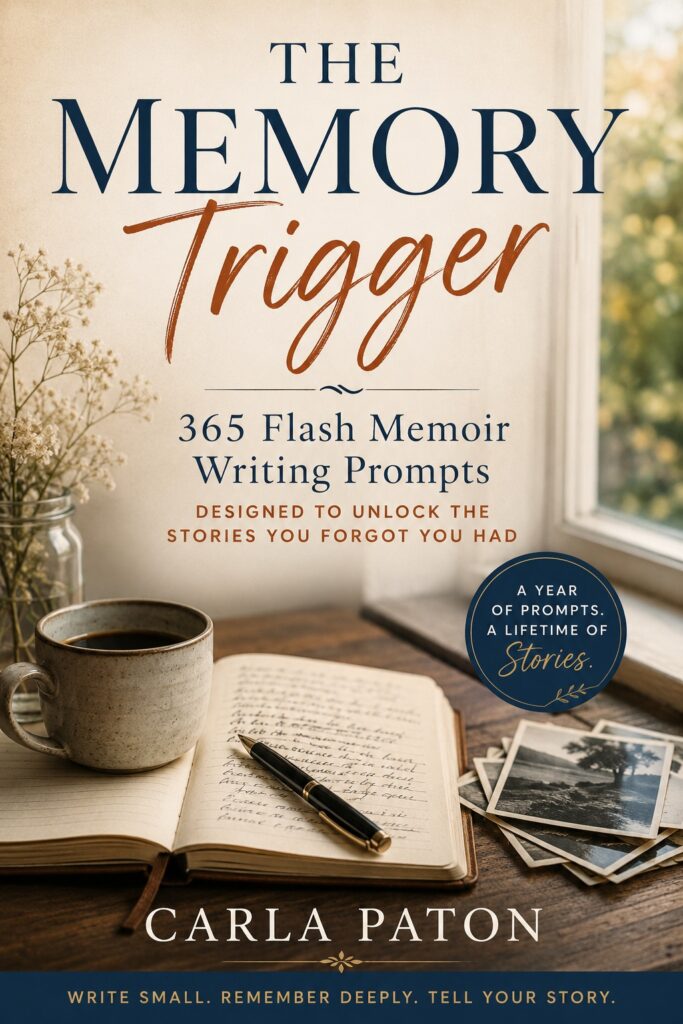
If you want a steady writing practice, keep gathering small memories like this one. Explore all 365 prompts in The Memory Trigger: 365 Flash Memoir Writing Prompts.


Get the Free Close Reading Worksheet Pack
Join my email list and receive the printable worksheet pack you can use with any novel or poem.
No spam. Just helpful guides for reading literature well.












