
Flash Memoir Prompt: Time You Were Proud of a Family Member in a Way You Never Told Them

family memoir prompt

A warm flash memoir prompt for remembering a quiet moment when you felt proud of a family member, even if the words never made it out loud.

You may remember the exact second: your brother standing a little straighter than usual, your grandmother laughing after a hard season, your child trying again after giving up twice. You felt something rise in your chest. Pride, maybe. Relief. Love with nowhere to go.

Then the moment passed. Someone changed the subject. The dishes needed washing. The car pulled away. You never said what you felt.

This flash memoir prompt about a time you were proud of a family member in a way you never told them invites you to return to that small, unfinished moment. It is not about making a speech. It is about noticing what your silence held.

family memoir prompt

The Prompt

Write about a time you were proud of a family member in a way you never told them.

This prompt can unlock a powerful memory because pride is often quiet inside families. We do not always name it. Sometimes we think the other person already knows. Sometimes we feel shy, awkward, or too moved to speak.

A memory like this may be small on the outside. Maybe your cousin walked into a job interview after months of doubt. Maybe your father apologized for something old. Maybe your sister handled a crisis with a calm you had never seen before.

The story begins when you choose one moment and stay close to it. A strong flash memoir does not need to explain your whole family history. It only needs one scene where your feelings became clear.

Why This Memory Matters

Families often carry unspoken stories. We notice each other more than we admit. We watch who keeps trying, who changes, who shows up, who becomes braver in a quiet way.

Writing about pride you never expressed can reveal the difference between what happened and what you felt. On the surface, the memory might look ordinary. Someone cooked dinner, crossed a stage, made a phone call, or stayed calm in a hospital room. Under that surface, you saw effort.

This kind of memory also shows your role as a witness. You may not have been the person at the center of the scene, but you were changed by watching them. That is a real memoir subject.

If you are a student, this prompt can help you practice close observation. You can use some of the same skills you would use to analyze characters in literature: notice action, listen for tone, and pay attention to what a person chooses under pressure.

The focus keyphrase, flash memoir prompt time proud family member way, may sound like a search term, but the heart of the idea is simple. When did someone in your family become larger in your eyes, and why did you keep that feeling to yourself?

How to Approach This Prompt

Begin with a physical detail. Do not start by saying, “I was proud of my mom.” Start with her hands on the steering wheel. Start with the crease in your uncle’s shirt. Start with your daughter’s shoes tapping under the table before she spoke.

A concrete detail gives the memory a doorway. Once you step through it, the emotion can follow without force.

Next, narrow the memory to one scene. Try not to cover five years of struggle before the proud moment. You can hint at the background in a sentence or two, but the main power should come from the scene itself.

Write what you noticed before you explain what it meant. For example, describe how your brother cleared his throat before reading his poem at the school event. Describe how your aunt kept her voice steady while talking to the doctor. Let the reader see what you saw.

If you like to mark up drafts, you might find it useful to annotate your own writing after the first pass. Circle the strongest sensory detail. Underline the sentence where the feeling becomes clear. Then cut anything that explains too much.

One helpful way to begin is with this sentence: “I did not tell them then, but I was proud when…” Finish it quickly, without trying to sound polished. After that, move straight into the scene.

The Flash Memoirist
previous arrow
next arrow

A Quick Example

I did not tell my dad I was proud of him the afternoon he asked my sister for help with his phone. It sounds too small to count, but it did. He stood in the kitchen with his reading glasses low on his nose, holding the phone like it might bite him. For years, he acted like needing help was a kind of weakness. My sister showed him how to pay a bill online, and he listened. He did not snap. He did not joke his way out of feeling foolish. He just nodded and tried again when he hit the wrong button. I watched from the table, pretending to sort mail. What I wanted to say was, “That was hard for you, and you did it anyway.” Instead, I asked if anyone wanted coffee.

Try It Yourself

Set a timer for ten minutes. Choose one family member and one moment when you felt proud of them, even if you never said it. Keep the scene small enough to hold in your hand.

You do not have to make the person perfect. In fact, the memory may feel more honest if the relationship is complicated. Pride can live beside frustration, distance, or old hurt. Let the feeling be mixed if it was mixed.

Use this flash memoir prompt time proud family member way as an invitation to notice what stayed unsaid. You are not writing a thank-you note unless you want to. You are writing a scene that shows what you saw and why it mattered.

When you finish, read the piece once out loud. Listen for the sentence that feels most true. That sentence may be the center of the whole memory.

Want More Flash Memoir Prompts?

If this prompt helped you find a quiet family story, keep going. Short prompts can make daily writing feel more focused and less forced. Explore all 365 prompts in The Memory Trigger: 365 Flash Memoir Writing Prompts.
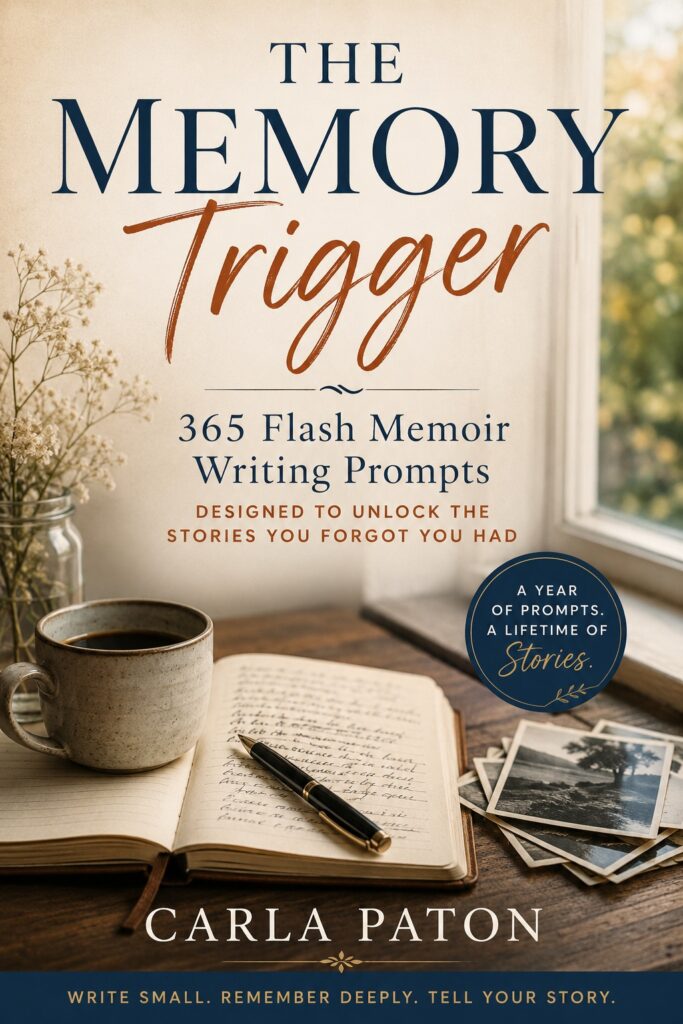

The Memory Trigger

Flash Memoir Prompt: Apology that Never Came

Apology That Never Came

A focused flash memoir prompt for writing about the apology that never arrived, using one sharp memory, one sensory detail, and one honest emotional turn.

You may remember where you were when you realized the apology was not coming. Maybe you checked your phone too many times. Maybe you rehearsed what they might say. Or maybe you felt silly for wanting words that should have been offered freely. This flash memoir prompt apology never came asks you to stay with that moment, not to settle the whole relationship, but to notice what silence felt like in your body.

An apology can become louder by its absence. The missing words may leave behind a scene: a kitchen table, a school hallway, a hospital room, a parking lot after dark. When you write about the apology that never came, you are really writing about expectation, hurt, and the strange work of moving on without a clear ending.

Apology That Never Came

The Prompt

Write about the apology that never came.

This prompt can unlock a meaningful memory because it begins with something unfinished. In flash memoir, unfinished moments often carry the most weight. You do not need to explain every argument or every year that led to it. You only need to find the scene where you understood that no one was going to say, “I’m sorry.”

That is where the story begins to breathe. The silence may show more than a long explanation could. A pause, a turned shoulder, an unread message, or a too-bright smile can reveal the truth of the memory.

Why This Memory Matters

The apology that never came may seem like a story about another person’s failure. It may be that. But it may also become a story about what you learned to carry, what you refused to carry, or how you changed after waiting too long.

This kind of memory often has two timelines. There is the original hurt, and then there is the later realization that repair would not happen in the way you wanted. The second moment can be quieter, but it may matter more. That is when you see yourself clearly.

Maybe you stopped defending them. Maybe you stopped blaming yourself. Or maybe you learned that closure does not always arrive from the person who caused the pain. Sometimes it comes from naming the truth without needing anyone else to agree.

A flash memoir prompt apology never came can help writers practice emotional precision. Instead of writing, “I was hurt,” you can show the untouched cup of coffee across from you, the dress you wore to look calm, or the sound of someone changing the subject. Small details let readers feel the memory without being told how to feel.

If you are a student or a newer writer, this is also a useful way to think about character. Real people are rarely simple villains or saints. If you want to explore that idea more, you might find it helpful to read about how to analyze characters in literature and then apply some of that same curiosity to the people in your own story.

How to Approach This Prompt

Begin with a physical detail. Do not begin with the whole history. Start with the chair, the phone screen, the smell of rain, or the way your hands felt as you waited.

Then narrow the memory to one scene. Choose a moment when the missing apology became clear. Maybe it was after a family dinner, during a school day, after a breakup, or years later when you saw the person again and they acted as if nothing had happened.

Write what you noticed before you explain what it meant. This helps you avoid turning the piece into a summary of blame. For example, instead of starting with, “My friend never took responsibility,” you might begin, “She laughed at someone else’s joke and slid my notebook back across the table without looking at me.”

That kind of opening gives the reader something to see. It also gives you room to discover the emotion instead of forcing it too soon.

If you get stuck, try writing the scene in five slow sentences. In the first sentence, place yourself in the room. In the next, describe one object. Then write what the other person did or did not do. After that, write what you wanted them to say. End with what you understand now.

You can also annotate your own draft the way you might mark a poem or short story. Circle the strongest image. Underline the sentence where the emotion shifts. If that idea helps, this guide on how to annotate literature can give you a simple method for noticing patterns in a text, even when the text is your own memory.

Try not to solve everything in one draft. The power of this prompt often comes from restraint. Let the missing apology remain missing. Let the reader feel the space where it should have been.

The Flash Memoirist
previous arrow
next arrow

A Quick Example

The last time I expected my brother to apologize, we were standing in our mother’s garage beside a stack of boxes marked “kitchen.” He had borrowed money from me the year before and then told everyone I was selfish for asking about it. I had imagined this day so many times that I knew the apology by heart. He would look embarrassed. He would say he had been wrong. Instead, he picked up a lamp, checked the cord, and said, “You want this or not?” The garage smelled like dust and old cardboard. I remember rubbing my thumb along the tape on a box until it peeled back in a thin strip. I said no to the lamp. And I did not say anything about the money. That was the day I stopped waiting.

Try It Yourself

Set a timer for ten minutes and write about the apology that never came. Keep the scene small. Let the room, the weather, or the object in your hand do some of the emotional work.

You do not have to forgive anyone in this piece. You do not have to prove that you were right. Your only job is to tell the truth of one moment as clearly as you can.

If the memory feels too raw, write around the edge of it. Describe the place first. Describe what you did after. You can return to the harder part when you are ready. A flash memoir prompt apology never came can be powerful, but it should still feel safe enough to enter.

Want More Flash Memoir Prompts?

If this prompt helped you find a memory with real emotional weight, you may enjoy having a full year of short writing invitations close by. Explore all 365 prompts in The Memory Trigger: 365 Flash Memoir Writing Prompts.

The Memory Trigger

Flash Memoir Prompt: Family Gathering Where Something Shifted Between You and Another Family Member

Family Gathering Memoir

At a crowded table, a small look can change the whole room. This flash memoir prompt family gathering where something shifted invites you to return to one meal, holiday, reunion, or backyard visit when your place in the family felt different afterward.

Family Gathering Memoir

The Prompt

Write about the family gathering where something shifted between you and another family member.

This prompt works because family gatherings often bring old roles into the open. Someone treats you like a child, even though you have changed. Someone finally sees you clearly. Someone says the one sentence everyone else avoids. The shift may be warm, painful, strange, or quiet.

You do not need to explain your whole family history. In fact, this prompt becomes stronger when you choose one focused memory. A plate being passed. A chair left empty. A hand on your shoulder. A joke that did not feel funny anymore. Small details can carry the emotional truth of a much larger story.

Why This Memory Matters

A family gathering can look ordinary from the outside. People eat, talk, clean up, and leave. Yet inside that ordinary scene, something important may happen. You may realize you no longer want to keep peace at any cost. You may see a parent as human for the first time. You may notice a sibling protecting you, judging you, or asking for forgiveness without using the word.

This kind of memory matters because it often marks a change in how you understand someone. The other person may not have changed at all. The shift may have happened inside you.

That is what makes this flash memoir prompt family gathering where something shifted so useful. It gives you a clear place to begin, but it leaves room for emotional discovery. You can write about a birthday dinner, a funeral lunch, a holiday morning, or a noisy afternoon on a porch. The setting gives the memory a frame. The shift gives it meaning.

If you want to study how people reveal themselves through action, you might find it useful to read about how to analyze characters in literature. Memoir is different from fiction, of course, but the same question can help: What does this person do in the scene that shows who they are to you?

How to Approach This Prompt

Begin with a physical detail from the gathering. Do not start with the lesson. Start with the tablecloth, the smell of baked ham, the folding chairs in the garage, or the way your aunt stirred her coffee long after the sugar had dissolved.

Then narrow the memory to one scene. You may be tempted to explain every argument, every past wound, and every old pattern. Resist that at first. Let the reader stand beside you in one moment before you tell them what it meant.

Try writing the scene in the order you noticed it. What did you see first? What did you hear? What did the family member say or do? What did your body feel before your mind understood the shift?

For example, instead of writing, “That was the day I realized my brother respected me,” you might begin with, “My brother moved his keys off the empty chair and said, ‘Sit here. I saved it for you.’” The meaning can arrive later.

You can also treat the memory like a page you are marking up. Circle the strange detail. Underline the sentence that changed the mood. If that approach helps you slow down, this guide on how to annotate literature may give you a useful way to think about noticing patterns, even in your own memory.

As you write, avoid trying to make the family member all good or all bad. Real shifts are often more complicated. A person can hurt you and still hand you a coat when you are cold. A person can love you and still misunderstand you. Let that tension stay on the page.

The Flash Memoirist
previous arrow
next arrow

A Quick Example

At Thanksgiving, my father sat at the kids’ table because there were too many cousins and not enough chairs. He looked too large there, knees turned sideways, paper plate balanced on one hand. When my uncle started teasing me about quitting law school, I laughed the way I always did, fast and fake. Before I could answer, my father put down his fork. “She doesn’t owe us a performance,” he said. The room went thin and quiet. I stared at the cranberry sauce still shaped like the can. My father did not look at me, and maybe that made it easier. He just picked up his fork again. For years, I thought he wanted me to be impressive. That day, I wondered if he had only wanted me to be free.

Try It Yourself

Set a timer for ten minutes and write the gathering as one scene. Choose one family member and one moment when the air changed between you. Do not worry yet about making it polished.

If you get stuck, begin with this sentence: “I knew something had shifted when…” Then replace the explanation with a concrete detail. What did the person do? What did you say? What did no one else seem to notice?

This flash memoir prompt family gathering where something shifted does not ask you to solve the relationship. It asks you to remember one turning point with honesty. That is enough for a strong first draft.

Want More Flash Memoir Prompts?

If one memory leads to another, keep going. Short prompts can help you build a steady writing practice without needing a full plan for a memoir. Explore all 365 prompts in The Memory Trigger: 365 Flash Memoir Writing Prompts.

The Memory Trigger

Flash Memoir Prompt: Moment You Realized You and a Parent Were More Alike Than You’d Wanted to Admit

memoir prompt parent

You hear your own voice snap across the kitchen, and for one strange second, it sounds exactly like your mother or father. This flash memoir prompt moment realized parent more alike invites you to slow down inside that uneasy recognition and write one honest, focused memory.

memoir prompt parent

The Prompt

Write about the moment you realized you and a parent were more alike than you’d wanted to admit.

This prompt can open a powerful memory because it starts with resistance. Most of us carry at least one sentence inside us: “I’ll never be like that.” Then life gives us a mirror. Maybe it happens while you fold towels the same way your father did. Maybe you hear yourself use your mother’s exact warning tone. Maybe you notice your own stubborn silence at the dinner table.

A flash memoir does not need to explain your whole family history. It only needs one sharp moment where recognition arrives. That small scene can hold surprise, shame, tenderness, humor, or relief.

Why This Memory Matters

Realizing you resemble a parent can feel complicated. If the parent was loving, the likeness may feel sweet. If the relationship was painful, it may feel like something you want to push away. Most memories are somewhere in the middle.

This kind of story often uncovers the space between who you planned to become and who you actually became. You may have spent years trying to be calmer, softer, braver, neater, louder, or freer than a parent. Then one ordinary moment reveals that inheritance is not always dramatic. Sometimes it hides in a sigh, a habit, a look over the top of your glasses.

That is why this flash memoir prompt moment realized parent more alike can be useful for writers. It asks you to look at character, memory, and self-understanding in the same scene. If you enjoy studying how people are shaped by family, you might also like this guide on how to analyze characters in literature. The same skills we use to understand fictional people can help us understand ourselves with more care.

You do not have to decide whether the likeness is good or bad. Try to write the moment before you judge it. Let the reader feel the recognition with you.

How to Approach This Prompt

Begin with a physical detail. Do not start with “My parent and I are alike because…” Start with the thing that showed you. A slammed cabinet. A hand on a hip. A list written in block letters. A joke told too sharply. A quiet drive where neither of you apologized.

Narrow the memory to one scene. Choose one room, one conversation, or one small action. If you try to cover your whole relationship with that parent, the writing may become too broad. Flash memoir works best when it gives the reader a clear place to stand.

Write what you noticed before you explain what it meant. For example, describe your hand tightening around the steering wheel before you write about anger. Describe the silence after your child asked a question before you explain your fear. Let the scene do some of the work.

You might also pay attention to your younger self. What had you promised never to repeat? What bothered you most about that parent when you were a child? The answer may point you toward the right scene.

If you are writing for school or building a personal essay, annotation habits can help too. Mark the details in your draft that carry the most emotion. This simple practice is similar to how to annotate literature, except the text is your own memory.

Keep the ending small. You do not need to forgive, condemn, or solve the whole family pattern. You can end with the sound of your own voice in the room and the strange feeling of knowing where it came from.

The Flash Memoirist
previous arrow
next arrow

A Quick Example

I was helping my son find his missing soccer cleat, and I could feel my patience draining with every closet door he opened. “If you put things where they belong, you wouldn’t have this problem,” I said. The sentence came out clean and hard, like it had been stored in me for years. My father used to say the same thing when I lost library books, mittens, permission slips. I hated how small it made me feel. My son looked down at the floor, and I saw myself at nine years old, searching for something and wishing the adult nearby would just help. I found the cleat under the couch. I handed it to him and said, softer, “Let’s both try to remember next time.”

Try It Yourself

Set a timer for ten minutes and write the scene without stopping. Start with the sound, gesture, phrase, or habit that made you realize the resemblance. Stay close to the moment.

If the memory feels uncomfortable, let it be uncomfortable on the page. You are allowed to write with mixed feelings. You can love a parent and resent a pattern. You can reject a trait and still understand where it came from.

Use this flash memoir prompt moment realized parent more alike as a way to explore inheritance in a small, honest frame. The goal is not to blame yourself or your parent. The goal is to notice something true and give it shape.

Want More Flash Memoir Prompts?

Explore all 365 prompts in The Memory Trigger: 365 Flash Memoir Writing Prompts.

The Memory Trigger

Flash Memoir Prompt: Family Secret You Were Told before You Were Ready to Hold It

flash memoir prompt family secret

A brief, steady writing invitation for exploring the moment a family secret was placed in your hands before you knew what to do with it.

Maybe you were standing in a kitchen while someone rinsed a coffee mug. Maybe you were in the back seat of a car, watching streetlights slide across the window. Or, maybe the secret arrived in a whisper, a warning, or a sentence that sounded casual until you felt your chest tighten.

Being told a family secret too young can change the room around you. One minute you are a child, a teenager, or simply someone who trusts the adults nearby. The next minute, you are holding information with weight. Today’s flash memoir prompt family secret told before ready is about that exact shift.

This is not a prompt about exposing anyone. It is about remembering what it felt like to know something before you had the language, maturity, or safety to understand it.

flash memoir prompt family secret

The Prompt

Write about a family secret you were told before you were ready to hold it.

This prompt can unlock a powerful memory because secrets often come with strange details. You may remember the wallpaper, the smell of dinner, the way someone lowered their voice, or how your own body reacted before your mind caught up.

A flash memoir does not need to explain the whole family history. In fact, it often works better when it stays close to one scene. The moment you were told may reveal more than a long summary ever could.

Why This Memory Matters

A family secret can make you feel older in an instant. It may teach you who was safe, who was complicated, and who carried pain behind ordinary habits.

This kind of memory matters because it often marks a change in how you saw your family. A parent may have become more human. A grandparent may have seemed less like a legend and more like a person with choices. A sibling, aunt, uncle, or cousin may have been pulled into a new light.

You do not have to decide who was right or wrong before you write. Start with what happened inside you. Did you feel proud to be trusted? Angry to be burdened? Confused because the secret explained something you had sensed for years?

When writing about this prompt, pay attention to tone. A secret told in a tired voice feels different from one told with drama or panic. If you want to think more about how emotional atmosphere works on the page, this guide to tone vs. mood in literature may help you shape the scene without overexplaining it.

The flash memoir prompt family secret told before ready asks you to notice the gap between information and readiness. That gap is where the memoir often lives.

The Flash Memoirist
previous arrow
next arrow

How to Approach This Prompt

Begin with one physical detail.

Choose something small and real: a spoon left in a cereal bowl, your aunt’s red nails, the hot vinyl seat of a car, the hum of a refrigerator. Let that detail bring you into the scene before you explain the secret.

Then narrow the memory to the exact moment of being told. Do not try to write the entire family story. You can mention the secret without tracing every cause and consequence. The goal is to show what it felt like to receive it.

You might begin with a sentence like: “She told me while folding towels.” Or: “I remember the screen door banging shut before he said it.” Simple openings leave room for truth.

Write what you noticed first. Maybe the person telling you would not meet your eyes. Maybe they smiled in a way that did not match the words. Or, maybe they said, “You’re old enough to know,” even though you did not feel old enough at all.

After that, let yourself write the emotional truth. You can say, “I did not understand why I felt guilty.” You can say, “I wanted to give the secret back.” Or, you can say, “For years, I thought knowing meant I had to protect everyone.”

If the memory involves people who are hard to understand, it may help to think of them as complex characters rather than simple villains or heroes. This student-friendly guide on how to analyze characters in literature can also help memoir writers notice motives, contradictions, and change.

Be kind to yourself as you write. You can leave names out. You can change identifying details. And you can stop before the memory becomes too much. A flash memoir prompt family secret told before ready should give you a doorway, not push you through it too fast.

A Quick Example

My mother told me in the laundry room, which made it worse somehow. The dryer was thumping with jeans, and the air smelled like warm cotton and bleach. She was matching socks when she said my grandfather had another family before ours. She said it like she was telling me we were out of milk. I remember looking at the basket between us, all those white towels folded into neat squares. I was thirteen. And I wanted to ask if Grandma knew, but my mother shook her head before I spoke. “Don’t bring it up,” she said. After that, every Sunday dinner felt staged. Grandpa passed the rolls. Grandma poured tea. I sat there with a secret in my mouth, afraid it would fall out if anyone made me laugh.

Try It Yourself

Set a timer for ten minutes and write the scene as you remember it. Start with the room, the light, or the object closest to your hands. Let the secret enter the scene when it entered your life.

Do not worry about making the writing polished. You can revise later. For now, focus on the moment your understanding changed.

If the memory feels too sharp, write around it. Describe the weather, the clothes, the sound of the person’s voice. Sometimes the safest way into a difficult memory is through the edges.

When you finish, underline one sentence that feels true. That sentence may become the heart of a longer piece, or it may be enough on its own.

Want More Flash Memoir Prompts?

If this prompt opened a memory you want to keep exploring, you may enjoy a full year of short, focused writing invitations. Explore all 365 prompts in The Memory Trigger: 365 Flash Memoir Writing Prompts.

The Memory Trigger

Flash Memoir Prompt: Way Your Family Handled Someone’s Grief

flash memoir prompt grief

A focused flash memoir prompt about the way your family handled someone’s grief, told through one scene, one sensory detail, and one honest emotional truth.

Maybe you remember the casserole dishes first. Or the way everyone lowered their voices when they stepped into the hallway. Grief often changes the volume of a house before anyone explains what has happened.

This flash memoir prompt way family handled someone’s grief invites you to look at one moment when sadness entered your home, or your extended family, and watch what people did with it. Did they speak openly? Did they make food? Did they avoid the name of the person who was gone? Did someone become practical because feelings felt too large?

You do not have to solve the grief on the page. You only have to notice how your family carried it.

flash memoir prompt grief

The Prompt

Write about the way your family handled someone’s grief.

This prompt can unlock a meaningful memory because grief often reveals family patterns. Some families gather. Some scatter. Some whisper, joke, clean, cook, pray, argue, or pretend they are fine. The story may not be about the loss itself. It may be about the way people acted around the person who was hurting.

For this flash memoir prompt way family handled someone’s grief, try to choose one scene instead of a full history. A kitchen after a funeral. A car ride home from the hospital. A living room where someone kept folding the same blanket. One small scene can hold more truth than a long explanation.

Why This Memory Matters

The way a family responds to grief can tell you what was allowed in that house. Were tears welcome? Was silence respected? Did people reach for comfort, or did they make themselves useful so they would not have to feel helpless?

You might discover that your family showed love in a language you did not understand at the time. Maybe your aunt never said the right words, but she filled the freezer with soup. Maybe your father left the room whenever your grandmother cried, and only years later did you realize he was crying in the garage.

This kind of memory matters because grief often strips family life down to habit. People fall back on what they know. That can be painful, tender, awkward, or even strangely funny. A flash memoir does not need to turn your family into heroes or villains. It can simply show them as people trying to stand near sorrow without knowing exactly how.

If you are thinking about how emotion sits inside a scene, you may find it useful to consider the difference between tone and mood in literature. In memoir, the room may feel heavy, but your adult voice might sound calm, curious, or forgiving. That contrast can make the piece feel more layered.

How to Approach This Prompt

Begin with a physical detail. Do not start by explaining who died, how long the grief lasted, or what everyone believed about loss. Start with what you saw.

Maybe there was a paper plate bending under potato salad. Maybe someone kept rubbing a thumb over a wedding ring. Maybe the TV stayed on with the sound muted because nobody wanted to sit in silence, but nobody wanted noise either.

Once you have the detail, build one scene around it. Where are you? Who is in the room? What does each person do when grief becomes visible? Let action carry the meaning for a while before you name what it meant.

For example, instead of writing, “My family avoided sadness,” you might write, “When my mother started crying, my uncle stood up and asked who wanted coffee.” That single action says a great deal. It also gives the reader space to feel the meaning rather than be told what to think.

Try to avoid telling the whole story at once. You do not need to cover the illness, the funeral, the months after, and every family conflict connected to it. Flash memoir works best when the frame is small. One afternoon can reveal the larger truth.

If you want to shape the memory into a stronger piece later, tools for organizing scenes and evidence can help. The Literary Analysis Essay Toolkit is designed for students, but its focus on close reading can also help writers study their own scenes with care.

The Flash Memoirist
previous arrow
next arrow

A Quick Example

After my grandfather died, my grandmother sat at the kitchen table in her church shoes while everyone moved around her. My mother washed dishes that were already clean. My uncle took out the trash three times. Nobody said Grandpa’s name until my little cousin asked why his chair was empty. The room froze. My grandmother looked at the chair, then at the window above the sink. For a second I thought she had not heard. Then she reached for the sugar bowl and pushed it toward my cousin. “He always took too much,” she said. Everyone laughed softly, even my mother, who had soap up to her wrists. That was how grief entered our family, not as a scream, but as a chair nobody wanted to move.

Try It Yourself

Set a timer for ten minutes and write from the prompt: Write about the way your family handled someone’s grief. Choose one person who was grieving and one scene where your family responded. Stay close to the room. Notice hands, dishes, shoes, light, sound, or silence.

Do not worry about making the memory neat. Grief rarely arrives in a neat form. Your job is to write what happened, then let the emotional truth rise from the details.

If the memory feels heavy, give yourself permission to stop after one page. You can return later. A flash memoir prompt way family handled someone’s grief should help you explore the past with care, not force you to relive more than you are ready to face.

Want More Flash Memoir Prompts?

Explore all 365 prompts in The Memory Trigger: 365 Flash Memoir Writing Prompts. Each prompt is built to help you enter one focused memory and turn it into a short, honest piece of writing.

The Memory Trigger

Flash Memoir Prompt: Family Member Who Saw You Most Clearly

flash memoir prompt family member

At a noisy kitchen table, someone notices you have gone quiet before you even know how to say what is wrong. This flash memoir prompt family member who saw most clearly invites you to write about the person in your family who understood something true about you, even if they never made a speech about it.

flash memoir prompt family member

The Prompt: Flash Memoir Prompt Family Member Who Saw Most Clearly

Write about the family member who saw you most clearly.

This prompt can open a powerful memory because being seen often happens in small ways. It might be a grandmother who knew you hated crowds. A brother who understood your jokes before anyone else did. An aunt who noticed your talent long before you called it a dream.

You do not need to explain your whole relationship with this person. In fact, the best response may come from one narrow scene. Think of a moment when someone in your family recognized who you were, what you needed, or what you were trying to hide.

Why This Memory Matters

Many family stories focus on conflict, tradition, loss, or love. This one asks a quieter question: who noticed you?

That kind of memory can be tender, but it can also be complicated. Maybe the person who saw you clearly was not the person you expected. Maybe they understood one part of you and missed another. Maybe they offered comfort, blunt honesty, or a look across the room that said, “I know.”

When you write about this person, you may uncover the shape of your younger self. You may remember what you wanted others to know about you. You may also see how much it mattered when one person paid attention.

This prompt is especially useful because it helps you write from evidence instead of summary. Rather than saying, “My uncle understood me,” you can show him leaving a library book on your bed. Rather than saying, “My sister knew I was scared,” you can show her sliding into the seat beside you without asking questions.

If you enjoy looking closely at people, this kind of memoir work has something in common with learning how to analyze characters in literature. The goal is to notice action, speech, silence, and detail. A real person, like a character on the page, becomes clearer through what they do.

How to Approach This Prompt

Begin with a physical detail. Do not start with the meaning. Start with the room, the weather, the smell of dinner, the sound of a screen door, or the way your family member stood with one hand on the counter.

Then place yourself in one scene. Choose one moment when this person seemed to understand you better than others did. Keep the memory small enough to hold in your hand.

You might ask yourself:

What did they notice about me that others missed?

What did they say, or choose not to say?

How did my body feel when I realized they understood?

Try to write what happened before you explain what it meant. Let the reader see the gesture first. The meaning can arrive later, often in the final few lines.

For example, you might write about your father quietly fixing the strap on your backpack before the first day at a new school. You might write about your cousin laughing at the strange drawing in your notebook and asking to see more. You might write about your mother knowing you were pretending to like a sport and handing you a sketchpad instead.

A good flash memoir does not need a grand ending. It needs a clear moment. If you are used to marking up books for clues, you can use a similar habit here. Notice the details you would underline if this scene appeared in a story. If that helps, these tips on how to annotate literature can also remind you how much meaning can live in a small phrase or image.

As you write, avoid trying to prove that this person always saw you clearly. People are rarely that simple. Instead, write one true memory. Let it stand on its own.

The Flash Memoirist
previous arrow
next arrow

A Quick Example

My grandfather never asked why I brought a book to every family party. Everyone else teased me for reading beside the cooler while cousins played tag in the yard. He just lowered himself into the lawn chair next to mine and handed me a paper plate with a hot dog on it. “Good spot,” he said, looking toward the maple tree that gave the best shade. Later, when my aunt called me antisocial, he tapped the cover of my book with one finger. “She’s listening,” he said. “Just differently.” I remember the mustard on my thumb, the grass stuck to my sandals, and the relief of not having to defend myself. He did not make me louder. He made quiet feel allowed.

Try It Yourself

Set a timer for ten minutes and write about the family member who saw you most clearly. If the memory feels too big, shrink it. Start with where you were sitting. Start with the sound of their voice. Start with the thing they noticed before anyone else did.

You can write this as a tribute, a question, or even a complicated memory. The person may still be in your life, or they may be gone. They may have seen the artist, the worrier, the reader, the caretaker, the rebel, or the child who needed a little more room.

Return to this flash memoir prompt family member who saw most clearly whenever you want to write about recognition without turning it into a speech. Let one scene carry the feeling.

Want More Flash Memoir Prompts?

If this prompt opened a memory, keep going. A daily prompt can help you build a steady writing habit without needing a large plan first. Explore all 365 prompts in The Memory Trigger: 365 Flash Memoir Writing Prompts.

The Memory Trigger

Flash Memoir Prompt: Moment when Your Family Surprised You by Being Exactly What You Needed

flash memoir prompt family surprise

A focused writing invitation for remembering the moment your family became exactly the help, comfort, or steady presence you did not know how to ask for. Maybe you expected a lecture. Maybe you expected silence. Maybe you expected your family to miss the point, tease you, or make the whole thing louder than it already felt. Then, somehow, they did the right thing. They brought the blanket, made the call, sat beside you, changed the subject, or simply stayed. This flash memoir prompt about a moment family surprised you by being what you needed asks you to look closely at that small shift.

flash memoir prompt family surprise

The Prompt

Write about a moment when your family surprised you by being exactly what you needed.

This prompt can open a memory that may look ordinary from the outside. A ride home. A quiet dinner. A hand on your shoulder. A sibling who did not joke for once. A parent who did not ask questions. Flash memoir works well when the moment is small enough to hold in one scene, yet charged with feeling.

The focus is not proving that your family was perfect. It is noticing one time when the people around you met the moment better than you expected. That kind of memory often carries both surprise and relief.

Why This Memory Matters

Family stories can get stuck in old patterns. We remember who always talks too much, who avoids hard topics, who fixes things, who disappears, and who thinks food can solve everything. Those patterns may be true, but they are not the whole story.

This prompt invites you to write about a break in the pattern. Maybe your loud family went quiet because you needed peace. Maybe your practical father cried with you instead of offering advice. Maybe your sister, who usually competed with you, defended you without being asked.

That surprise matters because it shows change, tenderness, and complexity. In literature, we often pay attention to character shifts because they reveal what someone values under pressure. The same idea can help in memoir. If you want more practice noticing those changes, this guide on how to analyze characters in literature can also help you observe real people with more care.

A flash memoir prompt moment family surprised by being present at the right time may uncover a story about illness, grief, embarrassment, fear, or a day when you felt unseen. It may also uncover humor. Some families show love in strange ways. A burned casserole, an awkward pep talk, or a badly wrapped gift can still become the exact thing you needed.

The Flash Memoirist
previous arrow
next arrow

How to Approach This Prompt

Begin with the physical detail that proves you were inside the moment. Do not start with the lesson. Start with the chair, the kitchen light, the sound of tires on wet pavement, the smell of coffee, or the way your brother kept tapping his foot because he did not know what to say.

Then narrow the memory to one scene. You do not need to explain your whole family history. Let the reader understand the pattern through what happens in that moment. If your mother usually gave advice, show the moment she stayed quiet. If your cousins usually joked, show the moment they carried your boxes without making fun of you.

Write what you noticed before you explain what it meant. For example, you might write, “My father put my favorite mug beside me and left the room,” before you write, “That was how I knew he understood.” The detail gives the feeling room to rise on its own.

It can also help to make quick notes before drafting. Mark the moment when your expectation changed. What did you think would happen? What actually happened? What did your body do when you realized they had helped? If you like breaking a text into small clues, the same habit used to annotate literature can help you mark your own memory for meaning.

Try not to polish the family into saints. The power of this flash memoir prompt moment family surprised by being exactly enough comes from honesty. They may have been clumsy. They may have said the wrong thing first. The surprise may be that, after all that, they still showed up.

A Quick Example

I called my older brother from the grocery store parking lot because I had failed my driving test. Again. I expected him to laugh. He had passed on the first try and had never let me forget it. Instead, he said, “Stay there.” Fifteen minutes later, his truck pulled in beside my mother’s car. He handed me a cherry slushie and took the passenger seat. “Show me the route,” he said. For an hour, he let me drive around the empty streets behind the high school. He did not sing, tease, or grab the door handle. When I made a wide turn, he only said, “Try that one again.” By the time we pulled back into the parking lot, the ice in my cup had melted, but my hands had stopped shaking.

Try It Yourself

Set a timer for ten minutes and write one scene from this prompt. Keep your attention on what happened in the room, car, hallway, yard, or kitchen. Let the meaning arrive after the action.

If you get stuck, write this sentence and continue from there: “I thought they would _____, but instead they _____.” That contrast can lead you straight into the memory. You may find that the real story is not about dramatic rescue. It may be about being known in a quiet, specific way.

This flash memoir prompt moment family surprised by being what you needed can be tender, funny, or bittersweet. Trust the version that feels true. A short piece does not need a perfect ending. It only needs one honest turn.

Want More Flash Memoir Prompts?

If this prompt helped you remember one surprising family moment, keep going. Small memories often lead to deeper ones when you give them time and attention. Explore all 365 prompts in The Memory Trigger: 365 Flash Memoir Writing Prompts.

The Memory Trigger

Flash Memoir Prompt: Argument You Witnessed Between Adults in Your Family as a Child

flash memoir prompt argument

A focused writing invitation for remembering an argument you witnessed between adults in your family as a child, through one clear scene, one sharp detail, and the emotions you were too young to name.

The room may have changed before anyone raised a voice. Maybe a fork stopped halfway to someone’s mouth. Maybe a door shut too hard. Maybe you were sitting on the carpet, pretending to watch TV while every part of you listened.

This flash memoir prompt about an argument witnessed between adults in your family asks you to return to a moment when childhood met adult conflict. You do not have to solve the argument. You do not have to judge anyone. You only have to remember what it felt like to be there.

flash memoir prompt argument

The Prompt

Write about an argument you witnessed between adults in your family as a child.

This prompt can unlock a powerful flash memoir because children often notice what adults think they are hiding. You may remember the sound of a voice, the smell of dinner burning, or the way someone looked away instead of answering.

A memory like this does not need a full family history behind it. In fact, it may work better if you stay with one moment. A flash memoir prompt about an argument witnessed between adults in your family becomes strongest when it focuses on what the child saw, heard, and misunderstood.

Why This Memory Matters

Family arguments can mark a child’s understanding of safety, loyalty, silence, and power. Even if the argument was ordinary to the adults, it may have felt huge to you. Children often measure danger by tone, posture, and what happens after the shouting stops.

This kind of memoir does not have to accuse anyone. It can simply tell the truth of a child’s view. Maybe you thought the argument was your fault. Maybe you learned which parent to avoid. Maybe you discovered that adults could be scared too.

Writing this scene may also show how your younger self made meaning from limited information. That gap between what happened and what you understood is often where the deepest memoir writing lives.

If you are practicing close observation, the same skill you might use to analyze characters in literature can help here. Notice action before explanation. What did each person do with their hands? Who moved closer? Who left the room? Those details can reveal more than a summary ever could.

How to Approach This Prompt

Begin with a physical detail. Choose one object, sound, or movement from the scene. It might be a cracked plate, a buzzing kitchen light, a suitcase by the door, or your own knees pulled under your chin.

Then narrow the memory to one scene. Do not try to explain every argument your family ever had. Stay inside a short stretch of time. Let the reader stand where you stood.

You might write the first draft in present tense, as if the child is living it now. For example: “I am under the dining room table. My father’s shoes are beside my mother’s bare feet.” This can help you stay close to the original feeling.

Write what you noticed before you explain what it meant. A child may not understand divorce, money trouble, jealousy, grief, or stress. The child may only know that someone’s voice has changed. Let that limited understanding guide the piece.

If you feel stuck, make a quick note map before drafting. Write down where you were, who was there, what you heard, and what you did with your body. This is close to the way readers annotate literature, except you are marking your own memory instead of a page.

Try not to rush toward the lesson. The emotional truth may be small. Maybe the scene explains why you dislike closed doors. Maybe it shows the first time you realized adults could say things they could not take back.

The Flash Memoirist
previous arrow
next arrow

A Quick Example

I was nine, sitting on the stairs with my spelling book open on my lap. The word was “separate,” and I kept writing the second “a” too close to the “r.” In the kitchen, my aunt said my mother’s name like it was something breakable. Then my grandfather slapped his palm on the table, and all the glasses jumped. No one knew I was there, or maybe they did and decided I was too small to count. I remember the smell of onions in the pan and my mother’s voice getting very quiet. That scared me more than the shouting. When my uncle came into the hall, he smiled at me like nothing had happened. I looked back at my paper and wrote “separate” five more times.

Try It Yourself

Give yourself ten minutes with this prompt. Start with the room, not the reason. Let the memory stay partial if that is how it comes back to you.

You may choose to write from the child’s point of view first, then add one or two lines from your adult self at the end. That contrast can create depth without forcing a neat conclusion.

A flash memoir prompt about an argument witnessed between adults in your family can bring up strong feelings, so write at a pace that feels safe. You can change names, skip details, or stop after one paragraph. The goal is not to expose everything. The goal is to catch one honest moment on the page.

Want More Flash Memoir Prompts?

If this prompt helped you find a memory worth exploring, keep going with short, focused pieces. Explore all 365 prompts in The Memory Trigger: 365 Flash Memoir Writing Prompts.

The Memory Trigger

Flash Memoir Prompt: Parent Who Was Harder to Reach

flash memoir prompt parent

A tender flash memoir prompt about the parent who felt harder to reach, told through one small scene, one telling detail, and the truth you could not say then.

Maybe you knew exactly which parent would laugh at your joke, sign your permission slip, or ask about your day. And maybe the other one felt like a locked room. You could see them. You could hear them moving through the house. Still, there was a distance you did not know how to cross.

This flash memoir prompt about the parent who was harder to reach asks you to enter that distance with care. You do not have to judge the parent. You do not have to excuse them either. Your job is smaller and more honest: choose one moment when you felt the space between you.

That moment might be quiet. A car ride. A kitchen table. A phone call that ended too soon. A birthday where you waited for the right words and got practical advice instead.

When you write from one scene, the memory can breathe. You can show what it felt like before you try to explain what it meant.

flash memoir prompt parent

The Prompt

Write about the parent who was harder to reach.

This prompt can unlock a meaningful memory because it points toward a relationship shaped by distance, silence, timing, or fear. The parent may have been loving but closed off. They may have been busy, strict, wounded, distracted, or simply difficult to understand.

A strong flash memoir does not need the whole history. It needs one sharp moment. Think of a time you tried to get close, ask a question, share news, or be noticed. What happened in the room? What did your parent do with their hands? What did you decide to stop asking?

If you are using this as a flash memoir prompt parent who harder reach writing exercise, let the scene stay small. The smaller the scene, the more room there is for emotional truth.

Why This Memory Matters

The parent who was harder to reach often becomes a central figure in memory because distance leaves questions behind. Children notice more than adults think. They notice footsteps, moods, silences, favorite chairs, closed doors, and half-answers.

This kind of memoir piece may uncover a story about wanting approval. It may reveal what you learned to hide. It may show how you became funny, careful, quiet, helpful, or independent because one parent felt out of emotional range.

You might discover that the parent was not cold in every way. Maybe they fixed your bike but never said they were proud. Maybe they worked long hours and came home too tired for softness. Maybe they showed love through food, repairs, or rules, while you kept waiting for words.

Writing this memory can also help you see the parent as a person, not just a role. If you want to think more deeply about how people are shaped on the page, this guide on how to analyze characters in literature can help you notice motive, action, and contradiction. Those same tools can be useful in memoir, especially when writing about family.

The goal is not to solve the relationship in one page. The goal is to tell the truth of one moment as you experienced it then, with the understanding you have now.

The Flash Memoirist
previous arrow
next arrow

How to Approach This Prompt

Begin with a physical detail. Choose something you can see, hear, touch, or smell. Your father’s work boots by the door. Your mother’s coffee gone cold. A newspaper lifted like a wall. A hand on the steering wheel. A bedroom door closed almost all the way.

Once you have that detail, narrow the memory to one scene. Do not begin with “My mother was always distant” or “My father and I never really talked.” Those sentences may be true, but they explain too much too soon.

Try starting with what happened first:

“My father sat in the truck with the engine off.”

“My mother kept folding the same towel.”

“I stood in the hallway holding my report card.”

After that, write what you noticed before you write what it meant. Let the reader stand beside you in the memory. Let us hear the chair scrape, see the light under the door, or feel the pause after your question.

You can also use simple margin notes before drafting. Circle the detail that feels most alive. Underline the sentence where the emotion shifts. If that kind of close attention helps you, this student-friendly guide on how to annotate literature offers useful habits you can borrow for your own memories.

Most of all, avoid trying to tell the whole story at once. A flash memoir prompt parent who harder reach piece works best when it trusts one memory to suggest the larger pattern.

A Quick Example

I was twelve when I learned my father liked butterscotch candy. Not from him. From the glass bowl on his dresser, where the wrappers collected like tiny gold leaves. On Saturdays, he polished his shoes while I sat on the floor and pretended to read. I was waiting for him to ask about my science fair, my new friend, anything. He tapped the shoe brush against the heel, slow and steady. “Hand me that cloth,” he said. I passed it over like an offering. Our fingers barely touched. Later, at the store, I bought a roll of butterscotch with my allowance and kept it in my desk. I thought if I liked what he liked, some door might open. It didn’t. But for years, that candy tasted like trying.

Try It Yourself

Set a timer for ten minutes and write one scene about the parent who was harder to reach. Do not worry about making the parent good, bad, loving, or unfair. Let the memory show what was complicated.

Start with the room. Then bring in the parent. Then bring in yourself, wanting something. Maybe you wanted a hug. Maybe you wanted an answer. Maybe you wanted them to look up.

If the memory feels tender, go slowly. You can write around the hardest part before you write directly into it. You can stop at one image if that is all you have today.

This flash memoir prompt parent who harder reach exercise is not asking for a perfect conclusion. It is asking for a true glimpse. Sometimes one small scene can say what a whole childhood could not explain.

Want More Flash Memoir Prompts?

If this prompt opened a memory, keep going while the door is still cracked. Short prompts can help you build a steady writing practice without needing a full chapter plan. Explore all 365 prompts in The Memory Trigger: 365 Flash Memoir Writing Prompts.

The Memory Trigger
error

Enjoy this article? Please spread the word :)

Follow by Email
BLUESKY
fb-share-icon
Reddit
LinkedIn
Share
RSS