Themes in The Joy Luck Club: A Student-Friendly Guide

The Joy Luck Club themes

A clear guide to the major ideas, conflicts, and meanings students should notice in The Joy Luck Club.

Understanding the themes in The Joy Luck Club helps you see why Amy Tan’s novel feels personal and powerful. The book is not only about mothers and daughters, but also about memory, culture, pain, and love.

This guide explains the main ideas in simple terms so you can use them in class discussion, AP Literature writing, or a college essay.

In this Guide

  • Why the themes matter
  • Family and generational conflict
  • Identity and belonging
  • Language and storytelling
  • Memory, trauma, and silence
  • Gender, power, and voice
  • How to write about the themes
  • FAQ
The Joy Luck Club themes

Why Themes in The Joy Luck Club Matter

The novel uses personal stories to explore large questions about family, culture, and selfhood.

The Joy Luck Club is built from linked stories. Four Chinese immigrant mothers and their American-born daughters each carry different hopes and fears.

The themes in The Joy Luck Club come from these gaps between people who love each other but often misunderstand each other. The mothers know the pain of their past. The daughters often feel judged by lessons they do not fully understand.

This is why the book fits so well in high school and college classes. It shows how private family moments can reveal deep social and cultural conflicts.

For author background, you can review Britannica’s overview of Amy Tan.

Family and Generational Conflict: Core Themes in The Joy Luck Club

Much of the novel’s tension comes from love that feels like pressure.

One of the most important themes in The Joy Luck Club is the conflict between mothers and daughters. The mothers want to protect their daughters from pain. The daughters want room to define themselves.

June thinks her mother, Suyuan, expects too much from her. Waverly feels trapped by Lindo’s pride and criticism. Rose struggles to make choices because she has learned to doubt her own voice.

These conflicts are not simple fights. They come from different life experiences. The mothers survived war, loss, forced marriage, and strict gender roles. Their daughters grow up in America, where they are told to seek independence.

A strong theme statement might say: Tan shows that family love can become painful when parents and children do not share the same language of care.

This theme is common in literature. In Romeo and Juliet, family expectations shape personal choices. In Tan’s novel, the conflict is quieter, but the emotional stakes are just as real.

From Idea to Novel Blueprint

Identity and Belonging: Themes in The Joy Luck Club

The daughters often feel caught between the culture they inherit and the culture they live in each day.

Identity is one of the richest themes in The Joy Luck Club. The daughters are Chinese American, but they do not always know what that means. They may resist their mothers’ traditions, yet they also feel that something is missing when they ignore them.

June’s trip to China near the end of the novel is a key moment. She worries that she is not Chinese enough. Yet the trip helps her understand that identity is not only about language, food, or place.

Identity also comes through family memory. When June meets her half-sisters, she sees that her mother’s story did not end with loss. She becomes part of that story.

Tan avoids an easy answer. Belonging is not a single choice between China and America. It is a process of learning what has shaped you.

This theme connects with works like The House on Mango Street by Sandra Cisneros, where a young narrator also tries to understand home, heritage, and selfhood.

Language and Storytelling

In the novel, stories become a way to pass down truth when direct speech fails.

Many conflicts in the book happen because mothers and daughters do not understand each other’s words or meanings. The mothers may speak in warnings, images, or family stories. The daughters may hear only criticism.

Storytelling gives the mothers power. They use stories to explain what happened to them, but also to teach survival. Lindo’s story of her arranged marriage shows wit and strength. An-mei’s memories of her mother reveal the cost of silence.

These stories also change the daughters. They learn that their mothers are not only strict parents. They are women with deep wounds, clever plans, and lost dreams.

Among the themes in The Joy Luck Club, this one matters because the novel itself acts like a memory box. Each section adds another voice. Together, the voices create a fuller truth.

If you want help linking voice to character choices, see our guide on how to analyze characters in literature.

Memory, Trauma, and Silence

The past does not stay in the past in Tan’s novel.

Several mothers carry memories that they cannot share easily. Suyuan loses her twin daughters during war. Ying-ying suffers in a marriage that steals her sense of self. An-mei learns that women can be harmed by the rules of their society.

These memories shape how the mothers raise their daughters. Sometimes they become protective. Sometimes they become harsh. Often, they do both at once.

Silence is just as important as speech. When painful stories stay hidden, daughters can only guess why their mothers act as they do. This creates distance.

The novel suggests that healing begins when stories are finally told. June does not fully know her mother until after Suyuan dies. That loss makes the final reunion with her sisters even more moving.

This theme is also central in Toni Morrison’s Beloved, where memory and trauma shape family life. Both novels show that buried pain can still guide the present.

Gender, Power, and Voice

Tan shows how women fight for power in worlds that often deny it to them.

The mothers grow up in settings where women have limited control over marriage, family duty, and social status. Their lives teach them that survival often requires strategy.

Lindo learns to escape a forced marriage without open rebellion. An-mei learns the danger of a world that treats women as weak or disposable. Ying-ying must recover a voice she once lost.

The daughters face different limits. They live in America, but they still struggle with self-doubt, unfair expectations, and painful relationships. Rose, for example, must learn to speak for herself in her marriage.

These themes in The Joy Luck Club show that voice is not just speech. Voice means choice. It means the right to name your own pain and your own future.

Fate, Choice, and Personal Strength

The novel often asks whether people are trapped by the past or able to change their lives.

The mothers sometimes speak as if fate has power. They believe in signs, luck, and hidden forces. Yet their stories also show bold choices.

Suyuan creates the Joy Luck Club during a time of fear. That act matters. It turns despair into community and gives women a way to hold on to hope.

Waverly’s chess talent also connects to this theme. Her success depends on skill, but it also depends on confidence and a sense of inner force.

Tan does not reject fate fully. Instead, she shows that people live inside limits but can still act with courage.

How to Write About Themes in The Joy Luck Club

A good essay does more than name a topic. It explains what the novel says about that topic.

Start by turning a topic into a theme statement. Do not write, family is a theme. Write something like: Tan suggests that family love can wound when it is shaped by fear and silence.

Then connect the theme to a character conflict. June and Suyuan work well for this because their relationship changes how readers understand love, expectation, and regret.

You can also focus on structure. The novel’s many voices show that no single character owns the whole truth. This is a strong point for AP Literature essays.

When you discuss themes in The Joy Luck Club, use short quoted phrases if your teacher allows text evidence. Then explain how the detail reveals a larger meaning.

For deeper essay work, our guide to character analysis in literature can help you connect theme, conflict, and motive.

If you want a quick review tool before a test, our student literature study guide pack can support your notes and essay planning.

Helpful Background for Students

A little context can help, but the best analysis still begins with the text.

Amy Tan published The Joy Luck Club in 1989. The novel draws on Chinese American family life, immigration, and mother-daughter bonds, though it is a work of fiction.

For more classroom context, the NEA Big Read page on The Joy Luck Club offers useful background.

These books pair well with Tan’s novel for class projects or further reading.

  • The Bonesetter’s Daughter by Amy Tan
  • The Woman Warrior by Maxine Hong Kingston

FAQ: Themes in The Joy Luck Club

These quick answers can help you review before a quiz, seminar, or essay.

What are the main themes in The Joy Luck Club?

The main themes in The Joy Luck Club include mother-daughter conflict, identity, memory, storytelling, gender, and the search for voice.

What is the most important theme in the novel?

The most important theme is often seen as the struggle between mothers and daughters. Tan shows that love can be hard to understand across culture and age.

How does Amy Tan show identity?

Tan shows identity through family stories, cultural tension, and June’s journey to understand her mother’s past.

Why is storytelling important in the book?

Storytelling helps the mothers share pain, wisdom, and history. It also helps the daughters see their mothers as full people.

Key Takeaway

The lasting themes in The Joy Luck Club show that family stories can hurt, heal, and shape who we become. Tan’s novel asks readers to listen closely, especially when love is hidden inside conflict.
How to Write a Things Fall Apart Literary Analysis Essay

Things Fall Apart literary analysis

A Things Fall Apart literary analysis essay asks you to explain how Chinua Achebe builds meaning through character, conflict, culture, and style. This guide will help you choose a strong angle, write a clear thesis, and use evidence with purpose.

In this Guide

  • Why this essay is different from a plot summary
  • How to choose a focused topic
  • Thesis statement examples
  • Essay structure and paragraph planning
  • Evidence ideas from the novel
  • Common mistakes to avoid
  • Recommended books
  • FAQ
Things Fall Apart literary analysis

Why a Things Fall Apart literary analysis essay is different

Your job is not to retell the story.

A Things Fall Apart literary analysis essay should explain how the novel works. You study Achebe’s choices, such as point of view, proverbs, conflict, irony, and character change.

Plot summary says Okonkwo fears weakness. Analysis asks why that fear matters and how it shapes the tragic path of the novel.

This is similar to writing about Macbeth. You would not just say Macbeth wants power. You would explain how ambition, prophecy, and fear lead him toward ruin.

For background on the novel, you can review this Britannica overview of Things Fall Apart.

How to choose a topic for your Things Fall Apart literary analysis essay

A good topic should be narrow enough to prove in a few pages.

The best Things Fall Apart literary analysis essay topics focus on one clear pattern. Do not try to cover the whole novel at once.

Strong topic ideas include:

  • Okonkwo’s fear of weakness and his tragic choices
  • Proverbs as a way to show Igbo values
  • The clash between individual pride and community law
  • The arrival of missionaries and the loss of cultural control
  • The novel’s final paragraph and the power of narration
  • Masculinity, violence, and public honor

If you feel stuck, start with a question. For example: How does Achebe show that Okonkwo is both respected and deeply flawed?

Thesis examples for a Things Fall Apart literary analysis essay

A thesis should make a claim that someone could debate.

A weak thesis says, Okonkwo is an important character in the novel. That is true, but it does not give your essay a direction.

Use these thesis statement examples as models for your own Things Fall Apart literary analysis essay:

  • Thesis example 1: In Things Fall Apart, Achebe presents Okonkwo as a tragic figure whose fear of weakness turns cultural pride into personal damage.
  • Thesis example 2: Achebe uses proverbs to show that Igbo society has deep moral order, which challenges the colonial view of Africa as uncivilized.
  • Thesis example 3: The novel’s final shift in perspective reveals how colonial power reduces a complex culture into a simple story for outsiders.
  • Thesis example 4: Through Okonkwo’s exile, Achebe shows that survival requires flexibility, not only strength.

Each thesis names a literary idea and points toward evidence. That is the heart of a strong essay.

How to structure a Things Fall Apart literary analysis essay

A clear structure helps your reader follow your argument.

A Things Fall Apart literary analysis essay usually works best with an introduction, body paragraphs, and a short conclusion. Each body paragraph should prove one part of the thesis.

A simple body paragraph plan looks like this:

  • Topic sentence: Make one clear claim.
  • Context: Explain what is happening in the scene.
  • Evidence: Use a short quotation or exact moment.
  • Analysis: Explain how the evidence proves your point.
  • Link back: Connect the paragraph to your thesis.

If you want a full guide to the basics, read our step-by-step literary analysis essay guide.

For a faster writing process, the Literary Analysis Essay Toolkit gives you thesis frames, paragraph templates, and planning pages you can use before you draft.

Evidence tips for a Things Fall Apart literary analysis essay

Good evidence is not always the longest quote.

In a Things Fall Apart literary analysis essay, your best evidence often comes from key scenes. Choose moments that reveal a pattern in character or theme.

Useful scenes include:

  • Okonkwo’s treatment of Nwoye
  • The killing of Ikemefuna
  • Okonkwo’s exile in Mbanta
  • The arrival of the missionaries
  • The final paragraph about the District Commissioner

Do not drop a quote into the paragraph and move on. Explain word choice, tone, or contrast.

For example, if you use the final paragraph, focus on how the District Commissioner plans to turn a full human life into a small detail. That scene shows how colonial control also works through storytelling.

Common mistakes to avoid

Small writing choices can weaken a strong idea.

One common mistake is writing a summary instead of an argument. If most of your paragraph explains what happened, add more analysis.

Another mistake is treating Igbo culture as simple. Achebe shows a society with rules, debates, art, religion, and flaws.

A third mistake is making Okonkwo either hero or villain. A stronger essay shows how he can be brave and destructive at the same time.

Watch for vague claims. Words like important or interesting need a sharper point.

These books can help you build context before you write.

  • Things Fall Apart by Chinua Achebe
  • Chinua Achebe’s Things Fall Apart: A Casebook, edited by Isidore Okpewho

You can look for these through your school library, local library, or major book retailers.

FAQ: Things Fall Apart literary analysis essay

What is a good topic for a Things Fall Apart literary analysis essay?

A strong topic focuses on one idea, such as Okonkwo’s fear, proverbs, colonial power, or the novel’s ending.

What should my thesis include?

Your thesis should name the author, the literary focus, and the main meaning you plan to prove.

Can I write about Okonkwo as a tragic hero?

Yes. That can work well if you explain how his flaw leads to his downfall and affects the community around him.

How many quotes should I use?

Use enough evidence to support each body paragraph. One strong quote with careful analysis is better than several weak ones.

Should I include historical context?

Yes, but keep it tied to your argument. Context should support your analysis, not replace it.

Key Takeaway

A strong Things Fall Apart literary analysis essay does more than explain the plot. It shows how Achebe uses character, culture, and narration to reveal what happens when a world is forced to change.

Themes in Things Fall Apart: A Student-Friendly Guide

Things Fall Apart themes

A clear guide to the major ideas, conflicts, and meanings students should notice in Things Fall Apart.

The themes in Things Fall Apart help students see why Chinua Achebe’s novel still matters in English classes today. The book explores culture, power, pride, family, and loss through the fall of one man and the shock faced by a whole community.

This guide breaks down the major ideas in simple terms, with examples you can use for essays, class talks, or AP Literature prep.

In this Guide

Use these sections to trace the novel’s biggest ideas with more confidence.

  • Why the themes matter
  • Tradition and change
  • Masculinity and pride
  • Fate and personal choice
  • Family and community
  • Religion and colonial power
  • Language and storytelling
  • Tragedy and meaning
  • FAQ
Things Fall Apart themes

Why the themes in Things Fall Apart matter

Achebe writes about one village, but his ideas reach far beyond Umuofia.

When students study the themes in Things Fall Apart, they should look for tension. Almost every major idea in the novel comes from conflict between old ways and new forces, personal pride and social duty, or strength and fear.

The novel is also a response to how African cultures were often shown in European writing. Achebe gives Igbo life depth, order, beauty, and conflict. That makes the book both a story and a correction.

If you need a broader method for finding theme in any text, this guide on how to identify theme in literature can help.

Major themes in Things Fall Apart: tradition and change

One central theme is the struggle between a stable culture and rapid change.

Umuofia has customs that shape daily life. Marriage, farming, titles, festivals, justice, and religion all follow shared rules. These systems give people a sense of order.

Yet Achebe does not present tradition as perfect. Some customs protect the group, while others cause pain. The killing of Ikemefuna is one clear example. The community treats the act as tradition, but the emotional cost is severe.

Among the themes in Things Fall Apart, tradition and change may be the easiest to track. Watch how characters react when missionaries arrive. Some resist them, while others see them as a path toward dignity or safety.

This conflict is not simple. Achebe shows that change can bring both harm and hope, depending on who controls it.

Core themes in Things Fall Apart about masculinity and pride

Okonkwo’s idea of manhood shapes many of his choices.

Okonkwo fears weakness because he links it to his father, Unoka. To avoid being like him, Okonkwo becomes harsh, violent, and proud. He believes a man must show strength at all times.

Of all the themes in Things Fall Apart, masculinity is one of the most personal. Okonkwo’s strength helps him rise in Umuofia, but his fear of shame traps him.

He beats his wives, rejects tenderness, and takes part in Ikemefuna’s death because he does not want others to see him as weak. His public image matters more to him than his private conscience.

This theme connects well to Shakespeare’s Macbeth. Macbeth also lets pride and a narrow idea of courage push him toward ruin. Both men confuse power with wisdom.

Fate, personal choice, and tragic downfall

The novel asks whether Okonkwo falls because of destiny, society, or his own flaws.

Okonkwo is not unlucky in a simple way. He makes choices. Still, his world also places heavy pressure on him. His culture values titles, honor, courage, and public respect.

His exile after the accidental killing of Ezeudu’s son shows how quickly status can break. Even though the act is not planned, the punishment changes his life.

This gives the novel a tragic shape. Like many tragic heroes, Okonkwo has real greatness and a deep flaw. His flaw is not strength itself, but the fear that makes his strength rigid.

Students can write about this as a conflict between **free will and social pressure**. Okonkwo acts, but he acts inside a world with strict codes.

Family, community, and belonging

Achebe shows that identity comes from family ties and public life.

In Umuofia, the individual is never just an individual. A person belongs to a household, a clan, a lineage, and a set of shared beliefs.

Family life in the novel can be warm, but it can also be tense. Okonkwo loves some of his children, especially Ezinma, yet he struggles to show care. His fear of softness damages his home.

Nwoye’s story is key. He feels hurt by parts of Igbo custom and by his father’s harshness. When the missionaries arrive, he finds a new form of belonging.

This makes family one of the quieter themes in Things Fall Apart. The break between Okonkwo and Nwoye mirrors the larger break in the clan.

Religion, colonial power, and cultural conflict

The arrival of Christianity changes the balance of life in Umuofia.

The missionaries do not enter an empty world. Umuofia already has gods, priests, rituals, and moral laws. Achebe makes this clear so readers do not mistake Igbo religion for chaos.

At first, the new faith attracts people who feel pushed aside. This includes outcasts and those hurt by certain customs. Christianity gives them a new place in the world.

But religion soon joins with political power. The church leads to courts, prisons, messengers, and colonial control. What begins as belief becomes part of a system that weakens the clan.

This is one of the themes in Things Fall Apart that students should handle with care. Achebe does not suggest that one side is simple good and the other simple evil. He shows how belief can comfort people, but power can also use belief as a tool.

For reliable background on Achebe’s life and work, see Britannica’s biography of Chinua Achebe.

Language, storytelling, and historical voice

Achebe uses style to honor Igbo thought and speech.

The novel includes proverbs, folktales, speeches, and oral traditions. These moments show that Umuofia has its own art, logic, and wisdom.

A famous line in the novel says, **proverbs are the palm-oil with which words are eaten**. This means language has social value. It helps people argue, teach, praise, and remember.

The title also matters. It comes from W. B. Yeats’s poem The Second Coming, which you can read at the Poetry Foundation. Achebe uses that title to suggest a world where old centers no longer hold.

Language becomes one of the deepest themes in Things Fall Apart because the story itself challenges colonial speech about Africa. Achebe tells the story from within, not from the outside.

How the themes in Things Fall Apart build tragedy

The novel’s themes work together to create its tragic ending.

The themes in Things Fall Apart do not sit apart from the plot. They push the story forward. Okonkwo’s pride, the clan’s customs, and colonial force all shape the final act.

By the end, Okonkwo sees his world change in ways he cannot control. He wants his clan to fight, but many people no longer share his view. His final act shows both despair and rebellion.

The last scene is bitter because the District Commissioner reduces Okonkwo’s whole life to a small detail for a book. Achebe makes readers feel the damage caused when powerful people control the story of others.

If you want a simple way to track quotes, conflicts, and theme statements as you read, try our student theme study organizer.

Books to pair with Things Fall Apart

These books can deepen your understanding of Achebe’s world and literary purpose.

  • Things Fall Apart by Chinua Achebe
  • Arrow of God by Chinua Achebe
  • The Palm-Wine Drinkard by Amos Tutuola

You can search these titles at your library, school bookstore, or any major bookseller. No special edition is required for most class work.

FAQ about themes in Things Fall Apart

These quick answers can help with review or essay planning.

What are the biggest themes in Things Fall Apart?

The biggest themes in Things Fall Apart include tradition versus change, masculinity, family, religion, colonial power, and tragic downfall.

What is the main message of Things Fall Apart?

One main message is that cultures are complex and fragile. Achebe shows how personal flaws and outside power can break both a person and a community.

How does Okonkwo represent the theme of masculinity?

Okonkwo believes manhood means force, status, and emotional control. This belief helps him gain respect, but it also leads to cruelty and isolation.

Why is religion important in the novel?

Religion shapes law, family life, and identity in Umuofia. The arrival of Christianity creates both comfort for some people and conflict for the clan.

How can I write a thesis about the novel’s themes?

Pick one theme and explain how Achebe develops it through character choices, cultural conflict, and the ending. A strong thesis should make a clear claim, not just name a topic.

Key Takeaway

The themes in Things Fall Apart show how a society can fracture when private fear, public duty, and outside power collide. Achebe’s novel matters because it makes readers see both the strength and the pain inside that collapse.

Symbols in Cry, the Beloved Country: What They Mean and Why They Matter

Cry the Beloved Country Symbols

Alan Paton’s novel uses places and repeated images to make its ideas easier to feel. This guide explains the symbols in Cry, the Beloved Country and shows how each one connects to fear, faith, justice, and hope.

In this Guide

  • Why symbolism matters in the novel
  • A quick map of major symbols
  • The land as a symbol
  • Johannesburg and fear
  • Darkness and light
  • Absalom and the lost child
  • The church, prayer, and humble faith
  • The cry of the country
  • How to write about the symbols
  • FAQ
Cry the Beloved Country Symbols

Why Symbols in Cry, the Beloved Country Matter

Paton uses symbols to turn a national crisis into a human story.

A symbol is a person, place, object, or image that means more than itself. In this novel, the land is not just land. It shows the health of a whole society.

The symbols in Cry, the Beloved Country help us see how private pain connects to public injustice. Kumalo’s grief is personal, but it also points to a country harmed by fear and division.

A useful comparison is the green light in The Great Gatsby. It is a real light, but it also stands for Gatsby’s dream. Paton works in a similar way, but his symbols often carry a moral and spiritual weight.

If symbolism feels hard to spot, review this guide on how to find symbolism in a story.

Major Symbols in Cry, the Beloved Country: Quick Map

These are the main symbols students should know before an essay or class talk.

Most symbols in Cry, the Beloved Country grow out of real details in the plot. Paton does not hide meaning in random objects. He builds it through setting, names, repeated images, and contrast.

SymbolWhat It Means
The landThe moral and social health of South Africa
JohannesburgFear, disconnection, and loss of roots
Darkness and lightDespair and the hope of moral change
AbsalomA lost child and a broken bond between father and son
The church and prayerFaith under pressure
The cry of the countryGrief, warning, and a call for renewal

The Land: Damage, Healing, and Moral Health

The land is one of the clearest symbols in the novel.

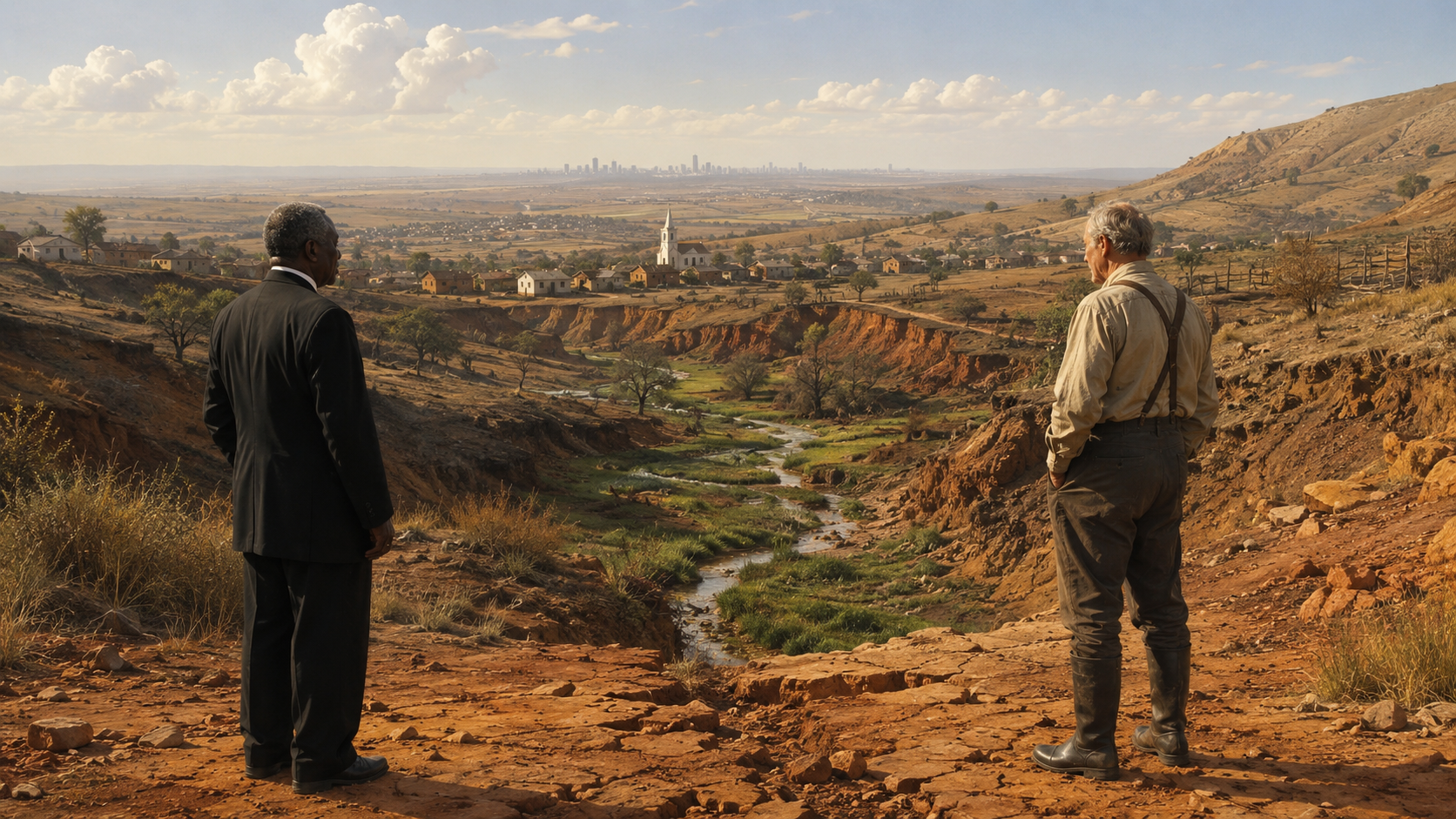
The valley of Ndotsheni is dry, worn down, and poor. Its soil cannot support the people who live there. This damaged land reflects a damaged society.

Paton shows that the land has been hurt by unfair systems. Black families are pushed into places with fewer chances and fewer resources. The weak land becomes a sign of deeper injustice.

When plans begin to restore the valley, the symbol shifts. The land starts to point toward repair. It does not mean all problems are solved, but it gives the novel a small hope.

This symbol connects to the theme of **restoration**. Paton suggests that healing a country must include both the land and the people who depend on it.

Johannesburg: A Symbol of Fear and Broken Connections

The city stands for the force that pulls families apart.

Johannesburg is where Kumalo searches for his sister Gertrude and his son Absalom. It is full of noise, danger, and confusion. People go there for work or survival, but many lose their way.

The city is not shown as evil in a simple way. It becomes frightening because social order has broken down. Families are separated, trust is weak, and poor people face harsh choices.

Absalom’s path in the city shows this clearly. He is not born bad. He becomes lost in a place where guidance has failed and fear has power.

This symbol connects to the theme of **social breakdown**. Paton wants readers to ask why young people become trapped, not just what they do after they are trapped.

Darkness and Light in the Novel

Paton uses darkness and light to show moral danger and spiritual hope.

Darkness often appears around fear, grief, and uncertainty. Kumalo does not know what he will find in Johannesburg. His search feels like a walk through a world where truth is hard to see.

Light appears when people show mercy or face the truth. Msimangu’s kindness gives Kumalo strength. James Jarvis also moves toward a kind of light when he learns more about his son’s work and begins to change.

This pattern is common in literature. In To Kill a Mockingbird, the mockingbird image points to innocence. In Paton’s novel, light points to conscience, not easy happiness.

The theme here is **moral vision**. Paton suggests that people cannot heal what they refuse to see.

Absalom: The Lost Child

Absalom is both a character and a symbol of a broken generation.

His name matters. In the Bible, Absalom is a son whose story ends in sorrow and conflict with his father. Paton uses that background to deepen Kumalo’s pain.

Absalom Kumalo represents young people cut off from stable homes, clear guidance, and safe work. His crime is his own, but the novel asks us to notice the world that shaped him.

The unborn child also matters. That child stands for a future that is still possible. It is fragile, but it is not erased.

This symbol connects to the theme of **lost family bonds**. Paton shows that national injustice often enters the home first.

The Church, Prayer, and Humble Faith

Faith in the novel is not a quick answer, but it gives people courage.

Kumalo is a priest, yet he still feels fear, anger, and shame. That makes his faith feel human. Prayer does not remove his pain, but it helps him keep moving.

Msimangu also links faith with action. He speaks with moral force, but he also helps Kumalo in practical ways. In the novel, real faith must care about real suffering.

The church becomes a symbol of **moral responsibility**. It asks people to face the truth, even when the truth hurts.

For helpful background on the author and his public role, see Britannica’s overview of Alan Paton.

The Cry as a Symbol of Grief and Hope

The title itself is symbolic.

The word cry has more than one meaning. It is a sound of pain, but it can also be a call for help. Paton’s title turns South Africa into a beloved place that is wounded and in need of care.

This cry belongs to many people. Kumalo cries for his son. Jarvis grieves for Arthur. The country itself seems to cry because its people live divided from one another.

Yet the word beloved matters too. Paton does not write as if the country is worthless. He writes as if it is worth saving.

This symbol connects to the theme of **hope through honest grief**. The novel says that love for a place must include the courage to see its wounds.

How to Write About Symbols in Cry, the Beloved Country

A strong symbolism paragraph should connect the image to a theme, not just name it.

When you write about symbols in Cry, the Beloved Country, use a simple pattern. Name the symbol, explain where it appears, then show what larger idea it supports.

For example, do not only say that the land symbolizes South Africa. Say that the damaged land of Ndotsheni symbolizes a society harmed by injustice, and that later efforts to restore it suggest a hope for repair.

You can also compare Paton’s symbols to symbols in other books you know. A well-known symbol, like the green light in The Great Gatsby, can help you explain how one image can carry a full theme.

For more support, use this simple symbolism method. If you want a place to collect evidence, try our one-page symbolism study sheet.

These books pair well with Paton’s novel for essays, discussion, or independent study.

  • Things Fall Apart by Chinua Achebe
  • Long Walk to Freedom by Nelson Mandela
  • A Dry White Season by André Brink

FAQ About Symbols in Cry, the Beloved Country

Here are quick answers to common student questions.

What are the main symbols in Cry, the Beloved Country?

The main symbols in Cry, the Beloved Country include the land, Johannesburg, darkness and light, Absalom, prayer, and the cry in the title.

What does the land symbolize?

The land symbolizes the condition of South Africa. Damaged land shows social harm, while efforts to heal the land suggest renewal.

Why is Johannesburg symbolic?

Johannesburg symbolizes fear and broken connections. It draws people away from home and shows how injustice can weaken family life.

What does Absalom symbolize?

Absalom symbolizes a lost child and a damaged bond between generations. His story shows how private tragedy can reflect public failure.

Is the title a symbol?

Yes. The cry in the title symbolizes grief, warning, and love for a country that still might be healed.

Key Takeaway

The symbols in Cry, the Beloved Country matter because they make the novel’s themes visible.

Paton uses land, light, family, and faith to show a country in pain. The symbols help readers see that healing requires truth, mercy, and real change.

Themes in Cry, the Beloved Country: A Student-Friendly Guide

Cry Beloved Country Themes

The themes in Cry, the Beloved Country help students see why Alan Paton’s novel still matters. This guide explains the book’s big ideas in clear language, with examples you can use for class notes or essays.

In this Guide

Use this roadmap to find the main ideas fast.

  • Why the novel’s themes matter
  • Land and broken community
  • Fear and injustice
  • Family and loss
  • Faith and moral action
  • How to write about the themes
  • FAQ
Cry Beloved Country Themes

Why themes in Cry, the Beloved Country Matter

The novel is set in South Africa during a time of deep racial division. Paton shows a country in pain through the story of Stephen Kumalo, a rural priest who travels to Johannesburg to find his son.

When students search for themes in Cry, the Beloved Country, they often expect one simple message. The novel is more complex. It shows how private grief connects to public injustice.

Theme means more than a topic. A topic might be fear, but a theme explains what the novel says about fear.

Major themes in Cry, the Beloved Country

Paton’s themes focus on how people live when a society has been damaged by injustice.

One major theme is the damage caused by racial inequality. Black South Africans face poverty, weak schools, unsafe labor, and unfair laws. These problems do not stay in the background. They shape the choices people can make.

Another major idea is moral responsibility. Paton asks whether people can help heal a broken country, even when the damage feels too large.

These themes in Cry, the Beloved Country work together. The novel does not only ask, Who did wrong? It also asks, What kind of society makes wrong more likely?

Themes in Cry, the Beloved Country: Land and Broken Community

The land in the novel reflects the state of the people who live on it.

Ndotsheni, Kumalo’s village, is dry and poor. The soil is weak, and young people leave for the city. This setting shows a deeper problem: rural communities have been drained of hope.

This is one of the most important themes in Cry, the Beloved Country because the land is not just scenery. It becomes a symbol of social collapse.

You can compare this idea to The Grapes of Wrath by John Steinbeck. In that novel, damaged land also pushes families away from home. In both books, the land shows human suffering.

Fear and Injustice among themes in Cry, the Beloved Country

Fear spreads through the novel like a sickness.

White characters fear crime and change. Black characters fear poverty, police, and the loss of family. Paton shows fear as a force that divides people who already live apart.

Arthur Jarvis tries to fight injustice through his writing and public work. His death is tragic because he is one of the people who wants real change.

This theme can remind students of To Kill a Mockingbird by Harper Lee. Both novels show how fear and prejudice can twist justice.

Family, Lost Sons, and Broken Bonds

The search for family gives the novel its emotional power.

Kumalo travels to Johannesburg to find his sister, brother, and son. What he finds is painful. His family has changed, and his son Absalom has become part of a tragedy he cannot undo.

James Jarvis also loses a son. At first, he knows little about Arthur’s beliefs. After Arthur’s death, Jarvis begins to understand the moral work his son cared about.

The two fathers suffer in different ways. Their grief creates one of the novel’s strongest connections.

Faith, Forgiveness, and Moral Action

Faith in the novel is not easy or simple.

Kumalo is a priest, but he still feels fear, anger, and doubt. Paton does not present faith as a magic cure. He shows it as a hard path that asks people to keep choosing mercy.

Forgiveness matters because the novel is full of wounds. Yet Paton does not say that forgiveness erases injustice. Instead, forgiveness opens a door to action.

Jarvis helps Ndotsheni after his son’s death. His aid does not fix the whole country, but it shows that one person can choose repair over hatred.

How to Write About the themes in Cry, the Beloved Country

Strong essays connect theme to character, setting, and conflict.

Do not write, The theme is racism, and stop there. A better claim would say that Paton shows racial injustice as a force that breaks families and weakens whole communities.

Use short quotes and explain them closely. Look at what the quote shows about power, fear, or moral choice.

If you need help shaping a thesis, use this guide on how to write a literary analysis essay. It can help you turn theme notes into a clear argument.

From Idea to Novel Blueprint

Historical Context That Shapes the Novel

The novel was published in 1948, the same year apartheid became official policy in South Africa.

Paton wrote about racial injustice before many global readers understood its full reach. That context helps explain the novel’s urgent tone.

For more background on the author, visit Britannica’s overview of Alan Paton.

Books to Search on Amazon or at Your Library

These books pair well with this novel for theme study.

  • Cry, the Beloved Country by Alan Paton
  • Things Fall Apart by Chinua Achebe
  • The Grapes of Wrath by John Steinbeck

FAQ: themes in Cry, the Beloved Country

These quick answers can help before a quiz or essay.

What are the main themes in Cry, the Beloved Country?

The main themes in Cry, the Beloved Country include racial injustice, fear, broken family bonds, faith, and the need for moral action.

What does the land symbolize in the novel?

The land shows the health of the community. Dry soil and damaged farms reflect poverty, neglect, and social breakdown.

Why is fear so important in the story?

Fear keeps people apart. It leads to suspicion, harsh choices, and more suffering.

Is the novel hopeful or sad?

It is both. The story is full of grief, but it also shows small acts of repair that point toward hope.

Key Takeaway

The themes in Cry, the Beloved Country show that personal pain and social injustice are deeply linked. Paton’s novel asks readers to face suffering honestly, then choose compassion and repair.

The Good Earth Character Analysis: Key People, Motivations, and Conflicts

the good earth characters

This The Good Earth character analysis breaks down the main characters, their motives, and the conflicts that shape Pearl S. Buck’s novel. It is built for students who need clear notes for discussion posts, essays, and quote-based analysis.

The novel follows Wang Lung’s rise from poor farmer to wealthy landowner, but its real power comes from how each person changes under pressure.

In this Guide

Use this guide to move from basic character notes to stronger claims about theme and conflict.

the good earth characters

The Good Earth Character Analysis: Quick Character Map

The novel uses character change to show how poverty, hunger, pride, and wealth test people.

CharacterRole in the story
Wang LungA farmer whose love of the land clashes with pride, desire, and fear of shame.
O-lanWang Lung’s wife, a former slave whose labor keeps the family alive.
Wang Lung’s fatherA link to the older rural world and the family’s duty to elders.
The sonsA sign of the next generation, which values comfort more than land.
The uncleA source of social pressure who uses family duty for personal gain.
LotusA symbol of luxury, status, and Wang Lung’s drift from his old values.
ChingA loyal friend who reflects simple trust and practical kindness.

A strong The Good Earth character analysis should focus on choices. What does each person want, and what price do they pay for it?

The Good Earth Character Analysis of Wang Lung

Wang Lung is the center of the novel because his rise shows both success and moral loss.

At the start, Wang Lung is poor but proud. He works hard, fears hunger, and trusts the land more than people.

His main motivation is security. He wants food, family honor, and control over his future.

That dream seems simple at first. Yet once he gains money, his desires grow. He buys more land, seeks status, and takes Lotus into his home.

His conflict is not just poor versus rich. It is humility versus pride. Wang Lung remembers hunger, but wealth makes him forget O-lan’s sacrifice.

This pattern is common in literature. Macbeth also rises in power, then loses part of himself because ambition takes over. Wang Lung is not as violent, but he too shows how desire can bend a person’s values.

The Good Earth Character Analysis of O-lan

O-lan matters because her silence often says more than other characters’ speeches.

She enters the story as a former slave from the House of Hwang. She does not expect comfort; she expects work.

O-lan’s motivation is survival. She bears children, works in the fields, saves jewels during crisis, and keeps the family alive during famine.

Her conflict comes from being needed but not valued. Wang Lung depends on her strength, yet later rejects her plain looks and quiet ways.

O-lan is one of the novel’s most painful figures because she rarely asks for much. Her dignity comes through action, not speech.

In a The Good Earth character analysis, O-lan can support themes about gender, class, and unseen labor. Like Jane Eyre, she has inner strength, but Buck gives her fewer chances to speak her pain aloud.

The Good Earth Character Analysis: Family Pressure and Wealth

The family around Wang Lung shows how wealth changes duty, love, and respect.

Wang Lung’s father represents the old family order. He expects care from his son, and Wang Lung accepts that duty even when life is hard.

The uncle creates a different problem. He uses family ties to demand help. Wang Lung feels trapped because refusing him would bring shame.

The sons show another conflict. They grow up with more comfort than their father had. Because of that, they do not feel the same bond with the land.

This matters near the end of the novel. Wang Lung still sees land as life itself. His sons see it as property they may sell.

Use The Good Earth character analysis to track this shift from survival to comfort. The family does not only gain wealth. It loses a shared purpose.

The Land as a Force in Each Character’s Choices

The land is not a person, but it works like a powerful force in the novel.

For Wang Lung, the land means safety. When all else fails, he believes the earth will still feed him.

For O-lan, the land means labor. She works beside Wang Lung, even when she is tired or ill.

For the sons, the land means less. They inherit the results of work they did not have to endure.

This is why the title matters so much. The earth is “good” because it gives life, but people must respect it. When Wang Lung moves away from that respect, his inner conflict grows.

For more help with this kind of reading, see our guide to analyzing characters in literature.

How to Write About These Characters in an Essay

Good essays move beyond saying whether a character is good or bad.

Start with a clear claim. For example: Wang Lung’s love of the land begins as wisdom, but wealth turns it into a source of pride.

Then connect the claim to a scene. You might discuss O-lan’s jewels, Wang Lung’s choice to bring Lotus home, or the sons’ plan for the land.

Focus on motivation, conflict, and change. Those points help you explain why a character matters to the whole novel.

If you want a simple class tool, pair your notes with our character analysis worksheet.

Historical Context That Helps Character Analysis

Context can help, but it should not replace close reading.

Pearl S. Buck grew up in China and wrote often about Chinese rural life. You can learn more from the Britannica profile of Pearl S. Buck.

The novel also reflects deep concern with poverty, land, family order, and social change. These forces shape the characters’ choices from the first chapter to the last.

Suggested Books for Deeper Study

These books can help if you want more background for class notes or an essay.

  • The Good Earth by Pearl S. Buck
  • Pearl Buck in China: Journey to The Good Earth by Hilary Spurling

FAQ: The Good Earth Character Analysis

These short answers can help you prepare for class discussion or a quick essay plan.

Who is the most important character in The Good Earth?

Wang Lung is the main character. His rise, pride, and fear of losing the land shape the plot.

What is the best focus for The Good Earth character analysis?

The best focus is character change. Track how poverty, land, and wealth affect Wang Lung, O-lan, and the sons.

Why is O-lan important?

O-lan keeps the family alive through work and sacrifice. Her treatment exposes the unfair limits placed on women.

What does Lotus reveal about Wang Lung?

Lotus shows Wang Lung’s desire for status and pleasure. She also marks his move away from the values that once grounded him.

How do the sons create conflict?

The sons do not share Wang Lung’s deep respect for the land. Their attitude points to a break between generations.

Key Takeaway

The Good Earth character analysis shows that Buck’s characters are shaped by need, pride, and the land. Wang Lung gains wealth, but the novel asks whether he loses the wisdom that helped him survive.

Themes in The Good Earth: A Student-Friendly Guide

Themes in The Good Earth

Understanding the themes in The Good Earth helps students see why Pearl S. Buck’s novel still matters. The book is not only about one farmer’s life, but also about land, hunger, family duty, and the cost of success.

This guide gives you the major ideas to notice, with simple examples you can use for class discussion or essays.

In this Guide

Use this quick map to find the part you need most.

  • Major themes in the novel
  • Land and survival
  • Family duty and gender roles
  • Wealth and moral change
  • Nature, hunger, and fate
  • Symbols and essay tips
  • Related books and FAQ
Themes in The Good Earth

Major themes in The Good Earth

The novel’s biggest ideas come from Wang Lung’s daily fight to live with honor and security.

The themes in The Good Earth grow from simple needs. Wang Lung wants land, food, sons, and respect. Yet each goal brings a new conflict.

Pearl S. Buck shows that survival can shape a person’s values. A poor farmer may seem humble because he has little power. Once he gains money, his true character faces a harder test.

This is why the novel works well for AP Literature and college essays. It connects a personal story to larger questions about class, gender, labor, and human desire.

For more background on the author, the Britannica entry on Pearl S. Buck gives a clear overview of her life and writing.

Land and survival: one of the central themes in The Good Earth

Land is the source of life, pride, and identity in the novel.

Wang Lung does not see land as a luxury. He sees it as safety. When he owns land, he has a way to feed his family and keep his place in the world.

This makes land the novel’s most powerful symbol. It stands for work, family roots, and moral strength. When Wang Lung stays close to the soil, he seems more grounded.

When he moves away from the land, he becomes less steady. Wealth pulls him toward comfort and status. The land keeps calling him back because it reminds him of who he used to be.

This theme has a strong link to John Steinbeck’s The Grapes of Wrath. In both books, land is not just property. It shapes dignity and survival.

Family duty in the themes in The Good Earth

Family gives Wang Lung purpose, but it also traps some characters in unfair roles.

Wang Lung feels deep duty toward his father and sons. In his world, family honor matters more than personal choice. This duty often guides his actions.

The novel also shows how gender roles limit women. O-lan works hard, saves the family, and rarely asks for praise. Her silence is one of the saddest parts of the book.

Buck does not ask readers to ignore Wang Lung’s flaws. He depends on O-lan, yet he does not fully value her. This conflict helps students write about power inside the home.

A useful comparison is Sophocles’ Antigone. Both works show how family duty can be noble, but also painful when society gives people unequal power.

Wealth and moral change in the themes in The Good Earth

The novel asks whether success can weaken a person’s values.

At first, Wang Lung’s hunger makes him careful and humble. He knows the cost of food because he has worked for it. As he grows rich, his choices begin to change.

He wants fine things. He wants social respect. And he also wants pleasure that does not connect to labor or duty.

This is one of the themes in The Good Earth that students should track closely. Buck does not say money is evil. She shows that wealth can make old values easier to forget.

Think of Shakespeare’s Macbeth. Macbeth gains power, but that power damages his mind and morals. Wang Lung’s fall is quieter, yet it still shows how success can change a soul.

Nature and hunger among the themes in The Good Earth

Nature is not gentle in this novel, but it is always powerful.

Drought and famine shape the plot. When the earth fails, people lose safety fast. Hunger breaks social rules and forces terrible choices.

Buck makes hunger feel physical. It is not an abstract problem. It enters the body, the home, and the family bond.

This theme also creates a question about fate. Wang Lung can work hard, but he cannot control rain, flood, or famine. The novel respects hard work, yet it never pretends that effort solves every problem.

For students, this is a strong essay angle. You can argue that the novel balances human effort with forces beyond human control.

Social class and the cycle of power

The novel shows how those with low income may come to resemble the rich once they gain power.

Early in the story, Wang Lung looks up at the wealthy House of Hwang. That family seems distant, rich, and weak from luxury.

Over time, Wang Lung gains land and status. His life begins to echo the same pattern he once judged. This shift creates irony.

The point is not that Wang Lung is a villain. The point is sharper than that. Buck shows how class systems can repeat themselves when people chase the same signs of power.

This theme works well with the idea of a social cycle. People rise, gain comfort, lose discipline, and risk decline.

Tradition, change, and personal desire

Wang Lung lives between old values and new temptations.

Tradition tells him to honor elders, value sons, respect land, and keep the family line strong. These beliefs give his life structure.

Yet desire pulls him away from that structure. He wants beauty, pleasure, and proof that he has become important. His private wants often clash with his public duties.

This conflict makes Wang Lung feel human. He is not easy to admire all the time, but he is easy to study. His choices reveal the pressure between what a person owes and what a person wants.

Symbols that support the themes

Buck uses objects and places to make big ideas easier to see.

The earth is the main symbol. It stands for life, labor, and return. Even when Wang Lung becomes wealthy, the land remains his deepest source of meaning.

The House of Hwang works as another symbol. It shows the danger of wealth without discipline. Its decline warns Wang Lung, even if he does not fully learn from it.

Food is also important. Meals, hunger, and stored grain show how close people are to safety or disaster.

If you want help with this skill, read our guide on how to find symbolism in a story. It can help you turn symbols into stronger theme statements.

How to write about the themes in The Good Earth

A strong essay should connect a theme to character change and evidence.

Do not write only that the novel is about land. Make the idea more specific. For example, you might argue that land gives Wang Lung moral strength, but wealth pulls him away from that strength.

A good theme statement should be a claim, not a topic. Land is a topic. A theme claim explains what the novel says about land.

Here is a student-friendly example: In The Good Earth, Buck shows that land can give people dignity, but only if they respect the labor and limits that come with it.

You can also use Rapid Reads Press study guides to build cleaner notes before you draft an essay.

These books pair well with Buck’s novel for theme study and class projects.

  • The Good Earth by Pearl S. Buck
  • The Grapes of Wrath by John Steinbeck

The Nobel Prize biography of Pearl S. Buck is also useful if your teacher asks for author context.

FAQ: themes in The Good Earth

These quick answers help with review before a quiz, essay, or class talk.

What are the main themes in The Good Earth?

The main themes in The Good Earth include the bond between people and land, the pressure of family duty, the danger of wealth, and the force of hunger.

Why is land so important in the novel?

Land gives Wang Lung food, pride, and identity. It is the one source of value that feels real to him.

Is Wang Lung a good person?

He is mixed. He works hard and loves his family in his own way, but he also becomes selfish as he gains wealth.

What does O-lan represent?

O-lan represents endurance, sacrifice, and the hidden labor that keeps the family alive.

What is a good essay topic for this novel?

A strong topic is how wealth changes Wang Lung’s values and weakens his bond with the land.

Key Takeaway

The best way to understand this novel is to watch how Wang Lung changes. The land gives him life, but wealth tests what kind of person he will become.

The Odyssey Explained Before You See the Movie

The Odyssey

Before you see a new movie adaptation of The Odyssey, it helps to know why this ancient story has lasted for nearly three thousand years. Homer’s epic is not just a tale about a hero trying to get home. It is a story about war, temptation, loyalty, pride, suffering, and the difficult return to ordinary life after extraordinary violence. At its heart, The Odyssey asks a simple but powerful question: what does it take to come home changed, and still be recognized as yourself?

The Odyssey

How The Odyssey Begins After the Trojan War

The Odyssey begins after the events of the Trojan War, a legendary conflict between the Greeks and the city of Troy. Odysseus, king of Ithaca, was one of the Greek leaders who fought in that war and played a major role in its ending. He is often credited with the idea of the Trojan Horse, the clever trick that allowed the Greeks to enter Troy and win after ten long years of fighting.

But the story does not begin with triumph. Instead, it begins with delay, loss, and exhaustion. The war is over, but Odysseus has not returned home. While other warriors have either reached their kingdoms or met terrible fates, Odysseus remains missing, trapped in a long and dangerous journey across the sea.

This is important because The Odyssey is not really about winning a war. It is about what happens after victory, when a soldier must face the consequences of his choices and find his way back to family, identity, and peace. The epic begins in a world where the battlefield is behind Odysseus, but his greatest test is still ahead.

Who Odysseus Is and Why His Journey Matters

Odysseus is not the strongest Greek hero, nor the most perfect. His defining trait is intelligence. He is known for his cunning, his ability to improvise, and his talent for surviving impossible situations. He can lie, disguise himself, persuade enemies, and think his way out of danger when brute force would fail.

That cleverness makes him fascinating, but it also gets him into trouble. Odysseus is proud, sometimes reckless, and often unable to resist proving how smart or important he is. One of the key tensions in the story is whether his intelligence will save him or whether his ego will keep creating new disasters.

His journey matters because it turns the idea of heroism inside out. Instead of focusing only on glory, The Odyssey focuses on endurance. Odysseus must survive storms, monsters, divine anger, temptation, grief, and loneliness. His goal is not to conquer a kingdom, but to return to the one he already has.

The Gods, Monsters, and Trials on His Route

The world of The Odyssey is filled with gods who interfere constantly in human lives. Athena, goddess of wisdom, often supports Odysseus because she admires his intelligence and courage. Poseidon, god of the sea, becomes his great enemy, especially after Odysseus blinds Poseidon’s son, the Cyclops Polyphemus.

Many of the famous episodes in the story involve strange lands and supernatural threats. Odysseus encounters the Lotus-Eaters, whose fruit makes men forget their desire to go home. He faces the Cyclops, escapes the witch-goddess Circe, travels to the underworld, hears the deadly song of the Sirens, and must navigate between the sea monsters Scylla and Charybdis.

These trials are not just random adventures. Each one tests a different part of Odysseus and his crew: discipline, memory, loyalty, courage, restraint, and judgment. In a movie adaptation, these episodes may become spectacular action sequences, but their deeper meaning lies in how each temptation pulls Odysseus further from—or closer to—home.

What Penelope and Ithaca Add to the Story

While Odysseus struggles across the sea, his wife Penelope waits in Ithaca. She is surrounded by suitors who believe Odysseus is dead and pressure her to marry one of them. These men invade the palace, consume the household’s wealth, and threaten the future of Odysseus’ family and kingdom.

Penelope is one of the most important figures in the story because she mirrors Odysseus in intelligence and patience. She delays the suitors through clever tricks, including weaving and unweaving a burial shroud to postpone choosing a new husband. Like Odysseus, she survives through strategy rather than force.

Ithaca gives the epic its emotional center. Without Penelope, their son Telemachus, and the threatened household, Odysseus’ journey would be just a series of adventures. The home he is trying to reach is not merely a place on a map. It represents love, order, memory, kingship, and the possibility of becoming whole again.

Key Themes to Watch for in the Adaptation

One major theme to watch for is the meaning of homecoming. The Odyssey is the great ancient story of “nostos,” or return. But coming home is not simple. Odysseus must prove who he is, confront what has changed, and reclaim his place without losing the hard-won wisdom of his journey.

Another important theme is the danger of pride. Odysseus survives because he is clever, but he suffers because he cannot always control his need for recognition. The story repeatedly asks whether greatness requires humility, and whether a hero can learn to master himself as well as his enemies.

Loyalty is also central. Penelope’s loyalty, Telemachus’ growth, the faithfulness of certain servants, and the failures of Odysseus’ crew all shape the story’s emotional stakes. As you watch the adaptation, pay attention not only to the monsters and gods, but to who remains faithful when hope seems lost.

The Odyssey endures because it combines adventure with deep human questions. It has monsters, magic, storms, and divine battles, but its true power comes from the longing to return home after being changed by hardship. Before seeing the movie, remember that Odysseus’ voyage is both physical and spiritual. He is sailing toward Ithaca, but he is also trying to rediscover who he is, what he owes to the people who love him, and whether he can finally become worthy of the home he has spent so long trying to reach.

The Odyssey Movie vs. Homer’s Epic: What Did Christopher Nolan Change? Spoiler Alert!

The Odyssey Movie
The Odyssey Movie

Christopher Nolan’s The Odyssey brings Homer’s ancient story to the screen as a vast IMAX adventure. Matt Damon plays Odysseus, the king of Ithaca who struggles to return home after the Trojan War. The film includes the Cyclops, Circe, Calypso, the Sirens, Penelope, Telemachus, and many of the characters audiences expect to see.

Yet Nolan does not simply illustrate Homer’s poem.

The central difference in The Odyssey movie vs. Homer’s epic involves the kind of hero at the story’s center. Homer presents Odysseus as a brilliant, deceptive, and morally difficult survivor. Nolan turns him into a war-weary man who questions whether he deserves to return home.

The movie preserves the journey, but it changes what the journey means.

Spoiler warning: This article discusses major events and the ending of Christopher Nolan’s 2026 film.

Is Christopher Nolan’s The Odyssey Faithful to Homer?

Nolan’s film remains faithful to the broad outline of the epic. Odysseus leaves Troy and spends years trying to reach Ithaca. He loses his men, confronts monsters, encounters powerful women, and eventually returns to a household threatened by Penelope’s suitors.

The movie also preserves many of the poem’s central themes. Homecoming, loyalty, hospitality, identity, pride, and recognition still shape the story.

However, adaptation requires selection. Homer’s poem contains 24 books, a large cast, several embedded stories, and an unusual structure. Nolan compresses events, removes characters, and changes motivations to create a more unified film.

The result is not a literal translation of the poem. It is a modern interpretation of it.

Nolan Makes Odysseus More Remorseful

The largest change concerns Odysseus himself.

Homer introduces a hero known for his many turns. Odysseus changes his manner, identity, and story whenever circumstances require it. He lies easily and often. Some lies protect him, while others seem to reveal how much he enjoys controlling a story.

His cleverness allows him to survive.

Nolan reduces this playful trickster quality. His Odysseus still possesses intelligence and military skill, but guilt weighs heavily on him. The destruction of Troy has left him troubled by the human cost of his own strategies.

The film treats the Trojan Horse as more than a clever victory. It becomes the source of Odysseus’s moral injury. His success helped the Greeks destroy a city, but that success also leaves him questioning the kind of man he has become.

This change gives the movie a more modern concern with war trauma and personal responsibility. Homer asks how a complicated man can recover his home and identity. Nolan asks whether a man responsible for terrible violence can return home unchanged.

The Trojan Horse Becomes a Major Part of the Story

Homer’s Odyssey does not show the fall of Troy as a continuous action sequence. Characters remember and retell events from the war, including the story of the wooden horse.

Nolan places the Trojan Horse near the beginning of the film and gives the fall of Troy a much larger role. This allows viewers to witness the event that haunts Odysseus throughout his journey.

The film also introduces Sinon, played by Elliot Page. Sinon comes primarily from Virgil’s Aeneid, not Homer’s Odyssey. In the later Roman epic, Sinon helps convince the Trojans to bring the wooden horse inside their city.

By adding Sinon, Nolan combines material from different parts of the classical tradition. Sinon also becomes a reminder of the ordinary soldiers used and forgotten by powerful leaders.

The change connects the spectacular opening of the movie to its deeper question: What does a victorious commander owe the people who suffered because of his plans?

The Movie Reduces the Direct Role of the Gods

The gods appear throughout Homer’s epic.

Athena disguises herself, guides Telemachus, assists Odysseus, and helps restore order in Ithaca. Poseidon’s anger keeps Odysseus from reaching home. Zeus makes decisions that shape the journey, while Hermes provides direct assistance during the encounters with Calypso and Circe.

Nolan’s world feels more human and less openly controlled by Olympus. Athena remains present, but much of the poem’s direct divine intervention disappears. Zeus, Poseidon, and Hermes do not repeatedly enter scenes to explain or alter events.

This change affects the question of responsibility.

In Homer, the gods influence human lives according to their loyalties and desires. People still make choices, but divine favor can determine whether those choices succeed.

In the film, Odysseus cannot blame every loss on a hostile god. His decisions carry more of the moral burden.

Students comparing the two versions should pay close attention to this difference. Removing direct intervention does not merely make the movie more realistic. It changes the relationship between fate and free will.

The Cyclops Scene Changes Odysseus’s Famous Mistake

The encounter with Polyphemus is one of the best-known episodes in the poem.

Homer’s Odysseus tells the Cyclops that his name is “Nobody.” After Odysseus blinds him, Polyphemus cries out that Nobody is hurting him. The other Cyclopes assume that he does not need help.

The plan works, but Odysseus cannot resist claiming credit. Once safely aboard his ship, he reveals his real name. Polyphemus then calls upon his father, Poseidon, to punish Odysseus.

This moment captures the contradiction within Homer’s hero. His cleverness saves him, but his pride creates a new disaster.

Nolan removes much of the verbal exchange, including the famous “Nobody” trick. His Odysseus also avoids the boast that causes so much harm in the poem.

The movie keeps the horror of the Cyclops but reduces the episode’s focus on language and pride. This choice supports Nolan’s more remorseful hero, though it removes one of Homer’s clearest examples of Odysseus defeating himself.

Calypso Changes from Captor to Caregiver

In Homer’s poem, Calypso keeps Odysseus on her island for seven years. She wants him to remain with her and offers him immortality. Odysseus longs for Ithaca despite the comfort and beauty surrounding him.

The movie presents Calypso differently.

Nolan’s Calypso gives Odysseus lotus flowers that dull his memories. The lotus originally belongs to another episode in Homer’s poem, where the Lotus-Eaters cause Odysseus’s men to forget their desire for home.

By combining Calypso with the lotus, Nolan turns her island into a place of emotional escape. Forgetfulness temporarily protects Odysseus from his memories of war.

Calypso therefore seems less like a jealous captor and more like a caretaker offering relief. When Odysseus remembers home, she allows him to leave.

The change fits the movie’s interest in memory and trauma. It also reduces some of the troubling power and sexual imbalance found in Homer’s version.

Circe Exposes Greed Instead of Seducing Odysseus

Homer’s Circe transforms Odysseus’s men into pigs. Hermes gives Odysseus the protection he needs to resist her magic. Odysseus then becomes Circe’s lover and remains on her island for a year.

The film keeps the transformation but changes its meaning.

Nolan’s Circe turns the men into pigs to expose the greed already within them. The punishment becomes a visible sign of their behavior rather than simply an act of enchantment. Her relationship with Odysseus also loses much of the poem’s sexual element.

This version supports the film’s broader concern with appetite. The men consume food without restraint, the suitors consume Odysseus’s household, and war consumes human lives.

Circe’s magic reveals what uncontrolled desire can make of a person.

The Phaeacians and Homer’s Storytelling Frame Disappear

Homer does not present most of Odysseus’s adventures as they happen.

Odysseus tells the Phaeacians about the Cyclops, Circe, the Sirens, and other dangers after those events have already occurred. This structure turns Odysseus into the narrator of his own legend.

That matters because Odysseus is an accomplished storyteller and liar. Readers must consider how he shapes his account and presents himself to his hosts.

Nolan removes the Phaeacian frame and shows the adventures more directly. This makes the movie easier to follow, but it also removes an important layer of uncertainty.

Homer asks readers to listen to a survivor tell his own story. Nolan asks viewers to witness the survivor’s experiences.

Some Women Gain New Motivations but Lose Mythic Power

Nolan has said that he wanted viewers to see the people behind the poem’s female icons. Helen, for example, carries visible and emotional consequences from the Trojan War. Penelope remains central to the questions of loyalty, memory, and home.

Other changes are more complicated.

Athena loses much of the direct power she exercises in Homer. Calypso becomes more of a sympathetic listener, while Circe’s role is shortened and separated from her year-long relationship with Odysseus.

These choices make the women more psychologically modern in some scenes, but they can also reduce their narrative power. Critics have already disagreed about whether Nolan deepens these characters or makes them secondary to Odysseus’s guilt.

This tension gives students a useful comparison topic: Does making a mythological woman more realistic necessarily make her more complex?

The Movie Changes the Meaning of the Ending

Homer’s poem does not end immediately after Odysseus kills the suitors and reunites with Penelope.

The families of the dead suitors threaten further violence. Athena, acting with Zeus’s approval, brings the conflict to an end. Divine intervention restores peace to Ithaca.

Nolan gives the story a different conclusion.

At the end of the film, Odysseus sails west with Penelope. He does not leave in search of more glory or wealth. He intends to honor the men who died under his command.

Homer closes with order restored. Nolan closes with a debt that still needs to be paid.

That difference reveals the movie’s central purpose. Nolan is less interested in whether Odysseus can reclaim his throne than in whether he can accept responsibility for the cost of his return.

What Is the Biggest Difference Between the Movie and the Poem?

The greatest difference in The Odyssey movie vs. Homer’s epic is the moral direction of Odysseus’s journey.

Homer’s hero must survive long enough to recover his name, household, marriage, and authority. His flaws complicate his heroism, but the poem does not require him to reject the values of his warrior culture.

Nolan’s hero must confront the damage created by those same values. His journey home becomes a reckoning with war, leadership, and guilt.

The film therefore changes the epic from a story of recovery into a story of attempted redemption.

That change may disappoint viewers who want Homer’s unpredictable trickster in full. It may also help modern audiences see why this ancient journey still speaks to questions about power and responsibility.

Frequently Asked Questions

Does The Odyssey movie follow Homer’s book?

The movie follows the epic’s central journey and includes many famous characters and episodes. It changes some motivations, removes the Phaeacian storytelling frame, reduces direct divine intervention, and gives Odysseus a stronger sense of remorse.

Did Homer write about the Trojan Horse?

The Trojan Horse is mentioned and remembered in Homeric poetry, but The Odyssey does not present the fall of Troy as the extended opening action shown in Nolan’s film. The character Sinon comes from Virgil’s Aeneid rather than The Odyssey.

Why are the gods less visible in Nolan’s movie?

Reducing the gods’ direct involvement places more responsibility on Odysseus and other human characters. Events feel less like divine punishment and more like consequences of human choices.

Is Nolan’s Odysseus different from Homer’s Odysseus?

Yes. Homer’s Odysseus is a clever trickster who lies, adapts, and sometimes creates trouble through pride. Nolan’s Odysseus is more openly troubled by war and concerned with making amends.

Should I read The Odyssey after watching the movie?

Yes. The film provides the scale and excitement of the journey, while the poem offers a more complicated hero, a larger role for the gods, and a layered storytelling structure that no single movie can reproduce.

Key Takeaway

Christopher Nolan’s The Odyssey does more than place Homer’s monsters on an IMAX screen. It reshapes the ancient epic around guilt and responsibility. Homer’s Odysseus fights to recover his former life. Nolan’s Odysseus must decide what kind of life he can build after everything he has done.

Both versions ask whether a person can truly return home. They offer very different answers.

Best Classic Existential Dread: Books That Face the Void

Classic Existential Dread

Some books do more than tell a story. Best Classic Existential Dread points us to works where characters face fear, meaning, guilt, and the strange weight of being alive.

These classics can feel dark, but they also help students think deeply about choice, purpose, and the human mind.

In this Guide

  • What classic existential dread means
  • Best Classic Existential Dread books to read
  • Key symbols and themes
  • Why these works matter for students
  • Book suggestions
  • FAQs
Classic Existential Dread

What Does Best Classic Existential Dread Mean?

Classic existential dread is the fear that life may not have a clear purpose.

In literature, this fear often appears through lonely characters, strange settings, and questions no one can fully answer. These stories do not always give comfort. They ask readers to sit with doubt.

The phrase Best Classic Existential Dread fits works that have lasted because they still feel real. Their worlds may be old, but their worries feel modern.

For a helpful background on existential thought, see Britannica’s overview of existentialism.

Best Classic Existential Dread Books Students Should Know

These works show fear, doubt, and meaning in sharp ways.

Franz Kafka’s The Metamorphosis is one of the clearest examples of Best Classic Existential Dread. Gregor Samsa wakes up as a giant insect, but the real horror is not just his body. It is how fast his family sees him as useless.

Albert Camus’s The Stranger explores a man who seems cut off from normal feeling. Meursault does not react the way society expects, which makes the world around him seem cold and absurd.

Fyodor Dostoevsky’s Notes from Underground gives readers a narrator full of anger and self-hate. He wants freedom, yet he traps himself in bitterness.

These books are not easy, but they reward close reading. They help students ask why people act against their own happiness.

Why Kafka Defines Best Classic Existential Dread

Kafka makes ordinary life feel like a nightmare.

In The Metamorphosis, Gregor worries about missing work even after his body changes. That detail is both sad and darkly funny. It shows how duty can erase a person’s sense of self.

Kafka’s dread comes from systems that no one can explain. Family, work, and society all become forces that judge Gregor without mercy.

This is why Kafka remains central to Best Classic Existential Dread. His stories show people crushed by rules they did not choose.

Existential Dread in American Classics

American literature often connects dread to dreams that fail.

F. Scott Fitzgerald’s The Great Gatsby is not usually called existential fiction, but it still carries deep dread. Gatsby builds his life around a dream that cannot survive reality.

The green light becomes a symbol of hope, but also of distance. It shows how desire can give life meaning while also causing pain.

For more on this idea, read our Great Gatsby analysis, which explores illusion, longing, and the cost of chasing the past.

In this way, Gatsby belongs near the world of Best Classic Existential Dread. His fear is not about monsters. It is about the empty space behind success.

Major Symbols in Best Classic Existential Dread

Symbols make inner fear visible.

In The Metamorphosis, Gregor’s insect body shows shame, isolation, and lost value. He becomes what he already fears he is to others: a burden.

In The Stranger, the sun often feels harsh and inescapable. It presses down on Meursault and makes the world feel strange, bright, and uncaring.

In The Great Gatsby, the green light points to longing that never ends. It is beautiful, but it is also out of reach.

These symbols help define Best Classic Existential Dread because they turn fear into something readers can see.

Common Themes: Meaning, Freedom, and Isolation

These stories often ask what humans do when certainty disappears.

One major theme is meaning. Characters search for purpose, but they often find silence instead of answers.

Another theme is freedom. Many characters are free in theory, yet trapped by fear, guilt, money, or social rules.

Isolation also matters. Existential dread grows when characters cannot connect with others, even when people surround them.

This is why Best Classic Existential Dread can feel intense. It does not only describe fear. It shows what happens when fear becomes a way of life.

Why Students Still Read These Books

These classics help students name feelings that are hard to explain.

Many teens and college readers know what it feels like to wonder if they are doing enough, choosing well, or living for the wrong goal. These books turn those fears into art.

They also build strong literary skills. Readers can track symbols, study unreliable narrators, and compare how different authors treat moral choice.

When students study Best Classic Existential Dread, they learn that literature can face darkness without giving up on thought.

These titles are strong picks for students, book clubs, or readers who want a deeper challenge.

  • The Metamorphosis by Franz Kafka
  • The Stranger by Albert Camus
  • Notes from Underground by Fyodor Dostoevsky

You may also pair these with modern poetry about alienation. The Poetry Foundation’s page on T. S. Eliot is a useful place to start.

How to Read Existential Classics Without Feeling Lost

Start with the character’s main fear.

Ask what the character wants, what blocks that desire, and what the story says about meaning. This keeps the reading focused.

Watch for repeated images. Doors, light, rooms, weather, and silence often matter in these works.

If the ending feels unclear, that may be the point. Best Classic Existential Dread often leaves readers with questions because the characters have questions too.

FAQs About Best Classic Existential Dread

What is the best book to start with?

The Metamorphosis is a strong first choice. It is short, strange, and rich in meaning.

Is existential dread the same as depression?

No. Existential dread is a fear or worry about meaning, freedom, death, or purpose. A book can explore these ideas without being only about depression.

Why do teachers assign these dark books?

Teachers often assign them because they lead to deep discussion. They also help students study symbols, tone, and theme.

Does The Great Gatsby count as existential dread?

It can. Gatsby’s dream gives his life meaning, but it also traps him. Our analysis of The Great Gatsby explains how illusion shapes the novel.

Are these books still worth reading today?

Yes. Best Classic Existential Dread still matters because people still ask hard questions about purpose, identity, and choice.

Key Takeaway

Best Classic Existential Dread is not just about fear. It is about what people do when life feels uncertain, unfair, or empty.

These books stay powerful because they do not offer easy answers. They invite readers to think, question, and face the strange parts of being human.

error

Enjoy this article? Please spread the word :)

Follow by Email
BLUESKY
fb-share-icon
Reddit
LinkedIn
Share
RSS