Best Classic Human Nature: Timeless Stories About Who We Are

classic human nature

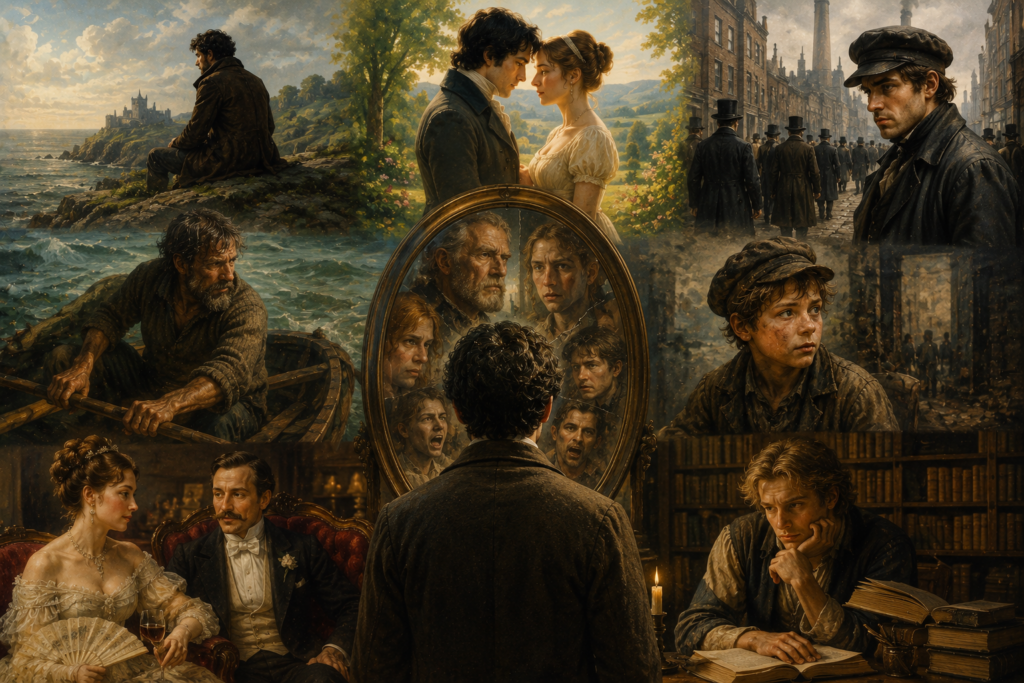
What makes people kind, jealous, proud, brave, or cruel? The Best Classic Human Nature stories ask those questions in ways that still feel fresh today.

These books help students see how literature explores choice, guilt, love, power, and fear. They also make class discussions much more interesting.

In this Guide

  • What Best Classic Human Nature means
  • Why classic books reveal human behavior so well
  • Major themes to watch for
  • Recommended books for students
  • How Shakespeare explores human nature
  • Symbols that show inner conflict
  • FAQs
human nature

What Best Classic Human Nature Means

These stories show people at their best and worst.

Best Classic Human Nature refers to classic literature that studies why people act the way they do. These works do not just tell a story. They ask what drives a person to love, lie, forgive, betray, or seek power.

That is why books from hundreds of years ago can still feel personal. A student may not live in ancient Greece or Victorian England, but they can understand pride, fear, and regret.

Classic literature lasts because it shows patterns in human behavior. Times change, but many inner struggles stay the same.

Why Best Classic Human Nature Stories Still Matter

Old books can feel surprisingly modern when they focus on real emotions.

The Best Classic Human Nature works matter because they help readers see themselves and others more clearly. They show that people are often complicated. A character can be noble in one moment and selfish in the next.

That mix makes literature feel true. In real life, people rarely fit into simple boxes like “good” or “bad.” Classic authors knew this well.

For example, in Frankenstein, Victor Frankenstein is brilliant, but his pride leads to harm. The creature is frightening, but he also wants love and acceptance. Mary Shelley asks readers to think about blame from more than one side.

Best Classic Human Nature Themes to Watch For

These themes appear again and again because they speak to deep human needs.

One major theme is ambition. In many classic works, ambition can inspire greatness, but it can also destroy a person. Macbeth wants power so badly that he loses his peace, his honor, and his sense of right and wrong.

Another key theme is guilt. Characters often try to hide from their actions, but guilt follows them. In Crime and Punishment, Raskolnikov believes he can live above normal moral rules. His mind proves otherwise.

Love is also central to Best Classic Human Nature literature. It can bring out courage and loyalty, but it can also expose jealousy or control. In Othello, love becomes poisoned by doubt.

These themes help readers ask strong questions: What do people want most? What are they willing to risk? What happens when desire becomes stronger than conscience?

Best Classic Human Nature Books to Read First

Start with books that are rich, readable, and often taught in school.

If you want a strong Best Classic Human Nature reading list, begin with works that focus on moral choice and inner conflict. These books give students plenty to discuss in essays, seminars, and AP Literature responses.

Frankenstein by Mary Shelley

This novel explores creation, responsibility, loneliness, and revenge. Victor wants glory, but he refuses to care for what he creates.

The creature begins with a need for kindness. When he faces rejection, his pain turns into anger. The book asks whether monsters are born or made.

Macbeth by William Shakespeare

This play is one of the clearest studies of ambition in classic literature. Macbeth starts as a brave soldier, but the promise of power changes him.

Lady Macbeth also reveals the cost of guilt. She pushes Macbeth toward murder, but her mind later breaks under the weight of what they have done.

Pride and Prejudice by Jane Austen

Austen studies pride, judgment, and self-knowledge with sharp humor. Elizabeth Bennet must learn that first impressions can be wrong.

Mr. Darcy must face his own pride before he can grow. Their story shows that love often depends on honesty and humility.

These titles are useful for school reading, essay practice, and personal study.

  • Frankenstein by Mary Shelley
  • Macbeth by William Shakespeare

Both books are short enough for students to manage, but deep enough for serious analysis. They are also great examples of Best Classic Human Nature because they focus on choices, consequences, and the hidden parts of the mind.

How Best Classic Human Nature Appears in Shakespeare

Shakespeare understood that people often fight battles inside themselves.

Shakespeare is central to Best Classic Human Nature because his characters feel alive. They doubt, desire, fear, and change. They often know the right choice, yet still choose the wrong one.

In Hamlet, the title character struggles with grief and revenge. He thinks deeply, but thought becomes a trap. His delay reveals how hard action can be when the mind is full of fear.

In King Lear, a king wants love, but he also wants control. His tragedy begins when he confuses praise with loyalty. That mistake feels painful because it is so human.

If Shakespeare’s wording feels hard at first, try this helpful guide: how to understand Shakespearean language. It can make the plays easier to read and discuss.

Symbols That Reveal Human Nature

Symbols help readers see what characters cannot always say out loud.

In many Best Classic Human Nature works, objects, settings, or images reveal inner conflict. A storm may show mental chaos. A locked room may suggest secrecy or shame.

In Macbeth, blood becomes a symbol of guilt. Macbeth and Lady Macbeth try to wash away signs of murder, but they cannot cleanse their minds.

In Frankenstein, light often stands for knowledge. Yet the novel questions whether all knowledge leads to wisdom. Victor gains scientific power, but he lacks moral care.

Symbols like these make classic literature more powerful. They turn private feelings into images readers can track and explain.

image-slider-with-thumbnail1.jpeg
PlayPause
previous arrow
next arrow
image-slider-with-thumbnail1.jpeg
image-slider-with-thumbnail3.jpeg
image-slider-with-thumbnail4.jpeg
ChatGPT Image Jun 27, 2026, 06_33_13 PM
ChatGPT Image Jun 27, 2026, 06_36_37 PM
ChatGPT Image Jun 27, 2026, 06_38_39 PM
ChatGPT Image Jun 27, 2026, 06_31_22 PM
image-slider-with-thumbnail7.jpeg
ChatGPT Image Jun 27, 2026, 06_29_43 PM
ChatGPT Image Jun 27, 2026, 06_27_44 PM
image-slider-with-thumbnail6.jpeg
ChatGPT Image Jun 27, 2026, 06_15_07 PM
image-slider-with-thumbnail5.jpeg
ChatGPT Image Jun 27, 2026, 06_22_43 PM
ChatGPT Image Jun 27, 2026, 06_25_37 PM
ChatGPT Image Jun 27, 2026, 06_19_43 PM
ChatGPT Image Jun 27, 2026, 06_12_00 PM
ChatGPT Image Jun 27, 2026, 06_08_50 PM
ChatGPT Image Jun 26, 2026, 04_54_23 PM
ChatGPT Image Jun 27, 2026, 05_53_51 PM
ChatGPT Image Jun 28, 2026, 08_35_55 AM
previous arrow
next arrow

How to Read Best Classic Human Nature Literature for Class

A few simple habits can make these books less confusing.

When you read Best Classic Human Nature texts, watch what characters want. Desire often reveals the heart of the story.

Notice when a character lies to others or to themselves. Self-deception is one of the most important parts of classic literature.

Track moments of choice. A character’s true nature often appears when pressure rises.

For Shakespeare, reading a scene out loud can help. You can also use this guide to Shakespearean language if the old wording slows you down.

Trusted Resources for Deeper Study

These sources can help students build background knowledge.

For author background and literary history, Britannica is a strong place to start. It offers clear overviews of major writers, books, and historical periods.

For poetry, drama, and author pages, the Poetry Foundation is also useful. It can help readers connect themes across different works.

FAQs About Best Classic Human Nature

What does Best Classic Human Nature mean in literature?

It means classic books or plays that explore why people act, feel, and choose as they do. These works focus on deep emotions and moral conflict.

What is the best classic book about human nature?

Frankenstein is one of the best choices for students. It explores ambition, loneliness, blame, and the need for compassion.

Why do teachers assign classic books about human nature?

Teachers assign them because they lead to strong discussion and analysis. They also help students think about real human problems through fiction.

Is Shakespeare good for studying human nature?

Yes. Shakespeare’s plays are full of jealousy, guilt, love, pride, and fear. His characters often feel real because their flaws are so recognizable.

Key Takeaway

The Best Classic Human Nature books last because they tell the truth about people. They show that every person can struggle with pride, fear, desire, and conscience.

When students read these works closely, they do more than study old stories. They learn how literature helps us understand ourselves. 📚

Best Classic Cults and Manipulation: Literature’s Most Chilling Power Stories

Cults and Manipulation

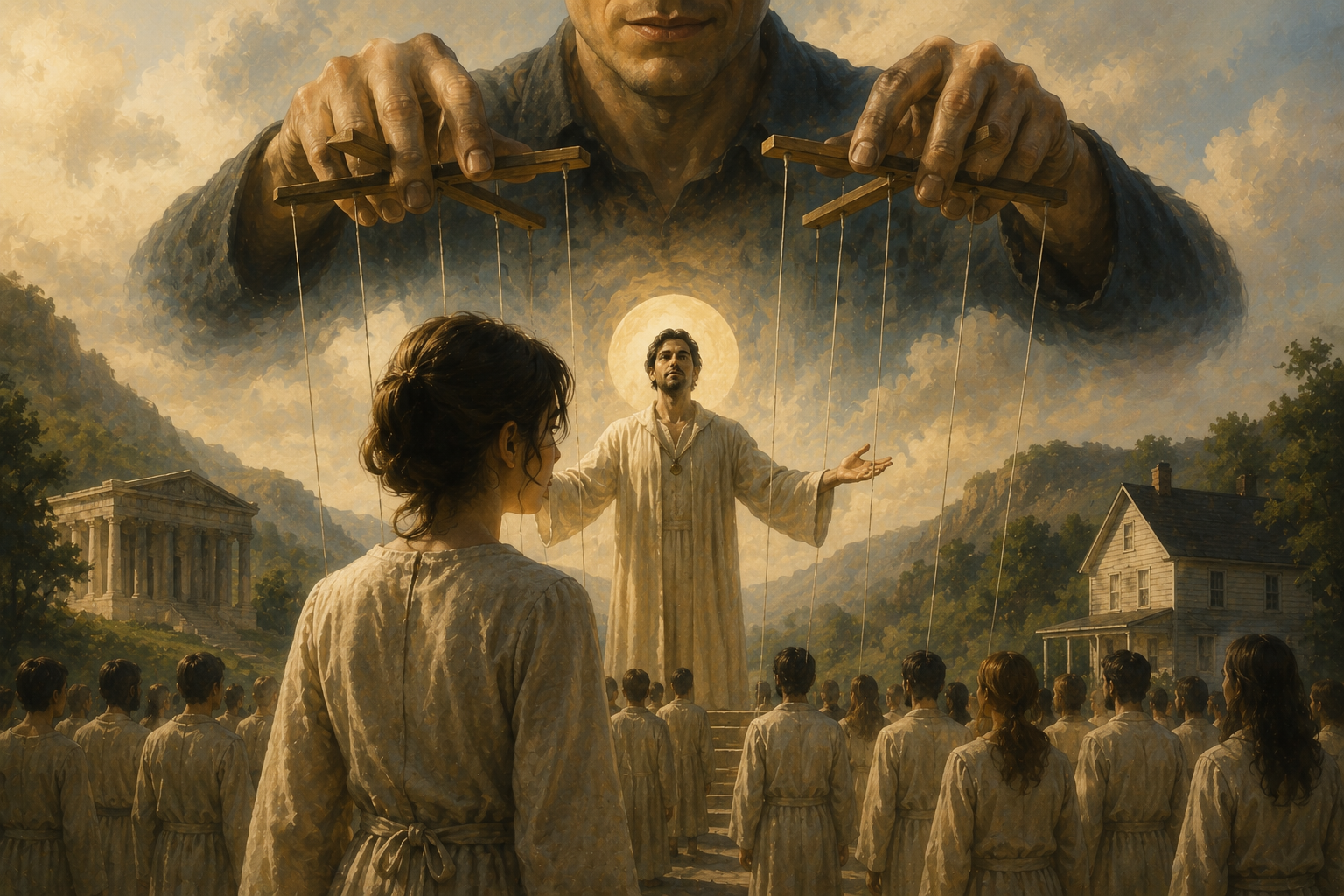
The best classic cults and manipulation stories show how people can lose their freedom without noticing at first. These books and plays are not just dark or strange, they reveal how fear, loyalty, and pressure can change a whole group.

For students, these works are rich choices for essays because they connect character, theme, symbolism, and history in clear ways.

In this Guide

  • Why cults and manipulation matter in classic literature
  • Best classic cults and manipulation books to read first
  • Common themes in these works
  • Symbols that reveal control
  • How to study these texts for class
  • FAQs

Why Best Classic Cults and Manipulation Stories Still Matter

These stories help us see how control can look normal from the inside.

The best classic cults and manipulation stories often begin with ordinary people. A town, a school, a family, or a nation starts to follow a belief system that no one is allowed to question.

That is what makes these works so powerful. They do not always need monsters. The danger comes from people who obey rules, repeat slogans, or fear being cast out.

In literature, cult-like control can appear in many forms. It may come from a leader, a government, a religious group, or even a crowd. The key idea is the same: people give up their judgment because the group seems stronger than the self.

Best Classic Cults and Manipulation Books to Read First

These works are strong starting points for students who want clear themes and powerful examples.

A strong best classic cults and manipulation reading path often starts with George Orwell’s 1984. In the novel, the Party controls language, memory, privacy, and love. Big Brother becomes more than a leader. He becomes a symbol of total power.

Arthur Miller’s The Crucible is another key text. The play is set during the Salem witch trials, but it also reflects fear during the Red Scare. People accuse others to save themselves, and the whole town becomes trapped by panic.

Shirley Jackson’s “The Lottery” is short, but it hits hard. The villagers follow a violent tradition because it has always existed. No one can explain it well, yet they still obey.

William Golding’s Lord of the Flies also fits this topic. The boys form a violent group around fear, status, and ritual. Jack does not need truth to lead. He needs emotion.

Amazon Books: Classic Titles Worth Reading

If you want to build a strong literature list, these books are easy to find on Amazon, in libraries, or through school reading programs.

  • 1984 by George Orwell
  • The Crucible by Arthur Miller

Both texts work well for essays about power, fear, mass belief, and moral choice.

Common Themes in Best Classic Cults and Manipulation Literature

These stories often ask one sharp question: why do people obey harmful systems?

One major theme in the best classic cults and manipulation works is fear. Fear makes characters doubt themselves. It also makes them turn against others.

In The Crucible, fear spreads through accusation. A person can be ruined by a lie, so people lie first to protect themselves.

Another major theme is identity. Cult-like systems often erase the individual. In 1984, Winston’s private thoughts are treated as crimes. The Party wants to control not only what people do, but what they believe is true.

Group loyalty is also central. In “The Lottery,” villagers follow the crowd even when the result is cruel. Jackson shows how tradition can become dangerous when people stop asking why it exists.

Common Symbols in Best Classic Cults and Manipulation Stories

Symbols in these works often turn simple objects into signs of control.

In the best classic cults and manipulation stories, symbols help readers see hidden power. A symbol may look ordinary, but it carries deep fear or pressure.

In 1984, Big Brother’s face is everywhere. His image stands for constant watchfulness. Even when he is not present, people feel watched.

In “The Lottery,” the black box is a key symbol. It is old, worn, and treated with respect. It shows how people can worship tradition even when that tradition harms them.

In Lord of the Flies, the painted faces become masks. The boys use them to hide shame. Once hidden, they act with more cruelty.

These symbols matter because they make manipulation visible. They show how power works through objects, rituals, and repeated images.

How Leaders Manipulate in Classic Literature

Manipulative leaders often use simple tricks that feel familiar.

They create enemies. They repeat slogans. They punish doubt. They make the group feel chosen or threatened.

In Animal Farm, Napoleon changes the rules while claiming to protect the farm. The animals are too tired, scared, or confused to resist. Language becomes a weapon.

In Lord of the Flies, Jack uses fear of the beast to gain control. He offers safety, but his version of safety requires obedience.

This is why the best classic cults and manipulation texts still feel current. They show that control does not always begin with force. Sometimes it begins with a promise.

How to Study Best Classic Cults and Manipulation for Class

These works become easier to analyze when you track patterns as you read.

When you study the best classic cults and manipulation literature, pay attention to repeated words, rules, punishments, and public rituals. These details often reveal the system of control.

It also helps to mark moments when a character doubts the group. Doubt is often the first sign of inner freedom.

If you want a simple method, use this guide on how to take notes while reading a novel. It can help you track symbols, character shifts, and theme evidence without feeling lost.

For essay writing, connect each example to a bigger idea. Do not just say a leader is cruel. Explain how that leader gains trust, spreads fear, or controls truth.

Historical Context That Helps

Many of these works reflect real fears from history.

1984 is often read as a warning about totalitarian power. For a clear overview of that idea, Britannica’s entry on totalitarianism is a helpful resource.

The Crucible connects to the Salem witch trials and to political fear in Miller’s own time. Britannica’s overview of the Salem witch trials gives useful background for students.

Context can deepen your reading, but the human questions still matter most. Why do people join in? Why do they stay silent? What does it cost to resist?

Why These Stories Work So Well for Essays

The topic gives students a clear path from plot to theme.

The best classic cults and manipulation stories are useful for essays because they have visible patterns. You can study leaders, victims, symbols, rules, and turning points.

They also invite strong thesis statements. For example, you might argue that Orwell shows language as the main tool of control. You might argue that Jackson presents tradition as dangerous when it lacks moral thought.

Good essays on this topic should avoid simple claims like “power is bad.” A stronger claim explains how power spreads and why people accept it.

FAQ: Best Classic Cults and Manipulation in Literature

What makes the best classic cults and manipulation stories so powerful?

They show how people can accept harmful systems. That makes the danger feel real, not distant.

Is 1984 about a cult?

Not in the usual sense, but it uses cult-like control. The Party demands total loyalty, controls truth, and turns Big Brother into a figure of worship.

Why is “The Lottery” often linked to manipulation?

The villagers follow a deadly ritual because of tradition and group pressure. No one wants to stand apart from the crowd.

What should I track while reading these works?

Track rules, repeated phrases, symbols, fear tactics, and moments when characters choose silence or resistance.

Key Takeaway

The best classic cults and manipulation stories are not only about strange groups or cruel leaders. They are about how fear, language, and loyalty can shape what people believe.

Great literature asks us to notice those patterns before they become normal. That is why these classics still matter in the classroom and beyond. 📚

Most Influential Redemption Arcs in Literature

Redemption arc

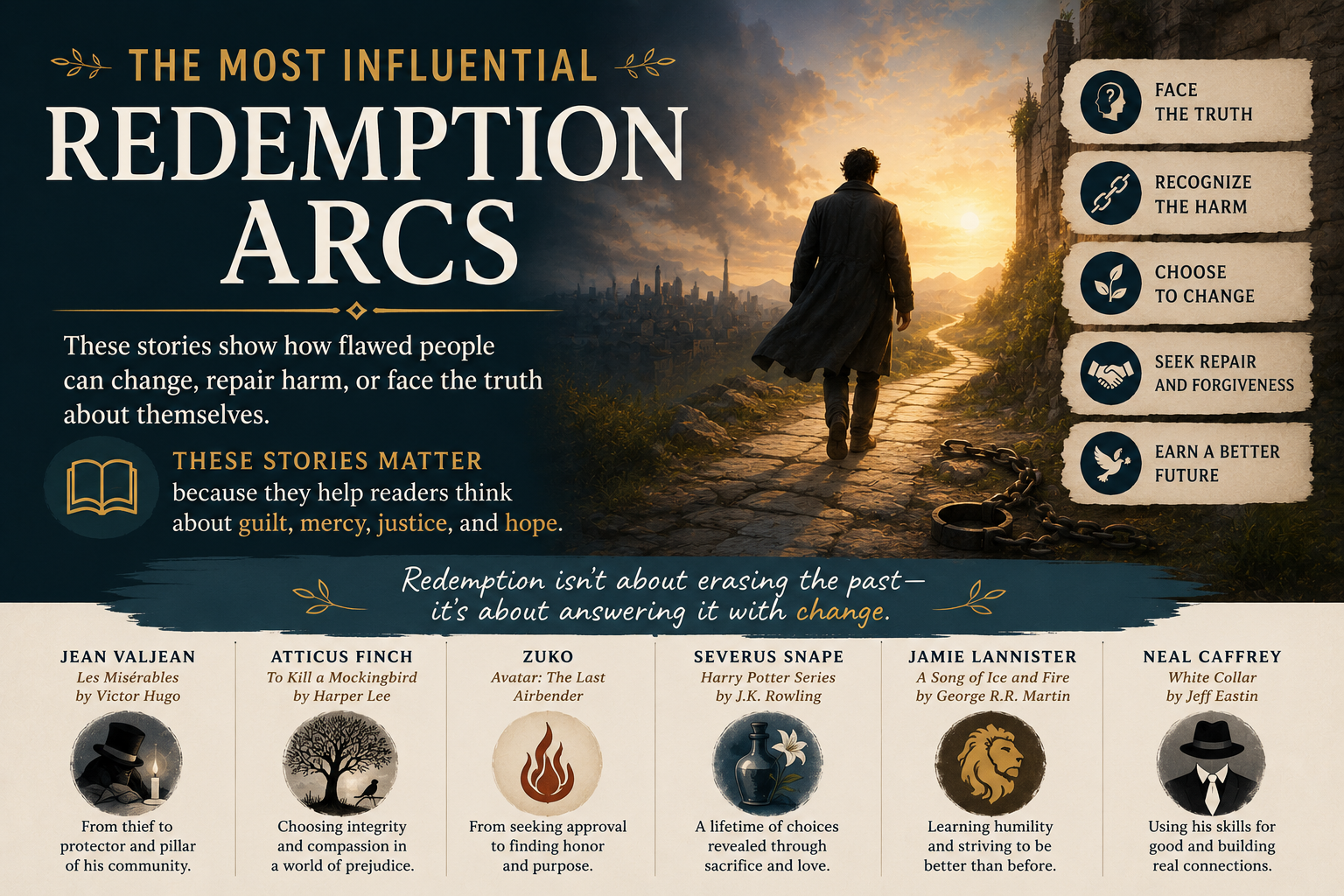
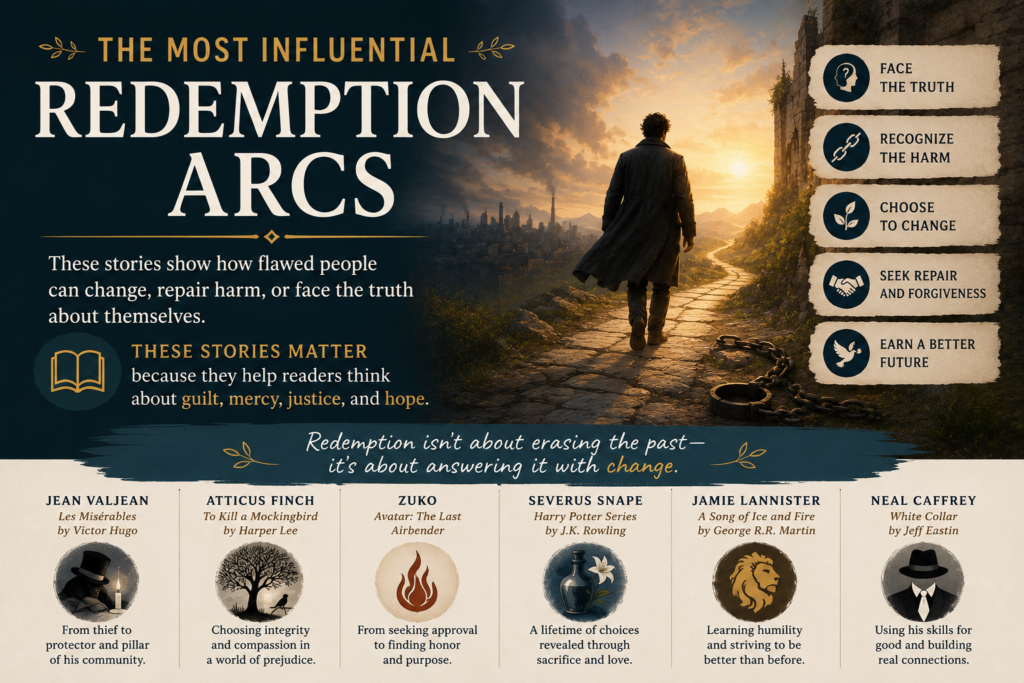
The Most Influential Redemption Arcs show how flawed people can change, repair harm, or face the truth about themselves. These stories matter because they help readers think about guilt, mercy, justice, and hope.

From old classics to modern novels, redemption arcs ask one hard question: can a person become better after doing wrong?

In this Guide

Redemption arc

Why the Most Influential Redemption Arcs Still Matter

Redemption arcs turn moral failure into a story of change.

The Most Influential Redemption Arcs do not excuse bad choices. They show what happens when a character sees the damage they caused and tries to change course.

This is why students often meet these arcs in English class. They give readers a clear way to study character growth, conflict, theme, and moral choice.

A strong redemption arc usually has a few key parts. The character causes harm, faces a crisis, feels the weight of guilt, and makes a choice that proves real change.

That final choice matters most. A character is not redeemed just because they feel sorry. They must act.

Most Influential Redemption Arcs in Classic Literature

Classic literature gives us some of the clearest examples of moral change.

These Most Influential Redemption Arcs have lasted because they feel honest. The characters do not become perfect overnight. Their change costs them something.

Ebenezer Scrooge in A Christmas Carol

Charles Dickens gives readers one of the most famous redemption stories ever written. Scrooge starts as cold, greedy, and cruel to the less fortunate.

After visits from the ghosts, he sees his past, present, and possible future. These visions force him to face the lonely life he has built.

Scrooge changes because he chooses kindness while he still has time. His redemption feels joyful, but it also comes from fear, shame, and self-knowledge.

For background on Dickens and his work, see Britannica’s overview of Charles Dickens.

Jean Valjean in Les Misérables

Victor Hugo’s Jean Valjean begins as a man marked by prison and poverty. After he steals silver from a bishop, the bishop protects him instead of turning him in.

That act of mercy changes Valjean’s life. He becomes a man who helps others, even when it puts him at risk.

Valjean’s arc shows that redemption is not one moment. It is a lifetime of hard choices.

Sydney Carton in A Tale of Two Cities

Sydney Carton starts as bitter and wasted. He sees himself as a failure with little purpose.

His final act changes how readers see him. By giving his life to save another man, he turns regret into sacrifice.

Carton’s redemption is tragic, but it is powerful. He cannot fix his whole past, yet he can give his life meaning.

Severus Snape in the Harry Potter Series

Snape is one of modern literature’s most debated redemption arcs. He is cruel, secretive, and often unfair.

Yet his hidden loyalty reveals a more complex person. His choices do not erase his harm, but they show a long struggle with guilt and love.

This is why Snape remains important in classroom and fan debates. His arc asks whether sacrifice can balance past cruelty.

Themes and Symbols in Redemption Arcs

Redemption stories often use symbols to show inner change.

Light and darkness appear often in redemption arcs. A character may move from shadow into light, which can show moral growth or new hope.

Journeys also matter. A road, a prison, or a return home can show that change takes effort. Jean Valjean’s movement through France reflects his search for grace and safety.

Names can carry meaning too. When a character takes a new name, it may show a new self. Valjean becomes Monsieur Madeleine, which points to his attempt to live beyond his prison past.

Time is another key symbol. In A Christmas Carol, the ghosts use time to teach Scrooge. The past brings regret, while the future offers warning.

If you want to sharpen your close reading of symbols, imagery, and word choice, try our guide on how to read Emily Dickinson. The same skills can help you study longer novels.

Modern Lessons from the Most Influential Redemption Arcs

Redemption arcs still shape how readers talk about justice and change.

The Most Influential Redemption Arcs are not simple “good guy” stories. They often ask if people deserve a second chance after real harm.

This question feels modern because people still debate it in schools, courts, families, and online spaces. Literature gives readers a safer place to think through the problem.

Some arcs stress forgiveness. Others focus on responsibility. The best ones do not make the answer too easy.

That is why redemption arcs work well in essays. You can ask what the character did wrong, what they learned, and whether their final choice truly repairs anything.

These books are strong choices for students who want deeper examples.

  • A Christmas Carol by Charles Dickens
  • Les Misérables by Victor Hugo

Both books show redemption in a clear but serious way. They also give students rich material for theme, character, and symbolism essays.

For shorter practice, pair a novel with poetry study. A poem can train you to notice small details that reveal change. Our post on reading Emily Dickinson is a useful place to start.

FAQs About the Most Influential Redemption Arcs

What are the Most Influential Redemption Arcs in literature?

The Most Influential Redemption Arcs often include Scrooge in A Christmas Carol, Jean Valjean in Les Misérables, and Sydney Carton in A Tale of Two Cities.

What makes a redemption arc believable?

A believable arc shows guilt, effort, and real change. The character must act in a way that proves they have learned from the past.

Is redemption the same as forgiveness?

No. A character may seek redemption without being fully forgiven. Forgiveness depends on others, while redemption depends on moral change.

Why do teachers assign books with redemption arcs?

These books help students study character growth, theme, and conflict. They also lead to strong essay topics about justice and mercy.

Key Takeaway

The Most Influential Redemption Arcs remind us that change is possible, but never cheap. Great literature shows that redemption requires truth, action, and the courage to become someone better.

Common Symbols in Classic Literature

literature symbols
literature symbols

Common Symbols in Classic Literature: A Student-Friendly Guide

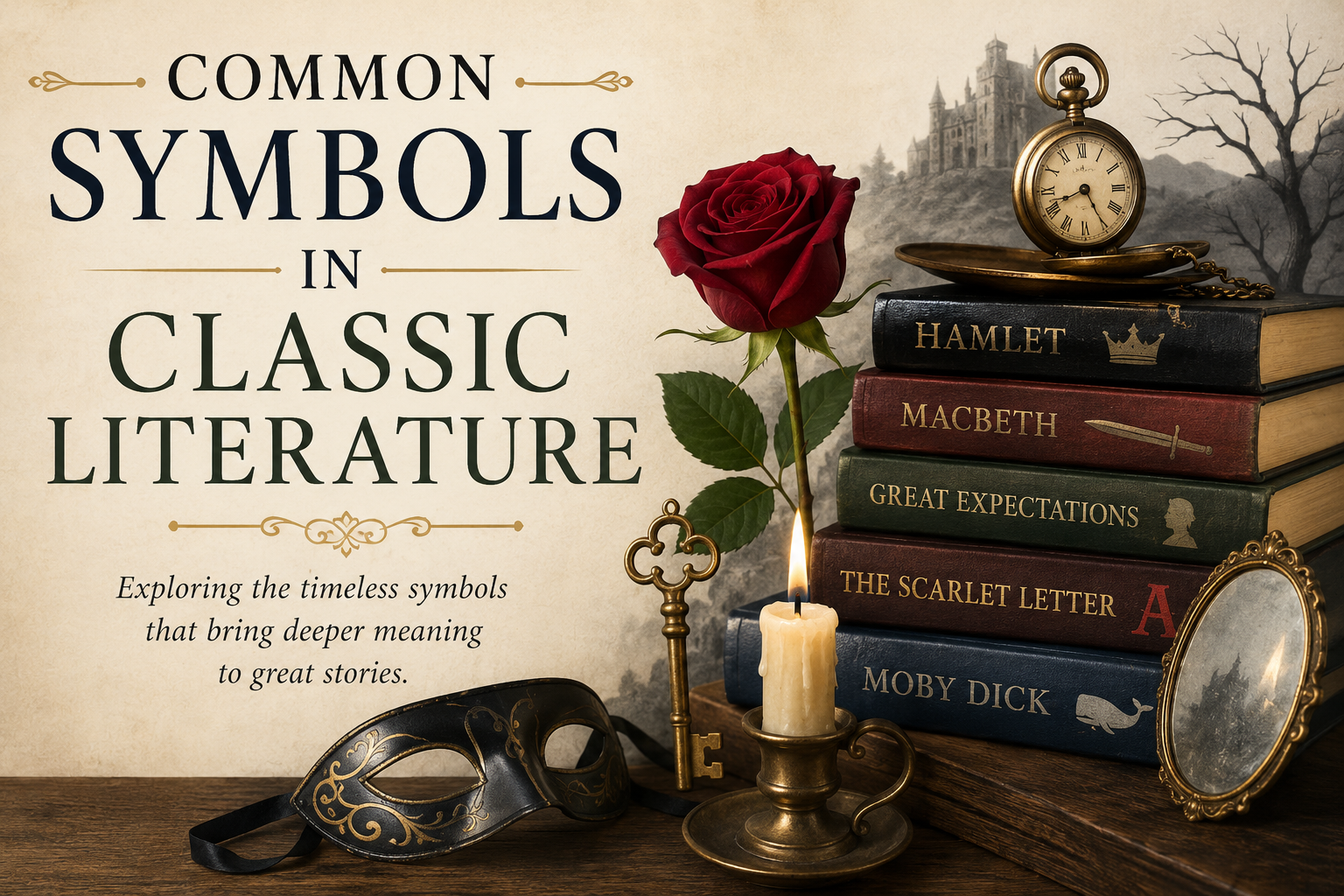
Common Symbols in Classic Literature can help you see deeper meaning in novels, plays, and poems. When you know what certain objects, colors, or places often suggest, you can read with more confidence and write stronger essays.

This guide explains key symbols, gives clear literary examples, and shows how to use them without overthinking every detail.

In this Guide

  • Why symbols matter in classic literature
  • Common symbols and what they often mean
  • Examples from famous books
  • How to analyze symbols in essays
  • Books that help you practice
  • FAQ and key takeaway

Why Common Symbols in Classic Literature Matter

Symbols help writers say more with less.

A symbol is something that stands for more than itself. It can be an object, place, color, animal, or action that points to a bigger idea.

For students, Common Symbols in Classic Literature are useful because they often connect to major themes. A river may suggest change. A locked room may suggest secrets. A storm may suggest conflict or fear.

Symbols do not always mean the same thing in every book. Context matters. Still, knowing common patterns gives you a strong place to start.

Common Symbols in Classic Literature: Light and Darkness

Light and darkness often show knowledge, truth, danger, or moral conflict.

Light often points to truth, hope, or understanding. Darkness often points to fear, confusion, or hidden evil.

In Frankenstein by Mary Shelley, light can suggest knowledge and discovery. Victor Frankenstein wants to “bring light” to science, but his search leads to pain and guilt.

In Heart of Darkness by Joseph Conrad, darkness is not just a setting. It raises questions about cruelty, power, and what people hide inside themselves.

When you see light or darkness in a classic text, ask what the character understands at that moment. Also ask what the writer may be hiding from the reader.

Common Symbols in Classic Literature: Colors

Colors can carry emotional and social meaning.

Red often suggests passion, sin, blood, or shame. White can suggest purity, innocence, emptiness, or coldness. Green often points to hope, envy, nature, or desire.

In The Scarlet Letter by Nathaniel Hawthorne, the red letter “A” is one of the most famous symbols in American literature. It marks Hester Prynne’s shame, but it also becomes a sign of strength.

In The Great Gatsby by F. Scott Fitzgerald, the green light at the end of Daisy’s dock stands for Gatsby’s dream. It also shows how that dream stays just out of reach.

Colors are among the most important Common Symbols in Classic Literature because they can appear many times across a story. Track when a color appears and how the mood changes around it.

Common Symbols in Classic Literature: Nature

Nature often reflects a character’s inner life.

Writers use weather, seasons, gardens, and wild places to show emotion or change. Spring may suggest youth or rebirth. Winter may suggest death, loss, or loneliness.

In Wuthering Heights by Emily Brontë, the wild moors reflect the fierce emotions of the characters. The setting feels harsh, open, and hard to control.

In King Lear by William Shakespeare, the storm shows Lear’s mental collapse. The weather outside mirrors the chaos inside him.

When you study Common Symbols in Classic Literature, pay close attention to setting. A landscape may reveal more than a character says out loud.

Common Symbols in Classic Literature: Animals

Animals often reveal power, fear, guilt, or instinct.

A snake may suggest danger or betrayal. A bird may suggest freedom or a trapped soul. A dog may suggest loyalty, but it can also show violence, depending on the story.

In Macbeth, Shakespeare uses animal images to show disorder and fear. After Duncan’s murder, nature seems broken, which suggests that Macbeth’s crime has damaged the moral order.

In Lord of the Flies by William Golding, the “beast” becomes a symbol of the boys’ fear. It also points to the violence inside human nature.

Animal symbols work best when you connect them to a theme. Do not stop at “the bird means freedom.” Ask who wants freedom and what blocks it.

Common Symbols in Classic Literature: Objects

Objects can carry a story’s biggest ideas.

A letter, ring, mirror, or weapon can gain meaning as the story moves on. The object may start as a normal item, then become tied to guilt, love, power, or memory.

In The Lord of the Rings by J.R.R. Tolkien, the ring stands for power and temptation. It shows how even good people can change when power takes hold.

In Jane Eyre by Charlotte Brontë, the locked room and hidden spaces at Thornfield Hall suggest secrets, fear, and social limits.

Common Symbols in Classic Literature often gain meaning through repetition. If an object appears at key moments, the author likely wants you to notice it.

Common Symbols in Classic Literature: Journeys and Roads

A journey often shows growth, escape, or a search for truth.

Roads and travel can show a character’s movement from innocence to experience. A physical trip may also reflect an inner change.

In The Odyssey by Homer, Odysseus’s journey is about more than getting home. It tests his pride, loyalty, and wisdom.

In The Adventures of Huckleberry Finn by Mark Twain, the river becomes a path toward freedom. Yet it also shows the moral problems of the society around Huck and Jim.

Journey symbols are useful in essays because they often connect to character growth. Ask what the character learns before and after the journey.

How to Analyze Common Symbols in Classic Literature

A symbol should connect to the whole story, not just one scene.

Start with the basic meaning. What is the object, color, place, or action? Then ask how it changes as the story goes on.

Look for repetition. If a symbol appears more than once, note when it appears and who is present. This can reveal a pattern.

Connect the symbol to a theme. A green light is not important only because it is green. It matters because it connects to dreams, wealth, and longing.

If you want a deeper step-by-step method, read this guide on how to find symbolism in a story.

How to Use Symbols in Literature Essays

Strong symbol analysis stays close to the text.

Do not write that a symbol “obviously” means one thing. Instead, prove your idea with evidence from the story.

A simple essay sentence might look like this:

In The Great Gatsby, the green light symbolizes Gatsby’s dream of a perfect future with Daisy, but its distance shows that the dream is impossible to fully reach.

This works because it names the symbol, explains the meaning, and links it to a theme.

For AP Literature or college essays, you should also explain how the symbol affects the reader. Does it create hope? Does it create doubt? Does it make the ending feel tragic?

Best Books for Studying Common Symbols in Classic Literature

These books give students strong practice with symbolism.

  • The Great Gatsby by F. Scott Fitzgerald
  • The Scarlet Letter by Nathaniel Hawthorne
  • Lord of the Flies by William Golding

Each book uses symbols in a clear way, which makes them helpful for essays and class discussion. They are also common choices in high school and college literature courses.

You can also explore trusted resources like the Poetry Foundation’s definition of symbol and Britannica’s overview of Symbolism for more background.

Quick Study Tips for Symbolism

A few simple habits can make symbol analysis much easier.

Mark repeated objects, colors, and places as you read. Write a short note each time one appears.

Ask what changes near the symbol. Does the mood shift? Does a character act in a new way?

Do not force a meaning. Some details are just details. A symbol matters when the story gives it weight.

When in doubt, return to theme. The best symbol analysis explains how one detail supports the bigger message of the work.

FAQ About Common Symbols in Classic Literature

What are the most common symbols in classic literature?

Some of the most common symbols are light, darkness, colors, nature, animals, objects, and journeys. Their meaning depends on the story’s context.

How do I know if something is a symbol?

Look for repetition, strong description, or a link to a major theme. If the author keeps drawing attention to it, it may be symbolic.

Can one symbol have more than one meaning?

Yes. A strong symbol can hold more than one idea. For example, the scarlet letter in Hawthorne’s novel suggests shame, strength, and identity.

Why do teachers ask students to find symbols?

Symbols help students understand theme, character, and conflict. They also lead to stronger literary analysis.

Should I memorize Common Symbols in Classic Literature?

You can learn common patterns, but do not rely on memorization alone. Always use the text to support your interpretation.

Key Takeaway

Common Symbols in Classic Literature are tools for deeper reading, not secret codes with fixed answers. Notice patterns, connect them to theme, and use evidence from the text to explain your ideas clearly.

error

Enjoy this article? Please spread the word :)

Follow by Email
BLUESKY
fb-share-icon
Reddit
LinkedIn
Share
RSS