The Joy Luck Club Summary and Analysis for Students

Joy Luck Club Summary

This guide offers The Joy Luck Club summary and analysis for students who need a clear path into Amy Tan’s novel. We will cover the plot, the structure, the main conflicts, and the deeper literary meaning.

Tan’s book can feel complex at first because it moves between voices and time periods. Once you see how the stories connect, the novel becomes much easier to understand.

In this Guide

Use this section to find the part of the novel you need most.

  • The Joy Luck Club summary and analysis: quick overview
  • Plot summary
  • Structure and point of view
  • Major conflicts
  • Themes and symbols
  • Study tips and FAQ
Joy Luck Club Summary

The Joy Luck Club summary and analysis: Quick Overview

Amy Tan’s novel is about mothers and daughters who love each other, yet often fail to understand each other.

The Joy Luck Club, published in 1989, follows four Chinese immigrant mothers and their American-born daughters in San Francisco. The older women carry painful memories from China. Their daughters face pressure to define themselves in America.

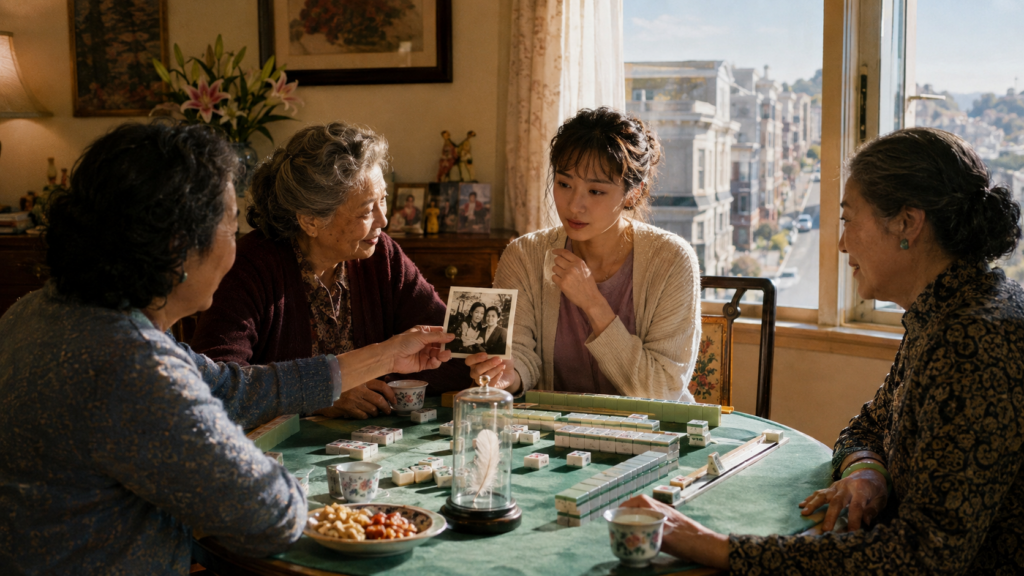
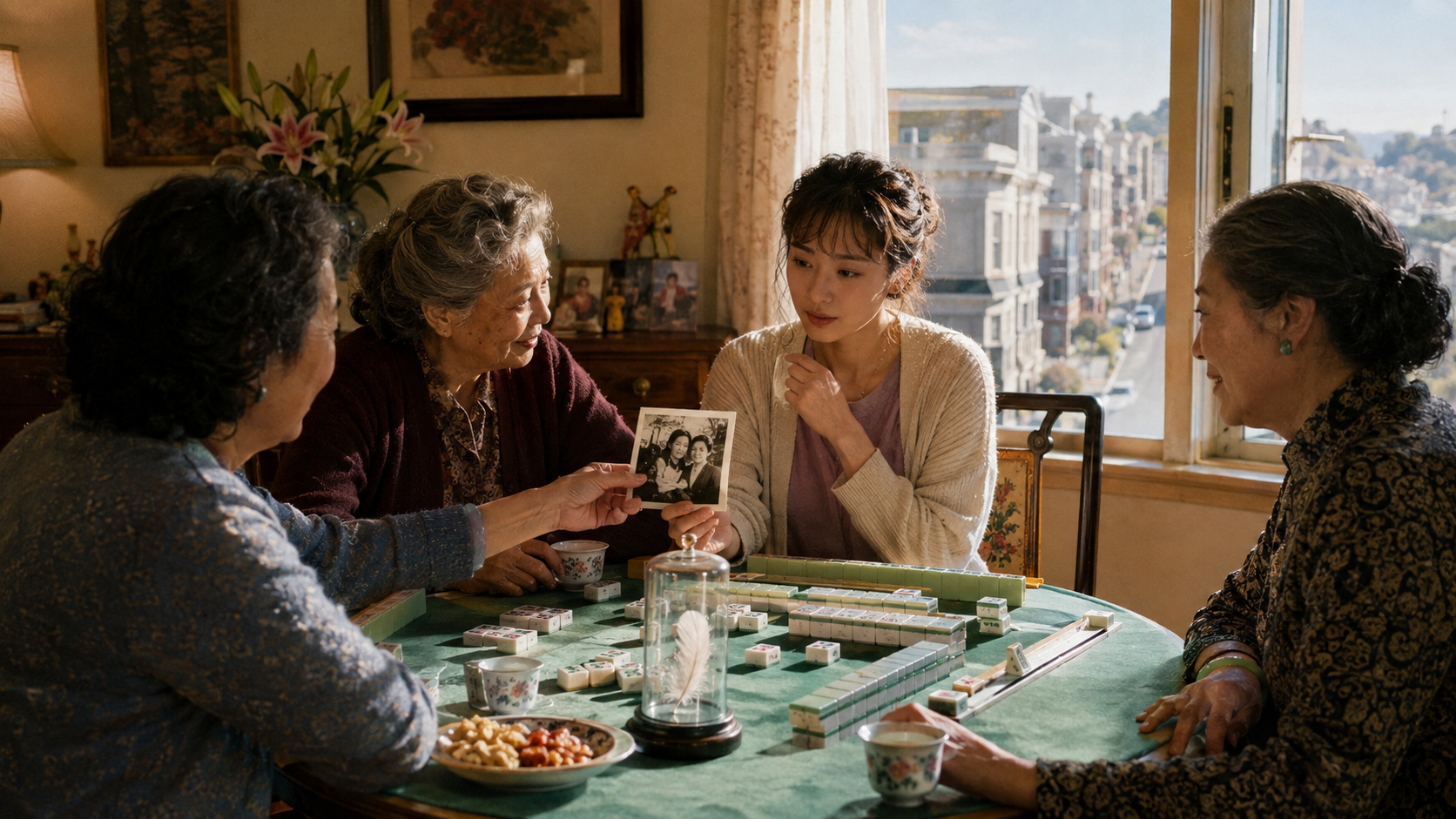
The title refers to a club started by Suyuan Woo. The women gather to play mahjong, share food, and protect hope during hard times. After Suyuan dies, her daughter Jing-mei takes her place at the table.

For class, The Joy Luck Club summary and analysis should focus on how stories pass from mother to daughter. The novel suggests that family history can hurt, but it can also heal.

If you want to study Tan’s life and career, the Britannica profile of Amy Tan gives helpful background.

Plot Summary of The Joy Luck Club

The novel does not follow one straight timeline, but its core story is easy to trace.

Jing-mei Woo has recently lost her mother, Suyuan. She joins the Joy Luck Club in her mother’s place and learns that Suyuan left behind twin daughters in China during wartime.

Jing-mei feels unsure about her role. She worries that she does not know enough about her mother to carry her story forward.

The novel then moves through the lives of the other families. An-mei Hsu teaches her daughter Rose to know her own worth. Lindo Jong teaches Waverly about strength, even when their pride causes tension.

Ying-ying St. Clair watches her daughter Lena accept an unequal marriage. Ying-ying wants Lena to find the voice she herself lost years before.

By the end, Jing-mei travels to China and meets her half-sisters. This final scene brings the novel’s emotional threads together. Jing-mei begins to understand Suyuan not as a distant mother, but as a full person with grief, courage, and hope.

The Joy Luck Club summary and analysis of Structure

The structure mirrors the way memory works: broken, personal, and powerful.

The novel is made of linked stories, not one simple chapter-by-chapter plot. Each family gets moments of focus, and each voice adds a new piece to the whole.

In The Joy Luck Club summary and analysis, this structure matters because it shows how identity is built from many stories. No single woman can explain the full meaning of the book alone.

The structure is similar to The House on Mango Street by Sandra Cisneros. Both books use short connected sections to build a larger portrait of family, place, and selfhood.

This form also asks readers to pay close attention. A small detail in one story may matter much more later. If you need help with that skill, see our guide on how close reading works in literature.

The Joy Luck Club summary and analysis of Themes

The novel’s themes center on voice, memory, and the hard work of understanding family.

The Joy Luck Club summary and analysis often starts with the theme of mother-daughter love. The mothers want to protect their daughters from pain. The daughters often hear that protection as control.

Another key theme is cultural identity. The daughters grow up in America, while their mothers carry Chinese customs and memories. This gap leads to conflict, but it also creates a rich double vision of the world.

Storytelling is one of the novel’s most important powers. The mothers tell stories so their daughters will not lose the past. The daughters learn that these stories are not just family gossip. They are maps for survival.

The novel also explores silence. Many characters do not say what they feel until pain forces the truth out. Tan shows that silence can protect people, but it can also trap them.

The Joy Luck Club summary and analysis of Conflict

Most of the novel’s conflict comes from love that has not found the right words.

The main conflict is between mothers and daughters. The mothers speak from memory, fear, and sacrifice. The daughters speak from desire, pride, and confusion.

Waverly and Lindo clash over success and independence. Waverly thinks her mother judges her. Lindo sees a daughter who does not always understand the cost of strength.

Rose and An-mei face a different conflict. Rose has learned to stay quiet in her marriage. An-mei wants her to speak with courage, because she knows what silence can cost.

Jing-mei and Suyuan’s conflict continues even after Suyuan dies. Jing-mei believed she disappointed her mother. The trip to China helps her see that her mother gave her a story, not just a set of demands.

Important Symbols in The Joy Luck Club

Tan uses objects and games to show hidden emotional truths.

Mahjong stands for community and survival. The game brings the women together when life feels unstable. It also gives the novel its main gathering place.

The swan feather stands for hope passed from mother to daughter. It suggests that even a small object can carry a large dream.

Chess in Waverly’s story stands for strategy and pressure. Waverly learns how to win, but she also learns how success can strain a family bond.

Food often reveals love that characters cannot say out loud. Meals show care, judgment, memory, and tension at the same time.

Why the Ending Matters

The ending gives Jing-mei a new sense of belonging.

When Jing-mei meets her sisters in China, she does more than complete a family reunion. She becomes a bridge between Suyuan’s past and the family’s future.

The photograph at the end matters because it joins three daughters through one mother’s story. Jing-mei finally sees that she is not separate from her mother’s history. She is part of it.

This ending does not solve every problem in the novel. It gives emotional closure because Jing-mei accepts the duty to remember.

How to Write About The Joy Luck Club in Class

Strong essays about this novel focus on how form and meaning work together.

A good thesis might argue that Tan uses shifting points of view to show how family truth changes from one generation to the next.

You can also write about symbols. For example, mahjong is not just a game. It is a sign of friendship, survival, and memory.

When you quote the novel, do not just drop in a line. Explain who speaks, what the moment reveals, and why the detail matters. For more help, review this guide to close reading a literary passage.

From Idea to Novel Blueprint

These books pair well with Tan’s novel for essays or independent reading.

  • The Joy Luck Club by Amy Tan
  • The Woman Warrior by Maxine Hong Kingston

If you compare these books, look at how each one uses memory and family stories to explore identity.

FAQ About The Joy Luck Club

Here are quick answers to common student questions.

What should I include in The Joy Luck Club summary and analysis?

Include the main family relationships, the linked-story structure, the mother-daughter conflicts, and the themes of memory and identity.

Who is the main character?

Jing-mei Woo is often seen as the central figure because her story frames the novel. Still, the book works as a shared portrait of several women.

What is the main message of the novel?

The novel shows that understanding family often requires listening to painful stories from the past.

Why is the structure confusing?

The book moves across different voices and memories. Once you track each mother-daughter pair, the structure becomes clearer.

Is The Joy Luck Club hard to read?

It can feel complex at first, but the language is clear. The challenge comes from the shifting points of view.

Key Takeaway

The novel is about learning to hear the stories that shaped you.

The Joy Luck Club summary and analysis shows that Amy Tan’s novel is not just about conflict between generations. It is about how love, memory, and language can cross a painful gap.

For students, the best way into the book is to follow the stories. Each one adds a new layer to the meaning of family.
Themes in The Joy Luck Club: A Student-Friendly Guide

The Joy Luck Club themes

A clear guide to the major ideas, conflicts, and meanings students should notice in The Joy Luck Club.

Understanding the themes in The Joy Luck Club helps you see why Amy Tan’s novel feels personal and powerful. The book is not only about mothers and daughters, but also about memory, culture, pain, and love.

This guide explains the main ideas in simple terms so you can use them in class discussion, AP Literature writing, or a college essay.

In this Guide

  • Why the themes matter
  • Family and generational conflict
  • Identity and belonging
  • Language and storytelling
  • Memory, trauma, and silence
  • Gender, power, and voice
  • How to write about the themes
  • FAQ
The Joy Luck Club themes

Why Themes in The Joy Luck Club Matter

The novel uses personal stories to explore large questions about family, culture, and selfhood.

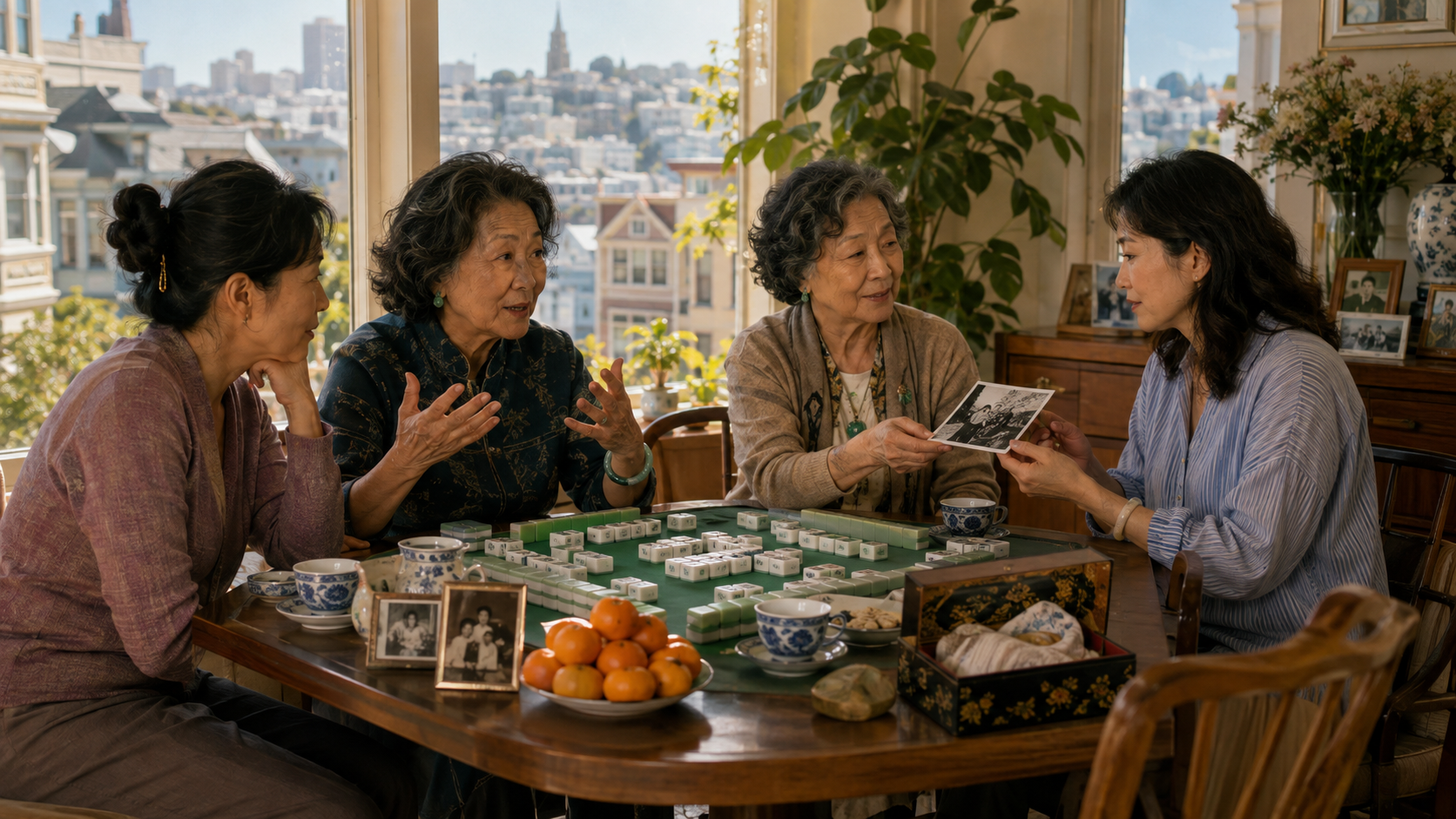
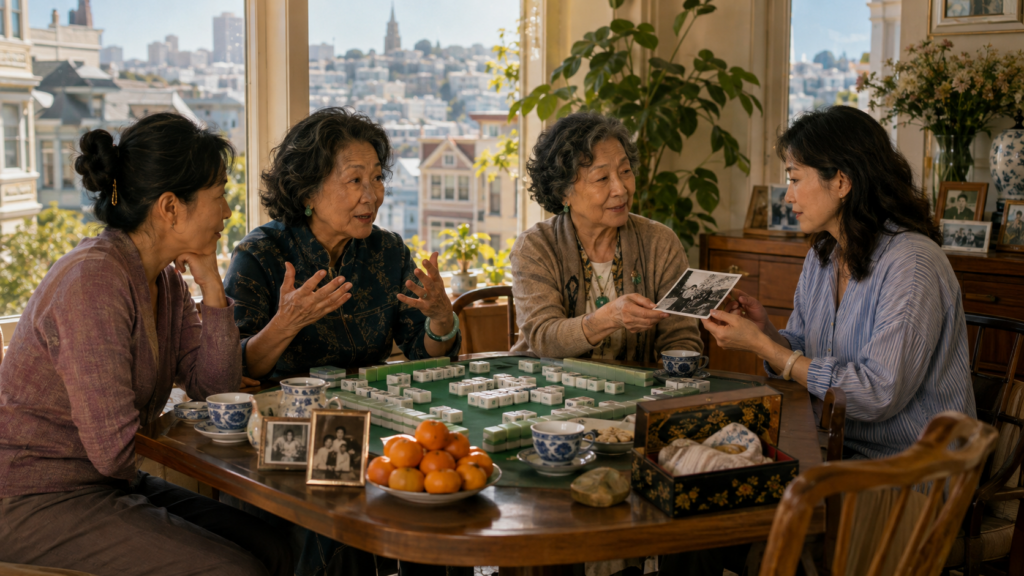
The Joy Luck Club is built from linked stories. Four Chinese immigrant mothers and their American-born daughters each carry different hopes and fears.

The themes in The Joy Luck Club come from these gaps between people who love each other but often misunderstand each other. The mothers know the pain of their past. The daughters often feel judged by lessons they do not fully understand.

This is why the book fits so well in high school and college classes. It shows how private family moments can reveal deep social and cultural conflicts.

For author background, you can review Britannica’s overview of Amy Tan.

Family and Generational Conflict: Core Themes in The Joy Luck Club

Much of the novel’s tension comes from love that feels like pressure.

One of the most important themes in The Joy Luck Club is the conflict between mothers and daughters. The mothers want to protect their daughters from pain. The daughters want room to define themselves.

June thinks her mother, Suyuan, expects too much from her. Waverly feels trapped by Lindo’s pride and criticism. Rose struggles to make choices because she has learned to doubt her own voice.

These conflicts are not simple fights. They come from different life experiences. The mothers survived war, loss, forced marriage, and strict gender roles. Their daughters grow up in America, where they are told to seek independence.

A strong theme statement might say: Tan shows that family love can become painful when parents and children do not share the same language of care.

This theme is common in literature. In Romeo and Juliet, family expectations shape personal choices. In Tan’s novel, the conflict is quieter, but the emotional stakes are just as real.

From Idea to Novel Blueprint

Identity and Belonging: Themes in The Joy Luck Club

The daughters often feel caught between the culture they inherit and the culture they live in each day.

Identity is one of the richest themes in The Joy Luck Club. The daughters are Chinese American, but they do not always know what that means. They may resist their mothers’ traditions, yet they also feel that something is missing when they ignore them.

June’s trip to China near the end of the novel is a key moment. She worries that she is not Chinese enough. Yet the trip helps her understand that identity is not only about language, food, or place.

Identity also comes through family memory. When June meets her half-sisters, she sees that her mother’s story did not end with loss. She becomes part of that story.

Tan avoids an easy answer. Belonging is not a single choice between China and America. It is a process of learning what has shaped you.

This theme connects with works like The House on Mango Street by Sandra Cisneros, where a young narrator also tries to understand home, heritage, and selfhood.

Language and Storytelling

In the novel, stories become a way to pass down truth when direct speech fails.

Many conflicts in the book happen because mothers and daughters do not understand each other’s words or meanings. The mothers may speak in warnings, images, or family stories. The daughters may hear only criticism.

Storytelling gives the mothers power. They use stories to explain what happened to them, but also to teach survival. Lindo’s story of her arranged marriage shows wit and strength. An-mei’s memories of her mother reveal the cost of silence.

These stories also change the daughters. They learn that their mothers are not only strict parents. They are women with deep wounds, clever plans, and lost dreams.

Among the themes in The Joy Luck Club, this one matters because the novel itself acts like a memory box. Each section adds another voice. Together, the voices create a fuller truth.

If you want help linking voice to character choices, see our guide on how to analyze characters in literature.

Memory, Trauma, and Silence

The past does not stay in the past in Tan’s novel.

Several mothers carry memories that they cannot share easily. Suyuan loses her twin daughters during war. Ying-ying suffers in a marriage that steals her sense of self. An-mei learns that women can be harmed by the rules of their society.

These memories shape how the mothers raise their daughters. Sometimes they become protective. Sometimes they become harsh. Often, they do both at once.

Silence is just as important as speech. When painful stories stay hidden, daughters can only guess why their mothers act as they do. This creates distance.

The novel suggests that healing begins when stories are finally told. June does not fully know her mother until after Suyuan dies. That loss makes the final reunion with her sisters even more moving.

This theme is also central in Toni Morrison’s Beloved, where memory and trauma shape family life. Both novels show that buried pain can still guide the present.

Gender, Power, and Voice

Tan shows how women fight for power in worlds that often deny it to them.

The mothers grow up in settings where women have limited control over marriage, family duty, and social status. Their lives teach them that survival often requires strategy.

Lindo learns to escape a forced marriage without open rebellion. An-mei learns the danger of a world that treats women as weak or disposable. Ying-ying must recover a voice she once lost.

The daughters face different limits. They live in America, but they still struggle with self-doubt, unfair expectations, and painful relationships. Rose, for example, must learn to speak for herself in her marriage.

These themes in The Joy Luck Club show that voice is not just speech. Voice means choice. It means the right to name your own pain and your own future.

Fate, Choice, and Personal Strength

The novel often asks whether people are trapped by the past or able to change their lives.

The mothers sometimes speak as if fate has power. They believe in signs, luck, and hidden forces. Yet their stories also show bold choices.

Suyuan creates the Joy Luck Club during a time of fear. That act matters. It turns despair into community and gives women a way to hold on to hope.

Waverly’s chess talent also connects to this theme. Her success depends on skill, but it also depends on confidence and a sense of inner force.

Tan does not reject fate fully. Instead, she shows that people live inside limits but can still act with courage.

How to Write About Themes in The Joy Luck Club

A good essay does more than name a topic. It explains what the novel says about that topic.

Start by turning a topic into a theme statement. Do not write, family is a theme. Write something like: Tan suggests that family love can wound when it is shaped by fear and silence.

Then connect the theme to a character conflict. June and Suyuan work well for this because their relationship changes how readers understand love, expectation, and regret.

You can also focus on structure. The novel’s many voices show that no single character owns the whole truth. This is a strong point for AP Literature essays.

When you discuss themes in The Joy Luck Club, use short quoted phrases if your teacher allows text evidence. Then explain how the detail reveals a larger meaning.

For deeper essay work, our guide to character analysis in literature can help you connect theme, conflict, and motive.

If you want a quick review tool before a test, our student literature study guide pack can support your notes and essay planning.

Helpful Background for Students

A little context can help, but the best analysis still begins with the text.

Amy Tan published The Joy Luck Club in 1989. The novel draws on Chinese American family life, immigration, and mother-daughter bonds, though it is a work of fiction.

For more classroom context, the NEA Big Read page on The Joy Luck Club offers useful background.

These books pair well with Tan’s novel for class projects or further reading.

  • The Bonesetter’s Daughter by Amy Tan
  • The Woman Warrior by Maxine Hong Kingston

FAQ: Themes in The Joy Luck Club

These quick answers can help you review before a quiz, seminar, or essay.

What are the main themes in The Joy Luck Club?

The main themes in The Joy Luck Club include mother-daughter conflict, identity, memory, storytelling, gender, and the search for voice.

What is the most important theme in the novel?

The most important theme is often seen as the struggle between mothers and daughters. Tan shows that love can be hard to understand across culture and age.

How does Amy Tan show identity?

Tan shows identity through family stories, cultural tension, and June’s journey to understand her mother’s past.

Why is storytelling important in the book?

Storytelling helps the mothers share pain, wisdom, and history. It also helps the daughters see their mothers as full people.

Key Takeaway

The lasting themes in The Joy Luck Club show that family stories can hurt, heal, and shape who we become. Tan’s novel asks readers to listen closely, especially when love is hidden inside conflict.

error

Enjoy this article? Please spread the word :)

Follow by Email
BLUESKY
fb-share-icon
Reddit
LinkedIn
Share
RSS