

Some images feel less like pictures and more like memories waiting for language.
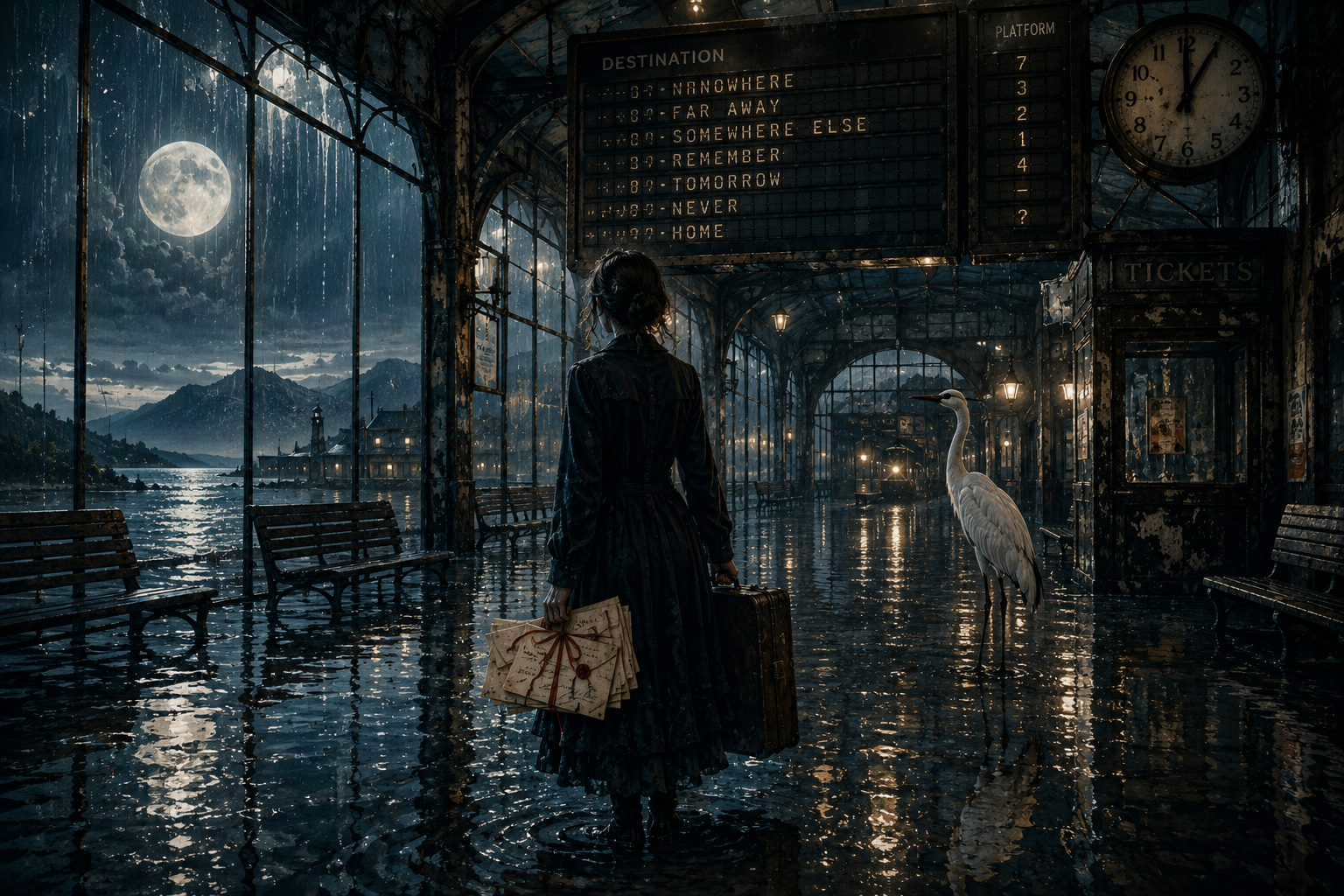
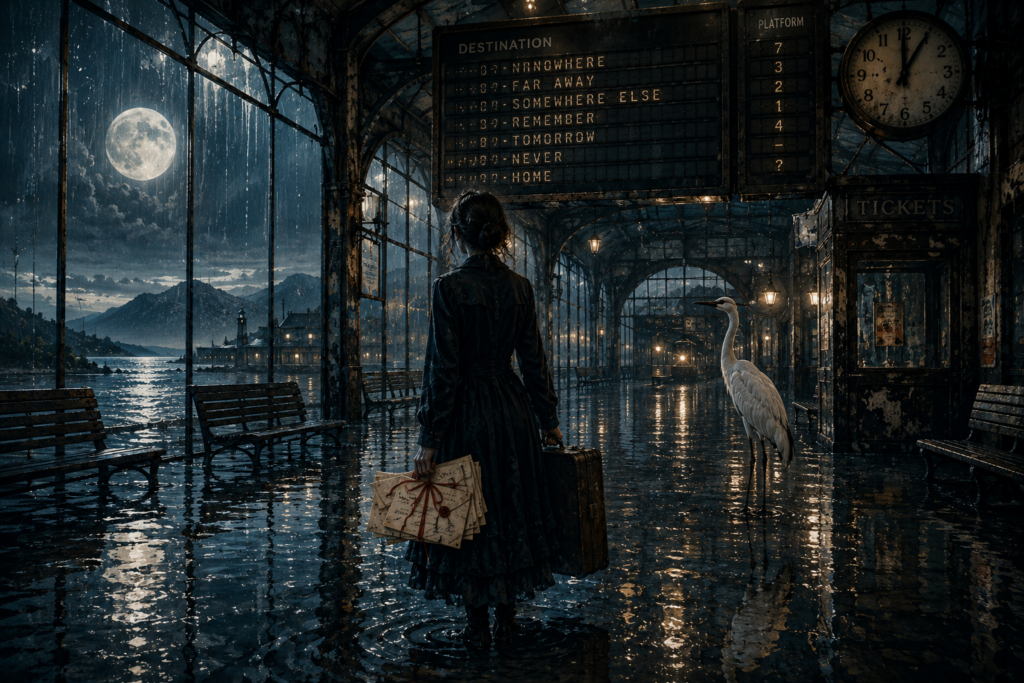
This ekphrasis poetry prompt begins with a strange and lonely scene: a woman standing in a flooded train station long after midnight while rain slides down cracked windows and unreadable destination signs flicker overhead. She carries old letters tied together with red thread. A white crane waits beside her in silence. Outside, the moon hangs low enough to feel personal.
Ekphrastic writing asks you to respond to an image through poetry or reflection. The image becomes a doorway into emotion, memory, symbolism, and voice. If you want a deeper understanding of how imagery and symbolism work together in literature, this guide on how to analyze poetry step by step can help strengthen your reading and writing practice:
How to Analyze Poetry Step by Step
What Is an Ekphrasis Poetry Prompt?
An ekphrasis poetry prompt uses visual art or an imagined scene as the starting point for a poem. The goal is not to describe every detail mechanically. The goal is to enter the emotional atmosphere of the image and discover what it reveals.
The word “ekphrasis” comes from ancient Greek rhetorical traditions and still appears often in poetry studies today. The Poetry Foundation explains ekphrasis as writing that responds to visual art in a vivid and imaginative way.
This particular ekphrasis poetry prompt works well for themes like grief, departure, memory, identity, loneliness, migration, unfinished conversations, or emotional change.
The Ekphrasis Poetry Prompt
Write a poem inspired by the flooded train station image.
Focus on one emotional tension inside the scene. Maybe the letters contain words that were never sent. Maybe the station no longer exists. Maybe the crane represents a person who died years ago. Maybe the water reflects memories instead of light.
You do not need to explain the entire setting. Let the poem stay uncertain in places. Images often become stronger when they leave room for silence.
Try beginning with one concrete detail:
“Her suitcase smelled like rain and old paper.”
“The station clock had stopped at 12:14.”
“The bird watched her like it remembered everything.”
How This Ekphrasis Poetry Prompt Builds Symbolism
Strong ekphrastic poems often rely on symbolism instead of direct explanation. In this image, the train station can suggest transition or emotional suspension. Water may represent memory or instability. The unreadable signs may reflect confusion about identity or the future.
If you want help understanding literary symbolism more deeply, this guide may help:
How to Find Symbolism in a Story
You can also let one object become the emotional center of the poem. Instead of writing about the whole station, write only about the letters, the crane, or the reflection in the water.
Questions to Explore While Writing
Who was meant to receive the letters?
Why has the woman stayed so late?
What memory does the station hold?
Why is the crane calm while everything else feels abandoned?
What destination can no longer be reached?
You may discover that the poem becomes less about the image itself and more about a moment in your own emotional history.
Why Ekphrastic Poetry Feels So Personal
Many writers struggle to begin with abstract feelings alone. Images help because they give emotion a physical shape. A flooded room, a flickering sign, or a silent bird can carry emotional weight before the poem fully understands itself.
That is part of what makes an ekphrasis poetry prompt useful. The image creates pressure. The poem becomes the response.
Sometimes the strongest lines arrive when the writer stops trying to explain everything.
Final Reflection
The best ekphrastic poems often feel haunted by something unsaid. This image invites that kind of writing. You do not need a perfect interpretation. You only need one honest emotional thread to follow.
Let the station become a place where memory waits.


Get the Free Close Reading Worksheet Pack
Join my email list and receive the printable worksheet pack you can use with any novel or poem.
No spam. Just helpful guides for reading literature well.












