Ekphrasis Poetry Prompt: The Empty Baseball Field

ekphrasis poetry prompt baseball

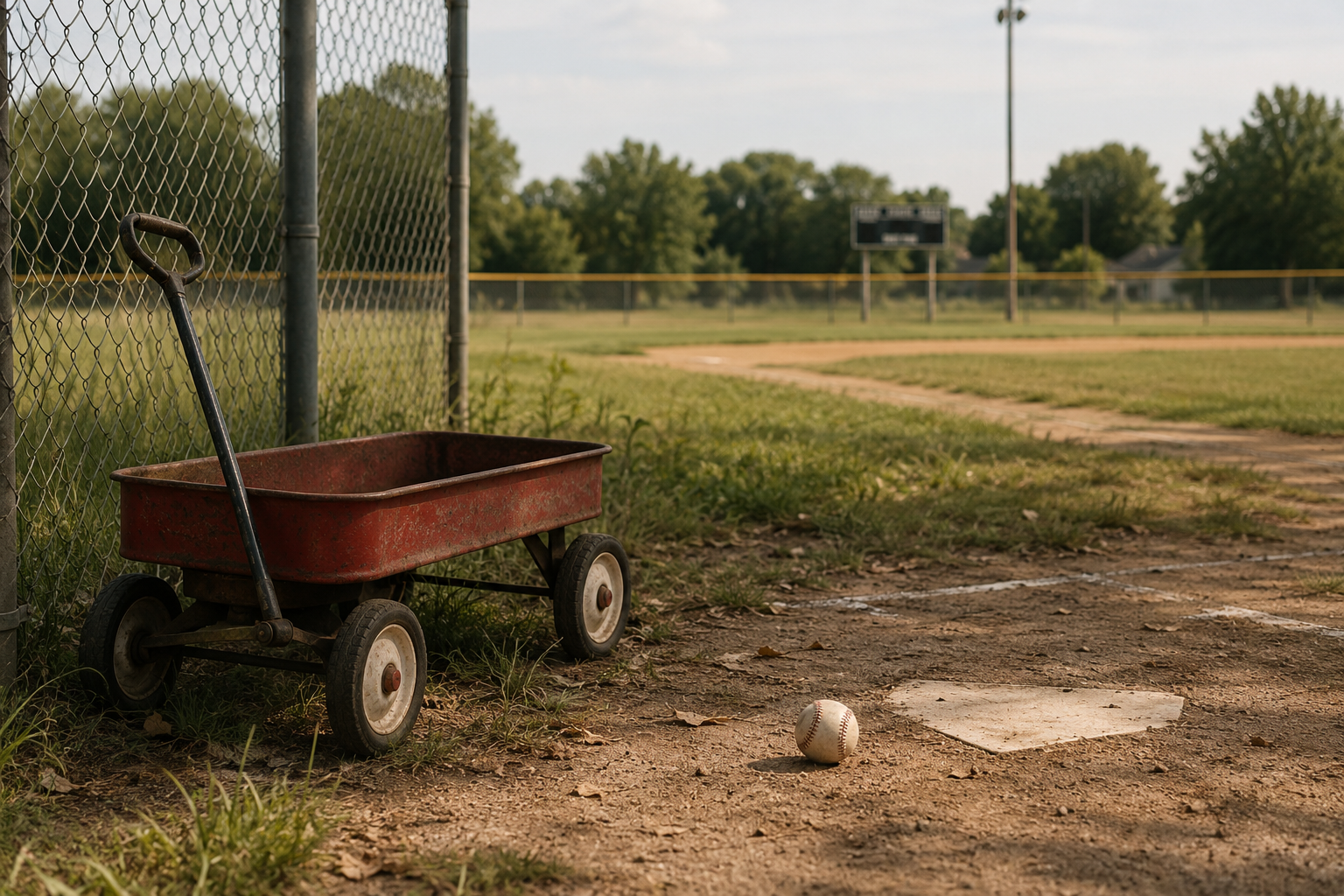
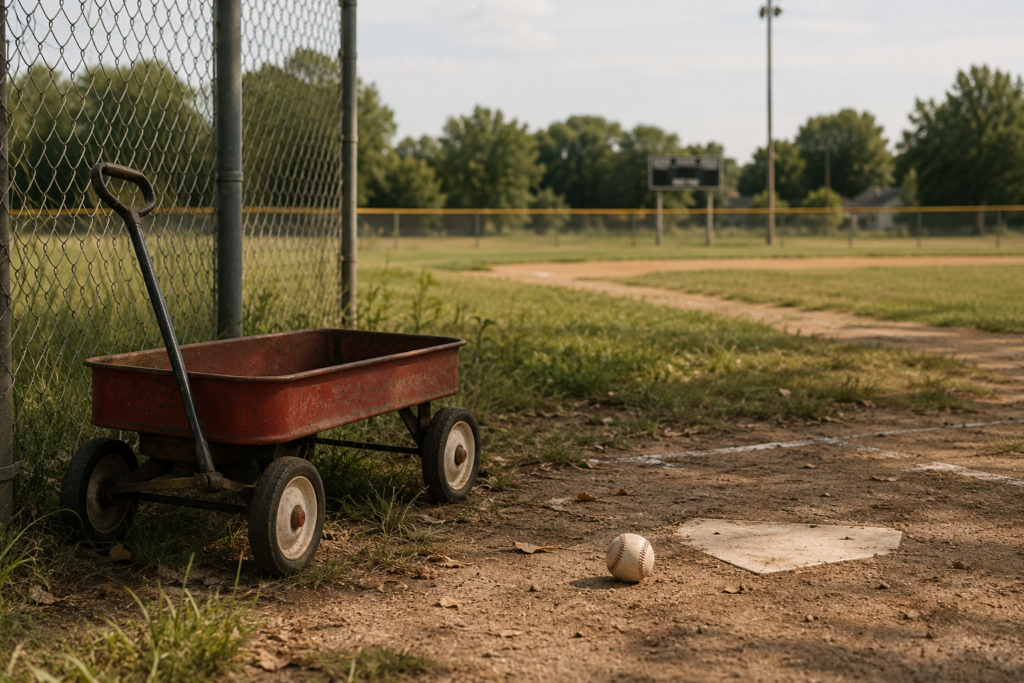
Sometimes the strongest poems begin with ordinary scenes. This ekphrasis poetry prompt invites you to look closely at a simple image: an empty baseball field, a lone baseball near home plate, and a faded red wagon waiting beside a fence. Nothing dramatic happens in the scene, yet it raises questions. Who left the wagon behind? Was a game interrupted? Has someone outgrown this place, or are they coming back tomorrow?

Ekphrastic poetry encourages writers to respond to visual art with imagination, emotion, and reflection. If you are new to the form, this ekphrasis poetry prompt offers plenty of room for interpretation.

ekphrasis poetry prompt baseball

Why This Ekphrasis Poetry Prompt Works

The image contains only a few objects, but each one carries symbolic possibilities. The baseball may represent childhood, competition, family traditions, or lost opportunities. The wagon could suggest work, play, memory, or transition. The empty field itself creates a feeling of absence.

Strong ekphrastic poems often emerge from unanswered questions. Instead of describing only what you see, consider what happened before the moment captured in the image and what might happen afterward.

If you would like help examining imagery and symbolism in poetry, see our guide on how to analyze poetry step by step:

Ekphrasis Poetry Prompt Questions

Use one or more of these questions to begin writing:

  • Who owns the wagon, and why was it left behind?
  • Is the baseball forgotten or intentionally placed there?
  • What memory does this field hold?
  • How has the place changed over time?
  • What emotions does the empty field create?
  • If the wagon could speak, what story would it tell?

You do not need to answer every question. Choose the one that sparks the strongest response.

Writing an Ekphrasis Poetry Prompt Response

Approach this ekphrasis poetry prompt from any angle that interests you.

You might write from the perspective of a child who spent every summer at the field. You could imagine an older person returning decades later. Perhaps the wagon becomes a symbol of a friendship that faded. The field may represent a dream that never came true or a season of life that passed too quickly.

Pay close attention to sensory details. What does the dirt smell like? What sounds remain when the crowd is gone? Or what does the afternoon light reveal?

For inspiration on poetic techniques, explore the Academy of American Poets:

https://poets.org

You may also find our guide to literary devices in poetry helpful:

Ekphrasis Poetry Prompt Challenge

Write a poem without mentioning baseball directly.

Allow the wagon, fence, grass, and empty space to carry the emotional weight. See how much meaning you can create through suggestion rather than explanation.

The most memorable poems often emerge from ordinary objects that reveal extraordinary human experiences. This simple scene offers exactly that opportunity.

Ekphrasis Poetry Prompt: The Missing Magnet

ekphrasis poetry prompt magnet

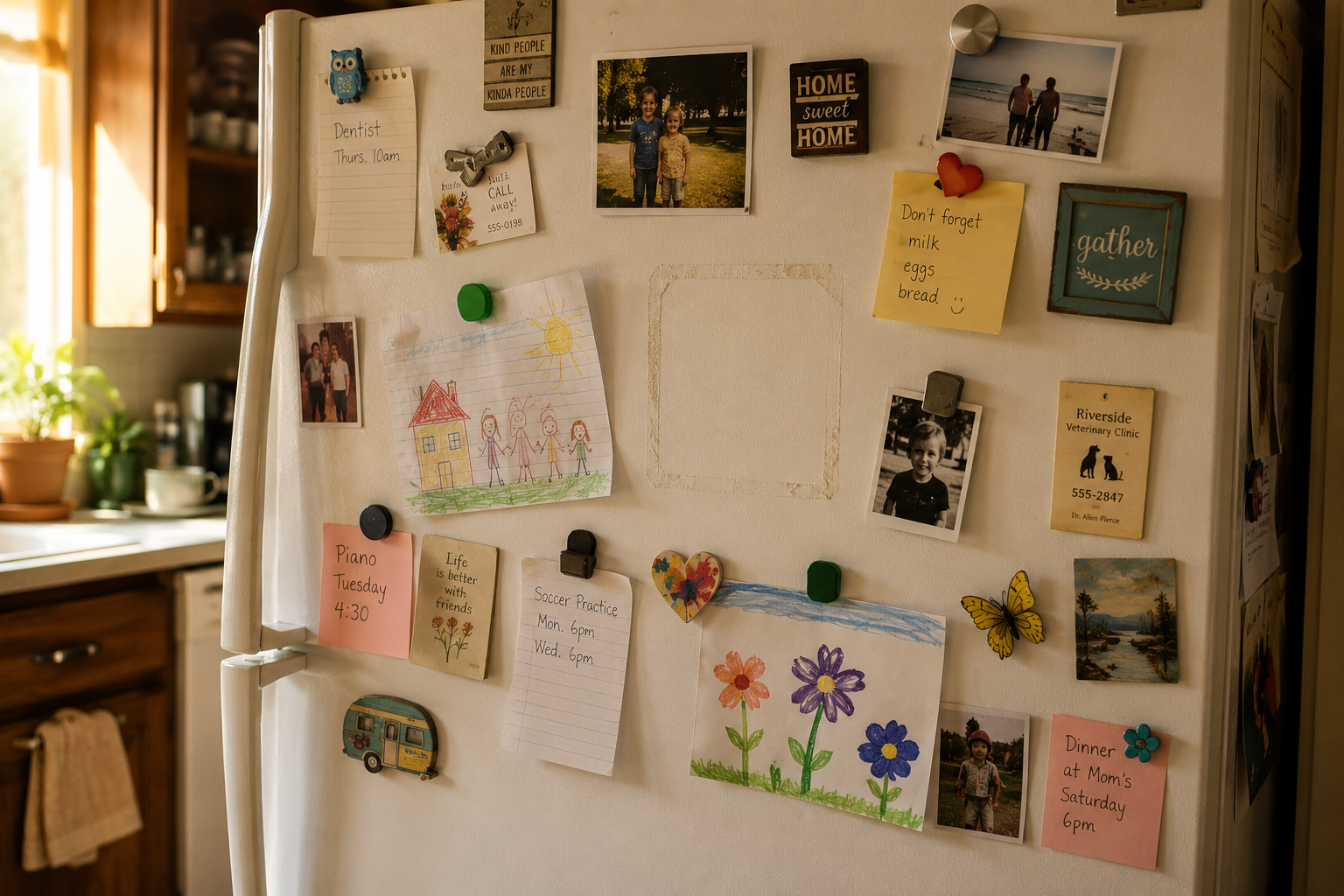
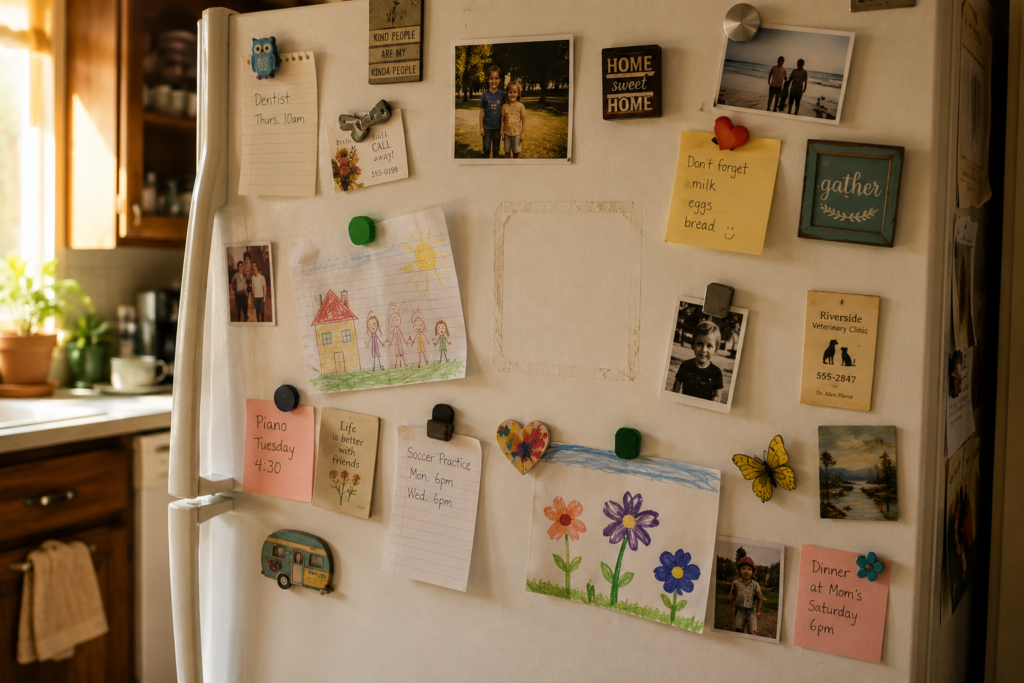
An ekphrasis poetry prompt does not require a dramatic image. Sometimes the most ordinary objects carry the deepest stories. A refrigerator door may seem like an unlikely source of inspiration, yet it often serves as a record of daily life. Photographs, notes, reminders, children’s artwork, and keepsakes gather there over the years. They become a quiet archive of a household’s history.

In this image, the refrigerator door displays a collection of familiar items. Family photos sit beside grocery lists and appointment cards. Children’s drawings fade with age. Near the center, however, an empty space remains where something once hung. The absence immediately draws attention. What occupied that spot? Why was it removed? Who took it away?

That unanswered question creates the heart of this ekphrasis poetry prompt.

ekphrasis poetry prompt magnet

If you are new to writing poetry from images, our guide on how to analyze poetry can help you think more deeply about symbolism and meaning:

Why This Ekphrasis Poetry Prompt Inspires Stories

A successful ekphrasis poetry prompt invites curiosity. The image does not provide a complete narrative. Instead, it offers clues.

The refrigerator door functions almost like a scrapbook. Every photograph represents a memory. Every note marks a moment in time. The empty space introduces tension because it suggests change.

Perhaps someone moved away. Perhaps a relationship ended. Or perhaps a child grew up and left home. The missing item could represent loss, growth, forgiveness, regret, or hope.

Poetry often begins with questions rather than answers. This image provides many questions for a writer to explore.

Looking Closely at the Details

Before writing, spend several minutes examining the image.

Notice the faded edges of photographs. Look at the handwriting on notes. Consider why some items remain while others disappear. Think about who placed these objects on the refrigerator and who sees them each day.

Small details often produce powerful poems.

As you observe, pay attention to literary devices such as symbolism, imagery, and metaphor. If you would like a refresher on these techniques, see our guide to literary devices in poetry:

You may also enjoy exploring examples of image-inspired poetry through the resources available at the Poetry Foundation:

https://www.poetryfoundation.org

Ekphrasis Poetry Prompt: The Missing Magnet

Study the image carefully.

Then write a poem that begins with this line:

“The empty spot on the refrigerator door mattered more than everything around it.”

As you continue, consider one of the following possibilities:

  • Write from the perspective of the person who removed the missing item.
  • Write from the perspective of someone who notices the empty space years later.
  • Imagine the object that once occupied that place.
  • Describe the memories attached to the missing item.
  • Explore how ordinary objects become symbols of larger life changes.

Allow the poem to focus on memory, absence, family history, or the passage of time.

Taking the Prompt Further

After completing your first draft, challenge yourself to write a second poem from a different perspective.

A parent and a child may tell very different stories about the same photograph. A refrigerator might remember events differently than the people who stand before it. Even the missing object could become a speaker in the poem.

These shifts in perspective often reveal unexpected emotional depth.

Final Thoughts

This ekphrasis poetry prompt reminds us that poetry does not always emerge from extraordinary scenes. A refrigerator door covered with everyday objects can hold years of memories. One missing item can raise questions that linger long after the image disappears.

The best poems often begin by noticing something small. In this case, that small detail is simply an empty space waiting to be filled with a story.

Ekphrastic Poetry Prompt: The Unopened Letter

ekphrastic poetry prompt letter

An effective ekphrastic poetry prompt does not always require a dramatic painting, a sweeping landscape, or a moment of obvious conflict. Sometimes the most compelling poems emerge from ordinary scenes that invite questions rather than provide answers.

Imagine a quiet room. A wooden chair stands beside a small table. A mug sits half-forgotten. Reading glasses rest near an unopened letter. No one is present. Nothing appears to be happening. Yet the image suggests a story waiting beneath the surface.

This ekphrastic poetry prompt asks you to enter that silence and discover what lies behind the objects.

ekphrastic poetry prompt letter

How to Approach This Ekphrastic Poetry Prompt

Begin by observing the details. What do the objects reveal about the unseen person who occupies this space? Why has the letter remained unopened? Is the writer absent temporarily, or forever?

You might choose to write from the perspective of the person who received the letter. You could also become the letter itself, waiting patiently for someone to break the seal. Another possibility is to write from the viewpoint of an observer who notices the scene years later.

If you need help examining imagery and symbolism, consider reviewing this guide on analyzing poetry:

Writing Ideas for This Ekphrastic Poetry Prompt

As you draft your poem, consider questions such as:

  • What message might the letter contain?
  • How long has it been waiting?
  • What emotions fill the room despite the absence of people?
  • What happened immediately before this moment?
  • What might happen next?

The strength of this image lies in its uncertainty. The unanswered questions create space for imagination.

Literary Devices to Explore in This Ekphrastic Poetry Prompt

This scene works especially well with symbolism, imagery, personification, and metaphor. The letter might symbolize regret, hope, forgiveness, opportunity, or loss. The chair could suggest waiting. The glasses might represent understanding that has not yet arrived.

If you would like to deepen your use of poetic techniques, this resource on literary devices can help:

For additional inspiration on ekphrastic poetry, the Poetry Foundation offers valuable examples and articles about poetry and poetic interpretation:

https://www.poetryfoundation.org

The Prompt

Study the image carefully.

Then write a poem inspired by the unopened letter on the table. Focus on the tension between what is known and what remains hidden. Let the ordinary objects reveal an extraordinary story.

Do not worry about finding the “correct” interpretation. The most interesting poems often emerge from possibilities rather than certainty.

Sometimes a single unopened envelope contains an entire world.

Ekphrastic Poetry Prompt: The Abandoned Shopping Cart

ekphrastic poetry

Some images seem ordinary at first glance. A shopping cart sits alone in a nearly empty parking lot. A few receipts drift across the pavement. The store remains open, yet no one claims the cart.

This ekphrastic poetry prompt invites you to look beyond the obvious. What appears to be a simple scene may contain dozens of possible stories.

One person might see loneliness. Another might see freedom. Someone else might imagine a hurried departure, a forgotten errand, or a life-changing phone call that interrupted an ordinary day.

That flexibility makes this image a strong starting point for poetry.

If you are new to reading and interpreting poetry, this guide can help you develop your observational skills: https://rapidreadspress.com/how-to-analyze-poetry-step-by-step/

ekphrastic poetry

Why This Ekphrastic Poetry Prompt Encourages Imagination

The most effective ekphrastic poetry prompt does not provide all the answers.

Instead, it leaves gaps.

Why is the cart alone?

Who left it behind?

What was inside it a few moments earlier?

What happened after the person walked away?

Because the image offers so little information, the writer must supply the meaning. The poem becomes an act of discovery.

Finding Symbolism in This Ekphrastic Poetry Prompt

A shopping cart may seem like a purely practical object, but poetry often transforms ordinary things into symbols.

The cart might represent responsibility.

It might symbolize unfinished plans.

It could suggest consumer culture, family life, aging, migration, or loss.

The meaning depends entirely on the perspective you choose.

Many poets find that simple objects reveal complex emotions more effectively than dramatic subjects.

For ideas on using symbolism, imagery, and metaphor, visit this guide to literary devices in poetry: https://rapidreadspress.com/literary-devices-in-poetry/

Writing Perspectives for This Ekphrastic Poetry Prompt

Consider writing from one of these viewpoints:

  • The person who abandoned the cart
  • A store employee collecting carts at the end of a shift
  • A child who rode inside the cart earlier that day
  • The cart itself
  • An observer watching from across the parking lot

Each perspective transforms the image into a different poem.

Questions to Explore in This Ekphrastic Poetry Prompt

As you write, think about the following questions:

  • What happened immediately before this moment?
  • What important decision has just been made?
  • What memory does the scene trigger?
  • Why does the cart remain where it is?
  • What does the empty parking lot reveal about the person who left?

Do not feel obligated to answer every question. Sometimes a poem becomes stronger when mystery remains.

A Challenge for This Ekphrastic Poetry Prompt

Write a poem that never uses the words shopping cart, store, parking lot, or receipt.

Instead, reveal the scene through sensory details and indirect clues.

This exercise encourages more vivid imagery and invites readers to participate in constructing meaning.

For additional poetry resources and examples, visit the Academy of American Poets: https://poets.org/

The strength of this ekphrastic poetry prompt lies in its simplicity. An abandoned cart is something most people have seen. Yet when viewed through the lens of poetry, it becomes a doorway into memory, emotion, and imagination.

Ekphrastic Poetry Prompt: The Empty Bus Stop

ekphrastic poetry prompt bus stop

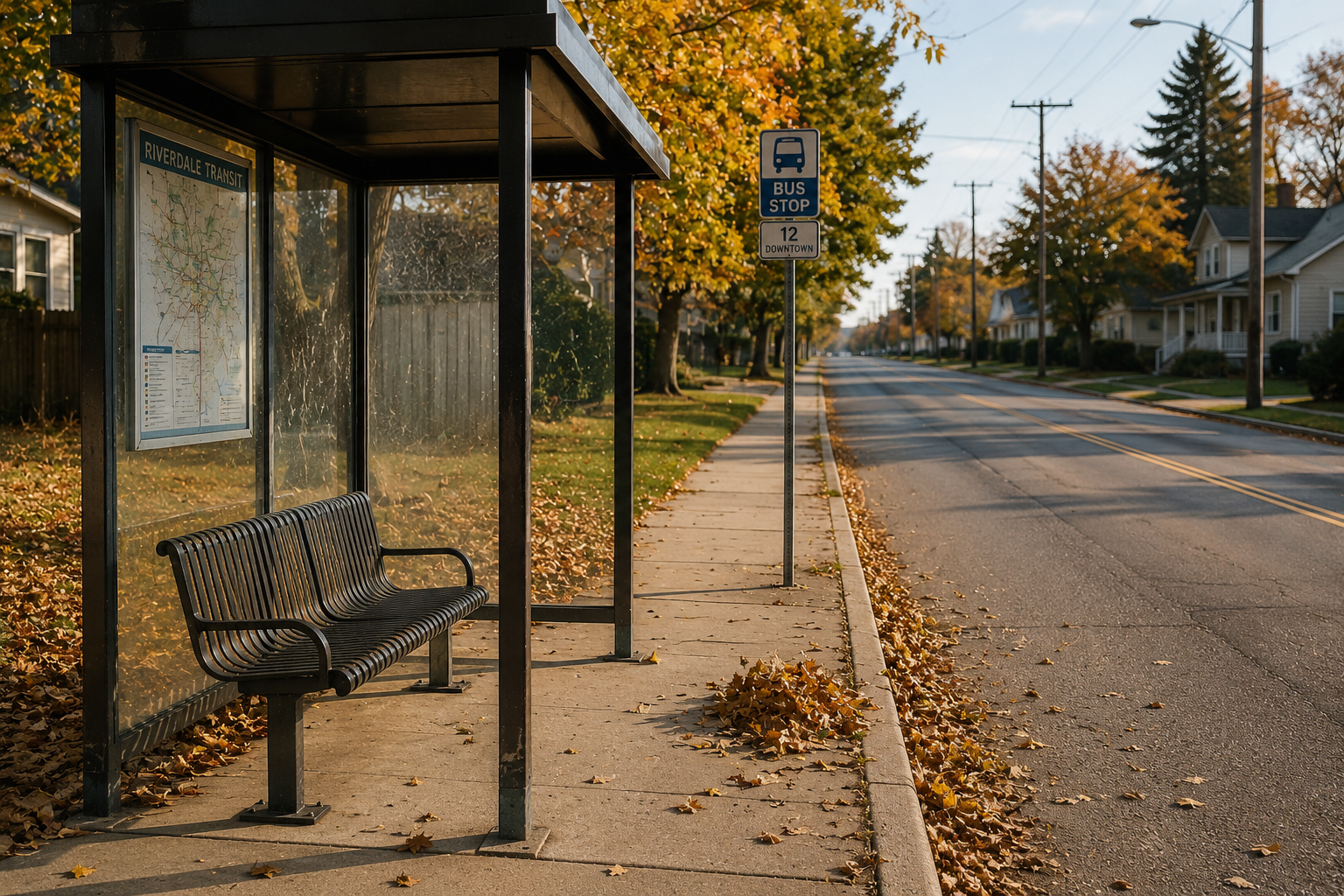
Sometimes the best poetry begins with an ordinary scene. This ekphrastic poetry prompt invites you to look closely at something easy to overlook: an empty bus stop on a quiet afternoon.

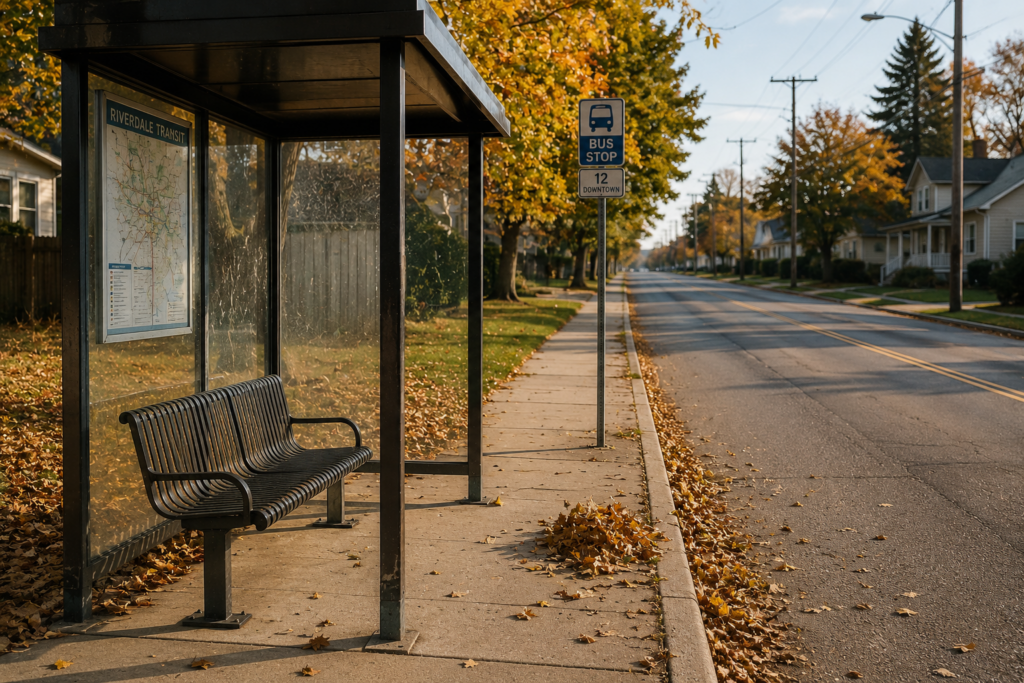
A metal bench waits beside the road. A few leaves collect near the curb. A faded transit map hangs behind scratched glass. Nothing dramatic appears to be happening. Yet the image feels full of possibility.

That is what makes this ekphrastic poetry prompt interesting. Every ordinary place contains stories that have not yet been told.

If you are new to writing from visual inspiration, you may find this guide helpful: https://rapidreadspress.com/how-to-analyze-poetry-step-by-step/

ekphrastic poetry prompt bus stop

Why This Ekphrastic Poetry Prompt Works

Many writers assume they need a spectacular image to inspire a poem. In reality, everyday scenes often create richer opportunities.

An empty bus stop raises questions.

Who was waiting here?

Who missed the bus?

And who arrived?

Who never showed up?

The image offers no answers. Instead, it gives the writer room to imagine.

A strong ekphrastic poetry prompt does not tell you what to think. It invites you to discover meaning for yourself.

Looking Closely at This Ekphrastic Poetry Prompt

Before you begin writing, spend a few minutes observing the details.

Notice the bench.

Notice the leaves.

And notice the road disappearing into the distance.

Ask yourself which object feels most important.

Perhaps the bench reminds you of loneliness.

Perhaps the route map represents choices.

Or perhaps the empty street suggests freedom.

Different writers will see different stories in the same image.

That diversity of interpretation lies at the heart of ekphrastic poetry.

Writing Ideas for This Ekphrastic Poetry Prompt

Try writing from one of these perspectives:

  • Someone waiting for news that never arrives
  • A student traveling home after a difficult day
  • An elderly person remembering a familiar route
  • The bus stop itself, watching people come and go
  • A traveler about to leave town forever

Focus on emotions rather than plot. Let the image guide your poem.

You may also want to experiment with symbolism, imagery, and personification. This overview of literary devices in poetry can help you develop those techniques: https://rapidreadspress.com/literary-devices-in-poetry/

Questions to Explore in This Ekphrastic Poetry Prompt

Consider one or more of the following questions:

  • What kind of person usually sits on this bench?
  • What destination matters most in this scene?
  • What memory lingers here?
  • What decision is about to be made?
  • What remains after everyone leaves?

Allow your answers to emerge through images and details rather than direct explanation.

A Challenge for This Ekphrastic Poetry Prompt

Write a poem that never mentions the bus stop directly.

Instead, reveal the setting through small observations: the schedule behind glass, the leaves at the curb, the approaching engine, the empty bench.

This approach encourages readers to participate in constructing the scene.

For additional inspiration and resources about poetry, visit the Academy of American Poets: https://poets.org/

The most memorable poems often begin with ordinary moments. This ekphrastic poetry prompt asks you to slow down, pay attention, and discover the stories hidden inside a place most people pass without noticing.

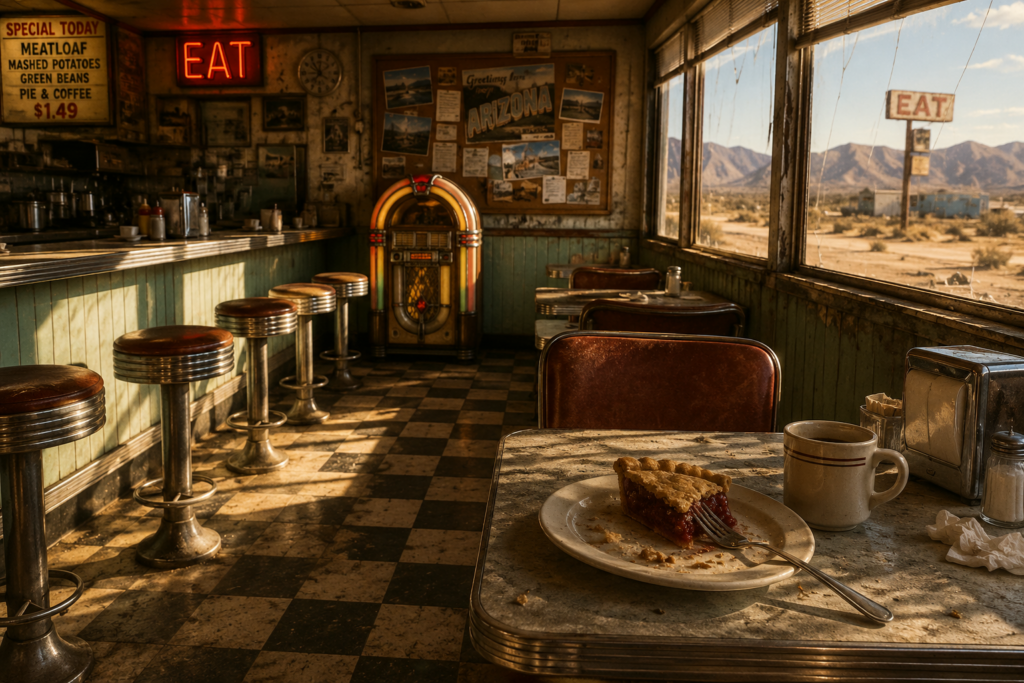
Ekphrastic Poetry Prompt: The Empty Diner at the Edge of Town

Ekphrastic Poetry Prompt diner

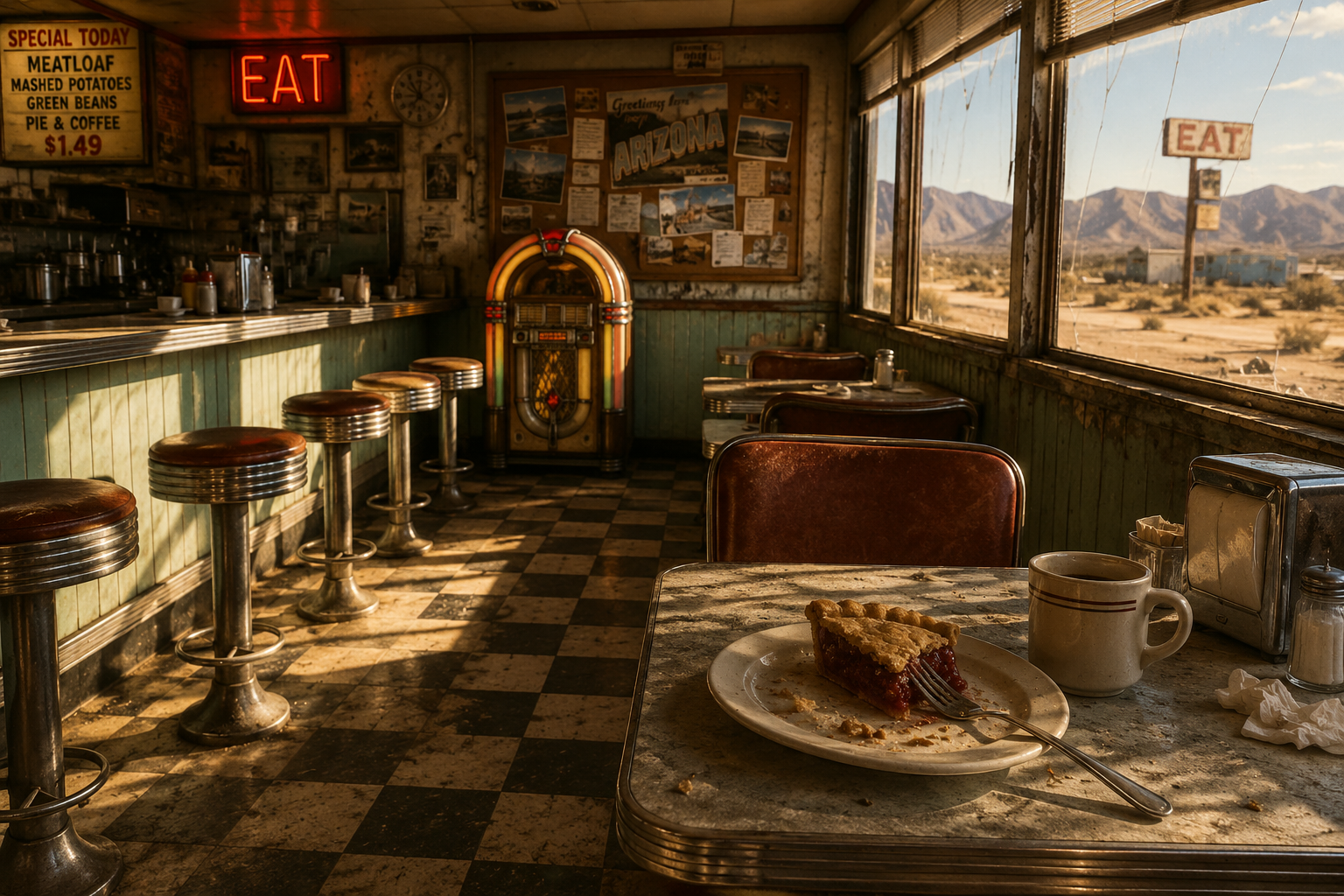
This ekphrastic poetry prompt begins with an image that feels familiar yet unsettling. Picture an abandoned roadside diner somewhere along a lonely highway. Dust covers the chrome stools. A slice of pie sits untouched on a table. Sunlight stretches across the checkerboard floor. The jukebox still glows, though no one remains to choose a song.

Unlike dramatic landscapes or fantastical scenes, this image draws its power from ordinary objects. Every item seems to hint at a story that stopped before it reached its ending. That sense of absence creates fertile ground for poetry.

If you are new to reading and writing poetry, you may find this guide helpful: https://rapidreadspress.com/how-to-analyze-poetry-step-by-step/

Ekphrastic Poetry Prompt diner

Why This Ekphrastic Poetry Prompt Invites Storytelling

A strong ekphrastic poetry prompt does more than provide something to describe. It encourages questions.

Who ordered the pie?

Why was it left behind?

Who pinned the postcards to the bulletin board?

Why does the jukebox still glow?

Poetry often begins when a writer notices what is missing rather than what is present. The empty diner asks readers to imagine the people who once filled the room. Their stories linger in the objects they left behind.

As you study the image, resist the urge to explain everything. Allow mystery to remain. Sometimes a poem gains strength when it leaves space for the reader’s imagination.

Entering the World of This Ekphrastic Poetry Prompt

Choose a perspective before you begin writing.

You might write from the viewpoint of the waitress who worked her final shift.

You might become the traveler who arrives years after the diner closed.

Or you might speak as the jukebox, remembering every song it ever played.

You might even write from the perspective of the abandoned slice of pie waiting for someone who never returned.

The goal is not accuracy. The goal is emotional truth.

Focus on sensory details. What does the room smell like? What sounds echo through the empty building? How does the afternoon light change the mood of the scene?

Literary Techniques for This Ekphrastic Poetry Prompt

Because the image contains so many meaningful objects, symbolism can play a major role in your poem.

The pie might represent a broken promise.

The postcards might symbolize dreams of escape.

The empty stools might suggest loneliness.

The glowing jukebox might stand for memory refusing to fade.

If you would like ideas for using imagery, symbolism, and metaphor, explore this guide to literary devices in poetry: https://rapidreadspress.com/literary-devices-in-poetry/

Writing Questions for This Ekphrastic Poetry Prompt

Use one or more of these questions as a starting point:

  • What happened just before the diner became empty?
  • Who was expected to arrive but never did?
  • Which object in the room holds the most important memory?
  • What would the diner say if it could speak?
  • What does the silence reveal that conversation once concealed?

Choose the question that creates the strongest emotional response and follow it wherever it leads.

A Challenge for Your Poem

Write a poem that never directly mentions abandonment, loneliness, memory, or loss.

Instead, reveal those ideas through images and details. Let the pie, the postcards, the sunlight, and the jukebox carry the emotional weight.

For additional inspiration and examples of contemporary poetry, visit the Academy of American Poets at https://poets.org/.

The best poems often emerge from ordinary places. This ekphrastic poetry prompt invites you to discover the hidden stories waiting inside an empty diner where the coffee has gone cold, the music has stopped, and the questions remain.

Ekphrasis Poetry Prompt: The Empty Chair in the Field

ekphrasis poetry prompt the empty chair

If you are looking for an ekphrasis poetry prompt that invites reflection, memory, and imagination, today’s image offers a rich place to begin. Picture a solitary white heron standing near an abandoned wooden chair in a field of golden grass. Mountains rise in the distance while the late afternoon sun casts long shadows across the landscape.

Ekphrastic poetry begins with close observation. The image becomes a doorway into emotion, story, symbolism, and personal insight. Whether you write free verse, formal poetry, or prose poetry, this scene provides many possible directions.

ekphrasis poetry prompt the empty chair

How to Approach This Ekphrasis Poetry Prompt

Before you begin writing, spend a few minutes studying the image. Notice the relationship between the bird and the chair. Ask yourself why the chair sits alone in the field. Consider who may have left it there and why the heron seems drawn to it.

An effective ekphrasis poetry prompt encourages curiosity rather than certainty. You do not need to explain the image. Instead, explore its possibilities.

You may find it helpful to review our guide on analyzing poetic imagery and meaning: https://rapidreadspress.com/how-to-analyze-poetry-step-by-step/

Writing Ideas for This Ekphrasis Poetry Prompt

The chair could symbolize absence, waiting, memory, or loss. The heron might represent patience, wisdom, solitude, or a messenger from another world.

Consider writing from one of these perspectives:

  • The heron observing the chair.
  • The former owner of the chair.
  • A traveler discovering the scene years later.
  • The chair itself telling its story.
  • An observer who believes the bird is guarding a secret.

You might focus on sensory details. What does the grass sound like in the wind? How does the sunlight change the mood of the landscape? What memories does the scene awaken?

Literary Devices for This Ekphrasis Poetry Prompt

Strong ekphrastic poems often rely on imagery, symbolism, metaphor, and personification. The contrast between the living bird and the abandoned chair creates natural tension that can drive a poem forward.

If you would like a refresher on poetic techniques, see our guide to literary devices: https://rapidreadspress.com/literary-devices-in-poetry/

For additional information about ekphrastic poetry as a literary form, the Poetry Foundation provides an excellent overview of poetry and poetic traditions: https://www.poetryfoundation.org/

The Prompt

Study the image carefully.

Write a poem about the relationship between the heron and the empty chair. Do not explain where they came from. Instead, allow the reader to discover their connection through images, actions, and details.

Challenge yourself to leave one important question unanswered by the end of the poem.

Final Thoughts

This ekphrasis poetry prompt works well because it balances mystery with simplicity. The image contains only a few elements, yet each one invites interpretation. Sometimes the most powerful poems emerge from scenes that appear quiet at first glance.

Take your time with the image. Let the landscape speak before you begin writing. Then follow the thread of curiosity wherever it leads.

Ekphrastic Poetry Prompt: The Conservatory Above the Sea of Flowers

ekphrastic poetry prompt flowers

Have you ever looked at an image and felt as though it was trying to tell you a story?

This ekphrastic poetry prompt invites you to step into a dreamlike scene filled with mystery, beauty, and unanswered questions. Ekphrastic writing encourages poets to respond to visual art with words. Instead of describing every detail, the goal is to explore the emotions, memories, and ideas the image awakens.

If you are new to the practice, our guide on how to analyze poetry step by step can help you notice the details that often inspire stronger poems: https://rapidreadspress.com/how-to-analyze-poetry-step-by-step/

ekphrastic poetry prompt flowers

Why This Ekphrastic Poetry Prompt Works

The image presents a strange but inviting setting. A glass conservatory sits above an endless field of flowers. White paper cranes move through the air. A giant astrolabe hangs suspended as if time itself has paused. An open journal waits on a stone pedestal.

Each object raises questions.

Who built this place? Why are the cranes gathering? What has been written in the journal? Is the astrolabe measuring stars, memories, or something else entirely?

Strong poetry often begins with curiosity. This ekphrastic poetry prompt gives you several symbolic elements that can spark a narrative, a meditation, or a lyrical exploration.

The Image

Imagine standing inside the conservatory. Sunlight filters through the glass walls. The scent of flowers drifts upward from the valley below. Hundreds of paper cranes circle overhead while the brass astrolabe slowly turns.

An open journal rests before you.

One page contains a message.

You cannot see all of the words.

You can only read the first sentence.

Write the poem that follows.

Writing From This Ekphrastic Poetry Prompt

You do not need to explain every detail in the scene. Focus on the element that captures your attention most strongly.

Perhaps the journal belongs to a traveler who never returned. Maybe the paper cranes carry messages from lost loved ones. The astrolabe could represent fate, memory, hope, or a search for direction.

As you write, pay attention to imagery and symbolism. If you would like a refresher on poetic techniques, our guide to literary devices in poetry offers useful examples: https://rapidreadspress.com/literary-devices-in-poetry/

Questions to Explore

What is written in the journal?

Why do the paper cranes circle the conservatory?

Who visits this place?

What does the astrolabe measure?

What emotion fills the space?

Or, what happens when the final crane lands?

You may answer one question or many. The strongest poems often grow from a single image that refuses to leave your mind.

A Creative Challenge

Write your poem in the voice of the conservatory itself.

What has it witnessed over the years?

What secrets does it keep?

How does it feel when visitors arrive searching for answers?

Changing the speaker can transform a familiar description into something surprising and memorable.

Learn More About Ekphrastic Poetry

Many poets throughout history have responded to visual art. The Academy of American Poets provides an excellent introduction to the tradition and examples of famous ekphrastic works: https://poets.org/glossary/ekphrasis

Whether your poem becomes a story, a reflection, or a meditation on wonder, this ekphrastic poetry prompt offers a rich visual world filled with symbols waiting for interpretation.

Take a few minutes to study the scene. Then begin with the first sentence you can imagine appearing in that journal and see where it leads.

Ekphrasis Poetry Prompt: The Greenhouse Full of Unsent Letters

ekphrasis prompt letters

An ekphrasis poetry prompt asks you to step inside an image and listen for the story hidden beneath its surface. The best ekphrastic poems do more than describe what appears in front of the eye. They uncover memory, tension, grief, hope, or desire inside the scene.

In this ekphrasis poetry prompt, the image becomes a quiet abandoned greenhouse filled with vines, sunlight, birdcages, and scattered handwritten letters. The place feels beautiful, but something inside it also feels unfinished. Someone left. Someone stayed silent. Something important never reached its destination.
If you are new to writing image-based poetry, this prompt works well beside our guide on how to analyze poetry step by step: https://rapidreadspress.com/how-to-analyze-poetry-step-by-step/

ekphrasis prompt letters

Why an Ekphrasis Poetry Prompt Works

An ekphrasis poetry prompt gives writers a concrete place to begin. Instead of staring at a blank page, you react to details already present inside the image.

The greenhouse scene creates emotional tension because it mixes care with abandonment. Plants continue to grow even after people disappear. Letters remain unread. Birdcages suggest voices trapped or forgotten.

Many strong poems begin this way. A single visual detail opens a deeper emotional question.

The Poetry Foundation offers several excellent examples of ekphrastic poetry if you want to study how other poets respond to visual imagery: https://www.poetryfoundation.org/

Ekphrasis Poetry Prompt

Look closely at the image.

A greenhouse stands empty beneath afternoon sunlight. Vines climb over cracked glass walls. Old birdcages hang from the ceiling. Dozens of handwritten letters scatter across the floor, some folded shut and others opened by the wind.


Write a poem from inside this scene.

You might write as the person who left the letters behind. You might become the greenhouse itself. You might focus on one specific object, such as a birdcage, a flower, or a single unread page.

Do not try to explain everything. Let the image carry part of the meaning.

Questions to Help You Begin the Ekphrasis Poetry Prompt

Ask yourself what kind of silence exists in this place.

Who wrote the letters?

Why were they never sent?

What happened to the birds?

Why does the greenhouse still feel alive after abandonment?

An ekphrasis poetry prompt often becomes stronger when you focus on one emotional thread instead of trying to describe the entire image at once.

If you struggle with symbolism in poetry, this guide may help: https://rapidreadspress.com/how-to-find-symbolism-in-a-story/

Example Opening Lines

You do not need to copy these lines, but they can help you hear the emotional tone of the scene:

“The flowers kept opening after you disappeared.”

“Every cage in the greenhouse faced the mountain.”

“The letters curled slowly in the heat like dying leaves.”

Good ekphrastic poems usually depend on sharp images more than explanation. Let the objects inside the scene reveal emotion naturally.

What This Ekphrasis Poetry Prompt Teaches Writers

This ekphrasis poetry prompt helps writers practice emotional atmosphere, symbolism, and visual detail at the same time.

The greenhouse image encourages poets to think about memory, silence, isolation, and unfinished communication. Those themes appear often in both modern poetry and classic literature.

You can also return to the same image later and write from a different perspective. One image can produce many completely different poems.

If you want more help turning imagery into literary analysis later, you may also find this resource useful: https://rapidreadspress.com/product/the-literary-analysis-essay-toolkit/

Final Thoughts on This Ekphrasis Poetry Prompt

An ekphrasis poetry prompt reminds us that images hold emotional stories long before words arrive. A forgotten greenhouse can become a poem about grief. A birdcage can become a symbol of fear or protection. A scattered letter can become the center of an entire voice.

Do not worry about writing a perfect poem on the first attempt. Stay inside the image long enough for something honest to emerge.

Ekphrasis Poetry Prompt Inspired by a Flooded Midnight Train Station

ekphrasis poetry prompt

Some images feel less like pictures and more like memories waiting for language.

This ekphrasis poetry prompt begins with a strange and lonely scene: a woman standing in a flooded train station long after midnight while rain slides down cracked windows and unreadable destination signs flicker overhead. She carries old letters tied together with red thread. A white crane waits beside her in silence. Outside, the moon hangs low enough to feel personal.

ekphrasis poetry prompt

Ekphrastic writing asks you to respond to an image through poetry or reflection. The image becomes a doorway into emotion, memory, symbolism, and voice. If you want a deeper understanding of how imagery and symbolism work together in literature, this guide on how to analyze poetry step by step can help strengthen your reading and writing practice:

How to Analyze Poetry Step by Step

What Is an Ekphrasis Poetry Prompt?

An ekphrasis poetry prompt uses visual art or an imagined scene as the starting point for a poem. The goal is not to describe every detail mechanically. The goal is to enter the emotional atmosphere of the image and discover what it reveals.

The word “ekphrasis” comes from ancient Greek rhetorical traditions and still appears often in poetry studies today. The Poetry Foundation explains ekphrasis as writing that responds to visual art in a vivid and imaginative way.

This particular ekphrasis poetry prompt works well for themes like grief, departure, memory, identity, loneliness, migration, unfinished conversations, or emotional change.

The Ekphrasis Poetry Prompt

Write a poem inspired by the flooded train station image.

Focus on one emotional tension inside the scene. Maybe the letters contain words that were never sent. Maybe the station no longer exists. Maybe the crane represents a person who died years ago. Maybe the water reflects memories instead of light.

You do not need to explain the entire setting. Let the poem stay uncertain in places. Images often become stronger when they leave room for silence.

Try beginning with one concrete detail:
“Her suitcase smelled like rain and old paper.”
“The station clock had stopped at 12:14.”
“The bird watched her like it remembered everything.”

How This Ekphrasis Poetry Prompt Builds Symbolism

Strong ekphrastic poems often rely on symbolism instead of direct explanation. In this image, the train station can suggest transition or emotional suspension. Water may represent memory or instability. The unreadable signs may reflect confusion about identity or the future.

If you want help understanding literary symbolism more deeply, this guide may help:

How to Find Symbolism in a Story

You can also let one object become the emotional center of the poem. Instead of writing about the whole station, write only about the letters, the crane, or the reflection in the water.

Questions to Explore While Writing

Who was meant to receive the letters?

Why has the woman stayed so late?

What memory does the station hold?

Why is the crane calm while everything else feels abandoned?

What destination can no longer be reached?

You may discover that the poem becomes less about the image itself and more about a moment in your own emotional history.

Why Ekphrastic Poetry Feels So Personal

Many writers struggle to begin with abstract feelings alone. Images help because they give emotion a physical shape. A flooded room, a flickering sign, or a silent bird can carry emotional weight before the poem fully understands itself.

That is part of what makes an ekphrasis poetry prompt useful. The image creates pressure. The poem becomes the response.

Sometimes the strongest lines arrive when the writer stops trying to explain everything.

Final Reflection

The best ekphrastic poems often feel haunted by something unsaid. This image invites that kind of writing. You do not need a perfect interpretation. You only need one honest emotional thread to follow.

Let the station become a place where memory waits.