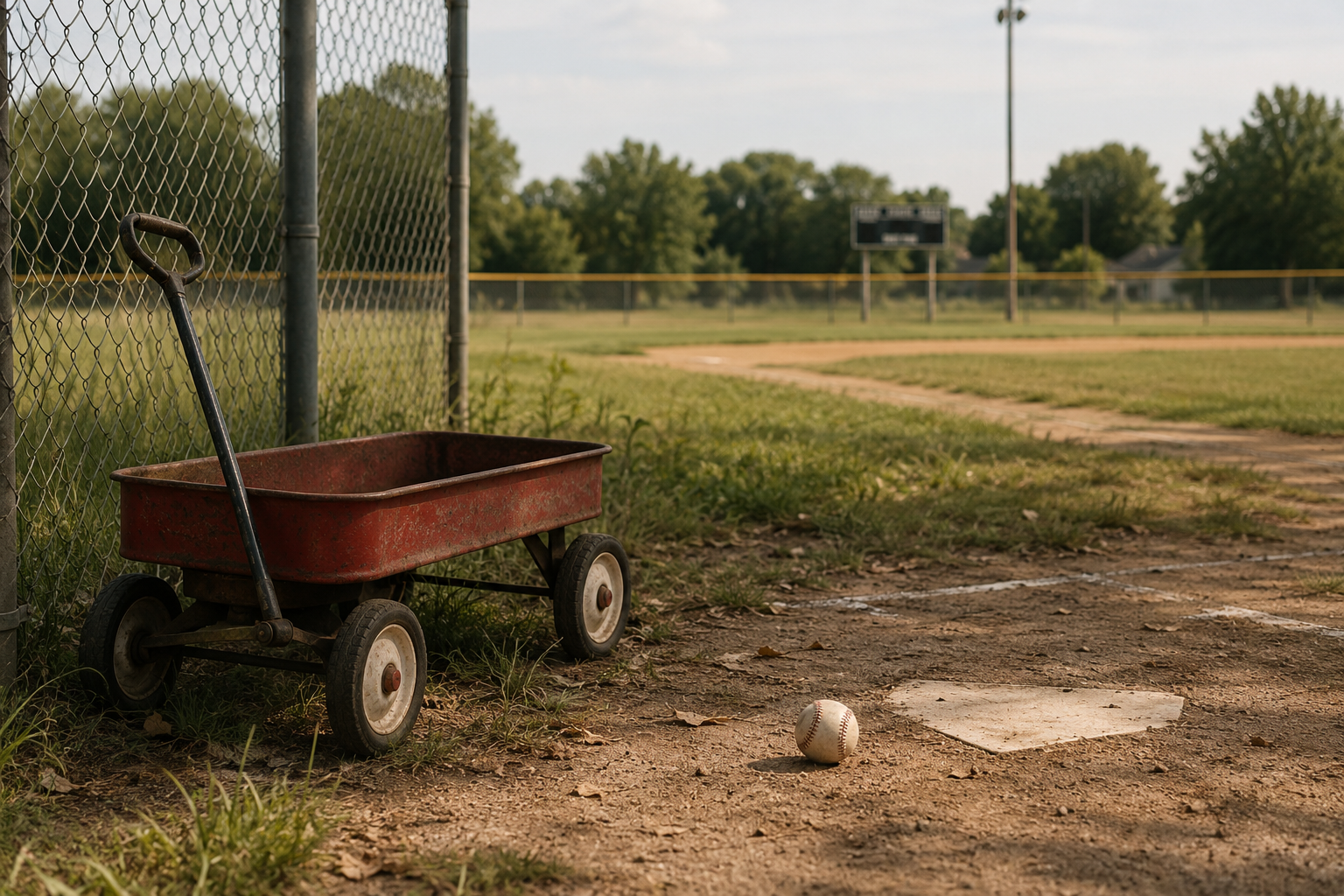
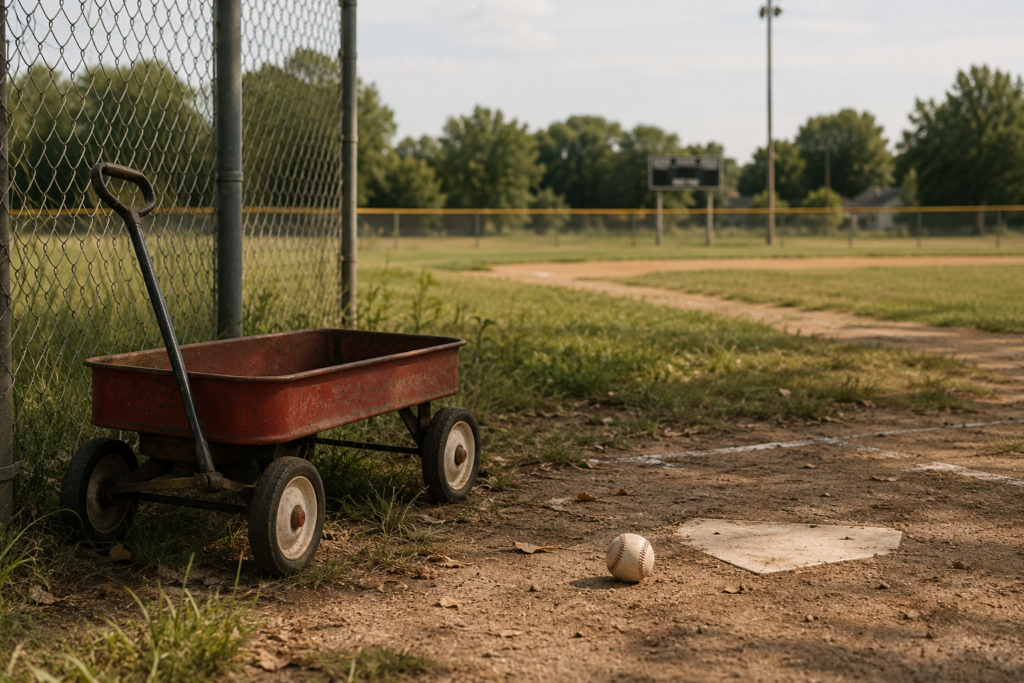
Sometimes the strongest poems begin with ordinary scenes. This ekphrasis poetry prompt invites you to look closely at a simple image: an empty baseball field, a lone baseball near home plate, and a faded red wagon waiting beside a fence. Nothing dramatic happens in the scene, yet it raises questions. Who left the wagon behind? Was a game interrupted? Has someone outgrown this place, or are they coming back tomorrow?
Ekphrastic poetry encourages writers to respond to visual art with imagination, emotion, and reflection. If you are new to the form, this ekphrasis poetry prompt offers plenty of room for interpretation.
Why This Ekphrasis Poetry Prompt Works
The image contains only a few objects, but each one carries symbolic possibilities. The baseball may represent childhood, competition, family traditions, or lost opportunities. The wagon could suggest work, play, memory, or transition. The empty field itself creates a feeling of absence.
Strong ekphrastic poems often emerge from unanswered questions. Instead of describing only what you see, consider what happened before the moment captured in the image and what might happen afterward.
If you would like help examining imagery and symbolism in poetry, see our guide on how to analyze poetry step by step:
Ekphrasis Poetry Prompt Questions
Use one or more of these questions to begin writing:
- Who owns the wagon, and why was it left behind?
- Is the baseball forgotten or intentionally placed there?
- What memory does this field hold?
- How has the place changed over time?
- What emotions does the empty field create?
- If the wagon could speak, what story would it tell?
You do not need to answer every question. Choose the one that sparks the strongest response.
Writing an Ekphrasis Poetry Prompt Response
Approach this ekphrasis poetry prompt from any angle that interests you.
You might write from the perspective of a child who spent every summer at the field. You could imagine an older person returning decades later. Perhaps the wagon becomes a symbol of a friendship that faded. The field may represent a dream that never came true or a season of life that passed too quickly.
Pay close attention to sensory details. What does the dirt smell like? What sounds remain when the crowd is gone? Or what does the afternoon light reveal?
For inspiration on poetic techniques, explore the Academy of American Poets:
You may also find our guide to literary devices in poetry helpful:
Ekphrasis Poetry Prompt Challenge
Write a poem without mentioning baseball directly.
Allow the wagon, fence, grass, and empty space to carry the emotional weight. See how much meaning you can create through suggestion rather than explanation.
The most memorable poems often emerge from ordinary objects that reveal extraordinary human experiences. This simple scene offers exactly that opportunity.