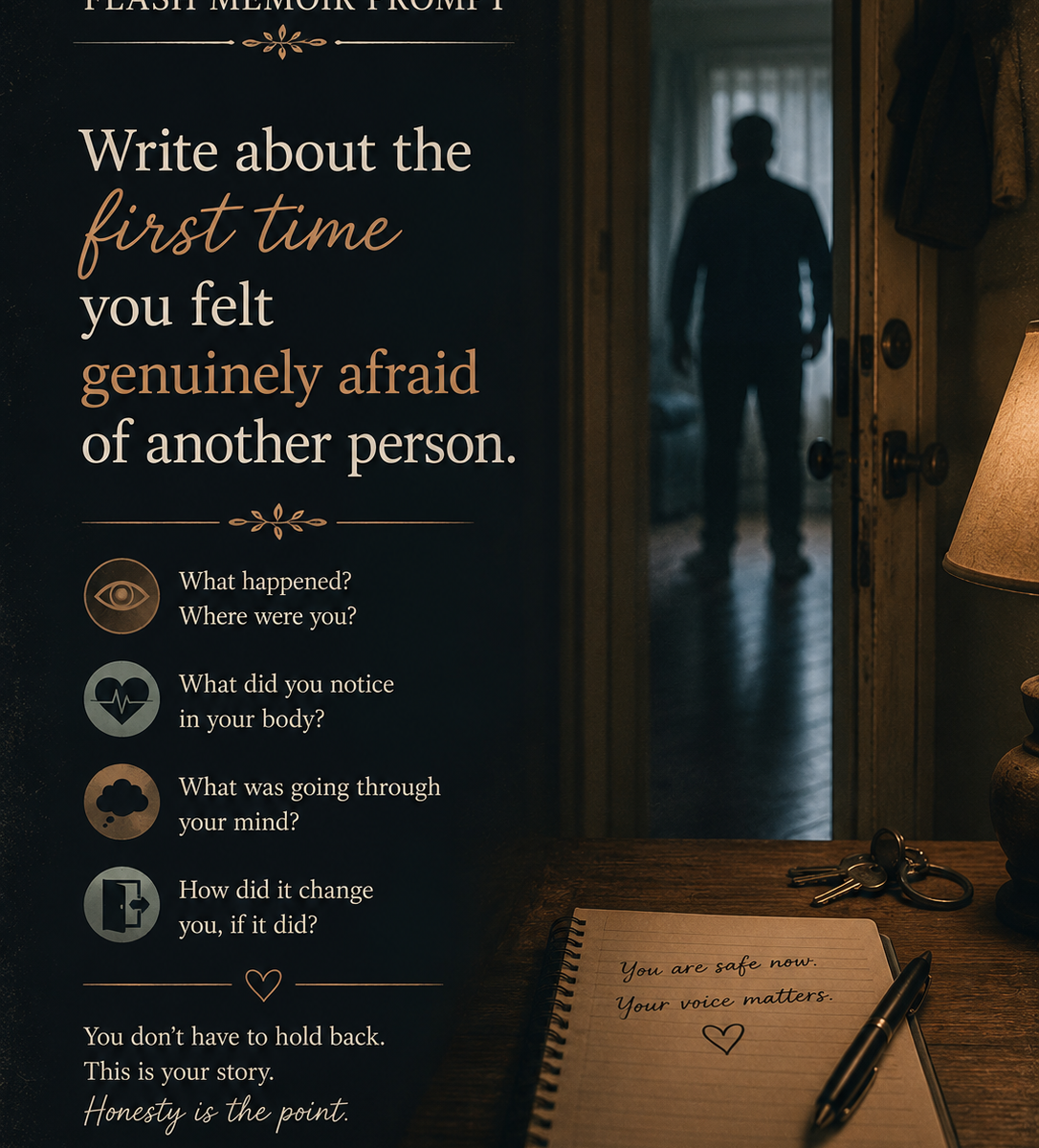
A brief writing invitation for remembering the first time fear attached itself to another person, through one clear scene, body detail, and honest emotional truth. The flash memoir prompt first time felt genuinely afraid asks you to return to a moment when your body understood danger before your mind had words for it.
Maybe it was a look across a kitchen table. Maybe it was someone blocking a doorway. Maybe it was a stranger on the street whose footsteps matched yours for too long. Fear of another person has a different weight than fear of the dark or fear of failing a test. It can make the room feel smaller. It can make your own voice vanish.
This prompt does not ask you to solve the whole past. It asks you to notice one moment clearly enough to tell the truth about it.
The Prompt
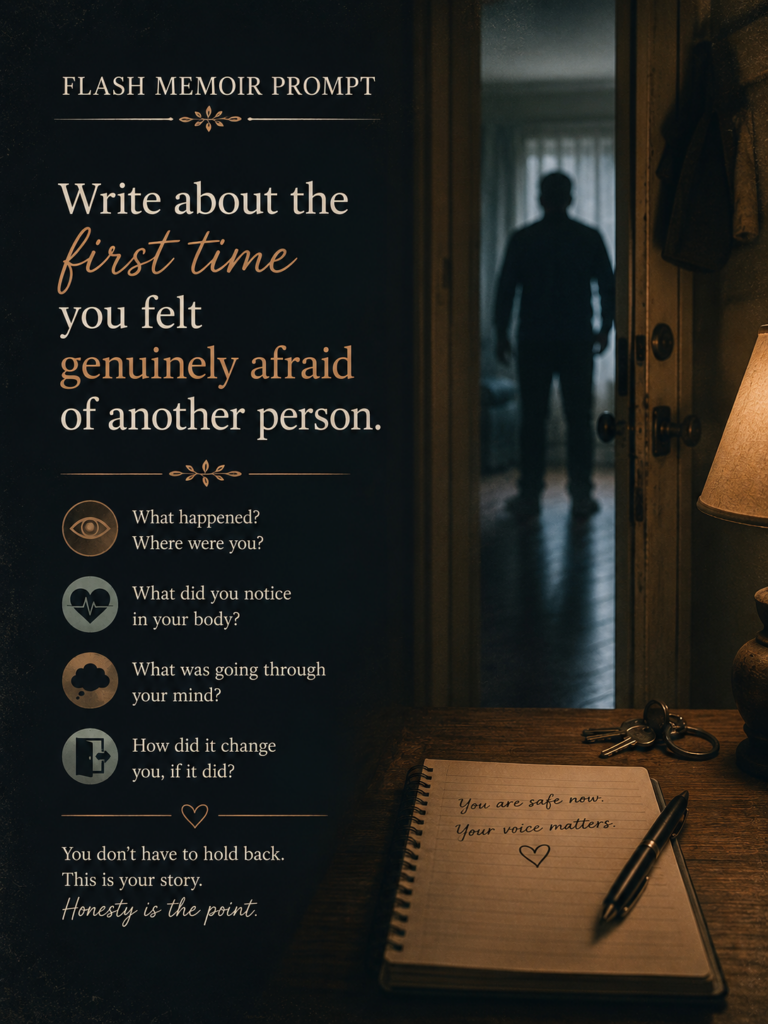
Write about the first time you felt genuinely afraid of another person.
This prompt can unlock a powerful memory because it brings you back to the first time you understood that another person could affect your sense of safety. That realization may have come in childhood, at school, at work, in a relationship, or in a place where you expected to feel safe.
A flash memoir prompt first time felt genuinely afraid is not about making the scene dramatic for a reader. It is about letting the memory stay close to the body. What did you hear? Where were your hands? What did the air feel like? Those details often carry more truth than a long explanation.
Why This Memory Matters
The first time you felt genuine fear of another person may have changed how you moved through the world. You may have become quieter. More alert. Faster to read faces. Slower to trust certain tones of voice. These changes can shape a life in subtle ways.
This kind of memory matters because it often marks a before and after. Before, you may have believed adults were always safe, friends could always be trusted, or public places were neutral. After, you knew better. That knowledge may have protected you, but it may have cost you something too.
You do not need to name the person in your writing. You do not need to explain everything that happened before or after. In flash memoir, one small scene can hold the larger emotional truth.
If you are thinking about how the feeling of a piece of writing differs from the writer’s attitude, you may find it helpful to revisit this guide to tone vs. mood in literature. A memory about fear can have a tense mood, while the narrator’s tone might be calm, confused, angry, or reflective.
How to Approach This Prompt
Begin with a physical detail, not background information. Write the first thing your body noticed. A dry mouth. A locked jaw. A hand on your shoulder that stayed too long. A hallway that suddenly felt empty.
Then narrow the memory to one scene. Do not try to tell the whole history of the person, the relationship, or the aftermath. Stay in the moment when fear arrived. Let the reader stand beside you there.
You might start with a sentence like:
“I knew I was afraid when I stopped breathing normally.”
Or:
“The first thing I noticed was how still everyone else became.”
After that, write what you noticed before you explain what it meant. Describe the room, the voice, the silence, the object in your hand. Memory often becomes more honest when you let the image come before the lesson.
If the memory feels too intense, give yourself limits. Set a timer for ten minutes. Write in third person if that gives you distance. Stop before the part that feels overwhelming. You are allowed to protect yourself while writing the truth.
You can also make notes in the margin of your draft as you go. If that helps you notice patterns, this guide on how to annotate literature may give you a simple way to mark images, repeated words, or emotional shifts in your own writing.
For this flash memoir prompt first time felt genuinely afraid, the goal is not to create a perfect essay. The goal is to catch the exact moment when fear became real.
A Quick Example
I was twelve, sitting in the back seat of my uncle’s truck, when he turned down the radio without looking at me. That was the first sign. He had been laughing a minute earlier, telling some story about work, but the truck went quiet all at once. My cousin stopped chewing her gum. I remember the smell of vinyl seats and wet leaves on the floor mat. He asked who had taken the money from the cup holder. No one answered. At the red light, he turned around slowly and looked straight at me. I had not taken it, but my face got hot like I had. I learned that day that truth did not always protect you.
Try It Yourself
Take ten to fifteen minutes and write from the prompt: Write about the first time you felt genuinely afraid of another person.
Start close to the body. Let the scene stay small. You do not have to explain why the person acted that way, and you do not have to forgive anyone on the page. Just write what happened as honestly as you can.
If the memory feels distant, try listing five details from the place where it happened. If the memory feels too close, write only the first thirty seconds. A brief piece can still be complete.
This flash memoir prompt first time felt genuinely afraid may bring up a hard memory, so give yourself care afterward. Stand up, drink water, look around the room you are in now. Writing about fear should not trap you inside it. It should give you a way to place the memory on the page, where you can see it with some space around it.
Want More Flash Memoir Prompts?
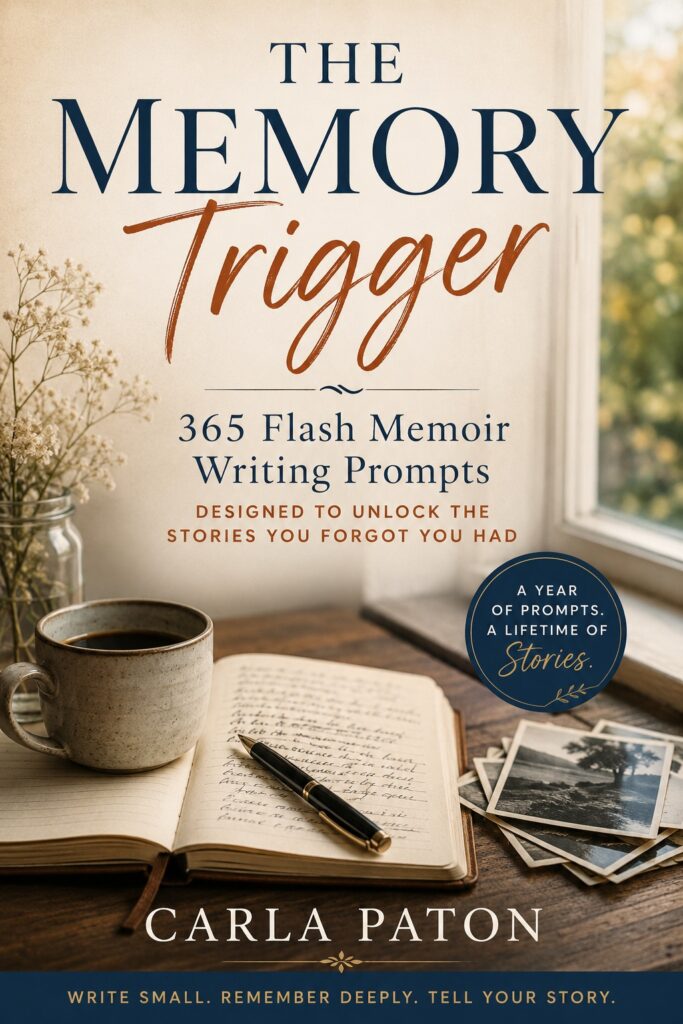
If you want a full year of short, focused memory invitations, explore all 365 prompts in The Memory Trigger: 365 Flash Memoir Writing Prompts. Each prompt is designed to help you write one vivid scene at a time.