The Scarlet Letter Symbolism: What the Scarlet Letter Really Means

scarlet letter symbolism

Understanding The Scarlet Letter symbolism is one of the fastest ways to unlock the meaning of Nathaniel Hawthorne’s novel.

What looks like a simple story about punishment quickly becomes something deeper—a story about identity, guilt, and how symbols shape the way we see people. If you’ve ever felt confused about what the scarlet “A” actually represents, you’re not alone. This guide will walk you through the most important symbols and show how they change throughout the novel.

In This Guide 📚

  • What the scarlet letter “A” means
  • How the meaning of the “A” changes
  • Pearl as a living symbol
  • The symbolism of the scaffold
  • The meaning of the forest
  • Why symbolism matters in essays
scarlet letter symbolism
Image by Carla Paton

The Scarlet Letter Symbolism: The Meaning of the “A”

This is the heart of The Scarlet Letter symbolism, and it’s where most students begin.
At first, the letter “A” stands for adultery. It is meant to shame Hester Prynne publicly and permanently. The Puritan community uses it as a way to define her entire identity based on a single sin. (affiliate link)

But Hawthorne does something surprising. Over time, the meaning of the letter begins to change. Some in the community begin to say it stands for “Able” because of Hester’s strength and service.

👉 Key insight: The letter never settles into one meaning. It represents shame, strength, identity, and transformation all at once.

💡 Symbols in literature often evolve. The scarlet letter is one of the clearest examples of this.

If you’re writing about this, a strong thesis might argue that the letter shows how society’s labels can change—but never fully disappear.

The Scarlet Letter Symbolism: Pearl as a Living Symbol

Pearl is not just a character—she is part of The Scarlet Letter symbolism.

She represents the living consequence of Hester’s sin, but also something more powerful.

Pearl constantly asks questions, points out hidden truths, and refuses to accept false appearances.

She is often described as wild, emotional, and unpredictable. This reflects her role as a symbol of truth and honesty in a world full of secrecy.

👉 Key insight: Pearl forces others—especially Dimmesdale—to face what they are trying to hide.

📌 “Pearl is the scarlet letter made alive.”

In essays, you can argue that Pearl represents truth that cannot be ignored, no matter how much characters try to hide it.

The Scarlet Letter Symbolism: The Scaffold

The scaffold is one of the most important physical symbols in the novel.
It appears in three major scenes, and each one shows a different stage of truth and confession.

In the beginning, Hester stands on the scaffold alone, publicly shamed. Later, Dimmesdale stands there at night in secret. Finally, he stands there in daylight and confesses.

👉 Key insight: The scaffold represents the journey from hidden guilt to public truth.

💡 Hawthorne uses repeated settings as symbols. When a place appears multiple times, pay attention to how it changes.

For analysis, you can argue that the scaffold shows that true freedom only comes through honesty.

The Scarlet Letter Symbolism: The Forest

The forest is another key part of The Scarlet Letter symbolism.

Unlike the town, which represents law and judgment, the forest represents freedom and secrecy. It is the one place where characters can speak honestly without fear of punishment.

Hester and Dimmesdale meet there to reveal the truth about Chillingworth and imagine a new life.

👉 Key insight: The forest is a space outside society—but it is not entirely safe or pure.

🌲 The forest represents both freedom and moral uncertainty.

In essays, you might argue that Hawthorne uses the forest to show that escaping society does not solve inner conflict.

The Scarlet Letter Symbolism: Why It Matters

So why does The Scarlet Letter symbolism matter so much?

Because Hawthorne is not just telling a story—he is asking readers to interpret meaning. The symbols force us to think about identity, judgment, and truth.

👉 Key insight: Symbols turn a simple plot into a complex moral question.

If you understand the symbols, you understand the novel.
And more importantly, you can write stronger essays.

📘 If you want a full breakdown of every chapter, symbol, and theme, check out the full study guide here:
https://rapidreadspress.com/product/the-scarlet-letter-study-guide/

scarlet letter symbolism
Image by Carla Paton


✍️ Need help writing your essay? These examples can show you exactly how to structure your analysis:
https://rapidreadspress.com/product/literary-analysis-essay-examples/

Key Takeaway 🎯

The Scarlet Letter symbolism shows that meaning is never fixed. The scarlet “A,” Pearl, the scaffold, and the forest all reveal that identity is shaped by both society and inner truth—and those two things are rarely the same.

FAQ – Scarlet Letter Symbolism

What does the scarlet letter “A” symbolize?

It begins as a symbol of adultery but grows to represent strength, identity, and transformation.

Why is Pearl considered a symbol?

Pearl represents the living truth of Hester’s actions and constantly exposes hidden guilt.

What does the scaffold symbolize?

It represents public judgment, confession, and the movement from secrecy to truth.

What does the forest symbolize in The Scarlet Letter?

The forest represents freedom from society, but also moral uncertainty and hidden truths.

Why is symbolism important in The Scarlet Letter?

Symbolism is how Hawthorne communicates deeper meaning about guilt, identity, and judgment beyond the surface story.

Count Dracula as a Symbol of Fear and Corruption in Dracula

Count Dracula as a symbol of fear and corruption

Count Dracula is one of the most famous villains in literature, yet his role goes far beyond a simple monster. In Dracula, he represents something deeper and more unsettling. He stands as a symbol of fear, moral decay, and the spread of corruption within society.

When readers look closely at his actions, his influence, and his presence in the novel, they begin to see that Dracula is not just a character. He is a force that threatens both the body and the soul.

This article contains affiliate links.

In this Guide 📚

  • What Dracula represents in the novel
  • How fear shapes his character
  • How corruption spreads through his victims
  • Why Dracula’s power goes beyond physical danger
  • What his defeat reveals about the novel’s message
Count Dracula as a symbol of fear and corruption
Image by Carla Paton

Count Dracula as a Symbol of Fear and Corruption

Dracula is more than a villain. He represents a deeper threat that spreads through fear and moral decay.

At the beginning of the novel, Count Dracula appears calm, polite, and even refined. Jonathan Harker meets a nobleman who speaks with care and shows control. Yet something feels wrong from the start. His strange habits and silent movements create unease long before his true nature is revealed.

This early tension matters because it shows that fear does not always appear in obvious ways. Dracula does not rely on loud violence at first. He creates fear through mystery and uncertainty. Readers feel this same unease as Harker slowly realizes he is trapped in the castle.

📌 Key Insight: Fear in Dracula begins with the unknown, not with open danger.

Count Dracula as a symbol of fear and corruption
Image by Carla Paton

How Dracula Represents Fear

Dracula’s power comes from his ability to appear, disappear, and remain unseen.

As the novel moves forward, Dracula’s supernatural abilities deepen this fear. He can change form, travel through darkness, and strike without warning. These traits make him difficult to fight because he cannot be understood in normal terms.

The characters struggle not just against a physical enemy, but against something they cannot fully explain. This sense of helplessness increases the tension of the story. Fear grows stronger when people feel they have no control.

Dracula’s presence also creates fear in the minds of his victims. He invades their thoughts and weakens their sense of self. This makes his threat feel personal and psychological, not just physical.

💬 “Fear grows strongest when it cannot be clearly seen or understood.”

Count Dracula as a symbol of fear and corruption
Image by Carla Paton

How Dracula Symbolizes Corruption

Dracula does not only harm his victims—he changes them.

One of the clearest examples of corruption appears in Lucy Westenra. She begins as kind and gentle, yet after Dracula’s attacks, she transforms into something dangerous. Her change shows how Dracula spreads his influence like a disease.

This transformation is not just about becoming a vampire. It represents the loss of innocence and moral stability. Lucy becomes a version of herself that reflects Dracula’s influence rather than her own character.

Mina Harker’s experience deepens this idea. Even though she is strong and intelligent, Dracula forms a connection with her that threatens her mind and identity. This shows that no one is fully safe from corruption, even those with strong character.

📌 Key Insight: Corruption in Dracula spreads quietly, often before anyone realizes it is happening.

Dracula’s Power Over Others

Dracula seeks control, not just survival.

Dracula does not act randomly. He plans carefully and moves with purpose. His journey from Transylvania to England shows his desire to expand his reach. He wants to spread his influence into new places and create more victims.

This ambition makes him more than a monster. He becomes a symbol of invading corruption that moves through society. His goal is not only to exist, but to multiply his power through others.

The group led by Van Helsing must work together to stop him. Their unity stands in contrast to Dracula’s isolation and control. This contrast highlights the difference between community and corruption.

💬 “Where Dracula divides and dominates, the others unite and resist.”

What Dracula’s Defeat Reveals

The ending of the novel shows that fear and corruption can be overcome.

Dracula’s defeat does not come from one person alone. It requires trust, courage, and shared purpose. Each character plays a role in stopping him, which suggests that evil cannot be defeated in isolation.

The novel presents a clear message. Fear may spread quickly, and corruption may take root, but they are not unstoppable. When people stand together with conviction, they can resist even the darkest forces.

This ending gives the story its lasting meaning. Dracula may be powerful, but he is not invincible.

Count Dracula as a symbol of fear and corruption
Image by Carla Paton

Why This Symbol Still Matters Today

Dracula remains powerful because his meaning goes beyond the story.

Readers still connect with Dracula because he represents fears that feel real. The fear of losing control, the fear of hidden danger, and the fear of moral decline all appear in modern life as well.

His character reminds us that the greatest threats are often the ones that spread quietly. They do not always appear as clear enemies. Instead, they work beneath the surface, shaping thoughts and actions over time.

Key Takeaway ✨

Count Dracula represents both fear and corruption, showing how evil can spread through secrecy, influence, and control—but also how it can be defeated through courage and unity.

FAQ – Count Dracula as a symbol of fear and corruption

Why is Dracula considered a symbol instead of just a villain?

Because his actions represent larger ideas like fear, moral decay, and loss of control rather than simple physical danger.

How does Dracula create fear in the novel?

He uses mystery, unpredictability, and psychological control, which makes him difficult to understand and resist.

What does Lucy’s transformation represent?

It shows how corruption spreads and how innocence can be lost through Dracula’s influence.

Why is Mina important to the symbolism?

She shows that even strong individuals can be affected, which makes Dracula’s threat more serious.

What is the main message of Dracula?

That fear and corruption are powerful, but they can be overcome through unity and moral strength.

Want to Go Deeper? 📖

If you want a full breakdown of Dracula with themes, characters, and analysis, check out the full guide here:
👉 https://rapidreadspress.com/product/dracula-study-guide/

Dracula Study guide

If you want to learn how to write essays like this step by step:
👉 https://rapidreadspress.com/product/literary-analysis-essay-examples/ (includes this analysis)

Lastly, for background on the novel’s publication and literary importance, Britannica provides a helpful overview of Dracula.

The Theme of Ambition in Frankenstein

theme of ambition in Frankenstein

Victor Frankenstein’s fatal obsession.

Mary Shelley’s Frankenstein remains one of the most widely studied novels in English literature. Beneath its famous story of a scientist and his creation lies a powerful idea that shapes the entire novel: the theme of ambition in Frankenstein. Victor Frankenstein’s intense desire for knowledge drives the plot forward and ultimately leads to tragedy for nearly everyone involved.

Shelley’s novel explores what happens when the pursuit of knowledge becomes an obsession. Victor begins with curiosity and hope, yet his ambition slowly separates him from moral responsibility, family, and humanity itself. The result is one of literature’s clearest warnings about the dangers of uncontrolled ambition.

This guide explores how the theme of ambition in Frankenstein appears throughout the novel and why it remains relevant for readers today.

This article contains affiliate links.

In this Guide:

What the Theme of Ambition in Frankenstein Means
Victor Frankenstein’s Desire for Knowledge
How Ambition Leads to Isolation
The Consequences of Victor’s Ambition
The Moral Warning of the Novel
Key Takeaway
FAQ About the Theme of Ambition in Frankenstein

theme of ambition in Frankenstein

What the Theme of Ambition in Frankenstein Means

Ambition is the strong desire to achieve something great. In literature, ambition often drives characters to pursue power, knowledge, or success. In Mary Shelley’s novel, the theme of ambition in Frankenstein focuses on the dangers of pursuing discovery without considering its moral consequences.
Victor Frankenstein dreams of achieving a scientific breakthrough that will make him famous. He wants to unlock the secret of life itself. At first, this ambition appears admirable. Curiosity and discovery have always been part of scientific progress.

However, Shelley shows that ambition becomes dangerous when it is guided by pride rather than responsibility. Victor becomes so focused on creating life that he stops asking whether he should attempt such an experiment.

💡 Key idea: Ambition in the novel is not evil by itself. The danger arises when ambition outstrips wisdom, empathy, and responsibility.

Victor Frankenstein’s Desire for Knowledge

Victor’s ambition begins in childhood. From an early age, he becomes fascinated with the mysteries of nature and the possibility of scientific discovery. When he later studies natural philosophy at the university of Ingolstadt, his curiosity develops into an intense desire to achieve something extraordinary.

Victor imagines that discovering how to create life will bring him honor and benefit humanity. He believes future generations will admire him as a scientific pioneer. This moment shows that Victor ties his ambition closely to pride.

As Victor explains in the novel, he hopes to “pour a torrent of light into our dark world.” His goal sounds noble, yet his ambition gradually becomes an obsession.

This stage of the story illustrates one of the most important aspects of the theme of ambition in Frankenstein: ambition often begins with good intentions before slowly becoming destructive.

How Ambition Leads to Isolation

As Victor works toward his experiment, he becomes increasingly isolated from the people around him. He spends months alone in his laboratory, neglecting his friends, his family, and even his own health.

Shelley uses this period of isolation to show how ambition can distort judgment. Victor becomes so focused on his experiment that he forgets the world beyond his work.

He later admits that his obsession consumed him completely. His relationships disappear. Victor’s physical health declines. His emotional stability weakens.

📖 “I seemed to have lost all soul or sensation but for this one pursuit.”

Victor’s isolation reveals a key part of the theme of ambition in Frankenstein: ambition can slowly separate a person from the human connections that normally guide moral choices.

theme of ambition in Frankenstein
Image by Carla Paton

The Consequences of Victor’s Ambition

The turning point of the novel occurs when Victor finally succeeds in creating life. Instead of feeling triumph, he experiences immediate horror. The creature’s appearance frightens him, and he abandons the being almost instantly.

This moment reveals the true problem with Victor’s ambition. He wanted the glory of discovery, yet he never considered the responsibility that would follow.

The creature’s suffering becomes the most tragic result of Victor’s ambition. Without guidance or companionship, the creature experiences rejection wherever he goes. His loneliness eventually turns into anger and revenge.

Several innocent characters die as a result of the conflict between creator and creation. Victor’s family suffers deeply, and his own life becomes defined by guilt and grief.

Shelley shows that the theme of ambition in Frankenstein extends beyond Victor himself. His choices harm many others, proving that uncontrolled ambition rarely affects only one person.

The Moral Warning of the Novel

By the end of the novel, Victor finally recognizes the dangers of his obsession. He reflects on how his desire for greatness blinded him to the ethical consequences of his work.

Mary Shelley presents Victor’s story as a warning. Scientific discovery can lead to progress and knowledge, but it must be guided by responsibility and wisdom.

The novel was written during a time when science and technology were advancing rapidly. Shelley’s story asks an important question that still matters today:

Just because something can be done, should it be done?

The theme of ambition in Frankenstein reminds readers that knowledge without moral reflection can produce suffering instead of progress.

📚 If you want to explore the novel more deeply, you can read the original text here: Frankenstein by Mary Shelley.

Key Takeaway

The theme of ambition in Frankenstein reveals how the pursuit of knowledge can become dangerous when it is driven by pride rather than responsibility. Victor Frankenstein’s obsession with discovery isolates him from others and ultimately leads to tragedy. Mary Shelley’s novel reminds readers that true progress requires both intelligence and moral wisdom.

FAQ – The Theme of Ambition in Frankenstein

What is the theme of ambition in Frankenstein?

The theme of ambition in Frankenstein explores the dangers of pursuing knowledge or success without considering moral responsibility. Victor Frankenstein’s obsession with creating life leads to suffering for himself and others.

Why is Victor Frankenstein considered ambitious?

Victor is driven by a desire to achieve scientific greatness. He hopes to unlock the secret of life and gain recognition for a discovery that no one else has achieved.

Is ambition portrayed as good or bad in Frankenstein?

Ambition itself is not entirely negative. The novel suggests that ambition becomes dangerous when it is driven by pride and ignores ethical consequences.

What lesson does Frankenstein teach about ambition?

The novel warns that great achievements must be balanced with responsibility. Without moral awareness, even brilliant discoveries can lead to destruction.

📘 Want to see real examples of literary analysis essays like this?

📗 Need help studying the novel?

Frankenstein Study Guide

How to Understand Shakespearean Language

how to understand Shakespearean language

A Practical Guide to Reading Shakespeare Without Getting Lost

Many readers feel intimidated when they first encounter Shakespeare. The vocabulary seems unfamiliar, the sentence structure feels unusual, and the rhythm of the language may appear difficult to follow.

Yet once readers learn how to understand Shakespearean language, the plays become far more accessible. Shakespeare’s writing often looks complicated at first glance, but many passages become clear once you slow down and focus on how the language works.

Like other forms of classic literature, Shakespeare rewards readers who approach the text carefully. Paying attention to context, word order, and imagery helps reveal meaning line by line.

If you’re new to this type of reading, this guide may also help:

👉 https://rapidreadspress.com/how-to-read-difficult-classic-literature/

⭐ Key Takeaway

Understanding Shakespearean language becomes easier when readers focus on context, sentence structure, and imagery rather than trying to translate every word immediately.

📚 In This Guide

In this article you’ll learn:

  • How to understand Shakespearean language step by step
  • Why Shakespeare’s English feels different from modern English
  • How to decode unusual sentence structure
  • How imagery helps reveal meaning
  • Practical strategies for reading Shakespeare with confidence
how to understand Shakespearean language
Image by Carla Paton

Why Shakespearean Language Feels Difficult

Learning how to understand Shakespearean language begins with recognizing why it seems unfamiliar.

Shakespeare wrote in Early Modern English, which differs from contemporary English in vocabulary, grammar, and pronunciation.

For example, readers may encounter words like:

  • thee
  • thou
  • thy
  • hath
  • dost

These words were common during Shakespeare’s time but have largely disappeared from modern usage.

In addition, Shakespeare often rearranged word order to maintain rhythm and dramatic emphasis.

Understanding these patterns helps readers approach the language with more confidence.

📌 Shakespeare’s language often looks difficult because the sentence order is different—not because the ideas are complicated.

Step 1: Focus on the Context of the Scene

One of the most helpful strategies for how to understand Shakespearean language is paying attention to the broader context of the scene.

Ask yourself simple questions:

  • Who is speaking?
  • What just happened?
  • What does the character want?

Understanding the situation often clarifies the meaning of unfamiliar phrases.

This strategy is closely connected to close reading, which you can explore here:

👉 https://rapidreadspress.com/what-is-close-reading-in-literature/

Step 2: Break Long Sentences Into Smaller Parts

Shakespeare’s sentences can sometimes stretch across several lines.

Instead of reading the entire passage at once, try breaking the sentence into smaller pieces.

For example, Shakespeare may place the verb at the end of the sentence or rearrange subject and object.

By identifying:

  • the subject
  • the verb
  • the object

you can often reconstruct the sentence in modern word order.

This simple step makes understanding Shakespearean language much easier.

Step 3: Pay Attention to Imagery

Shakespeare frequently uses vivid imagery to express emotions and ideas.

Even if individual words seem unfamiliar, the images themselves often reveal meaning.

For example, Shakespeare frequently uses imagery related to:

  • light and darkness
  • storms and weather
  • illness and healing
  • nature and growth

Recognizing these images can help readers understand the emotional tone of a passage.

If you’re interested in identifying patterns like these, you may enjoy:

👉 https://rapidreadspress.com/how-to-find-symbolism-in-a-story/

📌 Shakespeare’s imagery often explains the meaning of a passage even when the vocabulary feels unfamiliar.

Step 4: Look for Emotional Clues in the Dialogue

Shakespeare’s plays were written to be performed, not just read.

This means that characters often express strong emotions through rhythm, repetition, and dramatic language.

When learning how to understand Shakespearean language, try listening for emotional cues.

Ask questions like:

  • Is the character angry or afraid?
  • Is the speaker persuading someone?
  • Is the character reflecting on a difficult decision?

The emotional context often clarifies the meaning of complex lines.

Example: Understanding Shakespearean Language

Consider this famous line from Hamlet (affiliate link):

“To be, or not to be: that is the question.”

At first glance, the language appears simple but philosophical.

By examining the context of the scene, readers see that Hamlet is reflecting on whether life is worth enduring.

The line expresses a deeper theme about existence, suffering, and human uncertainty.

This example shows that understanding Shakespeare often requires connecting language with the emotional situation of the character.

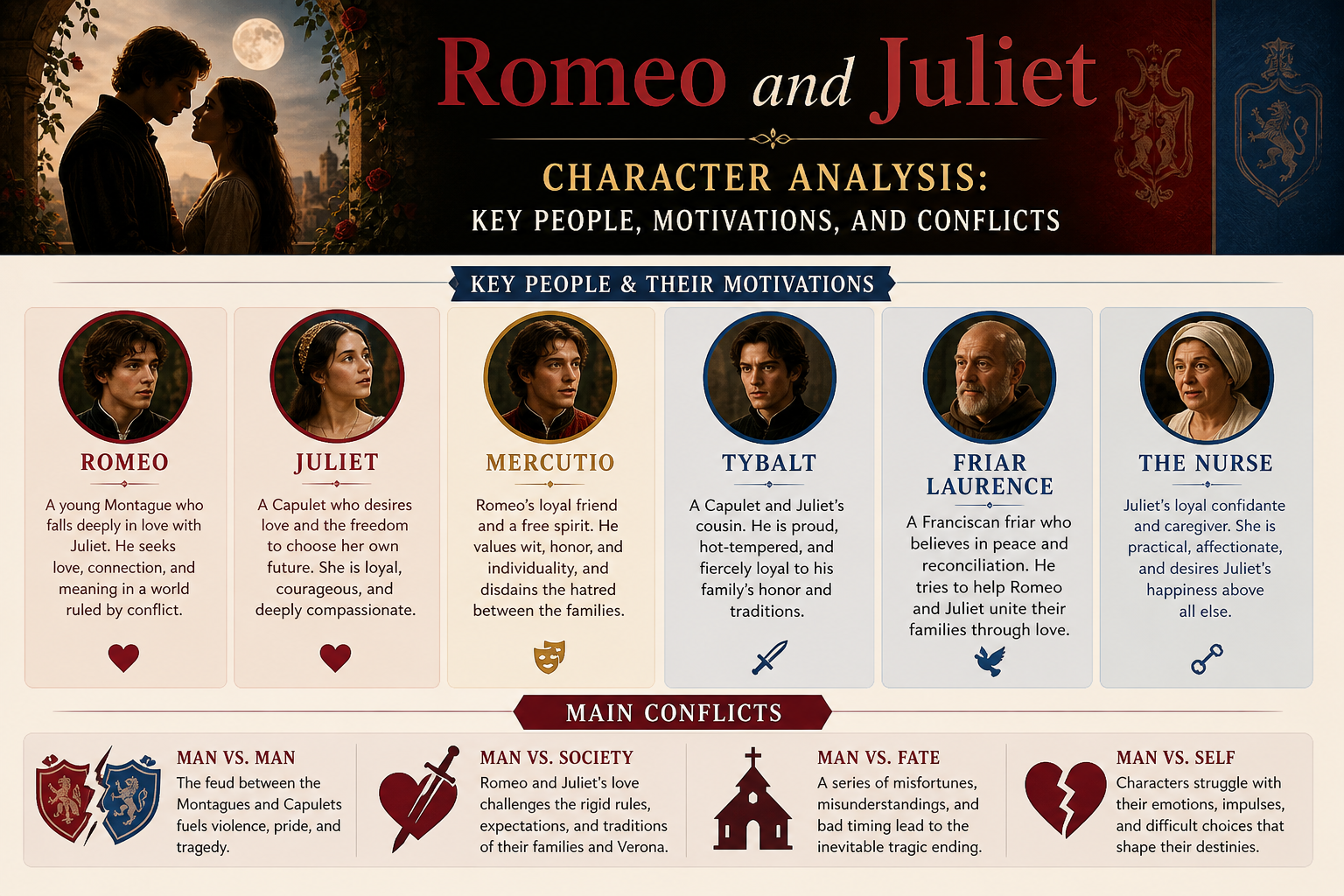
Another Example: Understanding Shakespearean Language in Romeo and Juliet

A second example can help illustrate how to understand Shakespearean language by focusing on context and imagery.

Consider this famous line spoken by Juliet:

“My bounty is as boundless as the sea,
My love as deep.”

At first glance, the word “bounty” may feel unfamiliar to modern readers. In Shakespeare’s context, it means generosity or abundance.

Juliet is comparing the depth of her love to the vastness of the ocean. The imagery of the sea suggests something powerful, limitless, and overwhelming.

Instead of translating each word individually, readers can focus on the emotional context of the scene. Juliet is confessing her love to Romeo, and the ocean imagery helps express how strong and expansive those feelings are.

This example shows an important principle of understanding Shakespearean language: even when some vocabulary seems unfamiliar, the imagery and emotional situation often reveal the meaning of the passage.

Folger Shakespeare Library – Romeo and Juliet

📌In Shakespeare, imagery often explains the meaning even when individual words feel unfamiliar.

Example: Decoding Shakespeare’s Word Order in Macbeth

Another key part of how to understand Shakespearean language is recognizing that Shakespeare sometimes rearranges normal word order.

In modern English, sentences usually follow this pattern:

Subject → Verb → Object

Shakespeare often shifts this order to create rhythm or emphasis.

Consider this line from Macbeth (affiliate link):

“So foul and fair a day I have not seen.”

At first glance, the sentence structure may feel confusing. But when we rearrange it into modern word order, the meaning becomes clearer:

“I have not seen a day so foul and fair.”

The line appears early in the play, when Macbeth reflects on the strange combination of victory and violence after a battle. The unusual phrase “foul and fair” also echoes the witches’ earlier line:

“Fair is foul, and foul is fair.”

This repetition hints at one of the play’s central themes: the blurred boundary between good and evil.

By recognizing how Shakespeare rearranges sentence structure, readers can more easily follow the meaning of complex lines.

📌 Shakespeare often rearranges word order for rhythm—reconstructing the sentence can reveal its meaning.

How Understanding Shakespeare Supports Literary Analysis

Learning how to understand Shakespearean language strengthens many literary reading skills.

When readers recognize imagery, symbolism, and patterns in Shakespeare’s writing, they can begin interpreting the themes of the play.

These observations often become the basis for essays and research papers.

If you’re interested in turning these insights into academic writing, see:

👉 https://rapidreadspress.com/how-to-write-a-literary-analysis-essay/

📚 Books That Help Readers Understand Shakespeare

These books provide helpful introductions to Shakespeare’s language and themes (affiliate links).

Shakespeare: The Invention of the Human — Harold Bloom

A widely discussed study of Shakespeare’s characters and influence.

Shakespeare After All — Marjorie Garber

A comprehensive and accessible guide to Shakespeare’s plays.

How to Read Literature Like a Professor — Thomas C. Foster

A helpful introduction to literary patterns often found in Shakespeare’s works.

Conclusion: Shakespeare Rewards Patient Readers

At first, Shakespeare’s language may feel unfamiliar. However, once readers learn how to understand Shakespearean language, the plays become far more engaging.

By paying attention to context, breaking down sentences, and recognizing imagery, readers gradually uncover the richness of Shakespeare’s writing.

Like many classic works, Shakespeare becomes clearer the more carefully you read.

FAQ — How to Understand Shakespearean Language

Why is Shakespeare’s language difficult?

Shakespeare wrote in Early Modern English, which includes older vocabulary and different sentence structures.

Do I need to translate every line?

Not necessarily. Understanding the scene and emotional context often reveals the meaning of difficult lines.

Is it helpful to read Shakespeare aloud?

Yes. Shakespeare’s writing was designed for performance, so hearing the rhythm can clarify meaning.

What is the best way to learn Shakespeare?

Reading slowly, annotating passages, and focusing on context are among the most effective strategies.

How to Read Difficult Classic Literature

how to read difficult classic literature

Practical Strategies for Understanding Challenging Novels and Older Writing

Many readers love the idea of reading classic literature but feel frustrated when they actually begin. Older vocabulary, unfamiliar sentence structures, and complex social settings can make classic novels feel slow or confusing.

Learning how to read difficult classic literature is less about intelligence and more about strategy. With the right reading habits, even challenging novels become engaging and rewarding.

In fact, many experienced readers approach difficult classics by slowing down, asking questions, and taking notes while reading. These habits make it easier to recognize characters, follow the plot, and understand the deeper ideas in the text.

If you’re new to this kind of reading, you may want to start with this guide:

👉 https://rapidreadspress.com/how-to-read-literature-like-a-scholar/

⭐ Key Takeaway

Reading difficult classic literature becomes easier when you slow down, take notes, and focus on patterns rather than trying to understand every word immediately.

📚 In This Guide

In this article you’ll learn:

  • How to read difficult classic literature step by step
  • Why classic novels often feel challenging
  • Practical strategies for understanding older language
  • A reading example from Pride and Prejudice (affiliate link)
  • Tools and resources that make classic literature easier
how to read difficult classic literature
Image by Carla Paton

Why Classic Literature Often Feels Difficult

Understanding how to read difficult classic literature begins with recognizing why these texts feel challenging.

Many classic novels were written in cultural and historical contexts that differ from modern life. Writers often used longer sentences and assumed readers understood social customs of their time.

For example, authors like Jane Austen frequently describe social rules, family expectations, and class relationships that may feel unfamiliar to modern readers.

Instead of trying to understand everything immediately, focus on the general situation of each scene. Meaning usually becomes clearer as the story unfolds.

For more help with tracking ideas while reading, see:

👉 https://rapidreadspress.com/how-to-take-notes-while-reading-a-novel/

📌Classic literature rewards patient readers who focus on patterns rather than perfection.

Strategy 1: Read Slowly and Reread Important Passages

One of the best strategies for how to read difficult classic literature is simple: slow down.

Classic authors often pack several ideas into a single paragraph. Reading quickly can make these passages feel overwhelming.

Instead:

  • read smaller sections at a time
  • pause after complex paragraphs
  • reread passages that seem important

Many readers discover that meaning becomes clearer during the second reading.

This process is closely related to close reading, which you can explore here:

👉 https://rapidreadspress.com/what-is-close-reading-in-literature/

Strategy 2: Keep Track of Characters

Another helpful technique for how to read difficult classic literature is tracking characters.

Many classic novels include large casts of characters with complex relationships.

You might keep a simple list such as:

Elizabeth Bennet — intelligent and observant
Mr. Darcy — reserved, proud, wealthy

Writing down short descriptions helps readers remember who is who.

Annotating passages can also make this easier:

👉 https://rapidreadspress.com/how-to-annotate-literature/

Strategy 3: Focus on Big Ideas, Not Every Word

A common mistake when learning how to read difficult classic literature is trying to understand every unfamiliar word immediately.

Instead, focus on:

  • the overall scene
  • the emotional tone
  • the character interactions

If an unfamiliar word appears but does not affect the overall meaning, you can continue reading and return to it later.

Many experienced readers rely on context clues to understand difficult passages.

📌 Understanding the scene matters more than understanding every individual word.

Example: Reading Pride and Prejudice

Jane Austen’s Pride and Prejudice (affiliate link) is often recommended for readers beginning classic literature.

Early in the novel, the narrator describes the Bennet family’s excitement about the arrival of Mr. Bingley.

At first, the dialogue and narration may feel formal or indirect. However, by focusing on the character interactions and social expectations, readers begin to understand the humor in Austen’s writing.

For example, Mrs. Bennet’s enthusiasm about wealthy suitors reflects the social pressures surrounding marriage in the early nineteenth century.

By observing these patterns, readers gradually recognize the novel’s themes of social reputation, pride, and personal growth.

These same observations can later become ideas for literary essays:

👉 https://rapidreadspress.com/how-to-write-a-literary-analysis-essay/

Tools That Make Classic Literature Easier

Several resources can help readers practice how to read difficult classic literature.

Online reading guides

The Poetry Foundation and British Library provide helpful background on classic works.

https://www.poetryfoundation.org
https://www.bl.uk

Reading notes

Keeping a reading journal helps track characters and themes.

Audiobooks

Listening to a skilled narrator can clarify tone and rhythm in older language.

📚 Books That Help Readers Understand Classic Literature

These books offer helpful advice for readers exploring classic texts (affiliate links).

How to Read Literature Like a Professor — Thomas C. Foster

A widely used guide explaining patterns that appear in classic literature.

How to Read a Book — Mortimer J. Adler & Charles Van Doren

A classic introduction to thoughtful and analytical reading.

The Well-Educated Mind — Susan Wise Bauer

A practical guide to reading classic literature across different genres.

Conclusion: Difficult Books Become Clear With Practice

At first, classic literature may feel slow or confusing. However, once readers develop strategies for how to read difficult classic literature, these works become much more enjoyable.

By slowing down, tracking characters, and focusing on patterns in the story, readers begin to uncover the rich ideas that have made these books endure for centuries.

Classic novels reward patience. The deeper you read, the more they reveal.

FAQ — How to Read Difficult Classic Literature

Why is classic literature harder to read?

Many classics use older language and refer to historical social customs that modern readers may not recognize immediately.

Should I look up every unfamiliar word?

Not necessarily. Focus on the overall meaning of the passage first. If a word seems important, you can return to it later.

Is it normal to reread classic novels?

Yes. Many readers find that rereading helps clarify meaning and reveal deeper patterns.

What is the best way to understand classic literature?

Slow reading, note-taking, and attention to characters and themes are among the most effective strategies.