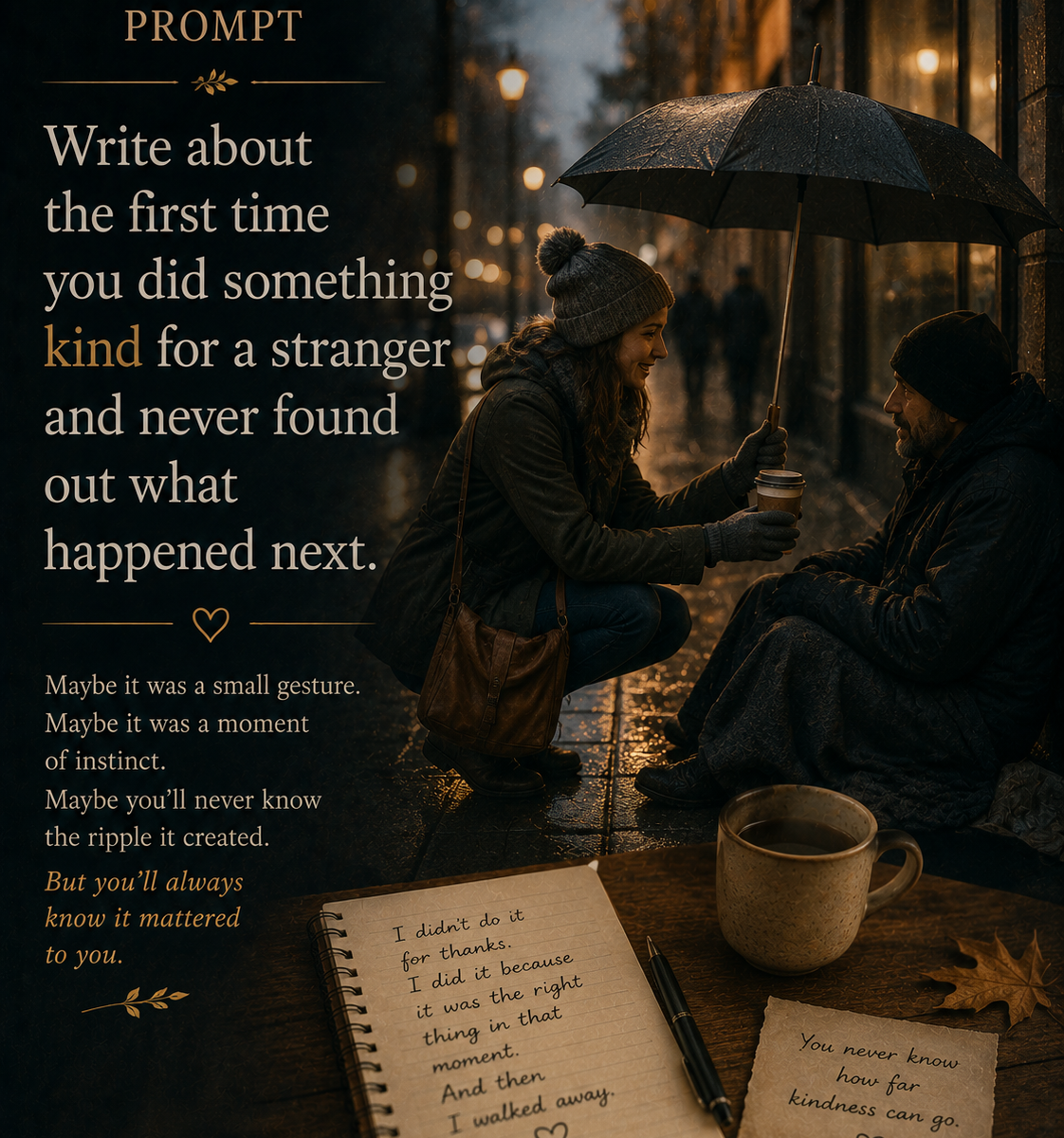
A warm, focused writing invitation about a small act of kindness, the stranger who received it, and the quiet mystery of never knowing what happened next.
You may remember the moment by what was in your hand. A dollar bill. A paper cup of coffee. A grocery bag. A bus ticket. Maybe you remember the stranger’s face only in pieces, like tired eyes, wet hair, or a sleeve pulled over one hand.
This flash memoir prompt first time something kind stranger invites you to write about a moment when you acted without getting the ending. You did something kind, then life moved on. No thank-you note arrived. No update came. You never learned if your small choice mattered in the way you hoped.
That unknown ending is part of the story.
The Prompt
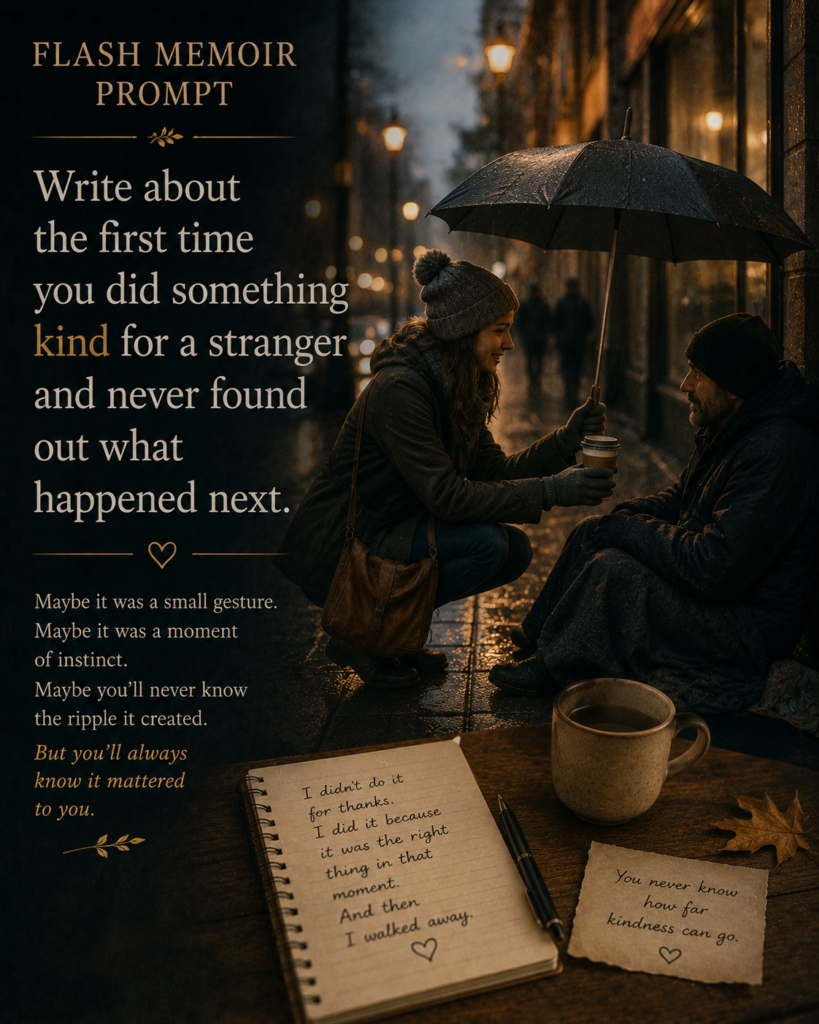
Write about the first time you did something kind for a stranger and never found out what happened next.
This prompt can unlock a meaningful memory because it asks you to focus on a single human exchange. You do not need a dramatic rescue or a grand sacrifice. The kindness may have been simple, such as holding a door, paying a fare, giving directions, sharing food, or staying with someone until help came.
The power of this memory often comes from its unfinished shape. In many stories, we want to know what happened after. Memoir does not always give us that. Sometimes the truth is that we gave what we could, walked away, and carried the question for years.
Why This Memory Matters
This kind of memory can show you who you were becoming at the time. Maybe you were a child who had just learned that adults could be lonely. Maybe you were a teenager who acted brave before you felt brave. Maybe you were in a hard season yourself and still noticed someone else’s need.
A first act of kindness toward a stranger can reveal a lot about your values before you had words for them. It may show what you had been taught at home, what you rejected, or what you learned from watching someone else suffer.
The stranger matters, too, even if you know almost nothing about them. In memoir, a person can appear for one page and still change the emotional weather of a piece. If you want to strengthen that kind of observation, it can help to practice noticing people the way you would when you analyze characters in literature. Look at gesture, tone, silence, and choice.
This flash memoir prompt first time something kind stranger is also a way to explore uncertainty. You may have wondered if you did enough. You may have felt proud, embarrassed, scared, or strangely sad. You may have forgotten the details for years, then found that one image still stayed with you.
That image is a good place to begin.
How to Approach This Prompt
Start with one physical detail from the moment. Do not begin with the lesson. Begin with the thing you can still see, hear, smell, or touch.
Maybe the stranger’s coat was too thin for the weather. Maybe the coins in your palm felt warm. Maybe the train platform smelled like rain and metal. Maybe your own voice sounded strange when you asked, “Do you need help?”
Keep the memory to one scene. It is tempting to explain the whole period of your life, especially if the moment happened during a difficult year. Give the reader just enough background to understand why this act mattered. Then return to the scene.
Write what you noticed before you explain what it meant. This will make the piece feel alive instead of like a summary. For example, instead of writing, “I felt compassion for him,” you might write, “He kept smoothing the same folded bus schedule, though the last bus had already left.”
If you get stuck, use a simple sentence starter: “The first thing I noticed was…” Let that sentence carry you into the memory. You can revise later.
You might also annotate your own memory as you draft. Circle the strongest sensory detail. Underline the moment you make the choice to help. Put a star beside the line where the unknown ending appears. If that sounds useful, this guide on how to annotate literature can also help you read your own draft with more attention.
Do not try to make yourself look perfect. A good flash memoir often becomes more honest when the writer admits mixed feelings. Maybe you hesitated. Maybe you worried other people were watching. Maybe you helped quickly because you felt awkward. The truth will make the kindness feel real.
A Quick Example
The first time I remember helping a stranger, I was twelve and waiting outside the pharmacy while my mother picked up a prescription. An old man stood near the curb with a white paper bag in one hand and a cane in the other. His hat had blown into the gutter. I watched it roll in dirty water, and for some reason I looked around first, as if someone else had been assigned to care. No one moved. I ran into the street when the light changed and grabbed the hat by its brim. When I handed it back, he said, “That was my good one,” and smiled like we shared a secret. My mother came out then. We drove away. I never knew his name, but I still remember the hat dripping onto my shoes.
Try It Yourself
Set a timer for ten minutes and write the scene as directly as you can. Begin with the place. Then bring in the stranger. Let the act of kindness happen slowly enough that the reader can feel your choice.
You do not have to solve the mystery of what happened next. In fact, try leaving the ending open. Let the last line hold the question, the image, or the feeling that stayed with you.
If you write from this flash memoir prompt first time something kind stranger, pay attention to the size of the moment. Small is enough. A stranger’s life may have continued far beyond your view, but your memory of that brief exchange can still carry emotional weight.
Want More Flash Memoir Prompts?
If you enjoy short writing invitations that lead into real memories, you may like having a full year of them within reach. Explore all 365 prompts in The Memory Trigger: 365 Flash Memoir Writing Prompts.