Famous Bildungsroman Novels Explained

Bildungsroman Novels

Famous Bildungsroman Novels Explained helps you understand one of the most important story types in literature: the coming-of-age novel. These books follow young people as they grow, make hard choices, and learn what kind of person they want to become.
If you are choosing a book for class, AP Lit, or your own reading list, this guide will help you find the right one.

In this Guide

  • What a bildungsroman is
  • Why these novels matter
  • Famous Bildungsroman Novels Explained through key examples
  • How students can choose the best book
  • Recommended books to read next
  • FAQ
Bildungsroman Novels

What Is a Bildungsroman?

A bildungsroman is a novel about a character’s growth from youth toward maturity.

The word comes from German. It often means a “novel of education” or “novel of formation.” You can read a fuller definition in Britannica’s overview of bildungsroman fiction.

These stories usually focus on identity, family, school, work, love, class, or moral choice. The main character often starts unsure of who they are. By the end, they understand more about the world and themselves.

That is why Famous Bildungsroman Novels Explained is such a useful topic for students. Once you know the pattern, many classic novels become easier to read.

Why Famous Bildungsroman Novels Explained Matters for Students

Coming-of-age novels are common in high school and college courses because they deal with real human change.

Teachers often assign these books because they show conflict between the self and society. A young person wants freedom, but the world pushes back. That tension creates strong themes for essays.

When you study Famous Bildungsroman Novels Explained, pay attention to what the main character learns. Ask what they lose, what they gain, and whether their growth feels hopeful or painful.

If you want a stronger way to study these books, this guide on how to read literature like a scholar can help you notice symbols, patterns, and deeper meanings.

Famous Bildungsroman Novels Explained: 10 Classics to Know

These novels are famous because they show growth in clear, powerful ways.

1. Jane Eyre by Charlotte Brontë

Jane Eyre follows an orphan girl who grows into a strong, independent woman. Jane faces cruelty, poverty, love, and moral pressure.

This book fits the bildungsroman form because Jane must decide what kind of life matches her values. Her growth is not only about romance. It is about self-respect.

Choose this if you like Gothic settings, strong emotions, and a main character with a clear moral voice.

2. Great Expectations by Charles Dickens

Great Expectations tells the story of Pip, a poor boy who dreams of becoming a gentleman. He believes wealth and status will make him better.

Pip’s journey makes this one of the best examples in Famous Bildungsroman Novels Explained. He learns that social rank does not equal goodness.

This is a smart choice for students who want to write about class, shame, guilt, and ambition.

3. The Catcher in the Rye by J. D. Salinger

Holden Caulfield is angry, lonely, and scared of adulthood. He calls many people “phony,” but he also struggles to face his own pain.

This novel fits because Holden stands at the edge of growing up. He does not fully mature by the end, but he starts to reveal why he is so hurt.

Pick this if you want a short, voice-driven novel that works well for essays about alienation.

4. To Kill a Mockingbird by Harper Lee

Scout Finch grows up in a small Southern town during a time of deep racism and injustice. Her father, Atticus, teaches her to think with courage and compassion.

The novel fits the bildungsroman form because Scout’s view of the world changes. She learns that people can be kind, cruel, brave, and weak.

This is a strong choice for readers who want a coming-of-age story tied to law, race, and moral courage.

5. A Portrait of the Artist as a Young Man by James Joyce

Stephen Dedalus grows from a sensitive child into a young artist. He struggles with religion, family pressure, and the need to create his own path.

This is one of the more challenging books in Famous Bildungsroman Novels Explained. The style changes as Stephen grows, so the form of the novel reflects his mind.

Choose this if you want a harder literary text and you enjoy close reading.

6. Little Women by Louisa May Alcott

Little Women follows the March sisters as they move from childhood into adult life. Each sister faces a different kind of growth.

Jo March is often the center of the coming-of-age story. She wants freedom, creative work, and a life that feels true to her nature.

This book is a good choice if you want warmth, family conflict, and questions about gender roles.

7. The House on Mango Street by Sandra Cisneros

Esperanza Cordero grows up in a Chicago neighborhood and dreams of a home of her own. The book is told in short vignettes.

It fits the bildungsroman form because Esperanza learns how place, gender, and culture shape her life. She wants to leave, but she also feels tied to her community.

This is a great pick for students who want a shorter book with rich language and strong themes.

8. Their Eyes Were Watching God by Zora Neale Hurston

Janie Crawford searches for love, voice, and selfhood. Her growth comes through relationships, loss, and hard-won freedom.

This novel belongs in Famous Bildungsroman Novels Explained because Janie’s maturity depends on claiming her own story. She learns to speak for herself.

Choose this if you want a beautiful novel about voice, identity, and independence.

9. David Copperfield by Charles Dickens

David Copperfield grows from a mistreated child into a writer. His life includes hardship, friendship, work, and personal failure.

The novel fits the form because David looks back on his life and tries to understand how each stage shaped him.

This is a longer read, but it is useful for students who want a classic example of the full bildungsroman arc.

10. The Perks of Being a Wallflower by Stephen Chbosky

Charlie enters high school while dealing with grief and trauma. Through letters, he tells the story of friendship, fear, and healing.

This modern novel fits because Charlie learns to face memories he has tried to avoid. His growth feels quiet but serious.

Pick this if you want a more recent coming-of-age story with a direct emotional style.

image-slider-with-thumbnail1.jpeg
PlayPause
previous arrow
next arrow
image-slider-with-thumbnail1.jpeg
image-slider-with-thumbnail3.jpeg
image-slider-with-thumbnail4.jpeg
ChatGPT Image Jun 27, 2026, 06_33_13 PM
ChatGPT Image Jun 27, 2026, 06_36_37 PM
ChatGPT Image Jun 27, 2026, 06_38_39 PM
ChatGPT Image Jun 27, 2026, 06_31_22 PM
image-slider-with-thumbnail7.jpeg
ChatGPT Image Jun 27, 2026, 06_29_43 PM
ChatGPT Image Jun 27, 2026, 06_27_44 PM
image-slider-with-thumbnail6.jpeg
ChatGPT Image Jun 27, 2026, 06_15_07 PM
image-slider-with-thumbnail5.jpeg
ChatGPT Image Jun 27, 2026, 06_22_43 PM
ChatGPT Image Jun 27, 2026, 06_25_37 PM
ChatGPT Image Jun 27, 2026, 06_19_43 PM
ChatGPT Image Jun 27, 2026, 06_12_00 PM
ChatGPT Image Jun 27, 2026, 06_08_50 PM
ChatGPT Image Jun 26, 2026, 04_54_23 PM
ChatGPT Image Jun 27, 2026, 05_53_51 PM
ChatGPT Image Jun 28, 2026, 08_35_55 AM
previous arrow
next arrow

Famous Bildungsroman Novels Explained by Theme

The best way to compare these books is to look at what kind of growth the character faces.

Social growth appears in novels like Great Expectations and To Kill a Mockingbird. Characters learn how class, race, and power shape the world around them.

Inner growth is central to books like Jane Eyre and The Catcher in the Rye. These characters must understand fear, pride, grief, or self-worth.

Artistic growth drives A Portrait of the Artist as a Young Man. Stephen wants to become an artist, but he must break away from forces that limit him.

This is why Famous Bildungsroman Novels Explained works well as an essay topic. You can compare not just what characters do, but how they change.

How to Choose a Bildungsroman for Class or Personal Reading

Start with the kind of story you enjoy.

If you like strong heroines, read Jane Eyre or Little Women. If you want a shorter modern text, try The House on Mango Street or The Perks of Being a Wallflower.

If your teacher wants a classic with major literary history, choose Great Expectations, David Copperfield, or A Portrait of the Artist as a Young Man.

For AP Literature, pick a novel with rich themes and complex growth. Jane Eyre, Their Eyes Were Watching God, and Great Expectations are especially useful.

As you read, track moments when the character changes their mind. Those moments often lead to the strongest essay claims.

Famous Bildungsroman Novels Explained for Essay Writing

These novels give students clear material for literary analysis.

A strong essay can focus on the turning point in the character’s growth. For example, Pip in Great Expectations must face the truth about his dreams of status.

You can also write about setting. In The House on Mango Street, Esperanza’s neighborhood shapes how she sees herself and what she wants to escape.

Symbolism matters too. In Jane Eyre, homes often reflect Jane’s stage of life and sense of belonging.

For a deeper reading method, use these literature reading strategies while you take notes.

Books to Consider Buying

These editions are useful for students and literature lovers who want to build a strong reading list.

  • Jane Eyre by Charlotte Brontë
  • Great Expectations by Charles Dickens

Both books are classic examples in Famous Bildungsroman Novels Explained. They also appear often in school courses and essay prompts.

FAQ: Famous Bildungsroman Novels Explained

What does bildungsroman mean?

A bildungsroman is a coming-of-age novel. It follows a young character as they grow in mind, values, or identity.
What is the most famous bildungsroman?

Great Expectations and Jane Eyre are two of the most famous examples. Both show a young person shaped by hardship and choice.

Is every coming-of-age story a bildungsroman?

Not always. A bildungsroman usually focuses deeply on moral, social, or personal growth, not just age or time passing.

Which bildungsroman is best for AP Literature?

Jane Eyre, Great Expectations, and Their Eyes Were Watching God are strong choices because they offer complex themes and character growth.

Why do teachers assign bildungsroman novels?

Teachers assign them because they help students study identity, conflict, society, and change. These themes work well for literary essays.

Key Takeaway

Famous Bildungsroman Novels Explained shows that growing up in literature is rarely simple. The best coming-of-age novels reveal how people change when they face pressure, pain, and truth.

What Is a Bildungsroman?

bildungsroman

If you have ever read a story about a young person who grows up, makes hard choices, and learns who they are, you may have read a bildungsroman. So, What Is a Bildungsroman? It is one of the most common and useful story types in literature.

This guide explains the term in simple language, shows why it matters, and gives examples you may know from class.

In this Guide

bildungsroman

What Is a Bildungsroman? Simple Definition

A bildungsroman is a story about personal growth from youth toward maturity.

The word comes from German. “Bildung” means education or formation, and “roman” means novel. A bildungsroman is often called a coming-of-age novel.

The short answer to What Is a Bildungsroman? is this: it is a novel that follows a character as they grow, learn, and change. The change is not just about age. It is about how the character sees the world.

In many bildungsroman stories, the main character starts with a limited view of life. By the end, they understand more about themselves and their place in society.

What Is a Bildungsroman? Key Traits to Notice

Most bildungsroman novels share a few clear patterns.

When a teacher asks, What Is a Bildungsroman?, they often want you to look for growth over time. The main character usually faces pressure from family, school, class, or society.

A bildungsroman often includes a young main character who feels out of place. That character may struggle with rules, unfair treatment, or a painful truth.

The story also tends to include a turning point. This moment forces the character to see life in a new way.

By the end, the character may not become happy or successful. But they usually gain self-knowledge. That inner change is what matters most.

What Is a Bildungsroman? Why It Matters in Literature

This story type helps readers track how people change under pressure.

The question What Is a Bildungsroman? matters because many major novels use this form. It gives writers a way to explore identity, class, race, gender, and belief without turning the story into a lecture.

For students, the bildungsroman is useful because it connects plot to character development. You can ask, “What did the character believe at the start?” Then ask, “What do they understand by the end?”

This can help with essays, class talks, and close reading. If you want a broader method for studying fiction, see this guide on how to read literature with a scholar’s eye.

Famous Bildungsroman Examples

Some of the most studied novels in English fit this pattern.

Jane Eyre by Charlotte Brontë is a classic bildungsroman. Jane begins as an orphan with little power. As the novel moves forward, she learns to defend her dignity and choose her own path.

Great Expectations by Charles Dickens also fits the form. Pip grows up with dreams of becoming a gentleman. His journey teaches him painful lessons about pride, love, and social class.

To Kill a Mockingbird by Harper Lee can be read as a bildungsroman, too. Scout Finch learns that the adult world can be unfair and cruel. Her growth comes from seeing people with more depth.

The Catcher in the Rye by J.D. Salinger is another common example. Holden Caulfield resists adulthood, but his voice shows fear, grief, and confusion beneath his anger.

If you ask What Is a Bildungsroman? while you read these books, focus on the character’s inner shift. The plot matters, but the growth matters more.

image-slider-with-thumbnail1.jpeg
PlayPause
previous arrow
next arrow
image-slider-with-thumbnail1.jpeg
image-slider-with-thumbnail3.jpeg
image-slider-with-thumbnail4.jpeg
ChatGPT Image Jun 27, 2026, 06_33_13 PM
ChatGPT Image Jun 27, 2026, 06_36_37 PM
ChatGPT Image Jun 27, 2026, 06_38_39 PM
ChatGPT Image Jun 27, 2026, 06_31_22 PM
image-slider-with-thumbnail7.jpeg
ChatGPT Image Jun 27, 2026, 06_29_43 PM
ChatGPT Image Jun 27, 2026, 06_27_44 PM
image-slider-with-thumbnail6.jpeg
ChatGPT Image Jun 27, 2026, 06_15_07 PM
image-slider-with-thumbnail5.jpeg
ChatGPT Image Jun 27, 2026, 06_22_43 PM
ChatGPT Image Jun 27, 2026, 06_25_37 PM
ChatGPT Image Jun 27, 2026, 06_19_43 PM
ChatGPT Image Jun 27, 2026, 06_12_00 PM
ChatGPT Image Jun 27, 2026, 06_08_50 PM
ChatGPT Image Jun 26, 2026, 04_54_23 PM
ChatGPT Image Jun 27, 2026, 05_53_51 PM
ChatGPT Image Jun 28, 2026, 08_35_55 AM
previous arrow
next arrow

How to Read a Bildungsroman

A good reading strategy is to track change from the first chapter to the last.

Start by asking what the main character wants. Then watch how that desire changes after conflict or loss.

Notice who teaches the character, even if the lesson is harsh. A parent, friend, rival, or stranger can shape the main character’s growth.

You can also mark scenes where the character feels shame, anger, or doubt. These moments often reveal the deepest part of the bildungsroman.

For more help with literary analysis, this article on reading literature like a scholar gives simple tools you can use with almost any novel.

Books to Read Next

These books are strong choices if you want to see the bildungsroman in action.

  • Jane Eyre by Charlotte Brontë
  • Great Expectations by Charles Dickens

You can also read more about the term through Britannica’s entry on bildungsroman. For a free public-domain text, visit Project Gutenberg’s edition of Great Expectations.

FAQ: What Is a Bildungsroman?

What Is a Bildungsroman?

A bildungsroman is a novel about a character’s growth from youth toward maturity. It often focuses on identity, self-knowledge, and life lessons.

Is every coming-of-age story a bildungsroman?

Not always. A coming-of-age story may cover one key moment, while a bildungsroman often follows deeper growth over a longer span.

What is the main goal of a bildungsroman?

The main goal is to show how a character changes. The focus is not just what happens, but what the character learns.

Can a bildungsroman have a sad ending?

Yes. The ending does not need to be happy. The character may still gain insight, even after pain or failure.

Key Takeaway

What Is a Bildungsroman? It is a growth story that shows how a character becomes more aware of the world and themselves. When you read one, look for the moments that change how the character thinks, chooses, and sees life.

Famous Antiheroes in Literature

famous antiheroes

Famous Antiheroes in Literature can be some of the most interesting characters to study because they do not fit the usual hero mold. They may lie, hurt others, break rules, or act selfishly, yet readers still want to understand them.

These characters help us ask hard questions about guilt, power, survival, and what it really means to be “good.”

In this Guide

  • What makes an antihero different
  • Why antiheroes matter in literature
  • Major examples from classic books
  • How to analyze antiheroes for school
  • Helpful books to read next
  • FAQ and key takeaway
famous antiheroes

What Makes Famous Antiheroes in Literature Different?

An antihero is a main character who lacks many classic heroic traits.

A traditional hero is often brave, noble, and guided by a clear moral code. An antihero may still be brave, but that courage can come with pride, anger, fear, or deep moral weakness.

When students study Famous Antiheroes in Literature, they often notice one key idea: antiheroes are not simple villains. They may do wrong, but the story asks us to look deeper.

Antiheroes often feel real because people are not perfect. They can be selfish one moment and kind the next. That mix makes them useful for essays, class talks, and close reading.

Why Writers Use Antiheroes

Antiheroes help writers explore messy parts of human nature.

A perfect hero can inspire us, but an antihero can challenge us. These characters make readers ask, “Why do I care about someone who acts this way?”

Writers use antiheroes to show conflict inside the human mind. They may want justice but use cruel methods. They may seek love but push people away.

This makes antiheroes strong choices for literary analysis. If you need help with close reading, this guide on how to analyze characters in literature can help you build stronger claims.

Famous Antiheroes in Literature Students Should Know

Some antiheroes have shaped how readers think about character, choice, and morality.

Hamlet from William Shakespeare’s Hamlet is one of the most famous examples. He wants to avenge his father, but he delays, doubts himself, and causes great harm along the way.

Hamlet is not a clean hero. He is smart and sensitive, but he can also be cruel. His flaws make him a rich character for AP Literature and college essays.

Jay Gatsby from F. Scott Fitzgerald’s The Great Gatsby is another strong example. Gatsby dreams of love and success, but his dream rests on lies, crime, and an idealized past.

Readers may admire his hope, yet question his choices. That tension is why he remains one of the most discussed Famous Antiheroes in Literature.

Raskolnikov from Fyodor Dostoevsky’s Crime and Punishment is darker. He commits murder because he believes some people have the right to rise above normal rules.

The novel follows his guilt, fear, and possible path toward moral change. Raskolnikov is useful for students who want to study crime, conscience, and punishment.

Heathcliff from Emily Brontë’s Wuthering Heights is driven by pain, love, and revenge. His suffering helps explain him, but it does not excuse the damage he causes.

Heathcliff shows how an antihero can blur the line between victim and villain.

image-slider-with-thumbnail1.jpeg
PlayPause
previous arrow
next arrow
image-slider-with-thumbnail1.jpeg
image-slider-with-thumbnail3.jpeg
image-slider-with-thumbnail4.jpeg
ChatGPT Image Jun 27, 2026, 06_33_13 PM
ChatGPT Image Jun 27, 2026, 06_36_37 PM
ChatGPT Image Jun 27, 2026, 06_38_39 PM
ChatGPT Image Jun 27, 2026, 06_31_22 PM
image-slider-with-thumbnail7.jpeg
ChatGPT Image Jun 27, 2026, 06_29_43 PM
ChatGPT Image Jun 27, 2026, 06_27_44 PM
image-slider-with-thumbnail6.jpeg
ChatGPT Image Jun 27, 2026, 06_15_07 PM
image-slider-with-thumbnail5.jpeg
ChatGPT Image Jun 27, 2026, 06_22_43 PM
ChatGPT Image Jun 27, 2026, 06_25_37 PM
ChatGPT Image Jun 27, 2026, 06_19_43 PM
ChatGPT Image Jun 27, 2026, 06_12_00 PM
ChatGPT Image Jun 27, 2026, 06_08_50 PM
ChatGPT Image Jun 26, 2026, 04_54_23 PM
ChatGPT Image Jun 27, 2026, 05_53_51 PM
ChatGPT Image Jun 28, 2026, 08_35_55 AM
previous arrow
next arrow

Famous Antiheroes in Literature and the Question of Morality

Antiheroes make readers judge actions, motives, and consequences.

One reason Famous Antiheroes in Literature stay popular is that they do not give easy answers. They force readers to ask if a person can do terrible things and still deserve sympathy.

Take Macbeth from Shakespeare’s Macbeth. He begins as a brave soldier, but ambition leads him toward murder and tyranny.

Macbeth is not born evil. His fall matters because readers can see the choices that shape him. That makes his story a warning about power and moral collapse.

You can read more background on Shakespeare’s tragedy from Britannica’s overview of Macbeth.

Antiheroes also show how society shapes people. Some characters become morally broken because of poverty, abuse, war, or rejection. Literature asks us to notice both personal choice and outside pressure.

Common Traits of Antiheroes

Most antiheroes share patterns that make them easier to spot.

They often have serious flaws. These may include pride, anger, greed, fear, or a need for control.

They may also have a personal code. Even if their code is flawed, it helps explain why they act the way they do.

Many antiheroes want something deeply. Gatsby wants Daisy and the past. Macbeth wants power. Raskolnikov wants to prove he is above ordinary people.

When that desire grows too strong, it can lead to harm. This is where antiheroes often become tragic.

How to Study Famous Antiheroes in Literature

A strong character analysis looks at both behavior and meaning.

When you write about Famous Antiheroes in Literature, do not just call a character “bad” or “complicated.” Explain what the character wants, what choices they make, and how those choices affect others.

Start with the character’s goal. What do they want most? Then look at the methods they use to get it.

Next, study the cost. Who gets hurt? What does the character lose? What does the story suggest about those choices?

It also helps to track change. Some antiheroes grow, while others fall deeper into guilt or violence.

For a deeper method, use this resource on character analysis in literature as you plan your essay.

Antihero vs. Villain: What Is the Difference?

The difference often comes down to focus and sympathy.

A villain usually works against the main moral center of the story. A villain may tempt, attack, or destroy others without much inner conflict.

An antihero is often the main character or a major figure we follow closely. The story gives us access to their thoughts, pain, and reasons.

This does not mean the antihero is innocent. It means the story wants us to understand them, even when we reject their actions.

For example, Macbeth becomes a tyrant, yet the play lets us see his fear, guilt, and imagination. That inner life makes him more than a simple villain.

Why Famous Antiheroes in Literature Still Matter

Antiheroes remain powerful because they reflect real human struggle.

Famous Antiheroes in Literature are useful for students because they connect to major themes. These themes include ambition, guilt, identity, justice, and love.

They also make essays stronger. A simple hero may lead to a simple argument. An antihero gives you more room to explore conflict and contradiction.

Modern readers still care about antiheroes because they feel honest. They show that people can be damaged, selfish, loyal, brave, and afraid in the same story.

This is why characters like Hamlet, Gatsby, and Heathcliff continue to appear in classrooms. They are not easy to judge, and that makes them worth studying.

These books are strong choices if you want to explore antiheroes in classic literature.

  • Crime and Punishment by Fyodor Dostoevsky
  • Wuthering Heights by Emily Brontë

You can find these titles through your school library, public library, local bookstore, or Amazon. For poetry and Romantic-era background, the Poetry Foundation’s page on Lord Byron is also useful, since the “Byronic hero” influenced many later antiheroes.

FAQ About Famous Antiheroes in Literature

What is an antihero in literature?

An antihero is a main character who does not act like a traditional hero. They may be flawed, selfish, morally unclear, or driven by harmful desires.

Are antiheroes the same as villains?

No. A villain usually opposes the hero, while an antihero often stands at the center of the story. Readers may understand an antihero even when they dislike their choices.

Why are Famous Antiheroes in Literature important for students?

They help students study complex character motives, moral conflict, and theme. They also give writers strong material for essays.

Is Hamlet an antihero?

Yes, many readers see Hamlet as an antihero. He has noble goals, but his delay, cruelty, and inner conflict lead to tragedy.

Can an antihero change by the end of a story?

Yes. Some antiheroes grow or seek redemption. Others fall further because they refuse to face the truth about themselves.

Key Takeaway

Famous Antiheroes in Literature matter because they show that characters do not need to be perfect to be meaningful. Their flaws help readers think harder about choice, guilt, power, and what it means to be human.

What Is an Antihero?

what is an antihero

What Is an Antihero? In literature, an antihero is a main character who does not act like a traditional hero.

Antiheroes can be selfish, angry, dishonest, fearful, or morally confused, yet readers still follow their story. They matter because they make fiction feel more human and complex.

In this Guide

what is an antihero

What Is an Antihero? Simple Definition

An antihero is a central character who lacks the usual heroic qualities.

A traditional hero often shows courage, honor, kindness, and a clear sense of right and wrong. An antihero may still do important things, but their motives are messy.

So, What Is an Antihero? It is a main character who may not be noble, but still holds our attention. The antihero can make bad choices, hurt others, or act for selfish reasons.

This does not mean an antihero is always a villain. A villain usually works against the main goal of the story. An antihero is often the person we follow, even when we do not fully admire them.

What Is an Antihero? Common Traits to Look For

Antiheroes often feel real because they do not fit a perfect mold.

Many antiheroes are deeply flawed. They may lie, seek revenge, break rules, or avoid responsibility. Some feel guilt, while others try to bury it.

An antihero may have a personal code, but that code may not match society’s rules. This makes the character hard to judge in a simple way.

When students ask, What Is an Antihero?, one useful answer is this: an antihero is a character who makes readers ask, “Should I root for this person?”

That question is part of the point. Antiheroes force readers to think, not just react.

Why Antiheroes Matter in Literature

Antiheroes help stories explore moral gray areas.

In real life, people are not always brave, honest, or kind. Literature uses antiheroes to show how fear, pride, pain, and desire shape human choices.

An antihero can also reveal what a society values. If a character breaks the rules, the story asks whether those rules are fair. If a character acts selfishly, the story may ask what caused that behavior.

This is why the question What Is an Antihero? matters in English class. It leads to deeper ideas about power, justice, identity, and guilt.

For more help with this kind of reading, see this guide on how to analyze characters in literature.

What Is an Antihero? Famous Examples from Literature

Well-known antiheroes can help make the idea clear.

Raskolnikov in Crime and Punishment by Fyodor Dostoevsky is a strong example. He commits a terrible crime, yet the novel explores his guilt, fear, and search for meaning.

Holden Caulfield in The Catcher in the Rye by J. D. Salinger is another common example. He is rude, judgmental, and unreliable, but he also feels lost and hurt.

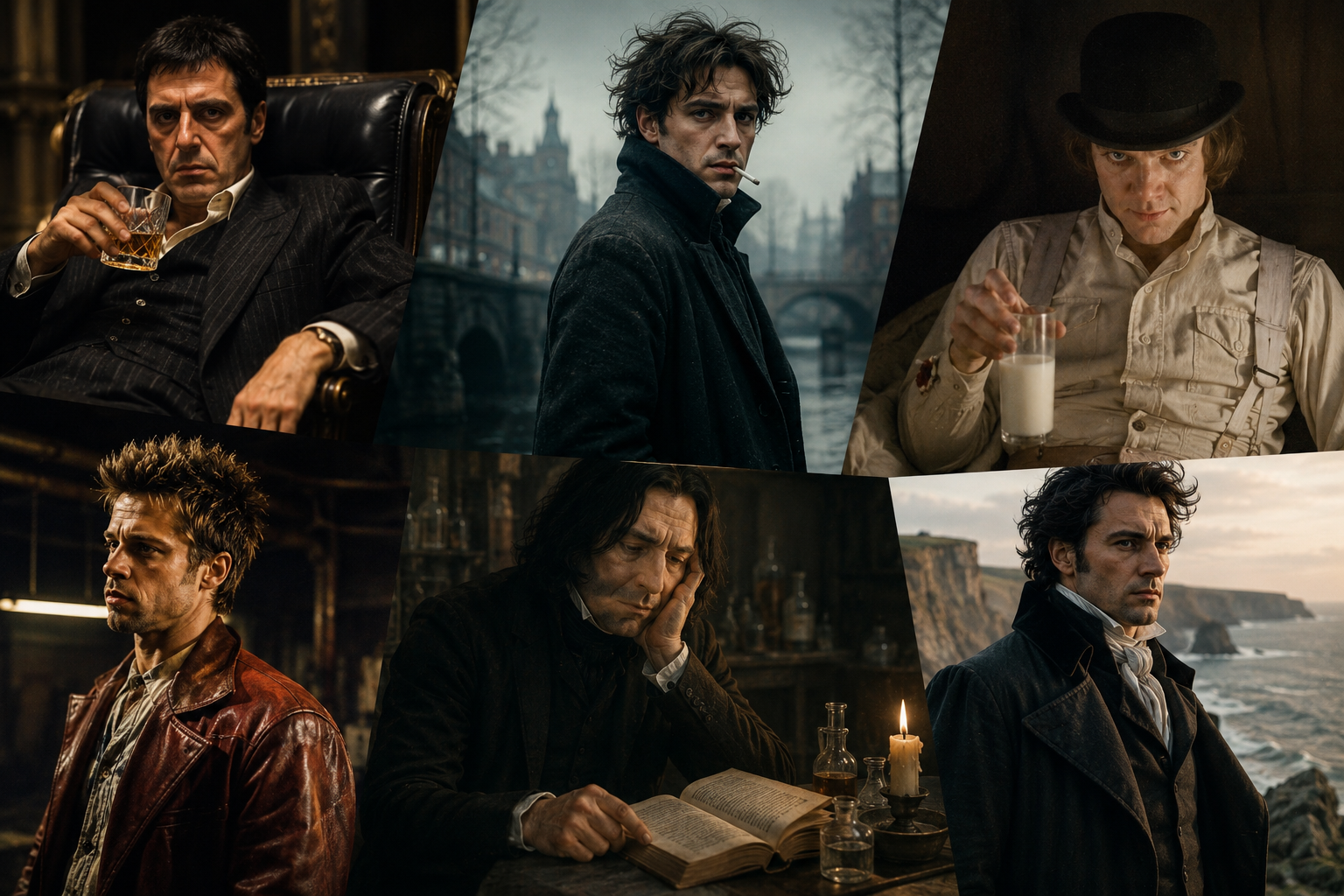
Severus Snape in the Harry Potter series by J. K. Rowling is often discussed as an antihero. He can be cruel and bitter, yet his choices are tied to loyalty, regret, and sacrifice.

Macbeth in Shakespeare’s Macbeth is more complex. He begins as a brave soldier, but ambition pulls him toward murder. Some readers see him as a tragic antihero because he is both powerful and morally broken.

If you want a short reference definition, Britannica offers a helpful overview of the antihero in literature.

image-slider-with-thumbnail1.jpeg
PlayPause
previous arrow
next arrow
image-slider-with-thumbnail1.jpeg
image-slider-with-thumbnail3.jpeg
image-slider-with-thumbnail4.jpeg
ChatGPT Image Jun 27, 2026, 06_33_13 PM
ChatGPT Image Jun 27, 2026, 06_36_37 PM
ChatGPT Image Jun 27, 2026, 06_38_39 PM
ChatGPT Image Jun 27, 2026, 06_31_22 PM
image-slider-with-thumbnail7.jpeg
ChatGPT Image Jun 27, 2026, 06_29_43 PM
ChatGPT Image Jun 27, 2026, 06_27_44 PM
image-slider-with-thumbnail6.jpeg
ChatGPT Image Jun 27, 2026, 06_15_07 PM
image-slider-with-thumbnail5.jpeg
ChatGPT Image Jun 27, 2026, 06_22_43 PM
ChatGPT Image Jun 27, 2026, 06_25_37 PM
ChatGPT Image Jun 27, 2026, 06_19_43 PM
ChatGPT Image Jun 27, 2026, 06_12_00 PM
ChatGPT Image Jun 27, 2026, 06_08_50 PM
ChatGPT Image Jun 26, 2026, 04_54_23 PM
ChatGPT Image Jun 27, 2026, 05_53_51 PM
ChatGPT Image Jun 28, 2026, 08_35_55 AM
previous arrow
next arrow

Antihero vs. Villain: What Is the Difference?

The difference comes down to the character’s role in the story.

A villain usually opposes the main character. A villain may cause harm, block the hero’s goal, or represent a major threat.

An antihero is usually the main character or one of the main characters. The story asks us to watch their choices closely, even when those choices are wrong.

So, What Is an Antihero? It is not just “a bad person.” It is a character whose flaws shape the story in a central way.

How to Analyze an Antihero in Class

A good antihero analysis focuses on choices, motives, and change.

Start by asking what the character wants. Then ask what they are willing to do to get it.

Look at how the author shapes your reaction. Do you feel sympathy, anger, pity, or doubt? Your response can reveal how the antihero works.

Pay attention to turning points. If the character faces a chance to change, their response often shows the main theme of the text.

When you write about an antihero, avoid simple labels like “good” or “bad.” Instead, explain the conflict inside the character.

Books with Strong Antiheroes

These books are useful if you want to study antiheroes more closely.

  • Crime and Punishment by Fyodor Dostoevsky
  • The Catcher in the Rye by J. D. Salinger
  • Macbeth by William Shakespeare

For Shakespeare background, the Poetry Foundation has a useful page on William Shakespeare.

FAQ: What Is an Antihero?

What Is an Antihero? Short Answer

An antihero is a main character who lacks classic heroic traits, such as courage, honesty, or selflessness. The antihero may still be interesting, sympathetic, or important to the story.

Is an antihero the same as a villain?

No. A villain usually works against the main character. An antihero is often the main character, even if they make harmful or selfish choices.

Can an antihero do good things?

Yes. Antiheroes can help others, fight injustice, or show loyalty. The difference is that their motives and methods are often flawed.

Why do authors use antiheroes?

Authors use antiheroes to create moral tension. These characters help readers think about guilt, choice, power, and human weakness.

How do I write about an antihero in an essay?

Focus on what the character wants, what flaws guide them, and how their choices connect to the theme. This approach works well with character analysis.

Key Takeaway

What Is an Antihero? An antihero is a main character who is flawed, complicated, and often hard to admire. The best reading tip is simple: do not ask only whether the character is good or bad. Ask why the story wants you to care. 📚

Most Beautiful Small Town Secrets: What Literature Teaches Us About Hidden Places

Small Town Secrets

Most Beautiful Small Town Secrets are more than pretty streets, quiet porches, and local legends. In literature, they often reveal the private fears, hopes, and choices that shape a whole community.

Small towns can look peaceful from the outside, but stories show us what lives under the surface.

In this Guide

  • Why small town secrets matter in literature
  • Classic examples from famous books
  • Symbols and themes to watch for
  • Recommended books to read
  • FAQ for students and readers
Small Town Secrets

Why Most Beautiful Small Town Secrets Matter in Literature

Small towns make secrets feel personal because everyone seems to know everyone.

Writers use small towns to show how public life and private life can clash. A character may smile at church, wave at a neighbor, or sit in a classroom, yet hide pain that no one wants to see.

That is why Most Beautiful Small Town Secrets work so well in fiction. Beauty creates contrast. The town may look calm, but the story asks us to look closer.

This setting also helps students notice social pressure. In a small town, gossip can act like a law. Reputation can matter as much as truth.

Most Beautiful Small Town Secrets in Classic Literature

Many classic books use quiet towns to explore deep conflict.

In To Kill a Mockingbird by Harper Lee, Maycomb seems slow and familiar. Yet the town hides racism, fear, and moral courage. The beauty of childhood memories sits beside serious injustice.

In Winesburg, Ohio by Sherwood Anderson, the town is full of lonely people. Each person carries a private story. These Most Beautiful Small Town Secrets are not always shocking, but they are deeply human.

In Thornton Wilder’s Our Town, Grover’s Corners appears simple. The play shows daily life, family love, and the passing of time. Its secret is that ordinary life is more precious than people realize.

You can read more about Winesburg, Ohio through Britannica’s overview.

Symbols Behind Most Beautiful Small Town Secrets

Small town stories often use simple objects to carry deeper meaning.

A locked room may stand for shame. A garden may suggest hope. A main street may show the public face of the town, while a back road may reveal what people hide.

In Most Beautiful Small Town Secrets, houses often matter. A bright porch can seem warm, but it can also hide family tension. A broken fence can suggest a broken boundary between private life and public talk.

Weather also plays a strong role. Summer heat can build pressure. A storm can mark a moment when truth breaks through.

These symbols help readers see that setting is never just background. It can act like a mirror for the characters.

Key Themes in Most Beautiful Small Town Secrets

Small towns in literature often ask big moral questions.

One major theme is appearance versus reality. A town may seem safe, polite, or pure, but the plot reveals what people refuse to face.

Another theme is belonging. Characters may want to fit in, but the town’s rules can limit who they become. This is common in coming-of-age stories.

Memory is also important. Many small town stories look back at childhood, family history, or old choices. The past does not stay buried for long.

Emily Dickinson’s poetry is a helpful match here because she often finds mystery in small spaces and quiet moments. If you want a student-friendly guide, read how to read Emily Dickinson.

These books are strong choices for students who want rich settings and hidden conflict.

  • Winesburg, Ohio by Sherwood Anderson
  • To Kill a Mockingbird by Harper Lee

Winesburg, Ohio is best for readers who like linked stories and quiet sadness. It shows how one town can hold many private worlds.

To Kill a Mockingbird is best for readers who want a clear plot with moral conflict. It shows how small town life can protect old beliefs, even when those beliefs hurt people.

For poetry that captures hidden feeling in plain language, Emily Dickinson is also worth reading. The Poetry Foundation’s Emily Dickinson page gives helpful background.

How Students Can Read Small Town Secrets More Closely

Start by asking what the town wants people to believe.

Then ask what the story slowly reveals. Pay attention to who has power, who gets judged, and who stays silent.

Look for repeated places. A courthouse, school, cemetery, or front porch can tell you what the town values.

It also helps to track gossip. In many stories, gossip shows fear more than truth. It can reveal what the town refuses to discuss in public.

Why Most Beautiful Small Town Secrets Still Feel Modern

These stories still matter because every community has a public face.

Today, that public face may appear on social media, school websites, or local news. The idea is the same. People and places often show only part of the truth.

Most Beautiful Small Town Secrets remind us to read beyond first impressions. A pretty setting can hold grief, courage, love, and change.

FAQ About Most Beautiful Small Town Secrets

What does “Most Beautiful Small Town Secrets” mean in literature?

It refers to hidden truths inside peaceful or charming small town settings. These secrets often reveal conflict, pain, or moral growth.

Why do writers use small towns so often?

Small towns make relationships feel close and intense. A secret can affect the whole community.

What is a good book about small town secrets for students?

To Kill a Mockingbird is a strong choice because it connects setting, justice, and character growth in a clear way.

Are small town secrets always dark?

No. Some secrets reveal kindness, love, or hidden strength. The secret may be painful, but it can also lead to truth.

Key Takeaway

Most Beautiful Small Town Secrets show that quiet places can hold powerful stories. In literature, the smallest setting can reveal the biggest truths about people.

The Kite Runner Character Analysis: Key People, Motivations, and Conflicts

Kite Runner characters

A practical breakdown of the main characters and how their choices shape the story.

A strong The Kite Runner character analysis starts with choices. In Khaled Hosseini’s novel, shame, love, fear, and loyalty pull people in different directions.

This guide is built for students who need clear points for discussion posts, essays, and quote-based analysis.

Kite Runner characters

In this Guide

  • Why character matters in the novel
  • Amir’s guilt and growth
  • Hassan’s loyalty and moral force
  • Baba’s pride and hidden shame
  • Rahim Khan’s role as a guide
  • Assef and Soraya as conflict figures
  • Major conflicts to track
  • Essay tips and study resources

The Kite Runner character analysis: Why characters matter

Hosseini uses character choices to show how the past can shape a whole life.

Plot matters in The Kite Runner, but character drives the story. Amir’s silence, Baba’s secrets, and Hassan’s loyalty create the novel’s deepest pain.

A good The Kite Runner character analysis asks one main question: what does each person want, and what do they fear? That question helps you move past summary and into real interpretation.

If you want a broader method, our guide on how to analyze characters in literature can help you build stronger claims.

The Kite Runner character analysis of Amir

Amir is the narrator, but he is not always honest with himself.

Amir wants Baba’s love more than anything. This need makes him jealous of Hassan, who seems to receive Baba’s warmth without effort.

His greatest conflict is internal. After Hassan’s assault, Amir does not help him. He feels shame, but he also tries to push the shame away.

This is why Amir is a complex character. He is not a simple hero or villain. He hurts someone who loves him, then spends years trapped by guilt.

Amir’s arc is about repair. He cannot erase what happened, but he can choose courage later. His trip back to Afghanistan gives him a chance to act when action costs him something.

In this way, Amir is like Macbeth in one key sense: guilt changes his life. The difference is that Macbeth moves deeper into harm, while Amir seeks a path toward atonement.

Hassan: Loyalty, innocence, and quiet strength

Hassan is one of the novel’s strongest moral centers.

Hassan’s famous loyalty to Amir is both beautiful and painful. He protects Amir, supports him, and trusts him even when Amir does not deserve that trust.

His line, “For you, a thousand times over,” shows love without demand. It also shows the unequal friendship between the boys.

A careful The Kite Runner character analysis should not treat Hassan as only a victim. He has courage, skill, patience, and deep emotional strength.

Hassan also reveals the injustice of the world around him. As a Hazara boy, he faces class and ethnic prejudice. His goodness makes that injustice feel even sharper.

Baba and Rahim Khan: Pride, guilt, and moral pressure

These older men shape Amir’s view of courage and truth.

Baba looks powerful, but he is not free from guilt. He judges lies harshly, yet he hides a major truth about Hassan. This makes him more human and more flawed.

Baba wants Amir to be brave, but he fails to see Amir clearly. His disappointment hurts Amir and feeds Amir’s need to prove himself.

In The Kite Runner character analysis, Baba works best as a study in contradiction. He is generous in public, but private shame shapes his home.

Rahim Khan serves a different role. He notices Amir’s talent and gives him the kindness Baba often withholds.

Later, Rahim Khan becomes the voice that calls Amir back to moral action. His message that “there is a way to be good again” gives the novel its clearest hope.

Assef and Soraya: Conflict outside and inside Amir

These characters show two very different kinds of pressure.

Assef is the novel’s clearest human threat. He represents cruelty, racism, and the desire to control others through fear.

He also forces Amir to face the past. When Amir confronts Assef as an adult, the scene becomes more than a fight. It becomes a test of whether Amir can finally protect someone weaker.

Soraya helps reveal another part of Amir. She has a past that people judge, yet she speaks about it with honesty.

Her honesty contrasts with Amir’s silence. She shows the kind of openness Amir fears, which makes her important to his growth.

The Kite Runner character analysis: Major conflicts to track

The novel’s conflicts work through shame, loyalty, and the search for redemption.

Amir vs. himself is the central conflict. His guilt follows him from Kabul to America and back again.

Amir vs. Hassan is painful because Hassan does not act like Amir’s enemy. The conflict comes from jealousy, class difference, and Amir’s fear of losing Baba.

Amir vs. Baba grows from unmet expectations. Baba wants a bold son, while Amir wants approval for who he already is.

Amir vs. Assef turns moral conflict into physical danger. Assef stands for the violence Amir once failed to challenge.

These conflicts make the novel useful for AP Literature and college essays. They connect character, setting, and theme without forcing the reader into a single answer.

How to use this The Kite Runner character analysis in essays

Strong essays do not just name traits. They prove how traits shape choices.

When you write The Kite Runner character analysis, start with a claim about motivation. For example: Amir’s desire for Baba’s approval leads him to betray Hassan, but that same guilt later pushes him toward redemption.

Then use a quote that shows the pressure behind the choice. After the quote, explain what the character gains, what the character loses, and why the moment matters.

For extra practice, you can use our character analysis practice guide as a planning tool before you draft.

Avoid writing only that a character is “good” or “bad.” Hosseini’s characters often carry both love and failure. That tension is where the best analysis begins.

Helpful resources for deeper study

Context can help you understand the novel’s world and the author’s background.

For reliable background on the author, see Britannica’s profile of Khaled Hosseini.

Books worth reading next:

  • The Kite Runner by Khaled Hosseini
  • How to Read Literature Like a Professor by Thomas C. Foster

FAQ

What is the main point of The Kite Runner character analysis?

The main point is to study how each character’s choices reveal guilt, loyalty, fear, and the need for redemption.

Who changes the most in The Kite Runner?

Amir changes the most. He begins as a fearful boy who avoids truth, then becomes someone who risks himself to protect Sohrab.

Is Hassan a flat or complex character?

Hassan is morally steady, but he is not flat. His loyalty, courage, and suffering give him deep emotional power.

Why is Baba important to Amir’s character?

Baba shapes Amir’s need for approval. His praise, silence, and secrets all affect Amir’s choices.

Key Takeaway

The best The Kite Runner character analysis shows that redemption is not simple. Hosseini’s characters prove that one choice can wound a life, but another choice can begin to heal it.

Best Gothic Villains: Why Darkness Feels So Human

gothic villains
gothic villains

The best Gothic villains and moral complexity go hand in hand because Gothic stories rarely give us simple evil. These characters scare us, but they also make us ask hard questions about guilt, power, desire, and choice.

From Dracula to Heathcliff, Gothic villains often show the dark side of human nature. That is why they still matter in classrooms, book clubs, and late-night reading sessions. 🕯️

In this Guide

  • What makes Gothic villains different
  • Why moral complexity matters
  • Famous Gothic villains in literature
  • How symbolism shapes Gothic evil
  • Recommended books to read
  • Questions students often ask
  • Key takeaway

Why Best Gothic Villains and Moral Complexity Still Fascinate Readers

Gothic villains stay with us because they are not always evil for no reason.

The phrase best Gothic villains and moral complexity points to one of the genre’s biggest strengths. Gothic fiction turns fear into a mirror. It asks readers to look at what people hide, deny, or fear inside themselves.

A Gothic villain may be cruel, but that cruelty often grows from pain, pride, loss, or obsession. This does not excuse the villain. It makes the story harder to dismiss.

That is why Gothic villains work so well in school essays. They help students explore character motives, symbols, and themes without simple answers.

What Makes a Gothic Villain Different?

Gothic villains are shaped by mood, setting, and secrecy.

A regular villain may want money or control. A Gothic villain often wants something deeper, such as freedom from shame, escape from death, or power over love.

These villains often live in dark houses, ruined castles, or isolated places. The setting reflects their inner life. The outside world becomes a map of the mind.

For a helpful background on the genre, see Britannica’s overview of Gothic fiction.

Best Gothic Villains and Moral Complexity in Famous Literature

The most famous Gothic villains are memorable because they disturb us and attract us at the same time.

Count Dracula in Bram Stoker’s Dracula is a clear example. He is violent and predatory, yet he also stands for fear of the unknown, fear of desire, and fear of social change.

In this way, best Gothic villains and moral complexity appear through Dracula’s role as both monster and symbol. He is not only a person to defeat. He is also a sign of what Victorian society feared.

Heathcliff in Emily Brontë’s Wuthering Heights is even harder to judge. He causes deep harm, but he is also shaped by rejection, class cruelty, and emotional loss.

Victor Frankenstein from Mary Shelley’s Frankenstein is not a classic villain in a simple sense. Still, his pride and refusal to care for his creation lead to ruin. His moral failure makes him one of Gothic literature’s most important dark figures.

If you want to study these characters more closely, start with this guide on how to analyze characters in literature.

Why Moral Complexity Makes These Villains More Powerful

A flat villain scares us for a moment. A complex villain stays in the mind.

Moral complexity means a character cannot be judged in one quick sentence. The reader must weigh their actions, motives, history, and choices.

This is key to the best Gothic villains and moral complexity. These characters force us to ask if evil comes from nature, society, trauma, or free will.

Mary Shelley’s creature in Frankenstein shows this tension. He commits terrible acts, but he also suffers rejection and loneliness. Readers may fear him and pity him at the same time.

That mixed response is the heart of Gothic reading. The genre does not let us feel safe for long.

Symbols and Themes: Villains and Moral Complexity

Gothic villains often carry the main symbols of the story.

Dark houses often suggest secrets. Locked rooms can show hidden guilt. Storms may reflect emotional chaos. These symbols help explain why the best Gothic villains and moral complexity feel so rich.

In Jane Eyre, Thornfield Hall holds secrets tied to Mr. Rochester’s past. Rochester is not the main villain in the same way Dracula is, but his moral choices shape the Gothic tension of the novel.

In Edgar Allan Poe’s stories, guilt often becomes almost physical. A sound, a shadow, or a room can seem alive with fear. You can explore Poe’s work through the Poetry Foundation’s Edgar Allan Poe page.

Common Gothic themes include guilt, forbidden desire, power, isolation, and the fear of losing control. These themes make villains feel tied to real human struggles.

Recommended Books for Best Gothic Villains and Moral Complexity

These books are strong choices for students who want clear examples of Gothic villains with depth.

  • Frankenstein by Mary Shelley: A powerful novel about creation, guilt, and responsibility.
  • Dracula by Bram Stoker: A classic Gothic text about fear, desire, and the threat of the unknown.

Both books show why the best Gothic villains and moral complexity matter in literary study. They give readers more than fear. They offer moral questions that do not fade after the final page.

How Students Can Analyze Gothic Villains

Start with what the villain wants.

Then ask what the story reveals about their past. A Gothic villain’s history often explains their fears, but it should not erase their responsibility.

Look at setting next. If a villain lives in a decaying house or hidden room, that space may reflect guilt, pride, or fear.

Notice how other characters react to the villain. Fear, pity, attraction, and disgust can all reveal the villain’s role in the story.

This approach works well for essays about best Gothic villains and moral complexity because it connects character, theme, and symbol in one argument.

Best Gothic Villains and Moral Complexity in Modern Culture

Modern books, films, and shows still borrow from Gothic tradition.

Many modern villains are not pure monsters. They may have tragic pasts, divided motives, or moments of weakness. This comes from the same Gothic interest in the hidden self.

That is why best Gothic villains and moral complexity remains a useful idea beyond older novels. It helps explain why audiences are drawn to characters who are dangerous but not simple.

Good Gothic villains make us uncomfortable because they blur the line between monster and human. That blur is where the genre does its strongest work.

FAQ: Best Gothic Villains and Moral Complexity

What makes a Gothic villain morally complex?

A morally complex Gothic villain has motives, fears, or wounds that make readers think harder about their choices. The villain may be cruel, but the story gives reasons to study them closely.

Is Frankenstein’s creature a villain?

He can be read as a villain, a victim, or both. His actions are violent, but his pain and rejection make him morally complex.

Why are Gothic villains often linked to old houses or castles?

Gothic settings often reflect the villain’s mind. A ruined home or locked room can suggest secrets, guilt, or hidden trauma.

Who is the best Gothic villain for an essay?

Heathcliff, Dracula, and Victor Frankenstein are strong choices. Each one gives students enough evidence to discuss motives, symbols, and moral conflict.

Key Takeaway

The best Gothic villains and moral complexity matter because they turn fear into thought. They remind us that literature’s darkest characters often reveal the hardest truths about human nature.

Gothic villains are not powerful only because they scare us. They are powerful because they make us question what evil is, where it begins, and why it can feel so close.

The Mentor Archetype in Fiction

Mentor archetype

The Mentor Archetype in Fiction is one of the easiest character patterns to spot once you know what to look for. This guide explains how mentors work, why they matter, and how students can write about them with more confidence.

In this Guide

Use this guide to understand the mentor’s role in stories and how to study it in class.

  • What the mentor archetype means
  • Why mentors matter in fiction
  • Common traits of mentor characters
  • Famous literary examples
  • How to analyze mentors in essays
  • Books that show strong mentor figures
  • FAQ
Mentor archetype

What Is The Mentor Archetype in Fiction?

A mentor is a guide who helps the main character grow.

At its core, The Mentor Archetype in Fiction is a character pattern. The mentor teaches, warns, trains, or inspires the hero. This character often knows more than the hero does, but the mentor cannot finish the journey for them.

Mentors may be teachers, elders, friends, family members, or even magical figures. They give the hero tools, advice, courage, or moral support.

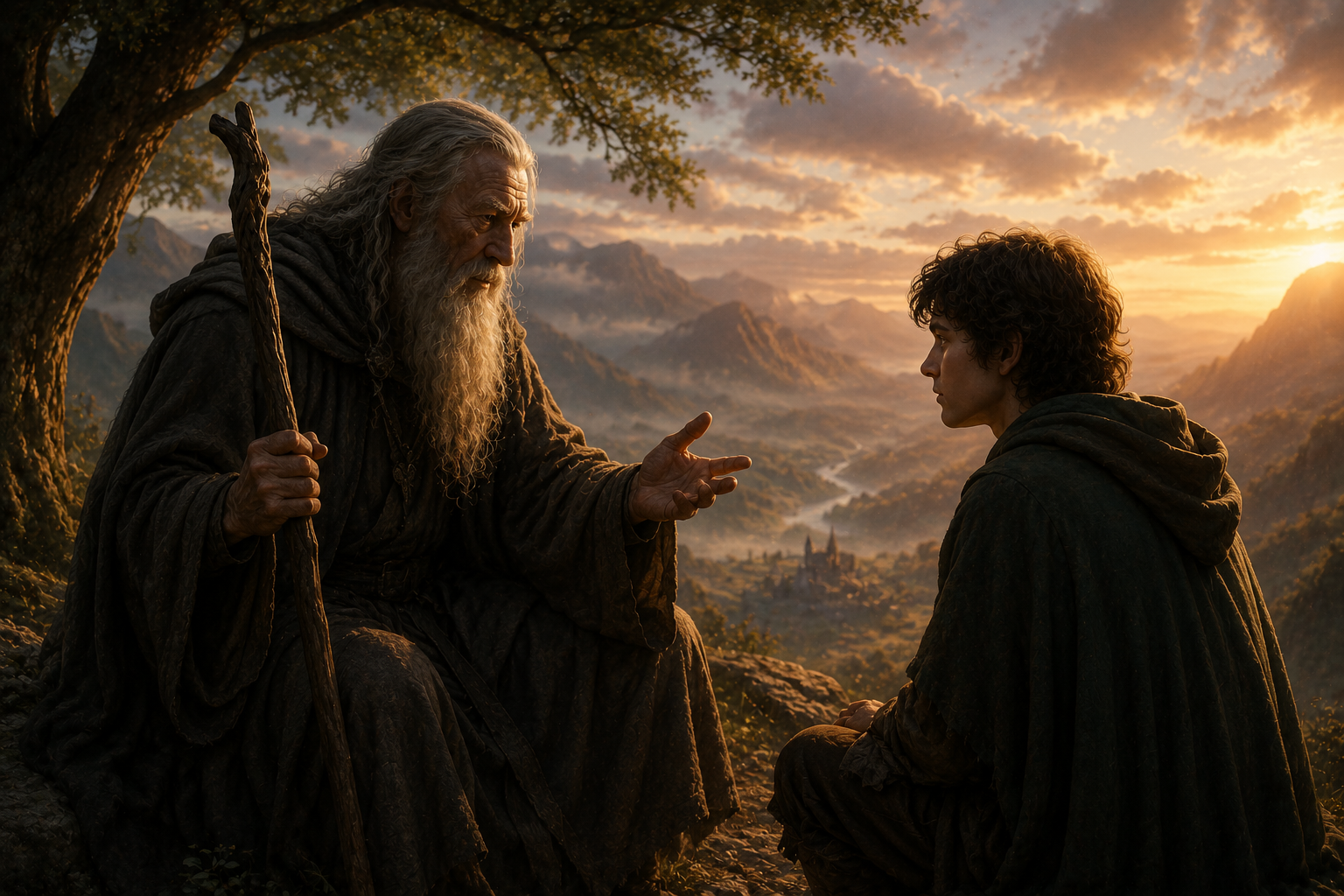
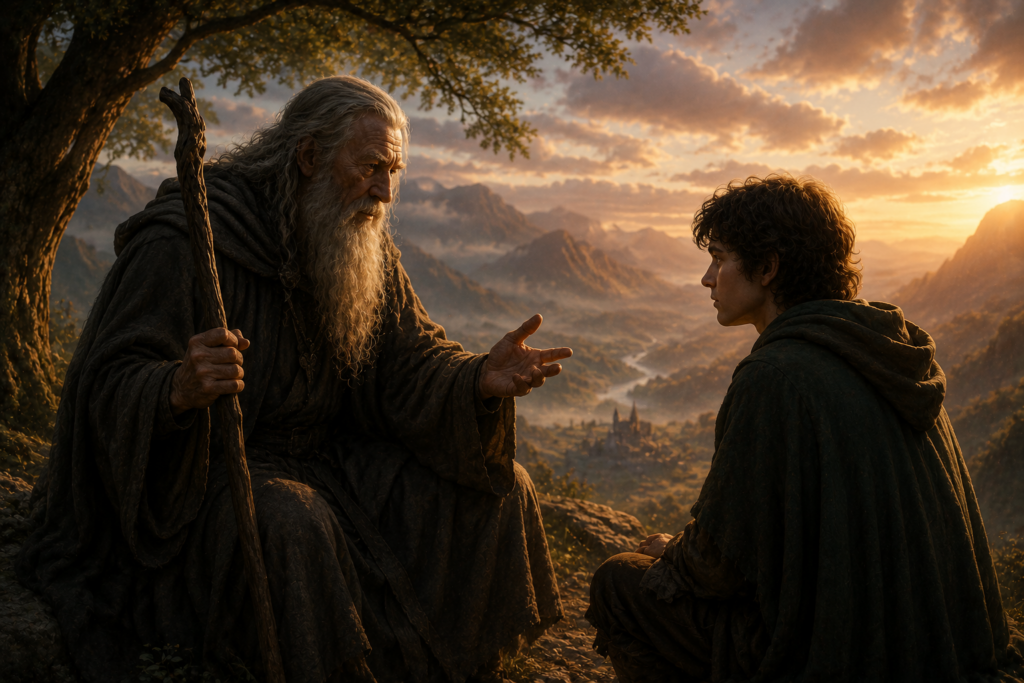
Think of Gandalf in The Hobbit by J.R.R. Tolkien. He pushes Bilbo out of his safe life and into a much larger world. Gandalf does not solve every problem, but he helps Bilbo become braver.

Why The Mentor Archetype in Fiction Matters

Mentors help reveal what the hero must learn.

The Mentor Archetype in Fiction matters because stories are often about change. A hero starts with a flaw, fear, or lack of knowledge. The mentor points toward a better path.

This role can also make the story feel deeper. A mentor may carry old wisdom, past pain, or a strong moral code. Through the mentor, the author can show what the world values.

In To Kill a Mockingbird by Harper Lee, Atticus Finch acts as a mentor to Scout. He teaches her to think about justice and empathy. His lessons shape how she sees the world.

Mentors also create tension. If the hero listens too much, they may never become independent. If they ignore the mentor, they may suffer for it.

Common Traits of The Mentor Archetype in Fiction

Mentor characters often share clear traits, even when they look very different.

The Mentor Archetype in Fiction usually has knowledge that the hero lacks. This knowledge may come from age, experience, study, or past failure.

A mentor often gives the hero a gift. The gift might be a weapon, a book, a clue, or a piece of advice. In many stories, that gift becomes important later.

Mentors also set limits. They do not always rescue the hero. A strong mentor knows the hero must face danger alone at some point.

Many mentors disappear, fail, or die before the ending. This can sound harsh, but it has a purpose. The hero must step forward without the mentor’s protection.

Dumbledore in the Harry Potter series offers advice and protection, but Harry must still face the final challenge himself. The mentor guides the path, but the hero must walk it.

Famous Examples of The Mentor Archetype in Fiction

Famous mentors help us see how flexible this archetype can be.

Seeing The Mentor Archetype in Fiction across different books can help students compare stories. Not every mentor is kind, and not every mentor is always right.

In The Odyssey, Athena helps Odysseus and Telemachus. She uses wisdom, disguise, and divine power. Her role shows that mentors can guide both action and identity.

You can learn more about Homer and this ancient epic through the Poetry Foundation’s page on Homer.

In The Hunger Games by Suzanne Collins, Haymitch mentors Katniss and Peeta. He is flawed and often bitter, but he knows how the Games work. His advice helps them survive a brutal system.

In The Lion, the Witch and the Wardrobe by C.S. Lewis, Aslan serves as a spiritual and moral guide. He helps the children understand courage, sacrifice, and loyalty.

These examples show that mentors do not all act the same way. Some are gentle. Some are strict. And some are mysterious. What they share is a role in the hero’s growth.

How to Analyze The Mentor Archetype in Fiction

A strong analysis looks at what the mentor does and what the hero learns.

When you analyze The Mentor Archetype in Fiction, do not stop at “this character gives advice.” Ask how that advice changes the story.

Start with the mentor’s purpose. What does this character teach the hero? Does the mentor help the hero face fear, understand truth, or make a moral choice?

Next, look at the mentor’s limits. A mentor may be wise, but they may also hide information or make mistakes. This can make the character more human.

Then ask how the hero changes after contact with the mentor. If the hero becomes more brave, honest, or independent, the mentor has helped shape the character arc.

Symbols can also deepen mentor scenes. A staff, book, sword, cloak, or letter may carry meaning. If you want help with that skill, read this guide on how to find symbolism in a story.

The Mentor Archetype in Fiction and the Hero’s Journey

A mentor often appears near the start of a hero’s adventure.

The Mentor Archetype in Fiction connects closely to the hero’s journey, a story pattern linked with Joseph Campbell. In this pattern, the hero leaves home, faces trials, and returns changed.

The mentor may appear after the call to adventure. This is the moment when the hero is asked to leave a normal life. The mentor helps the hero cross into the unknown.

For more background, you can read Britannica’s overview of Joseph Campbell.

Still, not every story follows this pattern exactly. Some modern books twist the mentor role. A mentor may betray the hero, refuse to help, or teach the wrong lesson.

These twists can make essays more interesting. If a mentor breaks the usual pattern, ask why the author made that choice.

How Students Can Write About Mentor Characters

A clear essay needs a clear claim about the mentor’s role.

Do not write only that a mentor “helps the main character.” That is too broad. Try to explain what kind of help the mentor gives and why it matters.

Here is a stronger claim: “Gandalf acts as a mentor because he pushes Bilbo to discover courage that Bilbo does not yet see in himself.”

This claim works because it links the mentor to the hero’s growth. It also gives you something to prove with scenes from the book.

When you choose evidence, look for key moments. Find scenes where the mentor gives advice, challenges the hero, or leaves the hero to act alone.

Good analysis also notices change. Ask what the hero believes before the mentor’s lesson and what the hero understands after it.

Relevant Books You Can Find on Amazon

These books offer strong examples of mentor figures for school reading or personal study.

  • The Hobbit by J.R.R. Tolkien: Gandalf helps Bilbo leave comfort behind and discover courage.
  • The Odyssey by Homer: Athena guides Odysseus and Telemachus through danger, pride, and growth.

These titles are useful for students because they show mentors in very different worlds. One is a fantasy quest. The other is an ancient epic.

FAQ About Mentor Characters

These quick answers can help you review the main ideas.

What is a mentor archetype?

A mentor archetype is a common character type who guides the hero. This character often teaches lessons, gives advice, or helps the hero prepare for a challenge.

Does a mentor have to be old?

No. Many mentors are older, but age is not required. A mentor only needs to offer guidance that helps another character grow.

Can a mentor be wrong?

Yes. Some mentors make mistakes or hide the truth. This can create conflict and make the story more complex.

Why do mentors often disappear from the story?

Mentors often leave so the hero must act alone. This helps prove that the hero has learned and changed.

Key Takeaway

Mentors matter because they help reveal the hero’s path.

The Mentor Archetype in Fiction is more than a wise teacher figure. A strong mentor pushes the hero toward change, and that change is often the heart of the story.

What Is the Trickster Archetype? A Beginner-Friendly Guide

Trickster archetype
Trickster archetype

If a character lies, jokes, breaks rules, or tricks others to expose the truth, you may be looking at a trickster. This guide answers What Is the Trickster Archetype? and shows why this character type matters in stories, myths, and plays.

In this Guide

Use this quick map to find what you need.

What Is the Trickster Archetype? A Simple Definition

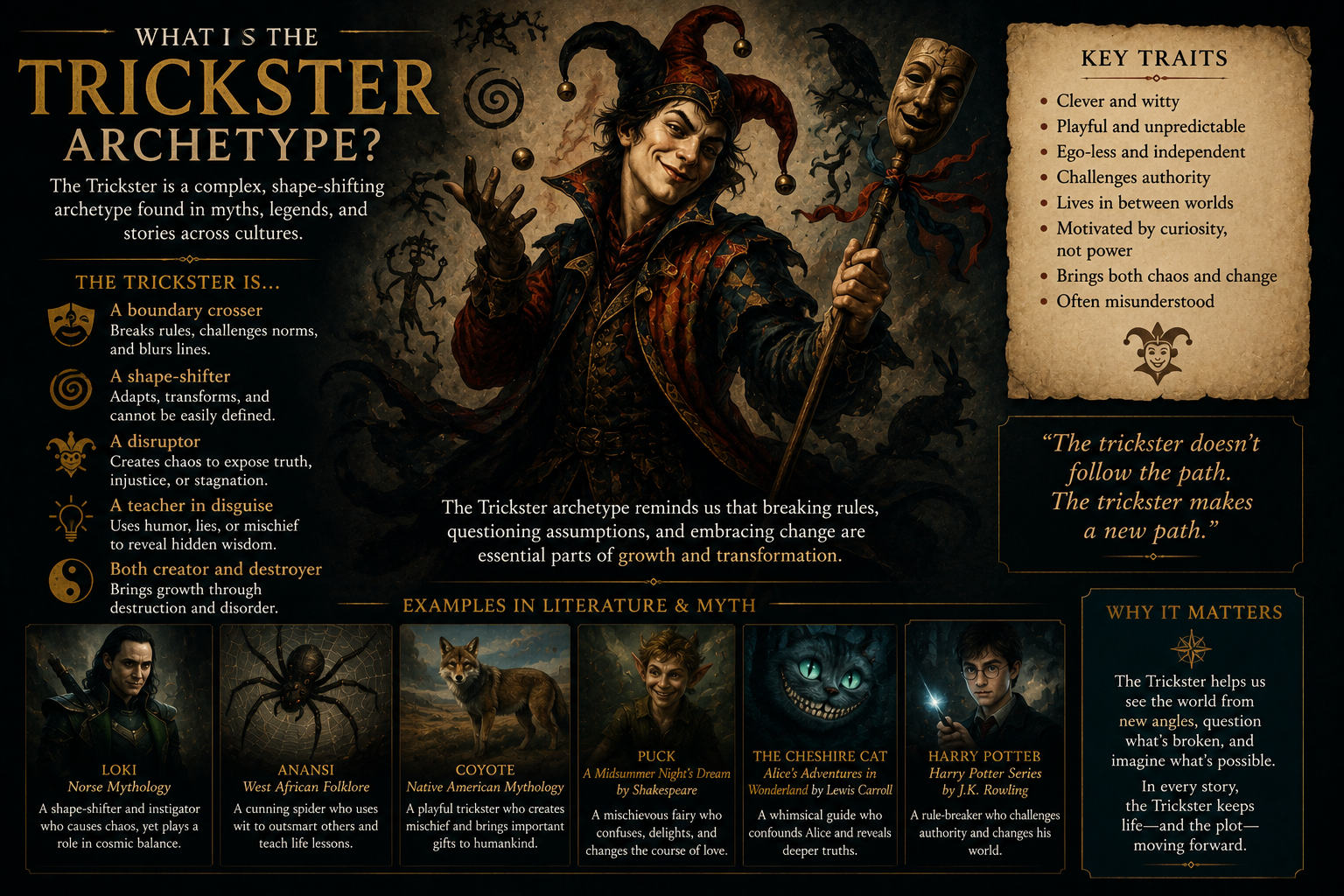
A trickster is a character who uses cleverness to challenge rules, fool others, or upset the normal order.

When students ask, What Is the Trickster Archetype?, the easiest answer is this: it is a repeated character pattern found across stories. A trickster often bends the truth, changes shape, plays jokes, or tricks people in power.

The trickster is not always evil. Some tricksters help others by exposing lies. Others cause chaos for fun. That mix makes them hard to trust and fun to study.

An archetype is a pattern that appears again and again in literature. The trickster archetype appears in myths, fairy tales, drama, novels, and modern fantasy.

What Is the Trickster Archetype? Why It Matters in Literature

The trickster matters because this character often reveals what a society fears, hides, or refuses to question.

A good answer to What Is the Trickster Archetype? should explain more than behavior. Tricksters do not only play pranks. They test the world of the story.

They may expose a proud king, fool a greedy person, or break a rule that no one else dares to touch. In doing so, they show cracks in the system.

That is why tricksters often appear when a story needs change. They push characters out of comfort and make hidden truths easier to see.

For more background on trickster stories across cultures, see Britannica’s overview of trickster tales.

What Is the Trickster Archetype? Common Traits to Look For

Tricksters are different in each story, but they often share a few clear signs.

If you remember one answer to What Is the Trickster Archetype?, remember this: tricksters use wit as power. They may not be the strongest character, but they know how to outsmart others.

Common signs include disguise, jokes, lies, riddles, and sudden reversals. A trickster may cross boundaries between human and animal, rich and poor, or order and chaos.

Tricksters also create tension. Readers may laugh at them, but they can also cause real harm. That uneasy feeling is part of their role.

When you read, notice how other characters react to the trickster. Fear, anger, and confusion can show how much power the trickster has.

What Is the Trickster Archetype? Famous Examples

Many well-known stories use tricksters to bring humor, conflict, and surprise.

Puck in William Shakespeare’s A Midsummer Night’s Dream is a classic trickster. He uses magic to confuse the lovers, and his mistakes turn the play into a comic mess.

Shakespeare often used clever characters to expose foolish behavior. You can learn more about him through the Poetry Foundation’s Shakespeare page.

Loki from Norse myth is another famous example. He can help the gods, but he also betrays them. That makes him a risky and unstable figure.

Anansi, the spider from West African and Caribbean folklore, often wins through wit. His stories show how a smaller figure can beat stronger enemies through clever plans.

Odysseus in Homer’s The Odyssey also has trickster traits. He survives by using disguise and strategy, especially when he fools the Cyclops Polyphemus.

What Is the Trickster Archetype? How to Analyze It

A strong analysis looks at what the trickster changes in the story.

When you ask What Is the Trickster Archetype? during reading, do not stop at “this character is sneaky.” Ask what the trick reveals.

Does the trickster expose a lie? Does the prank show that a leader is weak? Or, does the character’s chaos lead to growth?

Also look for symbols linked to the trickster. Masks, doors, mirrors, animals, and magic objects may point to hidden meanings. If you need help with that skill, read this guide on how to find symbolism in a story.

Practical tip: Each time the trickster appears, write down what rule gets broken and what truth comes out. That simple note can turn into a strong paragraph for class.

Books That Help You Understand the Trickster Archetype

These books include trickster figures or characters with strong trickster traits.

  • The Odyssey by Homer
  • A Midsummer Night’s Dream by William Shakespeare
  • Anansi Boys by Neil Gaiman

These are not affiliate links, just useful titles to explore.

FAQ: What Is the Trickster Archetype?

Here are quick answers to common student questions.

What Is the Trickster Archetype? in simple words?

It is a character type that uses tricks, jokes, or clever plans to challenge rules and reveal truth.

Is a trickster always a villain?

No. A trickster can help or harm. Many tricksters do both, which makes them complex.

Why do authors use tricksters?

Authors use tricksters to create conflict, question authority, and show hidden problems in a story’s world.

What is a good example of a trickster in literature?

Puck from A Midsummer Night’s Dream is a strong example because he causes confusion through mischief and magic.

Key Takeaway

The trickster is more than a comic troublemaker.

What Is the Trickster Archetype? It is a clever rule-breaker who shakes up the story and helps readers see what others miss.

The Shadow Archetype in Literature: A Student-Friendly Guide

the shadow archetype

The Shadow Archetype in Literature helps readers understand the darker parts of a character’s mind. It shows fear, guilt, rage, pride, or hidden desire, often through a villain, double, monster, or secret self.

If you study novels, plays, or poems, this idea can help you spot deeper conflict and write stronger analysis.

In this Guide

What Is The Shadow Archetype in Literature?

The shadow is the hidden side of a person or character.

Psychologist Carl Jung used the word “shadow” to describe the parts of the self that people try to deny or hide. These parts are not always evil, but they can become dangerous when ignored. You can read more about Jung’s background at Britannica’s Carl Jung page.

In stories, the shadow may appear as a villain, a monster, a rival, or a secret part of the hero. The Shadow Archetype in Literature often forces a character to face the truth about themselves.

For example, a brave hero may fear failure. A kind person may feel anger. A wise leader may crave power. The shadow brings these hidden feelings into the open.

Why The Shadow Archetype in Literature Matters

The shadow makes stories feel more real because people are not simple.

Most strong characters have inner conflict. They want to be good, but they may feel envy, shame, or pride. This struggle gives a story emotional weight.

The Shadow Archetype in Literature also helps readers understand theme. A story may ask questions like: What happens when people deny guilt? Can someone accept their dark side and still choose good?

This is useful for essays because the shadow connects character, conflict, and symbolism. If you want help with that skill, read this guide on how to find symbolism in a story.

Examples of The Shadow Archetype in Literature

Many famous works use the shadow to reveal hidden fear or desire.

Dr. Jekyll and Mr. Hyde

Robert Louis Stevenson’s Strange Case of Dr. Jekyll and Mr. Hyde is one of the clearest examples. Dr. Jekyll wants to separate his good side from his darker urges.

Mr. Hyde becomes the living form of those urges. The story warns that hiding the shadow does not destroy it. It can make it stronger.

Frankenstein

In Mary Shelley’s Frankenstein, the Creature can be read as Victor Frankenstein’s shadow. Victor wants glory and control, but he refuses to face the cost of his ambition.

The Creature reflects Victor’s fear, guilt, and rejection of responsibility. This makes the novel more than a monster story. It becomes a story about what happens when someone abandons what they create.

Macbeth

In Shakespeare’s Macbeth, Macbeth’s shadow appears through his hunger for power. At first, he seems loyal and brave.

Once ambition takes control, he becomes violent and fearful. His shadow does not arrive from nowhere. It was already inside him.

Lord of the Flies

William Golding’s Lord of the Flies shows the shadow in a group, not just one person. The boys try to build order, but fear and cruelty rise to the surface.

The “beast” is not only outside them. It is also inside them. This makes The Shadow Archetype in Literature a key idea in the novel.

How to Analyze The Shadow Archetype in Literature

You can find the shadow by asking what a character hides.

Look for moments when a character acts against their public image. A noble person may lie. A peaceful person may enjoy power. Or a confident person may fear being weak.

Next, look for symbols tied to darkness, mirrors, masks, monsters, doubles, locked rooms, or night. These details often point to the shadow. For more practice, use this guide on finding symbolism in a story.

When you write about The Shadow Archetype in Literature, do not stop at “this character is dark.” Explain what the shadow reveals. Does it show guilt? Does it expose fear? Does it test the hero’s values?

Useful Questions for Students

  • What part of the character does the shadow reveal?
  • How does the shadow create conflict?
  • Does the character accept the shadow or deny it?
  • What theme does the shadow help show?

Choosing Books with The Shadow Archetype in Literature

Books with strong shadow themes often have deep conflict and strong essay topics.

If you need a book for class, choose a story where the main character changes or faces guilt. These texts often give you more to discuss than a simple good-versus-evil plot.

Look for stories with doubles, secret identities, forbidden desires, or moral failure. These signs often point to The Shadow Archetype in Literature.

This type of book can work well for AP Literature because it supports analysis of character, theme, and structure.

Books to Explore on Amazon

These books are strong choices if you want to study the shadow archetype more closely.

  • Strange Case of Dr. Jekyll and Mr. Hyde by Robert Louis Stevenson
  • Frankenstein by Mary Shelley
  • Lord of the Flies by William Golding

You can also explore poems with dark speakers or divided selves. The Poetry Foundation is a helpful place to read classic and modern poems.

FAQ About The Shadow Archetype in Literature

What is the shadow archetype in simple terms?

The shadow archetype is the hidden side of a character. It may include fear, anger, guilt, or desire that the character does not want to face.

Is the shadow always evil?

No. The shadow is not always evil. It can hold painful truths, buried feelings, or traits a person has denied.

Can a villain be a hero’s shadow?

Yes. A villain can reflect what the hero fears or rejects in themselves. This makes the conflict more personal.

Why is the shadow archetype useful for essays?

It helps you connect character choices to deeper themes. It also gives you a clear way to discuss inner conflict.

Key Takeaway

The Shadow Archetype in Literature shows that the hardest battle is often inside the character. When readers understand the shadow, they can see why stories about monsters, rivals, and secret selves still feel so human.

error

Enjoy this article? Please spread the word :)

Follow by Email
BLUESKY
fb-share-icon
Reddit
LinkedIn
Share
RSS