

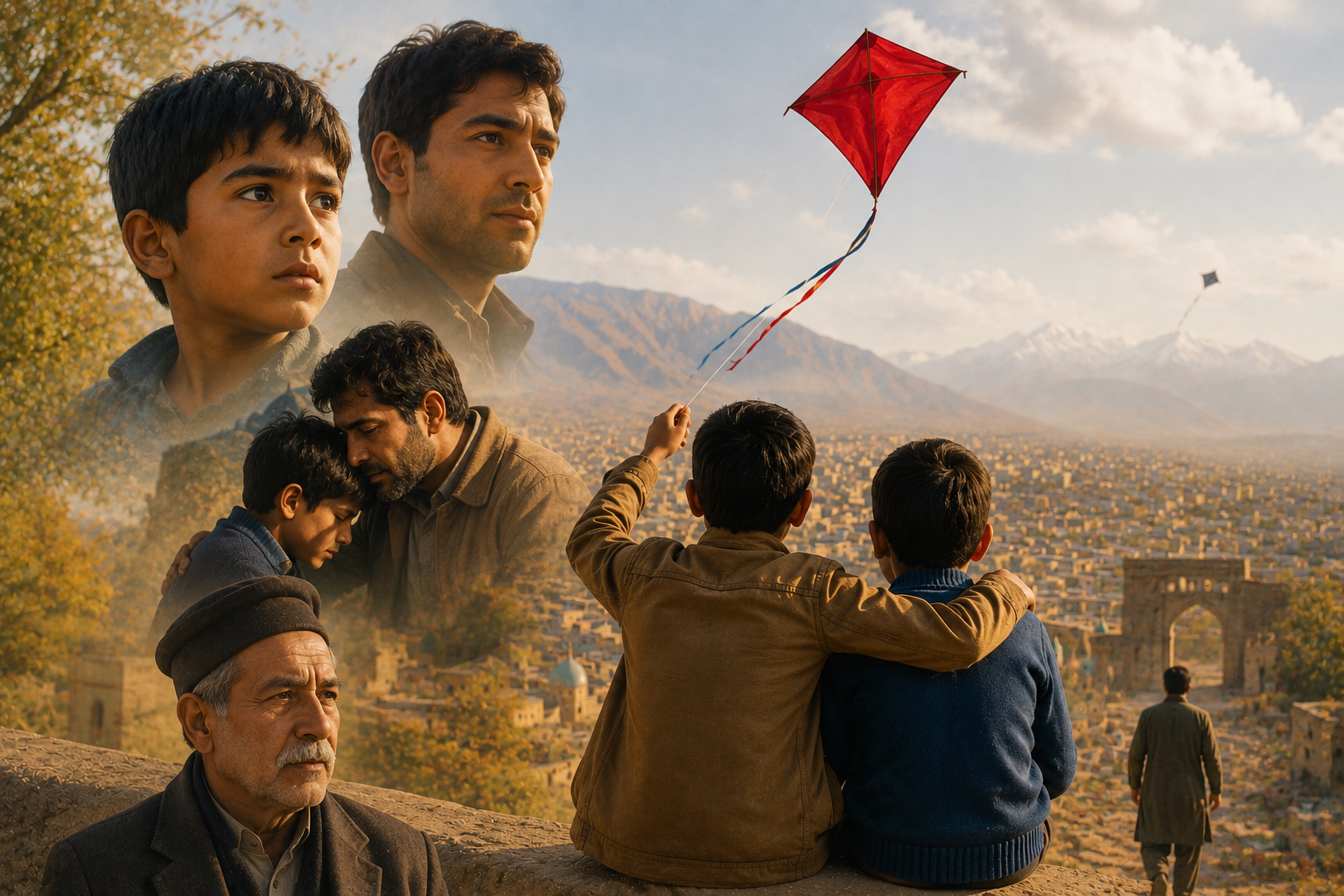
A practical breakdown of the main characters and how their choices shape the story.
A strong The Kite Runner character analysis starts with choices. In Khaled Hosseini’s novel, shame, love, fear, and loyalty pull people in different directions.
This guide is built for students who need clear points for discussion posts, essays, and quote-based analysis.
In this Guide
- Why character matters in the novel
- Amir’s guilt and growth
- Hassan’s loyalty and moral force
- Baba’s pride and hidden shame
- Rahim Khan’s role as a guide
- Assef and Soraya as conflict figures
- Major conflicts to track
- Essay tips and study resources
The Kite Runner character analysis: Why characters matter
Hosseini uses character choices to show how the past can shape a whole life.
Plot matters in The Kite Runner, but character drives the story. Amir’s silence, Baba’s secrets, and Hassan’s loyalty create the novel’s deepest pain.
A good The Kite Runner character analysis asks one main question: what does each person want, and what do they fear? That question helps you move past summary and into real interpretation.
If you want a broader method, our guide on how to analyze characters in literature can help you build stronger claims.
The Kite Runner character analysis of Amir
Amir is the narrator, but he is not always honest with himself.
Amir wants Baba’s love more than anything. This need makes him jealous of Hassan, who seems to receive Baba’s warmth without effort.
His greatest conflict is internal. After Hassan’s assault, Amir does not help him. He feels shame, but he also tries to push the shame away.
This is why Amir is a complex character. He is not a simple hero or villain. He hurts someone who loves him, then spends years trapped by guilt.
Amir’s arc is about repair. He cannot erase what happened, but he can choose courage later. His trip back to Afghanistan gives him a chance to act when action costs him something.
In this way, Amir is like Macbeth in one key sense: guilt changes his life. The difference is that Macbeth moves deeper into harm, while Amir seeks a path toward atonement.
Hassan: Loyalty, innocence, and quiet strength
Hassan is one of the novel’s strongest moral centers.
Hassan’s famous loyalty to Amir is both beautiful and painful. He protects Amir, supports him, and trusts him even when Amir does not deserve that trust.
His line, “For you, a thousand times over,” shows love without demand. It also shows the unequal friendship between the boys.
A careful The Kite Runner character analysis should not treat Hassan as only a victim. He has courage, skill, patience, and deep emotional strength.
Hassan also reveals the injustice of the world around him. As a Hazara boy, he faces class and ethnic prejudice. His goodness makes that injustice feel even sharper.
Baba and Rahim Khan: Pride, guilt, and moral pressure
These older men shape Amir’s view of courage and truth.
Baba looks powerful, but he is not free from guilt. He judges lies harshly, yet he hides a major truth about Hassan. This makes him more human and more flawed.
Baba wants Amir to be brave, but he fails to see Amir clearly. His disappointment hurts Amir and feeds Amir’s need to prove himself.
In The Kite Runner character analysis, Baba works best as a study in contradiction. He is generous in public, but private shame shapes his home.
Rahim Khan serves a different role. He notices Amir’s talent and gives him the kindness Baba often withholds.
Later, Rahim Khan becomes the voice that calls Amir back to moral action. His message that “there is a way to be good again” gives the novel its clearest hope.
Assef and Soraya: Conflict outside and inside Amir
These characters show two very different kinds of pressure.
Assef is the novel’s clearest human threat. He represents cruelty, racism, and the desire to control others through fear.
He also forces Amir to face the past. When Amir confronts Assef as an adult, the scene becomes more than a fight. It becomes a test of whether Amir can finally protect someone weaker.
Soraya helps reveal another part of Amir. She has a past that people judge, yet she speaks about it with honesty.
Her honesty contrasts with Amir’s silence. She shows the kind of openness Amir fears, which makes her important to his growth.
The Kite Runner character analysis: Major conflicts to track
The novel’s conflicts work through shame, loyalty, and the search for redemption.
Amir vs. himself is the central conflict. His guilt follows him from Kabul to America and back again.
Amir vs. Hassan is painful because Hassan does not act like Amir’s enemy. The conflict comes from jealousy, class difference, and Amir’s fear of losing Baba.
Amir vs. Baba grows from unmet expectations. Baba wants a bold son, while Amir wants approval for who he already is.
Amir vs. Assef turns moral conflict into physical danger. Assef stands for the violence Amir once failed to challenge.
These conflicts make the novel useful for AP Literature and college essays. They connect character, setting, and theme without forcing the reader into a single answer.
How to use this The Kite Runner character analysis in essays
Strong essays do not just name traits. They prove how traits shape choices.
When you write The Kite Runner character analysis, start with a claim about motivation. For example: Amir’s desire for Baba’s approval leads him to betray Hassan, but that same guilt later pushes him toward redemption.
Then use a quote that shows the pressure behind the choice. After the quote, explain what the character gains, what the character loses, and why the moment matters.
For extra practice, you can use our character analysis practice guide as a planning tool before you draft.
Avoid writing only that a character is “good” or “bad.” Hosseini’s characters often carry both love and failure. That tension is where the best analysis begins.
Helpful resources for deeper study
Context can help you understand the novel’s world and the author’s background.
For reliable background on the author, see Britannica’s profile of Khaled Hosseini.
Books worth reading next:
- The Kite Runner by Khaled Hosseini
- How to Read Literature Like a Professor by Thomas C. Foster
FAQ
What is the main point of The Kite Runner character analysis?
The main point is to study how each character’s choices reveal guilt, loyalty, fear, and the need for redemption.
Who changes the most in The Kite Runner?
Amir changes the most. He begins as a fearful boy who avoids truth, then becomes someone who risks himself to protect Sohrab.
Is Hassan a flat or complex character?
Hassan is morally steady, but he is not flat. His loyalty, courage, and suffering give him deep emotional power.
Why is Baba important to Amir’s character?
Baba shapes Amir’s need for approval. His praise, silence, and secrets all affect Amir’s choices.
Key Takeaway
The best The Kite Runner character analysis shows that redemption is not simple. Hosseini’s characters prove that one choice can wound a life, but another choice can begin to heal it.


Get the Free Close Reading Worksheet Pack
Join my email list and receive the printable worksheet pack you can use with any novel or poem.
No spam. Just helpful guides for reading literature well.












